

Dual CS 718 Q



Overview
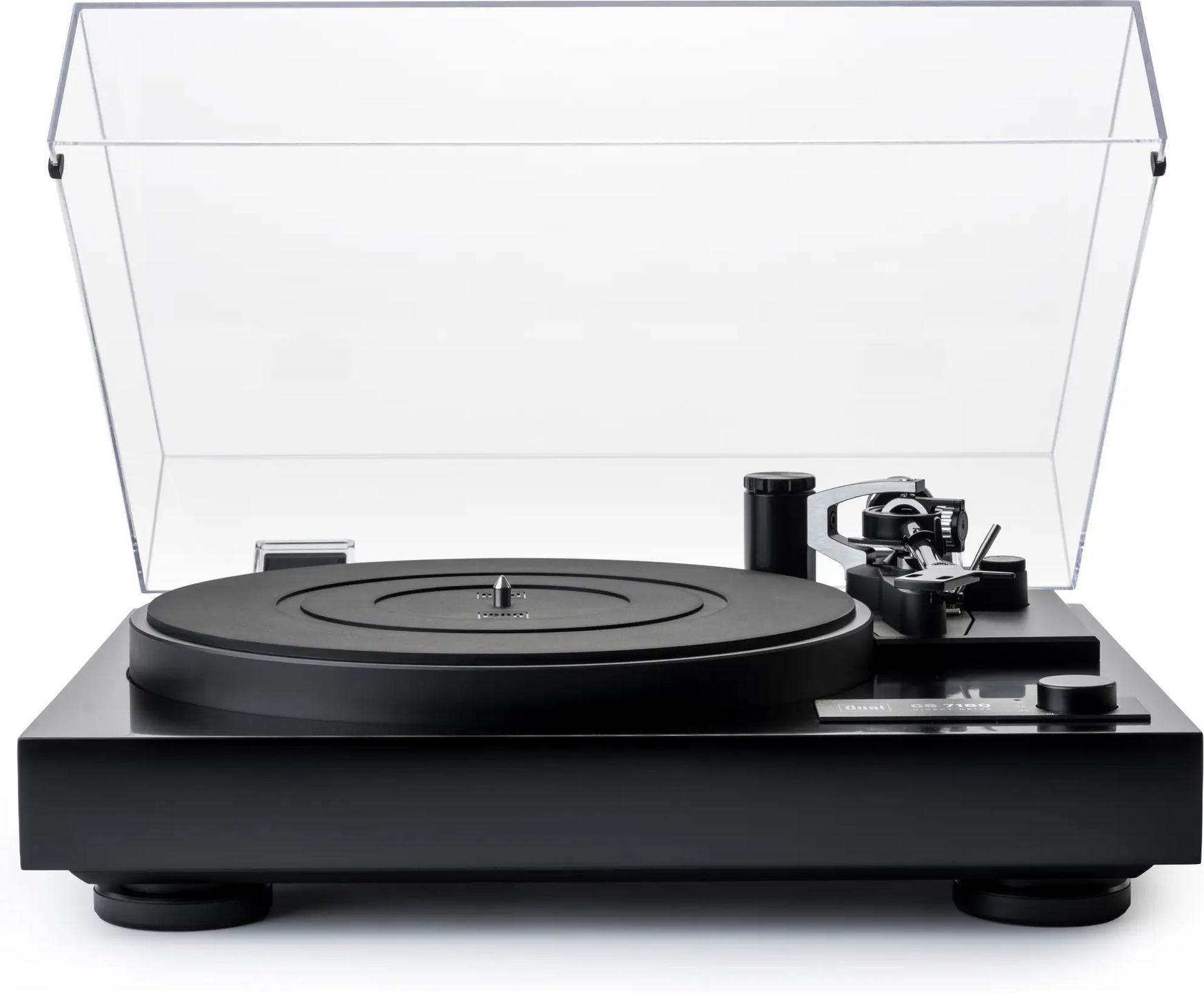
In 1973, Dual launched the CS 701, the first European direct-drive turntable. Half a century later, the German manufacturer reconnects with this technical lineage at the top of its current range. Designed and developed in Germany, this semi-automatic turntable aims for stable, precise analog playback, with no preamplifier and no concessions to digital, while leaving each user free to choose their cartridge.
The claimed lineage with the CS 701
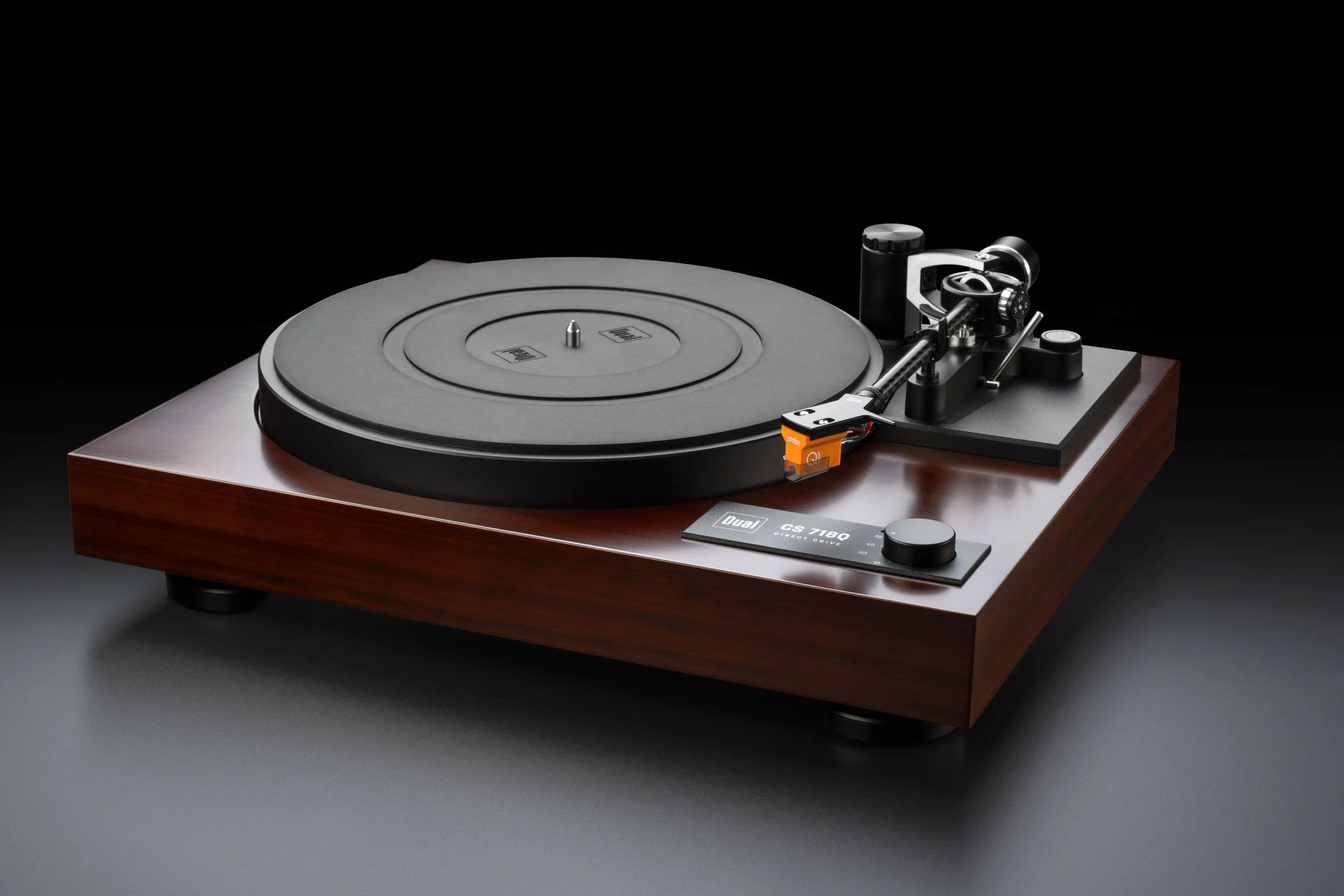
Dual clearly places the CS 718Q in the lineage of its Series 7, the one that included the CS 714 and CS 731, which built the brand’s reputation on rotational consistency and mechanical reliability. The “Q” in the name refers to the quartz regulation of those former high-end models. Compared with the CS 618Q, the only other direct-drive turntable in the current range, the CS 718Q moves upmarket mechanically: taller and heavier plinth, more substantial platter, revised tonearm, and expanded connectivity. Development is carried out at the brand’s German design center, which emphasizes this continuity with its turntables from the 1970s.
A quartz-controlled direct drive
The motor drives the platter without a belt or idler wheel: rotation comes directly from the motor shaft, quartz-regulated for the three speeds of 33, 45, and 78 rpm. Dual uses coils without a ferromagnetic core (air coils), a solution that limits vibrations and the motor cogging effect. Double shielding protects the assembly from magnetic interference. Wow and flutter remain below ±0.07% according to the DIN WTD standard, a value consistent with the turntable’s purpose. The absence of a flexible drive element eliminates the periodic replacement of a belt, a long-term durability advantage.
A tonearm developed in-house by Dual
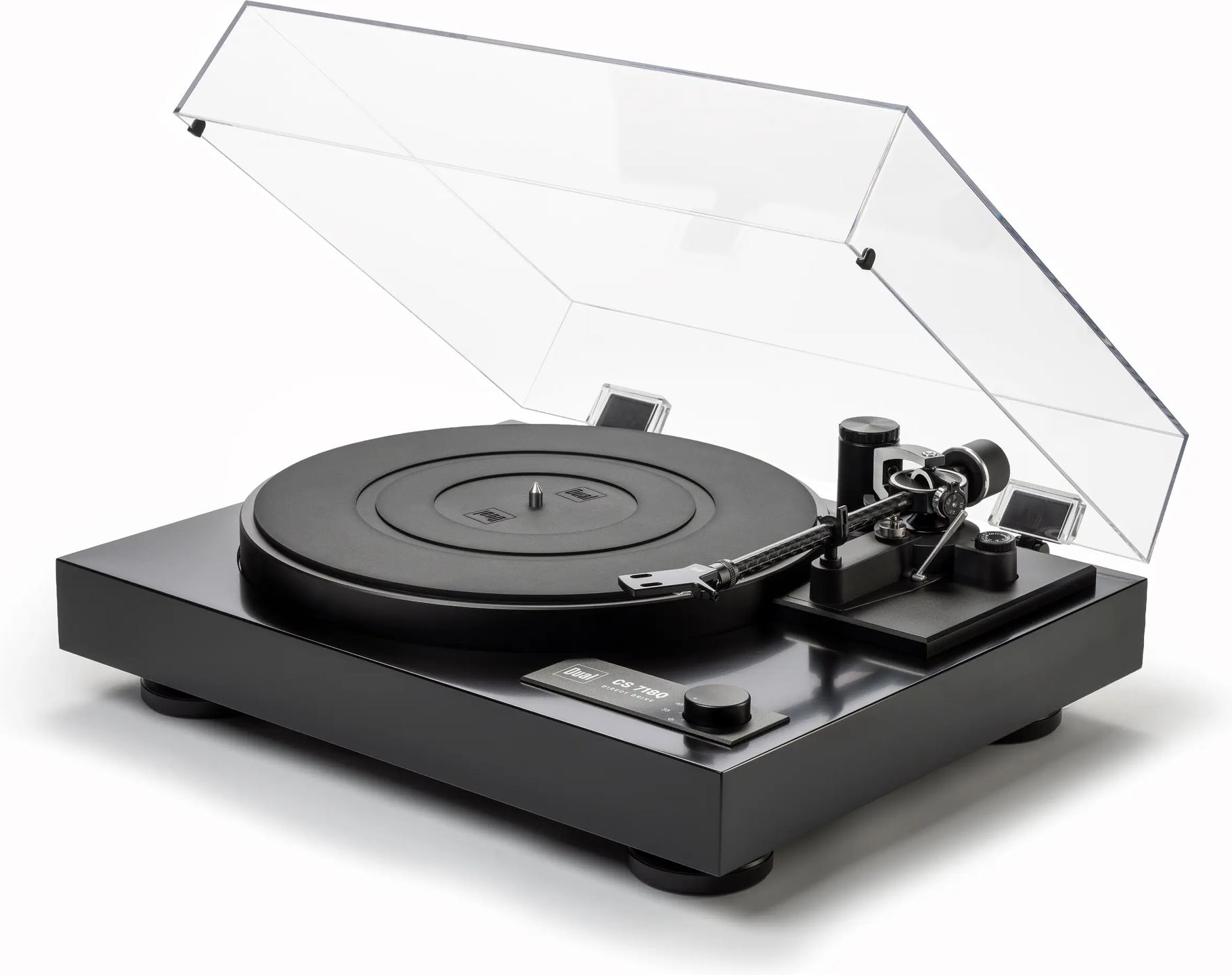
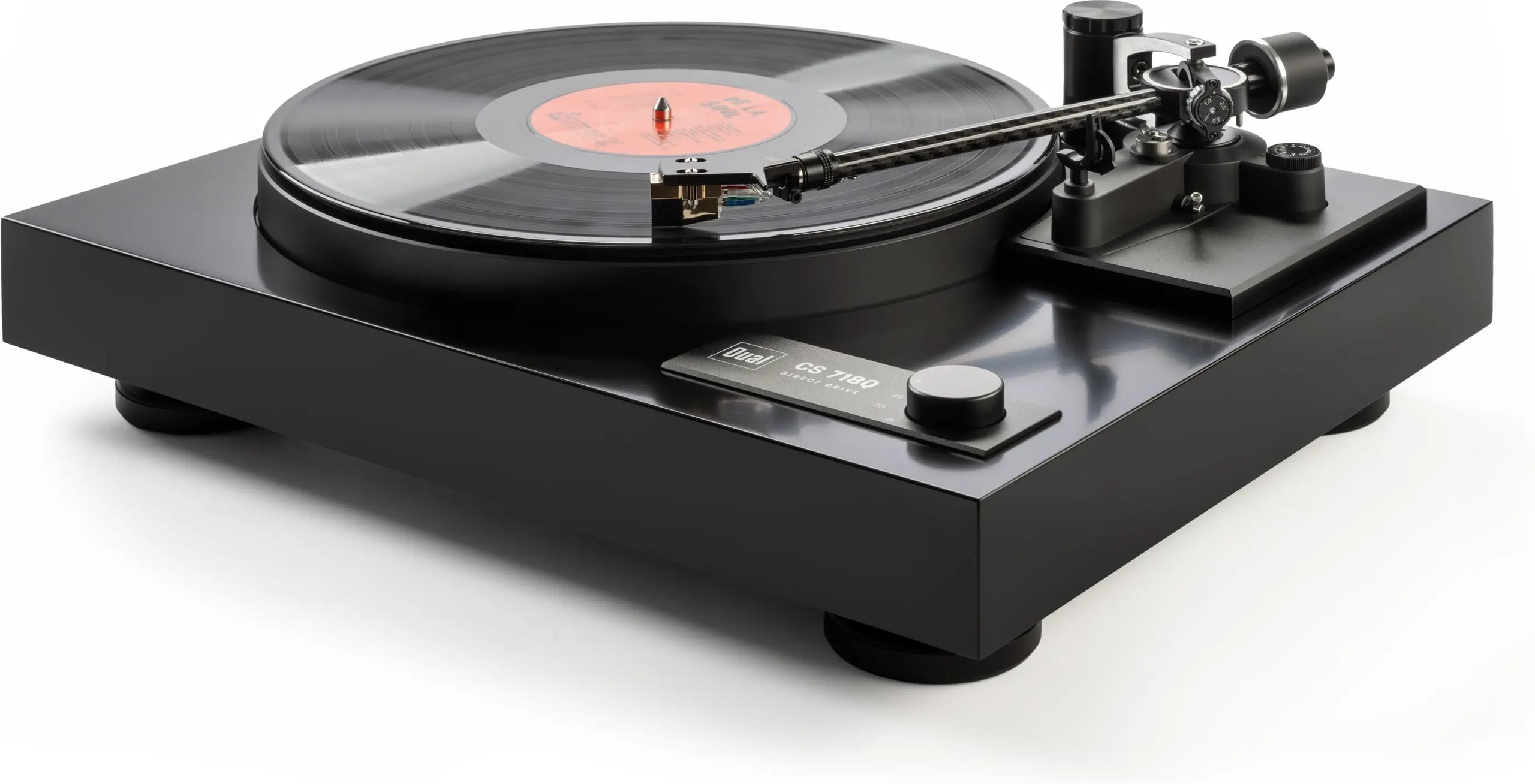
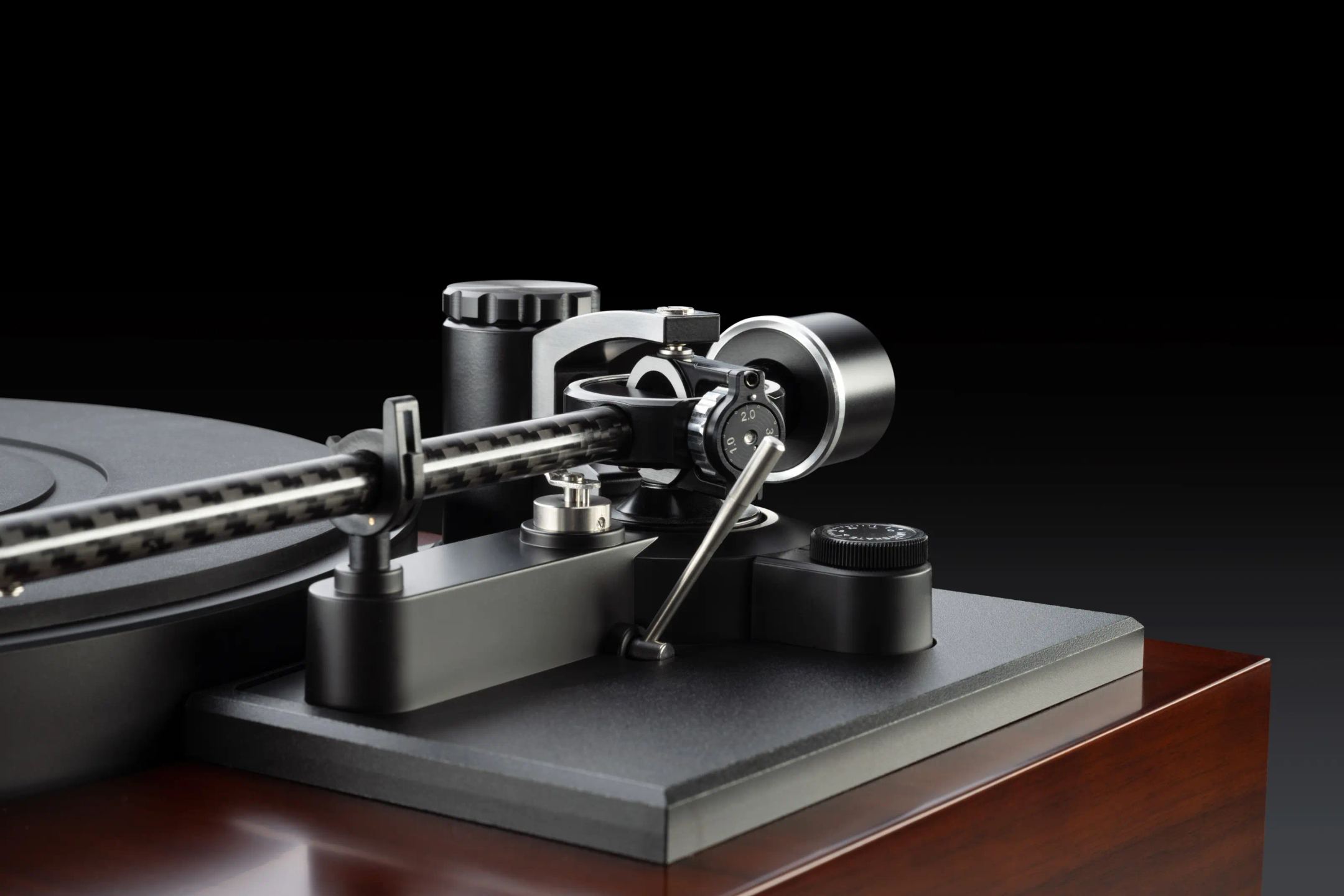
The tonearm is one of the most carefully developed parts of the turntable. Its tube adopts an aluminum and carbon sandwich structure, combining rigidity and controlled mass, for an effective length of 221.5 mm, an offset angle of 25.6°, and an overhang of 19 mm. The double-gimbal bearings echo the spirit of the former Series 7 tonearms. Tracking force is not generated by a conventional counterweight but by a precision spring, over a range of 0 to 3 g, which helps maintain stable pressure even on a slightly warped record. The removable headshell allows azimuth adjustment, and antiskating is continuously adjustable. The cartridge is not supplied: the tonearm accepts models from 3 to 13 g, opening the choice to a moving magnet or moving coil cartridge depending on the selected preamplifier.
Height adjustment during playback
The tonearm height (VTA adjustment) can be modified continuously over a range of +5 to -2 mm and remains accessible during playback thanks to a dedicated dial. The mechanism takes the form of a vertical column placed near the base of the tonearm, a visible element that contrasts with the understated design of other Dual turntables. This fine adjustment makes it possible to adapt the stylus tracking angle to the height of each cartridge, a feature the CS 618Q does not offer.
MDF chassis, platter, and vibration control
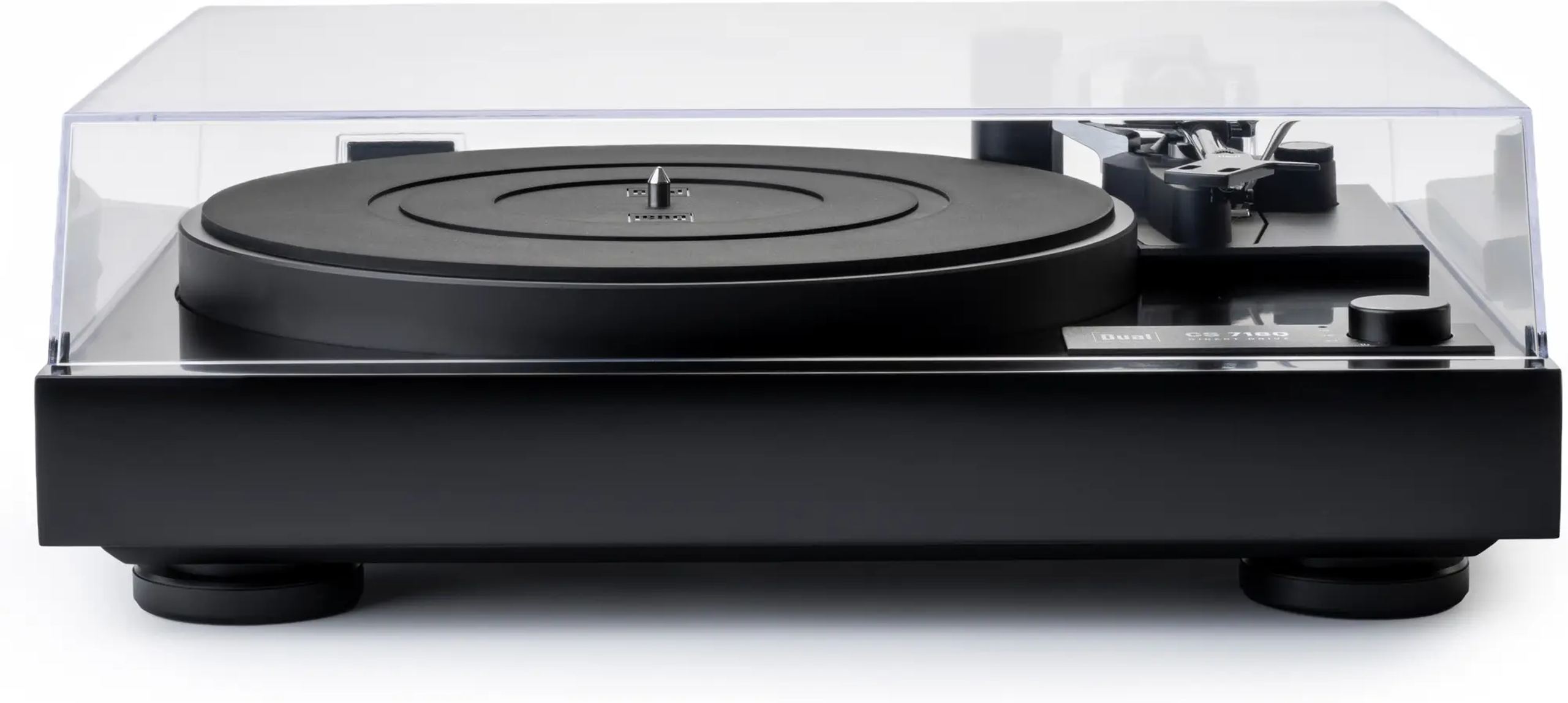
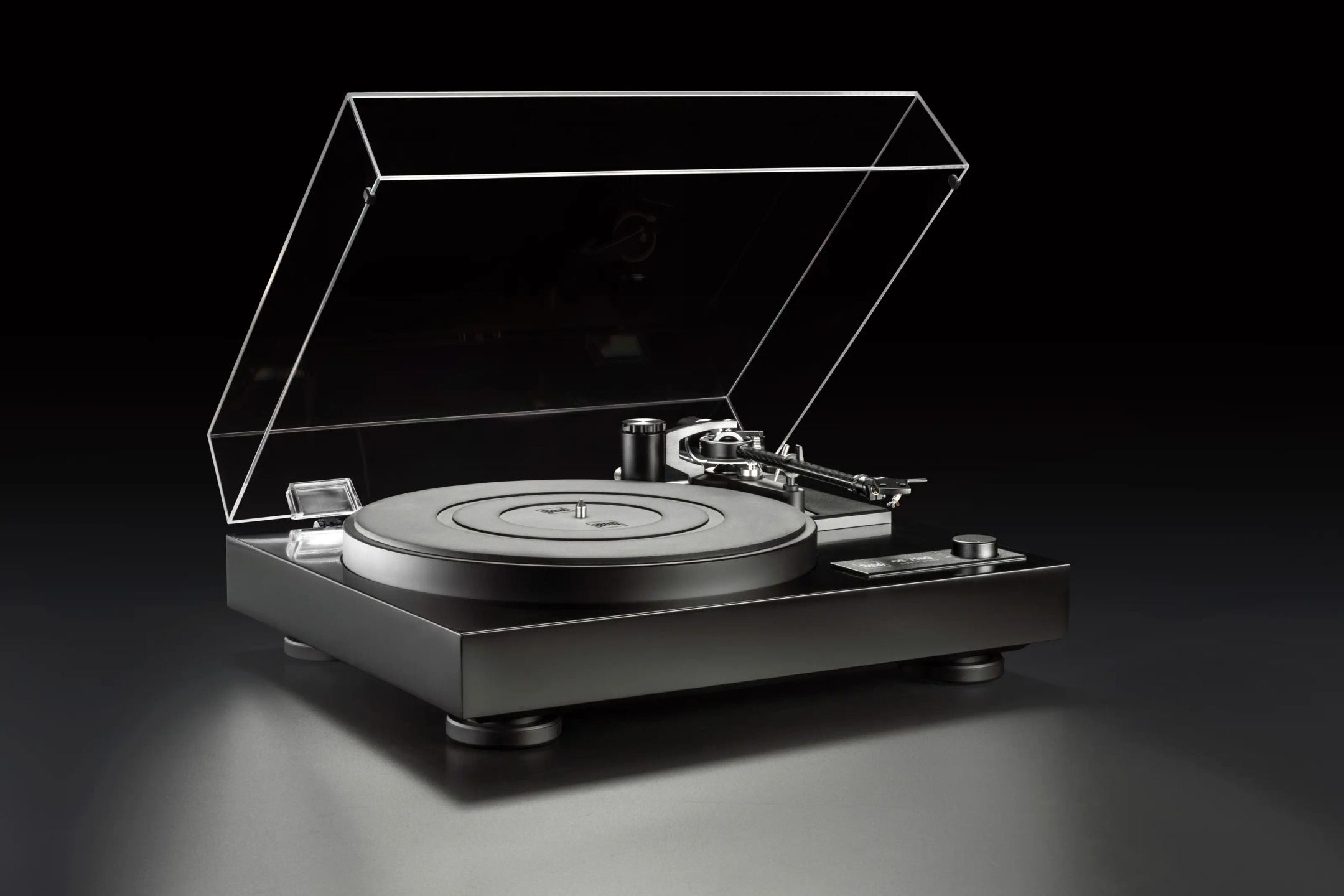
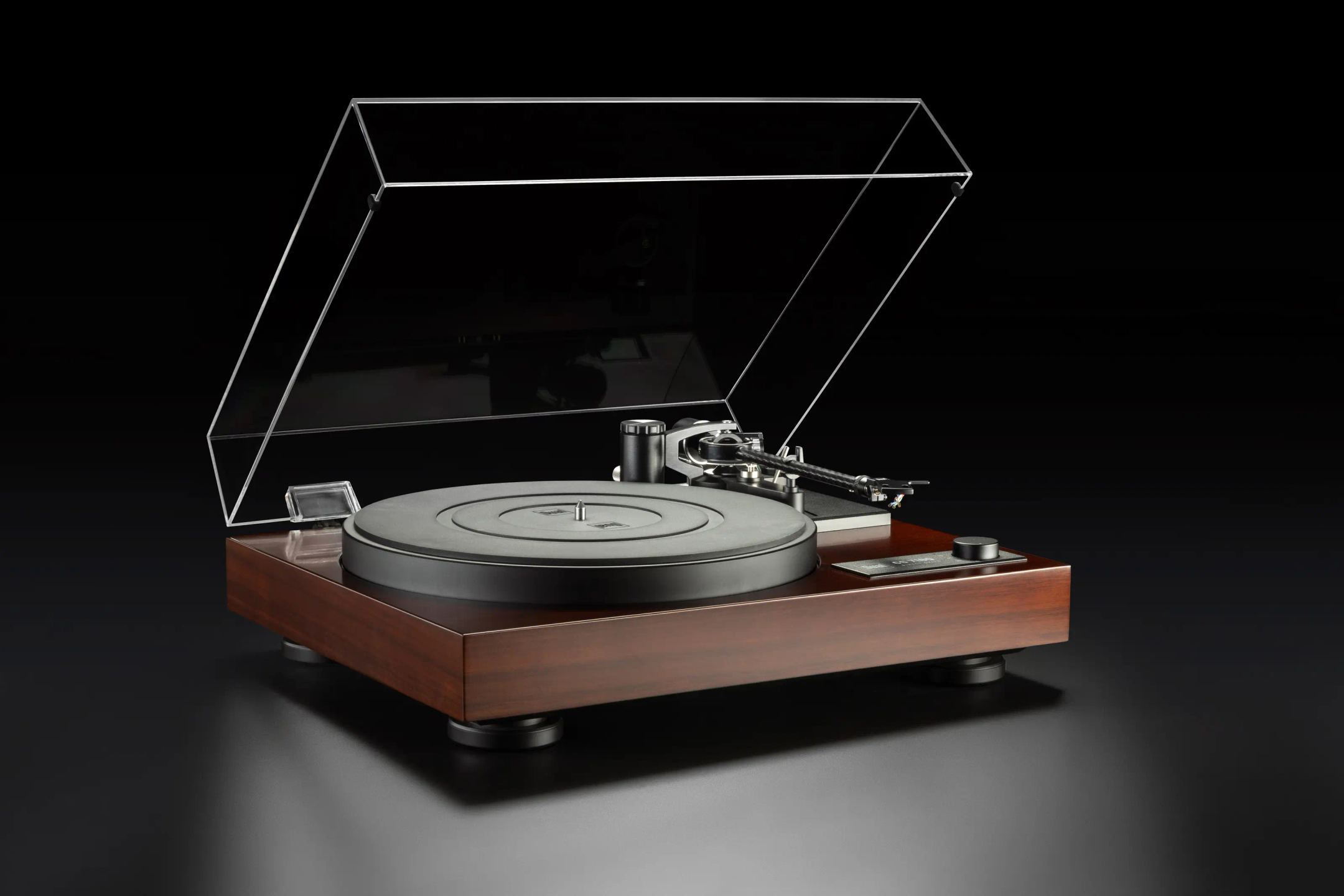
The high-rigidity MDF plinth is available in two finishes, satin black or real walnut veneer. It rests on decoupled feet fitted with resonance absorbers, height-adjustable to make leveling easier on a piece of furniture or a rack. The die-cast aluminum platter measures 305 mm in diameter and weighs 2.2 kg with its mat. Its underside receives a full rubber coating, complemented by a 4 mm damping mat developed for Dual. The hardened steel spindle rotates in a brass bearing. A transparent dust cover protects the whole assembly from dust. The turntable weighs 10 kg, a mass that contributes to its stability.
Connecting the turntable to a hi-fi system
The CS 718Q connects to a phono input or an external phono preamplifier: it includes neither a phono stage nor a digital output. Connectivity includes a stereo RCA output and a balanced XLR output, a first for Dual, useful for long cable runs or electronics equipped with a balanced phono input. In use, the turntable is semi-automatic: playback is started manually, then the motor stops and the tonearm lifts at the end of the record, which protects the cartridge. This automatic stop can be disabled for fully manual operation.
Documentation
Technical Specifications
General Overview
- Audiophile direct-drive turntable
- Engineering and design developed in Germany
- Auto-Stop function and automatic tonearm lift at the end of playback
- Compatible with 33, 45, and 78 rpm records
Motor
- Direct drive
- Quartz speed control
- Ironless air-core coils
- Double shielding against magnetic interference
- Wow & Flutter: < ±0.07% (DIN WTD)
Platter
- Die-cast aluminum platter
- Full underside rubber coating
- 4 mm rubber damping mat
- Diameter: 305 mm
- Weight (platter + mat): 2.2 kg
- Hardened steel spindle and brass bearing
Tonearm
- Aluminum / carbon sandwich tonearm
- High-precision double gimbal bearings
- Height adjustment: +5 mm / -2 mm
- Effective length: 221.5 mm
- Offset angle: 25.6°
- Overhang: 19 mm
- Dynamic tracking force via precision spring
- Tracking force adjustment: 0 to 3 g
- Compatible with cartridges from 3 to 13 g
- Removable headshell with azimuth adjustment
- Continuously adjustable anti-skating system
- Cartridge not included
Chassis
- High-rigidity MDF structure
- Satin black finish or real walnut veneer
- Decoupled feet with resonance absorbers
- Height-adjustable feet
- Transparent dust cover included
Connectivity
- Stereo RCA output
- Balanced XLR output
- Direct connection to a phono input
- No built-in phono preamp
- No digital output
Dimensions and weight
- Dimensions (dust cover closed): 435 x 367 x 155 mm
- Dimensions (dust cover open):
- Depth: 415 mm
- Height: 405 mm
- Weight: 10 kg
Frequently Asked Questions
What does the CS 718Q offer compared to the CS 618Q?
It features a heavier, more rigid plinth, a more substantial platter, on-the-fly tonearm height adjustment, and a balanced XLR output. Unlike the CS 618Q, it comes without a cartridge and without a phono preamplifier, which implies a more advanced surrounding system.
Is a separate phono preamplifier absolutely necessary?
Yes. The CS 718Q does not have a built-in phono stage. It must therefore be connected either to an amplifier with a phono input, or to an external phono preamplifier, chosen according to the type of cartridge (moving magnet or moving coil).
Which cartridge can be installed?
The tonearm accepts cartridges from 3 to 13 g, with adjustable tracking force from 0 to 3 g. The removable headshell makes mounting easier and allows azimuth adjustment. This wide range of movement lets you choose between an affordable moving magnet cartridge and a more ambitious moving coil cartridge.
Is playback automatic?
No, it is semi-automatic. Placing the tonearm and starting it are done manually. At the end of the record, the tonearm lifts and the motor stops on its own. This function can be disabled if you prefer to handle everything manually.
Can 78 rpm records be played under good conditions?
78 rpm speed is supported by the motor. However, to play these records properly, you need a cartridge or stylus suited to the groove of 78 rpm records, which is wider than that of modern microgroove records.
What is the practical benefit of the XLR output?
The balanced connection reduces susceptibility to interference on long cables. It is only beneficial if the downstream electronics have a balanced phono input; otherwise, the RCA output remains fully usable.
- Eco-contribution included in the sale price.
- GTIN / EAN: 4262425750434




