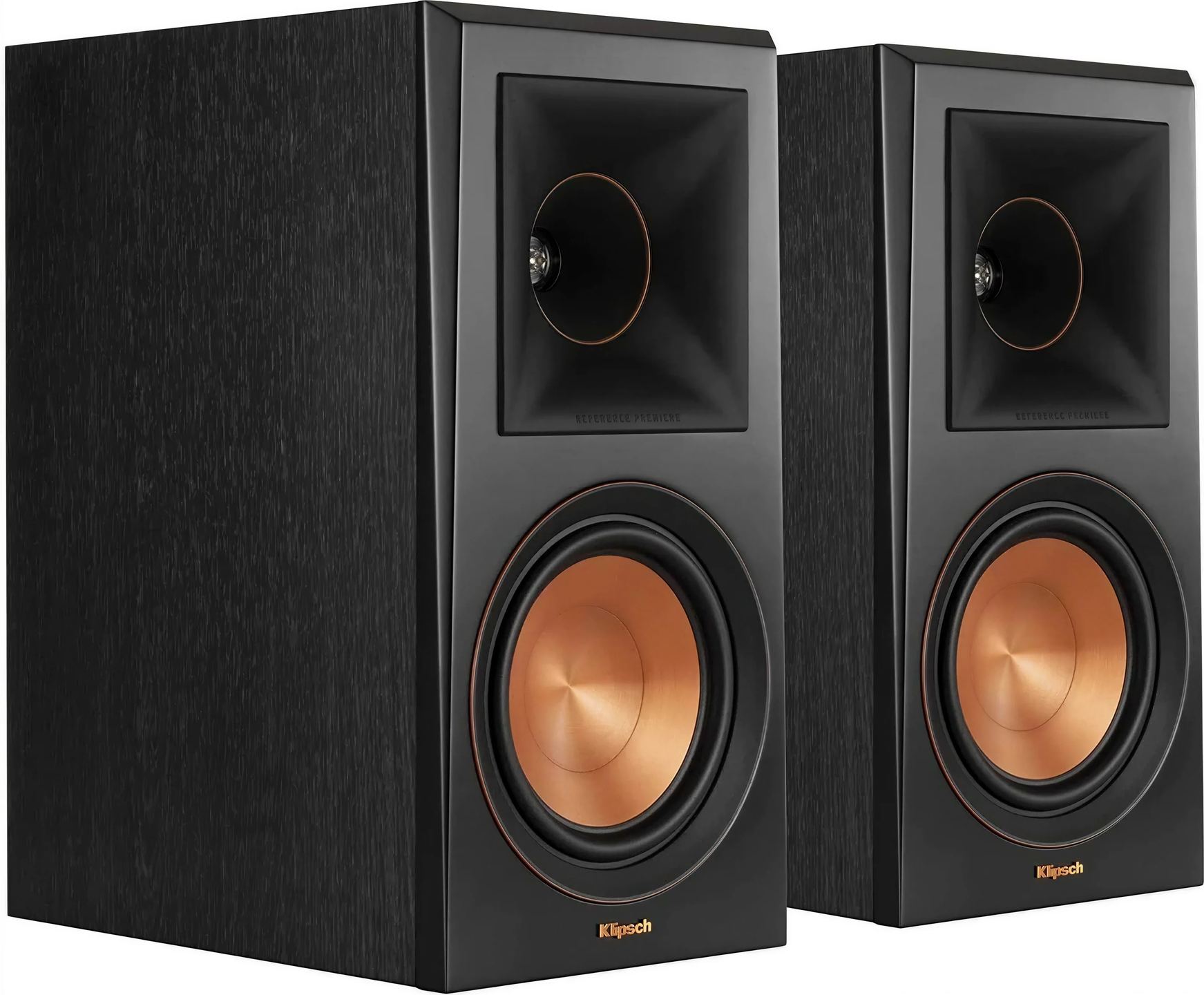
The acoustic horn has been part of the Klipsch signature since the early days of the American brand. The 2018 Reference Premiere range uses this principle in a compact format, with a Tractrix horn-loaded tweeter and a copper-colored woofer-midrange driver. The result is a high-sensitivity bookshelf speaker, equally at ease with modest-powered amplifiers and more muscular home theater setups.
The Tractrix horn and titanium tweeter
At the top, a 25 mm titanium dome tweeter sits in a 90° × 90° Tractrix horn. The horn directs high frequencies toward the listening area rather than letting them disperse onto the walls, which preserves clarity and detail a few meters from the pair of speakers. The horn face, made of silicone composite, limits the resonances typical of this type of loading.
The tweeter uses an LTS (Long Travel Suspension), which controls dome movement to reduce distortion. Its rear chamber is vented: the 2018 version opens this cavity to evacuate standing waves, with a more composed treble than on earlier Klipsch models. The signature remains distinctive, with a crisp attack on transients. Reducing the toe-in of the speakers toward the listening position softens the top end for those who find the treble a bit forward.
The copper-colored Cerametallic woofer-midrange driver
The 16.5 cm woofer-midrange driver uses a Cerametallic cone, a ceramic-and-metal assembly designed for rigidity without weighing down the moving part. A stiffer cone deforms less under stress, which limits distortion in the lower midrange. The copper color comes as much from this surface treatment as from the brand’s visual identity.
The voice coil, with a dual-layer copper wire winding, is mounted on a stamped steel chassis and a magnetic motor sized for efficiency. Bass extends down to 45 Hz, a limit consistent with a bookshelf format: the lowest octaves call for a subwoofer, but the foundation remains firm and well controlled on both music and soundtracks. The crossover point between the two drivers is set at 1500 Hz.
High sensitivity that makes amplifier choice easier
The stated sensitivity reaches 96 dB, a high figure that explains the brand’s reputation. Manufacturer figures remain optimistic, measured under favorable conditions, and real-world sensitivity sits a notch below; it still remains high for a compact two-way speaker. In concrete terms, the RP-600M needs few watts to play loud, which opens the door to low-power amplifiers, including some tube designs. The 8-ohm impedance and a fairly forgiving load make matching with most hi-fi or home theater electronics easier.
MDF cabinet and rear Tractrix port
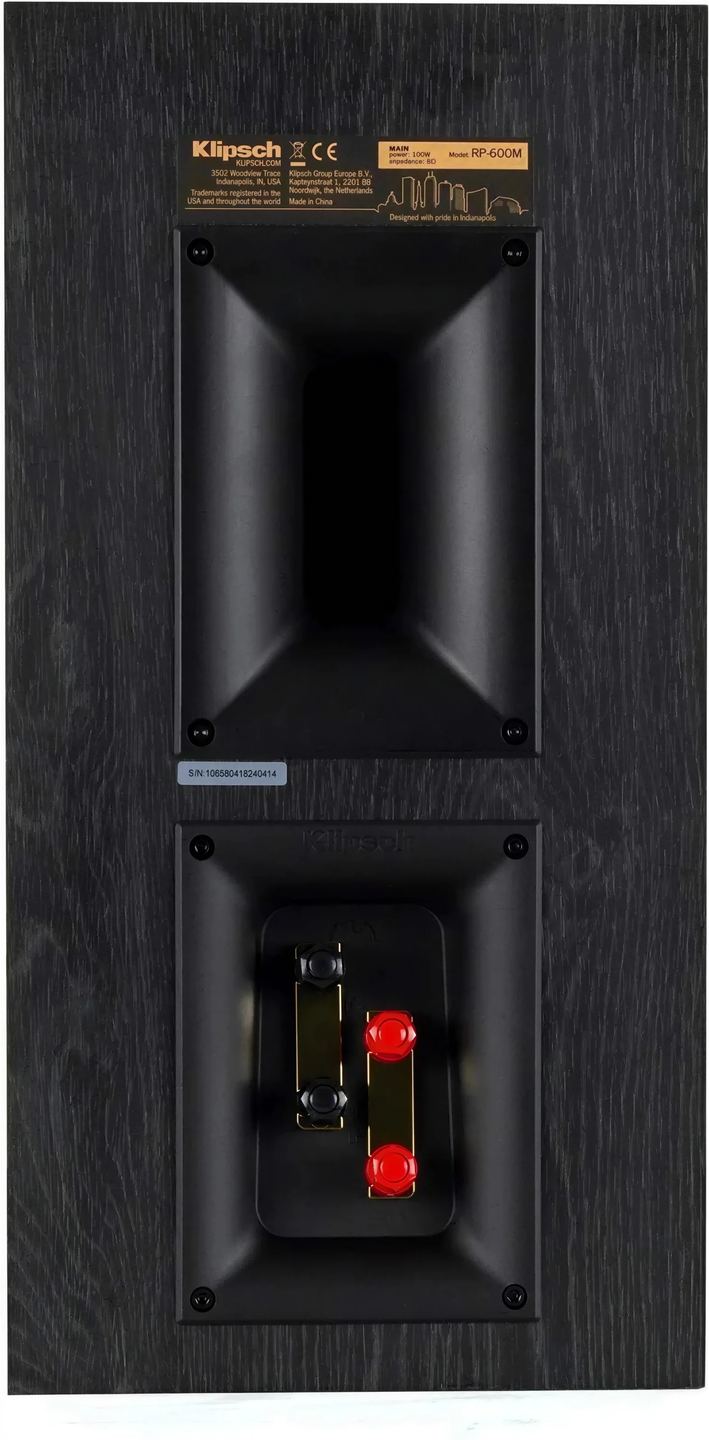
The MDF cabinet features a textured vinyl wood-look finish, here in black. The bass-reflex port opens at the rear and uses the Tractrix profile, a geometry that smooths airflow to reduce chuffing noise at high volume. This rear port means leaving a little space behind the speakers: bass balance depends on the distance to the wall and should be adjusted according to the room.
At the rear, a dual pair of binding posts allows bi-wiring or bi-amplification, with connectors that accept banana plugs, spades, or bare wire. The RP-600M measures 399 mm high, 202 mm wide, and 301 mm deep, and weighs 7.3 kg each: a size that calls for a stable support, whether a dedicated stand or a rigid shelf. Eight rubber pads are supplied for placement on furniture.
What system to install it in
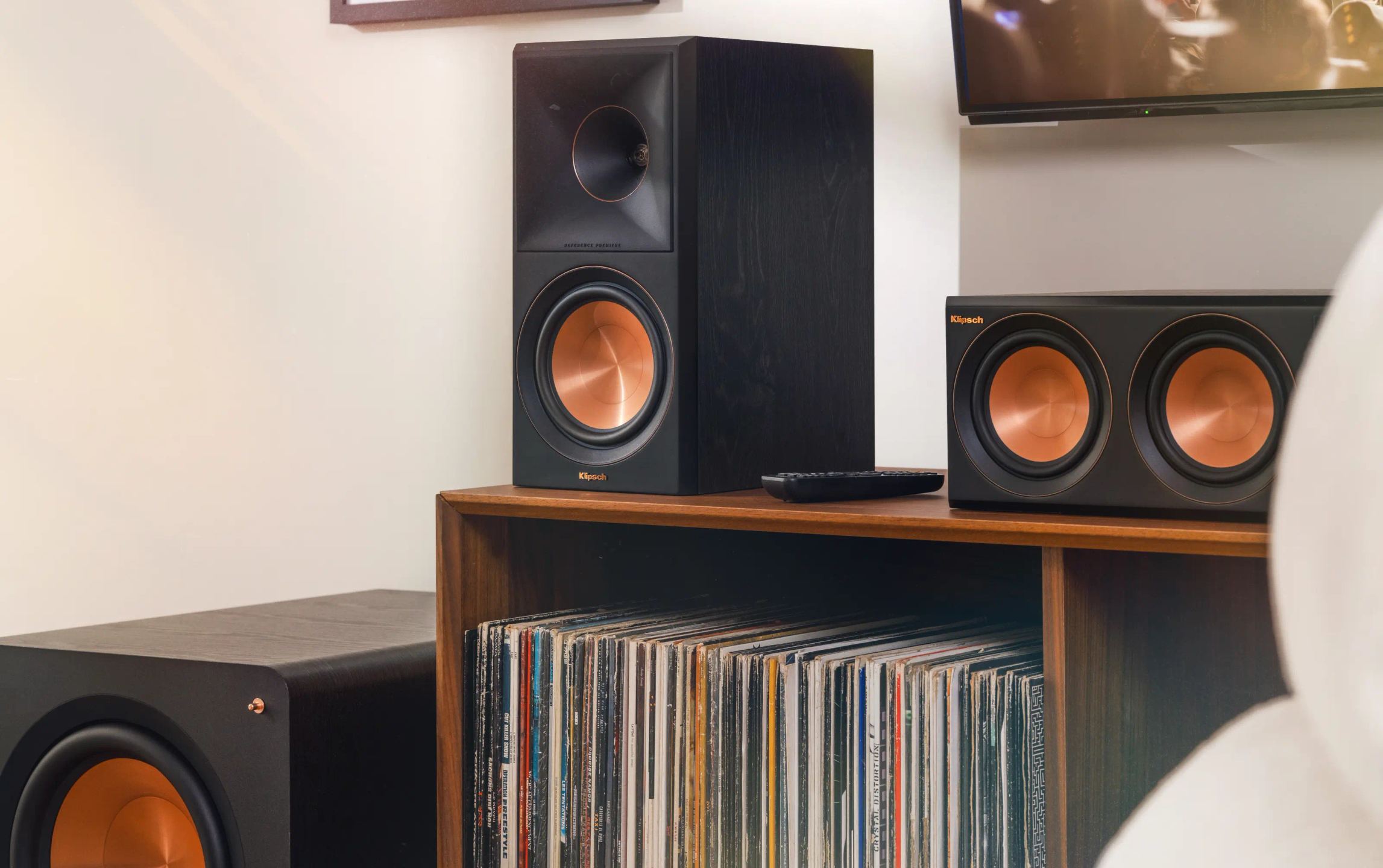
In a stereo living room system, the RP-600M pairs well with a medium-power integrated amplifier and suits music that thrives on dynamics and attack such as rock, jazz, or electronic. Its character emphasizes rhythm and presence rather than warmth. In home theater, it handles the main channel and matches the other Reference Premiere models for a cohesive system, with a subwoofer taking over in the sub-bass. In a small room, careful placement and slight toe-in adjustment are enough to balance the treble.
Tractrix horn with 90° x 90° coverage, composite coating
Woofer: 6.5″ (16.5 cm) Cerametallic cone
Design and cabinet
Cabinet material: MDF
Enclosure type: bass-reflex, rear-firing Tractrix port
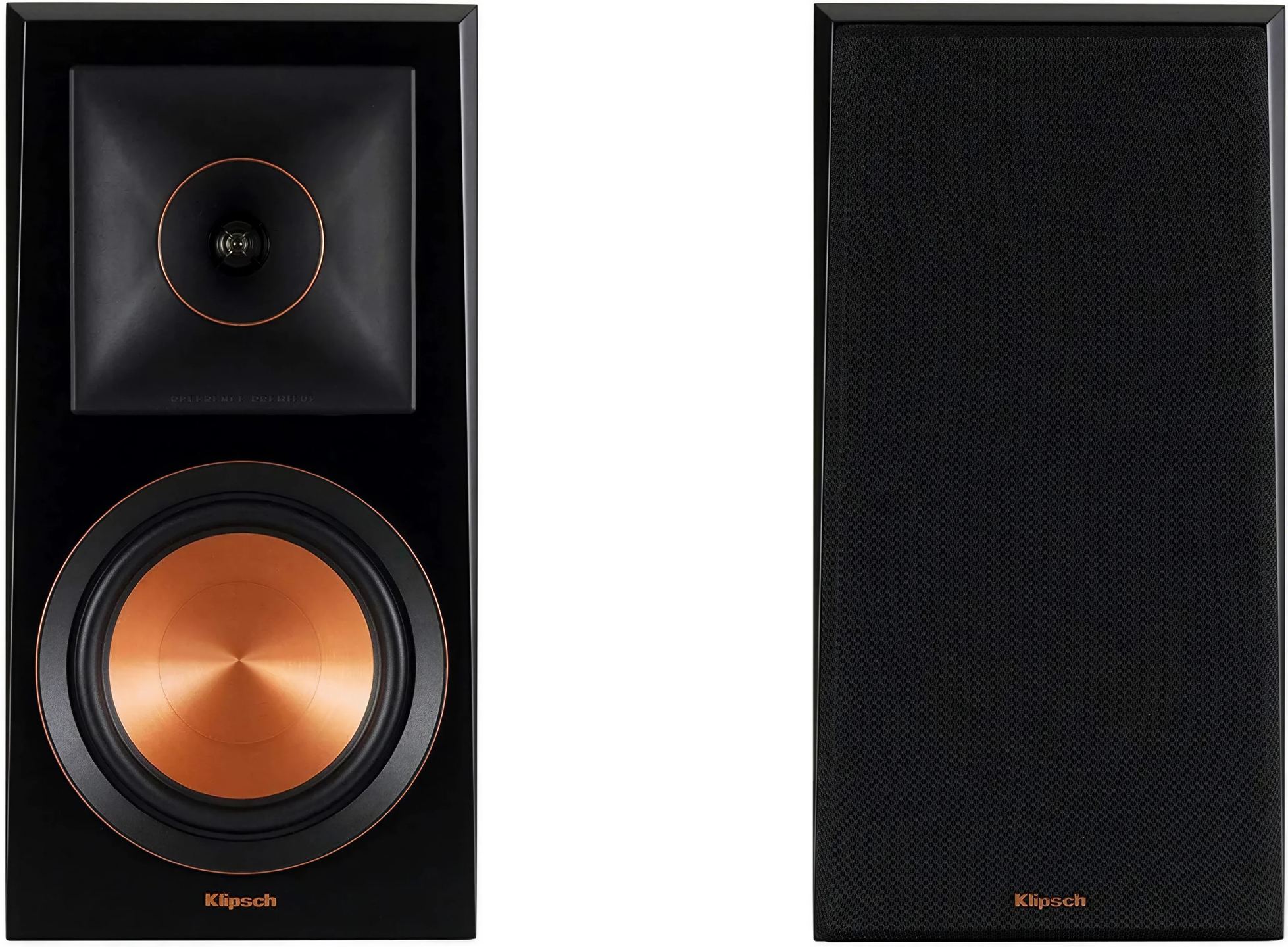
Magnetic grille
Finishes: ebony, walnut
Connectivity
Dual binding posts, compatible with bi-wiring and bi-amping
Dimensions and weight
Height: 39.9 cm
Width: 20.2 cm
Depth: 30.1 cm
Unit weight: 7.3 kg
Included accessories
8 rubber feet
Packaging and shipping
Packaging: pair
Shipping weight (pair): 17.1 kg
Frequently Asked Questions
What amplifier power should I plan for?
+
Thanks to its high sensitivity, the RP-600M requires very little power to deliver a comfortable volume level. An amplifier of around thirty watts per channel is sufficient in a medium-sized room, and the model remains comfortable with more powerful integrated amplifiers or home theater amps. Its 8-ohm load does not require any particular electronics.
Should you add a subwoofer?
+
In music, bass extension down to 45 Hz is sufficient for many listening situations without reinforcement. For movies or to reproduce infra-bass effects, a subwoofer usefully complements the low end of the spectrum. The subwoofer crossover setting should then be adjusted to around 60 to 80 Hz depending on the room.
Can it be placed on a piece of furniture or mounted on the wall?
+
Placement on furniture or on a stand is suitable, provided you keep some space behind the speaker: since the port is on the rear, a wall that is too close boosts the bass and blurs definition. Wall mounting flush against the partition is therefore not recommended; a speaker stand or an open shelf delivers better results.
What’s the difference compared with the RP-500M from the same range?
+
The RP-500M features a smaller 13 cm woofer-midrange driver, whereas the RP-600M steps up to 16.5 cm. The larger diameter delivers fuller bass and slightly higher sensitivity, at the cost of a bulkier cabinet. The rest of the design, including the titanium tweeter with Tractrix horn, follows the same logic.
Are the protective grilles removable?
+
Yes, the front grilles are magnetic and can be removed without any visible pegs, revealing the drivers, including the copper-colored woofer-midrange. Leaving them in place softens the treble very slightly, which can help in a lively room or for extended listening.
User reviews
Albino
Excellent speakers. I am very satisfied with my purchase
Comment from September 21, 2026 — Experience from September 10, 2026
Automatically translated — Show original (Portuguese)
Excelentes colunas de som. Estou muito satisfeito com a sua aquisição
Giancarlo
The speakers sound good to my taste. The bass is sufficiently boosted by the bass reflex and the impedance is 4 ohms, so the amplifier must work with low loads. The crossover seems to emphasize the bass (perhaps too much) and the highs.
Comment from September 18, 2026 — Experience from September 05, 2026
Automatically translated — Show original (Italian)
Le case suonano bene secondo i miei gusti. I bassi sono abbastanza caricati dal bass reflex e l'impedenza è di 4 ohm quindi l'amplificatore deve lavorare su carichi bassi. Il filtro sembra enfatizzare i bassi (forse troppo) e gli alti.
Corrado
Good product, in Klipsch style
Comment from August 17, 2026 — Experience from August 06, 2026
Automatically translated — Show original (Italian)
To better understand our visitors, measure marketing effectiveness and personalise ads, we and our partners use cookies and mobile advertising identifiers on your device. This data makes it possible to display personalised and non-personalised ads and measure their performance. Some cookies, which are technically necessary, are exempt from consent. You can accept those that require your consent, refuse them by clicking "Refuse", or customise your choices via the settings screen.
To find out how Google uses the data collected once you have given your consent, see Google’s Business Data Responsibility site (opens in a new window).
You can change or withdraw your consent at any time via the "Consent and cookies" link. Your choices will apply on our site for 12 months.