Lobsang
Excellent product quality..sounds very good .
Comment from 21 October 2026 — Experience from 4 October 2026
Automatically translated — Show original (Spanish)
Exelente calidad del producto..suena muy bien .



A global reference, What Hifi? is one of the most comprehensive magazines covering Home Cinema and Hifi. The "5 stars" award distinguishes the highest quality products, according to this British magazine.
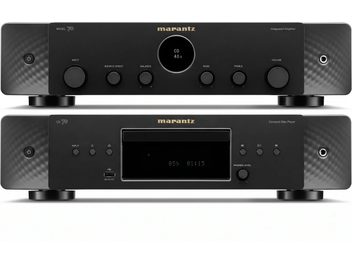
Successor to the CD6007, the CD 70 retains the disc mechanism and Marantz expertise while adopting the visual language used across the rest of the range. It shares its DAC with the MODEL 70 amplifier, adds high-resolution file playback via USB, and includes a dedicated headphone amplifier. Enough to put CDs back at the heart of a hi-fi system without giving up dematerialized sources.
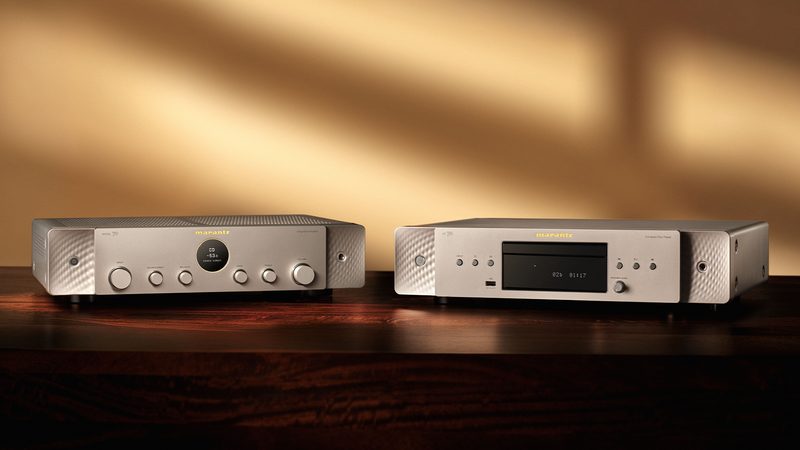
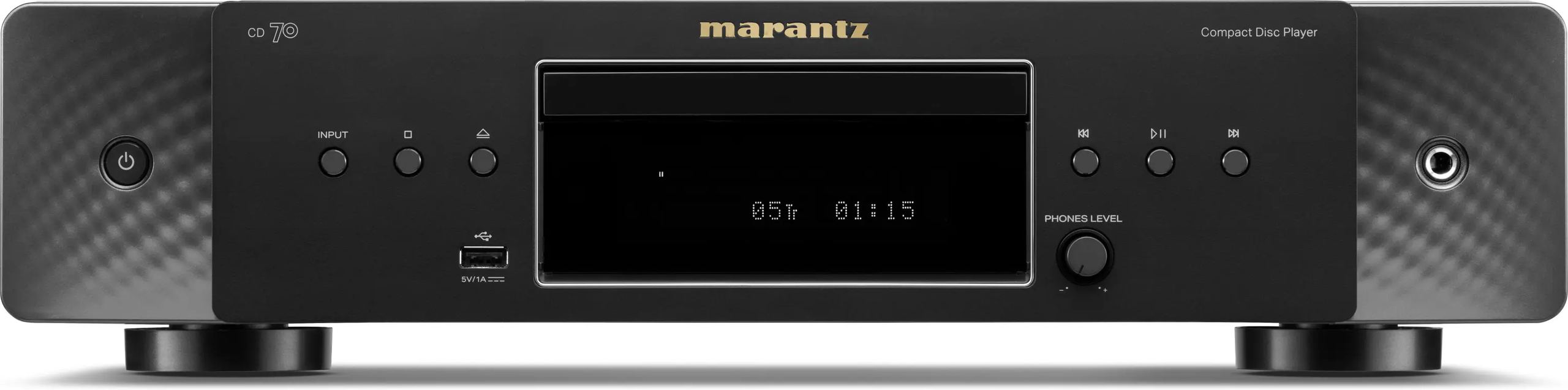
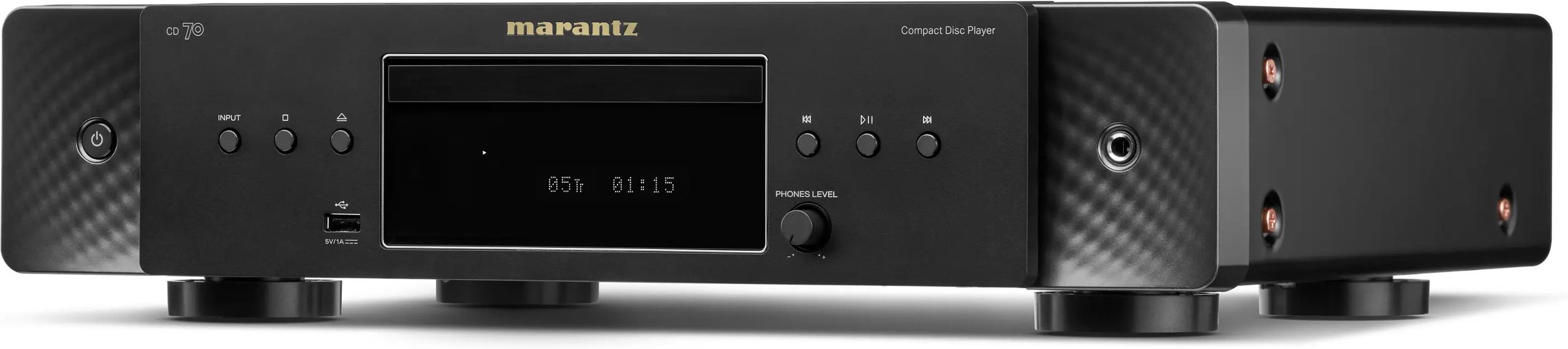
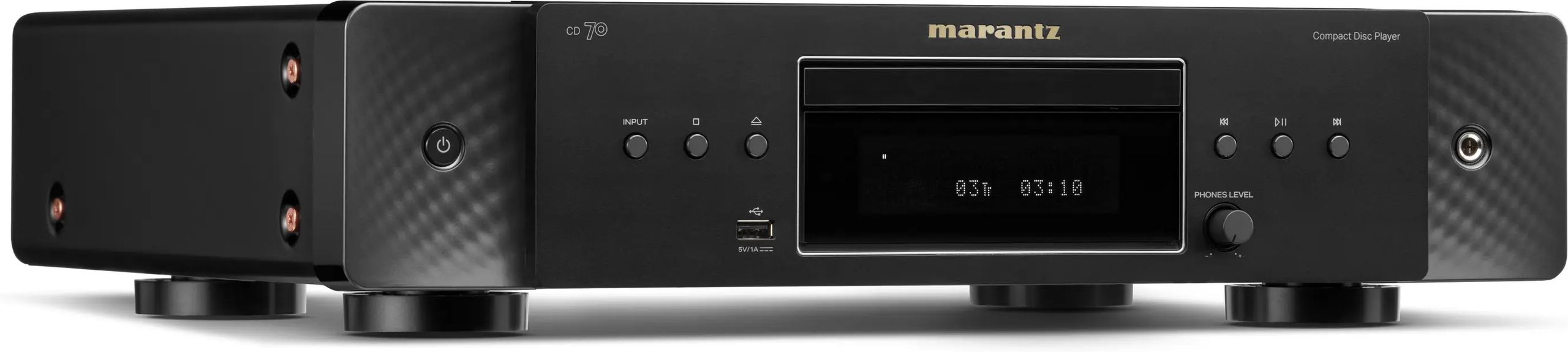
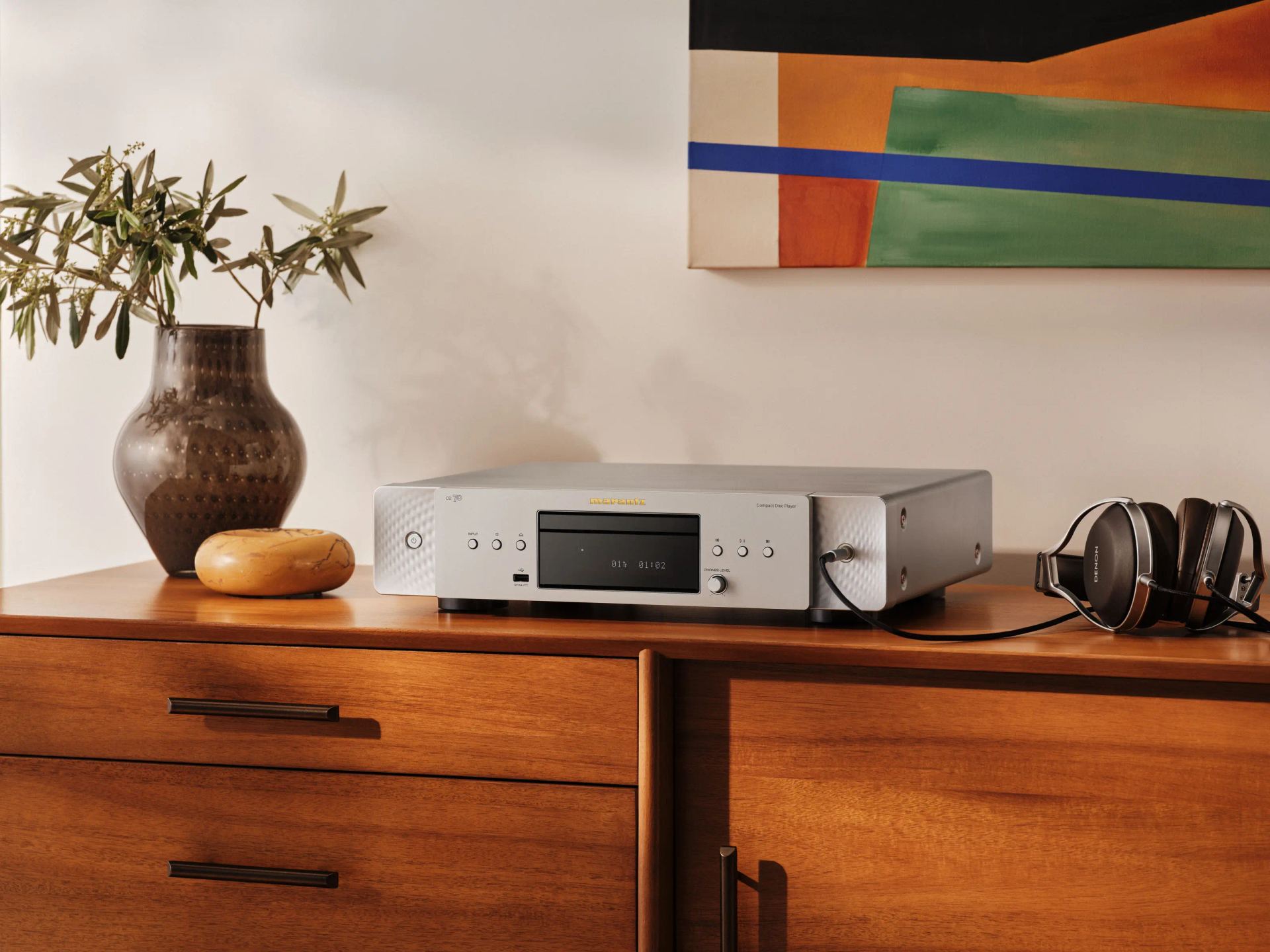
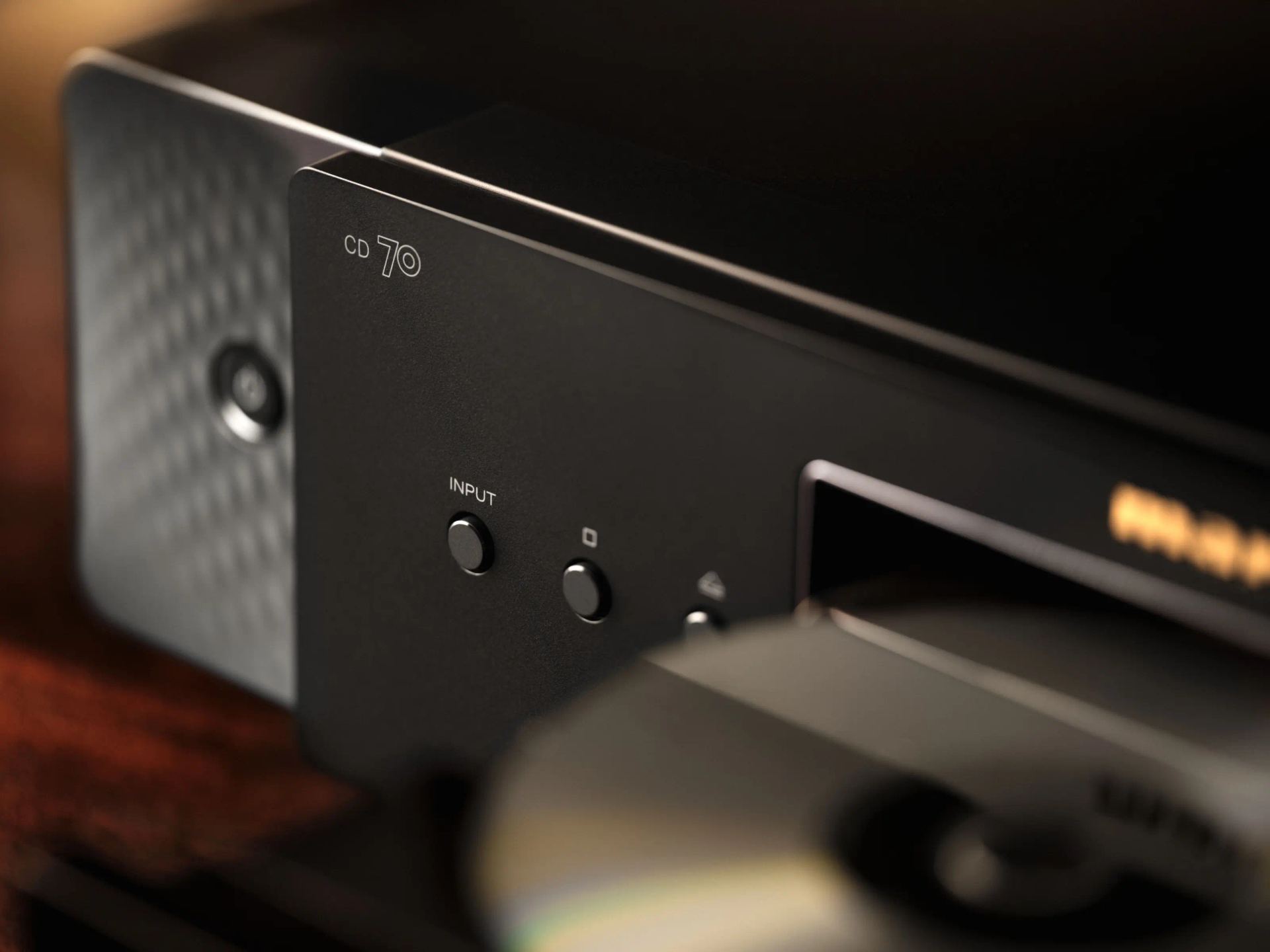
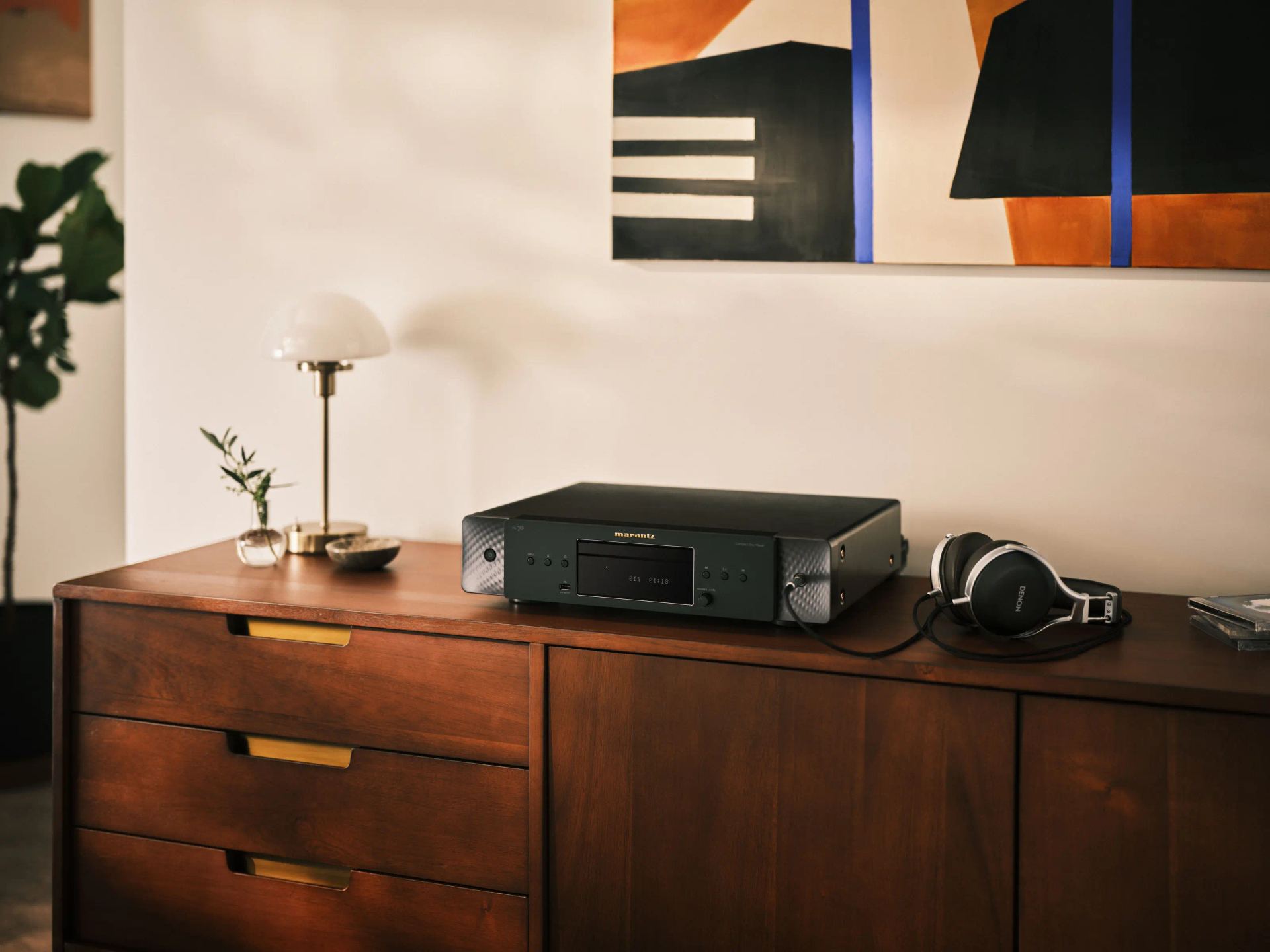
The CD 70 breaks away from the presentation of its predecessor. Aluminum front panel, textured surfaces, VFD display that can be dimmed or switched off to leave only the music: its styling matches the brand’s current hi-fi and home theater electronics. Two finishes are available, black and silver-gold.
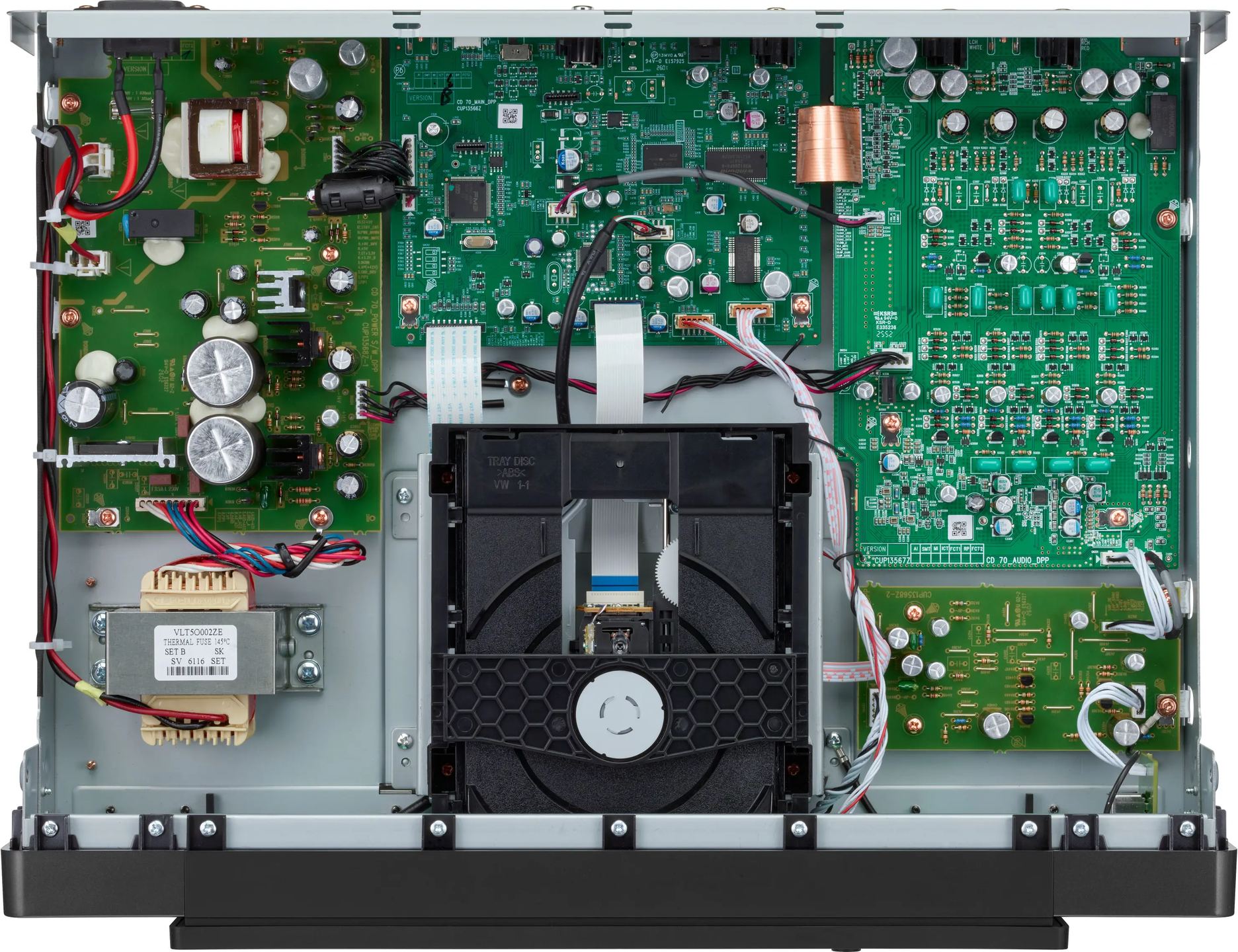
The CD 70 succeeds the CD6007 and retains some of its technical choices, but Marantz announces several internal developments: revised circuit layout, carefully selected components, and a chassis whose structure limits vibrations. Its DAC is shared with the MODEL 70 amplifier, helping create a consistent setup when the two are paired.
After reading the disc comes the most delicate task: converting digital data into a faithful analog signal. The CD 70 entrusts this task to a DAC revised compared with the previous model, supported by HDAM-SA2 modules developed by Marantz. These in-house amplifier circuits replace certain off-the-shelf integrated components and serve as the output stage; the brand reserves them for its most refined devices.
Several digital filters can be selected and slightly alter the sound rendering, allowing listening to be adjusted according to recordings and preferences. On the power supply side, a dedicated transformer and low-noise design preserve the subtlety of recordings. The symmetrical circuit layout follows the same approach.
Marantz states a signal-to-noise ratio of 110 dB, a dynamic range of 100 dB, harmonic distortion of 0.0016%, and channel separation of 98 dB, for a frequency response from 2 Hz to 20 kHz.
On the front panel, a USB-A port accepts a flash drive or external drive and directly plays the files stored on it, without going through a network player or computer. The CD 70 supports FLAC, WAV, AIFF, and ALAC formats, as well as DSD, covering the majority of dematerialized collections in quality higher than that of CD.
One useful detail: this high resolution is available only via USB. Data-format burned discs are not recognized. The tray accepts audio CDs, CD-Rs, and CD-RWs, including those containing MP3 or WMA files, but not SACDs. The USB port remains dedicated to storage: it controls neither an iPhone nor a connected portable player.
Many players make do with a headphone socket connected to a small auxiliary circuit. The CD 70 integrates a headphone amplifier built around an HDAM-SA2 module, the same type of circuit used in the main signal path. The front-panel 6.35 mm jack has its own volume control, and a gain setting accessible through the menu matches the output to headphones with different sensitivities.
The practical result: you can listen through headphones at a good level without connecting a separate amplifier, with sound that remains controlled and dynamic.
CD playback remains sensitive to vibrations, which can disrupt optical reading. The CD 70 addresses this with a double-layer chassis, a reinforcing metal plate, and isolating feet that filter resonances from the furniture or speakers. The disc mechanism, described as high precision, then operates in a more stable environment.
This pursuit of silence continues in the power supply, with separate rectification for the analog and digital sections to limit interference from one circuit to another. The CD 70 weighs 6.5 kg and measures 442 mm wide, a classic hi-fi player format that fits under an amplifier without difficulty.
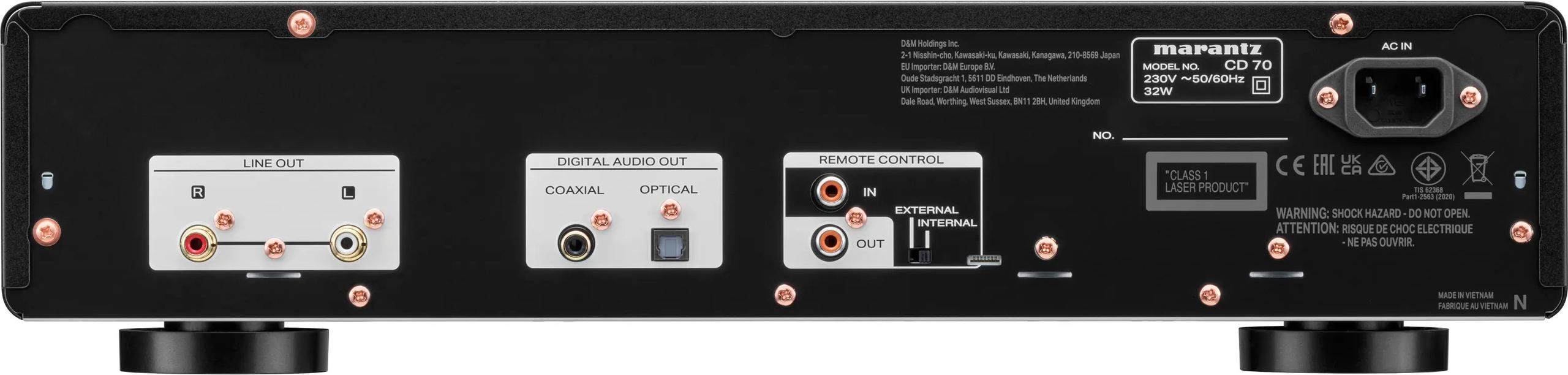
The outputs remain deliberately simple. A pair of gold-plated RCA sockets sends the analog signal to an amplifier, while two digital outputs, one optical and the other coaxial, allow the use of an external DAC if desired. There is no digital input: the CD 70 is a source, not an all-purpose DAC.
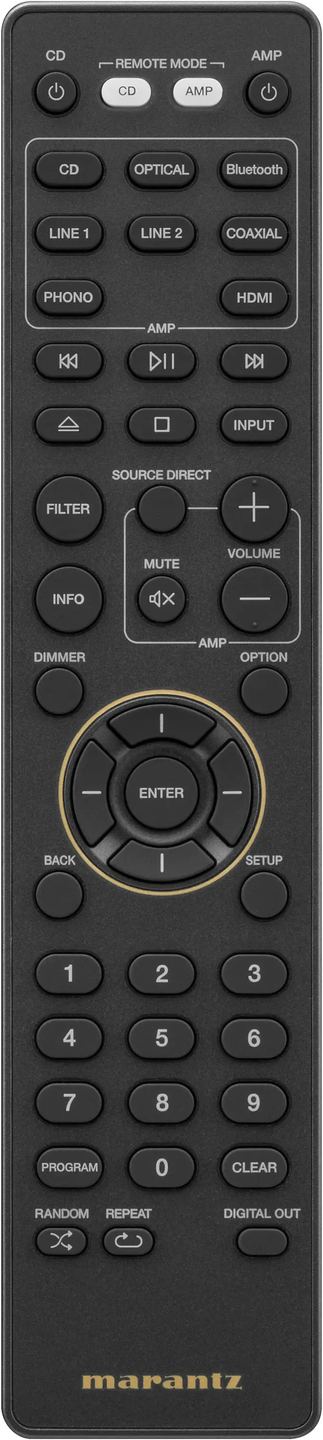
The Marantz D-Bus socket, labeled Remote Control, connects the CD 70 to a compatible Marantz amplifier, such as the MODEL 70, to operate both devices with a single remote control. The power cord is detachable, a detail appreciated by those who like to choose their cables. On a daily basis, shuffle playback, repeat, programming of 25 tracks, and automatic shutdown in the event of inactivity are all available from the supplied remote control.
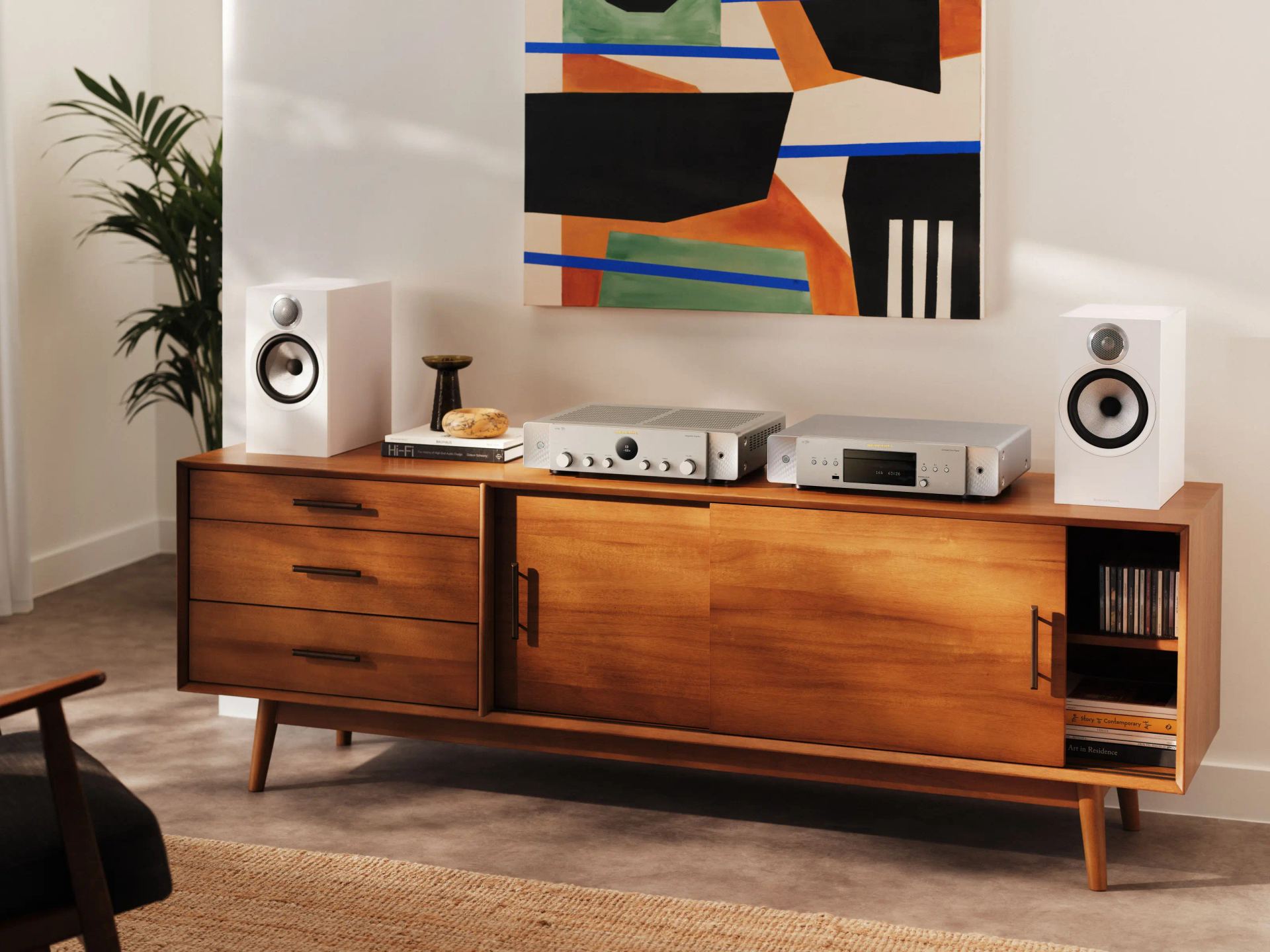
Even without those tweaks, the Marantz CD 70 is an impressive performer for the money. It sounds clear, and punchy, and produces a focused, precise sound. [...] It's a slight change in character compared with the CD6007. We find the older model sounds a touch more relaxed, while the newcomer favours a slightly more upfront and forward approach. [...] It might not be the most relaxed-sounding player Marantz has ever built, but it's still a serious performer for the money.
No. The optical and coaxial sockets are outputs, not inputs, and the front USB port is intended for storage devices. The CD 70 sends sound to an amplifier or converter; it does not receive it.
USB flash drives and external hard drives containing audio files. It does not recognize a connected iPhone, iPod, or portable music player as a playback source.
The RC006PMCD. Connected via the D-Bus jack to a compatible Marantz amplifier, it controls both devices, eliminating the need to juggle multiple remotes.
Approximately 32 W in operation and 0.3 W in standby. An automatic standby mode switches off the device after a period of inactivity.
442 mm wide, 351 mm deep and 109 mm high, weighing 6.5 kg. A standard size that fits into most hi-fi furniture.
The CD 70, the remote control and its batteries, an RCA audio cable, a Remote Control connection cable, the power cord, and a quick start guide.
Lobsang
Excellent product quality..sounds very good .
Comment from 21 October 2026 — Experience from 4 October 2026
Roland
I'm a little disappointed with this CD player: metal casing, well made, good sound, but why a plastic CD tray that seems so flimsy ... especially since it gets stuck halfway in when closing. I can free it by lifting it slightly with my fingertips. A minor adjustment may be needed, but it feels so fragile. My last CD player was an Onkyo "Integra" that gave up on me after 30 years
..
Comment from 25 September 2026 — Experience from 12 September 2026