

EverSolo AMP-F8
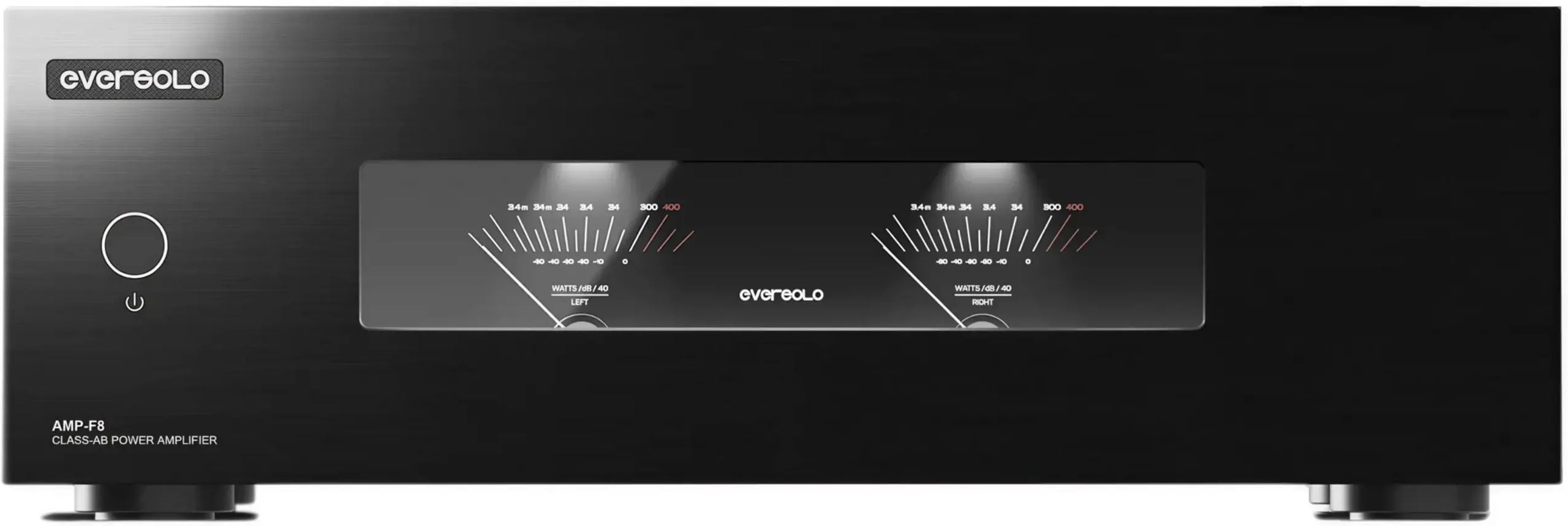
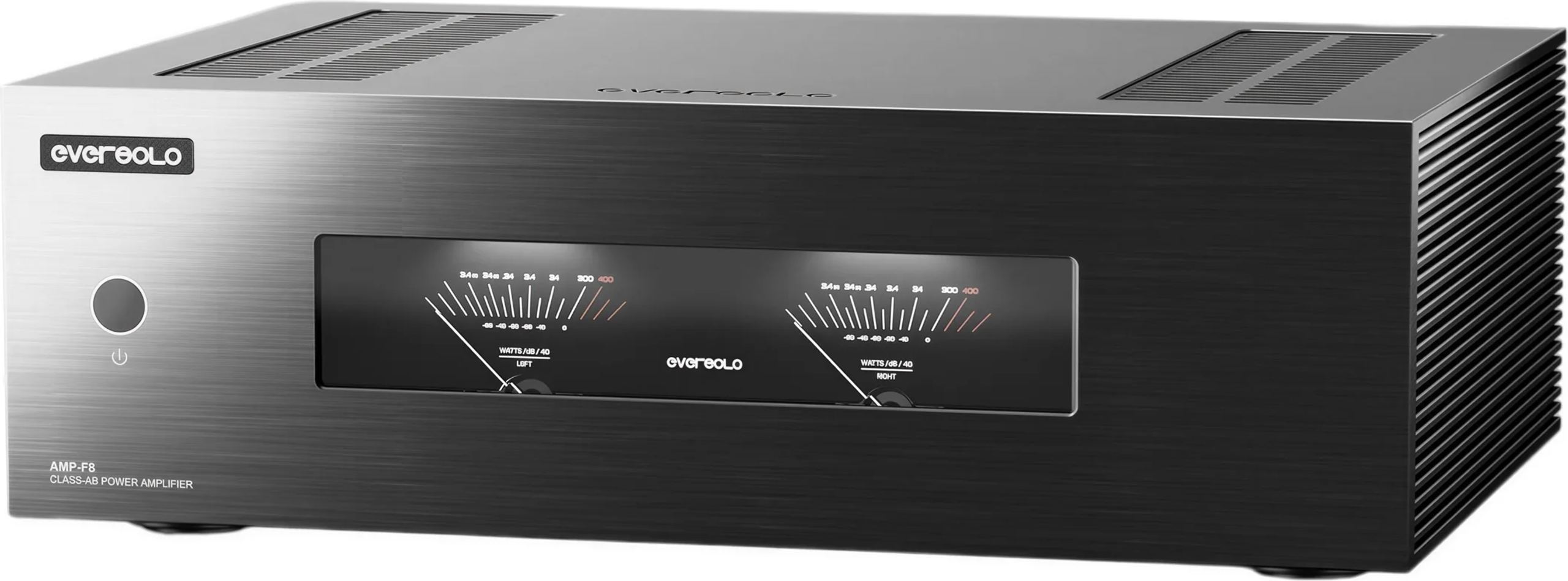
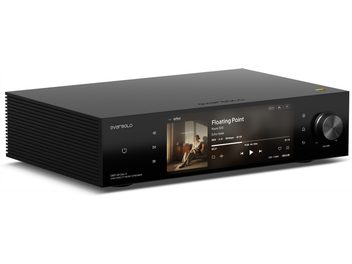
Eversolo AMP-F8, class AB power
Since its beginnings, Eversolo has made a name for itself with network players packed with touchscreens, DSP and room correction. The AMP-F8 takes the opposite approach: no conversion, no network, no volume control. An 800 W toroidal transformer, six MOSFETs per channel, two inputs and two pairs of speaker terminals. It is the brand’s second class AB power amplifier, in a more compact format than the first.

One device, two configurations
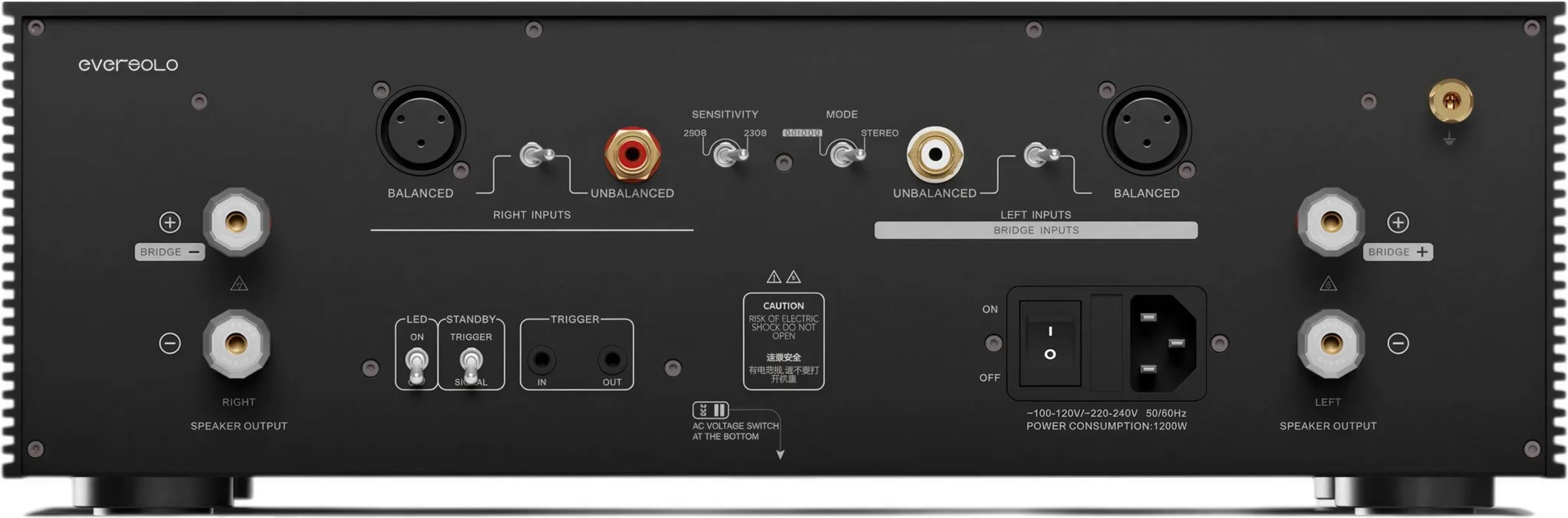
In stereo, the AMP-F8 delivers 180 W RMS per channel into 8 Ω, and 280 W into 4 Ω. A rear-panel switch bridges the two channels: the two stages then operate in opposition on a single output, and power rises to 500 W RMS into 8 Ω. One unit is enough for a complete stereo system. Two units, one per speaker, make a pair of mono blocks.
This step-by-step progression avoids having to sell the amplifier when the speakers become more demanding or the room gets larger. Bridged mode has its trade-off: each stage sees half the impedance presented by the speaker, and Eversolo only publishes a figure for 8 Ω in this configuration. With speakers that drop to 4 Ω or lower, conventional stereo operation remains the safest option.
A power supply built for peaks
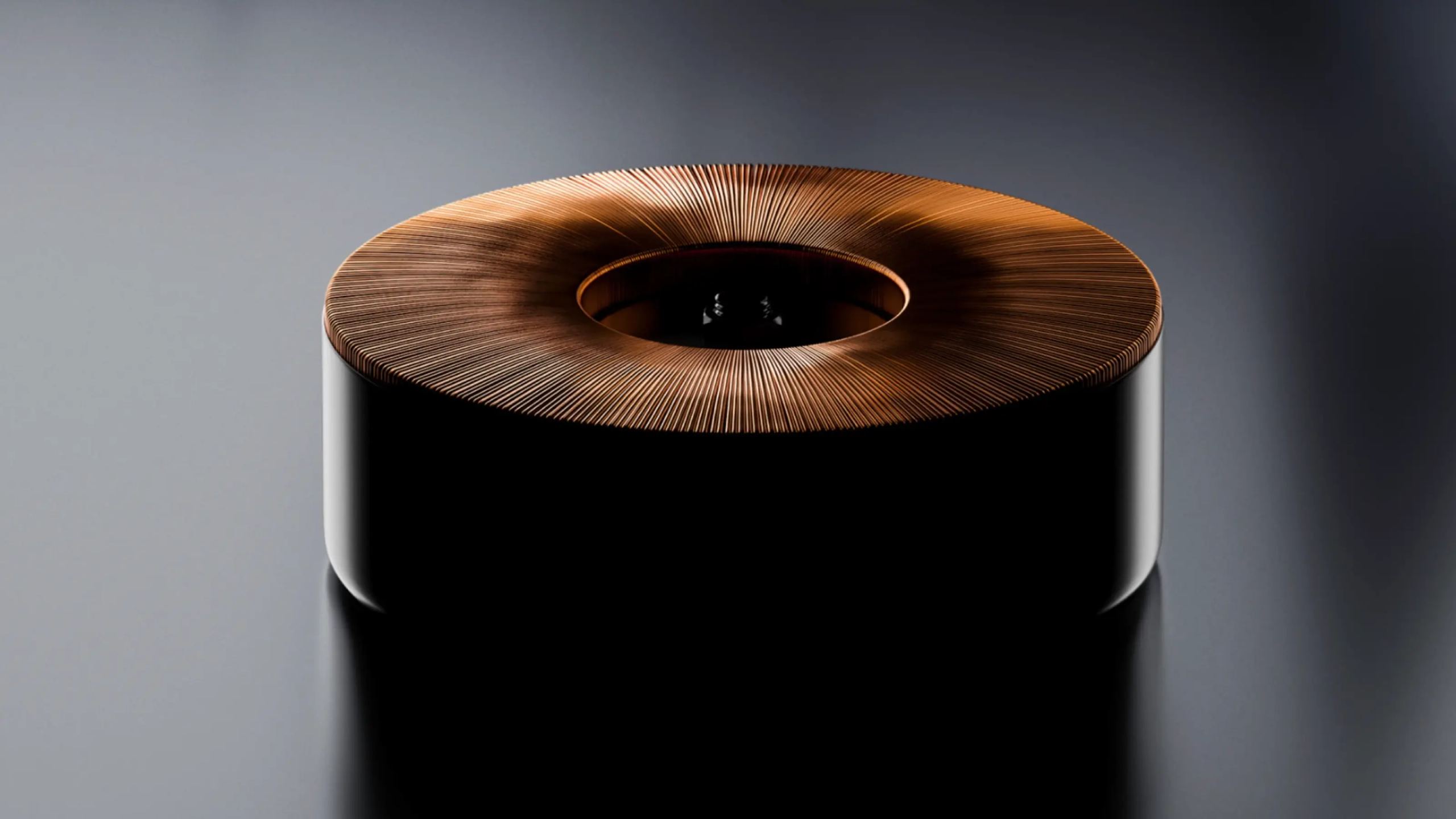
The 800 W toroidal transformer was developed specifically for this device, with separate power supply branches for each channel to limit interactions between channels. It is accompanied by twenty-four high-capacity audio capacitors. Their role is twofold: smoothing the residual ripple of the rectified voltage, and maintaining a current reserve that can be called upon within milliseconds when a transient demands far more than average power. This is where the difference lies between an amplifier that holds its ground on a bass drum attack and one that collapses.
A DC blocking circuit completes the package. Mains voltage often carries a parasitic DC component, produced by household devices that draw power only on one half-cycle. A toroidal transformer is sensitive to this: it begins vibrating mechanically, and the hum can be heard from the cabinet even with the speakers muted. The filter removes this component before the primary winding.
Three pairs of MOSFETs per channel
The output stage is based on three pairs of high-current MOSFETs per channel, or six power transistors on each side, connected in parallel to share the current. Upstream, the symmetrical differential design processes the signal through two branches in opposite phase, cancelling much of the interference common to both, starting with that coming from the power supply. Precision feedback completes the work.
Eversolo claims total harmonic distortion plus noise of 0.003%, an A-weighted signal-to-noise ratio of at least 115 dB, a frequency response from 10 Hz to 30 kHz at ±0.5 dB and crosstalk below -95 dB. The damping factor exceeds 400 into 8 Ω, corresponding to an output impedance below 0.02 Ω: the amplifier offers virtually no resistance to the current returned by the woofer voice coil after an impulse, and the cone stops dead. This figure should be put into perspective, since it is measured at the unit’s terminals: ten metres of 2.5 mm² cable are enough to bring actual damping down to around 50.
Two inputs, two gain levels
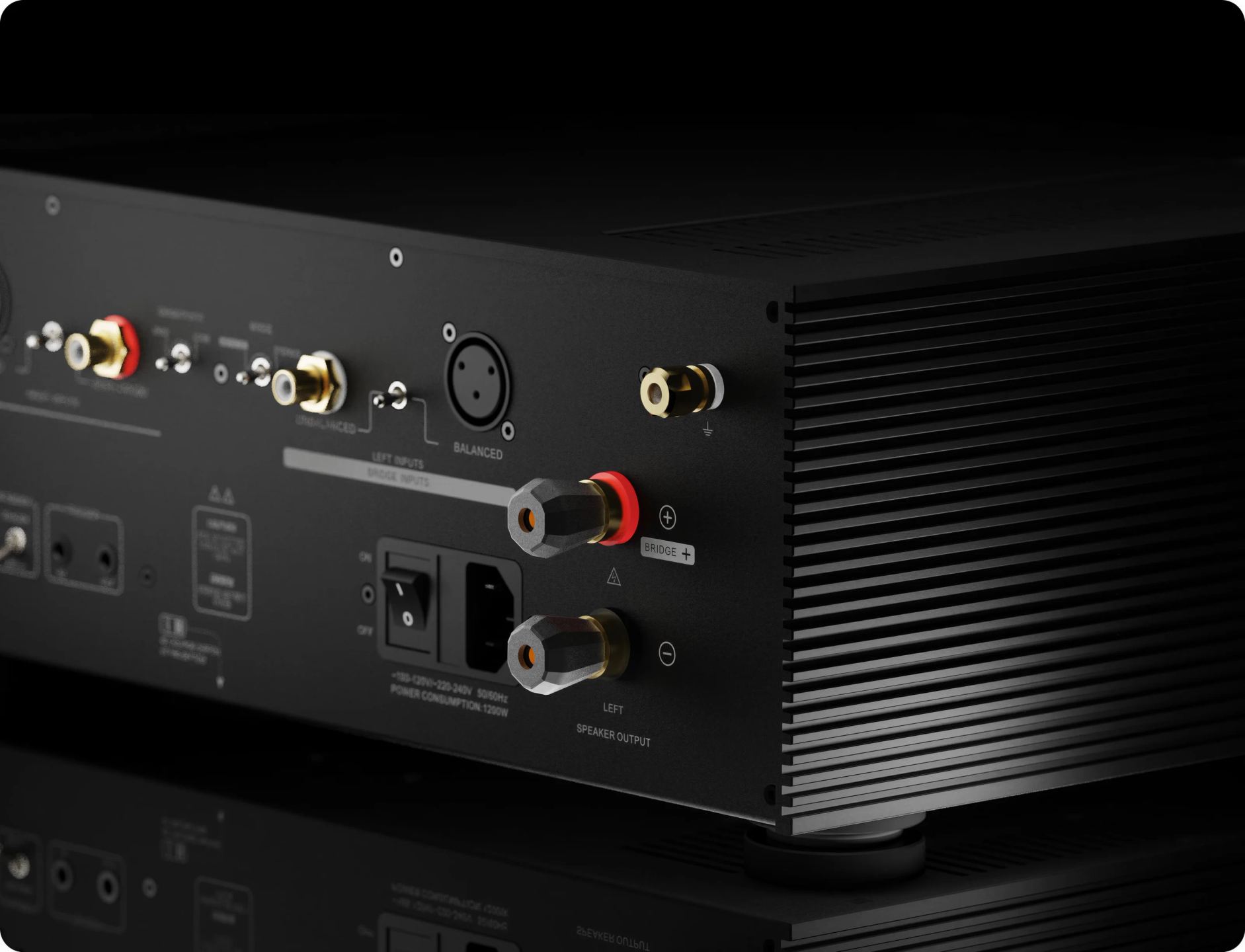
Connectivity is straightforward: one balanced XLR input, one unbalanced RCA input, both at 10 kΩ, and a switch to select either one. No multi-source selector, no volume control. The AMP-F8 requires upstream a preamplifier, a DAC with variable output or a network player that manages the level.
Gain can be set to two positions, 23 or 29 dB. At 23 dB, 5.2 V balanced or 2.65 V unbalanced is required to reach full power; at 29 dB, 2.6 V and 1.3 V are sufficient. The choice is not insignificant. A source with generous voltage output benefits from staying at 23 dB: the amplifier’s background noise rises less, and the preamplifier’s potentiometer operates higher in its range, where channel matching is best. The 29 dB setting accommodates sources with modest output levels. A 12 V trigger input and output links power-on with the rest of the system, while a standby switch and lighting switch complete the rear panel, and the terminals accept spades as well as banana plugs.
A machined chassis and VU meters
The aluminium is CNC-machined and features a sandblasted anodised finish, with shielding against electromagnetic interference and heatsink side panels. The proportions are unusual for this level of power: 265 mm wide, 388 mm deep, 119 mm high, and 15.9 kg on the scales. Narrow and deep, the AMP-F8 takes up less width than a traditionally sized device, but requires a sufficiently deep cabinet, and two units side by side need a 53 cm shelf.
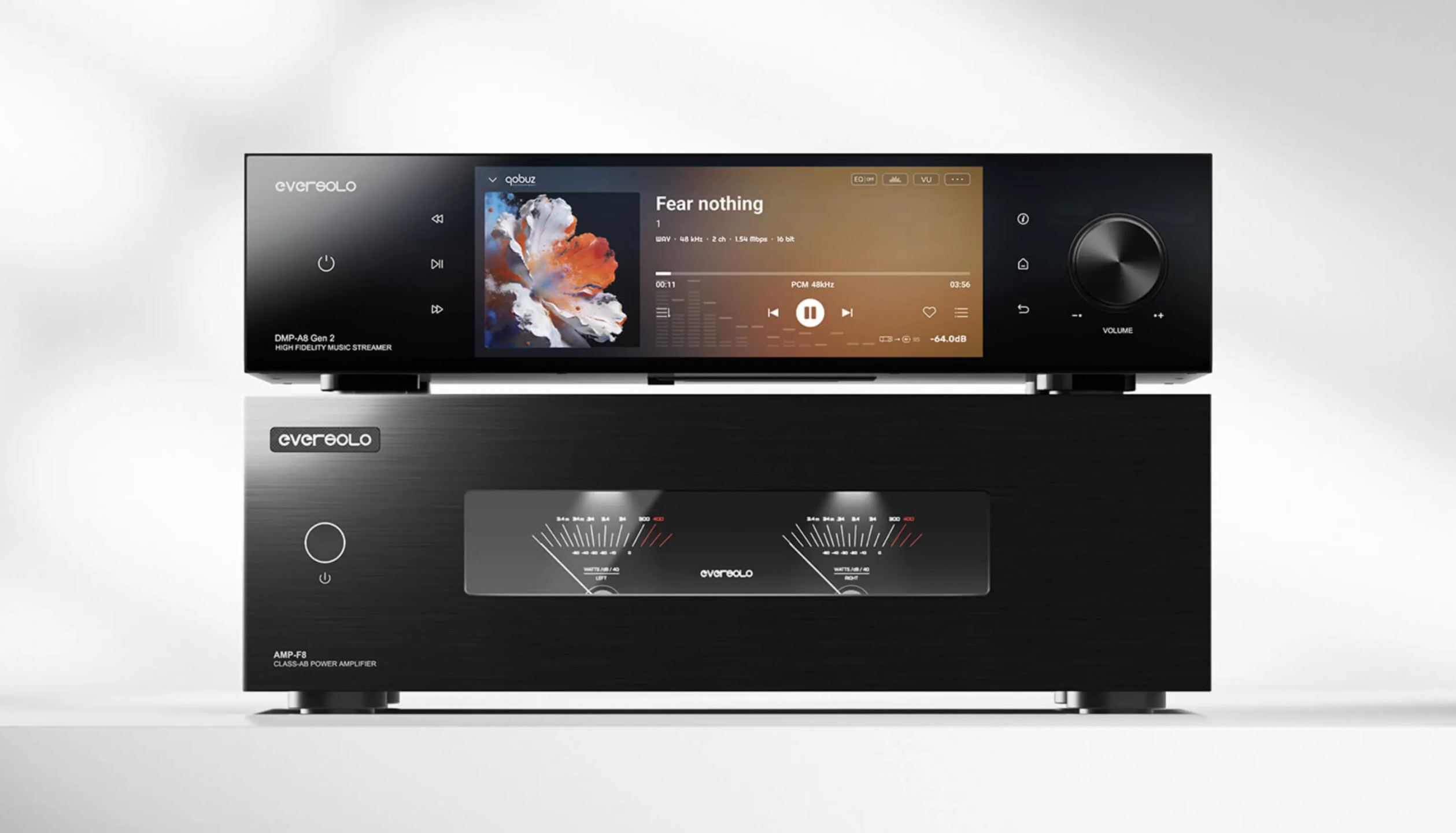
On the front panel, two backlit analogue VU meters track the level in real time, and their lighting can be switched off from the rear when the needles become distracting during a film. Class AB dissipates a significant share of energy as heat, even at idle, and maximum rated power consumption reaches 1200 W. Cooling is passive, without a fan: an enclosed cabinet should be avoided, and clear space above and at the sides is preferable.
Its place in the Eversolo range
Three power amplifiers coexist in the catalogue. The class D AMP-F2 is based on an NS600 module developed with Starke Sound and weighs in at 3.65 kg. The AMP-F10 is the larger class AB sibling, with a 1000 W linear power supply featuring two independent channels, five pairs of MOSFETs per channel, 200 W into 8 Ω, 320 W into 4 Ω and 650 W bridged, weighing 18 kg and measuring 430 mm wide.
The AMP-F8 fits between the two, and not only in terms of power. Its claimed distortion, at 0.003%, is lower than the 0.008% of the higher model, while its damping factor remains behind, at more than 400 versus more than 600. Eversolo also does not publish a figure into 2 Ω for the AMP-F8, whereas the AMP-F10 claims 450 W per channel. These differences should be read with caution, as measurement conditions are not always identical from one specification sheet to another, but they outline two personalities: the more compact model targets finesse and reduced footprint, while the more imposing one targets current delivery into difficult loads.
Technical Specifications
General Information
- Type: stereo power amplifier
- Amplification technology: Class AB
Output Power
- Stereo mode
- 180 W RMS per channel into 8 Ω
- 280 W RMS per channel into 4 Ω
- Bridged mode (bridge)
- 500 W RMS into 8 Ω
Audio Performance
- Frequency response: 10 Hz – 30 kHz (±0.5 dB)
- Signal-to-noise ratio: ≥ 115 dB (A)
- Total harmonic distortion + noise (THD+N): 0.003%
- Damping factor: > 400
- Crosstalk: ≤ -95 dB
Amplification Architecture
- High-fidelity Class AB amplification
- Balanced differential architecture
- Three pairs of high-current MOSFETs per channel
- Precision feedback
- Excellent linearity across the entire operating range
Internal Power Supply
- 800 W linear toroidal transformer
- Independent power supplies for each channel
- 24 high-capacity audio capacitors
- DC blocking circuit (DC Blocker)
- Reduced vibration and electrical interference
Sound Quality
- Faithful reproduction of the original recording
- Very low background noise
- Excellent channel separation
- Powerful, fast and perfectly controlled bass
- Great dynamic headroom
- Precise stereo imaging
- Natural and detailed timbre
Connectivity
- Audio inputs
- 1 × balanced XLR
- 1 × unbalanced RCA
- Input impedance
- XLR: 10 kΩ
- RCA: 10 kΩ
- XLR input sensitivity
- 5.2 V (23 dB gain)
- 2.6 V (29 dB gain)
- RCA input sensitivity
- 2.65 V (23 dB gain)
- 1.3 V (29 dB gain)
- Premium speaker terminals
Design and Chassis
- CNC-machined aluminum chassis
- Sandblasted anodized finish
- Shielding against electromagnetic interference
- Optimized heat dissipation
- Front-panel backlit analog VU meters
Compatibility
- Hi-Fi preamplifiers
- DACs with volume control
- Network players
- Stereo Hi-Fi systems
- Bookshelf and floorstanding speakers
- High-power mono installation via bridged mode
Power Supply
- Supply voltages: 100 to 120 V / 60 Hz, 220 to 240 V / 50 Hz
- Maximum power consumption: 1200 W
Dimensions and Weight
- Dimensions (W × D × H): 265 × 388 × 119 mm
- Net weight: 15.9 kg
- Gross weight: 18.6 kg
Included Accessories
- Power cable
- Trigger cable
- User manual
Frequently Asked Questions
Is a preamplifier required to use the AMP-F8?
You need an upstream component capable of adjusting the level, but not necessarily a preamplifier in the strict sense. A converter with variable output or a network player with volume control performs the same function, which corresponds to how the brand’s sources operate. Connecting a fixed-level source would mean listening at full power all the time.
How do you switch to bridged mode, and what do you need to connect two mono blocks?
Switching is done via a switch on the rear panel, and the terminals have markings specific to bridged operation. For two mono blocks, you need two AMP-F8 units, one per speaker, and a source or preamplifier with a left output and a right output: each channel feeds one unit. Check the speaker wiring before powering back on; the terminals used are no longer the same.
Can it be used for the front channels of a home theater setup?
Yes, provided that the home theater processor or amplifier has preamplified outputs for the front channels. Level adjustment and delay remain managed upstream, with the AMP-F8 providing amplification only. The processor’s automatic calibration must be rerun after connection, as the sensitivity of the front channels changes.
Is it better to connect it via XLR or RCA?
Both inputs have the same 10 kΩ impedance. The balanced XLR connection rejects interference picked up along the cable, which matters primarily over long distances or in an electrically noisy environment. Over one meter between two devices placed in the same cabinet, the difference is minimal. However, the sensitivity differs between the two inputs, so this must be taken into account when choosing the gain setting.
Is it suitable for low-impedance speakers?
In stereo, the manufacturer specifies a 4 Ω load at 280 W per channel, which covers the vast majority of floorstanding speakers on the market, including those whose impedance drops below the nominal value over part of the frequency range. No rating is published below 2 Ω. For a speaker known to be difficult to drive and rated at 4 Ω or less, stereo operation is preferable to bridged mode.
Do VU meters provide a reliable measurement of power?
These are needle level meters whose mechanical inertia smooths out the briefest peaks. They accurately reflect the average level and dynamics of a track, but much less so the peaks of a few milliseconds that actually place demands on the power supply. Their reading remains indicative, and their appeal lies as much in the life they bring to the front panel as in level monitoring.
- Eco-contribution included in the sale price.
- GTIN / EAN: 6975200360268




