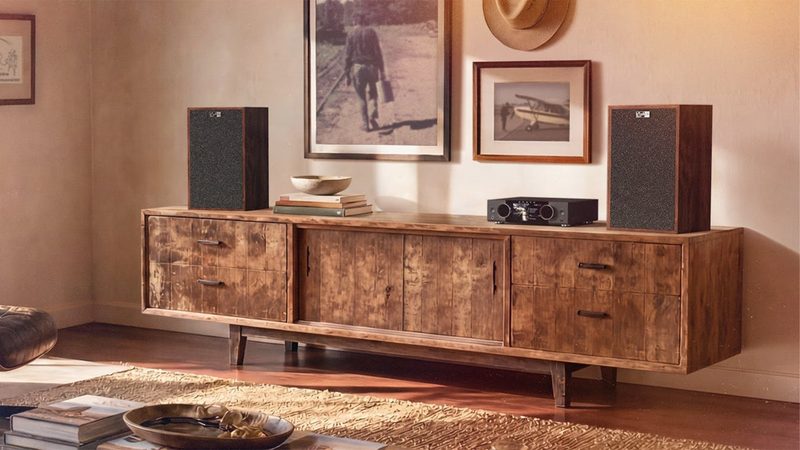
Klipsch Black Rebellion (pack of 2)


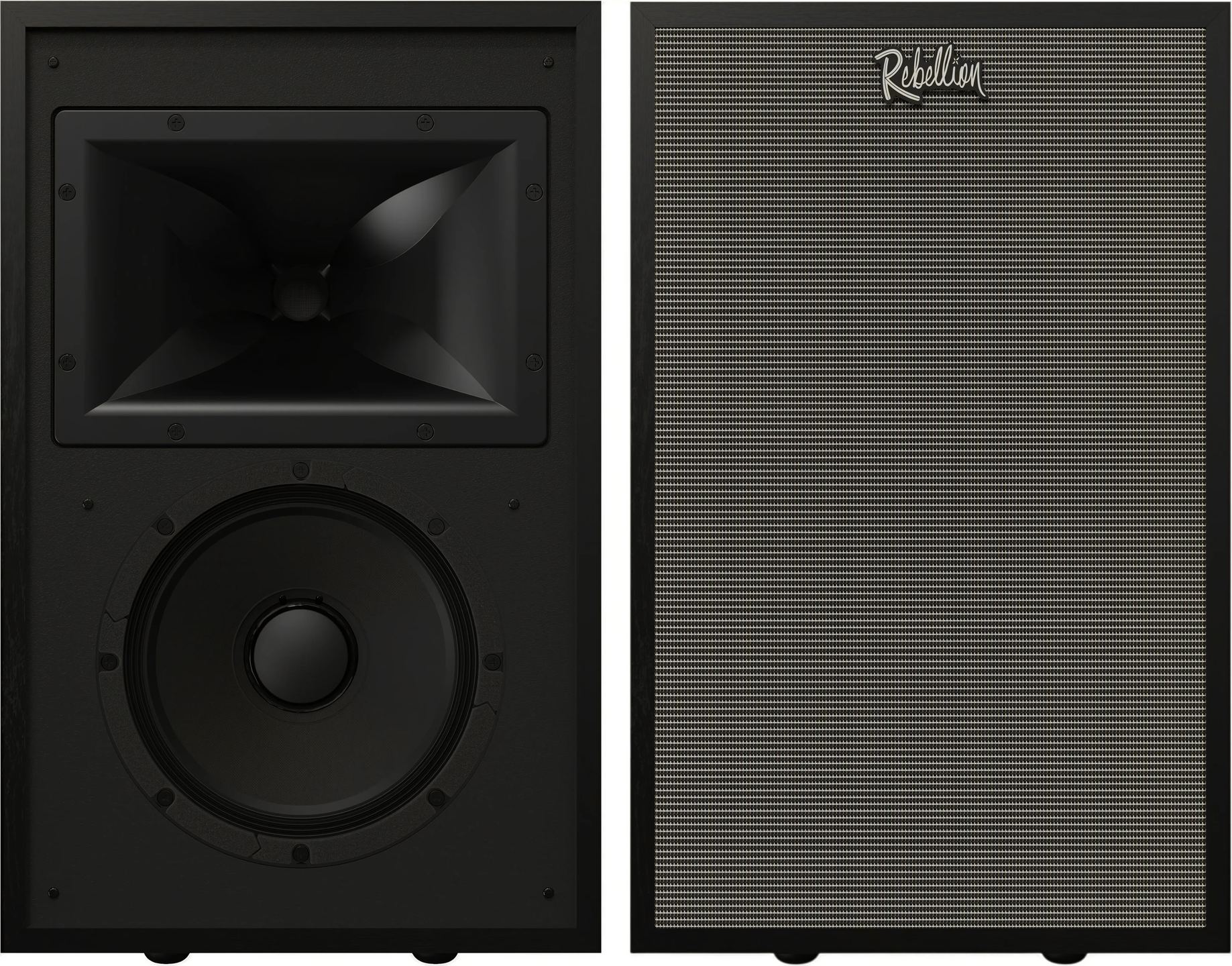
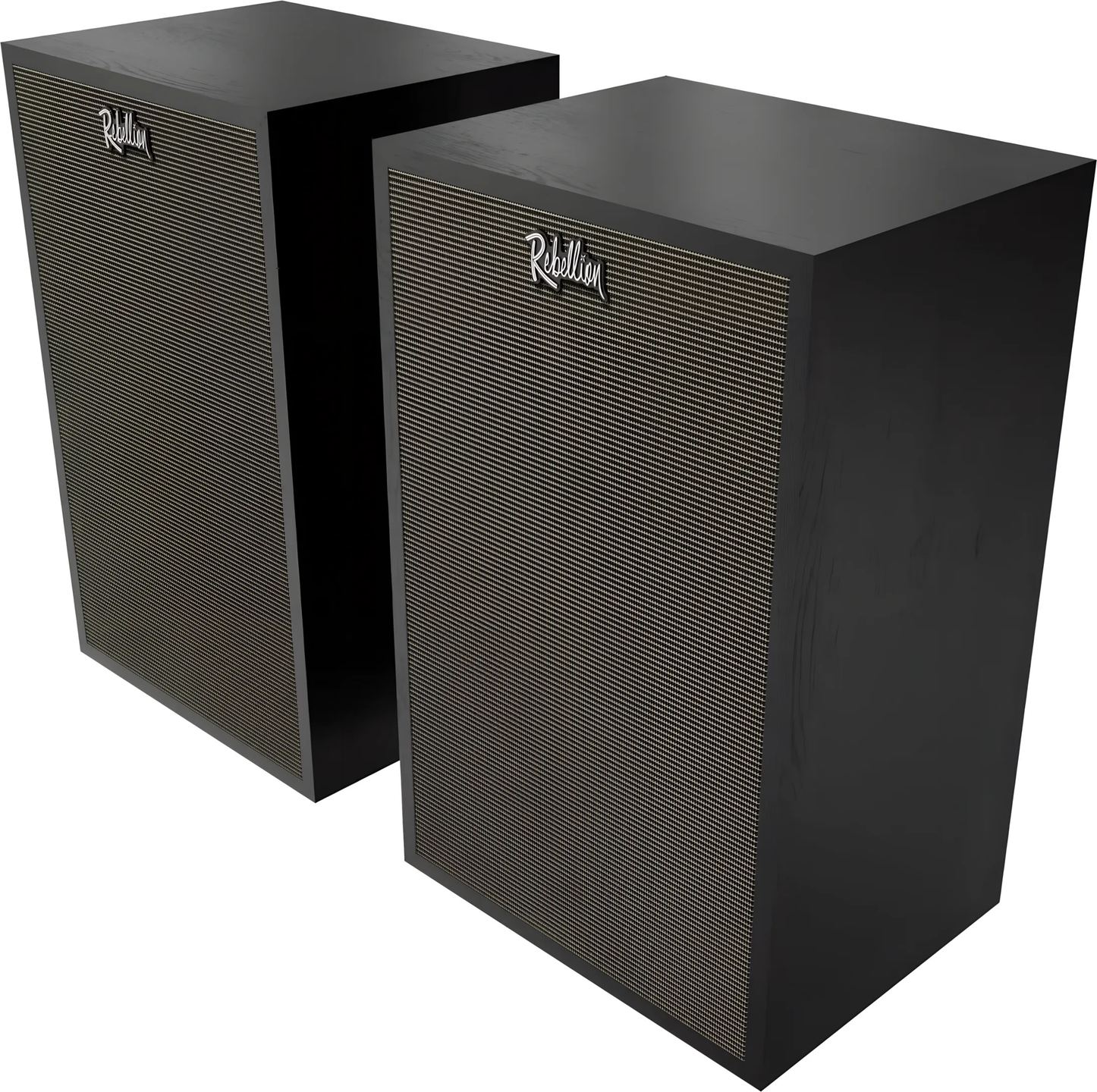
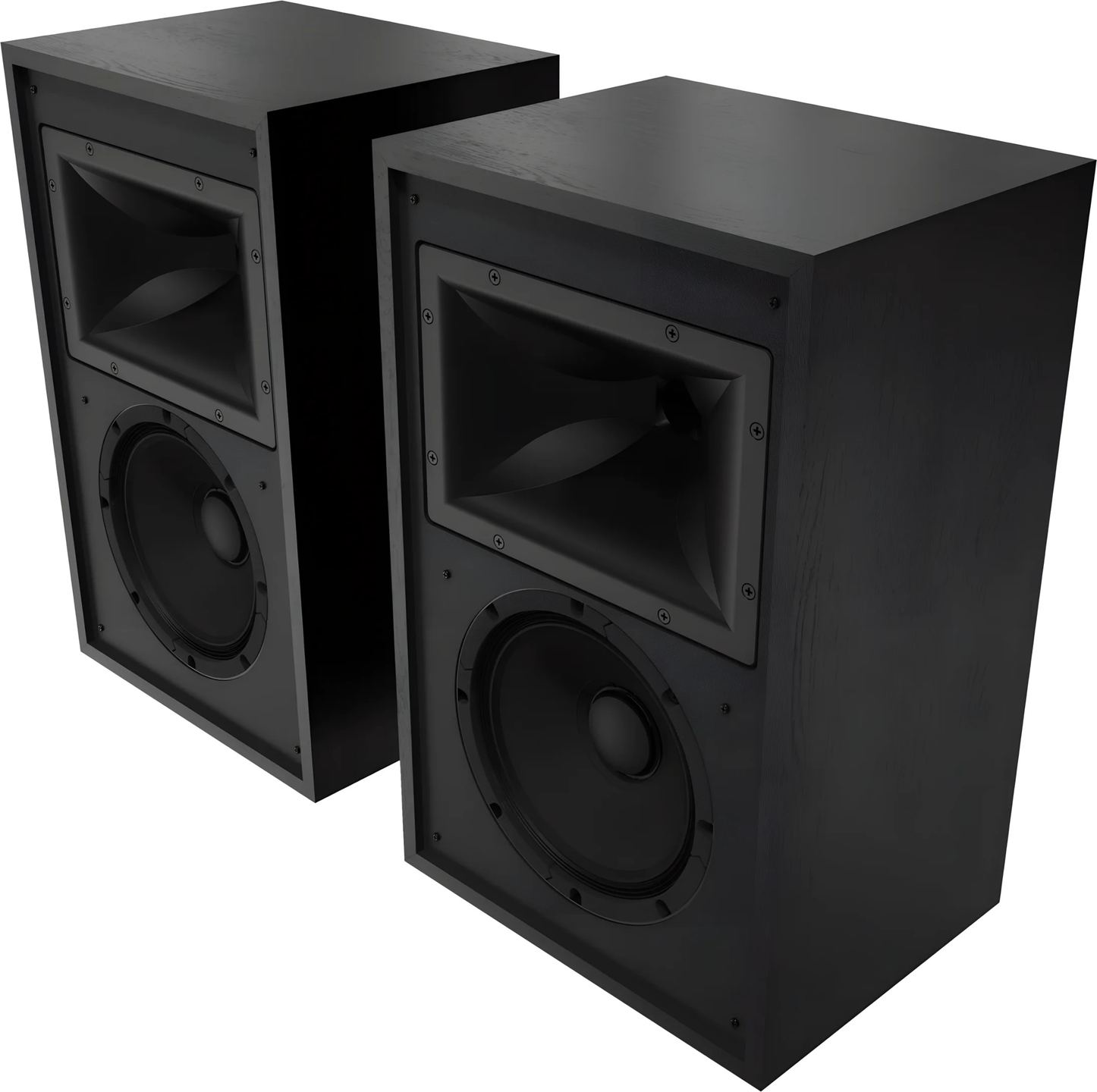
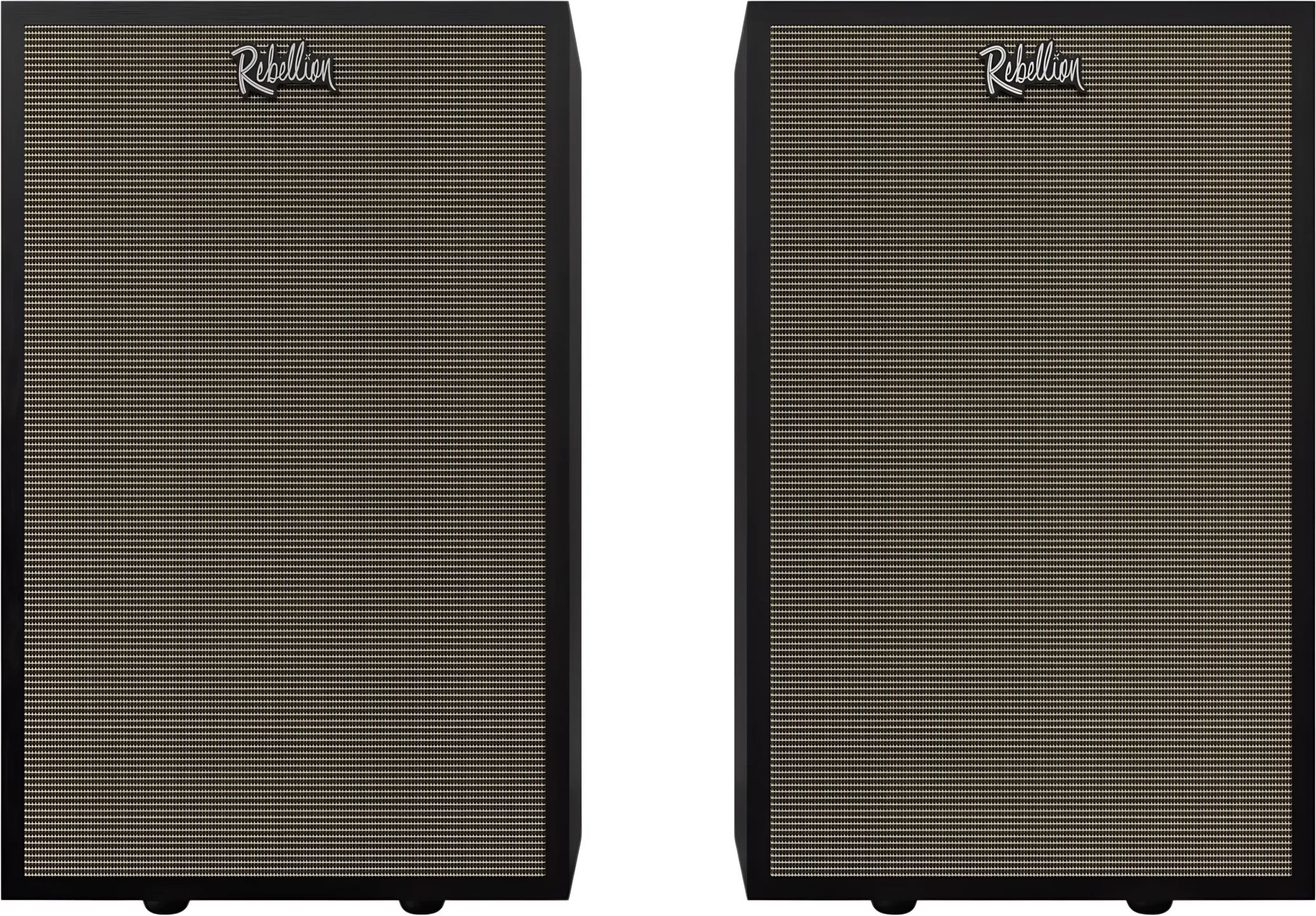
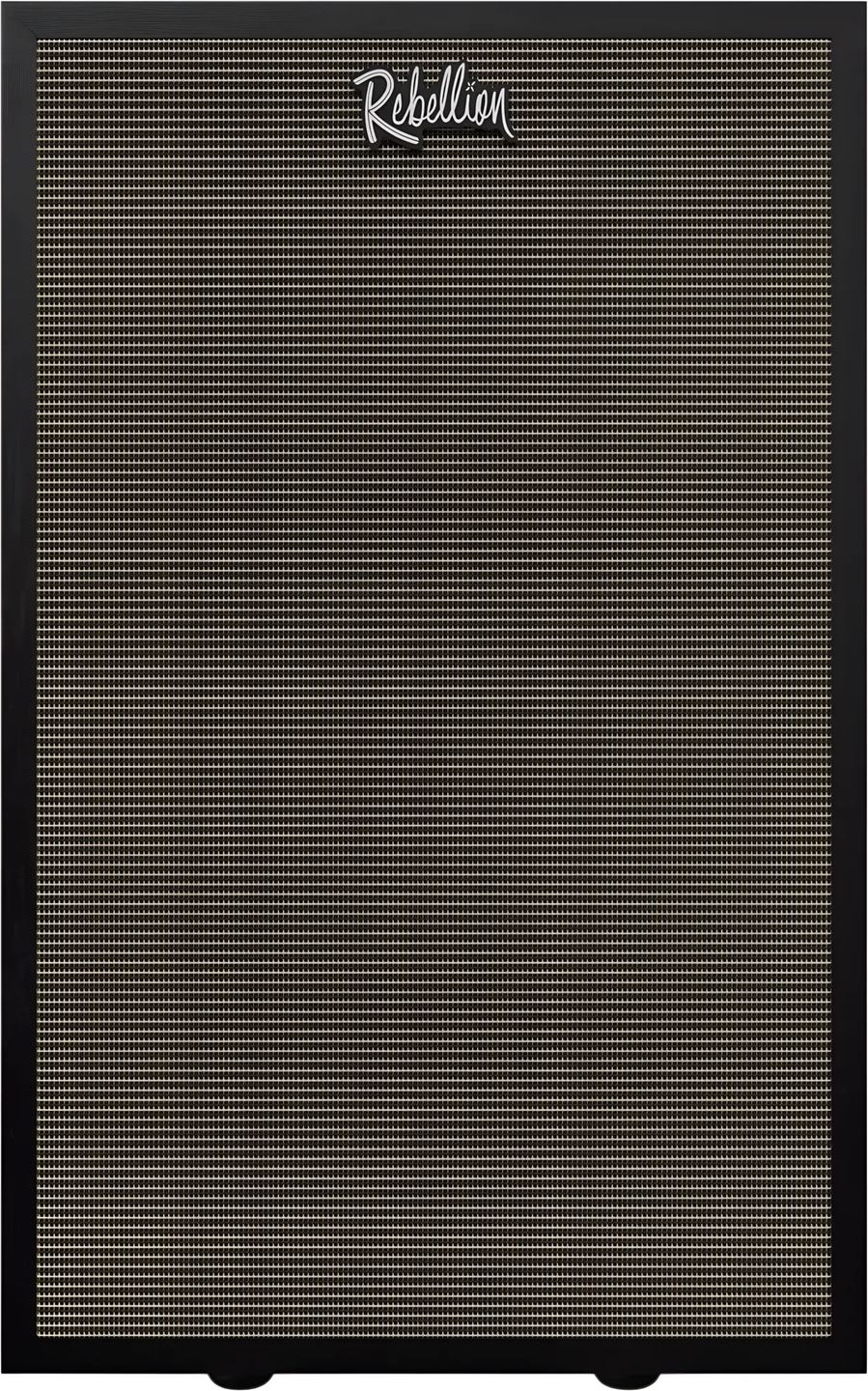

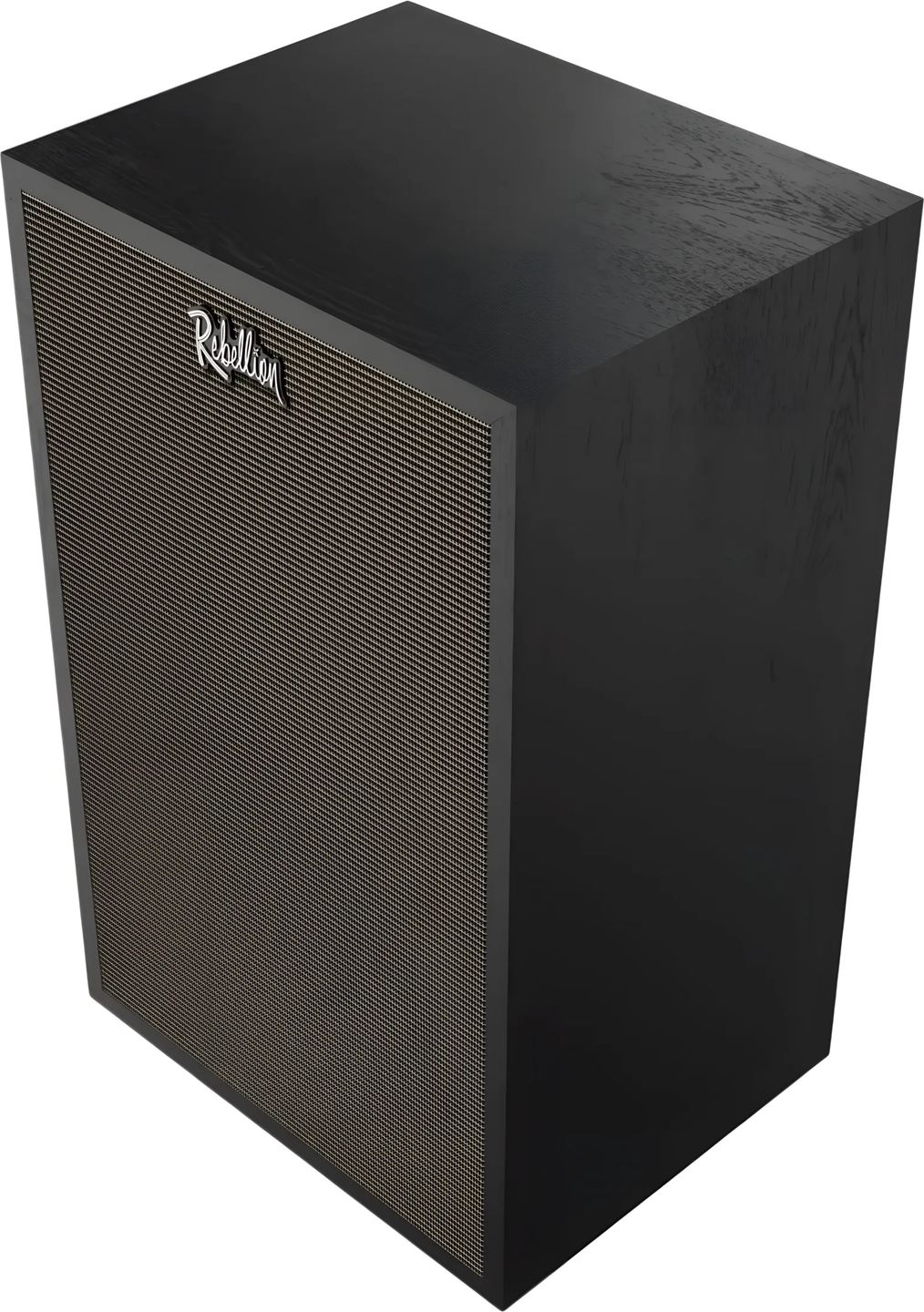




Klipsch Rebellion: the Heritage series goes bookshelf
In 1958, Paul W. Klipsch designed a small horn speaker, the H8, produced in sixteen units and placed as a center channel between two Klipschorns. Nearly seventy years later, this project has been pulled from the archives for the brand’s 80th anniversary. The Rebellion revives the concept: Klipsch horn sound in a cabinet compact enough to sit on a stand, without compromising on efficiency or domestic manufacturing.
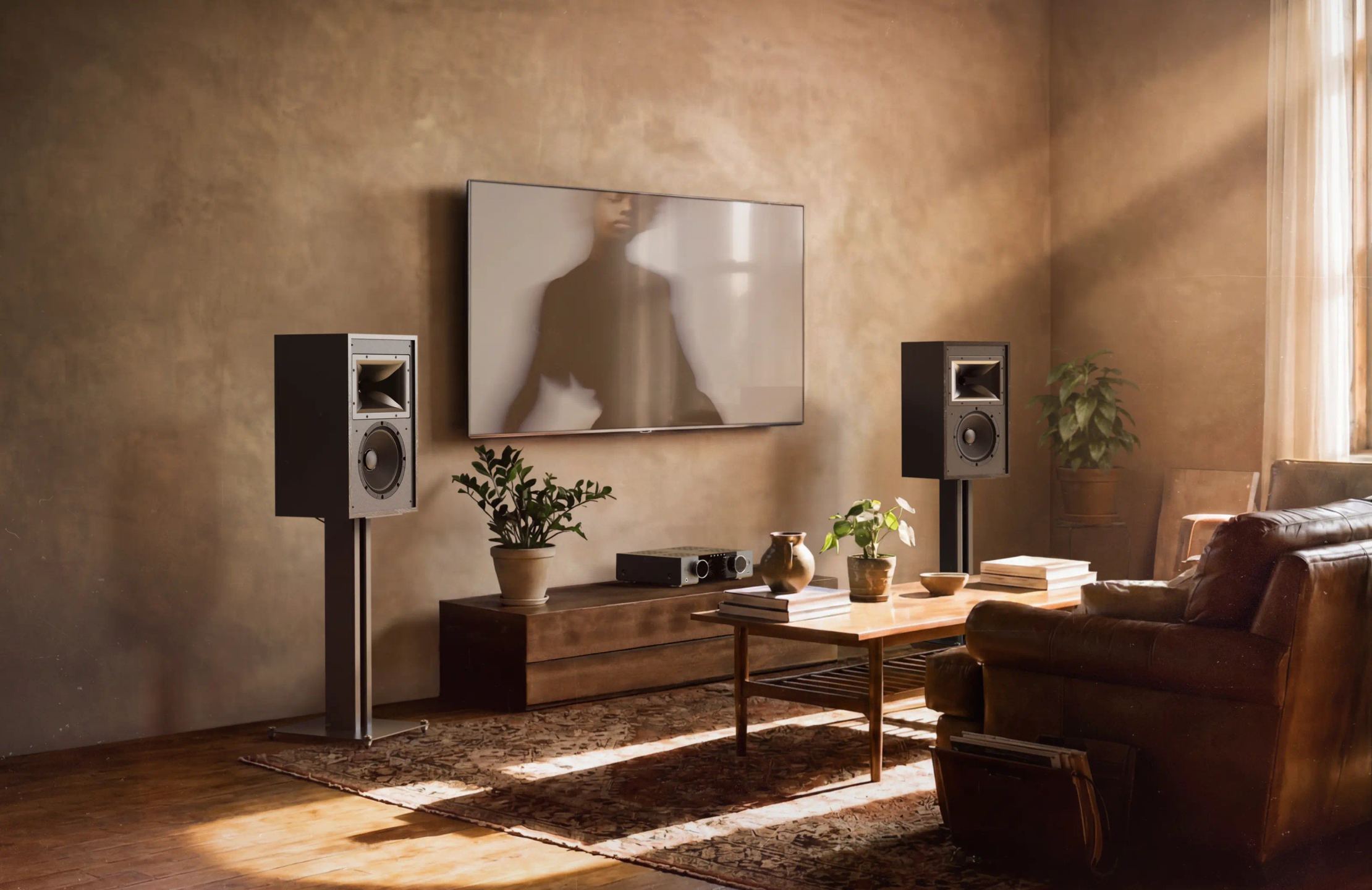
A 1958 project brought back into production
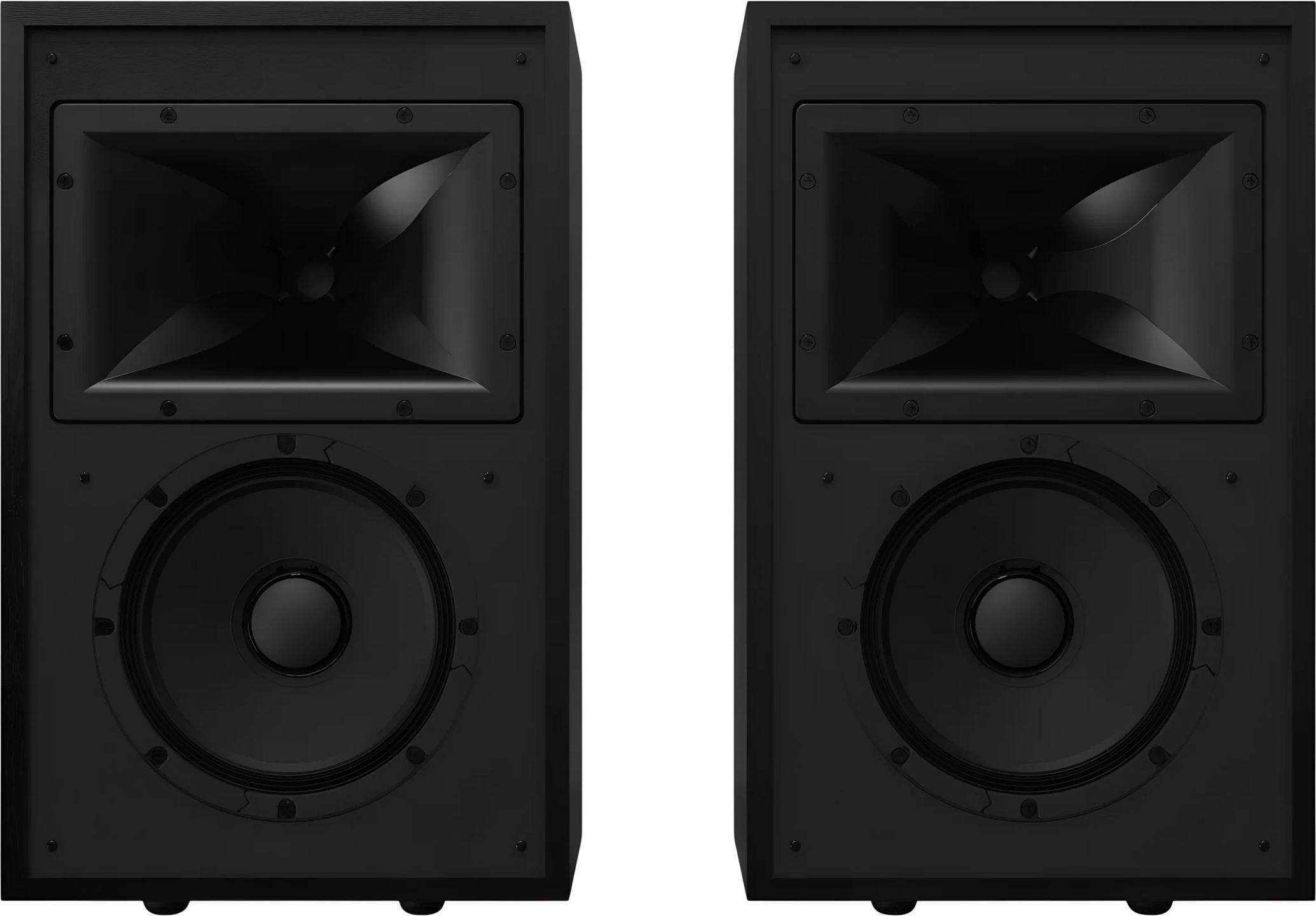
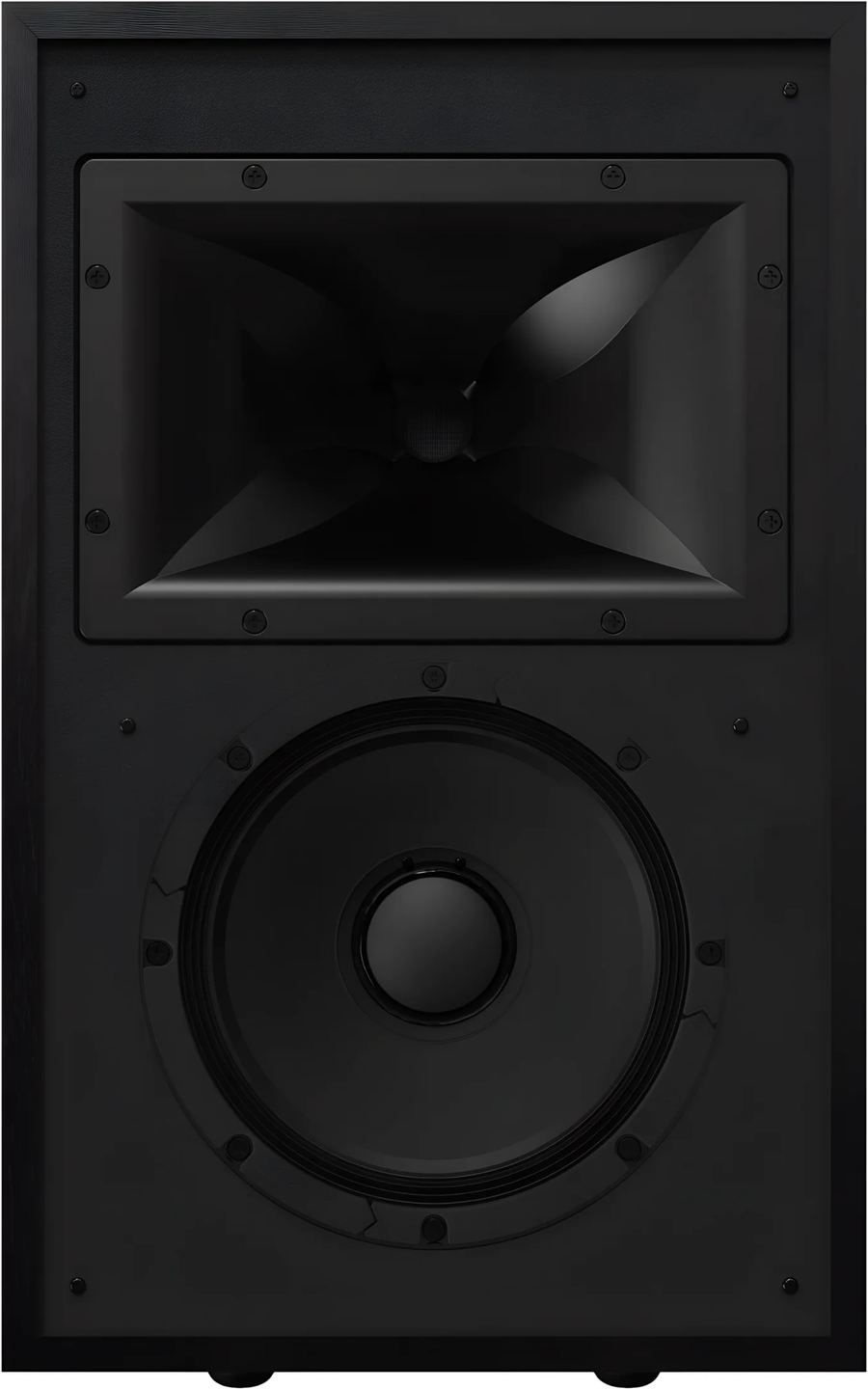
The original H8 filled a specific role in the late 1950s: a center channel slipped between two Klipschorns, to anchor voices in a three-channel stereo setup. It followed the format of the Heresy, released a year earlier, in a more compact form, and was only ever built in sixteen units. The Rebellion starts from that same design and brings it up to current standards without changing its core principle: a horn driver paired with an 8-inch woofer, in a cabinet that fits on a stand. It is the first bookshelf speaker in the Heritage series, which until now consisted of considerably larger models.
The Tractrix horn and the tweeter driver
High frequencies are handled by a compression driver, the K-702, loaded by a Tractrix horn K-703. The Tractrix profile is a flared curve that Klipsch uses on its speakers to control dispersion and limit distortion at the top of the frequency range. Added to this is Mumps technology, a horn treatment patented by the brand that smooths its response and directivity. In terms of measurements, horizontal coverage reaches 90 degrees and the low cutoff falls at 715 Hz — a fairly low value for a two-way design, which entrusts the horn with a large portion of the midrange. This is part of the Klipsch character: a lively and dynamic reproduction from the mid frequencies upward.
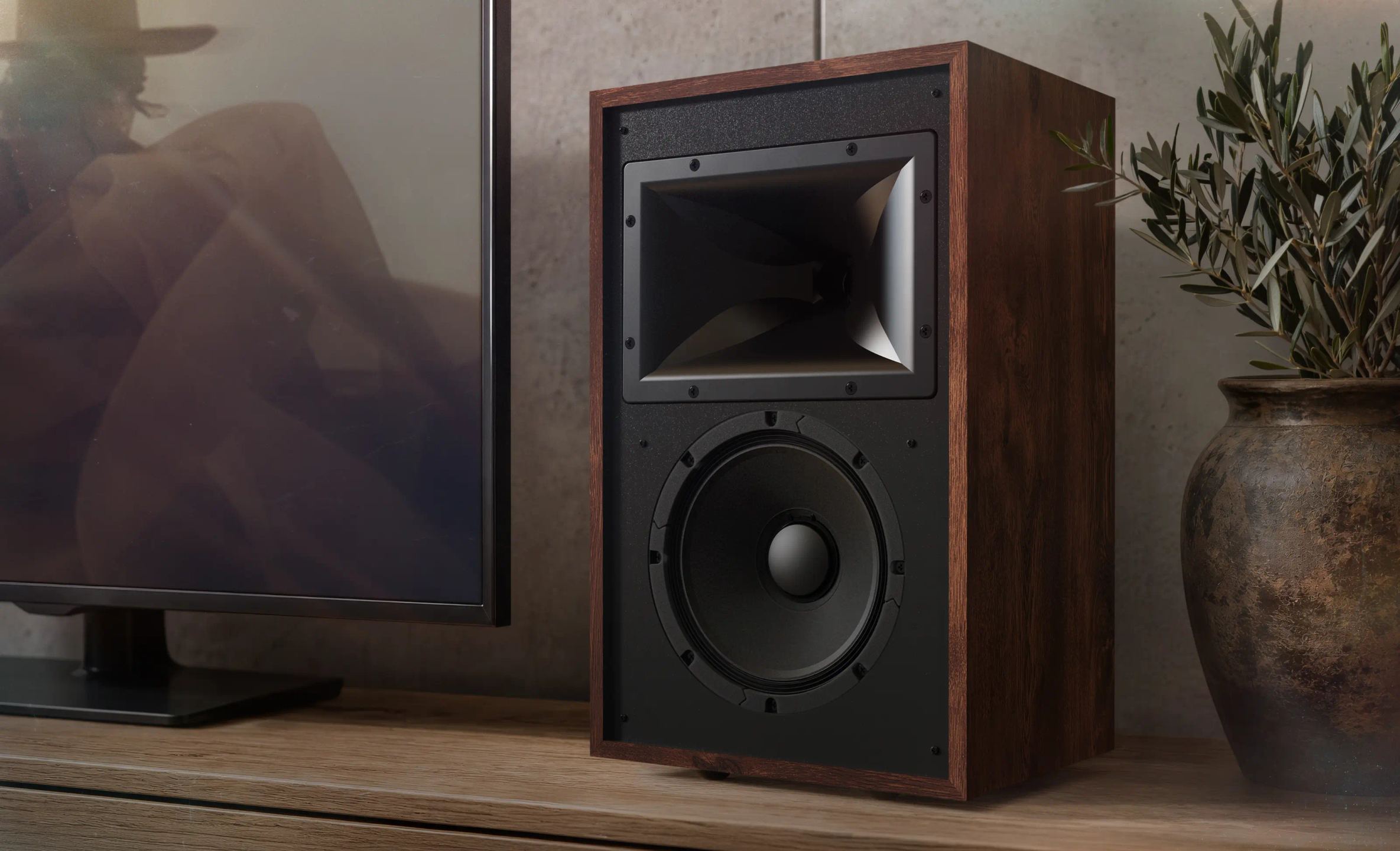
An 8-inch woofer in a bass-reflex enclosure
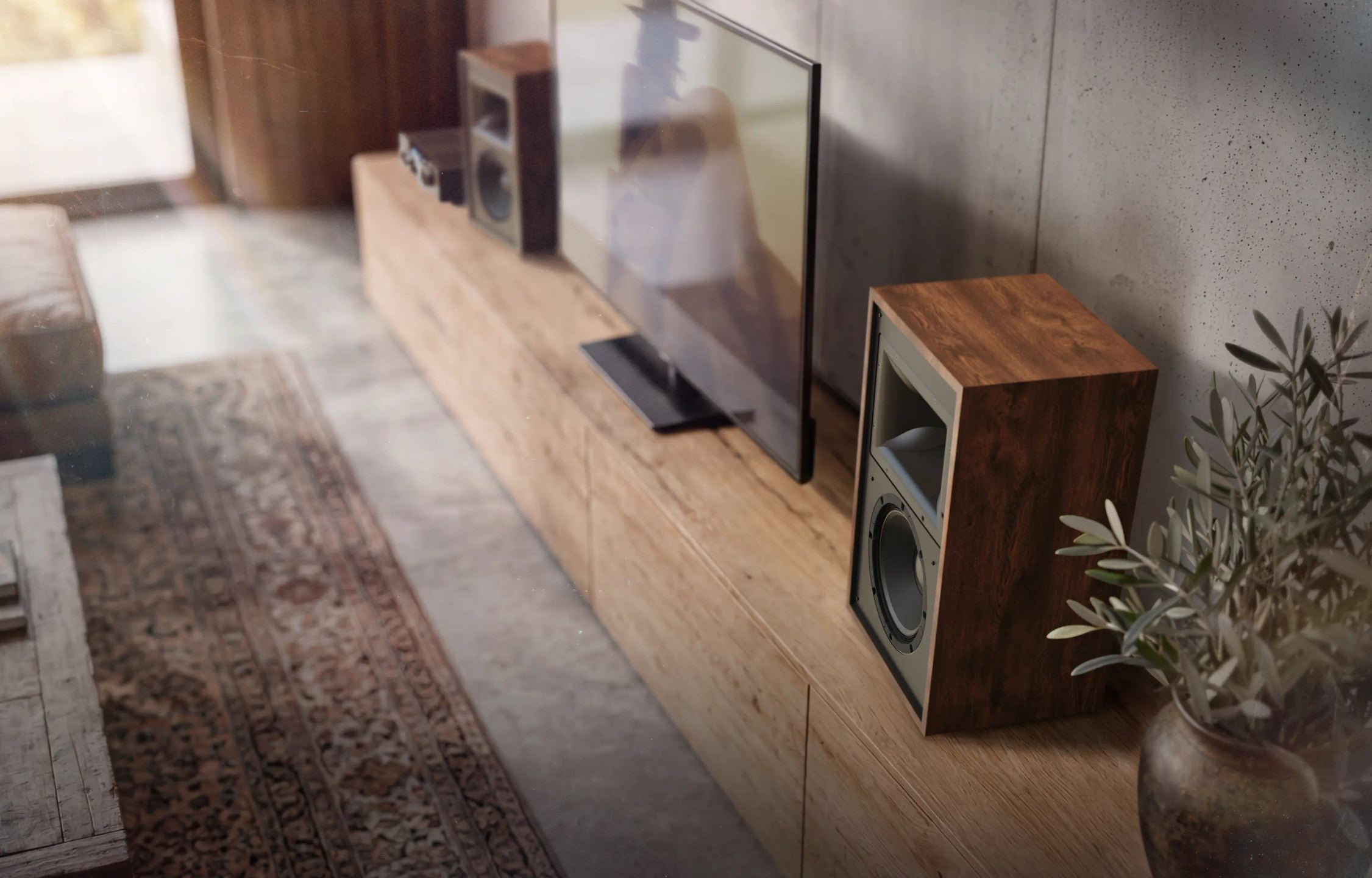
Below the horn, an 8-inch woofer, the K-81-EP, operates in a bass-reflex enclosure. The port exits at the rear and also features a flared Tractrix profile, designed to smooth airflow and reduce port noise as bass levels rise. The response extends down to 60 Hz at plus or minus 3 dB, and down to 45 Hz if a 10 dB drop is acceptable. For a speaker of this size, the low-end foundation remains substantial, provided the port is given room to breathe away from a wall.
High efficiency and amplifier pairing
The rated sensitivity reaches 95 dB for 2.83 V at one meter, an efficiency level that turns the usual thinking about power on its head. A few clean watts are enough to fill a living room, and the Rebellion is compatible with low-powered amplifiers, whether solid-state or tube. The trade-off lies in that same efficiency: a speaker this sensitive will reveal the slightest noise from upstream components, so a quiet amplifier and quiet sources matter just as much as power output. As for the load, the nominal 8-ohm impedance dips to 3.3 ohms around 170 Hz — a dip that any amplifier comfortable with low impedances will handle without difficulty. Power handling reaches 200 W and the calculated maximum output level is 115 dB, more than enough to absorb peaks well beyond domestic needs.
A hand-assembled cabinet in Arkansas
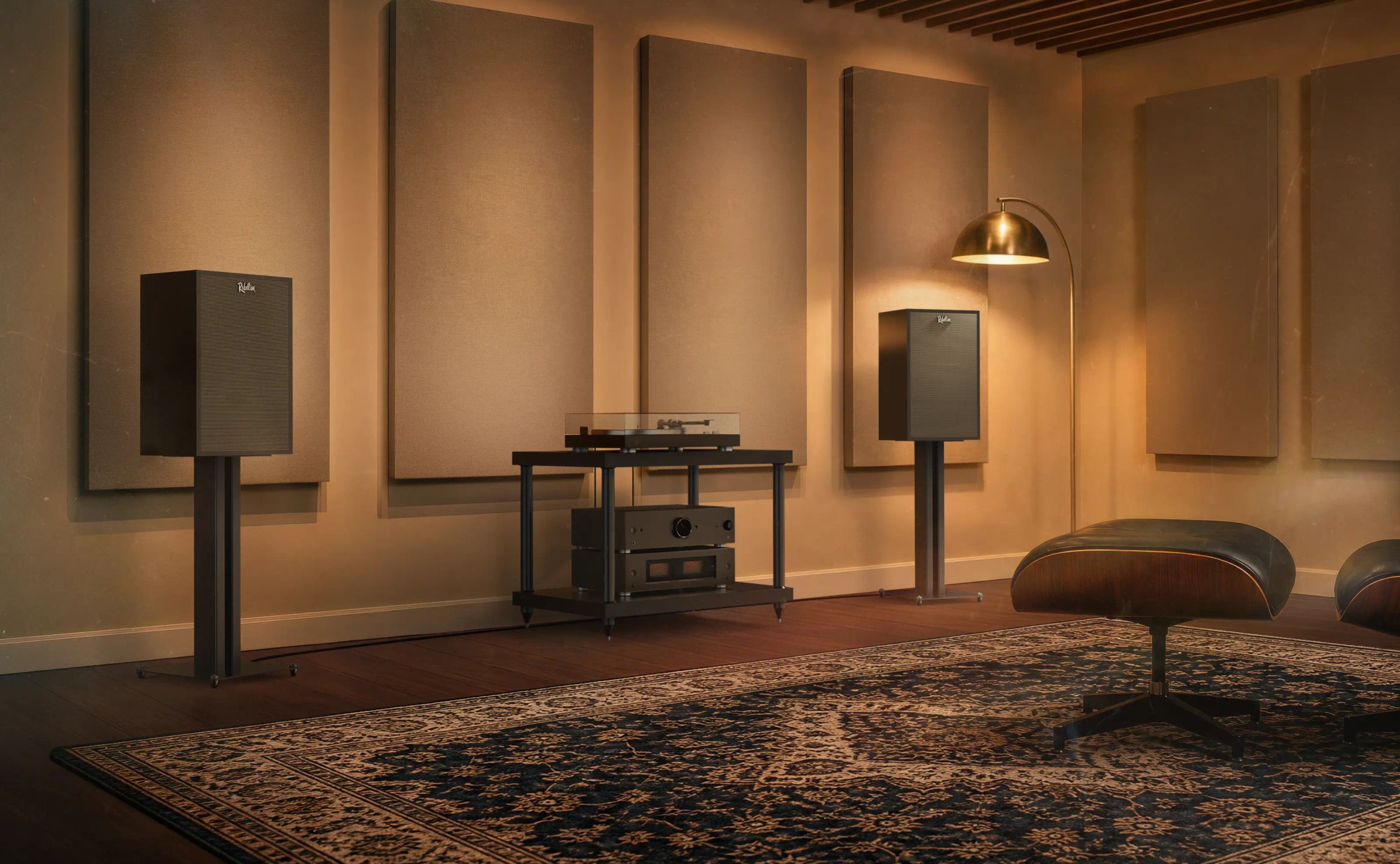
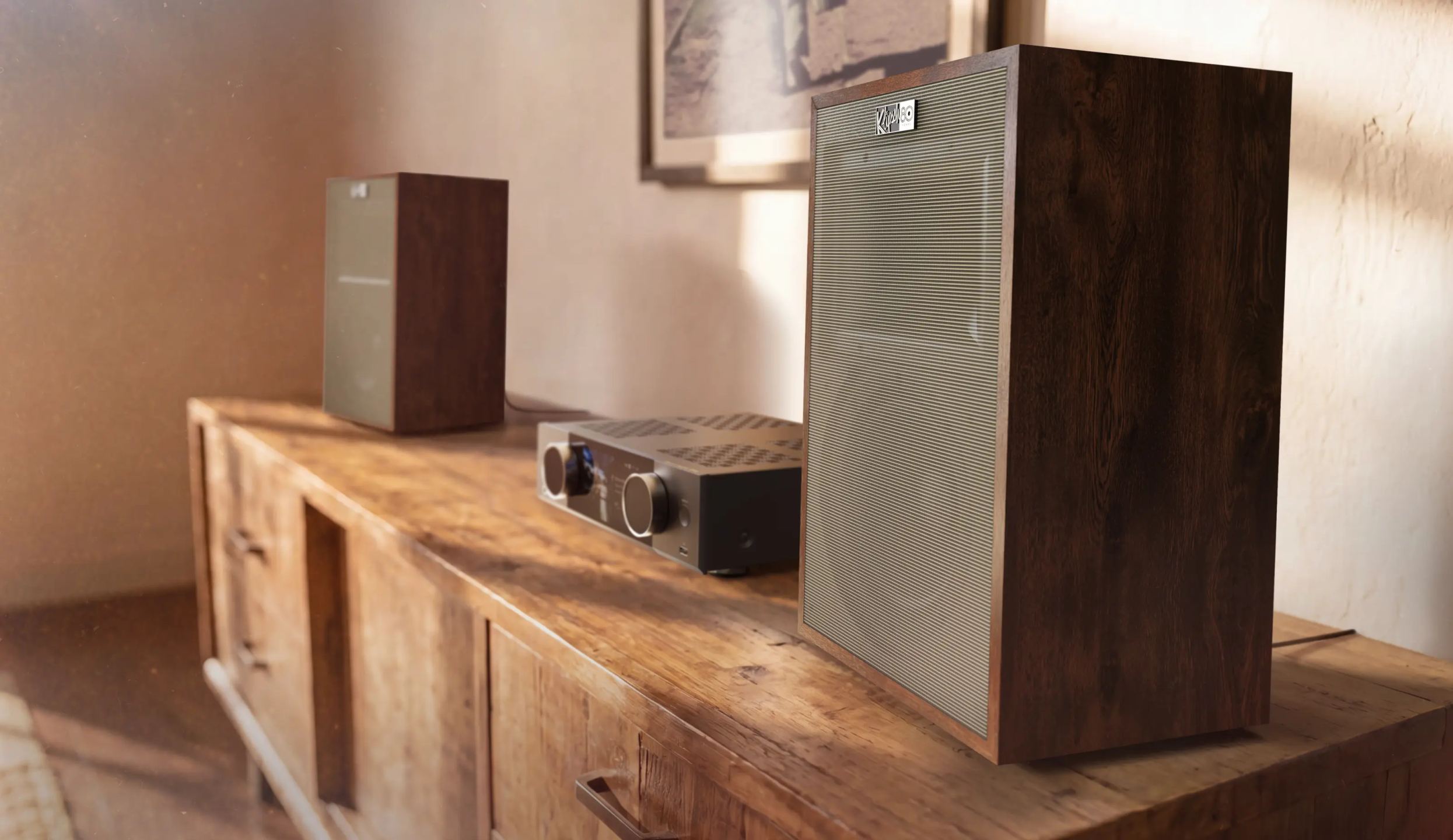
The cabinet is built from 18 mm plywood, a rigid structure that limits unwanted resonances. Each panel receives a real wood veneer, with matched grain from one speaker to the other, cut from the same log so that the pair responds symmetrically. Three finishes are available: Black Ash, Walnut, and a limited-edition Tigerwood finish marking Klipsch’s 80th anniversary. A fabric grille covers the front baffle, and a Heritage series badge completes the cabinet. Assembly is done by hand in Hope, Arkansas, where the other speakers in the lineup are also manufactured. At 14.5 kg per unit and just under 50 cm tall, the Rebellion is dense for a bookshelf format, and the ten-year warranty remains rare in this category.
Stand placement, stereo, and home theater
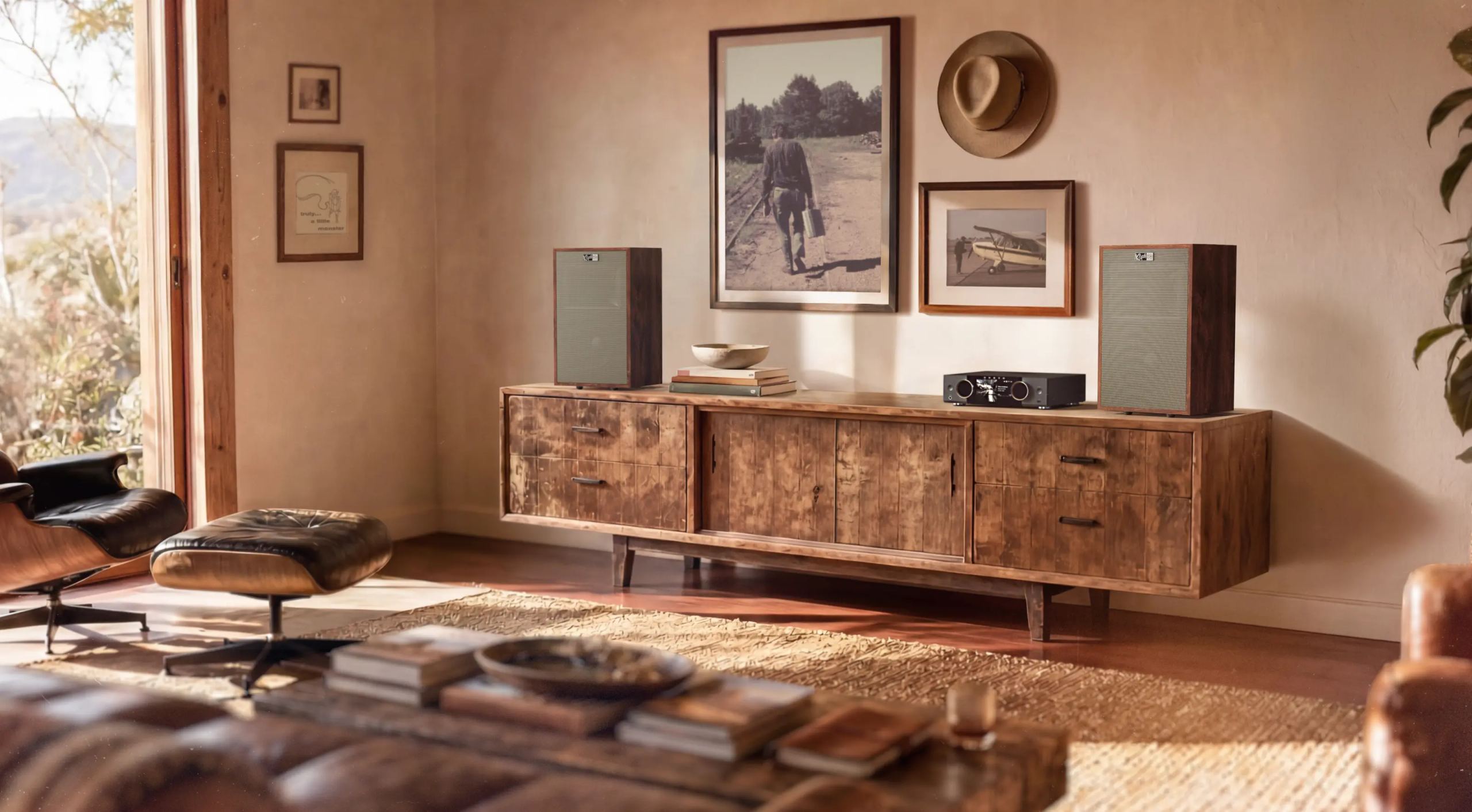
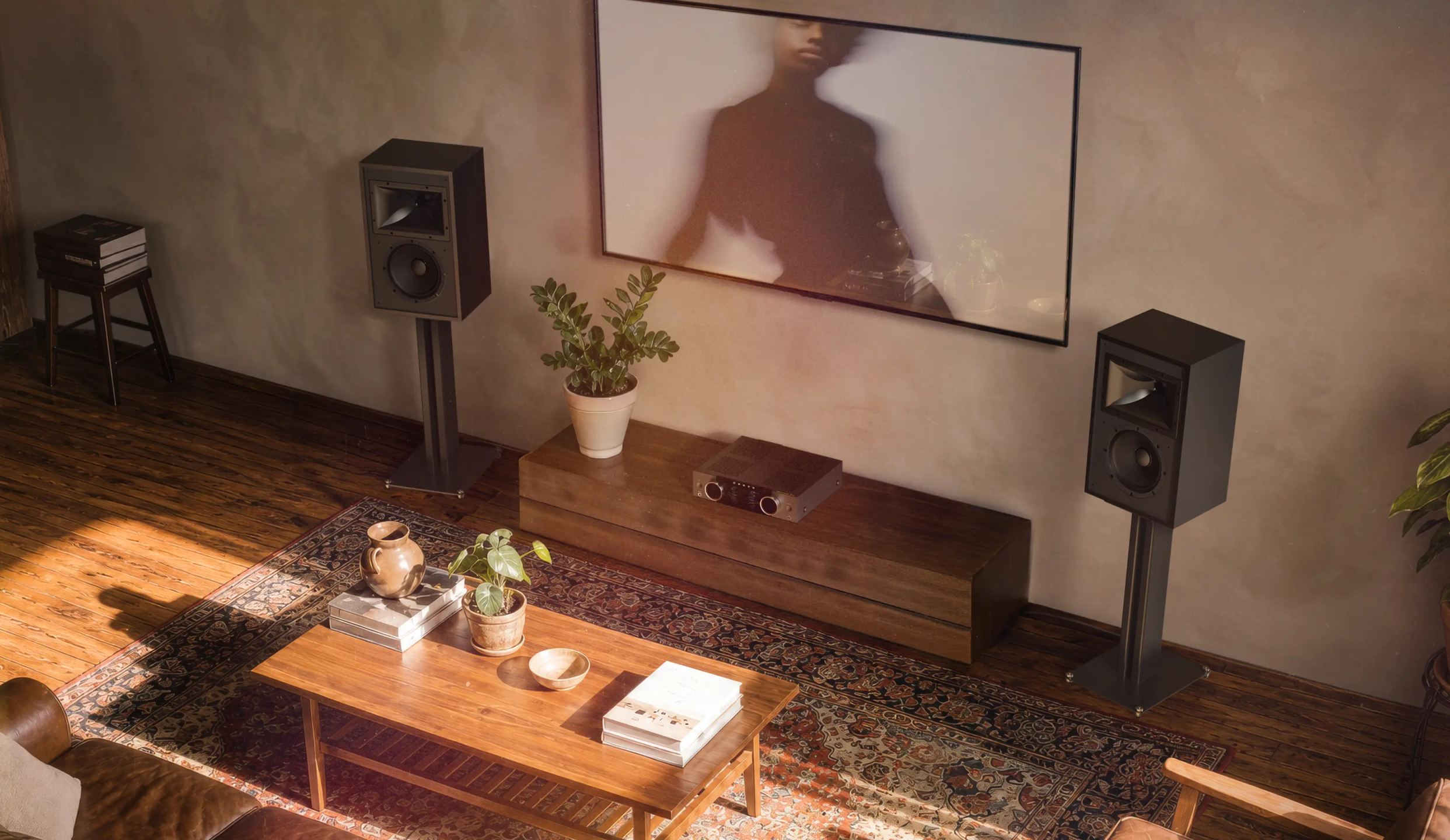
The Rebellion is sized for Klipsch KS-24 stands, which position it at ear height. This is not merely cosmetic: vertical dispersion narrows to 60 degrees in the treble, meaning the horn needs to be roughly at ear level to deliver its best definition. Any other stable stand of appropriate height will work just as well, as will a sufficiently deep shelf, as long as the rear port has room to breathe behind it. In two-channel stereo, it takes the place of a main speaker in a carefully assembled hi-fi system. It can also join a home theater setup built around Klipsch Heritage speakers, where its tonal signature matches the other models in the series. The rear connection panel features binding posts that accept spades, banana plugs, or bare wire.
Documentation
French
Technical Specifications
Heritage and craftsmanship
- First bookshelf speaker designed by Paul W. Klipsch, combining high performance and very low distortion
- Introduced in 1958 under the name H8, designed as a more compact version of the legendary Klipsch Heresy
- Heritage design faithful to the spirit of Paul W. Klipsch, modernized to meet current requirements
- Handcrafted in the United States, hand-assembled in Hope, Arkansas, by Klipsch craftsmen
- Klipsch Heritage badge completing the cabinet finish
- 10-year manufacturer warranty, particularly long for a speaker in this category
Acoustic architecture
- 2-way bookshelf speaker designed to deliver energy, precision, and dynamics
- Bass-reflex architecture for optimized low-frequency response extension
- Low distortion thanks to optimized driver and horn design to preserve signal accuracy
Drivers and technologies
- K-702 HF Driver tweeter
- Precise, detailed, low-distortion high-frequency reproduction
- K-703 Tractrix horn
- Iconic Klipsch horn technology promoting dynamic and controlled reproduction
- Klipsch Mumps technology for optimized horn dispersion and response
- 8” K-81-EP woofer
- Low-frequency driver designed to produce deep, powerful, and controlled bass
- Rear Tractrix port optimizing airflow and reducing turbulence for cleaner bass reproduction
Sound performance
- Frequency response: 60 Hz – 20 kHz ±3 dB
- F10 frequency response: 45 Hz – 21 kHz (-10 dB)
- Crossover frequency: 715 Hz
- Sensitivity: 95 dB @ 2.83 V
- Power handling: 200 W
- Calculated maximum continuous SPL: 115 dB
- Horizontal directivity: 90° ±30°, from 600 Hz to 20 kHz
- Vertical directivity: 60° ±30°, from 2.6 kHz to 20 kHz
- Nominal impedance: 8 Ω
- Minimum impedance: 3.3 Ω at 170 Hz
Connectivity
- High-end connection panel, designed for seamless integration
- 5-way binding posts
Heritage cabinet and finish
- 18 mm plywood cabinet
- Rigid construction designed to limit unwanted vibrations
- Real wood veneer finish, giving each speaker the appearance of a genuine piece of furniture
- “Book-Matched” matching wood veneers
- Grain patterns carefully selected and matched for a particularly elegant finish
- Fabric grille elegantly protecting the front panel
Installation and use
- Designed for Klipsch KS-24 stands, enabling positioning at the ideal listening height
- 2-channel stereo listening, an ideal solution for a high-end hi-fi installation
- Can be integrated into a Klipsch Heritage home theater system
- Compact format, allowing you to enjoy the Heritage sound signature in a controlled footprint
Dimensions and weight
- Dimensions (W × H × D): 30.48 × 48.48 × 24.28 cm
- Weight: 14.51 kg per speaker
- Shipping weight: 31.97 kg per pair
Frequently Asked Questions
Do you need a subwoofer with the Klipsch Rebellion?
It all depends on the room and the type of music. With usable response down to 60 Hz, the Rebellion stands on its own for most styles. For organ music, very low electronic music, or a film’s effects track, a subwoofer takes over below that limit. As the Rebellion is passive, the subwoofer connects to the preamplifier or amplifier via a dedicated output or an active model with high-level input.
Are KS-24 stands required?
No, but they position the speaker at the desired height, with the horn at ear level. A stable, sufficiently tall stand achieves the same result. A deep shelf also works, provided there is clearance at the rear for the port and this listening height is maintained.
Can the Rebellion be paired with other Klipsch speakers in a home theater system?
Yes. Within a Heritage installation, it is tonally matched with the other models in the series and can be used as a front channel or surround speaker. A home theater amplifier or amplifier-processor combination is required to drive it, as it has no internal electronics. Pairing it with more recent Klipsch series is still possible, although it requires level and distance adjustments during calibration.
What does the 80th Anniversary Tigerwood finish offer?
This is a limited edition released for Klipsch’s 80th anniversary. The veneer changes, with the contrasting grain of tigerwood, but the acoustic section remains identical to the black ash and walnut finishes. The choice is therefore aesthetic: same speaker, different presentation.
Is the Rebellion suitable for a small room?
Yes, and its efficiency helps. In a small space, a few watts are enough to reach comfortable listening levels, and the horn retains good definition at low power. The only constraint is the rear port: it is best to leave some space between the speaker and the wall, which is not always easy in a cramped room.
Is a low-power tube amplifier sufficient?
The 95 dB sensitivity makes the Rebellion compatible with small tube amplifiers, including a few-watt SET designs appreciated for this type of horn speaker. One point to watch: impedance drops to 3.3 ohms around 170 Hz, so it is best to use an amplifier that remains stable with this load and to choose the output transformer impedance tap carefully on models offering several.
- Eco-contribution included in the sale price.
- Manufacturer reference: 1080312
- GTIN / EAN: 743878093292