

MartinLogan Depth 215 black lacquered


Specifications and features

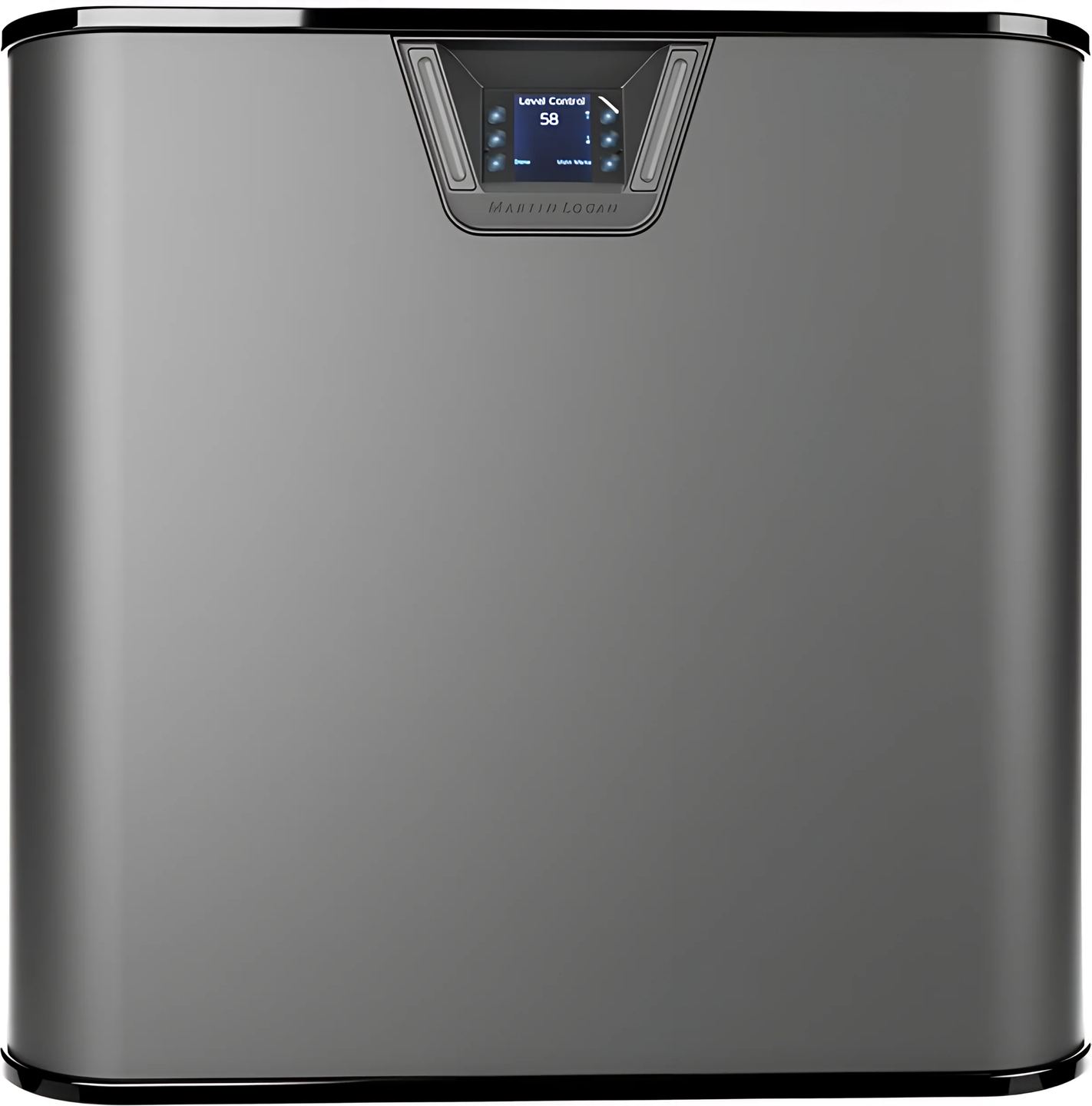
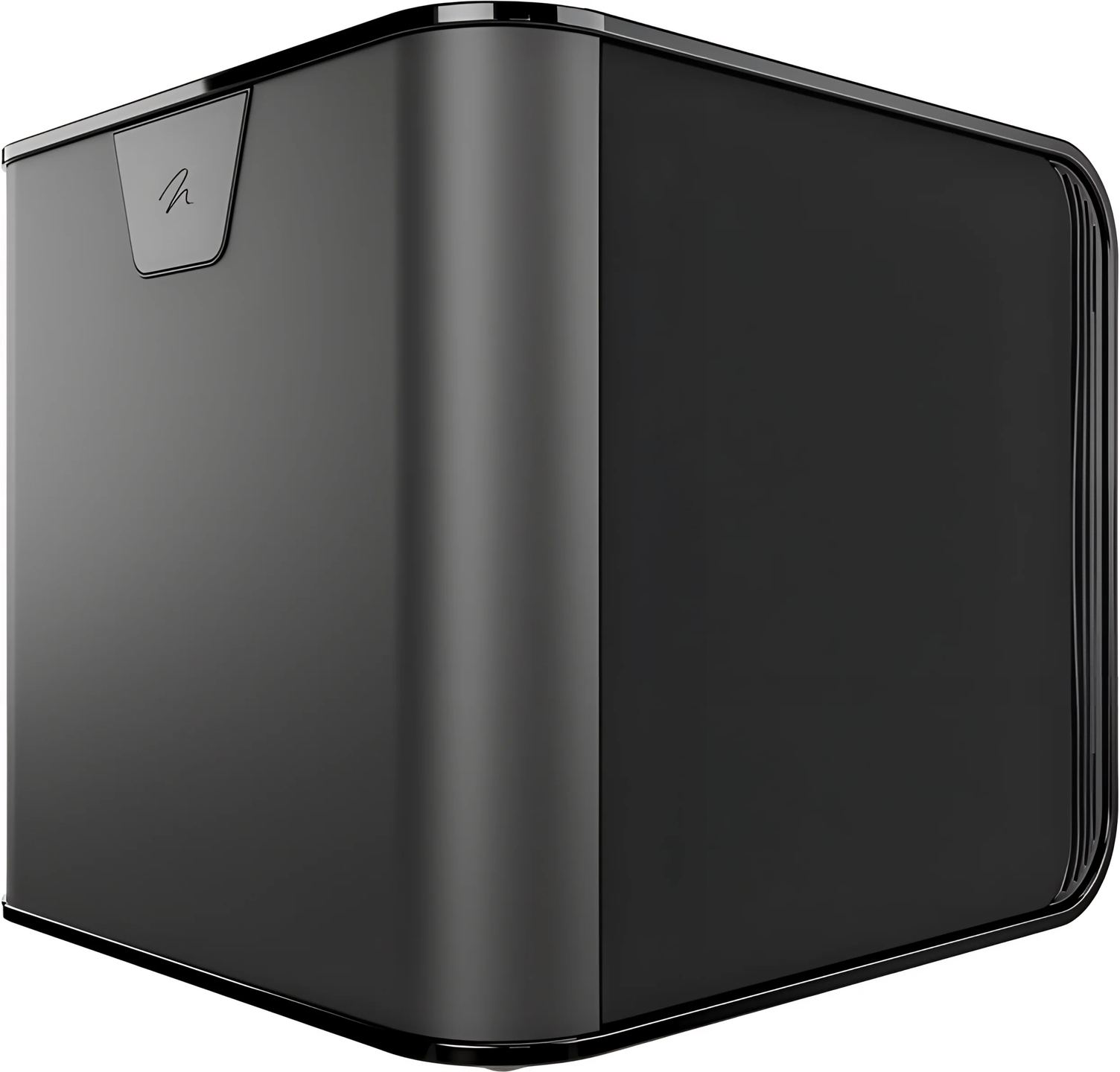
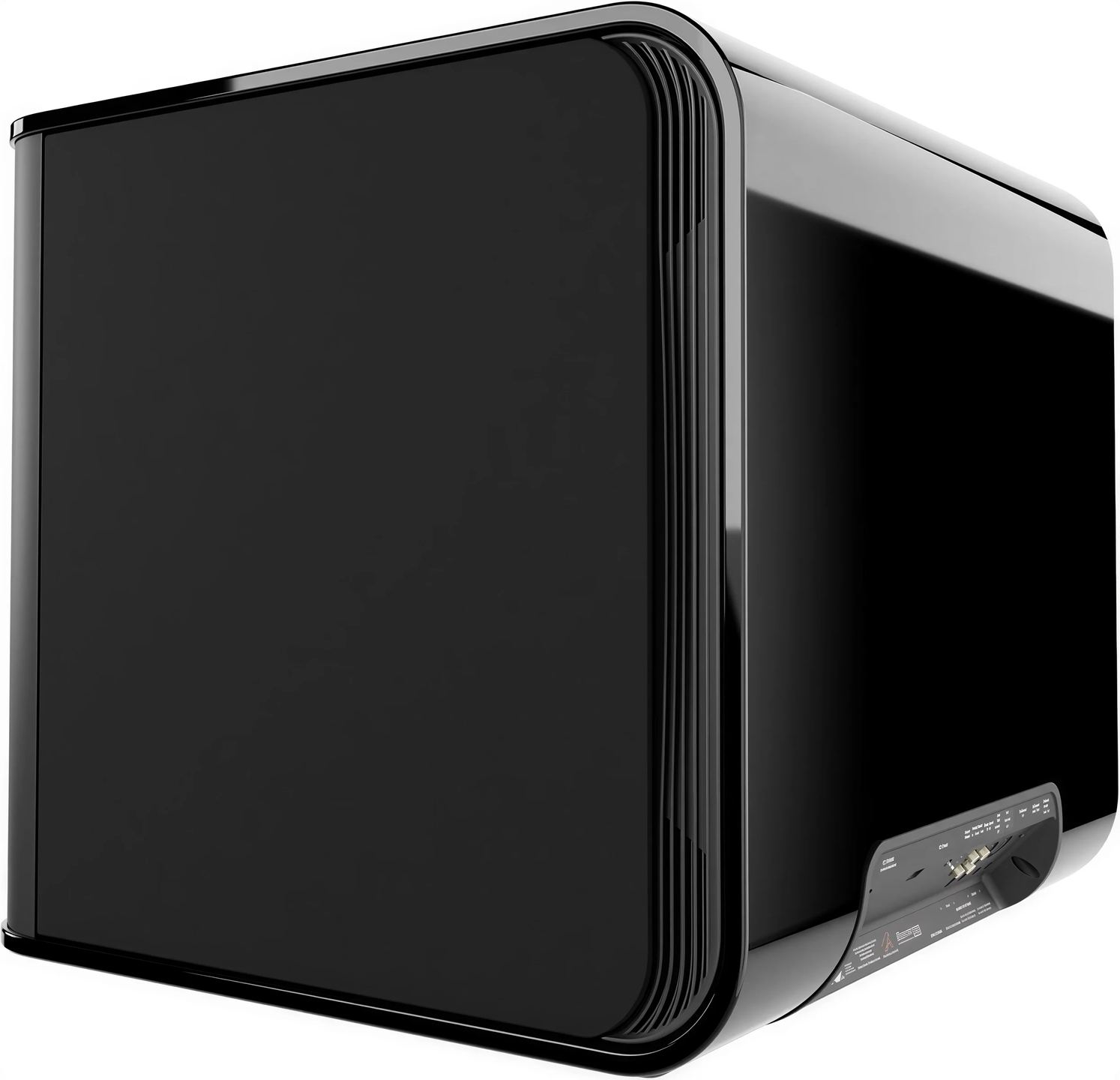
MartinLogan Depth 215, gloss black subwoofer
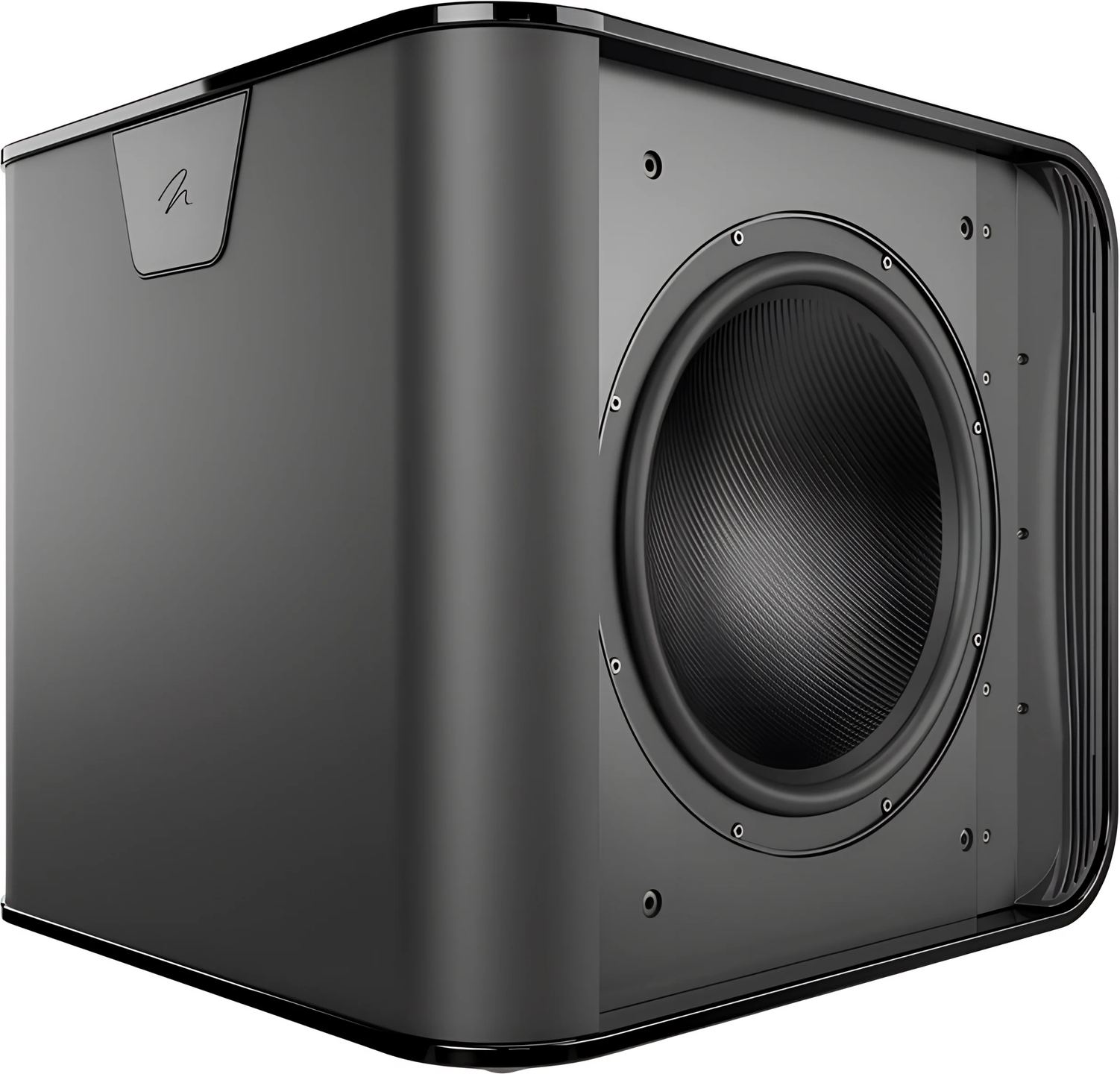
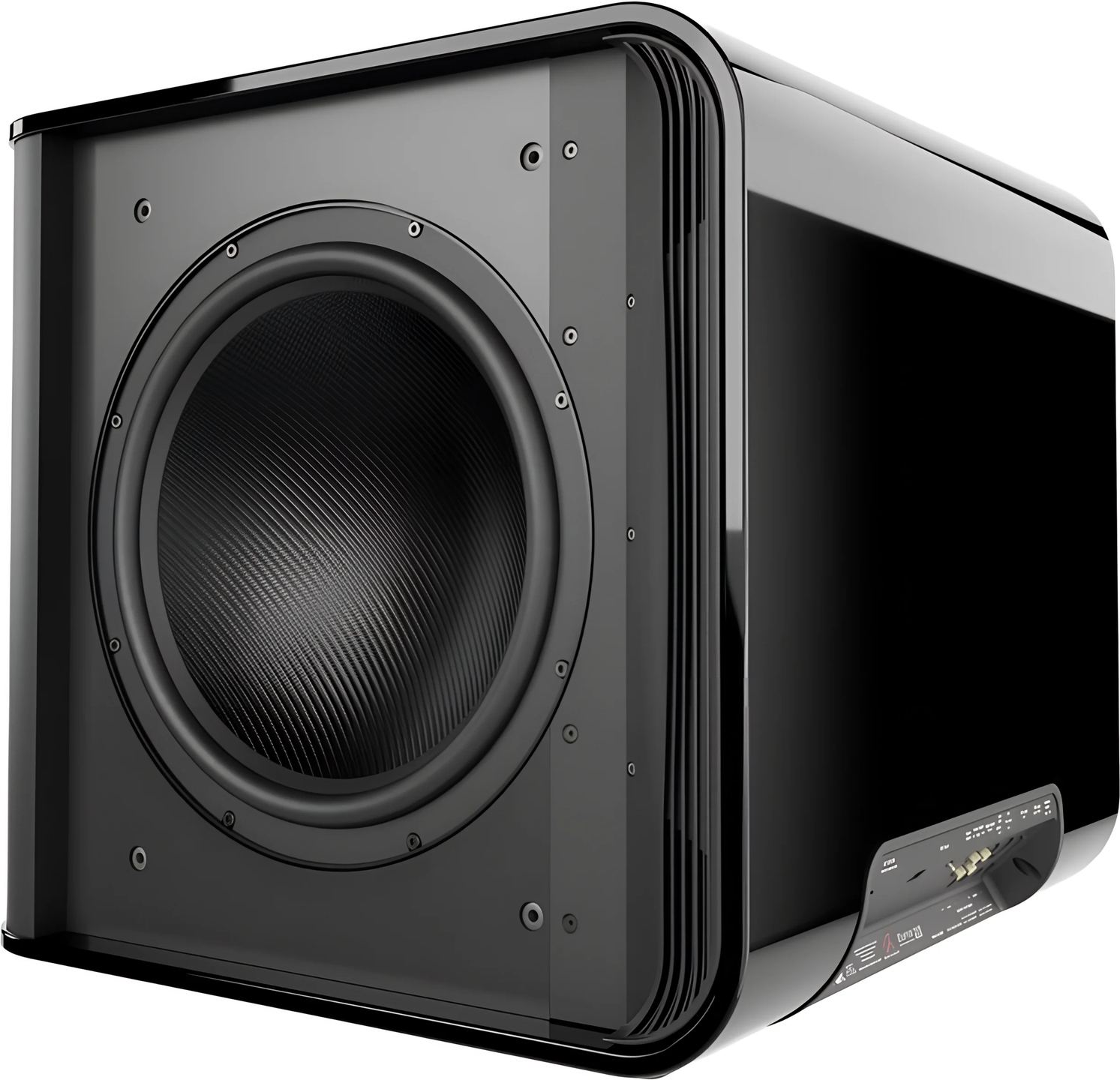
Two 38-centimetre drivers facing each other and mechanically cancelling one another out: this is the starting point for bass by MartinLogan. The result reaches down to 18 Hz without transmitting its forces to the gloss black cabinet. The 215 version is the more powerful of the two Depth series subwoofers, with 2,200 watts RMS split between two amplifiers and automatic room correction supplied as standard to adapt the response to the room.

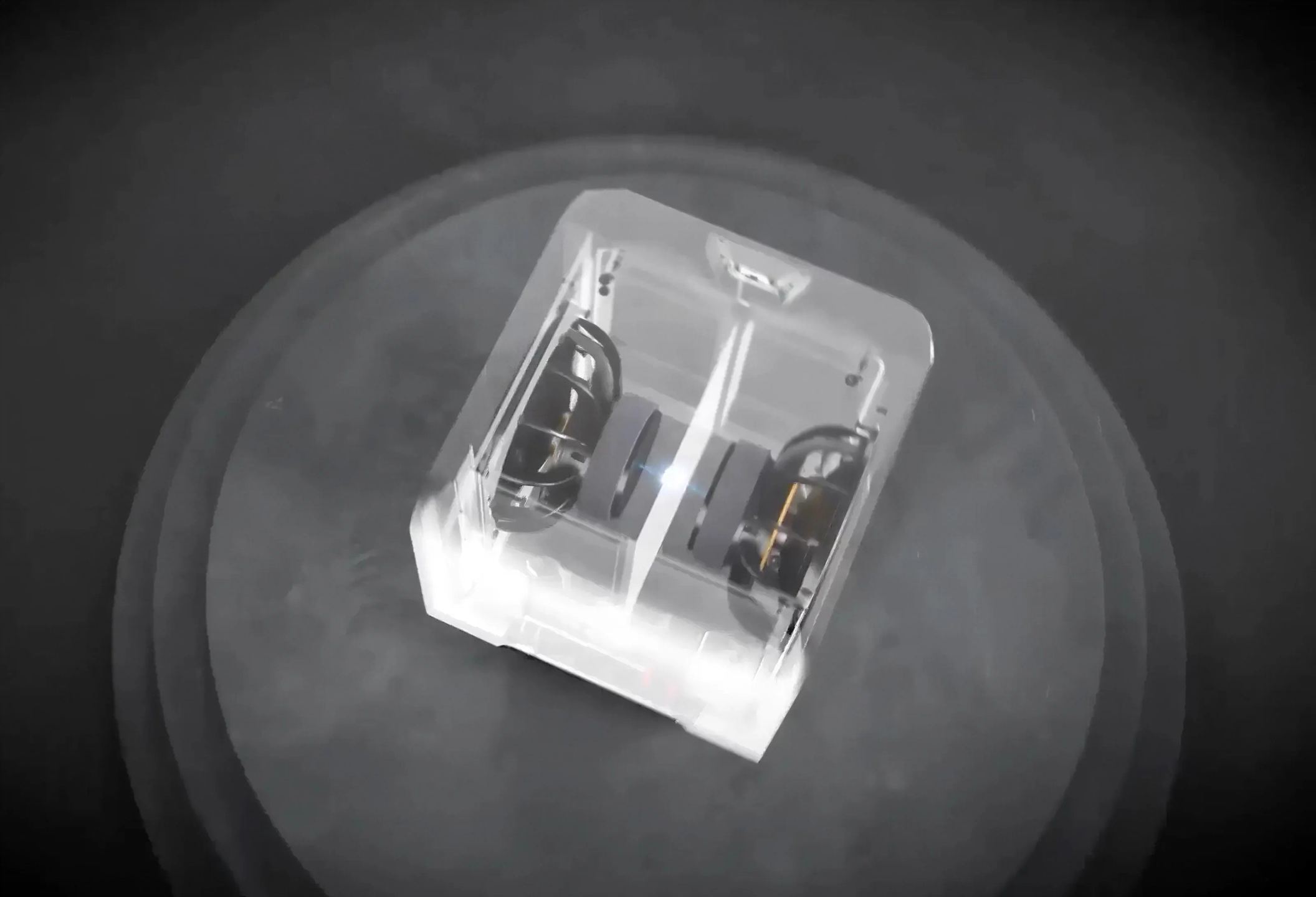
Two woofers mounted in opposition
Reproducing a low note requires moving a great deal of air, and this movement generates reaction forces capable of making the entire enclosure vibrate. MartinLogan addresses this issue with the BalancedForce configuration: the two 15-inch drivers are active and positioned in opposition. When one pushes, the other pulls in the opposite direction, and their reactions cancel each other out before reaching the cabinet. The enclosure remains still, bass becomes cleaner, and coloration caused by structural resonances is reduced.
Each woofer uses a cast aluminium basket and operates with high excursion, allowing high output levels without the diaphragm leaving its linear operating range.
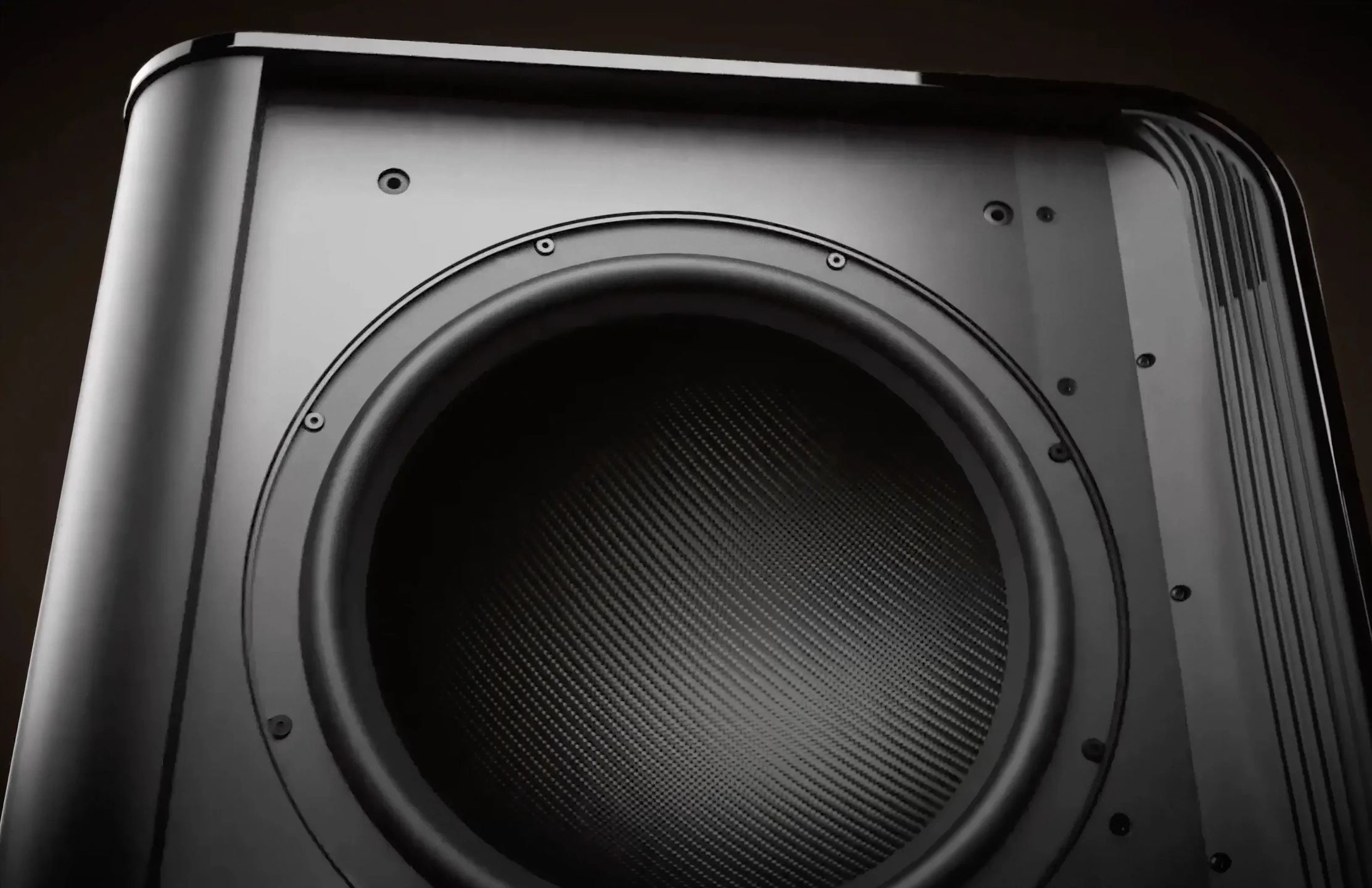
The three-layer Carbon Aerocore diaphragm
Articulate bass depends greatly on the diaphragm. A diaphragm that deforms or resonates adds unwanted sounds to the signal. For the Depth series woofers, MartinLogan developed a three-layer structure known as Carbon Aerocore. The outer layer is made of carbon fibre, rigid and lightweight. The core is PMI foam, a cross-linked structural material that stiffens the assembly while damping vibrations. The inner fibreglass layer adds damping without weighing down the cone. The cone remains rigid and stable, a prerequisite for the diaphragm to follow the electrical signal faithfully.
Two features complete the driver. Triple venting, beneath the spider, around the voice coil and through the pole piece, evacuates heat and compressed air behind the diaphragm. Two copper rings per woofer stabilise the magnetic field as the coil moves, reducing distortion.
Two Class-D amplifiers and the Vojtko DSP
Power comes from two reference Class-D amplifiers. Together, they deliver 2,200 watts RMS and 4,400 watts peak, providing the reserve needed to keep the diaphragms under control during the most demanding passages. Control is handled by a 64-bit Vojtko digital processor clocked at 500 MHz. It manages filtering, signal shaping and room correction calculations.
ARC Genesis room correction
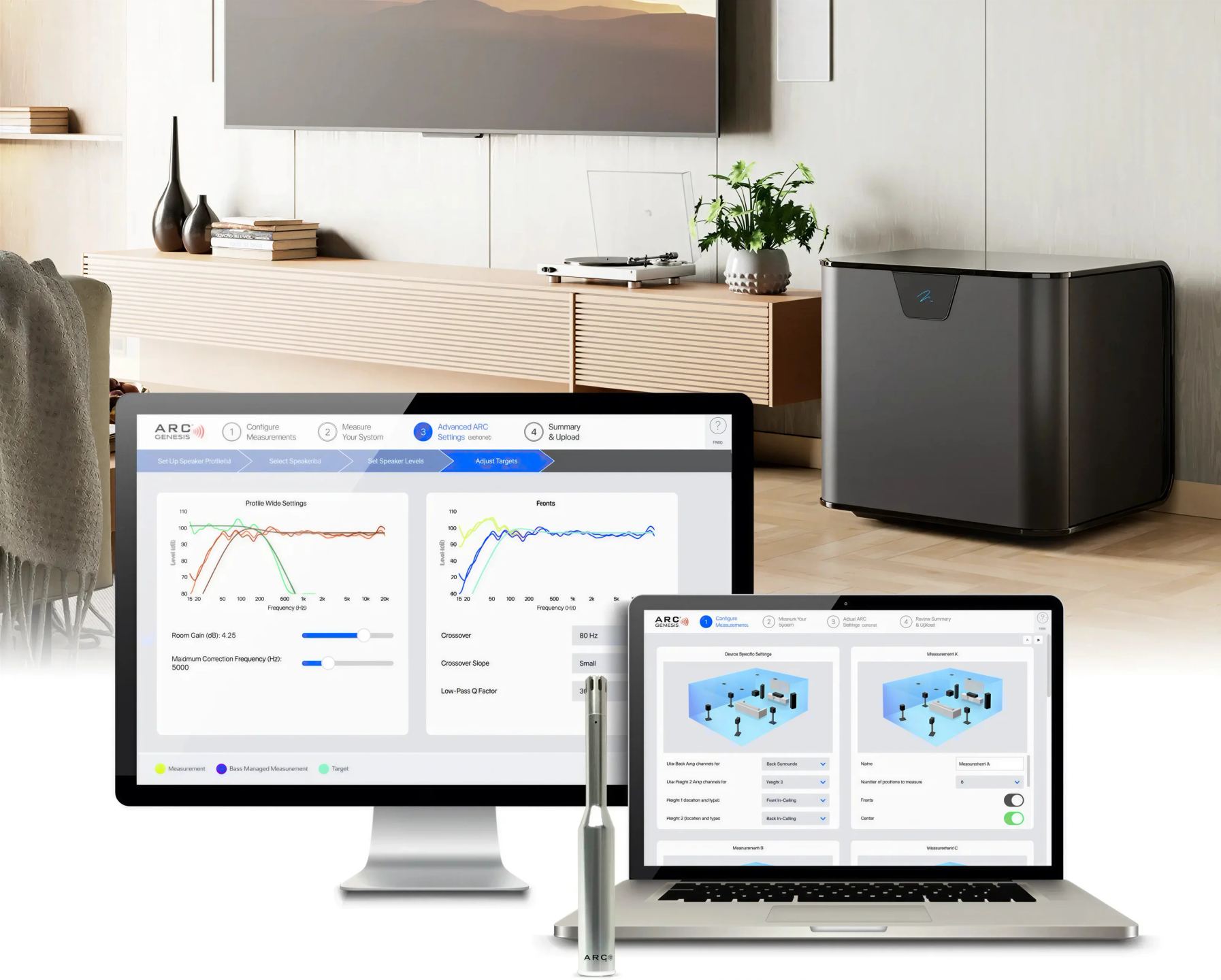
A subwoofer is affected by its room more than any other speaker. Low frequencies excite the room’s natural modes, those standing waves that boost certain notes and reduce others depending on where you are. The Depth 215 includes Anthem Room Correction in its ARC Genesis version. A measurement microphone and its stand are supplied with the subwoofer. The software measures the response at the listening position, then the DSP corrects deviations to smooth bass where you are seated. Setup is performed once after installation and can be adjusted if the furniture or layout changes.
App and wireless control
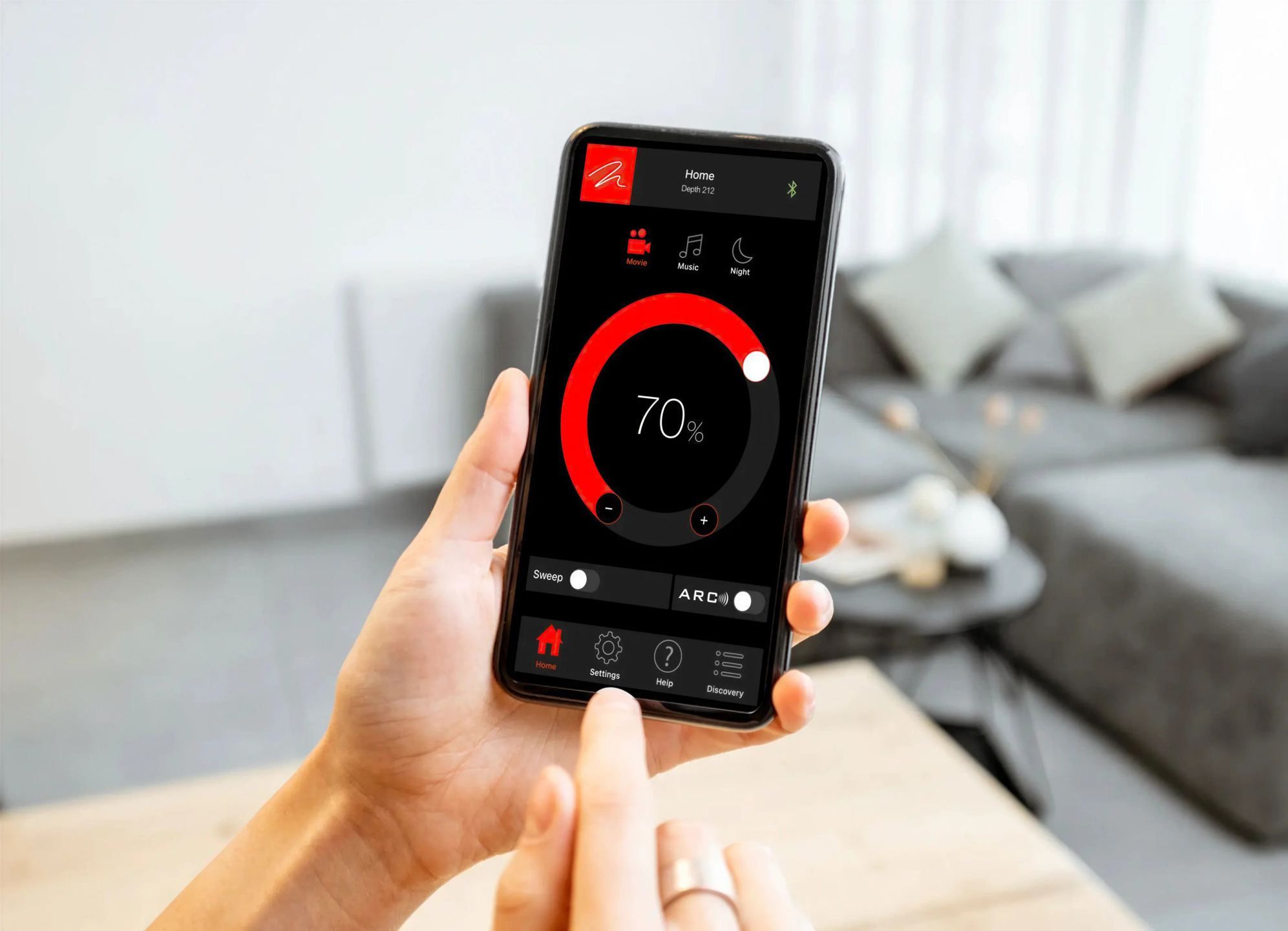
All settings are accessed through the Subwoofer Control app, connected to the subwoofer via Bluetooth. Level can be adjusted from -40 to +12 dB. The low-pass filter covers 35 to 120 Hz in 1 Hz steps, with bypass, 3rd-order or 4th-order slopes available. Phase can be adjusted from 0 to 180 degrees in one-degree increments, polarity can be reversed at the touch of a button, and a dedicated adjustment provides plus or minus 10 dB across the 20 to 30 Hz band, the infrasonic range. Three preset modes, Movie, Music and Night, adapt the response to the content and time of day.
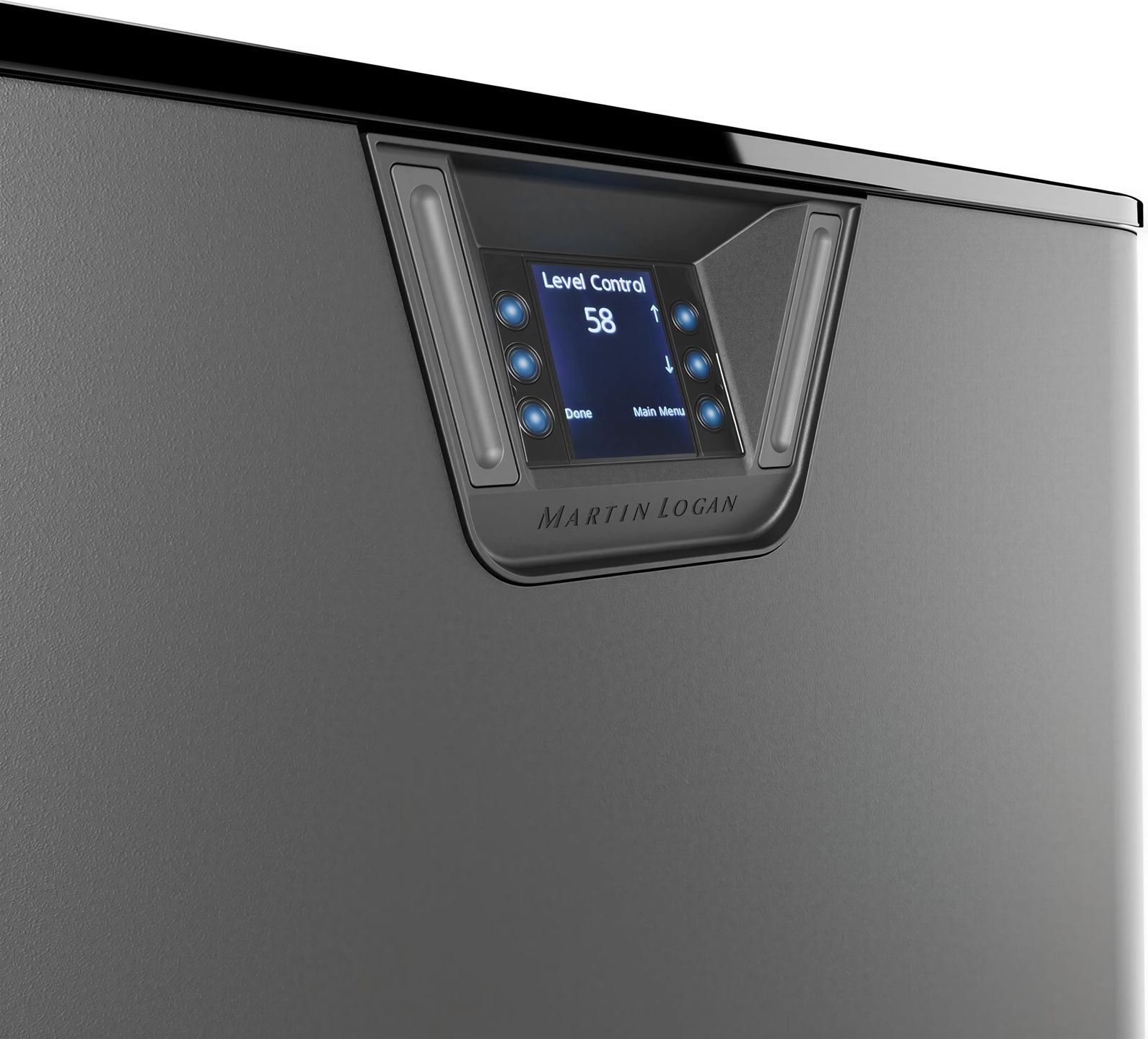
The subwoofer retains physical controls for those who prefer not to use the app. Beneath the “zig” logo on the front is a touch interface with an LED display and six backlit zones. The same logo acts as a night light: its colour can be configured or switched off for a discreet appearance. The connection between the source and subwoofer can be wireless, with a receiver built in and a transmitter supplied.
The cabinet and convection cooling
The cabinet accounts for a significant part of the work. Its walls combine multiple braces with variable thicknesses from 25 to 76 millimetres, ensuring it remains inert when the woofers move air. The amplifier is housed at the rear, concealed, and cooled by convection: the extruded aluminium fins covering the rear panel serve as both heat sinks and air intakes. No fan means no mechanical noise added to the bass.
Under the subwoofer, anti-vibration feet are integrated, and spikes are supplied for carpeted floors. The finish is gloss black. It measures 572 millimetres high, 580 wide and 595 deep, weighing 78.5 kilos, a weight that itself contributes to the overall stability.
Technical specifications
Acoustic performance
- Frequency response: 18 Hz – 120 Hz ±3 dB (anechoic measurement via the LFE input)
Drivers
- Woofers: 2 × 380 mm (15”), cast aluminum basket, high excursion, Carbon Aerocore cones
- Carbon Aerocore diaphragm: three-layer structure
- Carbon fiber
- PMI foam
- Fiberglass
- BalancedForce configuration: two active woofers mounted in opposition
- Ventilation: under-spider venting, vented voice coil, vented pole piece
- Demodulation: two copper rings per driver
Amplification and signal processing
- Amplification: two reference Class-D amplifiers
- Peak power: 4400 W
- RMS power: 2200 W
- Digital processing: 64-bit, 500 MHz Vojtko DSP engine
- Acoustic correction: Anthem Room Correction (ARC Genesis)
- Calibration microphone included
- Microphone stand included
Controls and settings
- Concealed Touch Control Interface (TCI): LED display, six backlit touch zones
- Subwoofer Control app: real-time adjustment of all parameters
- Bluetooth settings
- Level: -40 to +12 dB
- Low-pass filter: 35 Hz – 120 Hz (1 Hz increments)
- Filter order: bypass, 3rd, 4th
- Phase: 0 – 180° (1° increments)
- Polarity: normal or inverted
- 20 – 30 Hz level: ±10 dB
- Modes: Movie, Music, Night
- Backlit front “zig” logo, configurable color or can be disabled
Connectivity
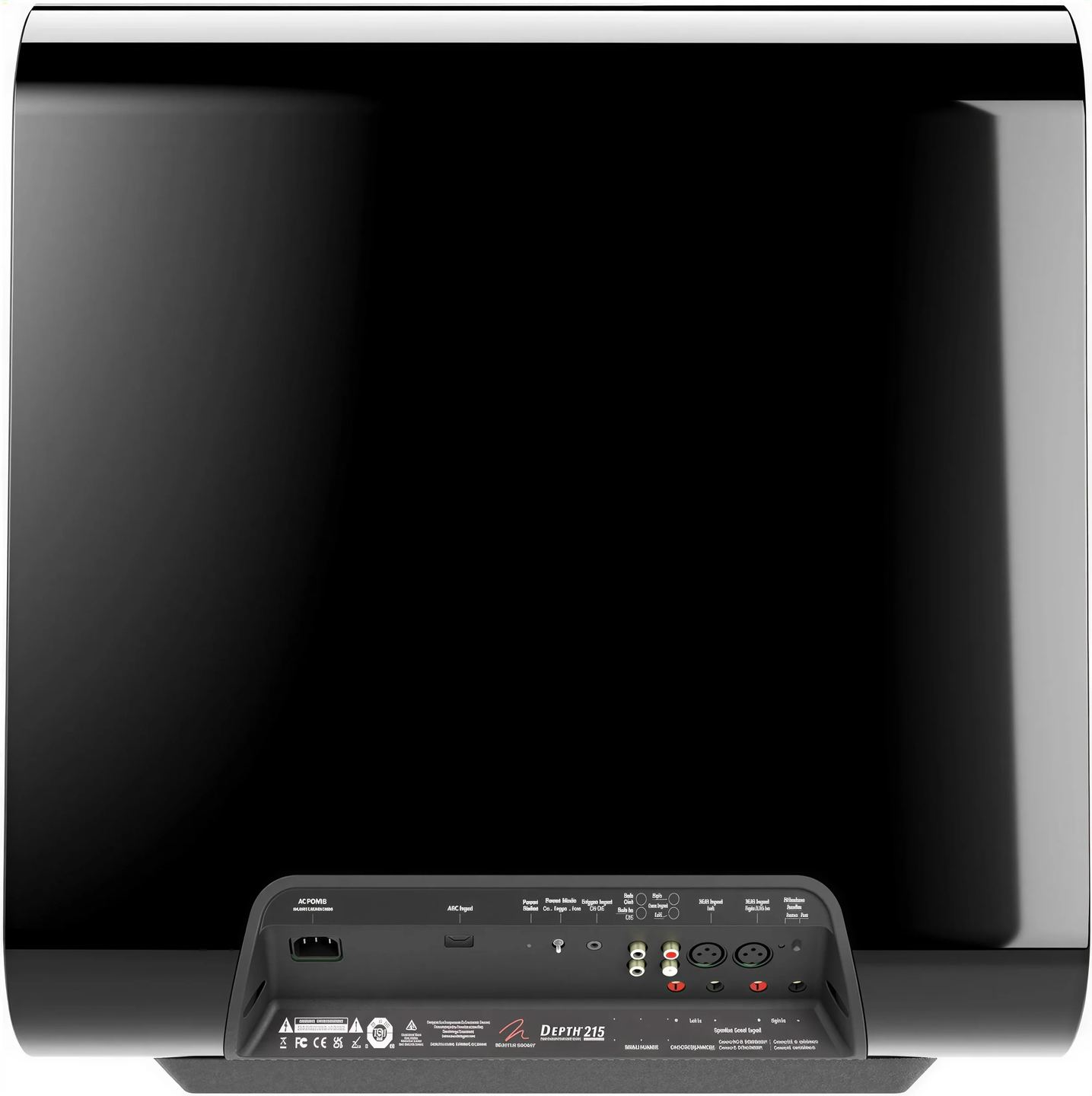
- Line-level inputs: left, right, LFE
- XLR inputs: left, right or LFE (on the right input)
- Speaker-level inputs: left and right (banana plugs required)
- Output: RCA subwoofer output (sum of all connected inputs)
- Wireless: built-in receiver, transmitter included
Cabinet
- Structure: multiple bracing, variable thickness from 25 to 76 mm
- Cooling: amplifier concealed at the rear, convection through extruded aluminum fins
- Integrated anti-vibration feet, carpet spikes included
General
- Finish: gloss black
- Dimensions (H × W × D): 572 × 580 × 595 mm
- Weight: 78.5 kg
Power
- Standby (wireless disabled): 0.5 W
- Standby (wireless enabled): less than 2 W (transmitter and subwoofer combined)
Frequently asked questions
What distinguishes the Depth 215 from the Depth 212?
The 212 features two 12-inch woofers and a single 2,200-watt peak amplifier, or 1,100 watts RMS. The 215 upgrades to 15-inch woofers and two amplifiers, delivering 4,400 watts peak and 2,200 watts RMS. Bass extends to the same point, 18 Hz, but the 215 moves more air and weighs more, 78.5 kg compared with 57.6 kg. The rest—the Carbon Aerocore diaphragm, Vojtko DSP, ARC Genesis correction, and settings—is shared by both.
Does the subwoofer work in a two-channel stereo system?
Yes. In addition to the LFE input of a home theater processor, the Depth 215 features left and right line-level inputs and left and right speaker-level inputs. It can be connected to either a stereo integrated amplifier or a multichannel processor.
Does wireless connectivity eliminate all cables?
No. It concerns the audio signal between the source and the subwoofer, transmitted by the supplied transmitter to the built-in receiver. The power cable remains essential, as the subwoofer needs power to operate.
What is the RCA subwoofer output for?
It outputs the sum of all connected inputs. It is used to connect a second subwoofer driven by the same signal, to cover a large room or balance bass between two listening positions.
Do speaker-level inputs require a specific connection?
Yes, they require banana plugs. Connect the amplifier’s speaker outputs to these inputs when the source does not offer a dedicated line-level or LFE output.
- Eco-contribution included in the sale price.


