

Sonus Faber Gravis II walnut


Overview
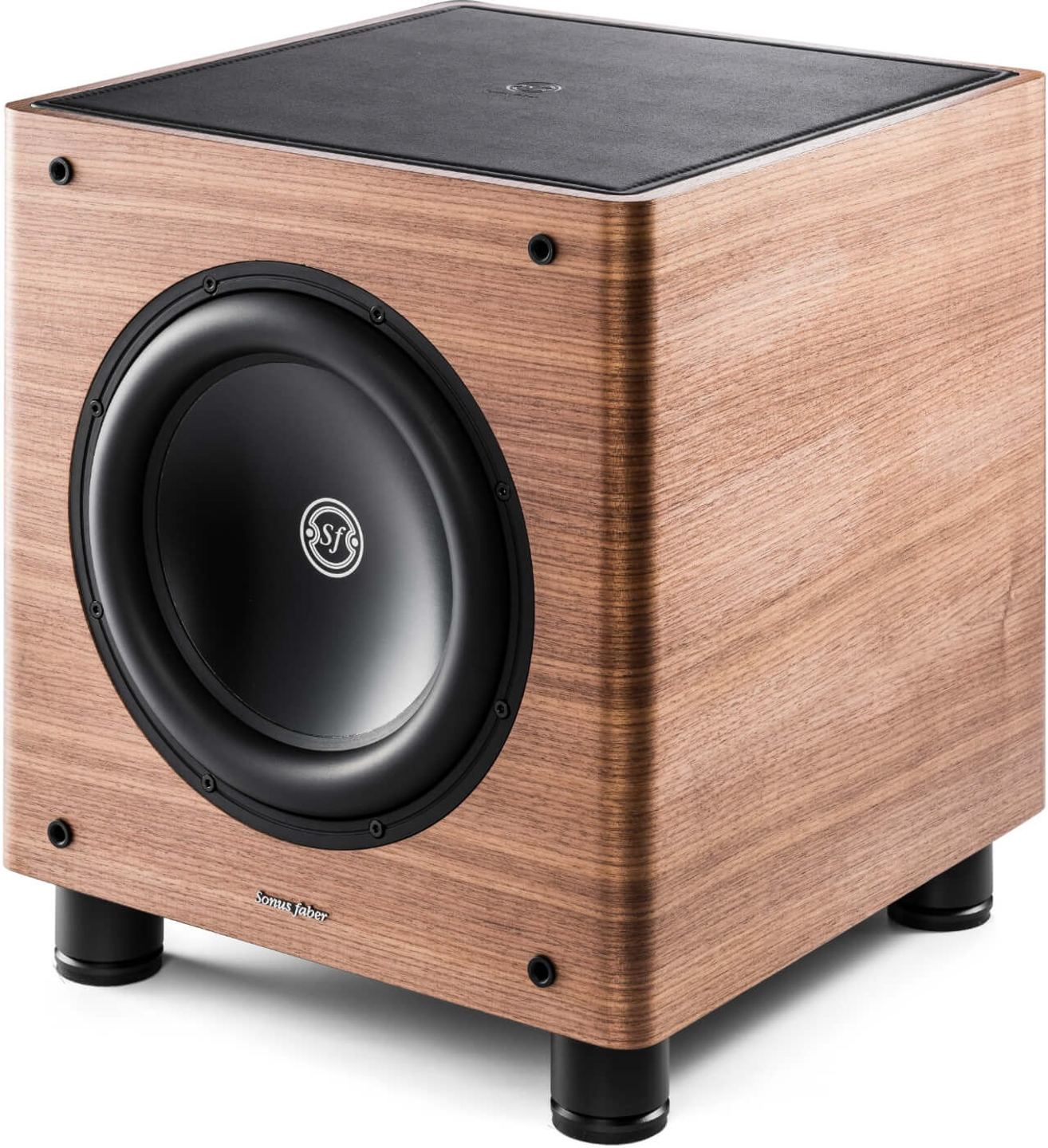
Bringing the bass down without betraying the musicality of a hi-fi system: that is the challenge taken on by a Sonus Faber subwoofer. The Vicenza-based manufacturer built its reputation on speakers with warm tonal character and refined cabinetry, and the Gravis II applies the same exacting standards to the lowest frequencies. It complements a pair of speakers for both music and cinema, with a look that makes it as much a piece of furniture as an audio device.
A return to Sonus Faber’s bass roots
The Italian brand is no stranger to subwoofers. Its very first project of this kind, the Gravis FB100, dates back to 1986, followed later by the Cremona Subwoofer M. The current Gravis collection continues this lineage with four models. The Gravis I and II are the most compact, designed to accompany the Sonetto collection, while the more powerful Gravis V and VI target the Homage Tradition and Reference ranges.
The Gravis II is the larger of the two smaller models. While the Gravis I features an 20 cm driver, the II moves up to 26 cm, with a larger cabinet and more powerful amplification. This intermediate size allows it to reach lower and handle higher level peaks, while remaining discreet enough to fit into a living room.
Passive radiator and treated paper: how the bass is produced
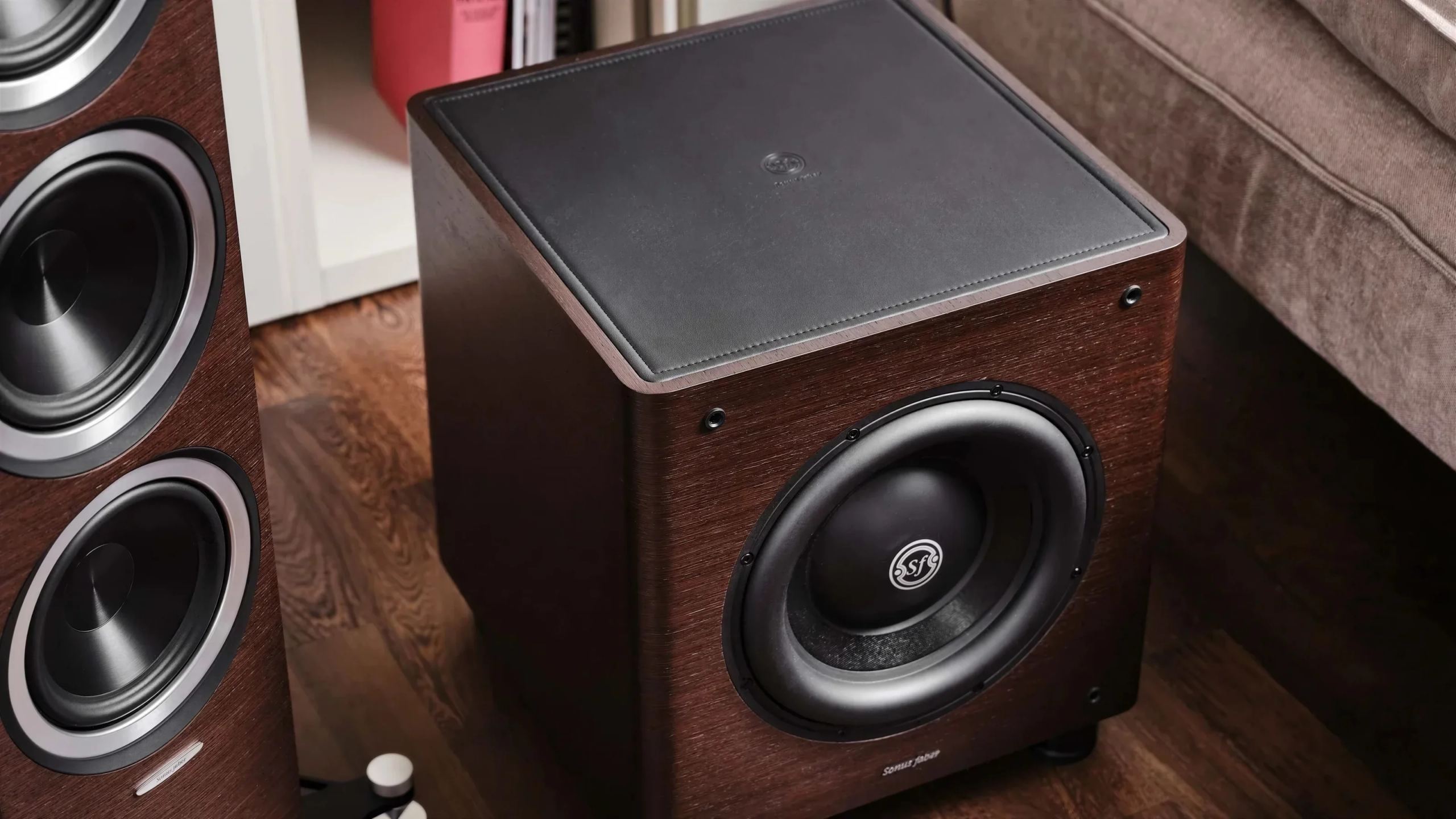
The Gravis II is based on a 26 cm long-excursion active driver, fitted with a treated paper cone and a wide rubber surround. Long excursion means that the cone moves a long distance back and forth, a necessary condition for moving a large volume of air and reproducing very low frequencies.
This driver is complemented by a passive radiator of the same diameter, sometimes called a passive cone or “drone cone.” This second cone is not connected to any amplifier: it is set in motion by the pressure generated by the active driver inside the enclosure. This technique reinforces the bass in the lower end of the spectrum without requiring an oversized subwoofer cabinet. Compared with a simple bass-reflex port, a passive radiator avoids unwanted air noise and is well suited to compact subwoofers. The Gravis II reaches down to 25 Hz, an extension that covers the infrabass found in electronic music, organ music, or soundtrack effects.
A 350-watt Class AB amplifier
The internal electronics use a proprietary Class AB amplifier developed for the Gravis series. It delivers 350 watts RMS, with peaks of up to 700 watts. Less widespread than Class D in recent subwoofers, Class AB is renowned for its linearity: it amplifies the signal consistently across the entire power range, at the cost of greater heat generation and power consumption. This choice is in line with the brand’s philosophy, which favors bass texture and naturalness over raw power alone.
An automatic power-on function detects the audio signal and wakes the subwoofer from standby, then puts it back to sleep after a period of silence. The function can be disabled if preferred. In standby, power consumption drops to 0.5 watt.
Three inputs for hi-fi and home theater alike
The rear panel brings together three types of connection, designed for two distinct uses. The LFE input, in mono RCA format, receives the dedicated bass channel from a home theater amplifier or processor. On this input, the subwoofer’s filter is bypassed: the home theater amplifier handles the crossover frequency and calibration, as required by multichannel standards.
The LINE input, also mono RCA, is used to connect to the line output of a preamplifier or stereo source. Finally, the high-level input uses a four-pole Neutrik Speakon connector. Originating from the professional world, this format stands out for its robustness and pull-resistant locking mechanism. In hi-fi, the high-level connection offers a concrete advantage: it takes the signal directly from the amplifier terminals, so the subwoofer receives exactly the same signal as the speakers, with the same sonic signature. Sonus Faber provides the required Speakon cable and details several wiring diagrams depending on the type of amplifier.
A welcome detail: volume levels are adjusted separately for the LFE input and for the line and high-level inputs. A system used both as a hi-fi setup and a home theater installation can therefore retain two distinct calibrations, without readjustment each time the use changes.
Settings to match the subwoofer to the speakers
Three controls allow the Gravis II to be matched to the rest of the system. The high crossover frequency can be continuously adjusted from 30 to 120 Hz: it sets the limit above which the subwoofer stops playing, preventing it from overlapping with the bass already handled by the main speakers. The filter slope is 24 dB per octave, a steep cutoff that limits overlap between the subwoofer and the speakers.
The phase adjustment, switchable between 0 and 180 degrees, corrects situations where the subwoofer and speakers are not time-aligned, which would create a dip in the bass at the listening position. These settings remain manual, with no automatic microphone calibration: matching is done by ear or with the help of a sound level meter, an approach that requires a little method but gives the listener complete control.
Cabinetry faithful to the Sonetto spirit
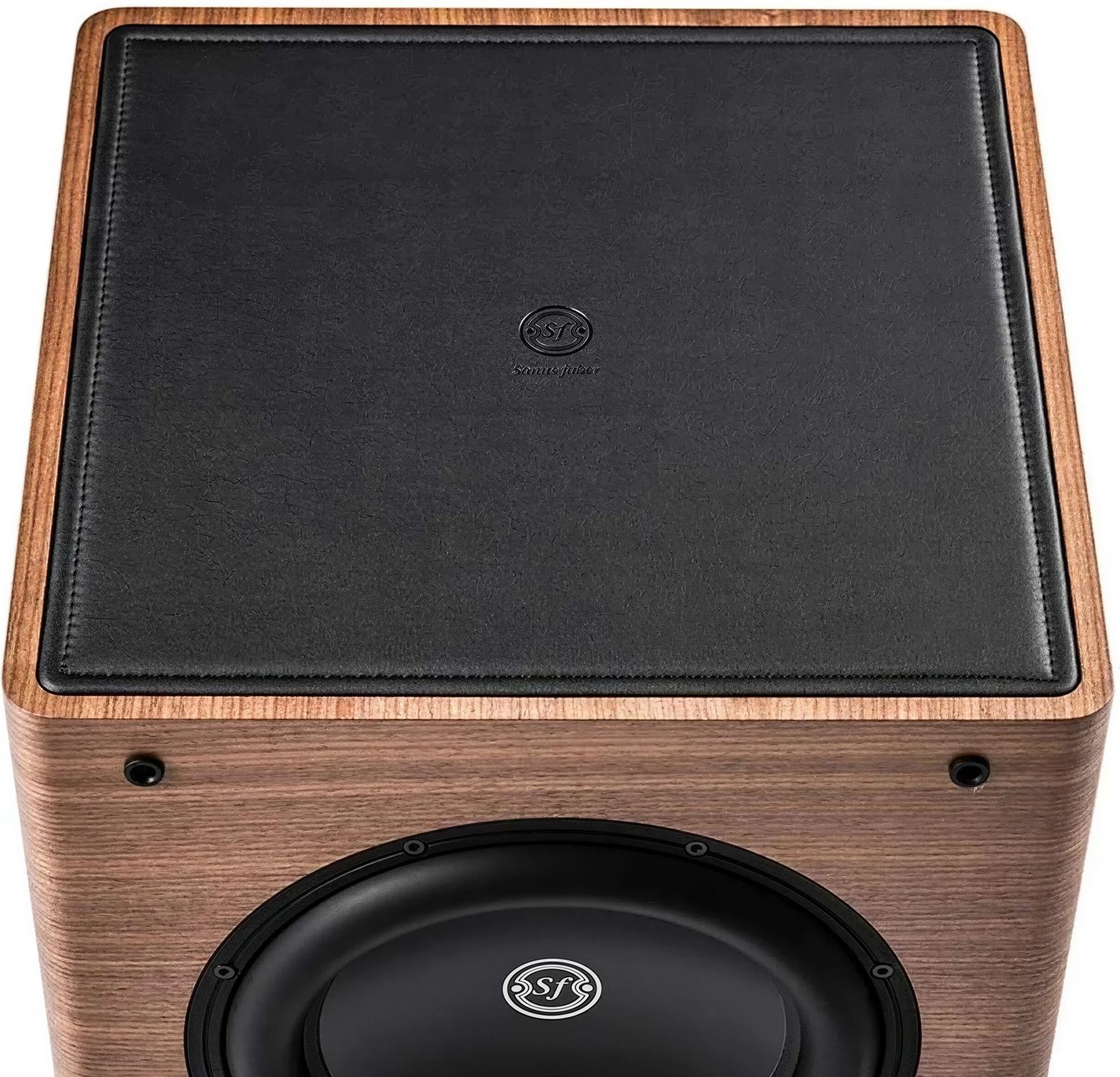
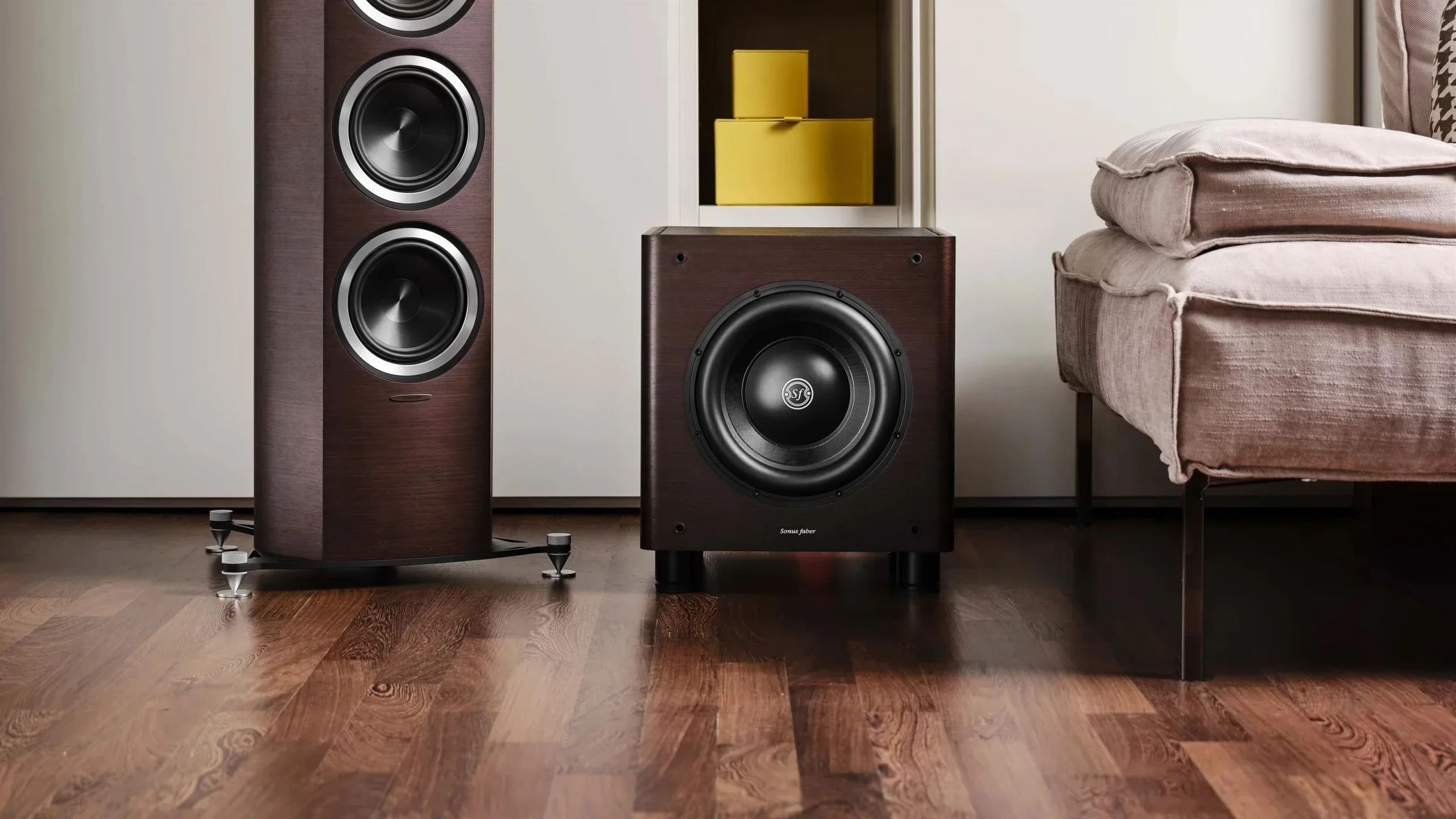
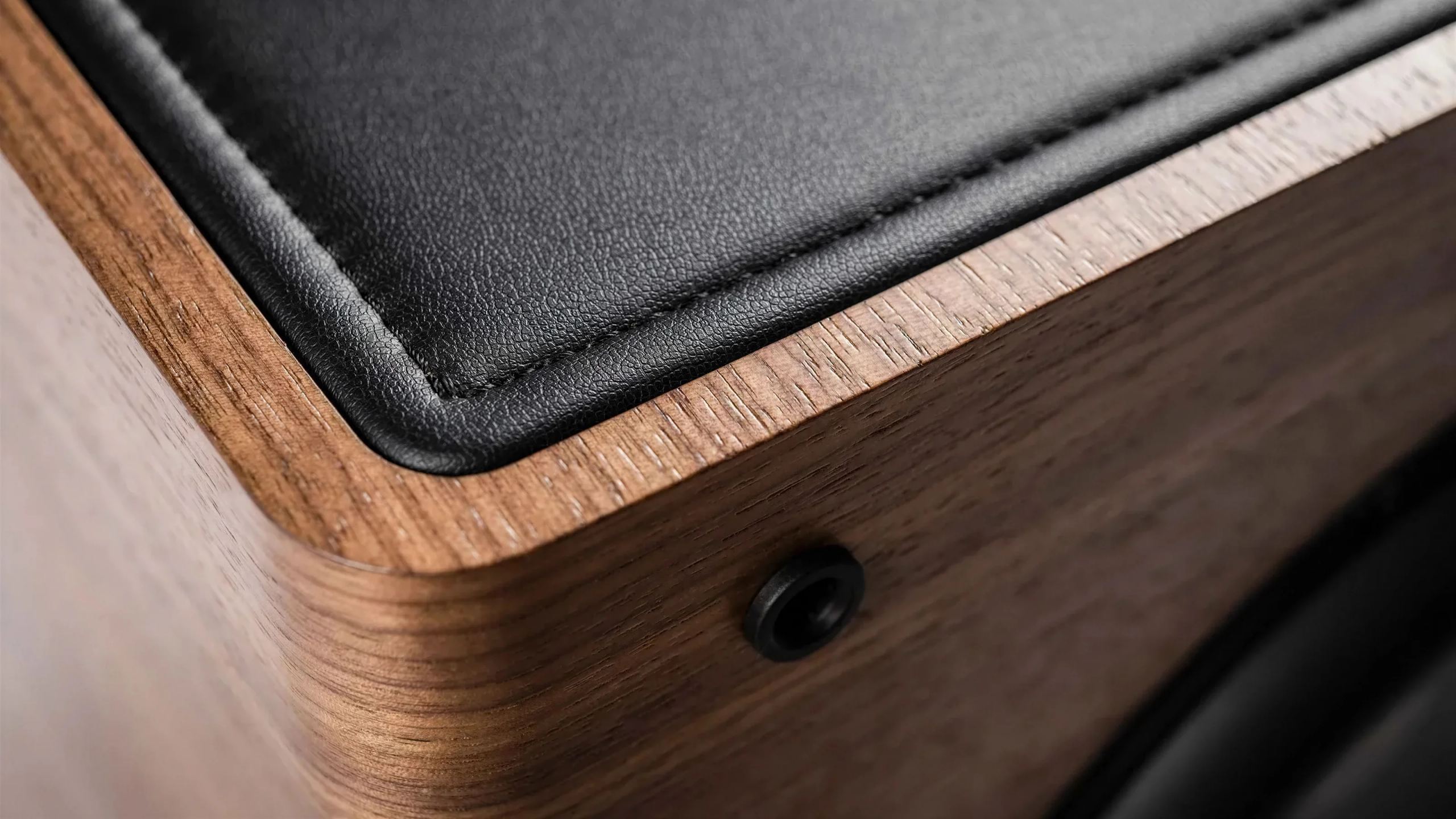
True to the brand’s visual identity, the Gravis II adopts a square-shaped cabinet topped with black leather, hot-stamped with the Sonus Faber logo. Open-pore wood, matte lacquer, or gloss lacquer finishes bring it closer to the speakers in the Sonetto collection, with which it forms a coherent ensemble, both visually and sonically. Rubber feet provide isolation from the floor.
At 40 cm high and equally deep, weighing 19.1 kg, it remains reasonably sized for a subwoofer of this diameter. Its moderate weight is due to its compact size: with equal performance, a larger subwoofer would be heavier. It can still be moved by one person and finds its place near a wall or in a corner, positions that naturally reinforce the bass.
Documentation
Technical Specifications
Acoustic Design
- Type: active bass-reflex subwoofer with passive radiator
- Driver: 1 × 260 mm long-excursion, treated paper cone, wide rubber surround
- Passive radiator: 1 × 260 mm long-excursion, treated paper cone
- Frequency response: 25 Hz to Fc (-6 dB), adjustable upper frequency
Amplification and Power
- Amplification: high-linearity Class AB
- RMS power: 350 W
- Peak power: 700 W
Connectivity and Audio Inputs
- LFE mono RCA
- LINE mono RCA
- HIGH LEVEL via 4-pole Neutrik Speakon
Settings and Controls
- Crossover frequency: continuously adjustable from 30 to 120 Hz
- Filter slope: 24 dB / octave
- Phase adjustment: 0° / 180° inversion
- Volume control: independent Master and LFE volume settings
- Automatic power-on: Auto On / Off can be disabled
Power Supply and Consumption
- Power supply: 120 V AC / 60 Hz or 230 V AC / 50 Hz depending on version
- Rated power consumption: 450 W
- Standby power consumption: 0.5 W
- Fuse: T6.3 A (110 V / 60 Hz); T3.15 A (230 V / 50 Hz)
Cabinet and Finishes
- Cabinet: square shape
- Finishes: open-pore wood / matte / gloss, black leather
- Isolation: rubber feet
Dimensions and Weight
- Dimensions (H × W × D): 404 × 356 × 408 mm
- Packaged dimensions (H × W × D): 537 × 512 × 526 mm
- Net weight: 19.1 kg
- Packaged weight: 26.8 kg
Frequently Asked Questions
Does the Gravis II only work with Sonus Faber speakers?
No. It was designed to match the Sonetto collection, both sonically and aesthetically, but its crossover frequency, phase and gain settings allow it to adapt to any pair of speakers. Its triple connectivity makes it compatible with the vast majority of hi-fi and home theater amplifiers on the market.
Should it be connected via LFE or high-level input?
It depends on the use. For a home theater setup driven by an audio-video receiver, the LFE input is the logical choice: the receiver handles bass management and calibration. For stereo listening from a preamplifier or integrated amplifier, the high-level Speakon input is recommended, as it sends the subwoofer the same signal as the one sent to the speakers. Nothing prevents using both inputs in parallel on a dual-purpose system, thanks to the independent volume controls.
What does “passive radiator” mean, and how is it different from a ported enclosure?
A passive radiator is an unpowered diaphragm that is set in motion by the internal pressure of the enclosure. It serves the same purpose as a bass-reflex port, boosting low frequencies at the bottom of the spectrum, but without an open duct. The advantage is that it avoids audible air turbulence at high volume and preserves clean bass in a compact cabinet.
Can it be placed against a wall?
Yes. A subwoofer generally gains bass output when it is moved closer to a wall or placed in a corner, as the surface reinforces low frequencies. The phase setting and volume control can compensate for any excess bass caused by this position. Sonus Faber’s user manual also provides placement guidelines depending on whether you are seeking clarity or maximum power.
What is the difference compared with the Gravis I?
The Gravis I is the smaller model, with a 20 cm driver and a more compact enclosure. The Gravis II steps up to 26 cm, with a larger cabinet tuned for this driver and greater power handling. It reaches deeper and handles high demands better, making it suited to slightly larger rooms or more demanding systems.
Is Class AB a disadvantage compared with Class D subwoofers?
It is a deliberate choice. Class D consumes less power and generates little heat, which explains its presence in many current subwoofers. The Class AB design used here offers great linearity and bass with a refined texture, at the cost of higher power consumption and heat generation. Sonus Faber made this choice to remain consistent with its pursuit of natural sound across the entire spectrum.
- Eco-contribution included in the sale price.




