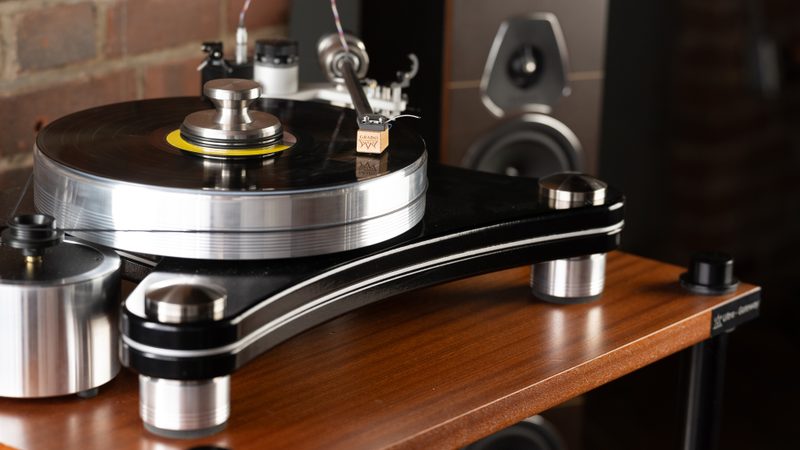

Grado Opus 4 (low level)
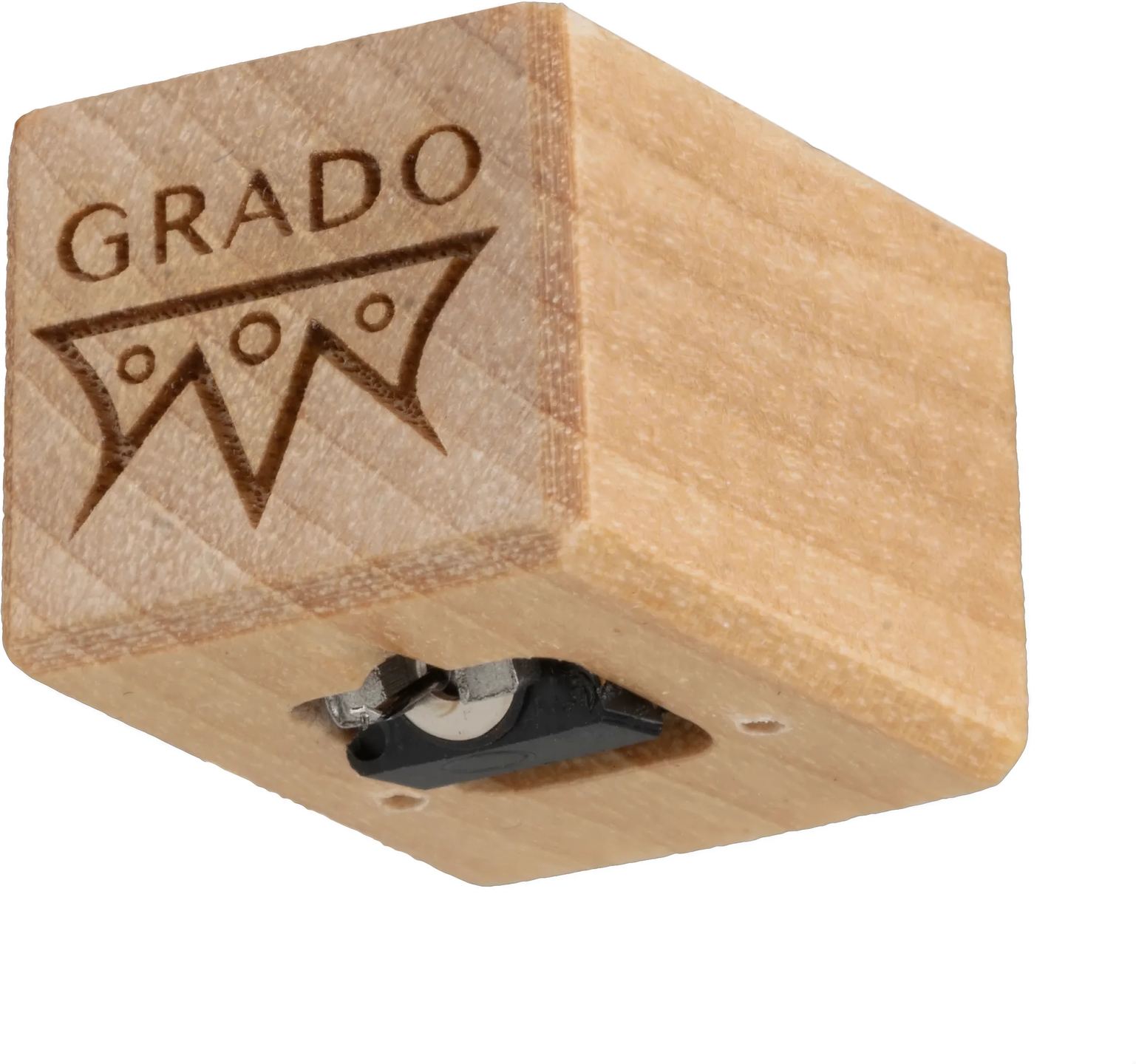
Grado Opus 4 (low output), the entry point to the Timbre series
Moving from a plastic body to a wooden body changes the way a cartridge reads a record. Grado takes this step with the Opus 4, the successor to the Opus3 and the first step in the Timbre series, the brand’s line of wood-bodied cartridges. Its low-output version requires a high-gain phono preamp, in exchange for an electrical generator with a more restrained output than that of the high-output version.
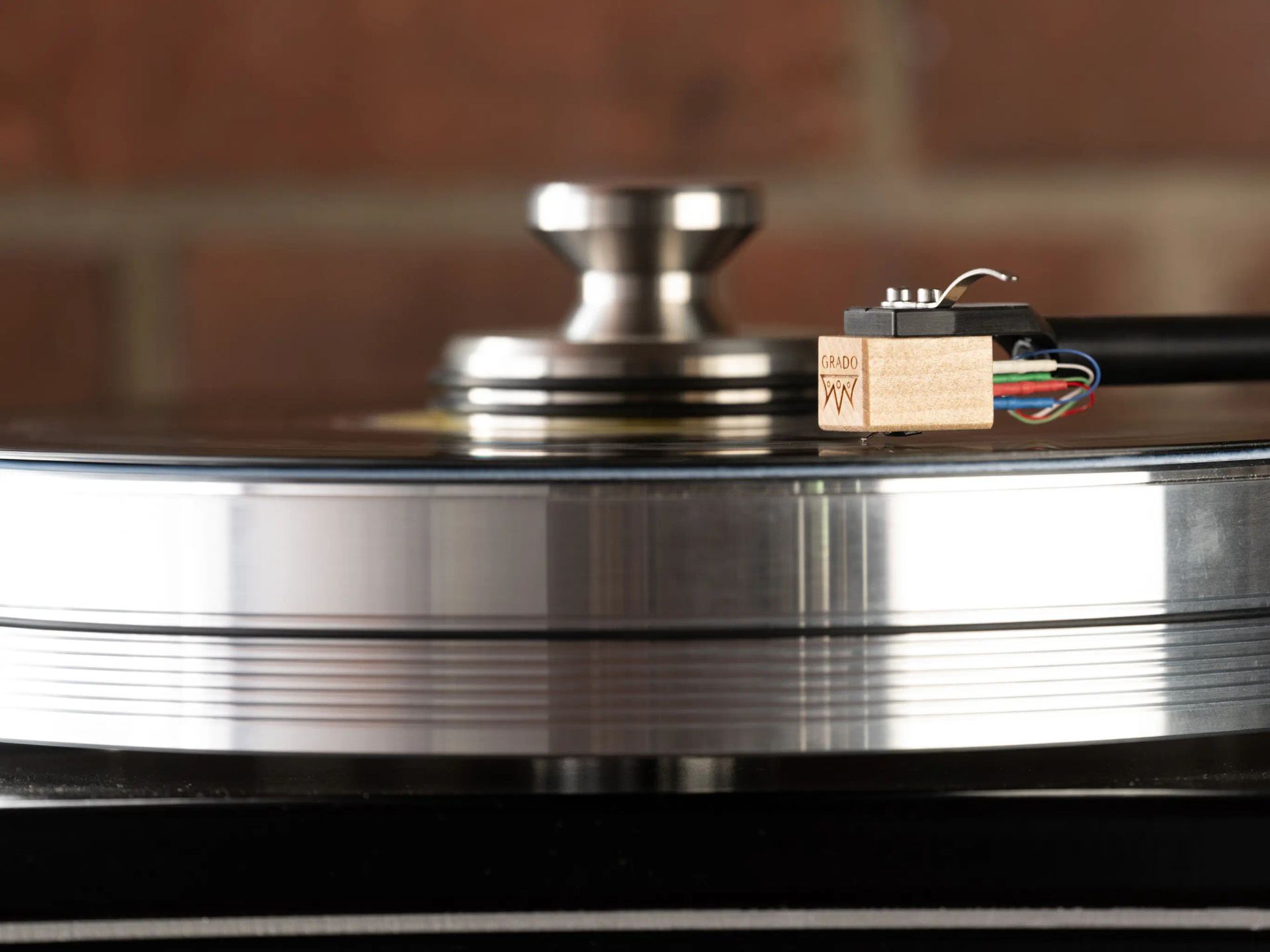
The maple body of the Timbre series
A cartridge does more than just read the groove: its body absorbs unwanted vibrations travelling up from the stylus and the tonearm. The chosen material therefore affects the sonic result. Grado houses the Opus 4 in a block of American maple, a wood selected for its ability to control resonances and already used in the brand’s headphones.
The Timbre series brings together Grado’s wood-bodied cartridges, above the plastic-bodied Prestige models. The Opus 4 is the entry model and incorporates the main design principles of the higher-positioned models, up to the Reference4 at the top of the series. The choice of maple follows an acoustic logic before being a matter of finish.
Moving iron according to Joseph Grado
Three major families share the cartridge market: moving magnet, moving coil, and moving iron. Grado invented and patented the moving-coil stereo cartridge before choosing another approach for its own models: moving iron, based on a principle known as Flux-Bridger, developed by Joseph Grado.
Its operation comes down to a simple idea. The coils remain fixed inside the cartridge body; only a small metal part, located at the end of the cantilever (the thin rod that carries the stylus), moves with the stylus tip and varies the magnetic field passing through these coils. The moving mass remains very low, which promotes speed and signal stability. This moving part does not include the delicate winding of a moving-coil cartridge, a factor that contributes to long-term durability.
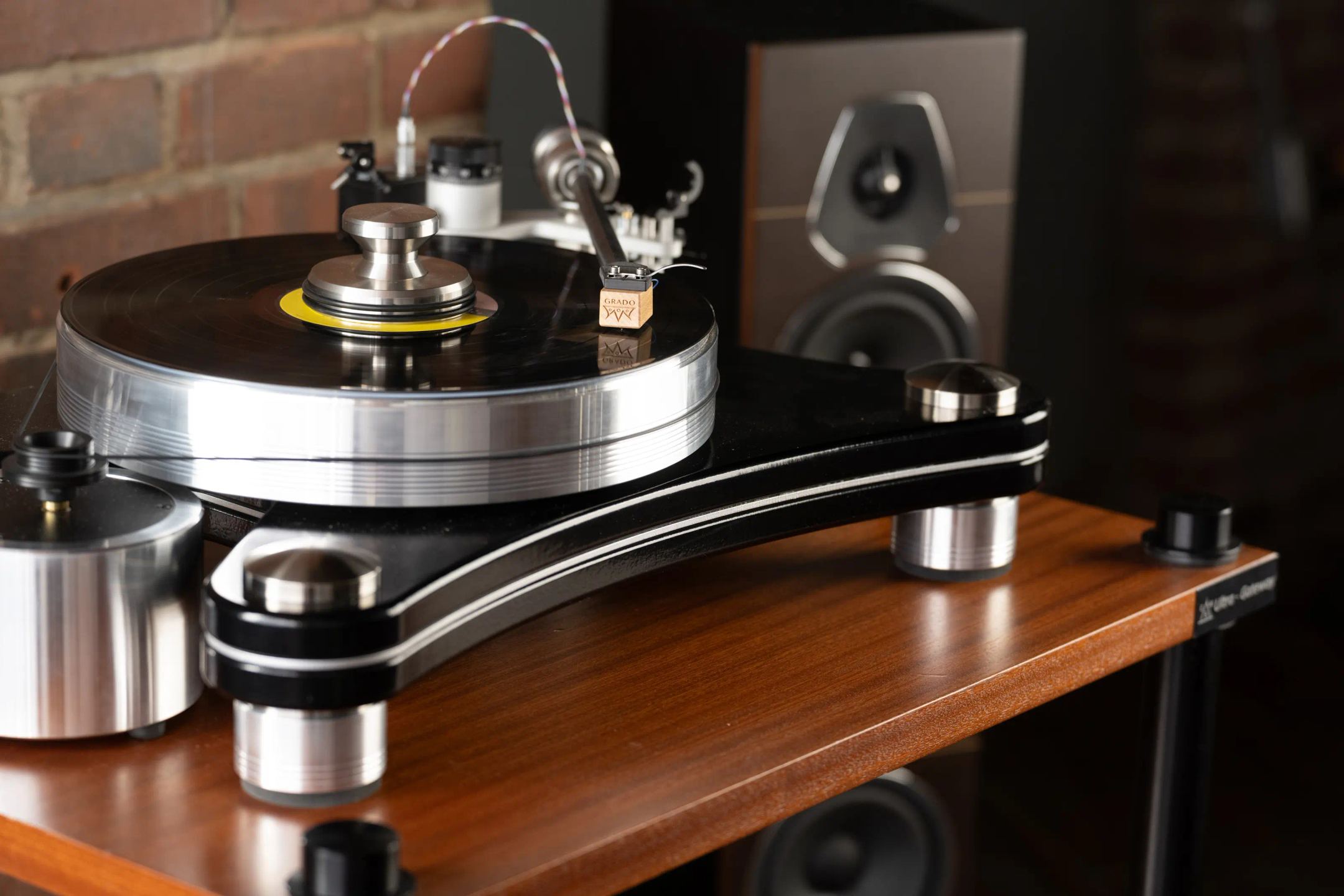
Elliptical stylus and OCC copper wiring
The Opus 4 stylus features a bonded elliptical diamond mounted on an aluminium cantilever. An elliptical tip has a finer contact area than a spherical tip: it follows the rapid variations engraved in the groove more faithfully and tracks better in tightly packed passages near the end of a record side. The term “bonded” indicates that the diamond is mounted on a metal base, a common solution at this price level.
Inside, the coils are wound with 5N OCC copper. The OCC designation refers to long-crystal copper, with a stated purity of 99.999% (the five “nines” of 5N), for a more consistent signal. Grado adds cold treatment, known as cryogenic treatment, and internal damping, two stages that reduce unwanted generator resonances.
Low output and preamp gain
A cartridge delivers a very low electrical voltage, which the phono preamp then raises to the level of other sources. The Opus 4 is available with two output voltages: 4.0 mV for the high-output version and 1.0 mV for the version described here. This lower figure requires more amplification.
In practical terms, a standard moving-magnet phono input expects a signal of around 4 to 5 mV. At 1.0 mV, the low-output Opus 4 requires higher gain, on the same order as that intended for a moving-coil cartridge. However, one detail sets it apart from moving coils: it requires loading at a high impedance, between 10 and 47 kilohms, rather than the hundred or so ohms typically used for moving-coil cartridges. The correct setting therefore combines high gain and high input loading, either through a high-gain phono input or through a moving-coil input kept at a 47-kilohm load.
Its low inductance, 6 millihenries, and internal resistance of 70 ohms make the setup relatively insensitive to tonearm cable capacitance, a parameter that usually affects moving-magnet cartridges. If your preamp offers only a standard moving-magnet input with no additional gain, the high-output version is the suitable choice.
Tracking force and tonearm compatibility
The Opus 4 uses the half-inch standard, the two-screw mounting accepted by most tonearms and headshells. It weighs 8.3 grams, a value compatible with most counterweights. Tracking force is adjustable between 1.6 and 1.9 grams, preferably using a dedicated scale to remain within this range.
The point to watch is compliance, here rated at 20 µm/mN. Compliance measures the flexibility of the suspension holding the cantilever: the higher it is, the more easily that suspension yields. A value of 20 places the Opus 4 among fairly compliant cartridges, well suited to low- to medium-mass tonearms. A very heavy tonearm combined with a compliant suspension lowers the tonearm-cartridge resonance frequency into a range where record defects, warping and off-center pressings, become noticeable. Across the usable range, response extends from 10 Hz to 60 kHz and channel separation is around 30 dB, ensuring a well-defined stereo image.
Technical Specifications
Design
- Type: moving iron cell, flux-bridger principle
- Version: low output, stereo
- Body: American maple
- Cantilever: aluminum
- Stylus: bonded elliptical diamond
- Internal wiring: 5N OCC copper
- Cryogenic treatment
- Internal damping
Electrical Specifications
- Output voltage: 1.0 mV (at 5 cm/s, 45°)
- Inductance: 6 mH
- Internal resistance: 70 Ω
- Load impedance: 10 kΩ to 47 kΩ
- Capacitive load: operation independent of cable capacitance
Audio Performance
- Frequency response: 10 Hz to 60 kHz
- Channel separation: 30 dB average, from 10 Hz to 30 kHz
Mechanical Specifications
- Compliance: 20 µm / mN
- Tracking force: 1.6 to 1.9 g
- Weight: 8.3 g
- Mounting: standard half-inch
Frequently Asked Questions
Is the Opus 4 available in a mono version?
Yes, Grado offers it in stereo and mono versions, each in high- and low-output models. A mono version reads only the lateral modulation of a mono record and ignores the vertical axis, which reduces surface noise on original mono pressings.
Can you replace the stylus yourself when it is worn out?
No. On wood-body cartridges, the stylus is not user-replaceable. Grado offers an exchange program: you return the worn cartridge and receive a new current-range wood model at a preferential price, with the old one sent back to the Brooklyn workshop for refurbishment.
Does it work with the built-in phono preamp of a turntable or amplifier?
These integrated preamps almost always offer a standard-gain moving-magnet input. At 1.0 mV, the low-output Opus 4 will play too quietly through it and force you to turn the volume up significantly, resulting in more audible hiss. You need a preamp with higher gain; otherwise, the high-output version remains the logical choice.
How can you tell when a stylus is worn out?
Wear is measured in playback hours. It manifests as increasing distortion, more noticeable toward the end of a side and on sibilant vocals. These are the signs that it is time to use the exchange program.
What distinguishes the low-level version from the high-level version, aside from the connection?
The maple body, aluminum cantilever, and elliptical diamond are identical. Only the coil winding changes: fewer turns lower the output voltage to 1.0 mV, resulting in lower inductance of 6 millihenries and lower internal resistance of 70 ohms than on the 4.0 mV version. The choice therefore depends on the preamp’s capabilities, not on the tracking mechanism.
- Eco-contribution included in the sale price.