

EPSON EH-LS7000
Specifications and features


Overview
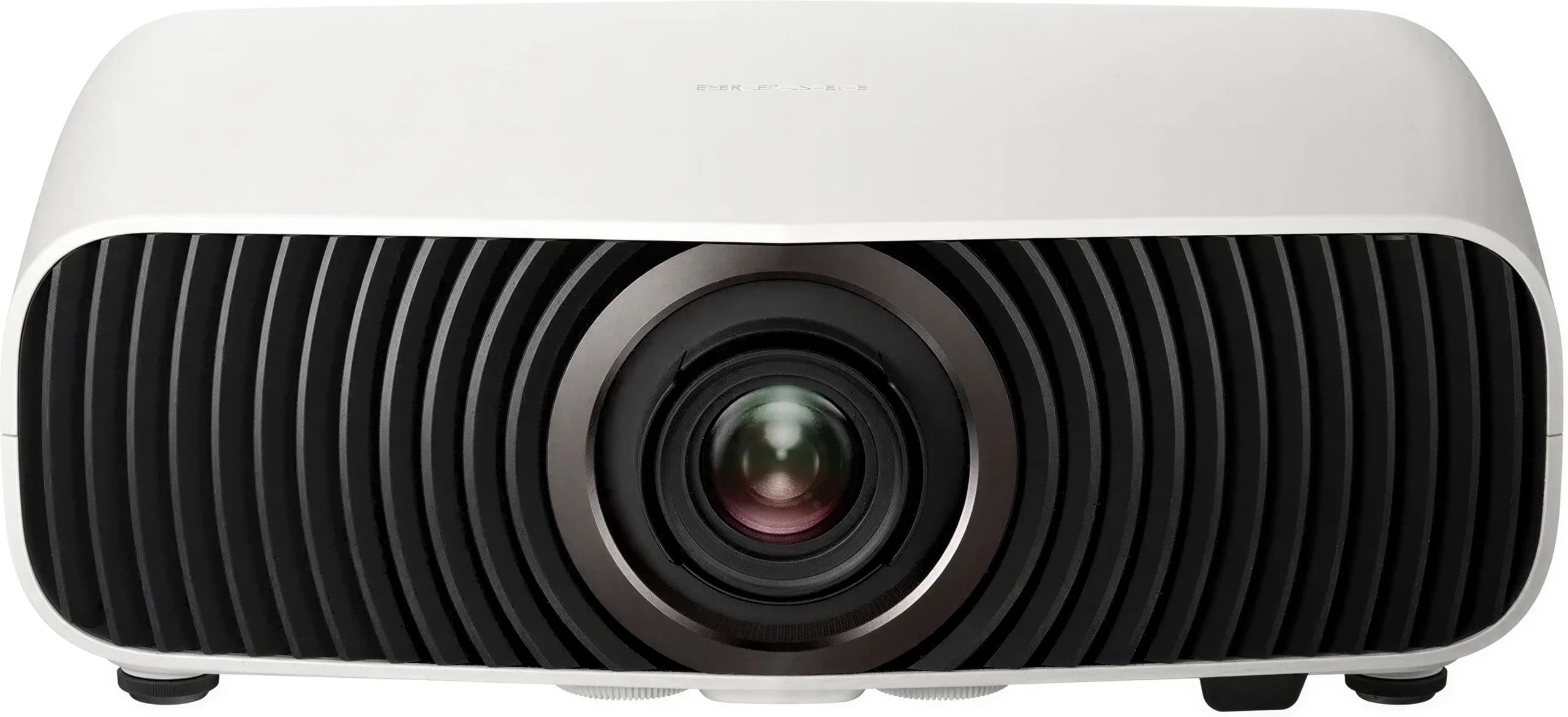
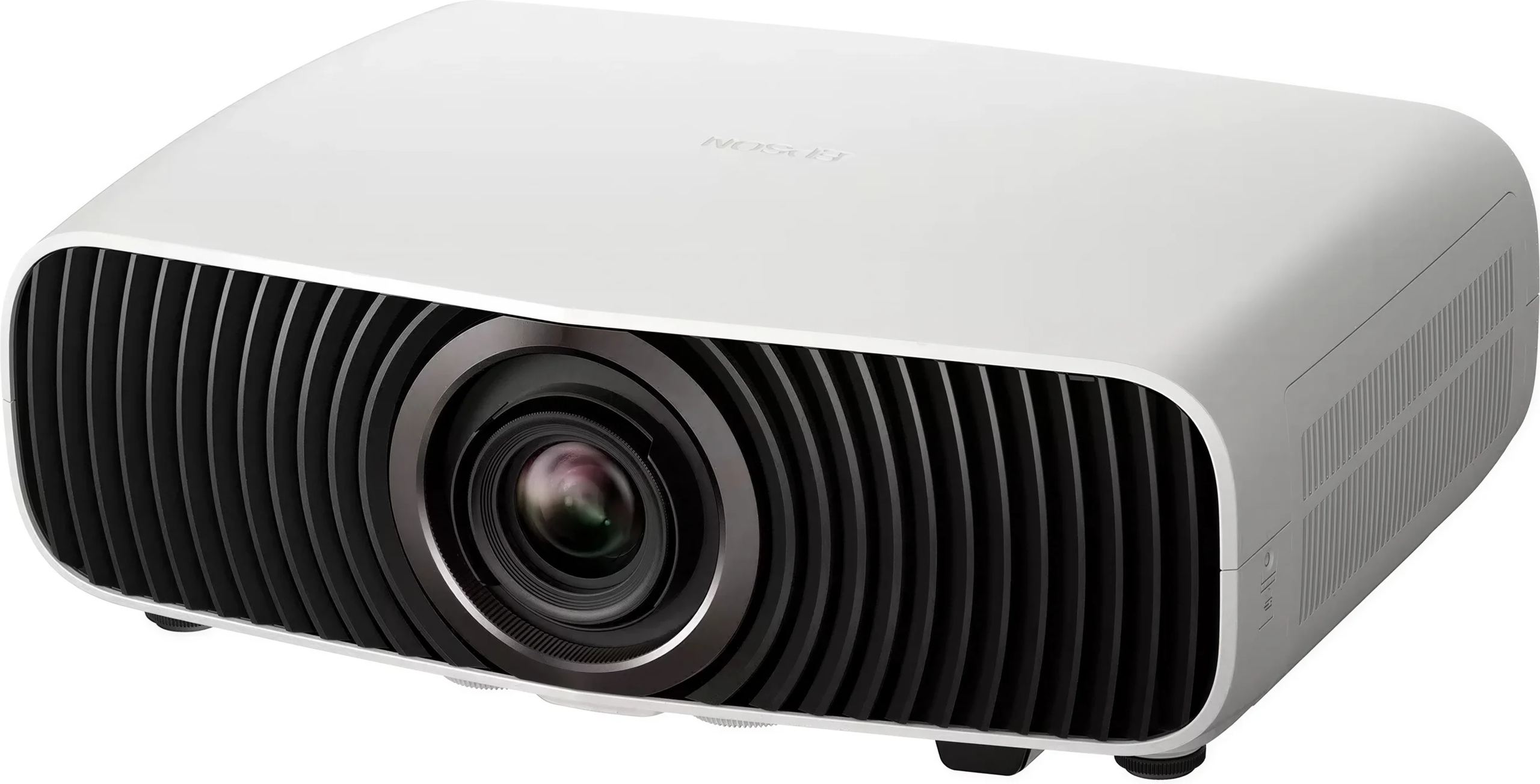
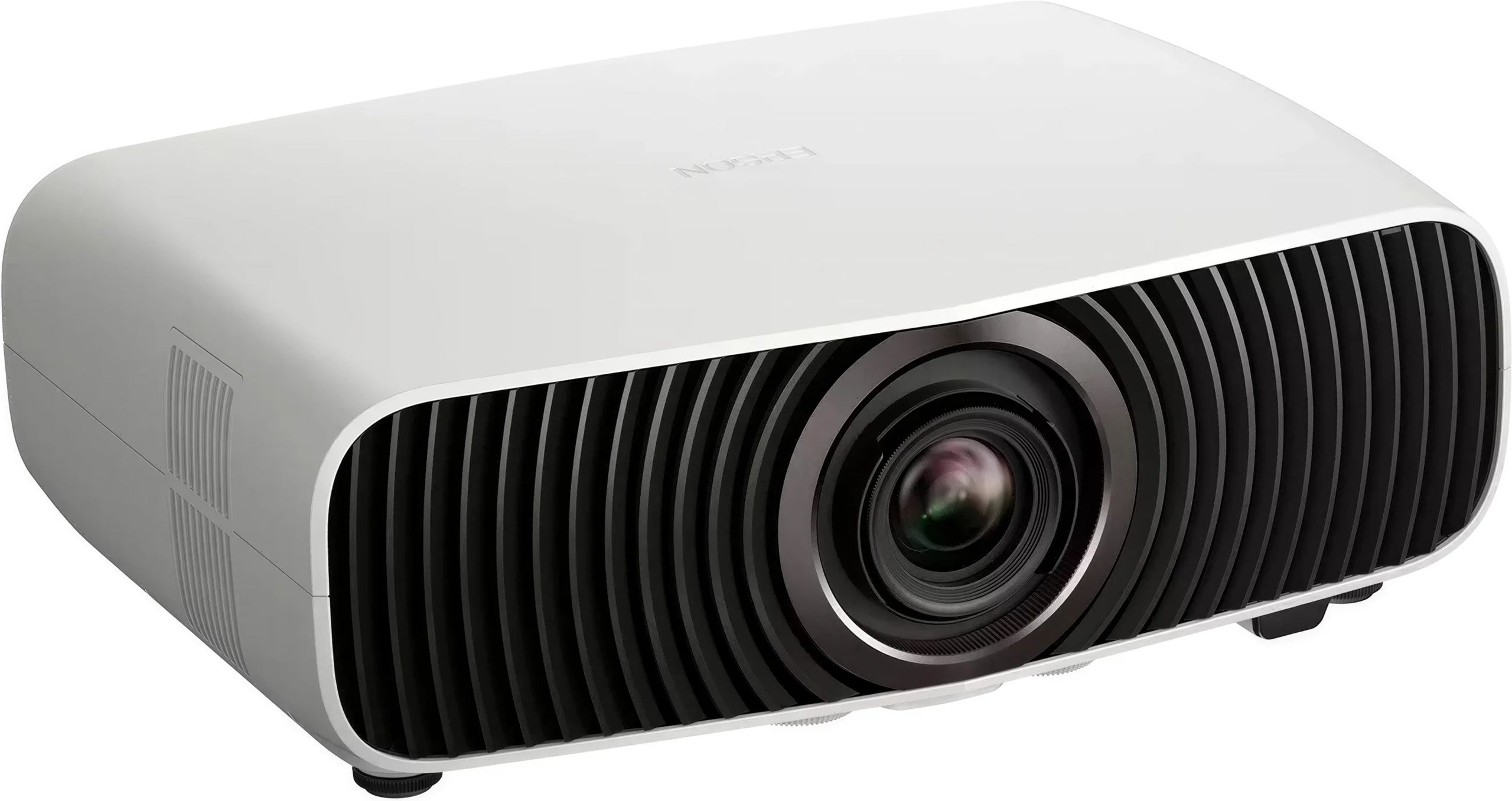
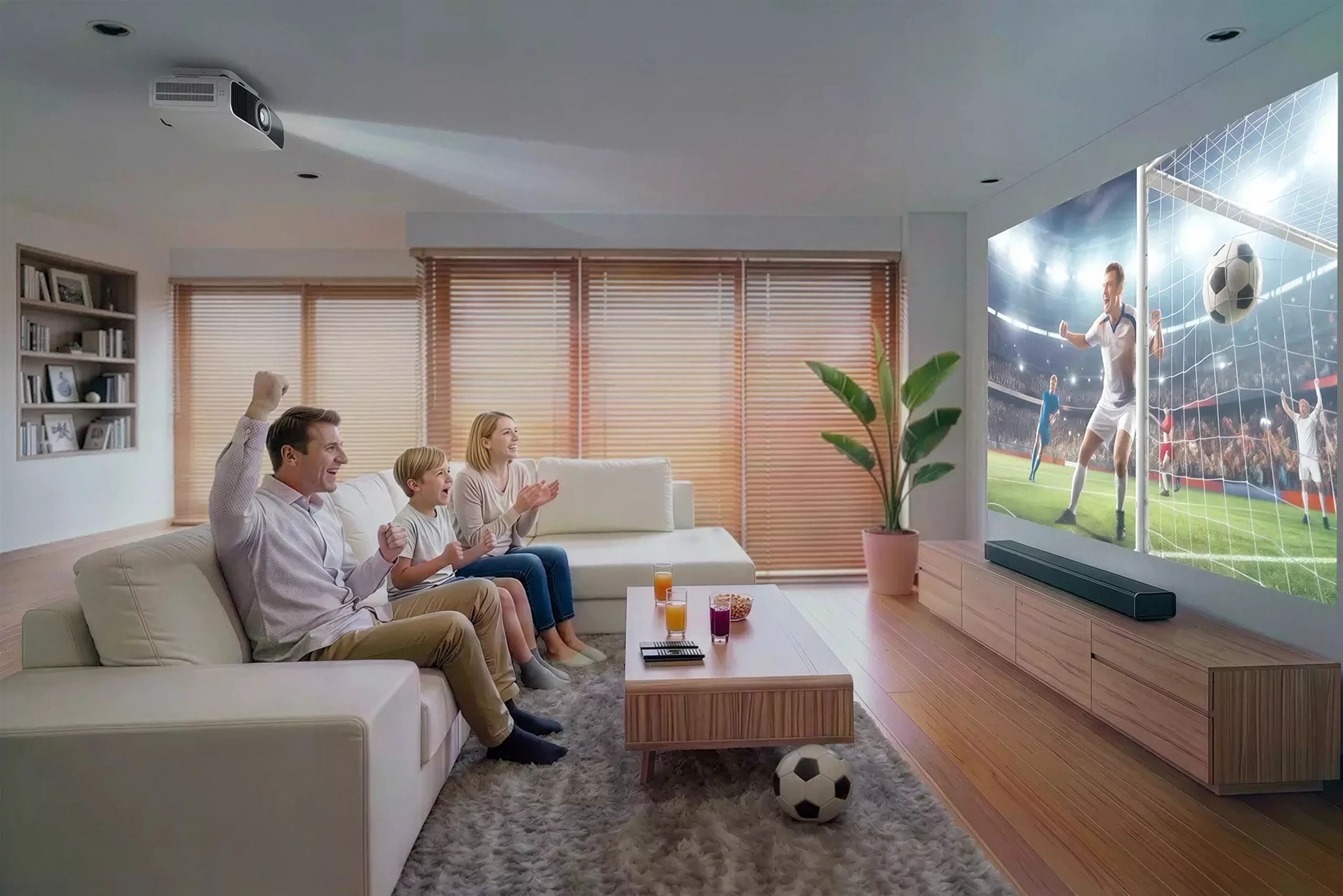
Beyond 85 inches, a television becomes difficult to accommodate in a living room. This laser projector projects a 100-inch image from less than three metres away from the wall, and more when the room allows. Epson combines it with its three LCD panels, a laser light source rated for 20,000 hours and artificial intelligence-assisted image processing, without an integrated app platform: the streaming player remains each person’s choice.
Three LCD panels and equal brightness in colour
The 3LCD principle separates the light from the laser source into three beams—red, green and blue—each passing through its own 0.62-inch panel before being recombined in a prism. All three colours are displayed simultaneously, without a colour wheel, and the image has no rainbow effect, those coloured fringes some people perceive around edges when moving their eyes. Output reaches 3,600 lumens for both white and colour, measured according to the ISO 21118:2020 standard: a saturated red or green remains as bright as a white area, which is noticeable in highly colourful images such as sports broadcasts or animated films.
This brightness allows projection in a dimly lit living room, even though complete darkness remains the condition for the best contrast. Eco mode reduces output to 1,800 lumens and fan noise from 25 to 22 dB(A), a setting suited to evening viewing in a dark room. The laser source features LD Boost technology, which gains up to 12% brightness without increasing noise levels.
4K resolution and 10-bit processing
The image contains 8,294,400 points on screen, equivalent to 4K UHD resolution of 3,840 × 2,160 pixels, formed from the three LCD panels. On a large diagonal, this density keeps edges sharp and text legible where a Full HD image would reveal its pixel structure.
Video processing works in 10 bits, or up to 1.07 billion shades, limiting the appearance of banding in gradients such as a sky or a solid background; an edge-reduction function is available for sources that still exhibit it. Colour processing handles the DCI colour space, used for cinema masters, while supported HDR formats are HDR10 and HLG, the latter used for high dynamic range television broadcasts.
How to correctly interpret the two contrast figures
The specification sheet provides two contrast values that do not measure the same thing. Native contrast, 1,900:1, corresponds to the difference between the brightest and darkest point within the same image, with the laser source at constant power. Dynamic contrast, greater than 5,000,000:1, comes from laser modulation, whose intensity is reduced in dark scenes. A film’s night sequences gain depth thanks to this modulation, but a scene combining a bright sky and shadowed areas relies solely on native contrast. Dark walls, a low-reflectance ceiling and a screen suited to the room therefore matter as much as the device’s settings for achieving deep blacks.
Artificial intelligence-assisted image processing
A MediaTek MT9681 chip handles processing. The AIPQ (AI PQ Scene 2.0+) function analyses each scene, recognises elements such as faces and continuously adjusts colour, contrast and sharpness, while AISR reconstructs detail in standard-definition or high-definition sources before upscaling them to 4K, a useful contribution for television channels or older recordings. Frame interpolation calculates intermediate frames to smooth fast motion: welcome during a match, it is debatable for a film shot at 24 frames per second, where it erases cinema’s characteristic motion.
Among the four picture modes, Cinema and Natural, with processing disabled, remain the most faithful to the original master, while Dynamic and Bright focus on brightness and saturation (enhanced by the dynamic colour booster) for a lit room. ISF certification enables calibration by a technician trained by the Imaging Science Foundation, using a probe to align colourimetry and gamma with current reference standards.
Easier placement thanks to lens shift
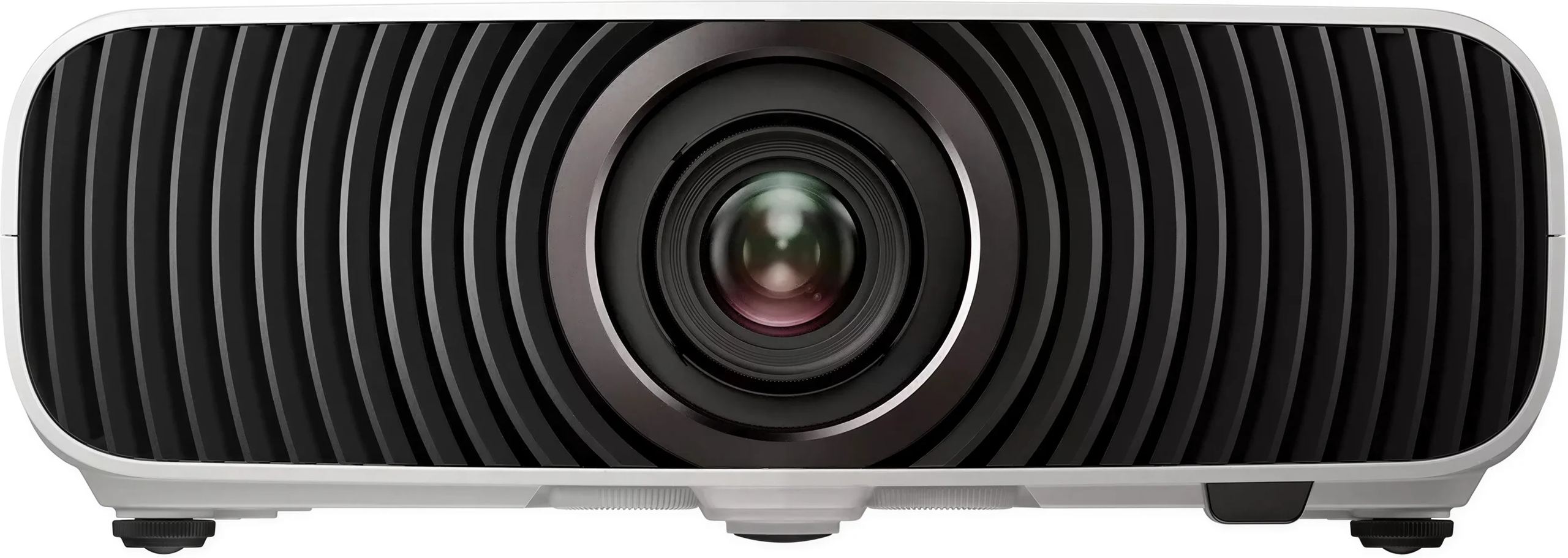
The lens is centred in the chassis, simplifying alignment: the device is placed on the screen axis, without calculating lateral offset. Its 1.62x manual zoom covers a throw ratio of 1.32 to 2.15:1, providing a 100-inch image from between 2.90 m and 4.71 m away, for diagonals ranging from 40 to 500 inches. Optical lens shift moves the image by ±59% of its height and ±21% of its width without tilting the projector, and therefore without keystone distortion: the unit can remain on a low shelf or hang from the ceiling while delivering a rectangular image. Quick Corner digital correction, which adjusts each corner separately, completes the system when installation falls outside these ranges; like any digital correction, it resamples the image and is best reserved for cases where optics are insufficient. Zoom, focus and shift are adjusted manually.
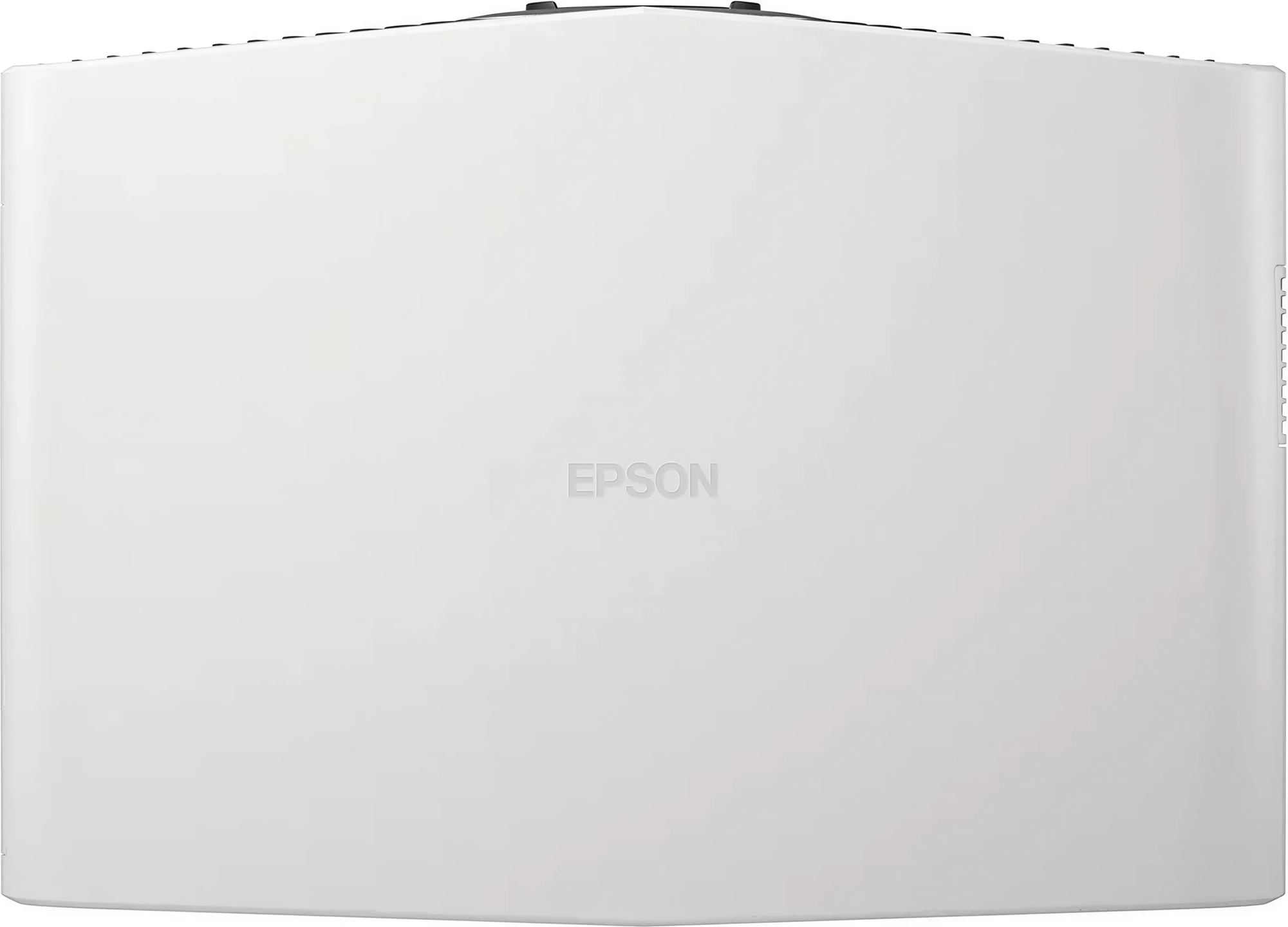
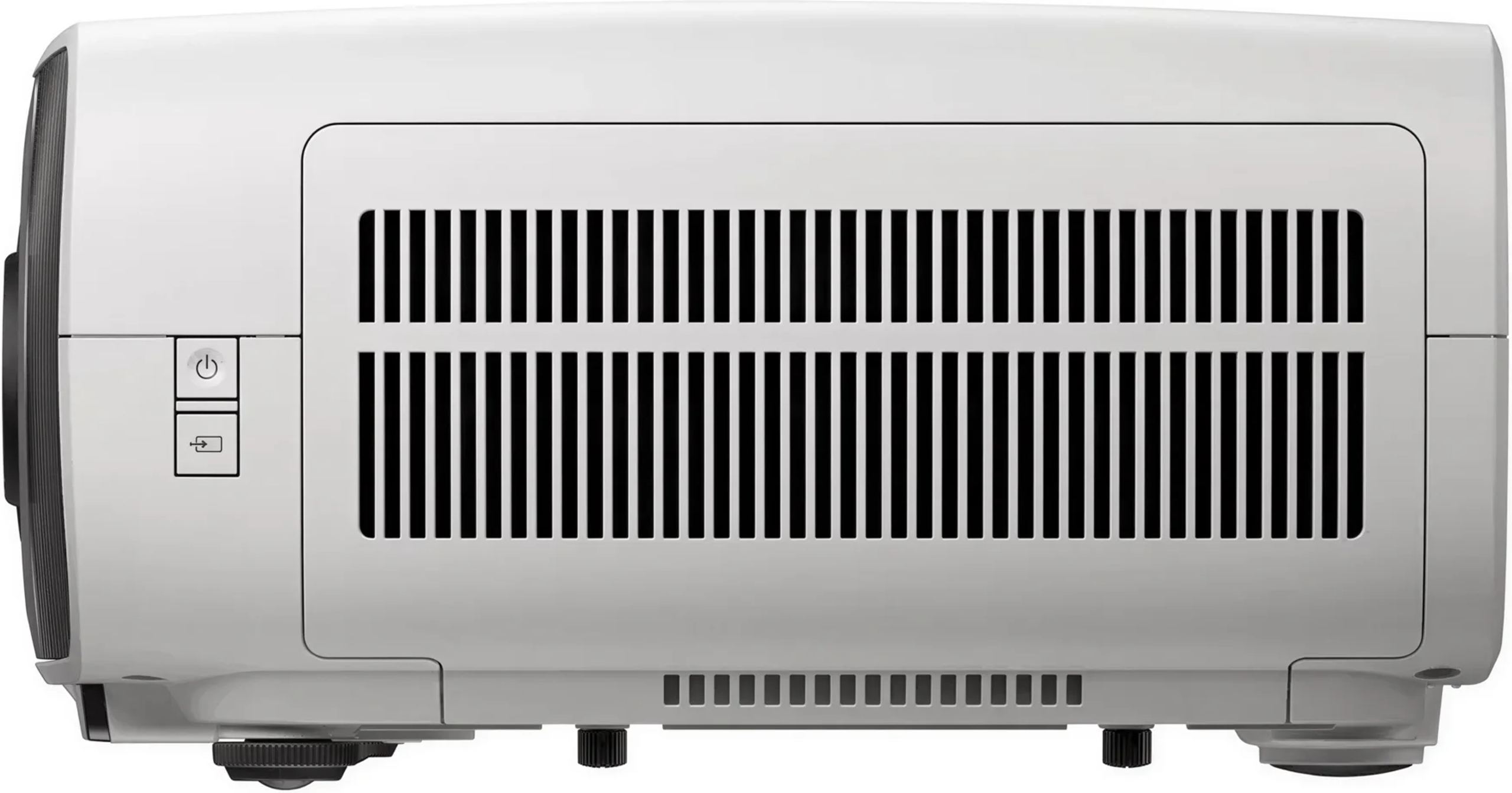
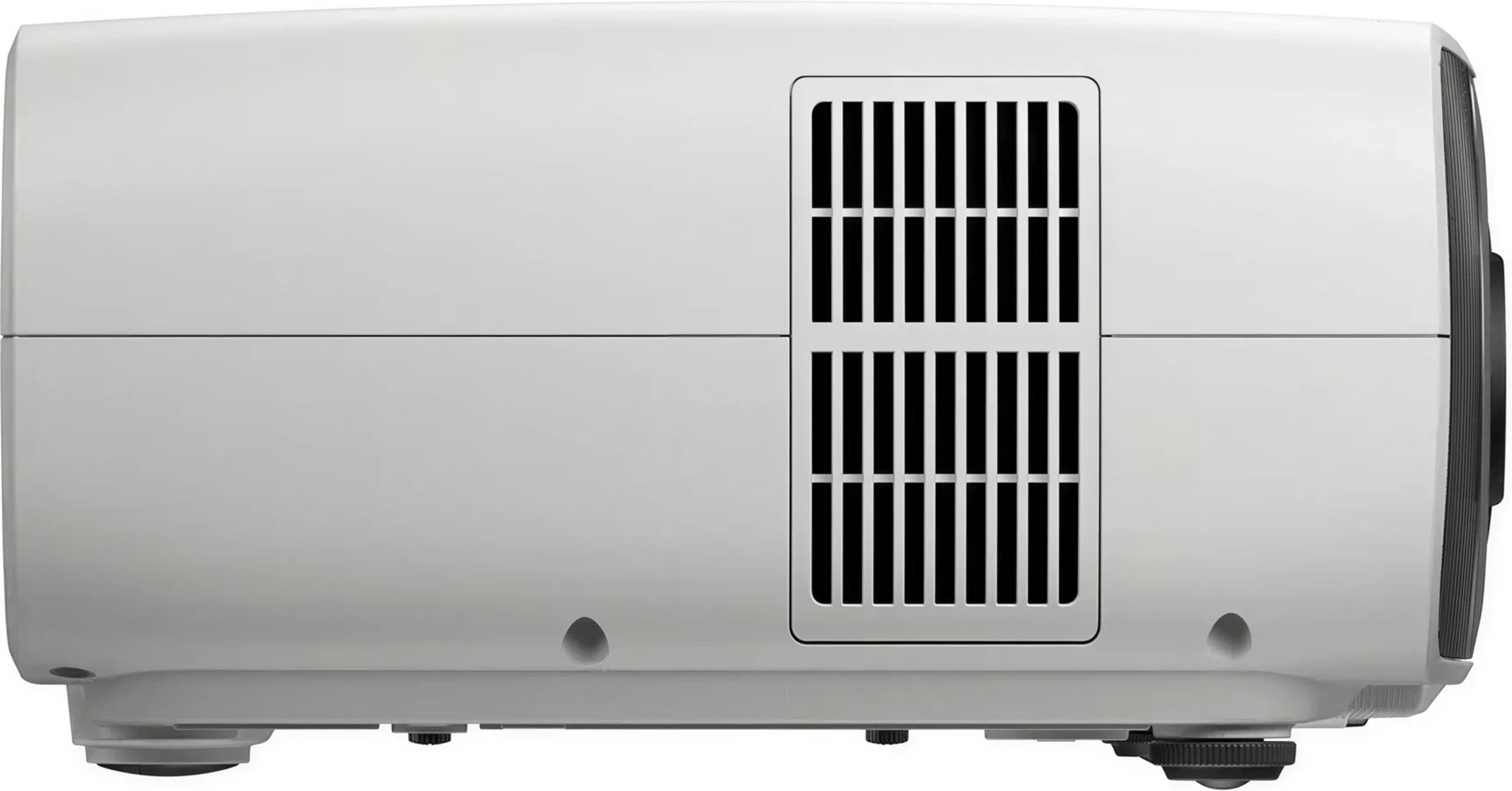
At 440 × 315 × 160 mm and 8 kg, the enclosure fits on living room furniture or a wall shelf. For ceiling installation, Epson offers ELPMB22 and ELPMB30 mounts (the latter ultra-slim, with 54 mm clearance below the ceiling), 450 and 700 mm extension tubes, a suspension adapter and a safety cable. The white finish blends into a light ceiling, while the black finish suits a dedicated room with dark walls.
A streaming player of your choice, connected via HDMI
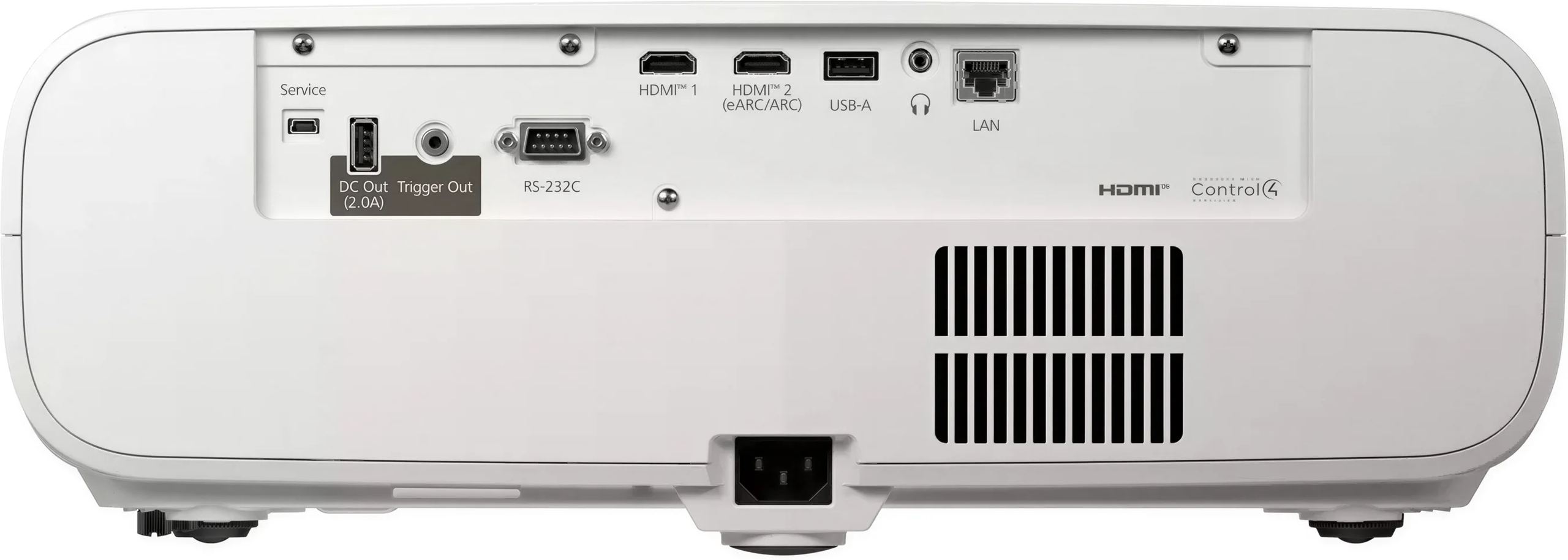
No app platform is integrated: Apple TV, Fire TV, Google TV or any other box connects via HDMI, and this player can be replaced when a newer model appears, without changing the projector. The powered USB port supplies power to a streaming stick, avoiding an additional power adapter at the ceiling. The HDMI ARC/eARC socket sends source audio back to a soundbar or a home cinema amplifier through the same cable; with eARC, lossless multichannel formats can be transmitted, provided the audio equipment is also eARC-compatible. A headphone output is available for private listening.
Matter, networking and control by an integrator
The projector can join a Matter installation, the open smart home standard: it can be added to Google Home, Samsung SmartThings or Home Assistant, switched on and off remotely, controlled by voice through these platforms and integrated into a scene that closes the shutters and dims the lights when a film starts. Network connectivity is provided via Wi-Fi 6E or an Ethernet port, while PJLink, ESC/VP.net, HTTPS and IPv6 protocols support remote control. In a room equipped by an installer, AMX Device Discovery and Control4 SDDP automatic discovery make the device appear in these systems without manual configuration, the RS-232C port remains available for older automation systems and the trigger output controls the lowering of a motorised screen when switched on.
A laser light source with no lamp to replace
The laser light source lasts up to 20,000 hours in each operating mode, or more than ten years at five hours per day, and both start-up and shut-down are instantaneous. Power consumption reaches 260 W in normal operation, 168 W in Eco mode and 0.5 W in standby.
Documentation
French
Technical specifications
Projection system
- Technology: 3LCD
- LCD panel: 0.62”
- Light source: laser
- Lifespan: up to 20,000 hours
- Video processing: 10-bit
- Image enhancement: AI-powered AIPQ and AISR
- Frame interpolation: yes
Image and video quality
- Resolution: 4K – 3840 × 2160
- Aspect ratio: 16:9
- Brightness: 3600 lumens
- Eco mode: 1800 lumens
- Dynamic contrast: greater than 5,000,000:1
- Native contrast: 1900:1
- Supported HDR formats: HDR10, HLG
- Color palette: up to 1.07 billion
- Color gamut: DCI
- 2D vertical refresh rate: 400 – 480 Hz
- Color modes: Cinema, Dynamic, Natural, Bright
Lens and projection
- Throw ratio: 1.32 – 2.15:1
- Zoom: manual, 1 – 1.62x
- Focal length: 18.2 – 29.2 mm
- Focus: manual
- Lens Shift
- Vertical: ±59%
- Horizontal: ±21%
- Lens memory: 10 positions
- Image size: 40 to 500 inches
- Projection distance for 100”: 2.9 to 4.71 m
Connectivity and network
- Connectivity: HDMI, HDMI ARC / eARC, USB 2.0 Mini-B, powered USB, RS-232C, Ethernet, Trigger, headphone output
- Wireless network: Wi-Fi 6E – IEEE 802.11a / b / g / n / ac
- Network protocols: HTTPS, IPv6, ESC/VP.net, PJLink
Compatibility and control
- Smart Home compatibility: Matter
- Home automation control: AMX, Control4
Power and acoustics
- Power consumption
- Normal operation: 260 W
- Eco mode: 168 W
- Standby: 0.5 W
- Noise level
- Normal mode: 25 dB(A)
- Eco mode: 22 dB(A)
Physical and environmental specifications
- Dimensions (W × D × H): 440 × 315 × 160 mm
- Weight: 8 kg
- Placement: tabletop or ceiling
- Color: white / black
- Operating temperature: 5 to 35 °C
Frequently Asked Questions
What are the differences compared with the other models in the EH-LS 2026 range?
The range includes four models. The EH-LS5000 (2,500 lumens) and EH-LS6000 (3,400 lumens) make up the entry-level range; the EH-LS7000 increases brightness to 3,600 lumens and adds ISF certification and integration with professional home automation systems. The EH-LS7500 includes these features with a short-throw lens (1.0 to 1.3:1 ratio) and 3,500 lumens: it displays a 100-inch image at around 2.20 m, compared with a minimum of 2.90 m for the EH-LS7000, in rooms where space is limited.
What image size for your viewing distance?
The distance is calculated by multiplying the image width by the throw ratio (1.32 in wide-angle position, 2.15 in telephoto position). For a 90-inch image, 1.99 m wide, the projector should be placed between 2.63 m and 4.28 m away; for 120 inches, 2.66 m wide, between 3.51 m and 5.71 m. Epson’s projection distance simulator refines these values according to the mounting height.
What maintenance is required?
With no lamp to replace, maintenance is limited to the air filter that protects the optical unit from dust. It should be checked from time to time, more often in a dusty room, and replaced with the ELPAF60 reference available as an accessory.
Can the projector be installed in a recess or cabinet?
Yes, provided that air can circulate around the enclosure. The unit generates up to 884 BTU/h, equivalent to its 260 W power consumption, and operates between 5 and 35 °C with 20 to 80% humidity. An enclosed cabinet or unventilated recess raises the internal temperature, which increases fan speed and therefore noise.
Which screen should you pair with the video projector?
In a dedicated room kept dark, a matte white gain 1.0 screen reproduces the image without altering colour accuracy. In a living room where ambient light remains, an ambient-light-rejecting screen designed for standard-throw projectors preserves contrast; screens of this type intended for ultra-short-throw models, which reflect light coming from below, are not suitable. The projector’s trigger output directly controls a motorised screen equipped with a 12 V input.
What is ISF certification for?
The Imaging Science Foundation trains technicians in calibrating displays and video projectors. Certification guarantees that the device provides the settings they need (white balance, gamma, primary-color calibration) to match the image to production standards using a probe, under the room’s actual conditions.
Is a video projector suitable for gaming?
Epson classifies it among its models suited for 4K gaming. To reduce display lag between the controller and the screen, it is best to disable image interpolation and artificial intelligence processing, which add calculations to each frame, and choose a simple picture mode such as Natural.
- Eco-contribution included in the sale price.
- Manufacturer reference: V11HC37040
- GTIN / EAN: 8715946749501




