Audio Pro C20 W white



Specifications and features


Overview
Under a TV, on a living-room media console or beside a turntable, a single 41 cm-wide speaker can replace a compact hi-fi system. The C20 W uses the same acoustic design as the C20: two tweeters and a woofer in a bass-reflex cabinet. It adds Audio Pro’s W-generation wireless platform, with a new app, AirPlay 2 and Google Cast.
Two tweeters and a woofer in one stereo cabinet
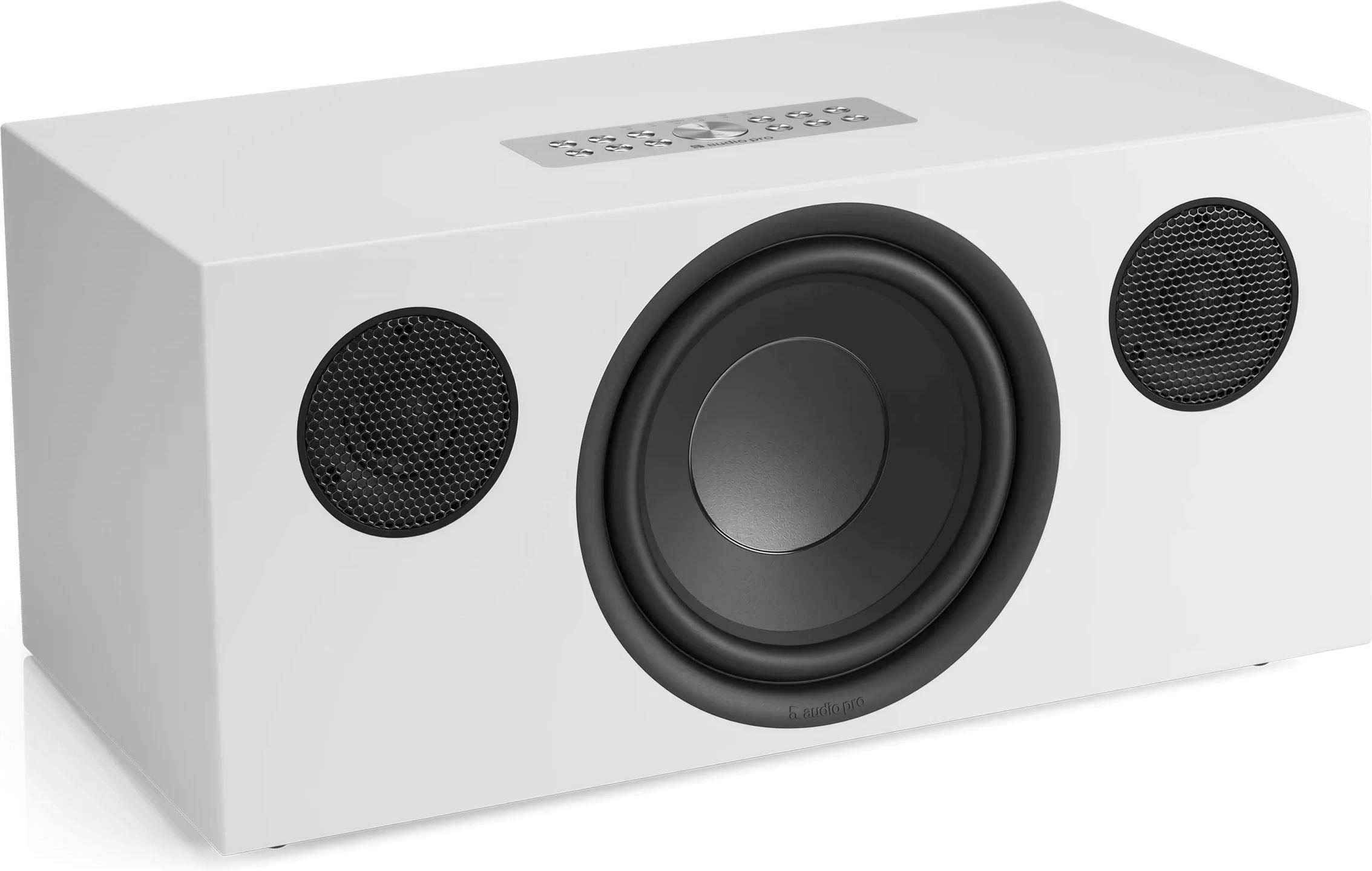
The two 25 mm soft-dome tweeters, one per channel, flank a 16.5 cm coated-paper woofer. The woofer reproduces bass and midrange up to 2,200 Hz, where the tweeters take over. The entire central range—the voices and body of most instruments—therefore comes from a single cone, keeping the sound consistent.
Each driver has its own Class D amplifier stage: 30 W per tweeter and 130 W for the woofer, for a total of 190 W. This strong emphasis on bass reflects a physical reality: low frequencies demand the most power.
The stereo image is still limited by a 41 cm cabinet. The tweeters are too close together to recreate the wide soundstage of a pair of speakers placed two metres apart. Below 2,200 Hz, both channels also pass through the same woofer. Left-right separation is therefore most noticeable up close. From farther away, it sounds more like a single, full-bodied source.
The bass-reflex cabinet, with its rear port, extends the woofer’s response down to 42 Hz. That figure is quoted at ±6 dB, a wide tolerance: it indicates how low the speaker still produces sound, not that its response remains flat down to that limit. Once the speaker is placed in a living room, the walls and floor reinforce the bass, and the measured in-room response reaches around 31 Hz at -6 dB. To go lower or add impact to films, a dedicated output lets you connect a subwoofer. The fabric grille is held in place by magnets and removes without tools.
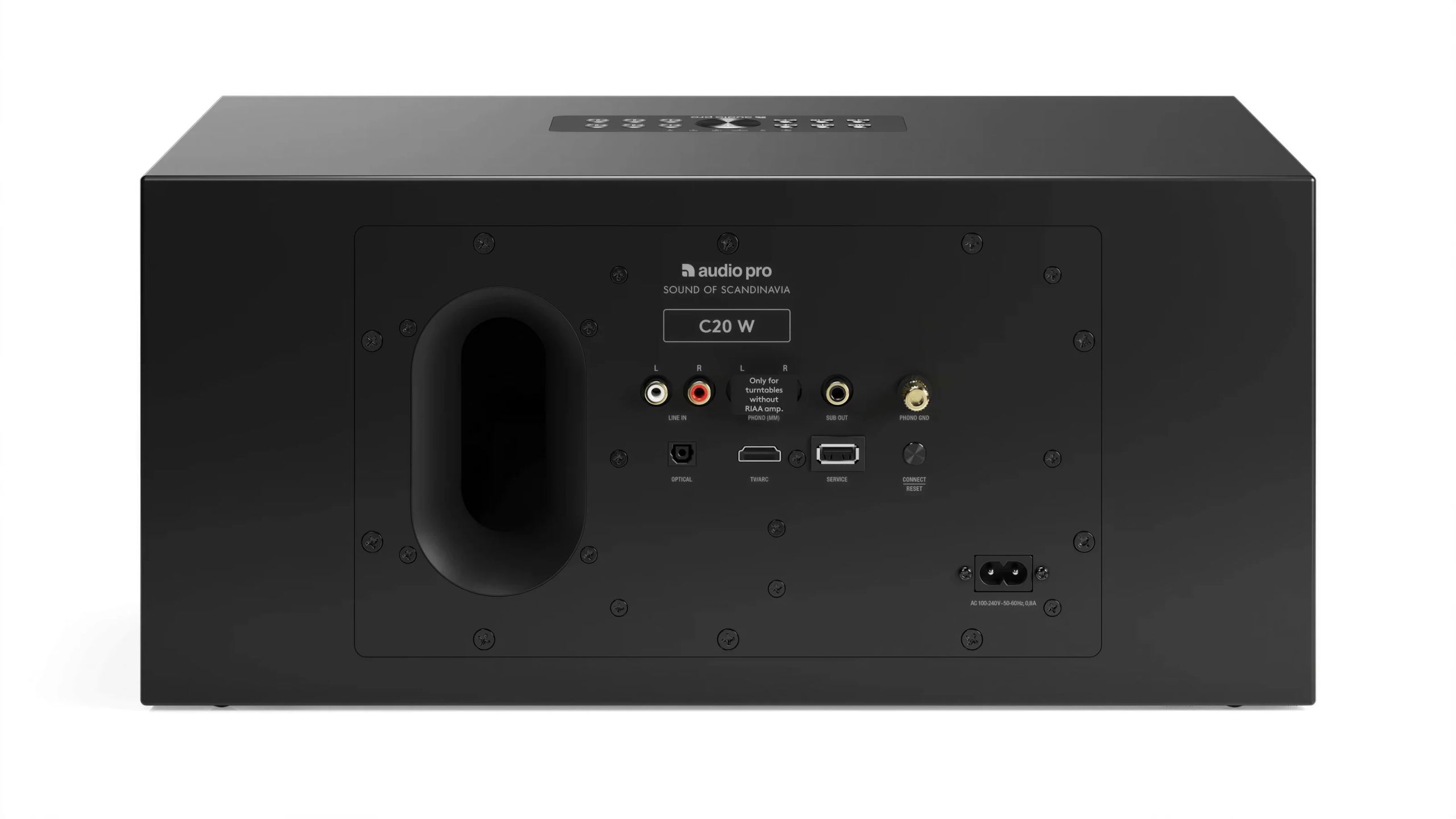
Rear connections for a TV and turntable
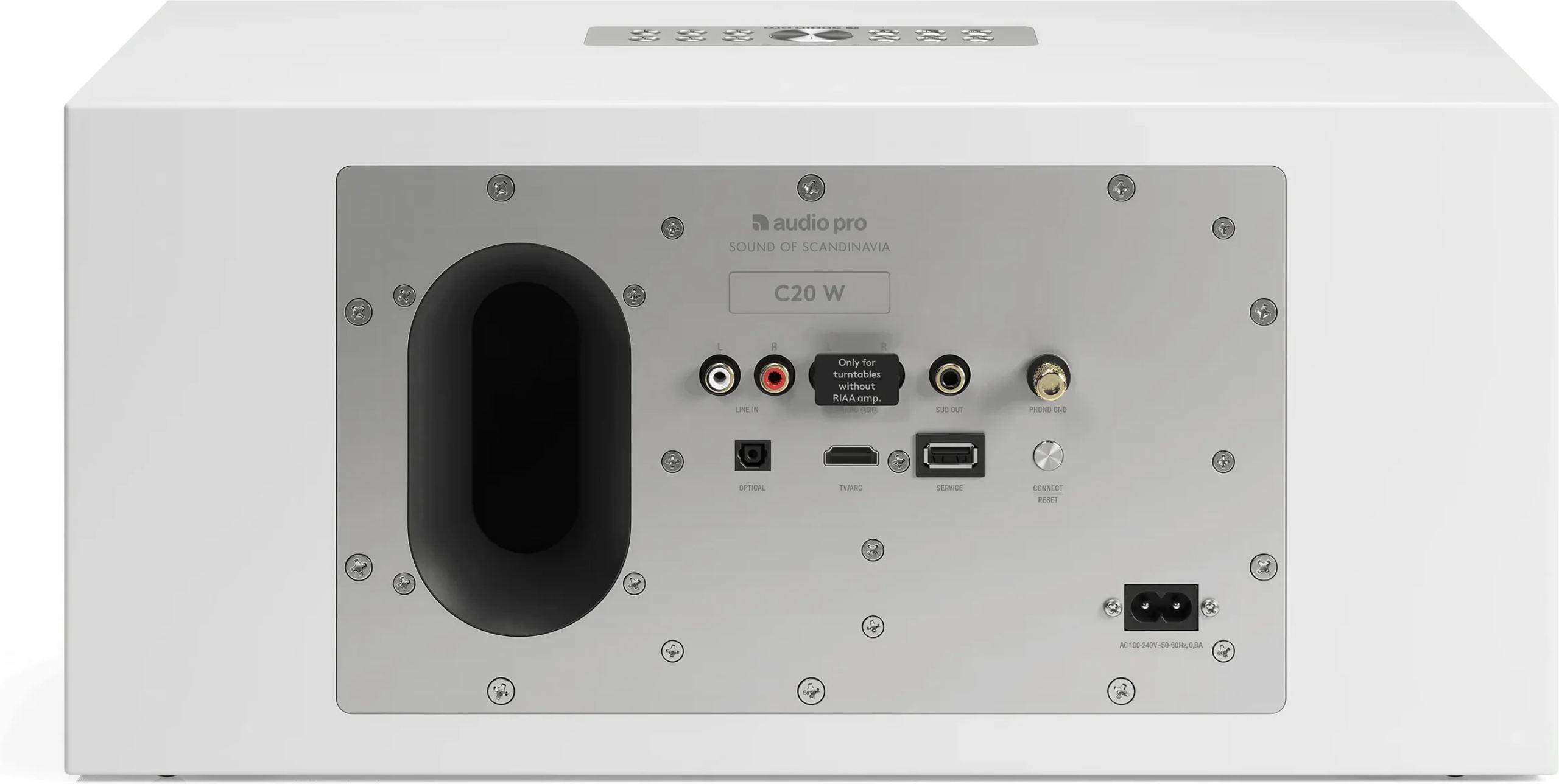
The TV connects through the HDMI ARC input. A single HDMI cable sends sound from the TV to the speaker, and in most setups the TV remote can then control the volume. The optical input provides an alternative for a TV without ARC or for a set-top box.
A turntable connects directly, thanks to the built-in phono preamplifier. This circuit serves two purposes. First, it applies RIAA equalisation, the standard curve that compensates for how records are cut (with bass reduced and treble boosted during production). It then raises the very weak signal from a moving-magnet (MM) cartridge to the level of a conventional source. A ground terminal beside the phono input accepts the turntable’s ground wire to prevent hum.
The RCA line input remains available for a CD player, network player or turntable that already has its own preamplifier. An RCA subwoofer output completes the setup when the speaker serves as the living room’s main sound system.
Streaming, multiroom and the W-generation app
The W stands for Audio Pro’s new wireless platform, built on technology from LinkPlay, the company behind WiiM. The speaker connects over dual-band Wi-Fi (2.4 and 5 GHz, 802.11ac).
Apple devices use it through AirPlay 2, while compatible apps use Google Cast. Spotify Connect and TIDAL Connect control it directly from their respective service apps. The Audio Pro app brings together Qobuz, Deezer, Amazon Music, TIDAL, TuneIn, Plex and numerous radio stations. It also plays music stored on a phone or shared over the local network. Wi-Fi streaming supports up to 24-bit / 96 kHz audio in FLAC, Apple Lossless, AAC, MP3 or WMA.
Multiple W-generation Audio Pro speakers can be grouped in the app. They can play the same music throughout the house or different content in each room, while AirPlay 2 and Google Cast groups remain available alongside them. In a group, the main speaker also streams whatever is connected to its inputs. A record playing on the turntable connected to the C20 W, or sound from the TV, can therefore also be heard on another Audio Pro speaker in the kitchen.
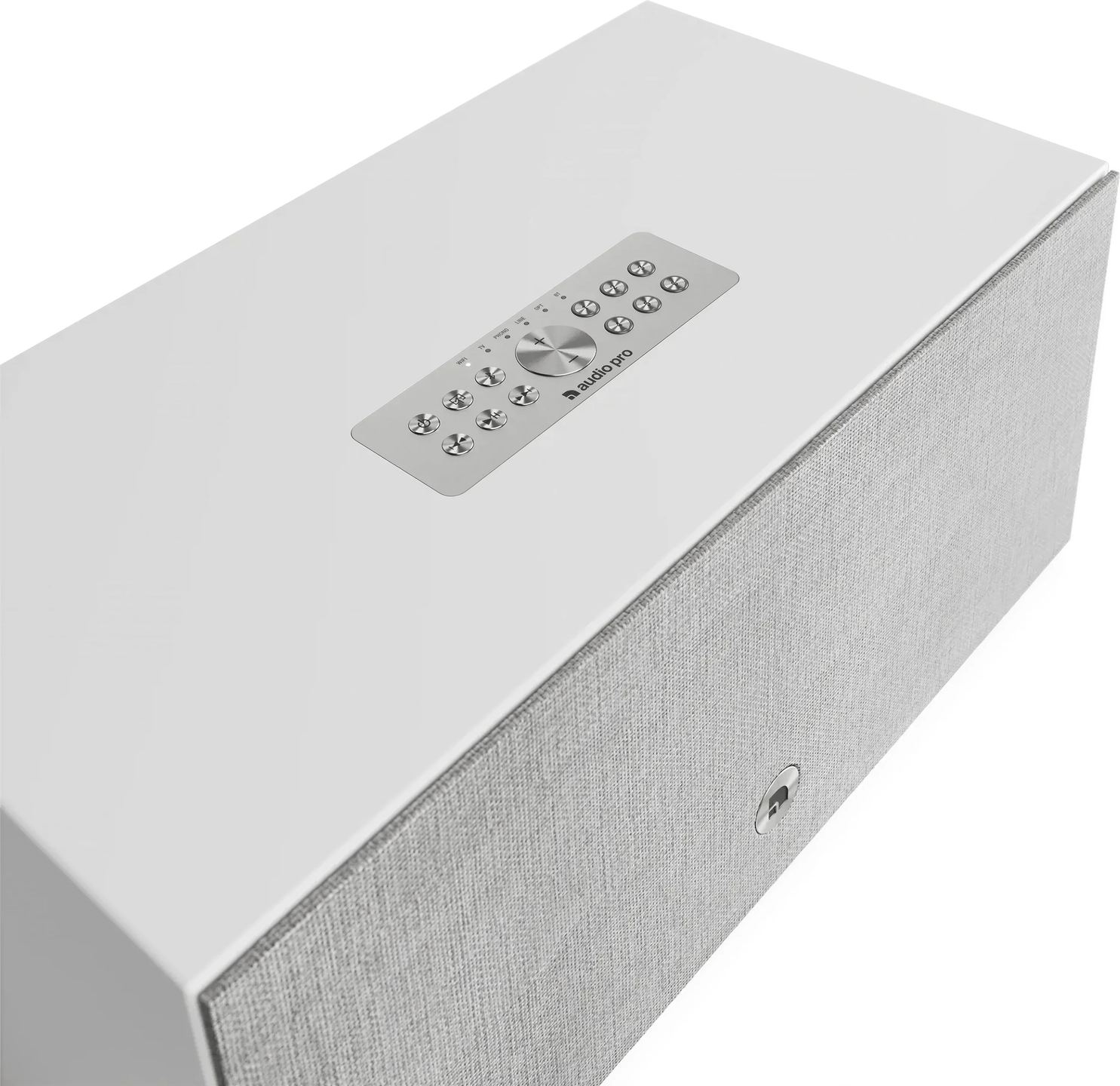
On top, the touch controls cover power, source selection, playback, volume and Bluetooth pairing. There are also six preset buttons, each recalling a radio station or playlist saved in the app. The app also offers an equaliser, and software updates arrive over the Internet.
Bluetooth 5.0 is handy for a guest or for playing a podcast from a phone. Limited to the SBC codec, however, it transmits a compressed signal, so Wi-Fi remains the preferred option for music.
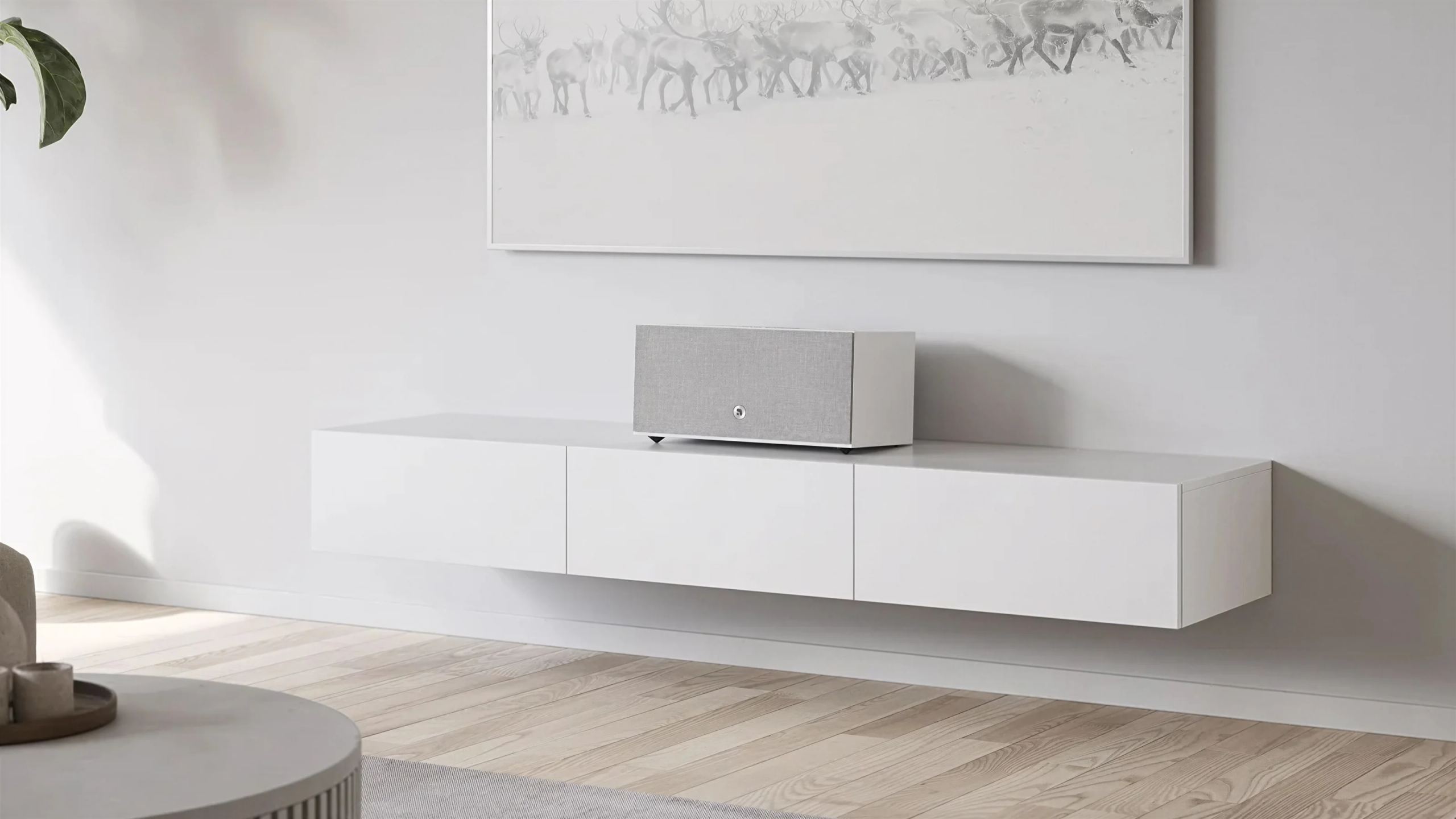
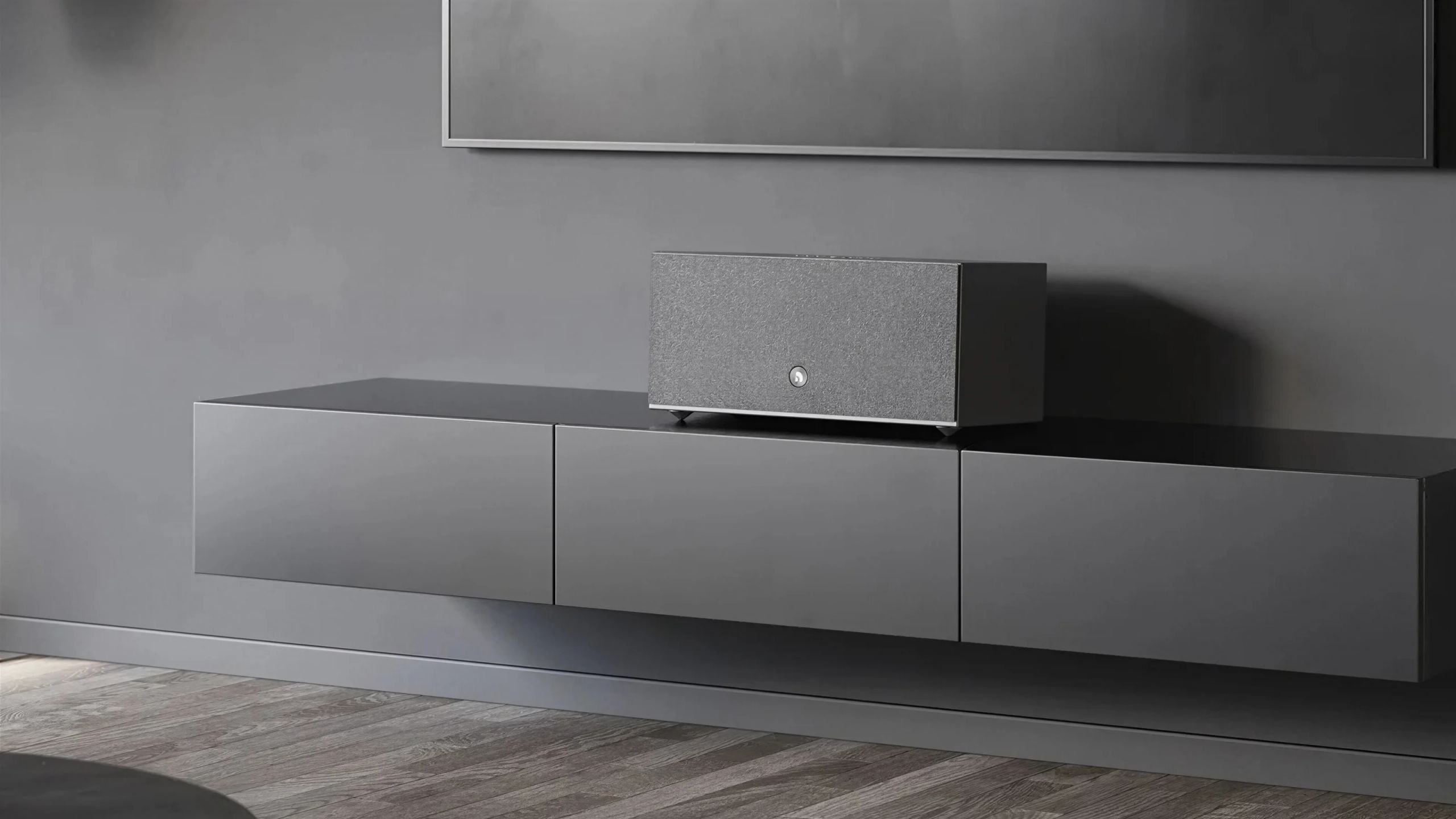
Positioning the speaker to make the most of the bass
Audio Pro places the C20 W among its models for large rooms. Because the bass-reflex port opens at the rear, the distance from the wall directly affects the bass. Pushed against a wall or to the back of a cabinet, the speaker gains bass, sometimes enough to make it sound heavy. Moving it a few centimetres forward, or reducing the bass in the equaliser, restores the balance.
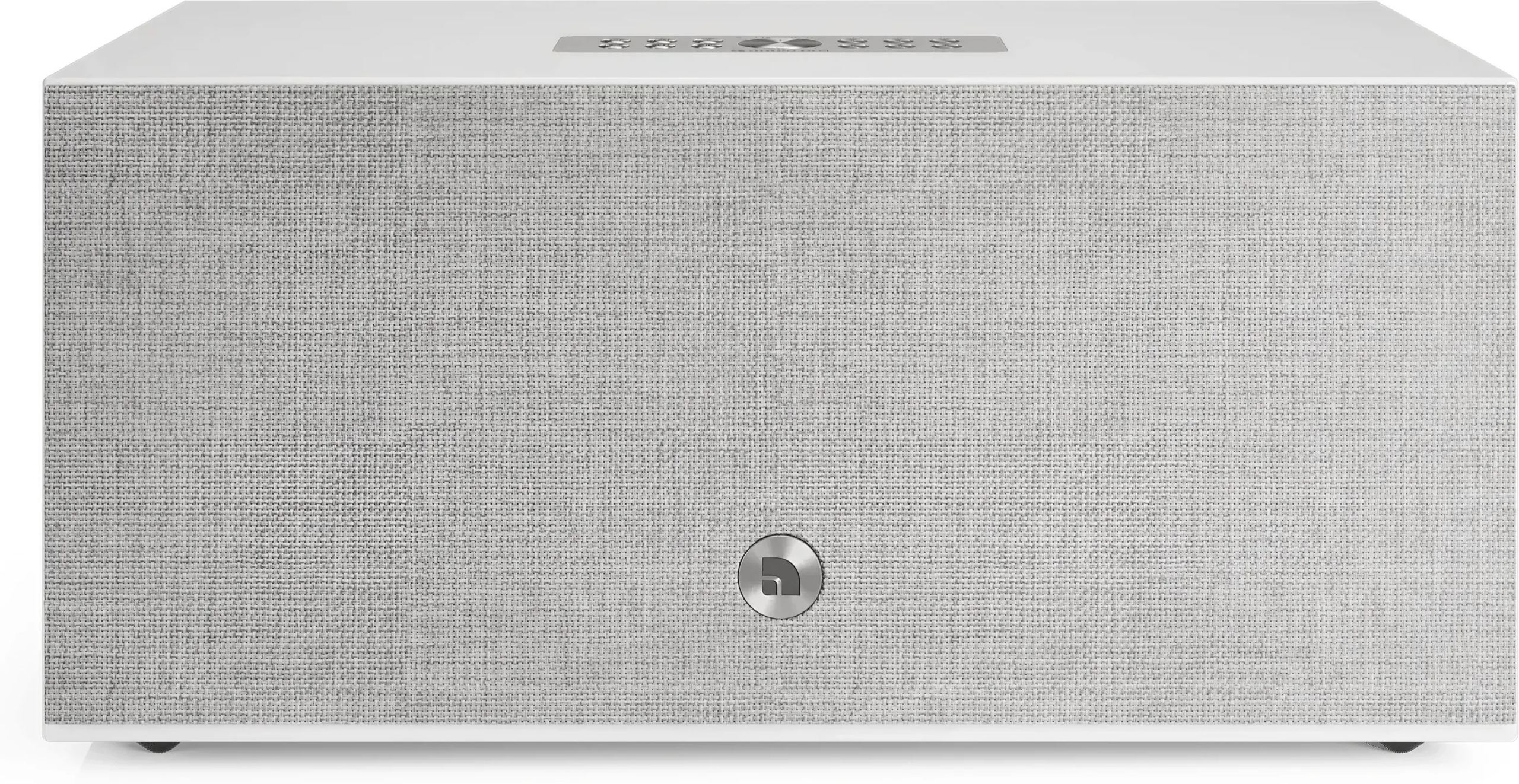
At 22 cm deep, it fits on most TV stands, provided its 19.6 cm height clears the bottom of the screen. Its 6.2 kg weight keeps it stable on a shelf or media console. It comes in white, black, grey and walnut, allowing it to match light or dark furniture or a wooden bookcase.
Documentation
Technical specifications
Design and controls
- Type: two-way stereo smart speaker
- Enclosure: bass-reflex with rear port
- Touch controls on the top panel
Drivers
- Tweeters: 2 × 25 mm, silk dome
- Midrange / bass driver: 1 × 16.5 cm
- Crossover frequency: 2200 Hz
Amplification and performance
- Total amplifier power: 190 W
- Tweeters: 2 × 30 W
- Midrange / bass driver: 130 W
- Frequency response: 41 Hz – 23.5 kHz (± 6 dB)
Audio playback and wireless connectivity
- Supported audio formats: MP3, WMA, AAC, FLAC, Apple Lossless
- Audio streaming over Wi-Fi: up to 24 bits / 96 kHz
- Built-in Bluetooth receiver: version 5.0, SBC codec
- Built-in dual-band Wi-Fi controller: 802.11 b/g/n/ac, 2.4 GHz / 5 GHz
- Streaming protocols and features: AirPlay 2, Google Cast, DLNA, Audio Pro multiroom and LinkPlay
Streaming services
- Amazon Music, BBC Radio, Calm Radio, Deezer, Hotmix, iHeart Radio, KKBOX, Napster, Open Network Stream, Pandora, Plex, Qobuz, Radio Paradise, SoundCloud, SoundMachine, Spotify, Soundtrack Your Brand, TIDAL, TuneIn, vTuner
Connections
- RCA stereo line input: 1
- MM-compatible RCA phono input: 1, with built-in phono preamplifier
- Optical digital input: 1
- HDMI ARC input: 1
- Subwoofer output: 1
Power
- Mains power: 100 – 240 V, 50 / 60 Hz
- Standby power consumption: 1.6 W
- Operating power consumption: 10.2 W
- Built-in battery: no
Dimensions, weight and included accessories
- Dimensions (W × H × D): 410 × 196 × 220 mm
- Weight: 6.2 kg
- Included accessories: power cable, manual
Frequently Asked Questions
What distinguishes the C20 W from the C20?
The drivers, amplification (2 × 30 W + 130 W), 2,200 Hz crossover, and dimensions are identical. The difference lies in the streaming electronics and software. The C20 W works with the new W-generation Audio Pro app, which replaces the Audio Pro Control app used by the C20. Both models support AirPlay 2 and Google Cast, allowing them to play together using these protocols.
Does the speaker decode Dolby Digital or DTS from the TV?
No. The HDMI ARC and optical inputs accept only stereo PCM. Set the TV’s audio output to PCM (sometimes called “stereo”); otherwise, a Dolby Digital or DTS stream will not play. Playback remains in stereo, with no multichannel decoding or Dolby Atmos.
Which phono cartridge can be used?
The phono input accepts moving magnet (MM) cartridges, the most common type on standard turntables. A moving coil (MC) cartridge produces a much lower voltage: it requires an external MC-compatible phono preamplifier connected to the line input. A turntable with its own preamplifier also connects to the line input. Alternatively, you can disable its preamplifier and connect it to the phono input.
Can the speaker be connected to the network with an Ethernet cable?
No, the network connection is via Wi-Fi only, on 2.4 or 5 GHz. In a room far from the router, a Wi-Fi extender or mesh Wi-Fi system ensures stable playback, especially in a multiroom setup.
Can the USB port on the back read a USB flash drive?
No. This USB-A port is for maintenance. Stored music is played over the local network, from a computer or shared drive, or from a phone using the app.
Which subwoofer should I pair it with?
Any powered subwoofer with an RCA line input connects to the dedicated output using a simple RCA cable. Then adjust the level and phase on the subwoofer so its bass blends with the speaker’s rather than standing apart. Placing the subwoofer near the speaker keeps the soundstage coherent in front of the screen.
Does the speaker go into standby mode automatically?
Yes. After about twenty minutes of inactivity, it goes into standby mode, using 1.6 W of power. You can still access it through the app, AirPlay 2, or Google Cast to resume playback.
Can it be installed on a shelf or in an alcove?
Yes, provided air can circulate. Allow 20 cm of clearance above and on each side, 10 cm at the rear, and about 10 cm of space behind the top shelf so hot air can escape. The rear clearance also benefits bass performance, since the bass reflex port is located there. The unit is not designed to be built into a wall.
- Eco-contribution included in the sale price.
- Manufacturer reference: 15391