

Panasonic TN-75W95C



Specifications and features


Overview
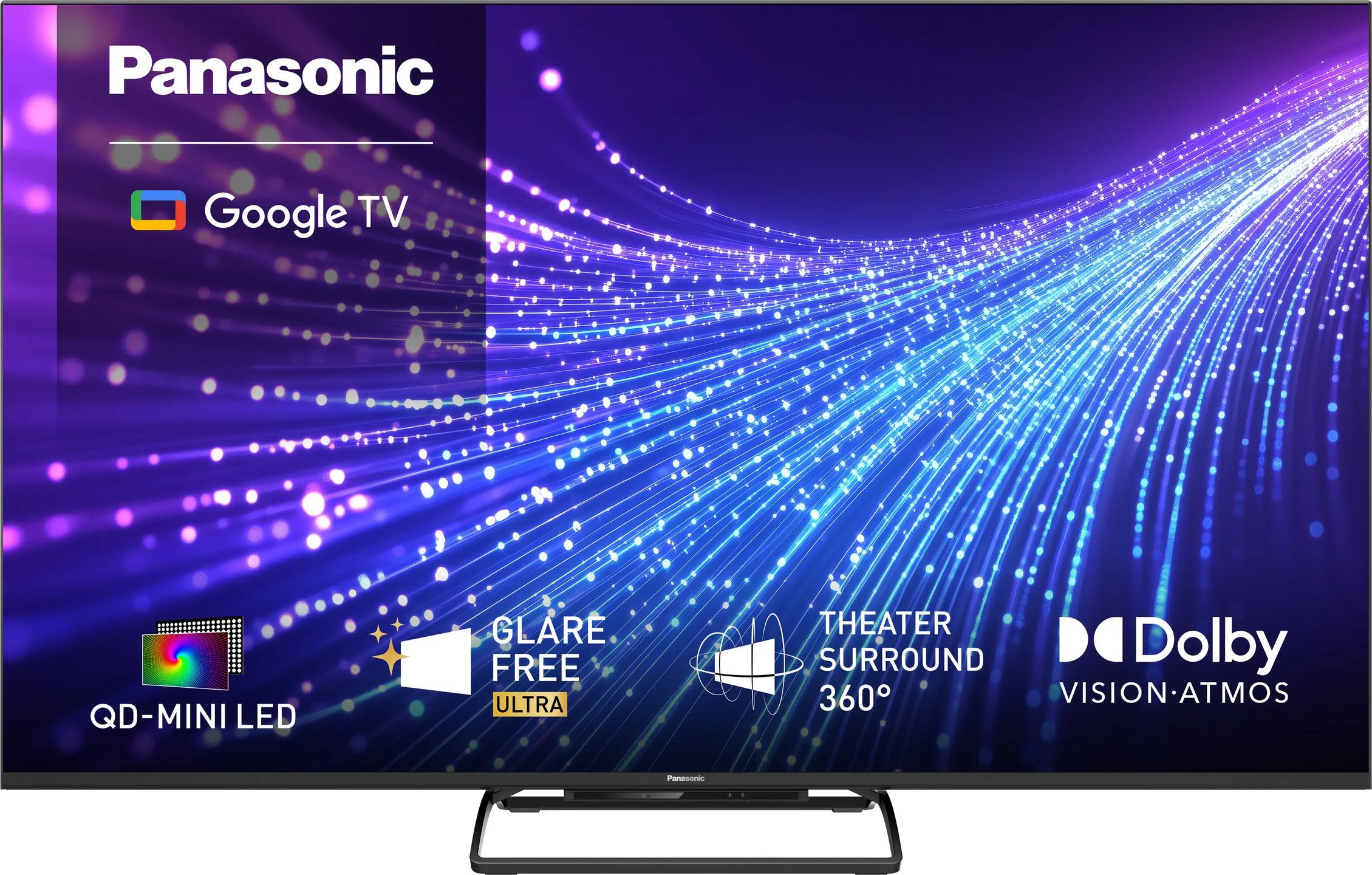
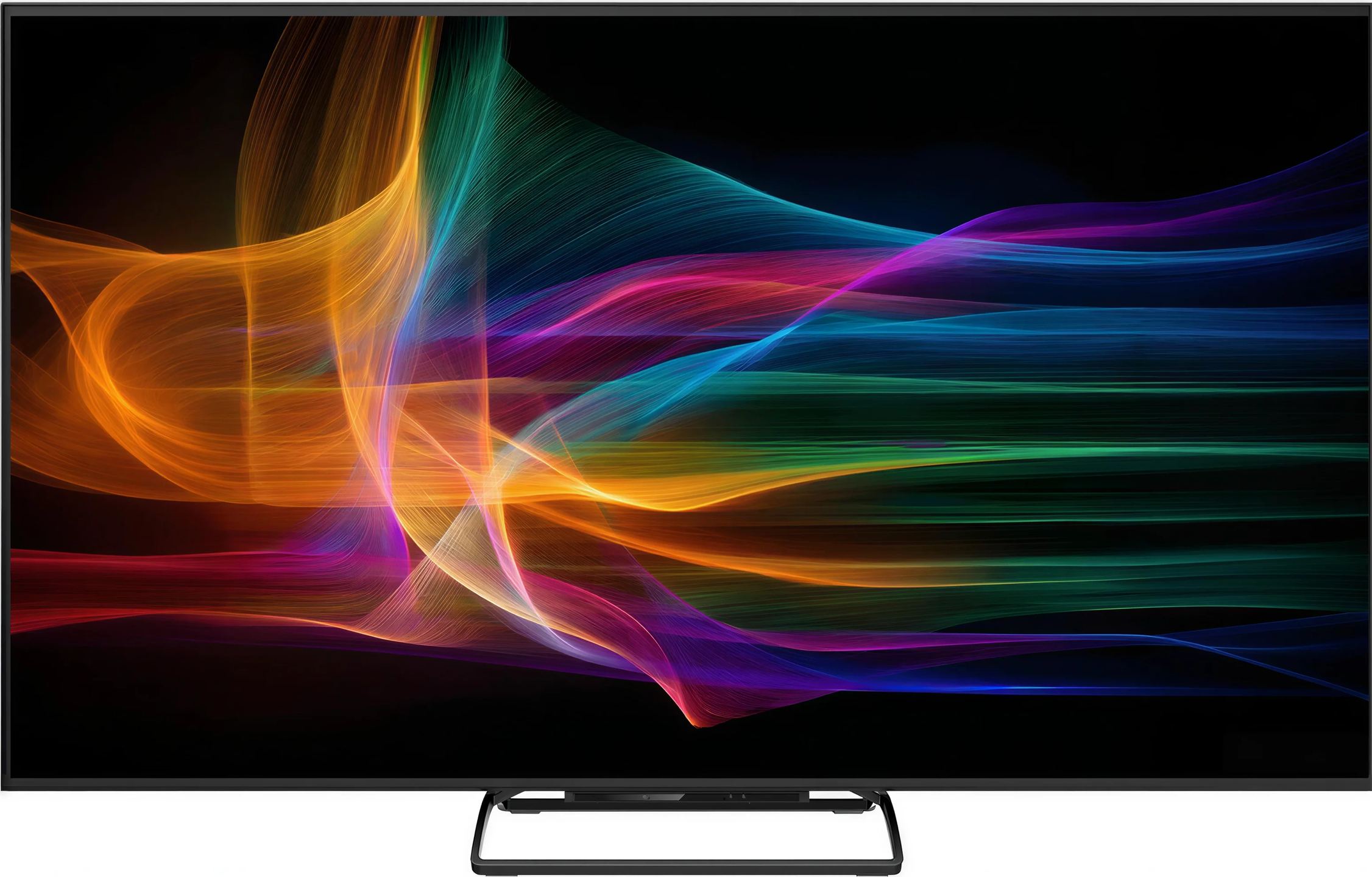
Windows reflected on the screen, blacks turning grey as soon as sunlight enters, colours fading in the middle of the afternoon: a large television installed in a bright living room has to contend with all of this. The top of Panasonic’s 2026 LCD range addresses these challenges with Mini LED backlighting featuring more than a thousand zones, a quantum dot panel and an updated anti-reflective treatment, across a 189 cm diagonal, with Google TV and an integrated 4.1 audio system.
Backlighting divided into more than a thousand zones
An LCD television does not produce its own light. LEDs positioned behind the panel illuminate it, and liquid crystals let this light through or block it pixel by pixel. With Mini LED technology, these LEDs are miniaturised and number in the thousands. They are grouped into zones that light up, dim or switch off independently of one another according to the image content.
Panasonic calls this control system Dynamic Local Dimming Ultra and specifies more than 1,000 zones on screen sizes of 65 inches and above, including 75 inches. The more zones there are, the more a moon in a night sky or a headlight in a dark scene stays bright without brightening everything around it.
The display remains a backlit panel. Against the 8.3 million pixels of 4K resolution (3840 × 2160), each zone covers an average of around 8,000 pixels. A white subtitle on a black background or a field of stars can therefore reveal a slight halo, which video processing limits by balancing brightness against black depth. In return, peak brightness reaches around 1,500 cd/m² (the “nits” found on specification sheets). This reserve serves sunlight reflections, explosions and urban lights in HDR content.
Colours pass through a layer of quantum dots, nanocrystals that convert the LEDs’ blue light into purer red and green. Panasonic groups this treatment under the name Wide Colour Spectrum. The brand claims 105% coverage of the DCI-P3 colour space, the digital cinema reference.
Glare Free Ultra up against windows and lamps
The Glare Free Ultra surface treatment, new to Panasonic in 2026, reduces reflections from light sources in the room and prevents the picture from looking washed out during the day. It also widens the viewing angle, a traditional weakness of LCD panels: someone sitting at the end of the sofa retains colours and contrast closer to those seen from the centre seat. An ambient light sensor adjusts the picture to suit the room’s lighting, from morning to evening.
The AI 4K Colour Engine Ultra processor analyses each scene to adjust contrast and colours. It also handles upscaling to the panel’s 4K resolution for lower-resolution sources, such as HD terrestrial TV channels or old recordings. For films, Filmmaker mode switches off motion interpolation and unnecessary processing, and preserves the colours and frame rate intended by the director.
For HDR, the television supports Dolby Vision and HDR10+, the two dynamic metadata formats that adjust the picture scene by scene. It also supports HLG, used by television broadcasters. Streaming apps and 4K Blu-ray discs are therefore each displayed in their best format.
A 144 Hz panel that keeps up with consoles and PCs
The panel refreshes up to 144 times per second. The three HDMI 2.1 inputs, protected by HDCP 2.3, accept high-frame-rate 4K and variable refresh rate (VRR) up to 144 Hz. With VRR, the screen matches the actual frame rate produced by the console or graphics card. Horizontal tearing and stuttering disappear when the game slows down.
Auto Low Latency Mode (ALLM) switches the television to Game Mode Extreme as soon as a console requests it. The Game Control Board brings together information about the incoming signal and gaming settings in a dedicated panel.
Current consoles top out at 120 Hz, and the headroom up to 144 Hz benefits gaming PCs. AMD FreeSync Premium certification covers AMD graphics cards, while the television is not G-Sync Compatible certified. One of the three HDMI ports supports eARC: if a soundbar or home cinema receiver occupies it, two inputs remain free for sources.
A 4.1 audio system integrated into the chassis
Sound relies on an 80 W 4.1 configuration: front- and side-facing speakers, complemented by a 20 W subwoofer. Dolby Atmos decoding supports spatial soundtracks from streaming platforms, and Theater Surround 360 processing extends the soundstage beyond the edges of the screen. Seven audio modes, including Cinema, Music and News, adapt the tonal balance to the programme.
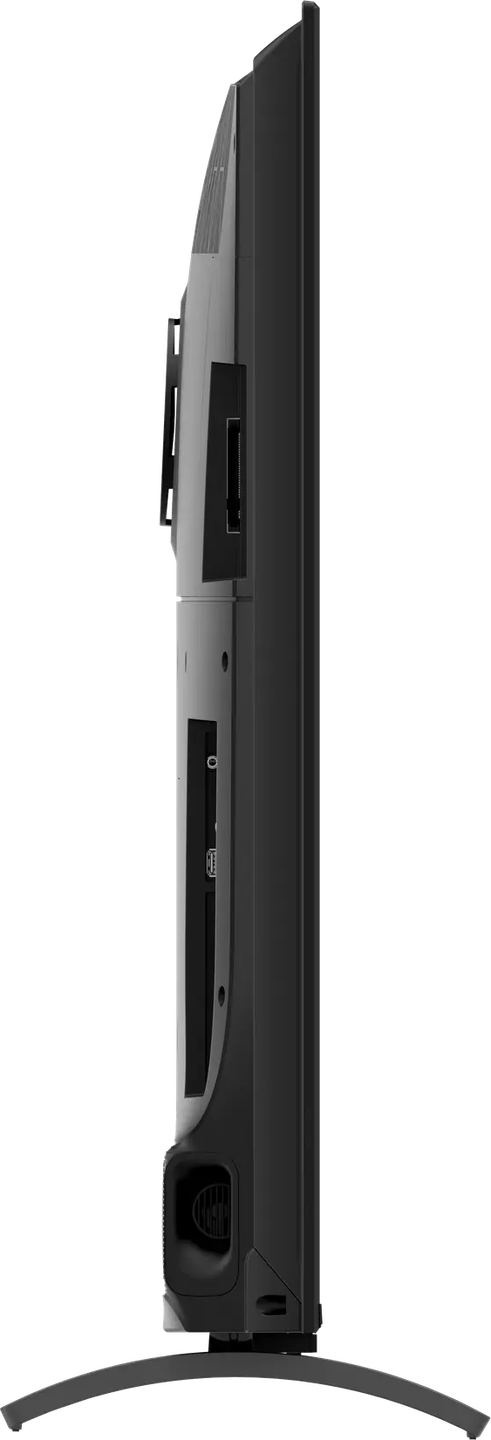
A chassis depth of 87 mm limits low-frequency extension, even with an integrated subwoofer. For a home cinema installation, the eARC output transmits Dolby Atmos and uncompressed multichannel formats to a receiver or soundbar. The optical output remains available for older equipment. Bluetooth Audio Link sends sound to wireless headphones, with a slight delay possible depending on the headphone model, and a wired headphone socket completes the setup.
Google TV, voice control and traditional television
Google TV brings streaming apps and recommendations together on a single home screen. The television integrates Google Assistant in hands-free mode: you can speak to it without picking up the remote, which also has a voice button. The television works with Alexa for those who have already equipped their home with Amazon speakers.
Built-in Chromecast and screen mirroring send videos and photos from a smartphone. Art Time mode turns the screen into a frame for paintings or photos when it is not showing anything. A Bluetooth keyboard and mouse make typing in apps easier, and the media player accesses files on a server on the home network.
Traditional television still has its place. The television combines terrestrial (DVB-T/T2), satellite (DVB-S2) and cable (DVB-C) tuners, the programme guide and HbbTV for broadcasters’ interactive services. A CI+ 1.4 slot accommodates a subscription module. A hard drive or USB stick of at least 160 GB is enough to record programmes received via aerial, satellite or cable and pause live TV. A voice guide reads menus aloud for visually impaired users.
Installing a 189 cm screen in the living room
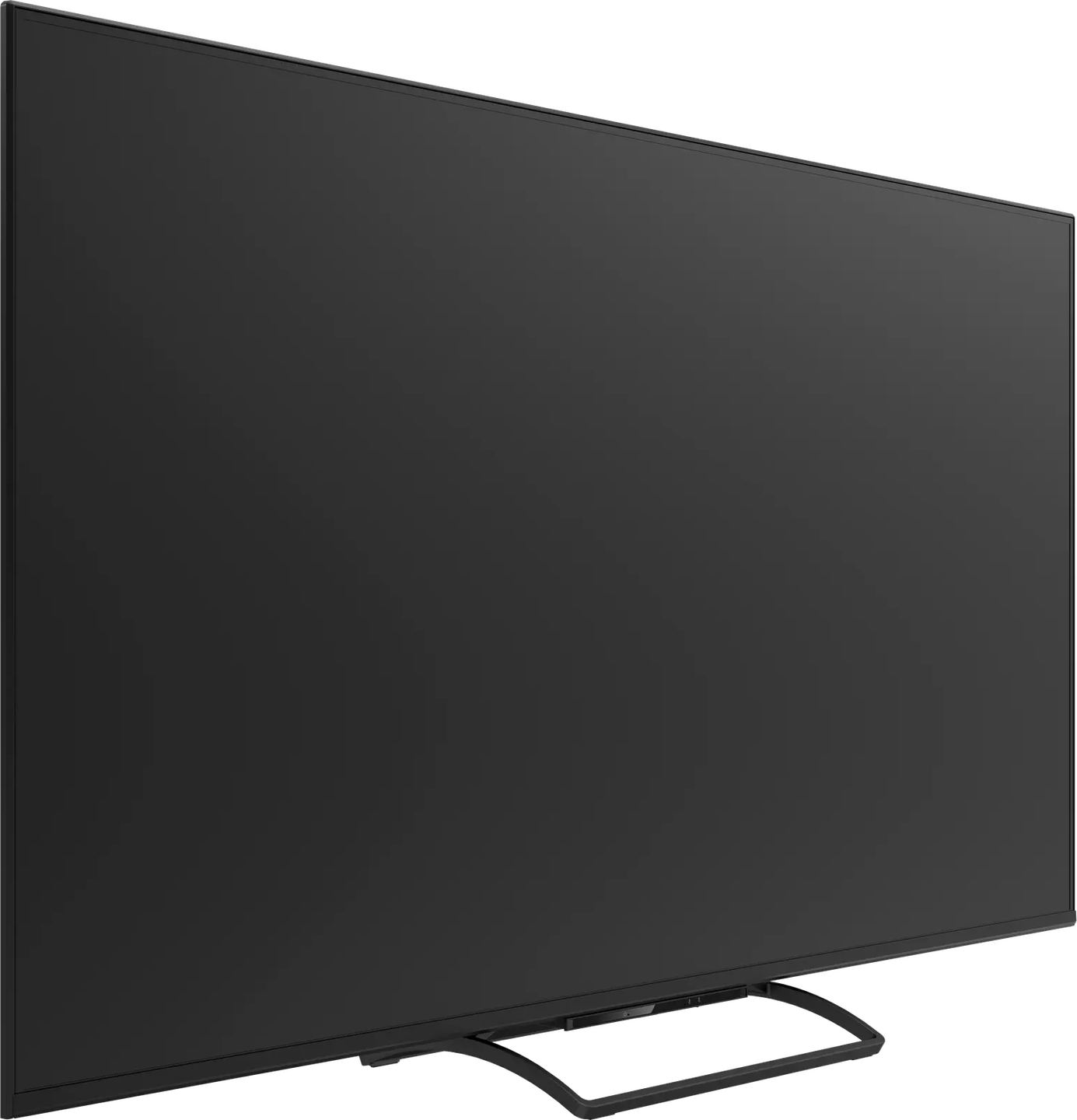
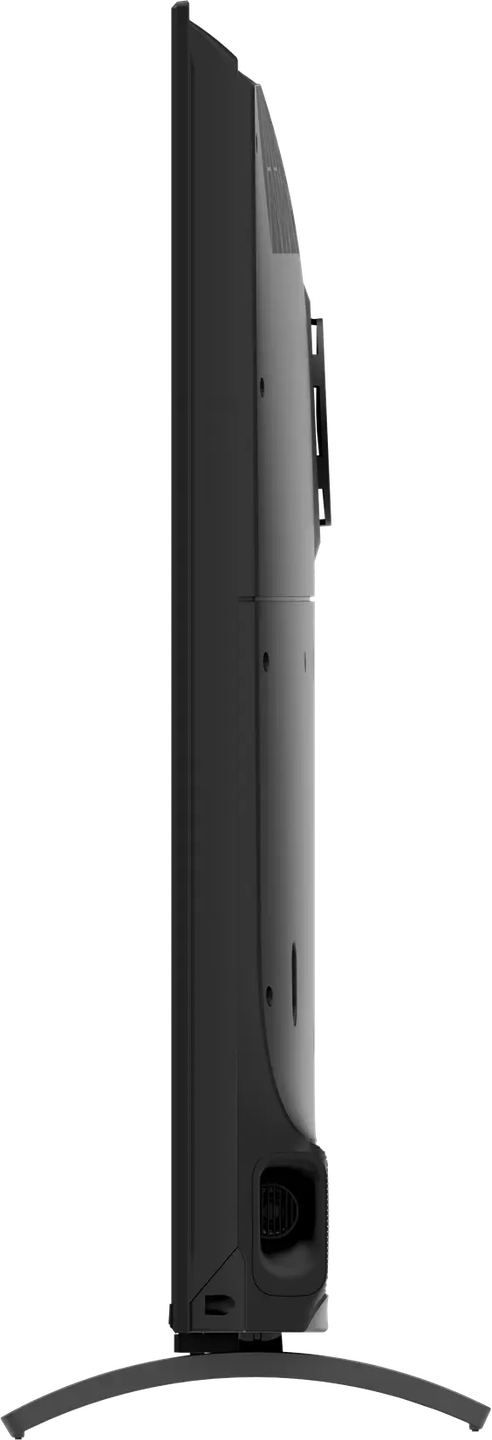
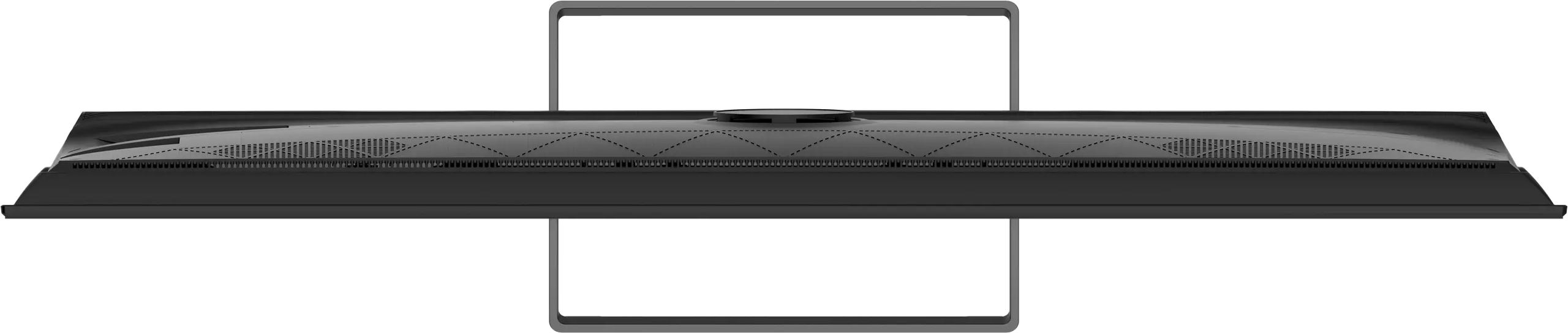
The television measures 1675 mm wide by 974 mm high and weighs 34.1 kg without its stand. The central U-shaped stand, in black metal, allows the use of a unit narrower than the screen, provided it is at least 365 mm deep. On this stand, the bottom of the picture sits only around 46 mm above the unit. A soundbar placed in front could therefore obscure the bottom of the screen: it is better to mount it on the wall or position it lower down.
Wall mounting follows the VESA 400 × 300 mm standard. The box, 1790 mm wide and weighing 44.3 kg, requires two people to handle it.
Power consumption varies considerably depending on the content: 107 kWh per 1000 hours in SDR (class E) and 250 kWh in HDR (class G). The difference comes from the backlighting, which drives its LEDs harder to achieve HDR’s brightness peaks. Standby consumption is limited to 0.5 W.
Technical specifications
Screen and picture
- Screen size: 189 cm (75 inches)
- Display technology: 4K QD-Mini LED
- Resolution: 3840 × 2160 pixels
- Refresh rate: 144 Hz
- Backlighting: DLED
- Contrast and dimming: Dynamic Local Dimming Ultra
- Colour processing: Wide Colour Spectrum
- Video processor: AI 4K Colour Engine Ultra
- AI picture processing: yes
- HDR formats: HDR10+, HLG, Dolby Vision
- Filmmaker Mode: yes
- Glare reduction: Glare Free Ultra
- Picture modes: Energy Saving, User, Standard, Sport, Vivid, Cinema, Game
- Ambient light sensor: yes
Audio
- Total audio power: 80 W
- Configuration: 4.1 channels
- Speakers:
- Front: 15 W
- Side: 2 × 15 W
- Subwoofer: 20 W
- Dolby Atmos: yes
- Surround sound: Theater Surround 360
- Audio modes: Standard, Vivid, News, Cinema, Music, Sport, User
Smart TV and features
- Smart TV system: Google TV
- Built-in Google Assistant: hands-free voice commands
- Google Assistant and Alexa compatibility: yes
- Chromecast: yes
- Screen mirroring: yes
- Frame Mode / Art Time: yes
- Media player: yes
- Home network: client mode
- USB recording with timeshift: yes
- Minimum USB device capacity: 160 GB
- Electronic programme guide (EPG): yes
- Voice guide (Voice Guidance): yes
- HbbTV: yes
- HDMI-CEC: yes
- Number of on-screen display (OSD) languages: 48
Gaming
- Game mode: Game Mode Extreme
- Game Control Board: yes
- Variable refresh rate (VRR): up to 144 Hz
- Auto low latency mode (ALLM): yes
- 4K high frame rate (4K HFR): yes
- AMD FreeSync Premium: yes
- G-Sync compatibility: no
Connectivity and reception
- HDMI: 3 inputs, HDMI 2.1 standard
- Enhanced audio return channel (eARC): yes
- Content protection: HDCP 2.3
- USB: 2 ports
- Ethernet: 1 port
- Wi-Fi: dual-band AC
- Bluetooth: yes
- Bluetooth Audio Link: yes
- Optical audio output: 1
- Headphone output: 1
- Composite video input: 1 mini-jack
- CI+ common interface: 1, version 1.4 ECP
- Digital tuner: DVB-T / T2 / DVB-S2 / DVB-C
Design, dimensions and installation
- U-shaped central stand: metal, black finish
- Wall mounting: VESA compatible
- VESA dimensions: 400 × 300 mm
- Dimensions without stand (W × H × D): 1675 × 974 × 87 mm
- Dimensions with stand (W × H × D): 1675 × 1020 × 365 mm
- Weight without stand: 34.1 kg
- Weight with stand: 34.9 kg
Power supply and consumption
- Power supply: 100 to 240 V AC, 50 / 60 Hz
- Standby power consumption: 0.5 W
- Energy class: E in SDR, G in HDR
- Consumption: 107 kWh per 1000 h in SDR, 250 kWh per 1000 h in HDR
Included accessories
- Voice remote control
- 2 AAA batteries
Packaging
- Carton dimensions (W × H × D): 1790 × 1164 × 203 mm
- Total packaged weight: 44.3 kg
Frequently asked questions
What’s the difference between the W95C and the W97C?
Only the color. The W95C is black, the W97C is silver; the panel, backlight, processor, audio, and connectivity are identical.
What sets this model apart from the 2025 W95B?
The W95B ran on Fire TV with the HCX Pro AI MK II processor. The W95C switches to Google TV, with Google Assistant and Chromecast built in, and the AI 4K Colour Engine Ultra processor. It introduces Glare Free Ultra anti-glare processing and features a 4.1 audio system with side-mounted speakers. The W95C drops two W95B features: Dolby Vision IQ, which adapted Dolby Vision content to the room’s lighting, and Calman compatibility. It supports standard Dolby Vision and adjusts its brightness using its own sensor.
Does the TV support professional calibration?
No. The W95C offers neither ISF mode nor Calman compatibility, which are reserved for the Z95B and Z90B OLED models in Panasonic’s 2026 range. Picture fidelity is achieved through Filmmaker mode, Cinema mode and manual settings in the picture menu.
Can you connect a home theater receiver without losing Dolby Atmos?
Yes, via the HDMI eARC port. It sends audio from apps and devices connected to the TV back to the amplifier, including Dolby Atmos and uncompressed multichannel formats. The optical output, by contrast, is limited to stereo and compressed multichannel audio.
How far should you sit from a 75-inch TV?
For the screen to cover a viewing angle of 30 to 40 degrees, as recommended by cinema standards, allow for a distance of approximately 2.3 to 3 meters. 4K resolution lets you sit closer without seeing individual pixels, allowing some flexibility in shallower rooms.
Is Wi-Fi sufficient for streaming 4K HDR?
Dual-band Wi-Fi AC easily handles the 15 to 25 Mbps required for 4K HDR streaming. When the router is far away or the network is busy, the Ethernet port provides a more stable connection.
Is a special storage device needed to record programs?
A hard drive or USB flash drive with a minimum capacity of 160 GB. The TV has two USB ports: one can remain dedicated to recording and pausing live TV, while the other can be used to play photos, music, and videos with the built-in media player.
- Eco-contribution included in the sale price.
- Spare parts available for 7 years
- Manufacturer reference: 5025232998845
- GTIN / EAN: 5025232998845


