

Sivga Peng
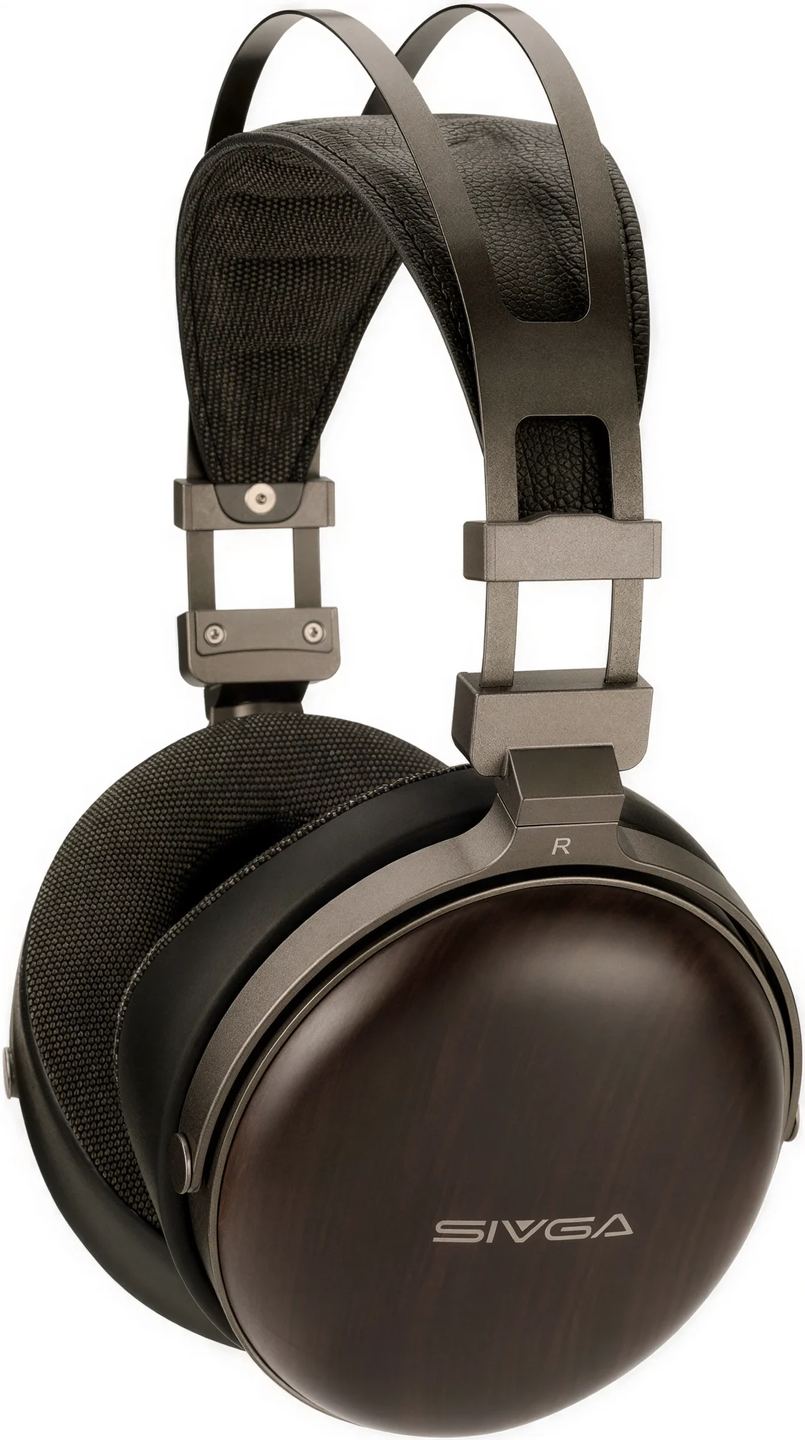
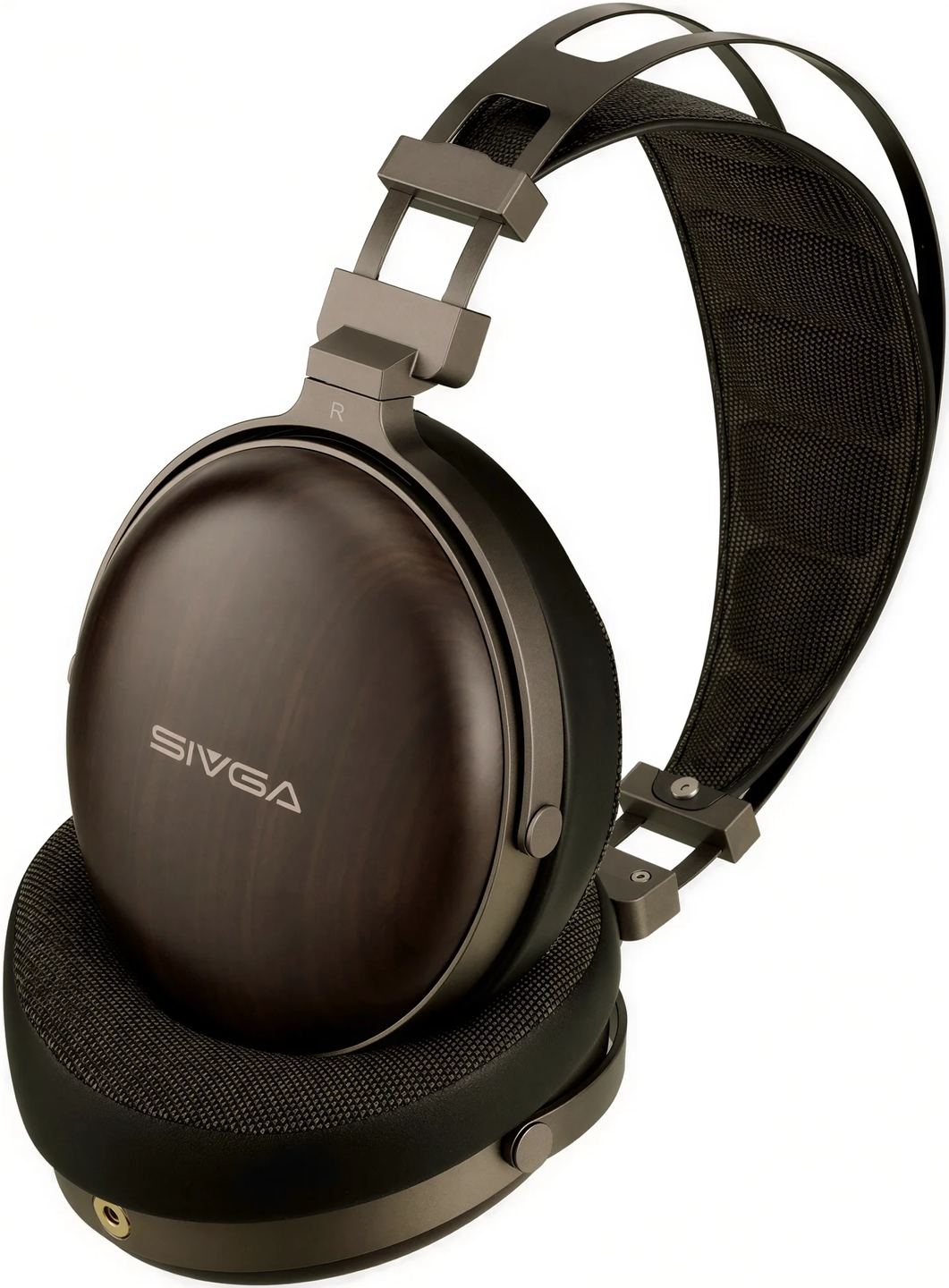
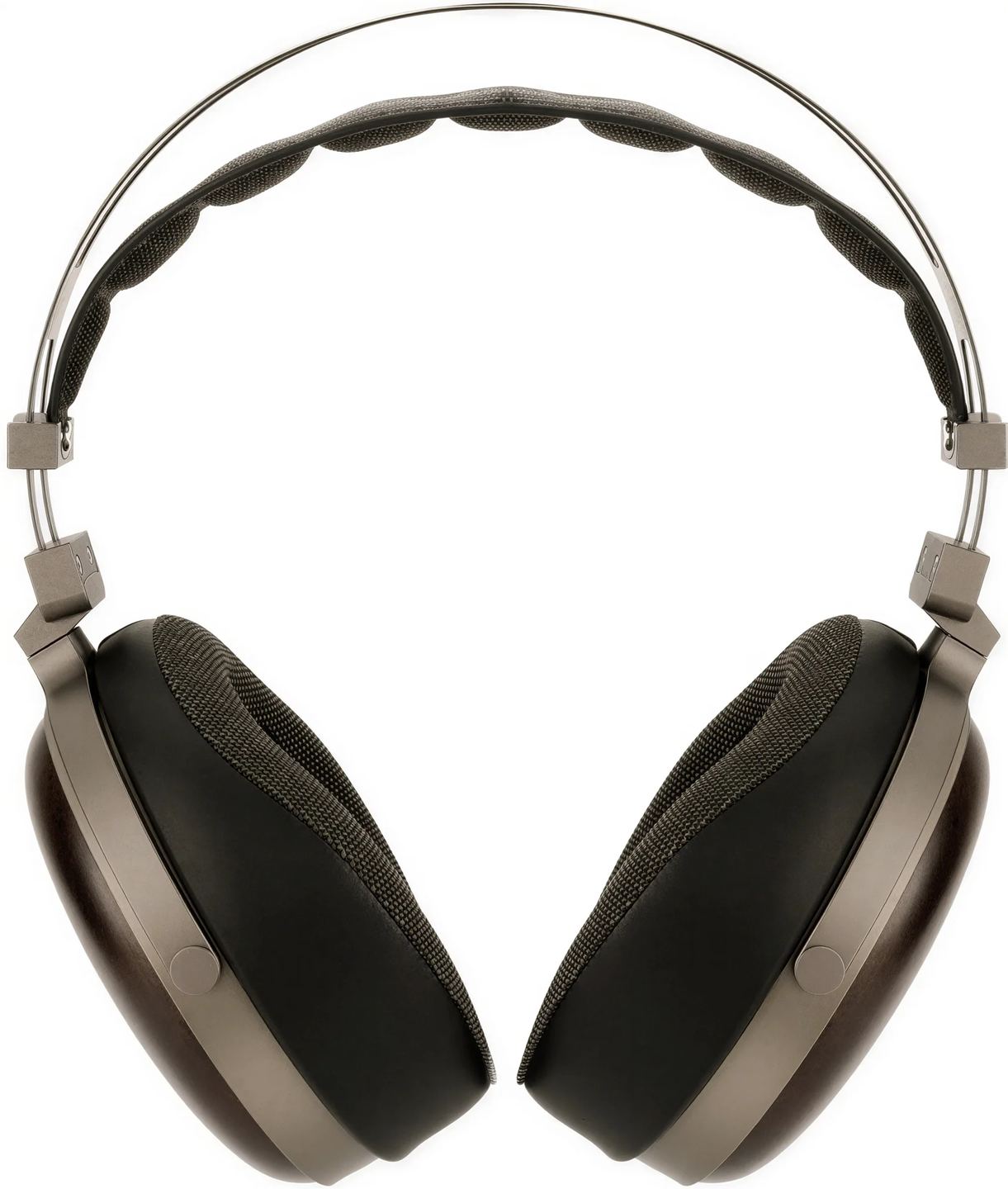
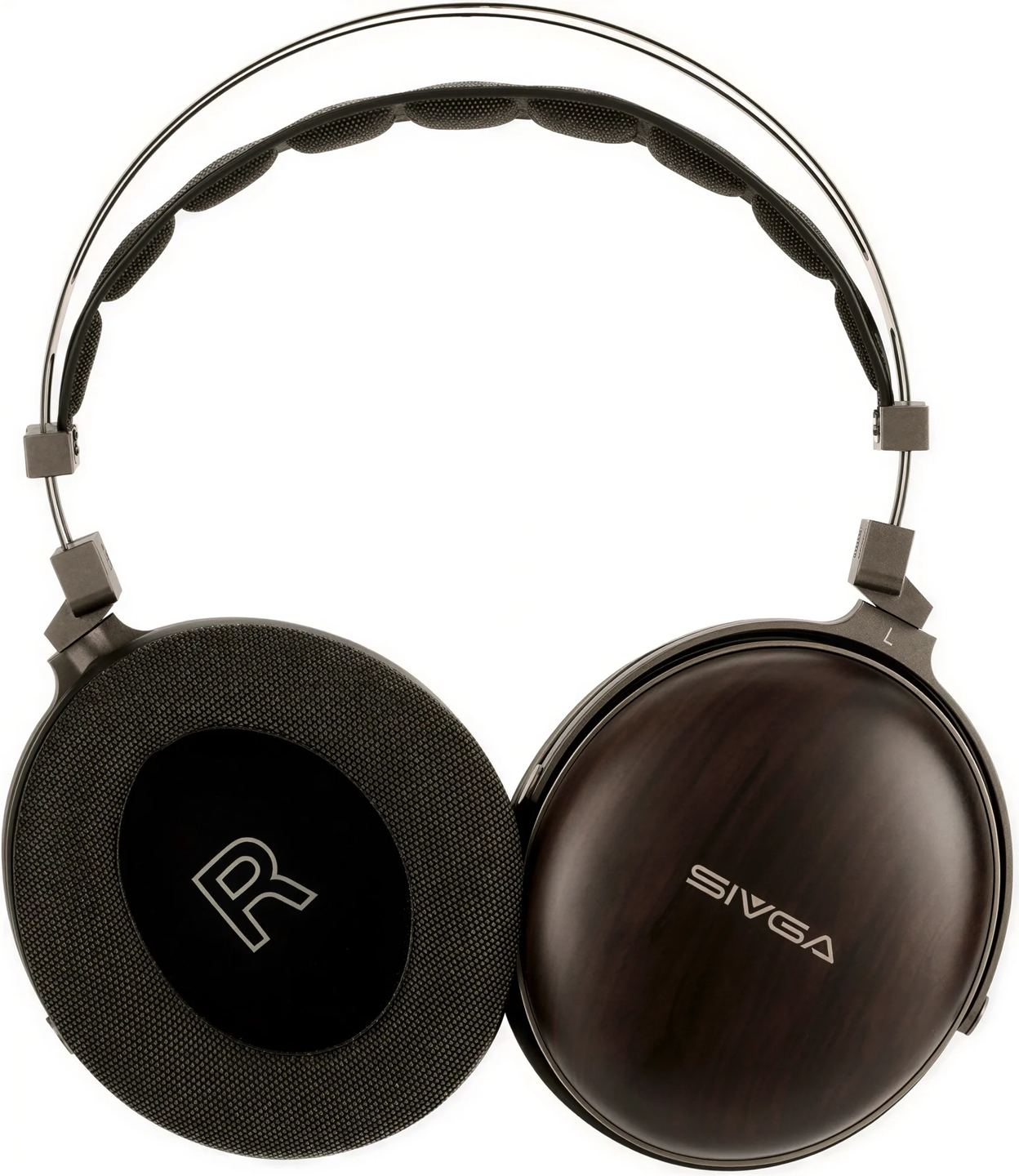
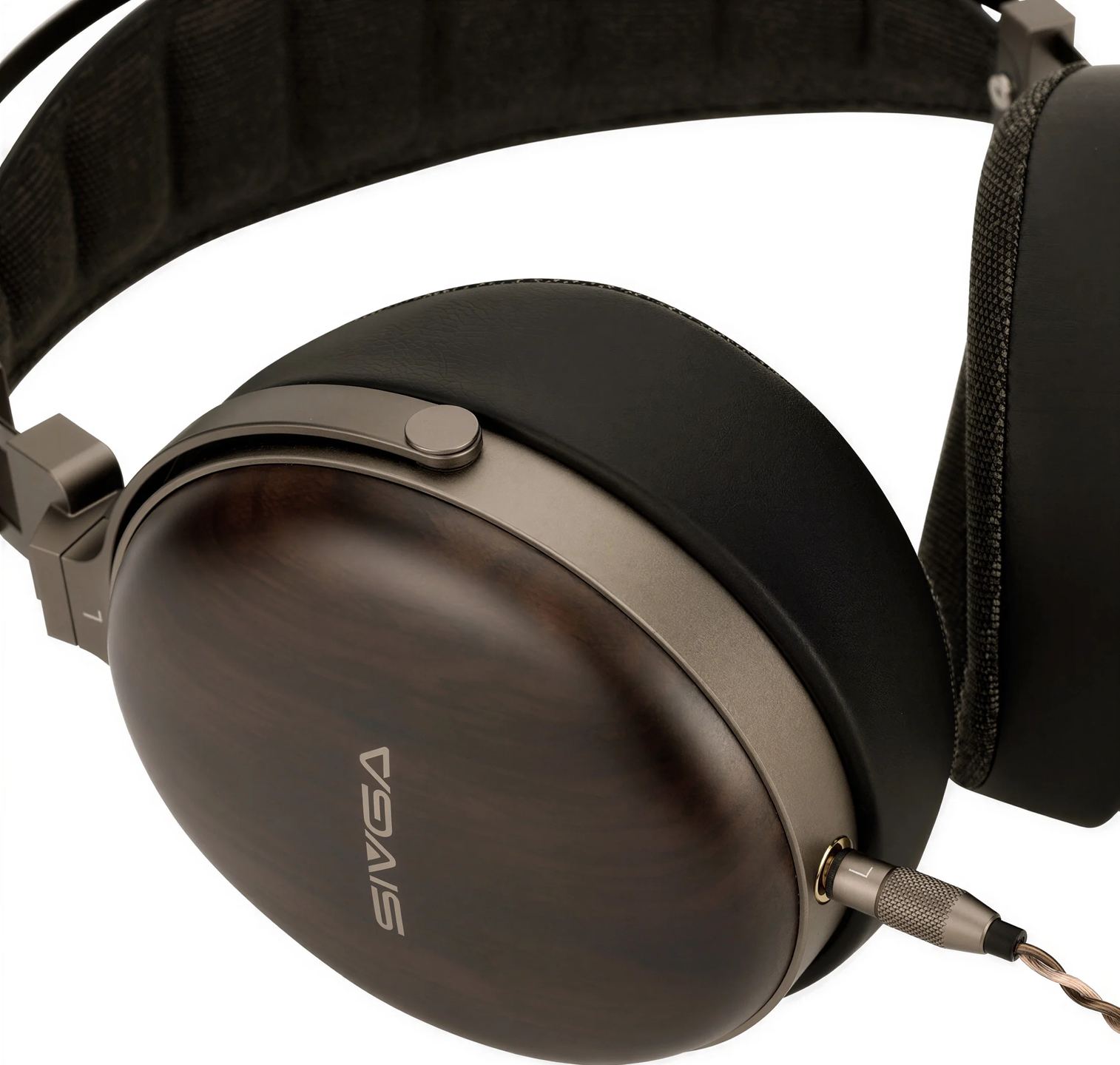
Sivga Peng, closed-back zebrawood headphones
African zebrawood, machined solid aluminium and a 50 mm dynamic driver with a sapphire composite diaphragm: Sivga brings together its two specialities, woodworking and precision engineering, in these closed-back over-ear headphones. With their 340-ohm impedance, they require a headphone amplifier or a converter capable of supplying sufficient voltage. Their 4.4 mm balanced cable comes with the adapters needed to connect to just about any source.
Zebrawood earcups on an aluminium frame
The outer earcups are carved from African zebrawood, a dense wood with alternating light and dark grain that gives each pair a unique pattern. Sivga polishes, stains and then leaves the wood to air-dry, and its patina deepens over years of use. Behind this wood, the chamber housing the driver is machined from aircraft-grade aluminium: it is rigid and lightweight, and limits the unwanted resonances that a more flexible shell would transmit. The yokes, support and all metal parts are made from the same machined aluminium, with a metallic anthracite-grey anodised finish that complements the brown tones of the wood.
Sapphire diaphragm, LCP surround and copper ring
The diaphragm is the part that sets the air in motion. On the Peng, it is made from a composite incorporating a layer of sapphire, a very rigid material that deforms less under stress and reduces distortion in the treble. Around its edge, the surround (the flexible ring connecting the diaphragm to the driver frame) is made from LCP, a liquid crystal polymer that is both lightweight and stiff, helping the diaphragm follow the fast attacks of a piano note or percussion hit. A copper ring integrated into the diaphragm completes the assembly: it stabilises its movement and limits distortion across the entire frequency range, specified as 20 Hz to 40 kHz.
The closed-back design traps the driver’s rear sound wave inside the earcup. Little sound leaks out and room noise is attenuated, making the Peng suitable for use in a shared office or in the evening next to someone who is sleeping. The usual trade-off with this design is a less airy soundstage than with open-back headphones, since sound cannot escape freely behind the driver.
A steel headband and a lambskin strap
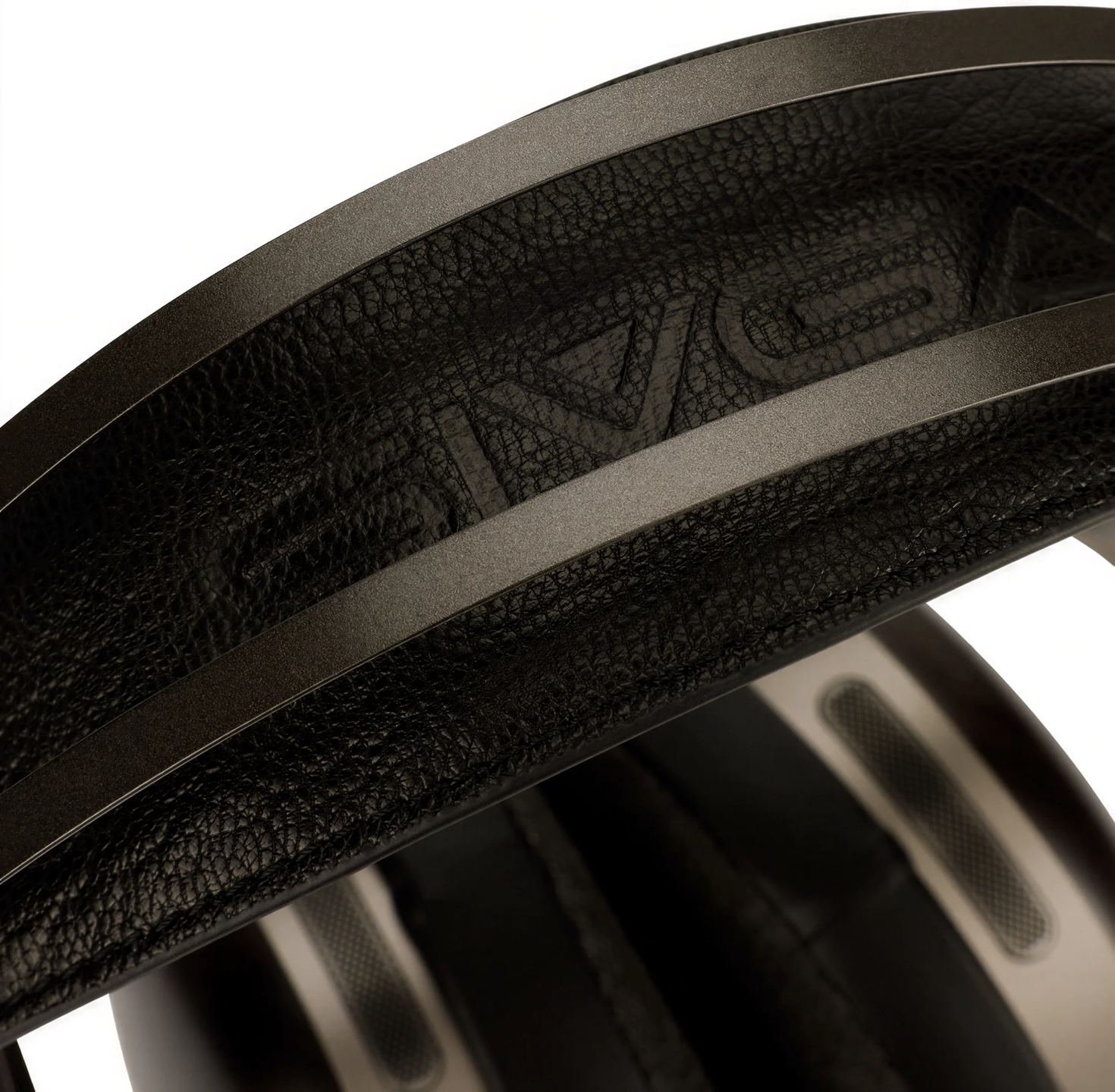
Comfort relies on two separate elements: a steel headband that resists deformation and maintains constant clamping pressure, and a suspended lambskin strap that distributes the weight across the top of the head. At 341 grams, the Peng is no featherweight, but this suspension avoids the single pressure point that becomes tiring after an hour. The earcups swivel through 180° and the headband slides freely to fit every head shape. The angled earpads, thicker at the rear, are filled with memory foam that follows the contours of the ear: this improves the seal and, with it, bass control, which depends directly on a good seal around the ear.
340 ohms: headphones that need an amplifier
Impedance measures the electrical resistance that headphones present to the signal. The higher it is, the more voltage is needed to reach the same volume. With 340 ohms and a sensitivity of 102 dB, the Peng will produce sound from a smartphone or laptop, but their low-voltage headphone outputs soon leave them short of volume and dynamics. A desktop headphone amplifier, a converter with a built-in amplifier or a high-resolution portable player with a balanced output is a much better match. This high impedance has an advantage: the headphones are relatively insensitive to residual amplifier hiss and variations in its output impedance, keeping the background quiet between tracks.
A 6N OCC cable with a 4.4 mm balanced termination
The detachable cable is made from 6N OCC copper, meaning 99.9999% pure copper produced by continuous casting, a process that forms long crystals and reduces the number of junctions the signal must cross. At the headphone end, two 3.5 mm mono jack plugs connect separately to each earcup. At the source end, the cable terminates in a 4.4 mm balanced plug, the standard format on recent headphone amplifiers and portable players. Sivga supplies a 4.4 mm to 3.5 mm jack adapter cable for unbalanced outputs and a 3.5 mm to 6.35 mm adapter plug for hi-fi amplifiers and studio equipment. The Peng comes in a leather-look hard case, accompanied by a hemp pouch for storing the cable.
Technical specifications
Acoustic design
- Type: closed-back over-ear headphones, with vents on top of the earcups
- Drivers: dynamic, 50 mm diameter
- Diaphragm: sapphire composite
- Surround: liquid crystal polymer (LCP)
- Copper stabilizing ring integrated into the diaphragm
- Magnet: not found
- Impedance: 340 Ω ± 15%
- Sensitivity: 102 dB ± 3 dB
- Frequency response: 20 Hz to 40 kHz
Materials and finish
- Earcups: solid African zebrawood, CNC-machined, sanded, stained and air-dried
- Earcup frames: CNC-machined aircraft-grade aluminum, gunmetal gray anodized finish
- Headband frame: steel
- Headband strap: lambskin
- Color: zebrawood
Comfort and adjustments
- Earpads: angled, foam, with fabric covering
- L / R markings inside
- Adjustments: 180° earcup rotation, height adjustment
Connectivity
- Headphone-side connectors: two 3.5 mm mini-jack sockets, left and right
- Detachable cable
Box contents and included accessories
- Peng headphones
- 6N OCC copper cable
- Termination: balanced 4.4 mm jack
- Length: not specified by SIVGA, 1.8 m according to retailer listings and reviews
- Adapter cable: balanced 4.4 mm jack to unbalanced 3.5 mm jack
- Adapter: 3.5 mm to 6.35 mm; 6.35 mm to 3.5 mm in the box contents
- Hard carrying case
- Hemp pouch
Dimensions and weight
- Earpads:
- Outer dimensions: 95 × 110 mm
- Opening: 48 × 65 mm
- Thickness: 20 to 30 mm
- Weight: 341 g
Frequently asked questions
Is it better to use the 4.4 mm output or the 3.5 mm output on my amp?
If your device has a balanced 4.4 mm output, plug the original cable directly into it. On most amplifiers and portable players, this output delivers more voltage than the unbalanced output, which suits the Peng’s high impedance. The 3.5 mm adapter remains useful for sources without a balanced output, but the headphones then operate in unbalanced mode.
Can the cable be replaced with a model from another brand?
Yes, provided you choose a cable terminated with two 3.5 mm mono jacks at the headphone end, a common connection on hi-fi headphones. Simply follow the left and right markings. The source-end termination can be freely chosen: 4.4 mm, 3.5 mm, 6.35 mm or 4-pin XLR, depending on your amplifier.
Does the Peng isolate sound as well as noise-cancelling headphones?
No. Its noise isolation is purely passive, achieved through closed earcups and the seal of the ear cushions. It reduces voices and background noise in a room, but does not cancel out the rumble of a plane or train as active noise cancellation does. The Peng is a pair of wired headphones, with no Bluetooth or microphone.
Can you take it on the go?
The earcups swivel to lie flat in the included hard case, which protects the wood well during transport. In practice, the Peng remains a pair of indoor headphones: its impedance requires a powerful source, and its wooden earcups do not cope well with rain or temperature fluctuations.
How do I care for wooden housings?
A soft, dry cloth is enough to remove fingerprints. Avoid water, household cleaners and solvents, as well as prolonged exposure to sunlight or proximity to a radiator: heat and changes in humidity are wood’s enemies.
Where does the Peng fit in the Sivga lineup?
It is the brand’s highest-end closed-back model, above the Robin and Oriole, which are also made of wood but significantly easier to drive. The brand also offers open-back headphones (Luan, Anser, SV023) and a model with planar drivers, the P2 Pro.
- Eco-contribution included in the sale price.
- Manufacturer reference: SIVGA-PENG
- GTIN / EAN: 6973869470915


