

T+A Solitaire T PRO black


Specifications and features


T+A Solitaire T PRO black, closed-back wireless and wired headphones
Taking a flight in the morning and plugging the same headphones into a home amplifier in the evening: that is the idea behind the Solitaire T, launched by T+A in 2022. The T PRO retains this concept and its aluminum housing, but completely updates the onboard electronics. A new Bluetooth chip, lossless codecs, Dolby Atmos and a converter dedicated to critical listening join the package, and the headphones continue to play without battery power, like a conventional wired model.
A driver tuned before any electronics
T+A develops its wireless headphones in the reverse order to common practice: the driver must sound right without any digital correction, and the electronics only come afterward. The T PRO’s driver measures 42 mm and uses a cellulose diaphragm, a material that is both light and rigid. This rigidity delays the point at which the diaphragm stops moving as a single unit and starts vibrating in separate areas, which colors the sound. Damping around the driver’s perimeter absorbs unwanted reflections arising at the edge of the diaphragm, and the bass loading has been reworked to maintain crisp attacks in the lower frequencies. The drivers are matched to tight tolerances, reducing differences between the left and right earcups.
In passive listening, the headphones have an impedance of 65 Ω and a sensitivity of 108 dB for 1 V at 1 kHz. A portable player, a small USB DAC or a headphone amplifier output can therefore easily drive them to a comfortable level, and the stated maximum level reaches 122 dB. The frequency response extends from 4 Hz to 45 kHz when the driver is driven directly by the cable, and tops out at 22 kHz when the headphones’ electronics are in use. Harmonic distortion remains below 0.05% at 1 kHz for 94 dB.
From the Pentaconn cable to the USB-C port, four ways to listen
The headphones accept their analog cables through a 2.5 mm jack on the earcup. At the source end, T+A provides a 3.5 mm connection for portable devices and a 3 m cable terminated with a 4.4 mm Pentaconn connector for balanced headphone amplifiers, with an adapter for 6.35 mm sockets. The balanced connection keeps the left and right signals completely separate all the way to the driver, including their grounds. The cables use OFC copper with gold-plated contacts, and their sheathing limits rubbing noise transmitted to the ears when the cable touches clothing.
Active Analog mode is this range’s distinctive feature. The signal remains analog and travels through the cable, but the powered-on headphones apply their own volume adjustment and noise cancellation. This makes it possible to connect the headphones to an aircraft’s entertainment system while cutting out engine noise, something ordinary wired headphones cannot do.
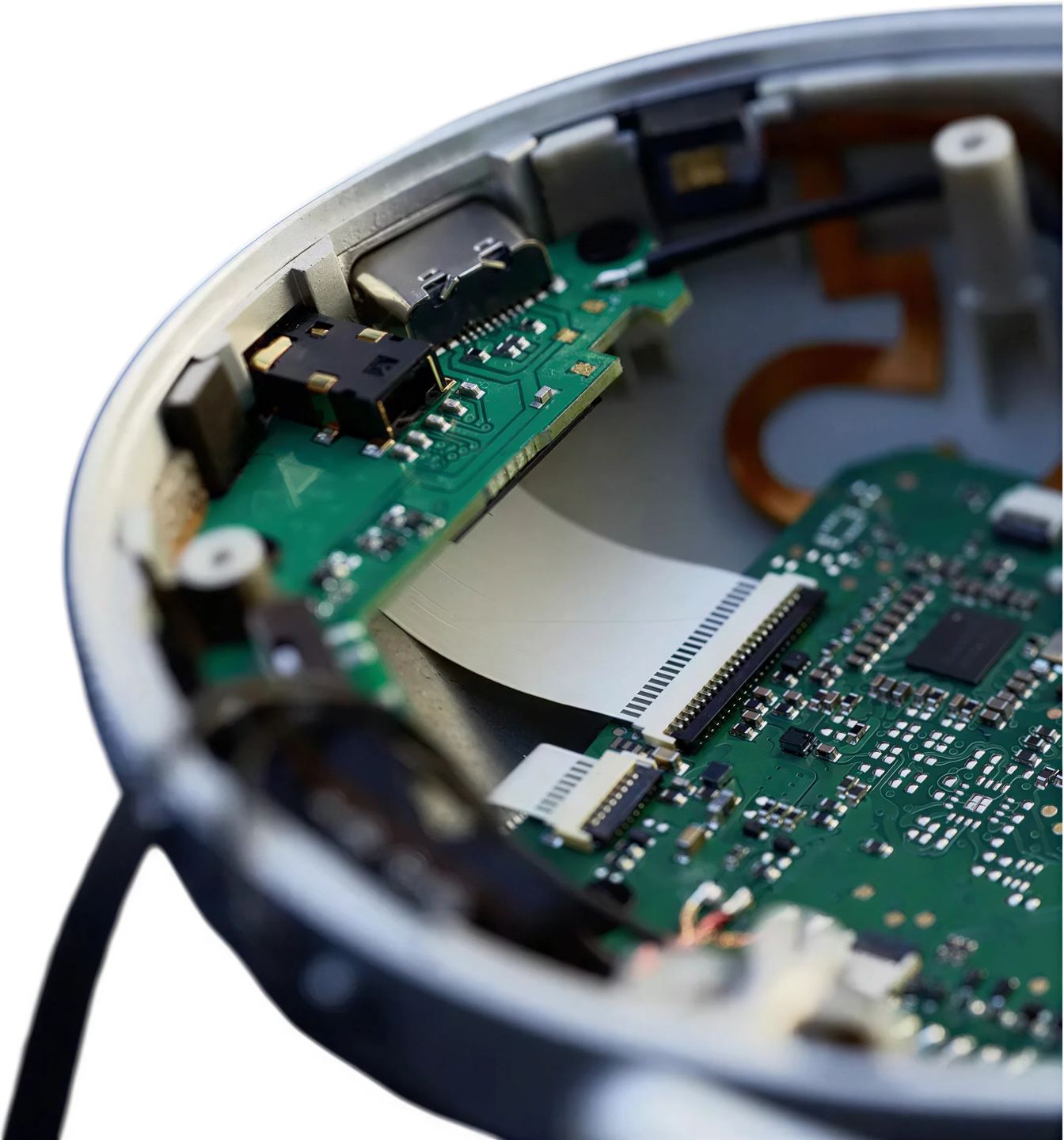
The USB-C port also serves as a digital input: a computer, tablet or smartphone sends its files without compression, and conversion takes place inside the headphones, bypassing that of the source device. Bluetooth completes the package.
Studio Pro mode and its ESS converter
Three listening modes can be selected by button: Studio, noise cancellation and Studio Pro. In the latter, the digital signal is handled by a second converter, an ESS Sabre ES9219, a chip with four conversion channels dedicated solely to audio. The resulting analog signal then passes through an analog headphone amplifier with an equally analog volume control. This point matters: digitally adjusted volume reduces the signal’s resolution as the level is lowered, whereas analog adjustment preserves it intact.
Studio Pro mode performs at its best through the USB-C input, where the stream arrives without any compression. It comes at a cost in battery life: a stated 25 hours, compared with 50 hours in the other modes.
Bluetooth 6.0, lossless codecs and Dolby Atmos
The wireless connection uses a Qualcomm QCC5181 chip with Bluetooth 6.0. The codec list covers every use: AAC for iPhones, LDAC and aptX HD for high-resolution audio with compatible Android smartphones, aptX Adaptive, which adjusts its bitrate to the connection quality, and aptX Lossless, which transmits lossless CD quality when supported by the phone. The headphones also support LC3, the more data-efficient Bluetooth LE Audio codec, and Auracast, which allows reception of public audio broadcasts or those from a compatible television. The earcup’s indicator lights show which codec is currently in use.
Dolby Atmos is the major new feature of this version. With content mixed in spatial audio, whether films or music, sounds are distributed all around the head rather than remaining aligned between the two ears. Conventional stereo recordings retain their usual presentation.
For calls, two dedicated microphones are fitted to the right earcup, and the touchpad answers calls, ends them or switches to a waiting call. A press also provides access to the phone’s voice assistant (Siri, Google Assistant or Alexa).
Two-stage noise cancellation for travel
Isolation begins without electronics. The materials of the earcups and cushions naturally block a large proportion of mid- and high-frequency noise, including voices and clicking sounds. Active noise cancellation takes over at low frequencies, such as the rumble of aircraft engines or a moving train, which passive isolation struggles to block. The system is hybrid: two microphones per earcup listen outside and inside the housings, and the electronics calculate the inverse signal from both measurements. The Solitaire Companion app adapts the noise cancellation’s behavior to different environments.
In noise cancellation mode, the headphones remain on even without music, serving as electronic earplugs, for sleeping during a flight, for example. In the other modes, they switch off automatically after five minutes without a signal. A short press activates transparency mode, allowing an announcement or a question to be heard without removing the headphones.
Machined aluminum, metal hinges and Nightflight finish
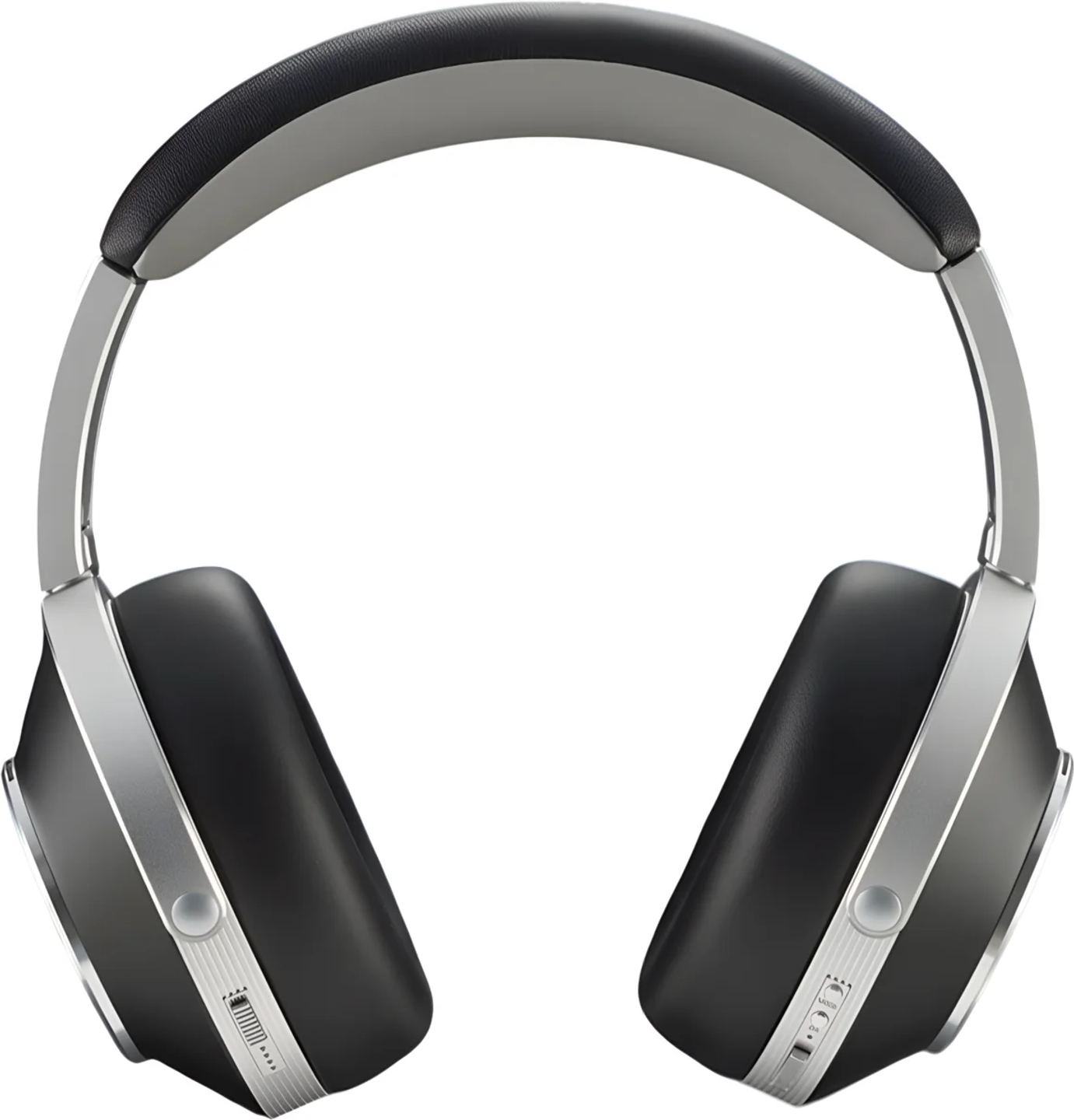
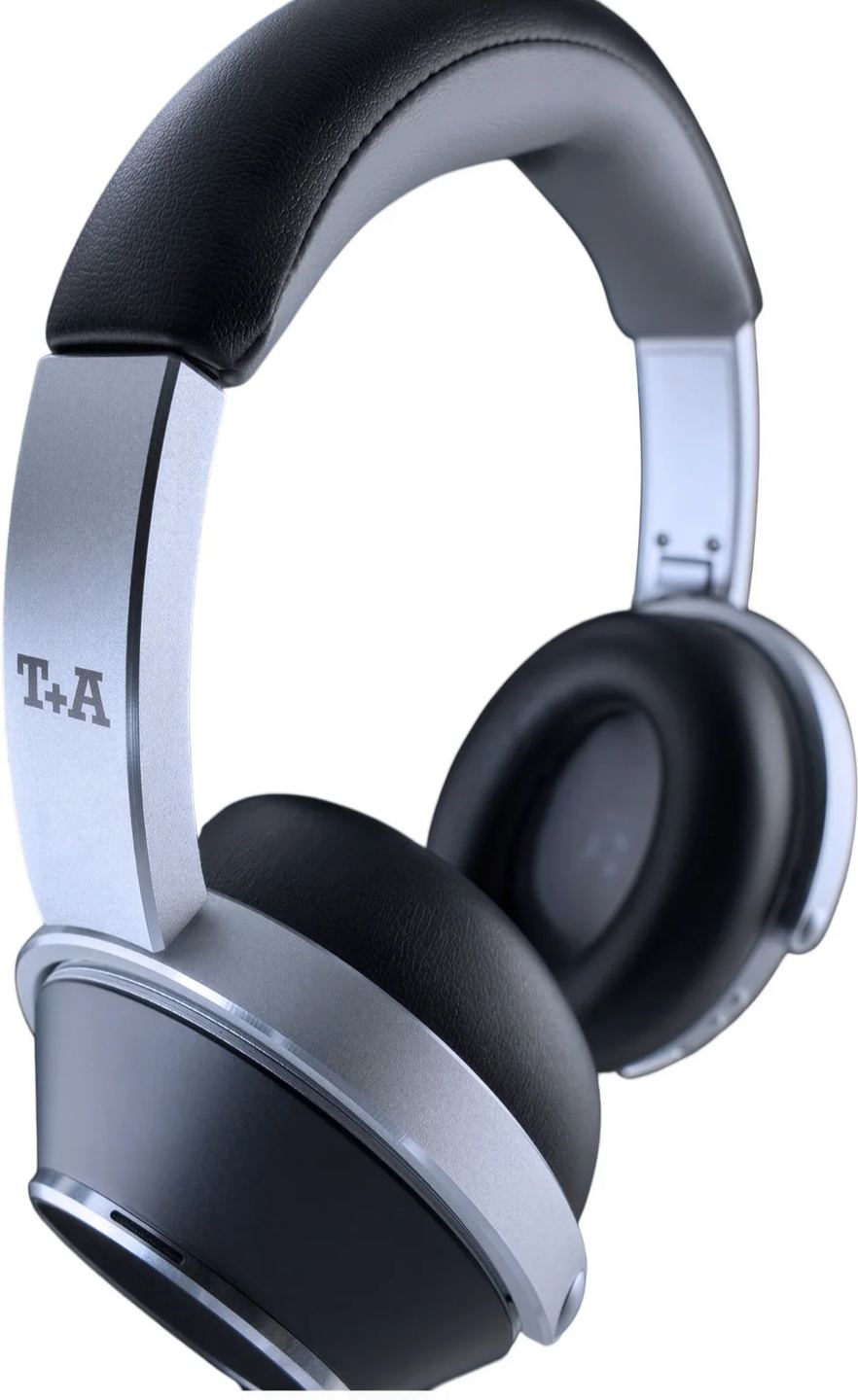
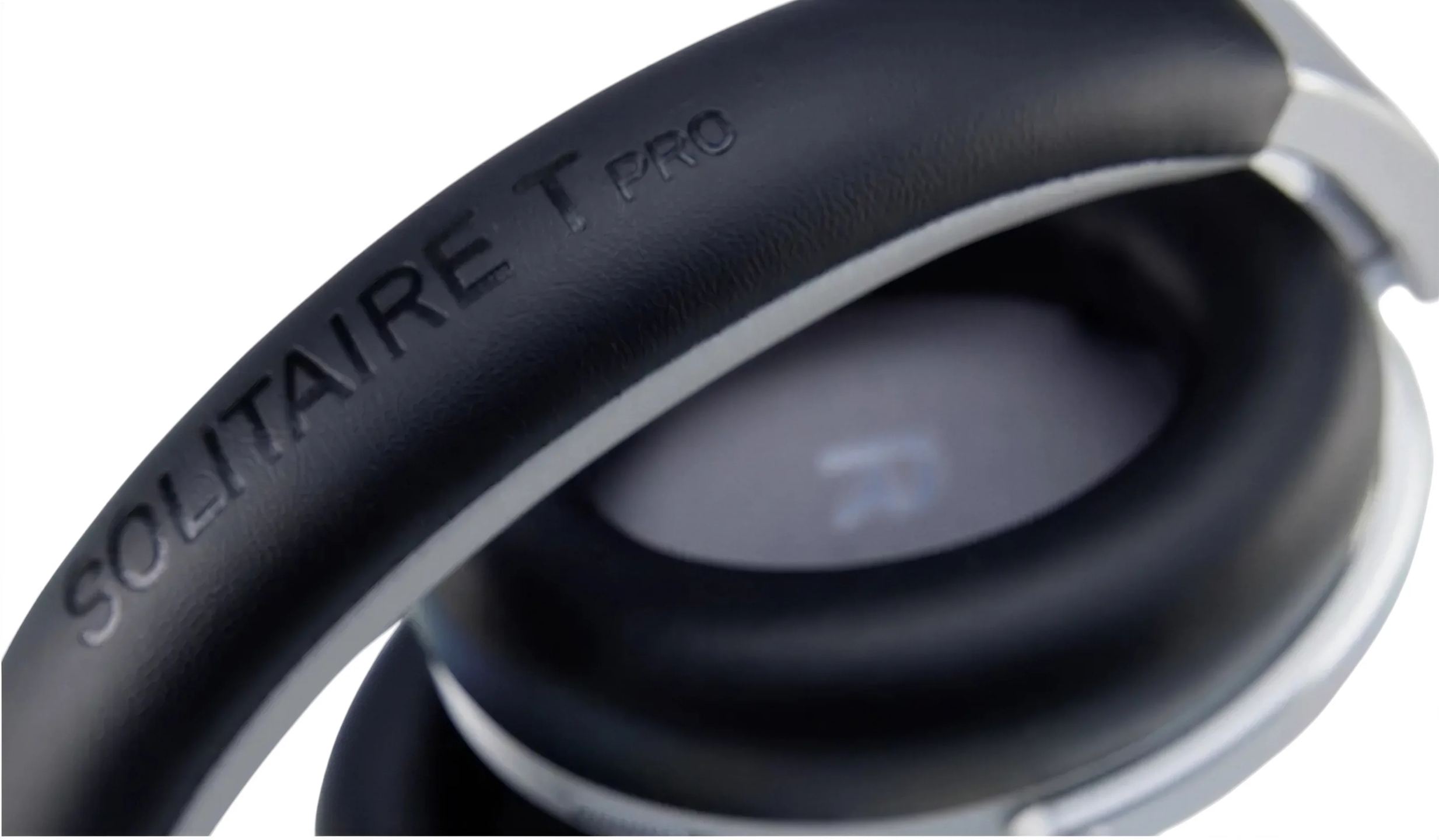
The aluminum parts are machined from solid stock, then bead-blasted and anodized, giving them a satin feel and good scratch resistance. The hard-metal hinges, with very little play, allow the earcups to rotate through 90° and fold inward: the headphones can be stored flat in their case or worn around the neck. They weigh 336 g, and T+A has worked on distributing this weight so that pressure remains even across the head during long listening sessions. The bevels on the headband and earcups echo the design of the Solitaire P, the brand’s reference headphones.
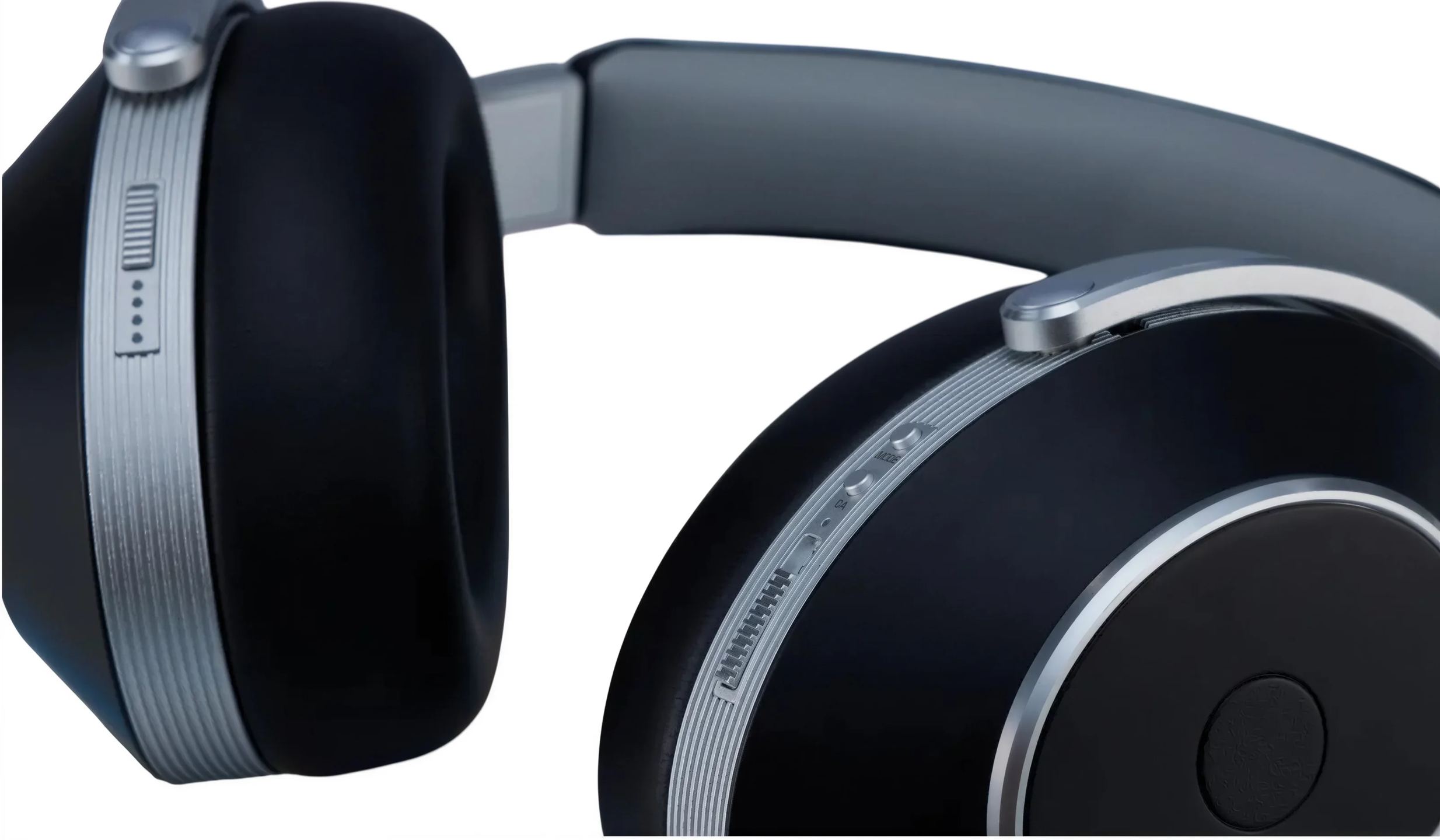
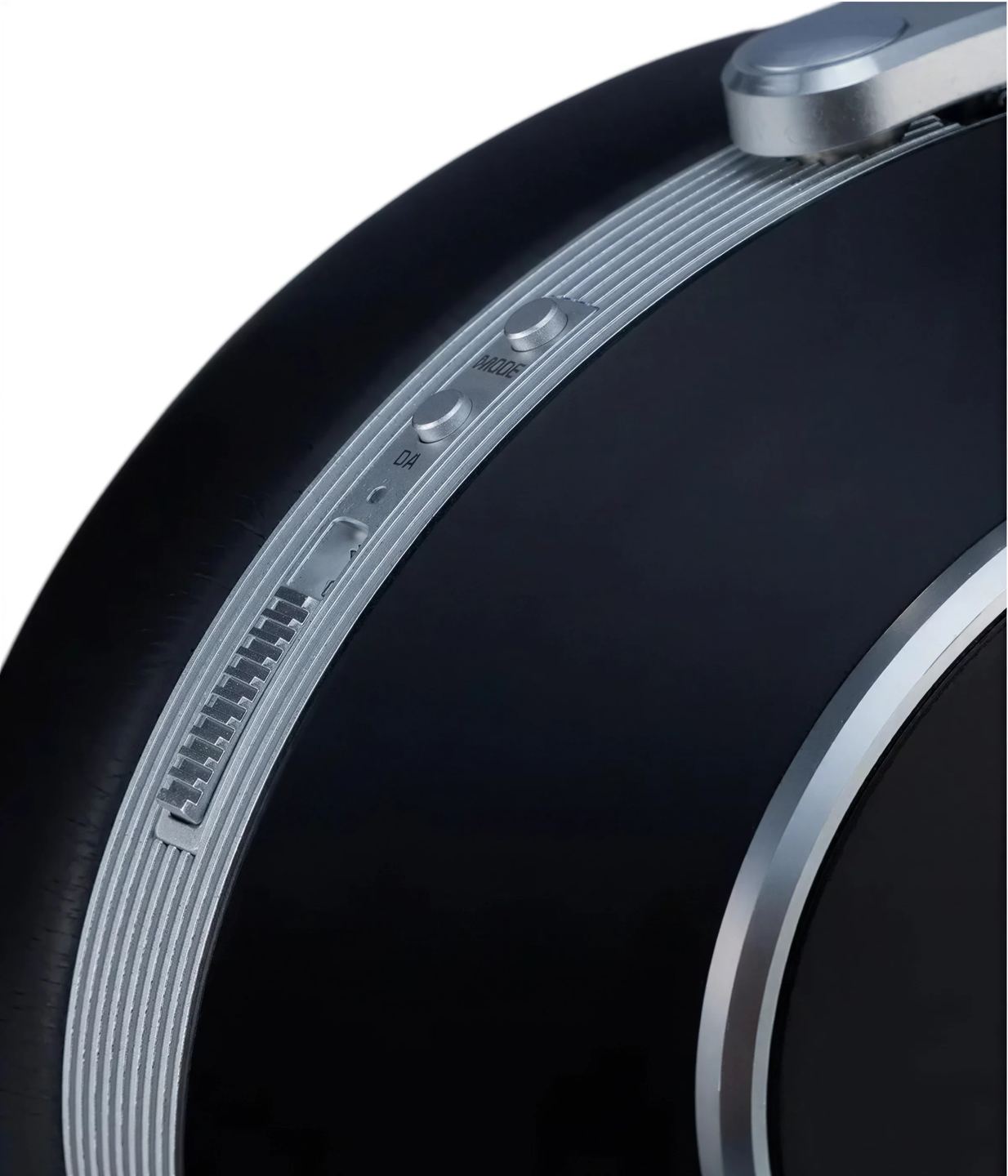
The black version, named Nightflight, combines a black base with dark gray and silver contrasts. For controls, the left earcup houses the power switch and charging indicators, while the right carries the touchpad (playback, volume, track changes) and the mode and Bluetooth buttons. Each action is confirmed by a voice announcement. Charging takes place via USB-C in around two hours, at a maximum of 5 W.
Changes compared with the Solitaire T
The T PRO retains the Solitaire T’s philosophy, closed-back design and aluminum construction, but the electronics have little in common anymore. The QCC5127 chip gives way to the QCC5181, Bluetooth moves to version 6.0, and LDAC, aptX Lossless, LC3 and Auracast join the codec list. The first model’s HQ mode becomes Studio Pro mode, with its ES9219 converter and analog volume control, and Dolby Atmos makes its debut. Battery life is reduced in return: 50 hours in everyday use and 25 hours in Studio Pro, compared with 70 and 35 hours for the Solitaire T.
Documentation
Technical specifications
Design and acoustic performance
- Acoustic coupling: over-ear, closed-back design
- Drivers: selected low-tolerance dynamic drivers
- Frequency response in active mode: 4 Hz to 22000 Hz
- Total harmonic distortion (THD): less than 0.05% at 1 kHz / 94 dB
Passive mode performance
- Impedance: 65 Ω
- Sensitivity: 108 dB at 1 kHz for 1 V
- Frequency response: 4 Hz to 45000 Hz
- Maximum sound pressure level: 122 dB
Microphones and noise cancellation
- Communication microphones: 2 microphones on the right earcup
- Active noise cancellation (ANC):
- Hybrid system
- 2 active noise cancellation microphones on each side
Bluetooth connectivity
- Bluetooth chip: Qualcomm QCC5181
- Bluetooth version: 6.0
- Bluetooth profiles: A2DP, AVRCP, HSP, HFP
- Audio codecs: SBC, AAC, aptX, aptX HD, aptX Adaptive, aptX Lossless, Auracast, LC3, LDAC
Battery, battery life and charging
- Battery:
- Technology: lithium-ion
- Capacity: 1200 mAh
- Battery life:
- Maximum: up to 50 hours
- In Studio Pro mode: up to 25 hours
- Charging:
- Connector: USB-C
- Maximum power: 5 W
- Parameters: 5 V / 1 A
- Charging time: approximately 2 hours
Weight
- Total weight: 336 g
Frequently asked questions
Do the headphones work when the battery is empty?
Yes. Connected via an analog cable, it works as fully passive headphones: the driver is then driven directly by the source’s amplifier. Only the electronic functions (Bluetooth, noise cancellation, Active Analog, USB-C) require battery power.
Which codec should I use with an iPhone?
Over Bluetooth, the iPhone transmits in AAC, as Apple does not support the LDAC and aptX codecs. For lossless listening, an iPhone equipped with a USB-C port can send digital audio through the supplied cable, with the headphones handling the conversion.
Which devices does the USB-C input work with?
T+A states compatibility with Android, iOS, Windows and macOS. The device recognizes the headphones as an external sound card and sends the digital audio stream to them.
Can you listen through a home headphone amplifier while keeping noise cancellation on?
Yes, that’s what Active Analog mode does: when powered on, the headphones receive the analog signal via cable and apply noise cancellation and volume control to it. For purely passive listening, simply leave the headphones switched off.
What is the Solitaire Companion app used for?
Available on iOS and Android, it controls the headphones’ settings, particularly adapting noise cancellation to the environment (airplane, public transport, office). It also allows you to install software updates provided by T+A.
Is the Riviera version technically different?
No. The Riviera version, in cream with cognac accents, shares the same electronics, drivers, and accessories. Only the finish changes.
- Eco-contribution included in the sale price.


