

Yamaha WXA-70A black



Specifications and features


Overview
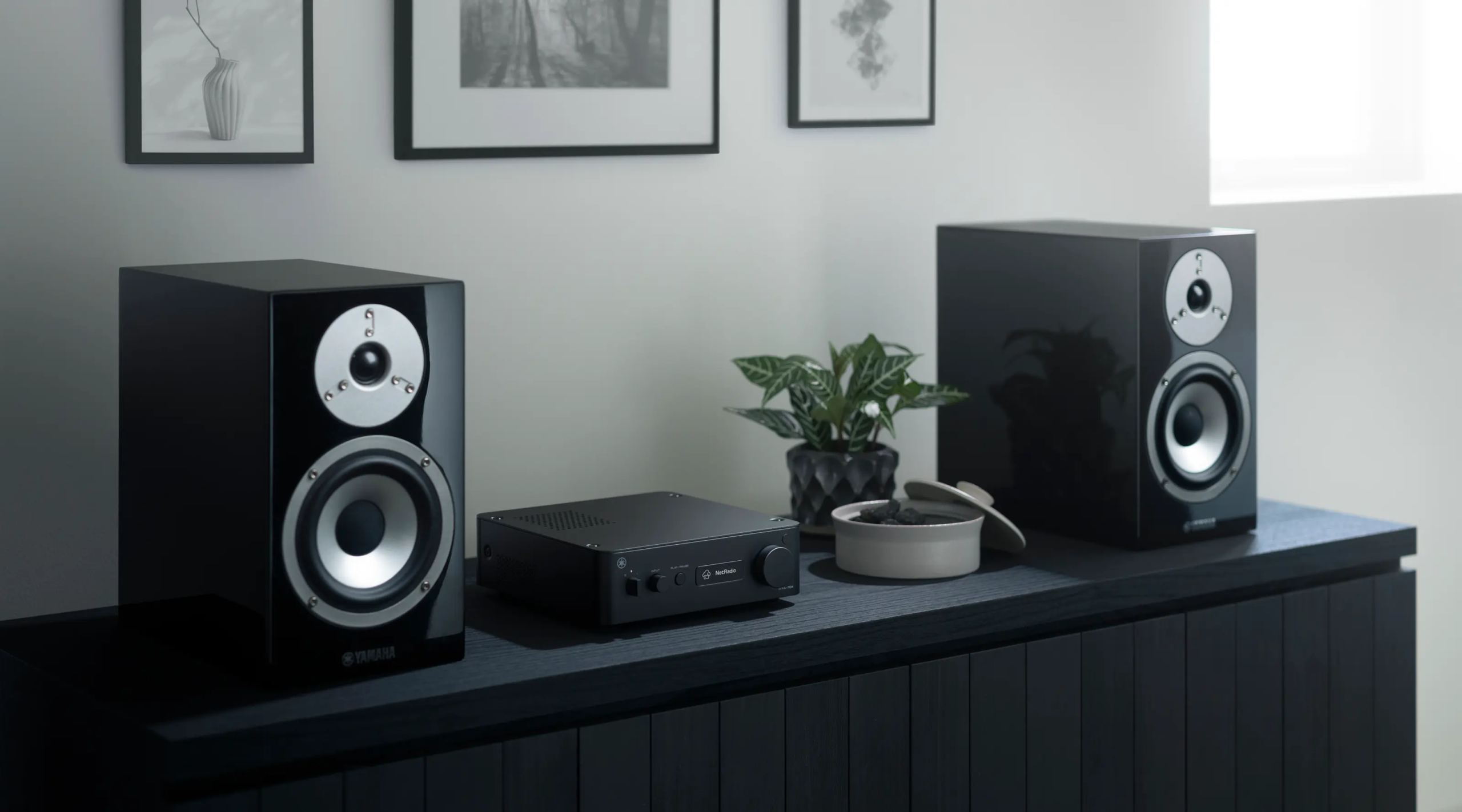
Two passive speakers, a TV, a CD player or a turntable, and just over twenty centimetres of free space on a shelf: that is the starting point for this small connected amplifier. It succeeds the WXA-50 after a decade and retains its compact size. It adds an HDMI connection for the TV, acoustic correction with a microphone and the main streaming services, in a black or silver aluminium enclosure.
A 22 cm-wide aluminium enclosure
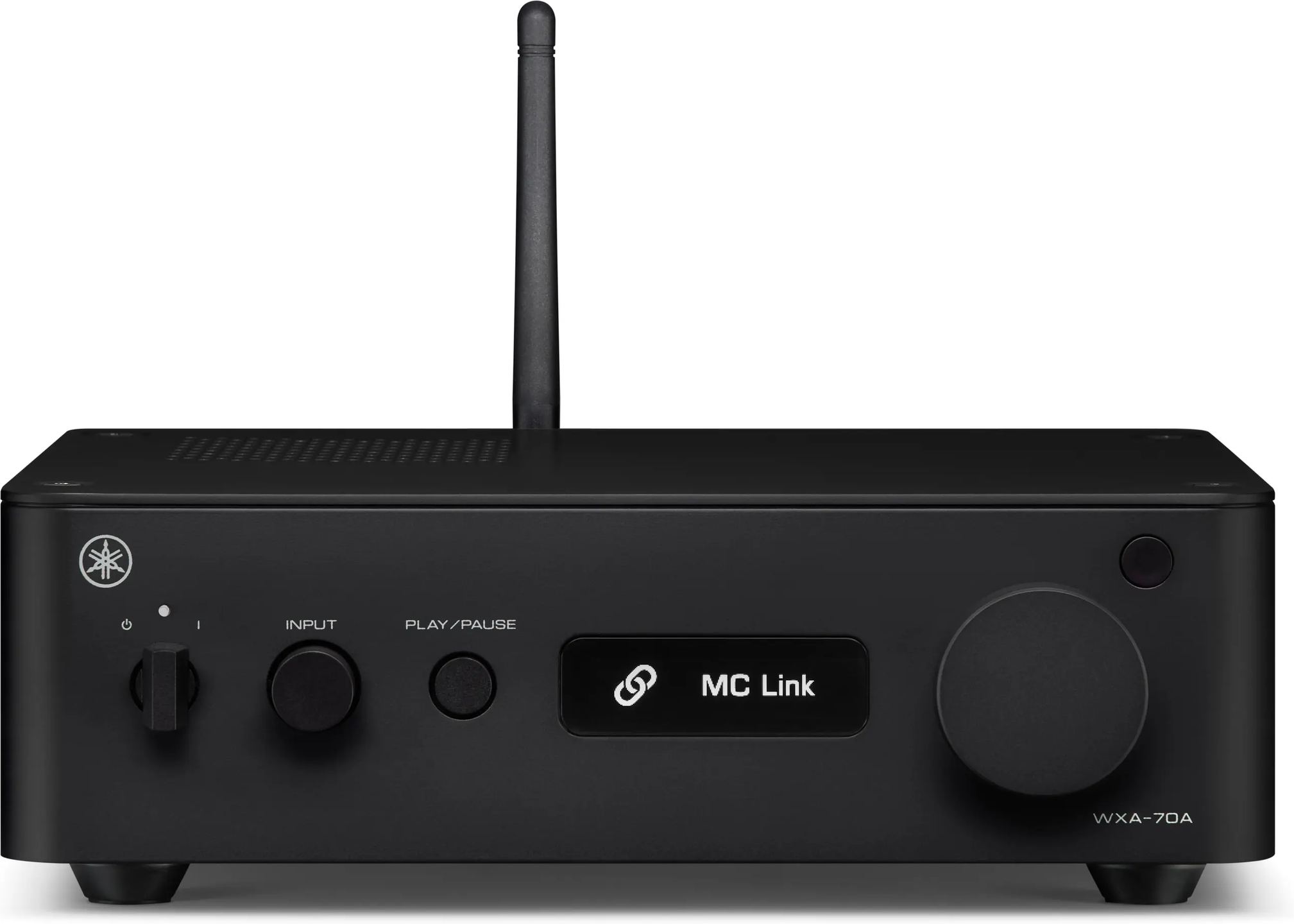
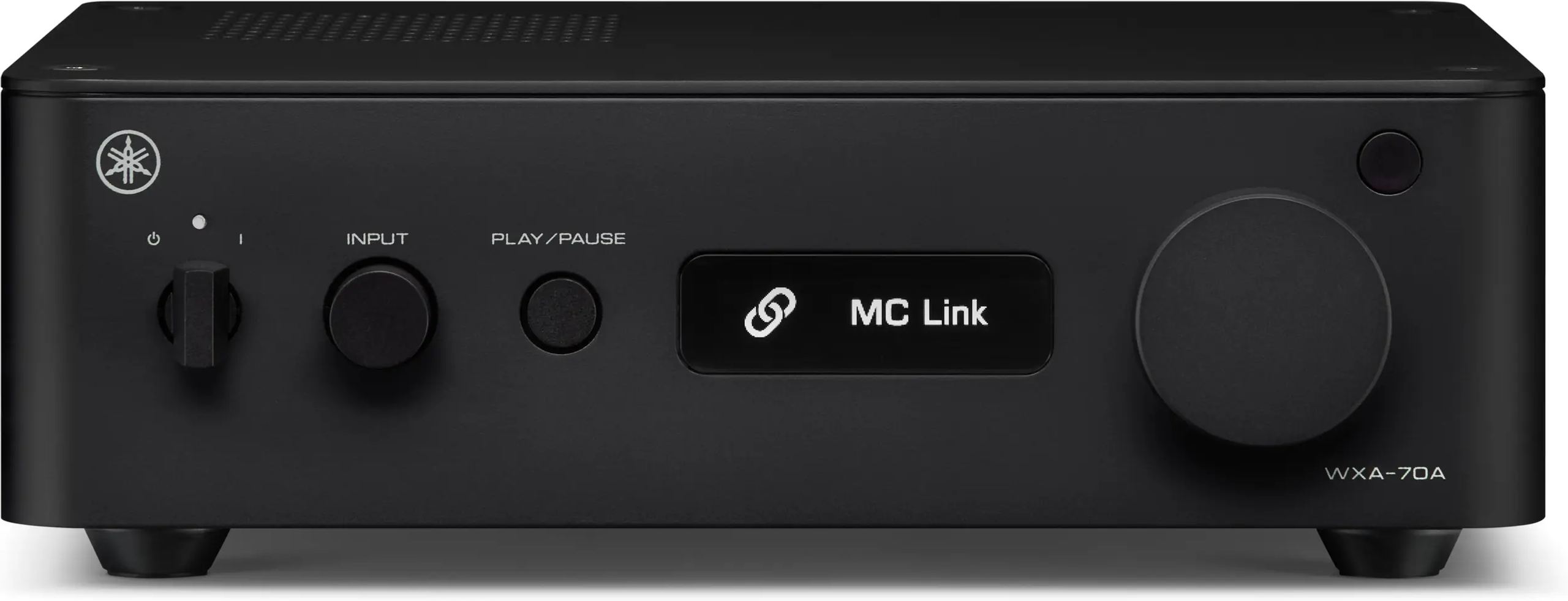
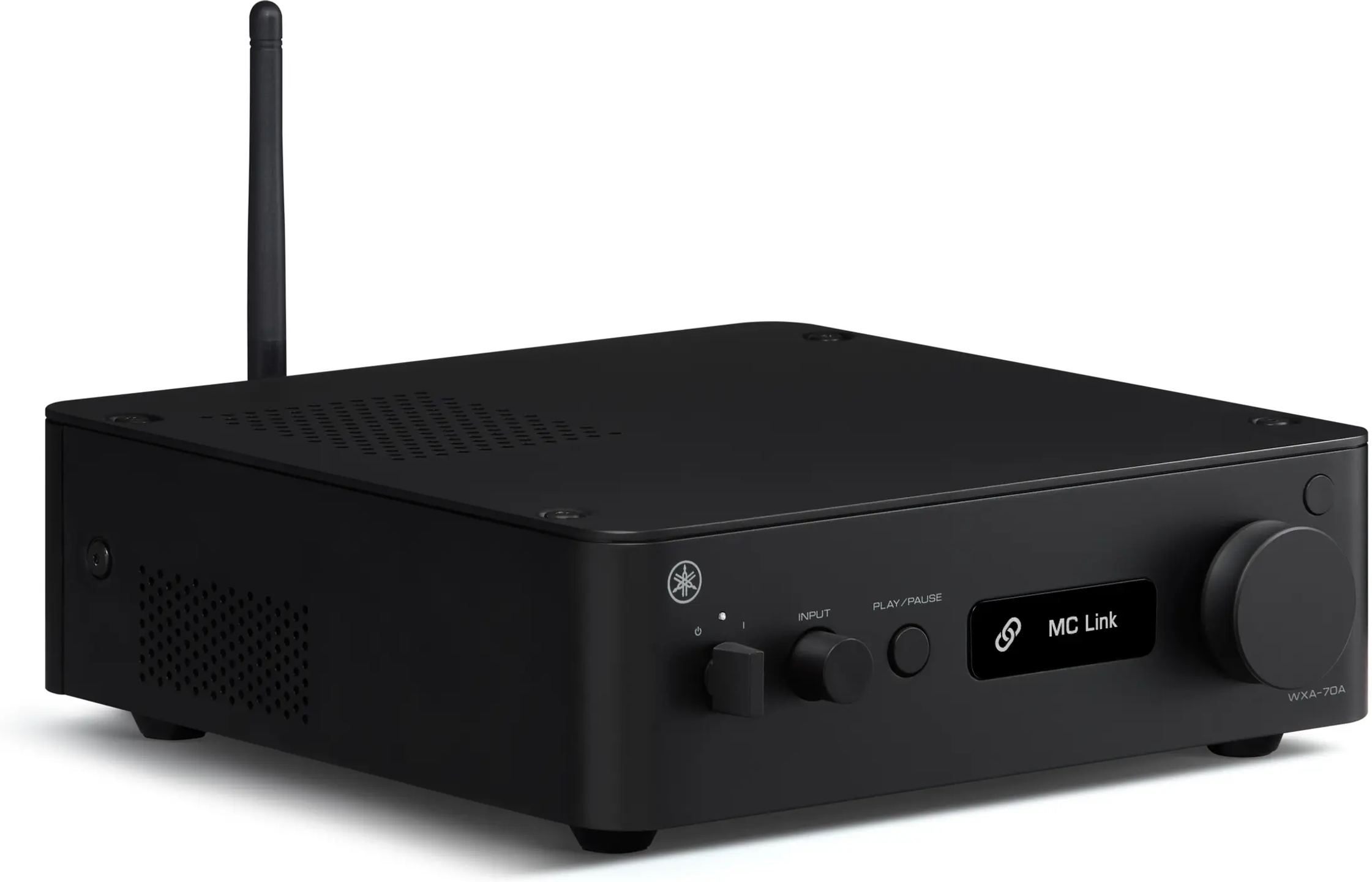
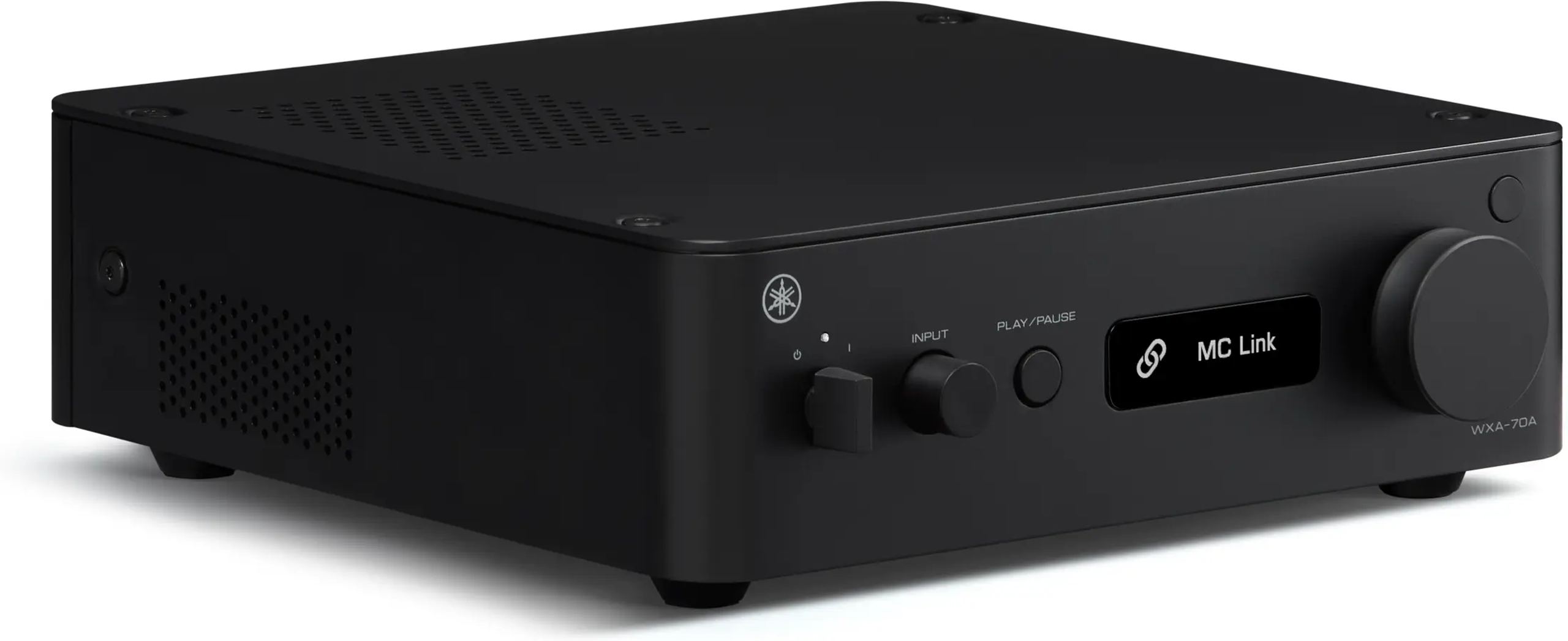
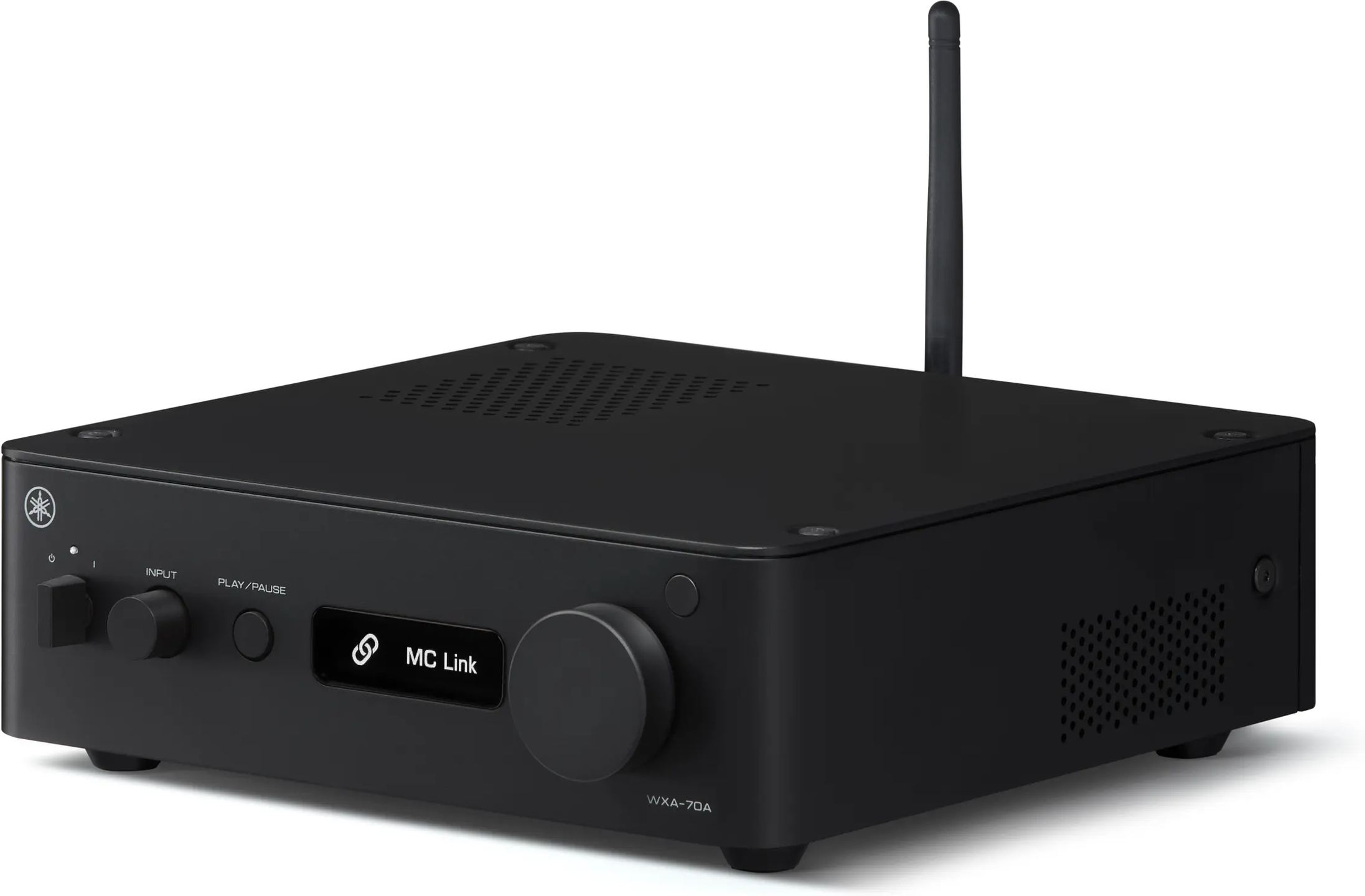
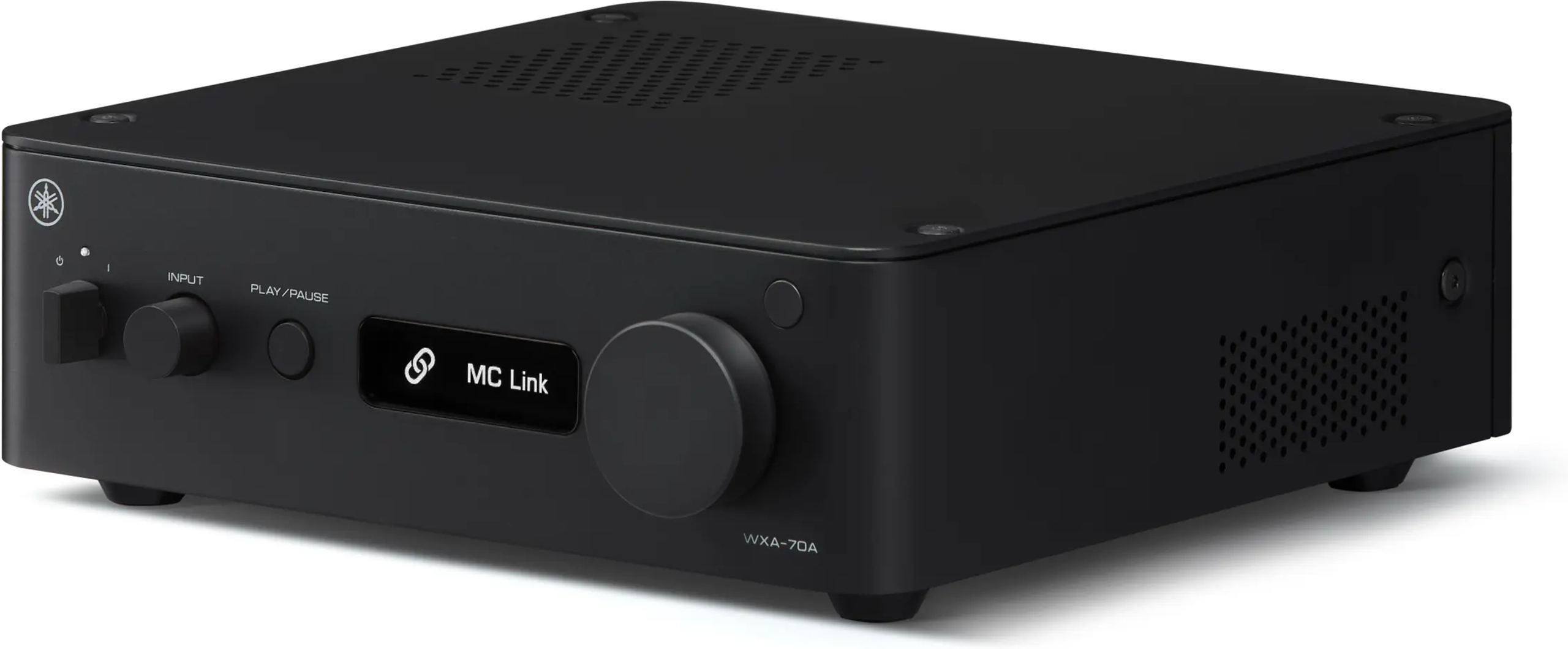
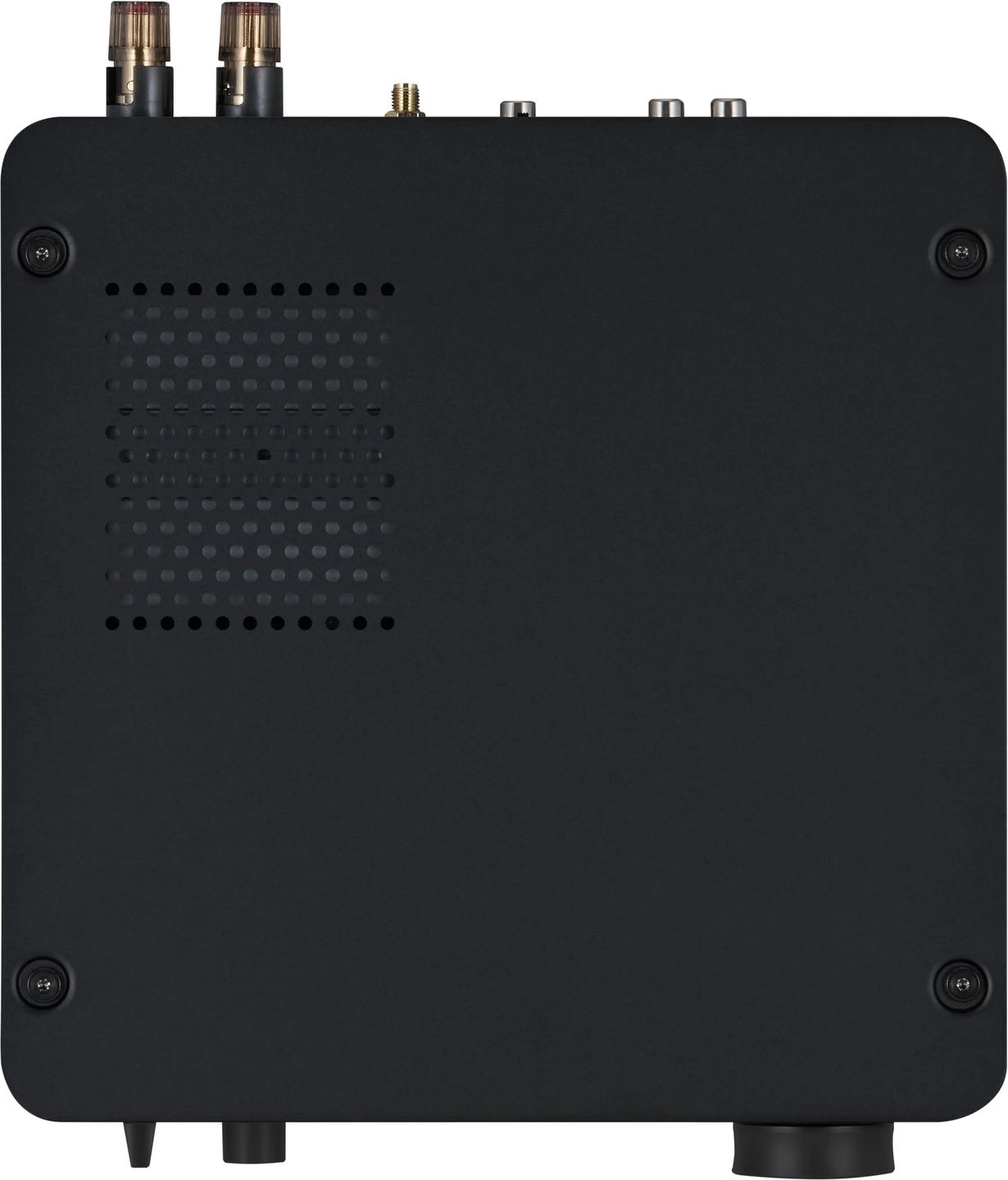
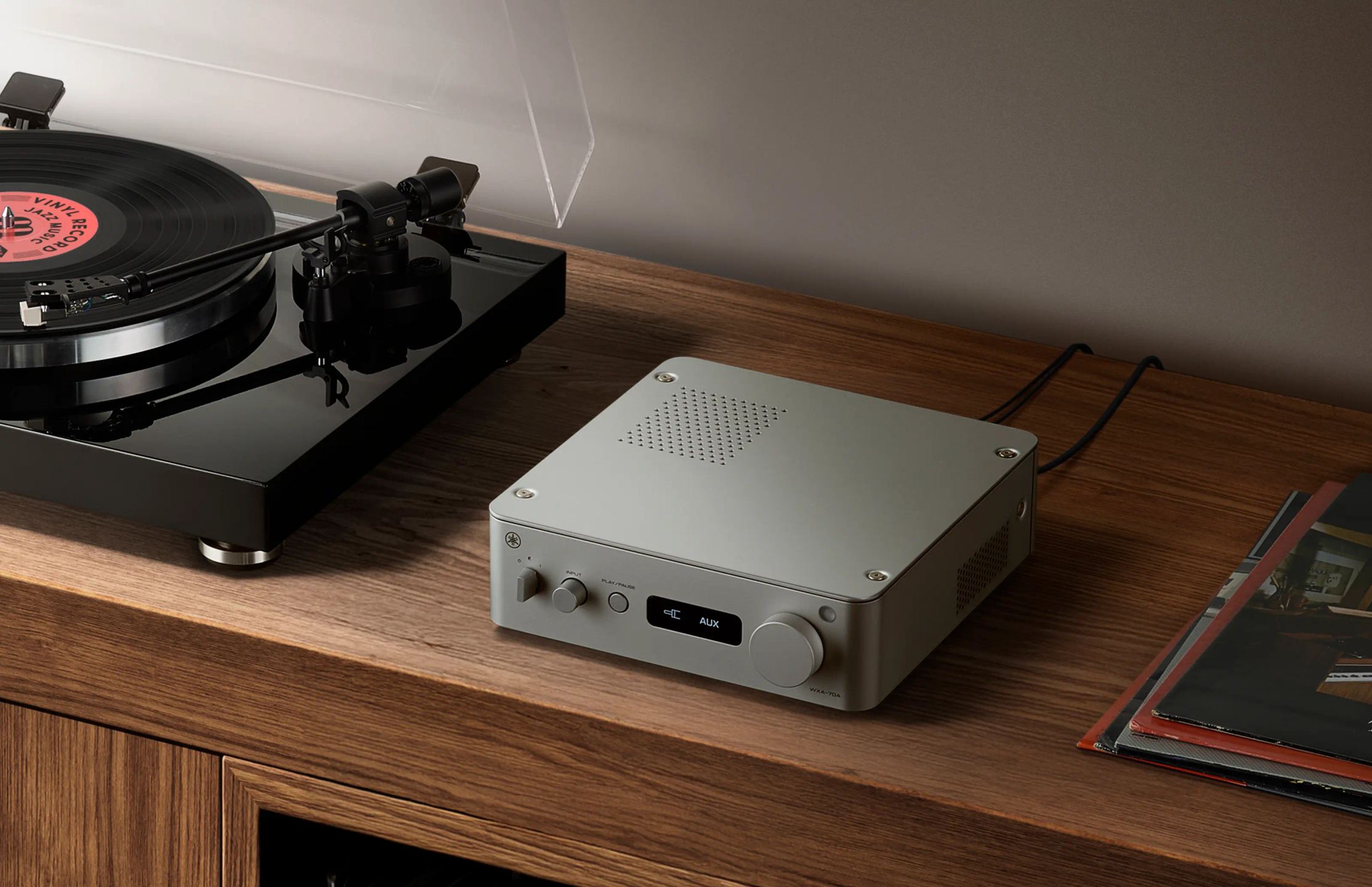
Measuring 220 mm wide, 73 mm high and 267 mm deep and weighing 2.6 kg, the WXA-70A fits under a TV, on a low cabinet or between two bookshelf speakers. The front, top and sides are made of 2 mm-thick aluminium. Unlike a steel cover, this non-magnetic metal does not react to the field produced by the transformer housed inside. A crossbar connects the two sides inside the chassis and limits vibrations, whether they come from the speakers or the supporting surface. On the front, the central OLED display shows the source and volume using text and icons. It is surrounded by the power switch, input selector, a play/pause button and a large aluminium volume knob, whose tactile feel was refined through several prototypes. On the rear, the speaker terminals are gold-plated.
Class D, ESS converter and separate ground
The power stage operates in Class D: the output transistors work by switching, generate little heat and allow for such a compact enclosure. For the European version, Yamaha specifies 2 × 55 W into 8 Ω and 2 × 10⁵ W into 4 Ω, with two channels driven across the full 20 Hz–20 kHz range at 0.06% distortion. In terms of dynamic power, the amplifier reaches 165 W on one channel into 4 Ω. These measurements across the full audio band are more demanding than the 1 kHz figures often highlighted. They are sufficient for bookshelf speakers or floorstanding speakers of average sensitivity in a living room. With low-sensitivity speakers, a large room and high volume, the headroom quickly diminishes.
Digital-to-analogue conversion relies on an ESS SABRE ES9039Q2M chip. Around it, Yamaha uses the D.O.P.G. (DAC on Pure Ground) principle from its high-end home cinema amplifiers. The converter’s power supply is positioned very close to the chip, and a dedicated return path routes the parasitic currents it generates directly back to the power supply. These currents therefore do not flow through the analogue circuits’ reference ground, the electrical zero point against which the music signal is measured. For the same reason, the digital and analogue sections of the board are physically separated.
YPAO acoustic correction applied to stereo
A room always alters the sound of speakers: walls reinforce certain bass notes, and nearby surfaces create reflections that blur the stereo image. YPAO measures these effects using the supplied microphone, connected by a 6 m cable and placed at the listening position. It then calculates a correction that takes into account the room’s shape, the nature of the walls, the speakers’ behaviour and their position.
Parametric equalisation (PEQ) acts on specific frequency bands to flatten bass peaks. Reflected Sound Control (R.S.C.) addresses early reflections, those that arrive a few milliseconds after the direct sound and determine the precision of the stereo soundstage. YPAO Volume adjusts the tonal balance according to the listening level, because the ear perceives less bass and treble at low volume. Equalisation calculations use 64-bit processing, and each function can be activated separately: you can listen and compare with and without correction. Correction is no substitute for good placement and cannot make a speaker reach lower than it is capable of reproducing. For the deepest bass, a subwoofer output is provided.
TV sound through a single HDMI cable
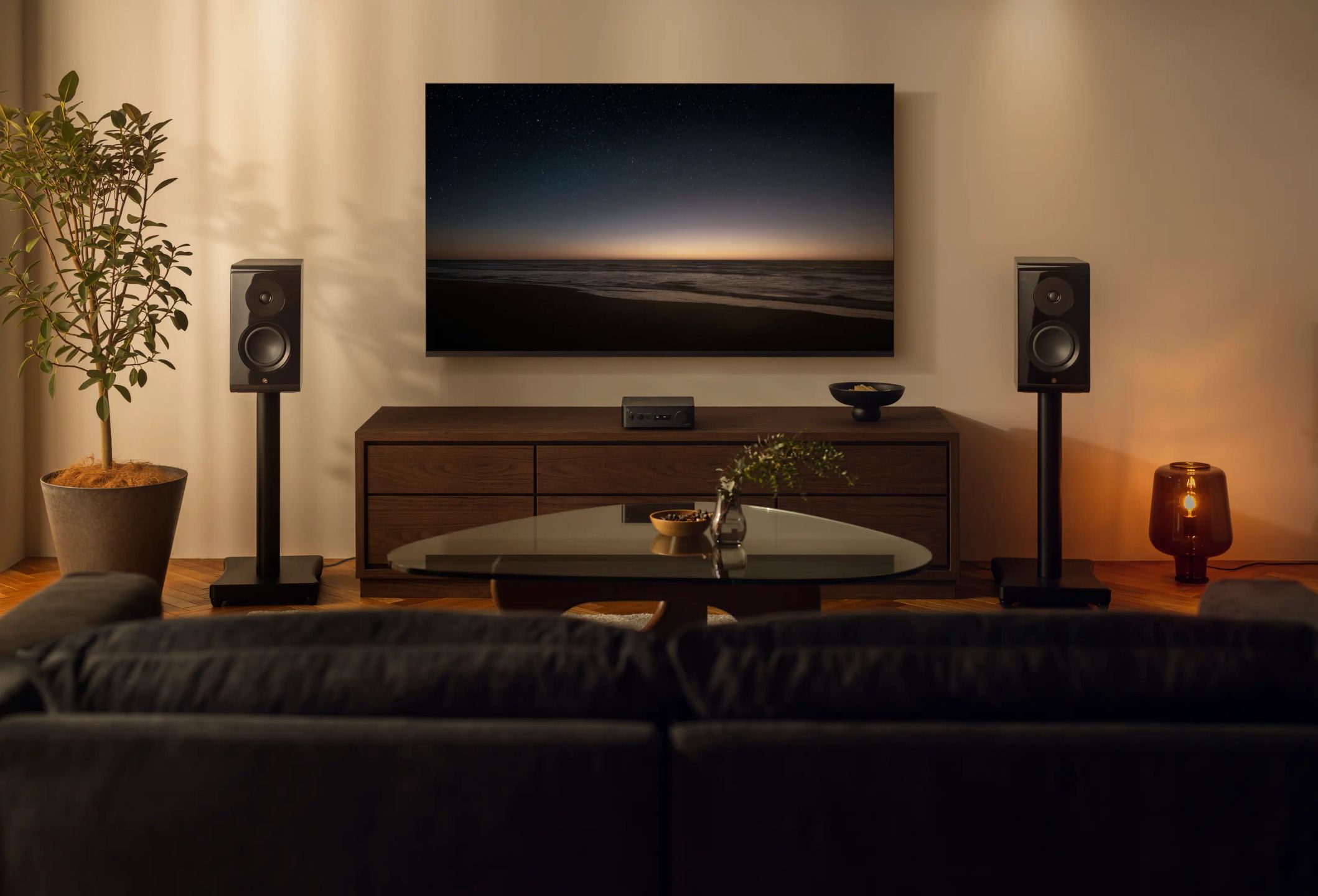
The HDMI eARC/ARC connection links the WXA-70A to the port of the same name on the TV. Thanks to the CEC protocol, the amplifier switches on and off with the screen, and its volume can be adjusted using the TV remote control. The dialogue level adjustment boosts voices without increasing the overall volume. It is useful for a film with a busy soundtrack, a sports broadcast with commentary or late-night listening at low levels. Sound remains in stereo through two speakers, with the option of adding a subwoofer for bass effects.
Streaming, MusicCast multi-room and physical sources
On the network side, the WXA-70A supports AirPlay 2 and Google Cast. It is compatible with Spotify Connect, TIDAL Connect and Qobuz Connect, allowing playback to be controlled directly from the service’s app. It is also Roon Ready and provides access to Internet radio as well as files stored on a local network server. It plays MP3, WMA, AAC, WAV, FLAC, ALAC, AIFF and DSD formats, the latter up to 11.2 MHz. With WAV, FLAC, AIFF and ALAC, tracks play without gaps, which matters for a live album or an opera. Connection is via dual-band Wi-Fi or an Ethernet cable, which is more stable when the router is within reach. Bluetooth 5.3 is limited to the SBC and AAC codecs: it is convenient for a guest streaming from their phone, but less suitable for focused listening than network services.
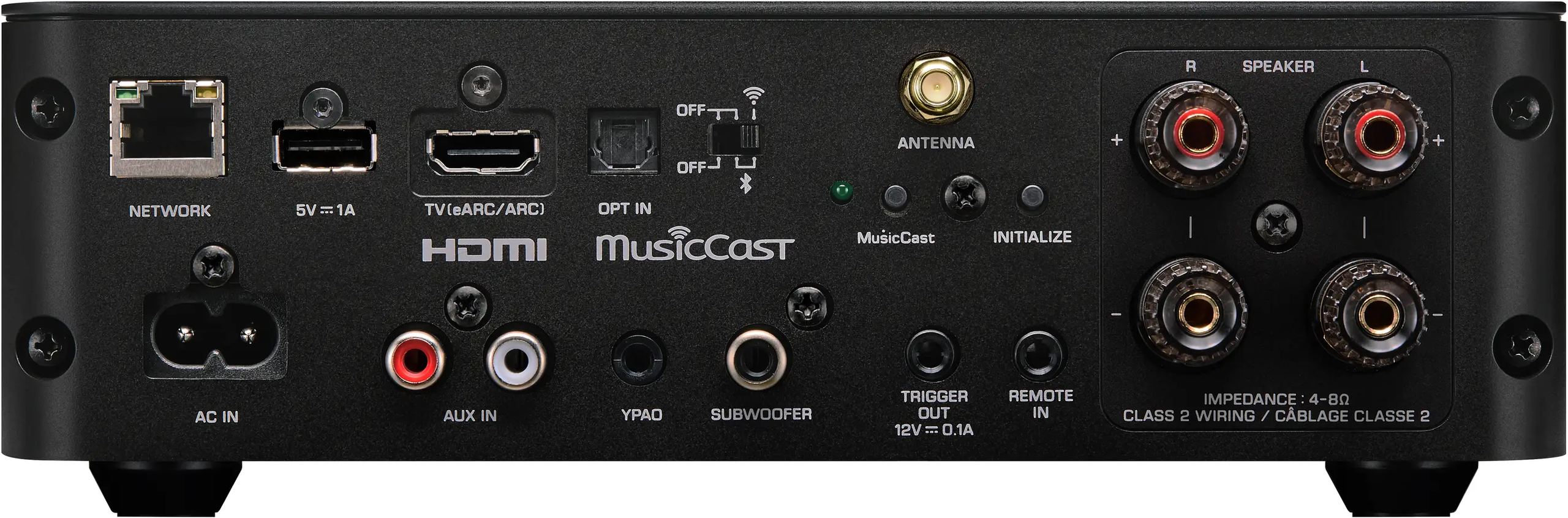
The MusicCast app controls everything and links the WXA-70A to other compatible Yamaha devices, wireless speakers or home cinema amplifiers. You can play the same music in several rooms or a different programme in each, including from sources connected to the amplifier: sound from the TV or a turntable can be sent to another MusicCast device in the home. For physical sources, the rear panel provides an analogue RCA input, an optical input and a USB-A port that reads a flash drive or hard drive and also handles updates. The list ends there: no coaxial input, no phono input and no headphone output.
A decade after the WXA-50
The WXA-50 from 2016 already specified 2 × 55 W into 8 Ω and 2 × 10⁵ W into 4 Ω: power has not changed. Everything else has. The new model adds an HDMI eARC connection, YPAO correction, the ES9039Q2M converter, as well as Google Cast, Qobuz Connect and Roon Ready certification. The enclosure increases in height (73 mm versus 51.5 mm) and weight (2.6 kg versus 1.95 kg) with its reinforced aluminium chassis. The WXA-50’s AUX OUT line output and trigger input disappear: only a trigger output remains.
Home automation integration planned from installation
The WXA-70A is compatible with Control4 control systems. It receives commands from a home automation system through its wired infrared input, without an emitter stuck to the front panel, and can switch on other devices through its 12 V trigger output. A web interface, opened from a browser on the local network, brings together network and system settings without using the app. The installer can also disable Wi-Fi and Bluetooth separately when the amplifier is connected via Ethernet in an equipment cabinet, preventing a passing phone from changing the source. In standby, the amplifier consumes 2 W.
Documentation
French
Technical specifications
Amplification and audio conversion
- Type: stereo streaming amplifier
- Output power at 220 V:
- 2 × 60 W into 6 Ω (20 Hz – 20 kHz, total harmonic distortion of 0.06%)
- 2 × 90 W into 4 Ω (20 Hz – 20 kHz, total harmonic distortion of 0.06%)
- Dynamic power: 150 W into 4 Ω (1 kHz, total harmonic distortion of 10%, 1 channel)
- Digital-to-analog converter: ESS SABRE ES9039Q2M
Acoustic calibration
- YPAO calibration:
- Parametric equalization (PEQ)
- Reflected Sound Control (R.S.C.)
- YPAO Volume
Connections and TV functions
- Inputs: RCA analog audio, optical audio, HDMI eARC / ARC, USB-A, Ethernet (local network)
- Outputs: speaker terminals, subwoofer output, 12 V trigger output
- TV functions:
- Volume and power control via CEC
- Dialogue level adjustment
Audio playback and network connectivity
- Supported audio formats: MP3, WMA, MPEG-4 AAC, WAV, FLAC, ALAC, AIFF, DSD
- Network services and protocols: AirPlay 2, Google Cast, Spotify Connect, TIDAL Connect, Qobuz Connect, Roon Ready, Internet radio
- Wireless connectivity: Wi-Fi, Bluetooth (SBC / AAC)
- Multi-room audio streaming: Yamaha MusicCast
Home automation integration
- Compatibility with home control systems
- Infrared input
- Web configuration interface
Power supply and consumption
- Supply voltage: 100 / 120 / 220 / 230 V depending on version
- Standby power consumption: 2 W
Included accessories
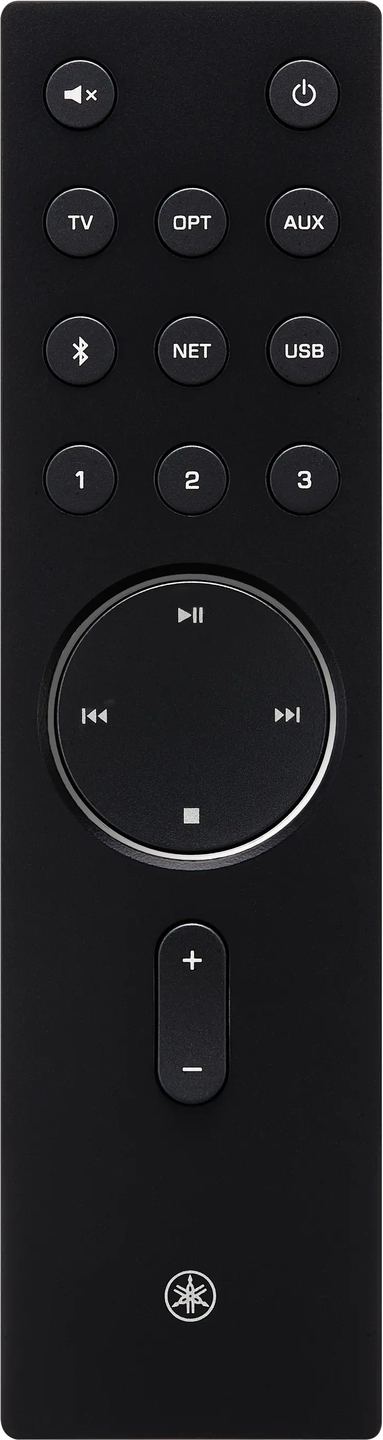
- Remote control, AAA batteries, 2 m power cable, 6 m YPAO microphone, guides
Dimensions and weight
- Dimensions (W × H × D): 220 × 73 × 267 mm
- Weight: 2.6 kg
Frequently asked questions
Can you connect a turntable to the WXA-70A?
Yes, but not directly, as it has no phono input. This circuit amplifies and equalizes the very weak signal from a cartridge. You therefore need a turntable with a built-in preamplifier (often switchable between “phono/line”) or an external phono preamp, which is then connected to the RCA input.
What is the difference compared to the WXC-70A?
The WXC-70A has the same form factor, the same converter, YPAO correction, an HDMI eARC port and the same network features, but no amplification. It operates in preamplifier mode (adjustable volume) or player mode (fixed level). It connects to an existing amplifier via an RCA output or an optical or coaxial digital output. The WXA-70A, on the other hand, directly powers a pair of passive speakers.
Which speakers should I pair with the WXA-70A?
It supports passive speakers rated from 4 to 8 Ω, and a lower impedance allows it to deliver more power. Speaker sensitivity matters even more: with a model rated at around 87 to 88 dB or higher, you can reach a comfortable listening level in a living room without pushing the amplifier to its limits. Bookshelf speakers or compact floorstanding speakers are the most suitable match for its size.
How do I add a subwoofer?
The dedicated output connects via an RCA cable to the line or LFE input of a powered subwoofer. If the subwoofer has a trigger input, the WXA-70A’s 12 V output turns it on and off along with the amplifier, avoiding the need to leave the subwoofer permanently on standby or rely on its automatic signal detection.
Does the TV need to be set up in a particular way?
Connect the HDMI cable to the TV socket marked eARC or ARC, then enable the CEC function in the TV’s menus, which each manufacturer gives its own name. Then select the external audio system as the sound output. Without CEC, neither automatic power-on nor volume control from the TV remote will work.
Does the WXA-70A work without Wi-Fi?
Yes. The Ethernet port handles all network functions, and the HDMI, optical, RCA and USB inputs do not require any connection. Bluetooth remains available even when Wi-Fi is turned off.
What does Roon Ready certification offer?
Roon is subscription-based music library management software installed on a computer or server. With Roon Ready certification, the WXA-70A is recognized directly by Roon as a playback endpoint, without going through AirPlay or another protocol. You can then use Roon’s interface and metadata to browse your music, and the software displays the signal path all the way to the amplifier.
- Eco-contribution included in the sale price.
- Manufacturer reference: VJM0950
- GTIN / EAN: 4957812725095


