

EverSolo C10


Overview
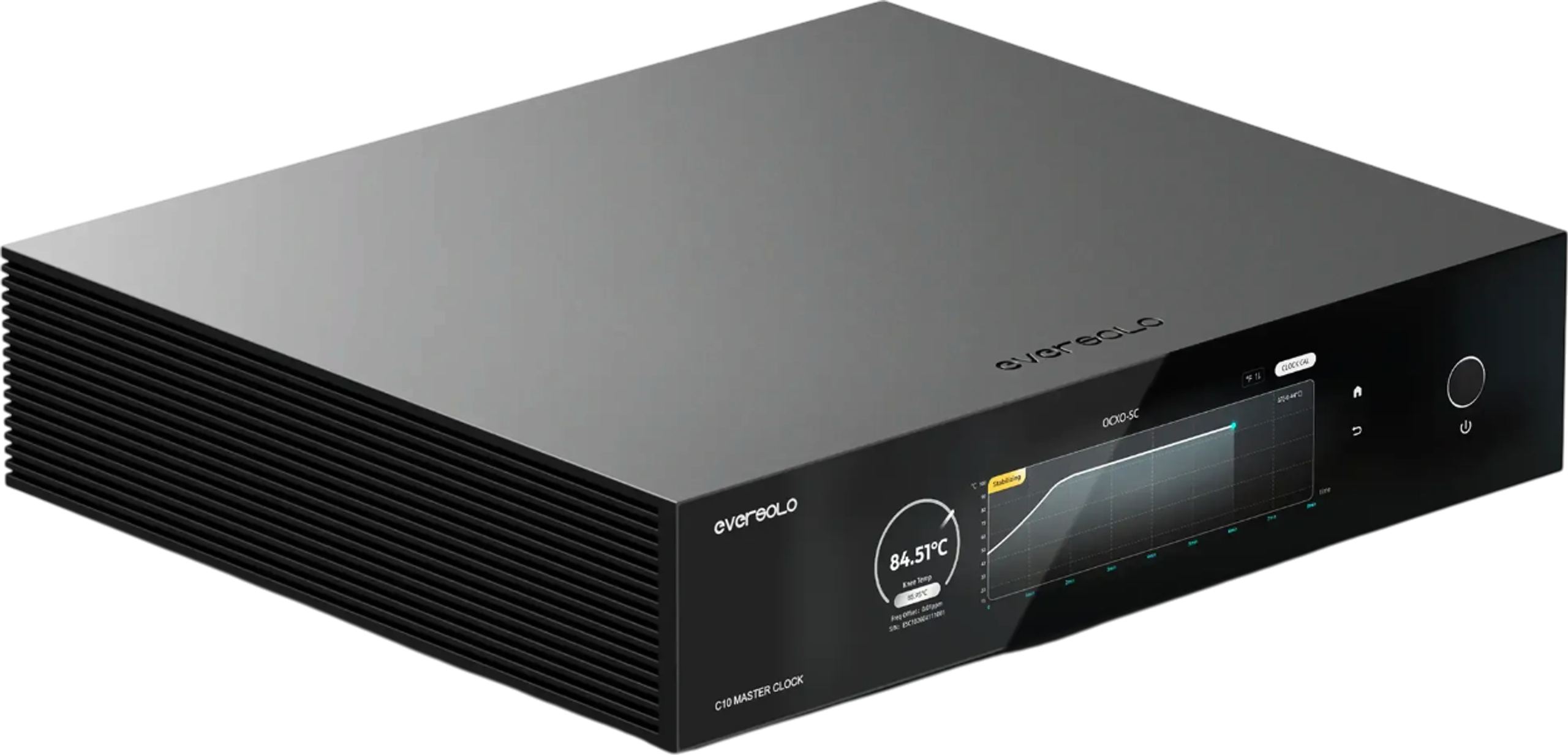
In a digital system, each device clocks the signal using its own quartz crystal, and no two crystals ever run at exactly the same rate. This master clock replaces these multiple references with a single one: a 10 MHz signal generated by an oven-controlled oscillator, then distributed through four outputs to the transport, DAC or network player. It completes the EverSolo 10 series, alongside the T10 transport and DAC-Z10 DAC.
An SC-cut quartz crystal housed in its own oven
The frequency of a quartz crystal varies with temperature. Just a few extra degrees in the room, or heat from an amplifier placed right next to it, is enough to shift it. An OCXO (oven-controlled crystal oscillator) eliminates this cause: the crystal is housed in a small heated enclosure, maintained at a constant temperature well above room temperature. EverSolo had an oscillator of this type developed for the C10 around an SC-cut quartz crystal. This cut is more difficult to produce than the AT cut used in standard oscillators. In return, the crystal is less sensitive to the temperature variations that remain inside the oven and to mechanical stress, and it ages more slowly. Its frequency therefore remains more stable from one year to the next.
Phase noise drops to −115 dBc/Hz or below at 1 Hz from the carrier. This value describes the slowest fluctuations in the signal, those very close to the nominal frequency: at a 1 Hz offset, the noise is 115 dB below the level of the useful signal. It is in this region close to the carrier that thermal and mechanical drift leave their mark, and this is where the oven and SC cut take effect. The oscillator, its precision temperature control and signal distribution are managed by the proprietary timing reference engine, called Reference Timing Engine (RTE).
Four BNC outputs to synchronize the entire digital system
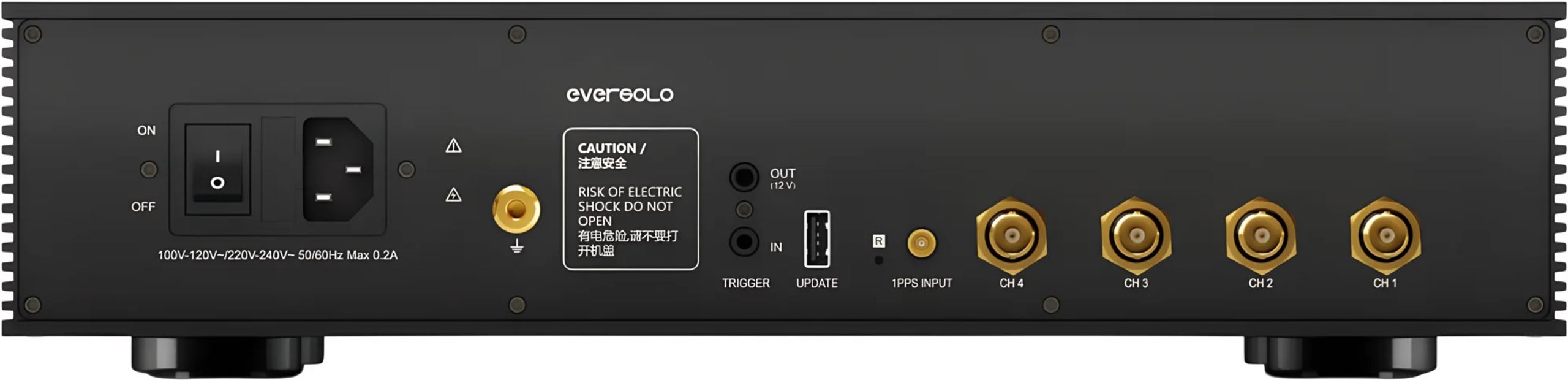
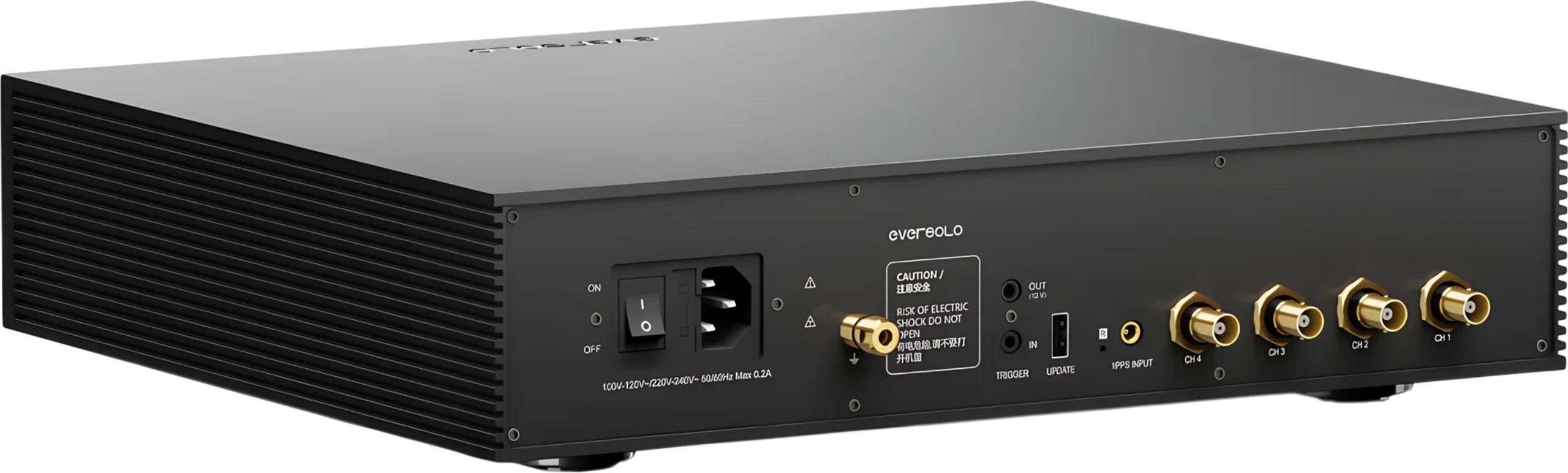
The four BNC outputs deliver the same 10 MHz signal. Each has its own buffer stage, a small amplifier that separates the output from the rest of the circuit. Connecting or disconnecting a device, or fitting a longer cable to one output, does not alter the signal sent to the other three. For the same reason, the internal circuits are isolated from one another, so that noise from one section cannot feed back into the oscillator.
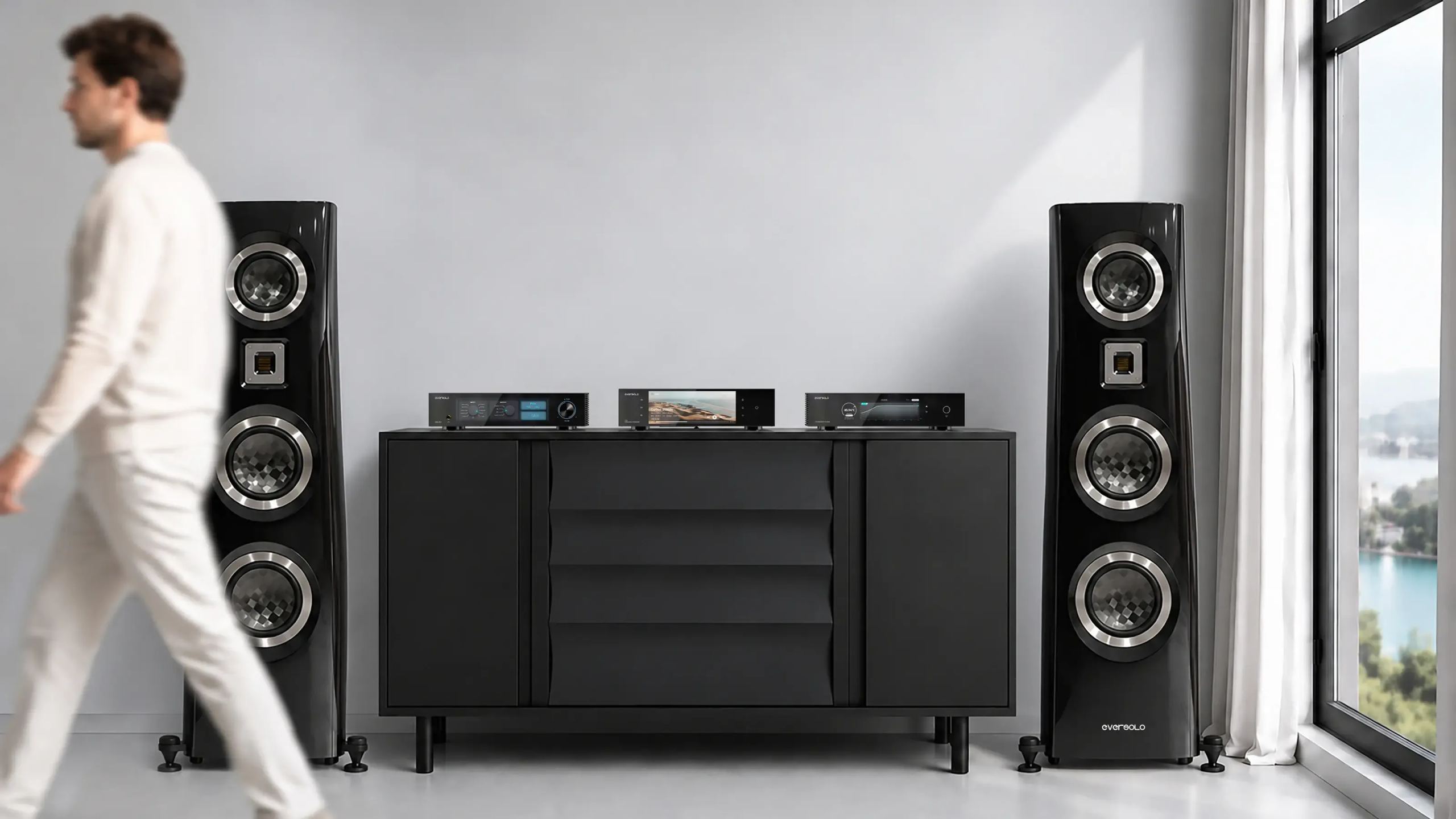
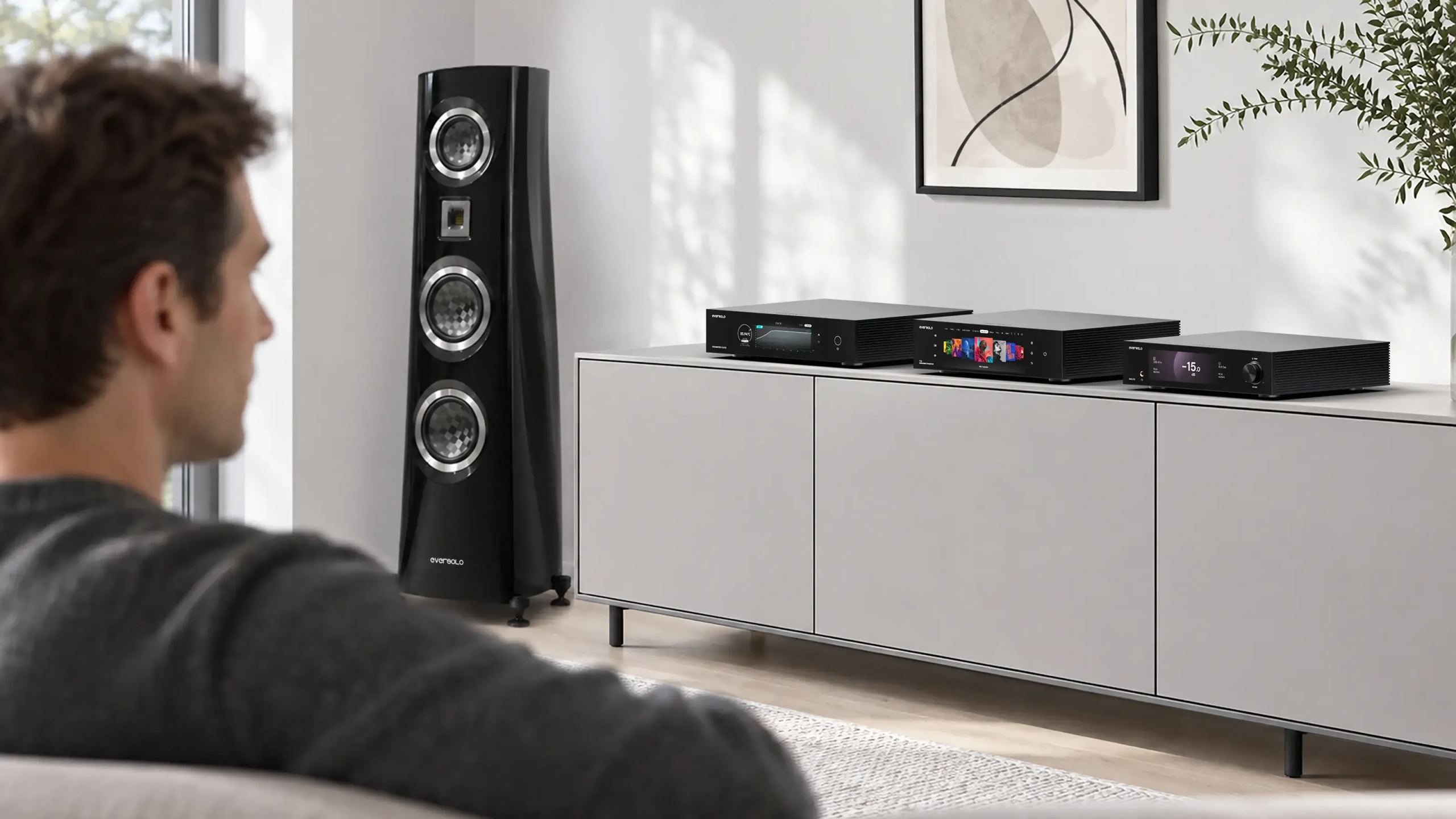
A 10 MHz clock does not directly clock the conversion. The receiving device uses it to lock its own audio clocks, which are multiples of 44.1 kHz or 48 kHz, through a phase-locked loop (PLL). The T10 transport and DAC-Z10 DAC both have an external BNC clock input compatible with 10 MHz at 50 or 75 Ω. Once connected to the C10, they operate on the same timebase rather than two independent quartz crystals. The DMP-A8 Master Edition Gen 2 network player also has a 10 MHz input. The two included BNC cables (0.5 m and 1 m) are enough for the T10 and DAC-Z10 pair. For a third or fourth device, additional cables will be needed.
The listening benefits depend on how the receiving device uses the signal. The T10 and DAC-Z10 already have carefully designed internal clocks. The C10’s contribution therefore lies in sharing a common reference between the source and conversion, and is most appreciable in an already well-developed system.
A GNSS input to align the oscillator with satellite time
The GNSS 1PPS synchronization input receives the pulse-per-second signal delivered by a satellite positioning receiver. This pulse is synchronized with the atomic clocks on board the satellites. It carries no sound: it gives the C10 an external reference to correct the slow drift of its oscillator, which the oven and SC cut reduce without eliminating. The receiver and its antenna are not included. The antenna needs a view of the sky, which often means placing it near a window or running a cable outdoors. Without this connection, the C10 operates using its OCXO alone.
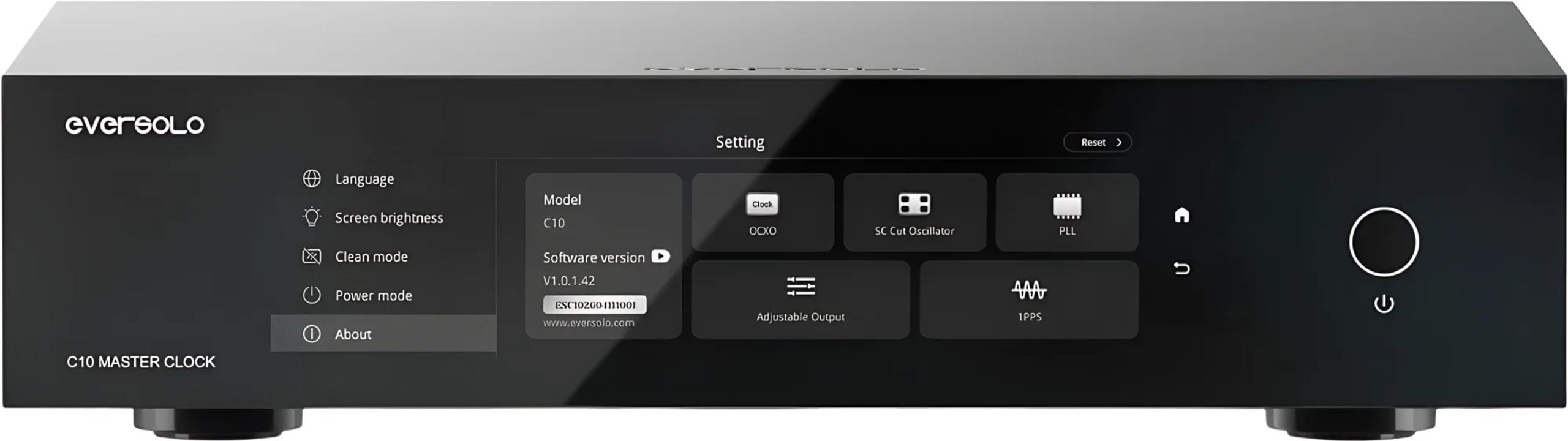
A 22.35 cm touchscreen to monitor warm-up
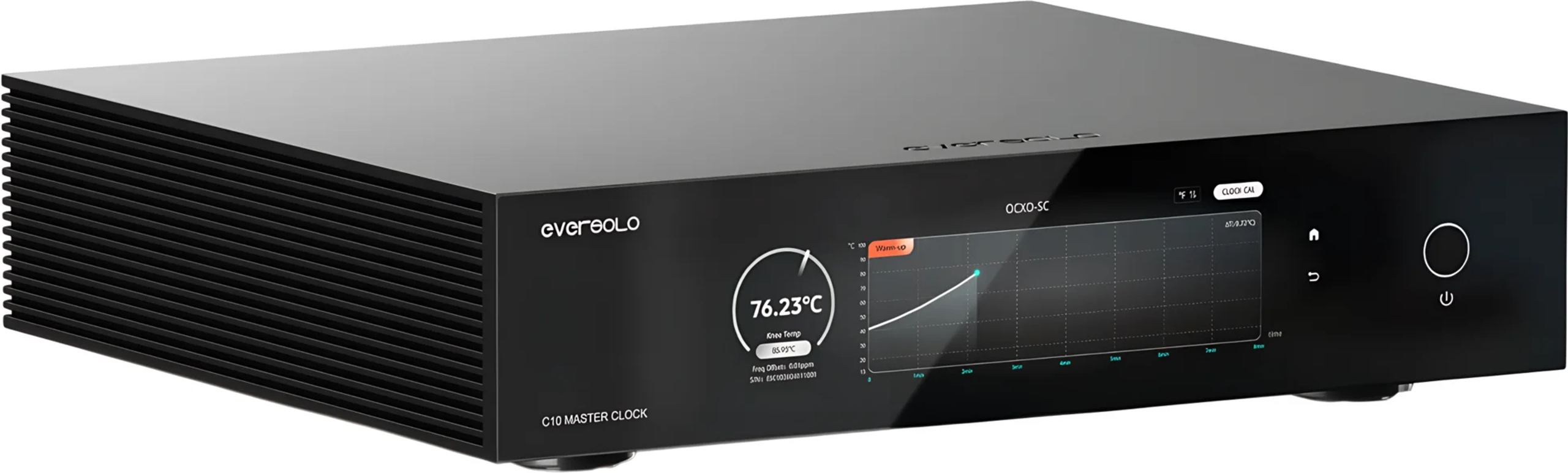
The IPS touchscreen, measuring 22.35 cm diagonally, plots the oven’s temperature curve and displays the clock status, along with accuracy and synchronization data. The temperature curve serves a practical purpose. An OCXO only reaches stability once the oven has reached its set temperature, and the screen shows when this point has been reached. It is therefore better to leave the device powered on continuously rather than switching it on when you want to listen.
The aluminum chassis measures 365 × 310 mm and stands 88 mm high with its feet (78 mm without), weighing 5.85 kg. The power supply uses a toroidal transformer, which radiates a weak magnetic field. This is an advantage for a device tasked with producing a clean signal and often installed among other electronic components.
Technical specifications
Architecture and synchronization
- Type: high-precision external master clock
- Reference frequency: 10 MHz
- Function: distribution of a stable timing reference to multiple compatible digital audio devices
- Oscillator: specially developed SC-cut oven-controlled crystal oscillator (OCXO)
- Proprietary technology: Reference Timing Engine (RTE)
- Thermal control: high-precision temperature regulation for optimal stability
Performance
- Ultra-low phase noise: ≤ −115 dBc/Hz at 1 Hz offset
- Frequency stability: optimized through the SC-cut crystal and thermal regulation
- Aging: optimized performance for improved long-term stability
- Reduced sensitivity to temperature variations and mechanical stress
Connectivity
- Clock outputs: 4 × BNC with independent buffer stages
- External synchronization input: GNSS 1PPS, one pulse per second
Display
- IPS touchscreen with a 22.35 cm diagonal
- Displayed information: temperature curves, clock status, accuracy and synchronization data
Design and power supply
- Aluminum chassis
- Toroidal transformer power supply
- Electronic architecture: isolated circuits
Compatibility
- EverSolo T10: network transport
- EverSolo DAC-Z10: digital-to-analog converter
Supplied accessories
- Power cable
- BNC clock cables: 0.5 m, 1 m
- User guide
- Warranty
- Cleaning cloth
Dimensions and weight
- Device dimensions (W × D × H): 365 × 310 × 88 mm, including feet
- Height without feet: 78 mm
- Net weight: 5.85 kg
- Packed weight: 8.40 kg
- Box dimensions (W × D × H): 493 × 426 × 205 mm
Frequently asked questions
What does the C10 offer compared to the OCXO clock already built into the T10?
The T10’s OCXO clocks the transport, while the DAC-Z10 retains its own clock. With the C10, both devices lock onto a single source. Its oscillator is housed in a separate chassis, with its own power supply, away from the transport’s processor and network circuitry.
Can the standard DMP-A8 Gen 2 be connected to the C10?
No. Only the DMP-A8 Master Edition Gen 2 version has a 10 MHz external clock input. The standard version has no socket to receive the signal.
Does the C10 improve a device without an external clock input?
No. The 10 MHz signal cannot pass through a USB connection or a coaxial or optical S/PDIF input. It requires a dedicated clock input, usually BNC, on the device to be synchronized.
Which cables should I choose to connect more than two devices?
Coaxial cables with BNC connectors, with an impedance matching that of the receiving device’s input. On the T10 and DAC-Z10, the input accepts 50 or 75 Ω. Short lengths limit losses and interference pickup, and the C10 can easily be placed less than a metre from the devices it synchronises.
Is a GNSS receiver essential?
No. The OCXO alone ensures short-term stability, which is what matters during listening. Satellite correction maintains frequency accuracy over the months. It mainly makes sense if you want a reference that can be verified over time.
Is a 10 MHz signal suitable for 44.1 kHz and 48 kHz sampling rates?
Yes. 10 MHz is a reference frequency, not a sampling frequency. The receiving device uses a PLL to derive the clocks for both families (44.1 kHz and 48 kHz, as well as their multiples) and for DSD. The same cable is used regardless of the file being played.
What is jitter and how does the clock relate to it?
Jitter refers to small irregularities in the timing of each sample’s conversion. A sample converted slightly too early or too late slightly distorts the reconstructed waveform. Clock purity, meaning low phase noise, sets the lower limit for these irregularities. The receiving device’s PLL circuit and the quality of its design then determine how much remains at the point of conversion.
- Eco-contribution included in the sale price.
- GTIN / EAN: 6975200360282


