

Klipsch R-51PM (pair)


Complementary product
Specifications and features


Klipsch R-51PM, Bluetooth powered speakers
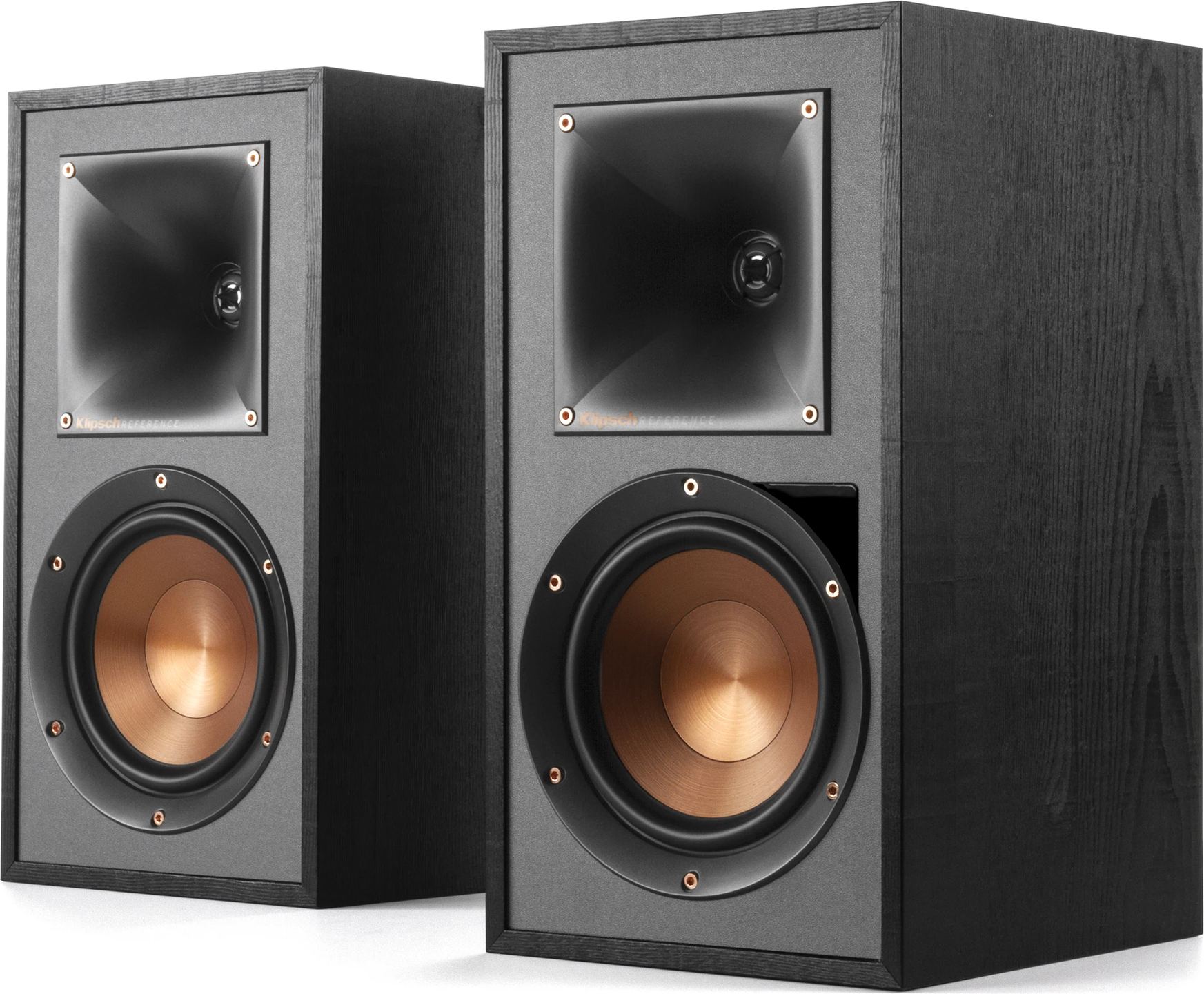
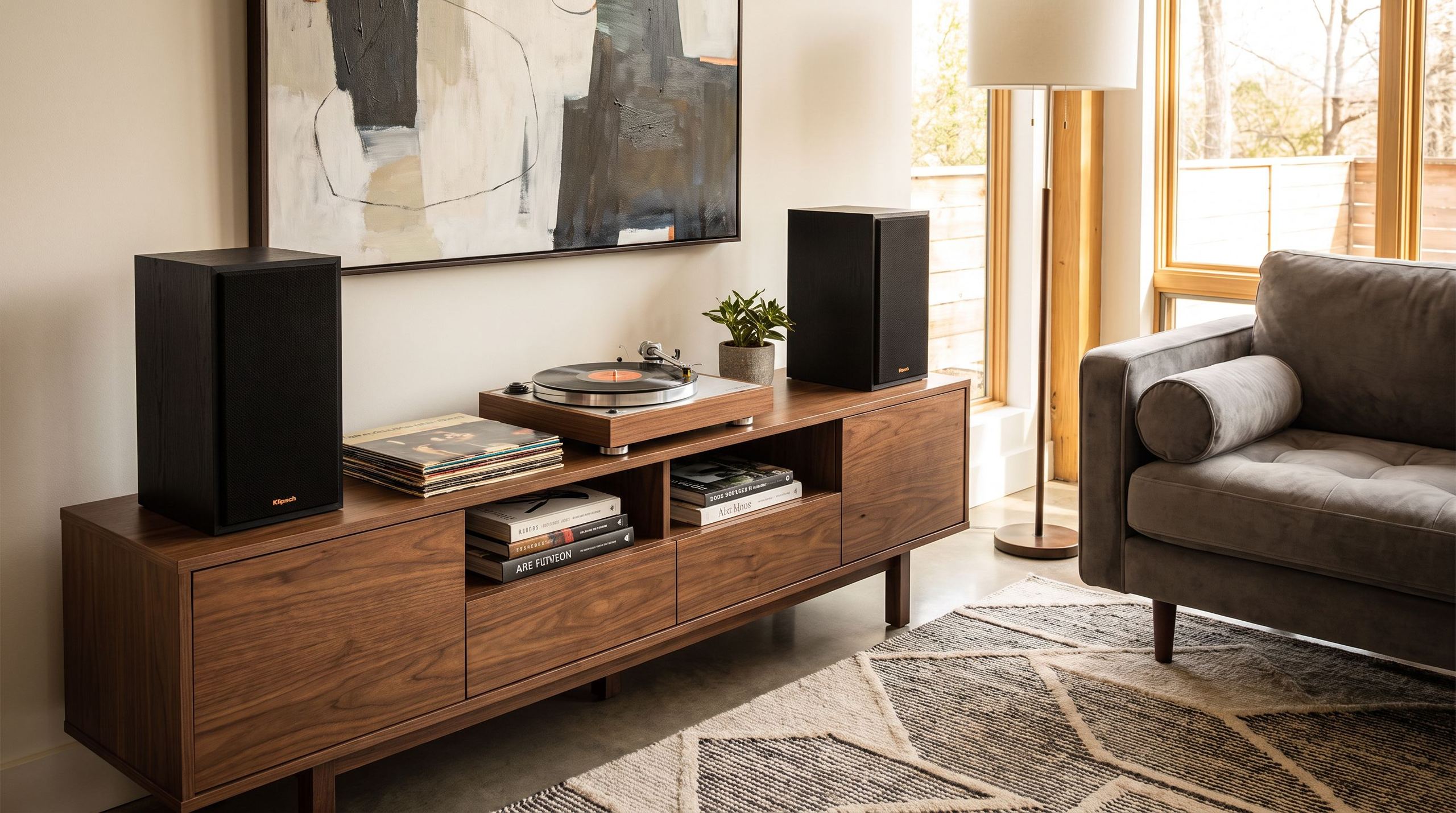
A turntable, a TV, a computer and a phone can all connect directly to this pair of speakers, with no amplifier or phono preamp to add. All the electronics are housed in the right speaker, which powers its partner via a simple cable. Klipsch uses the drivers from its Reference range here: a horn-loaded tweeter and a copper-coloured woofer. Both speakers fit on a shelf or on either side of a screen.
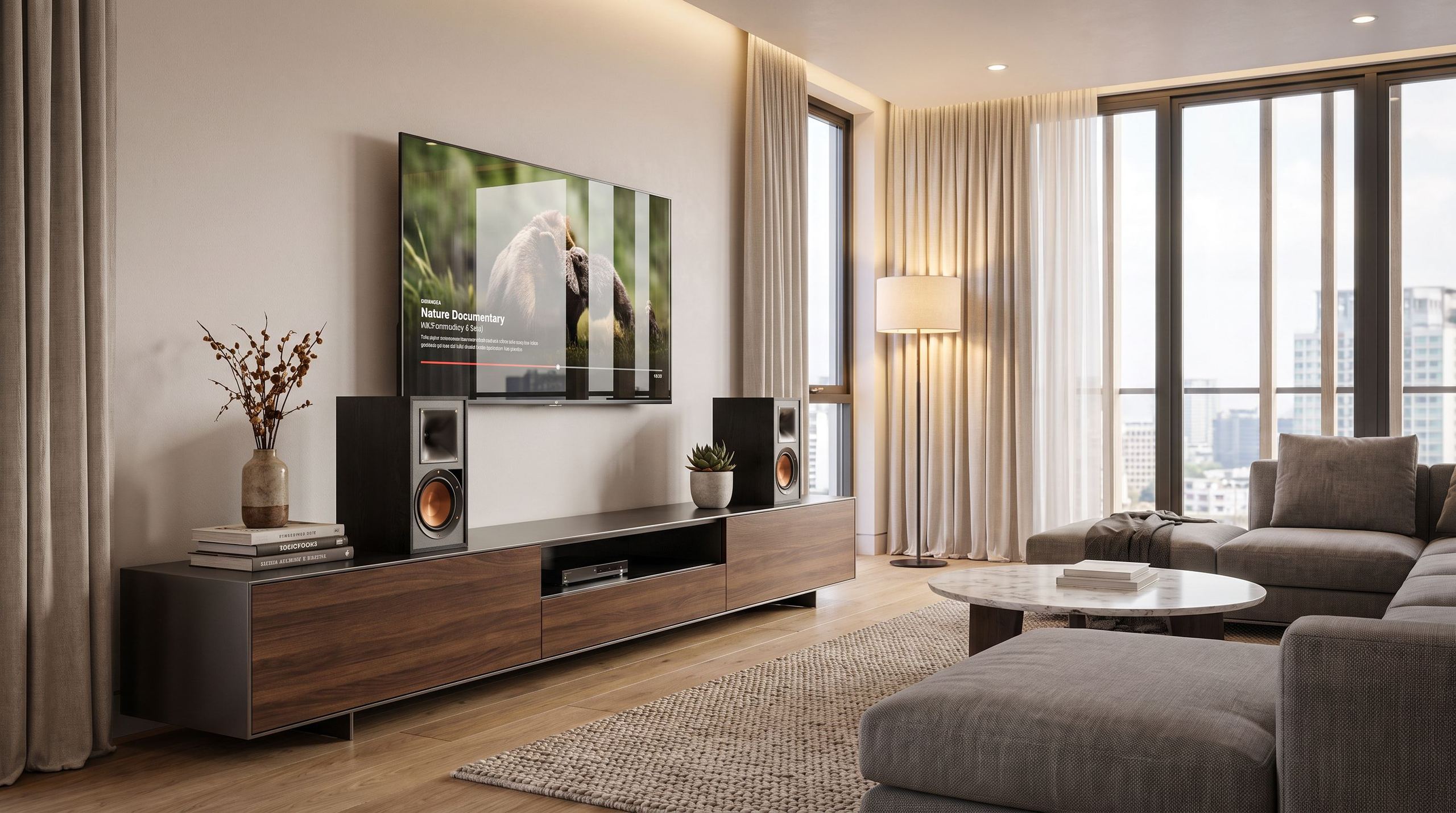
A single amplifier, hidden in the right speaker
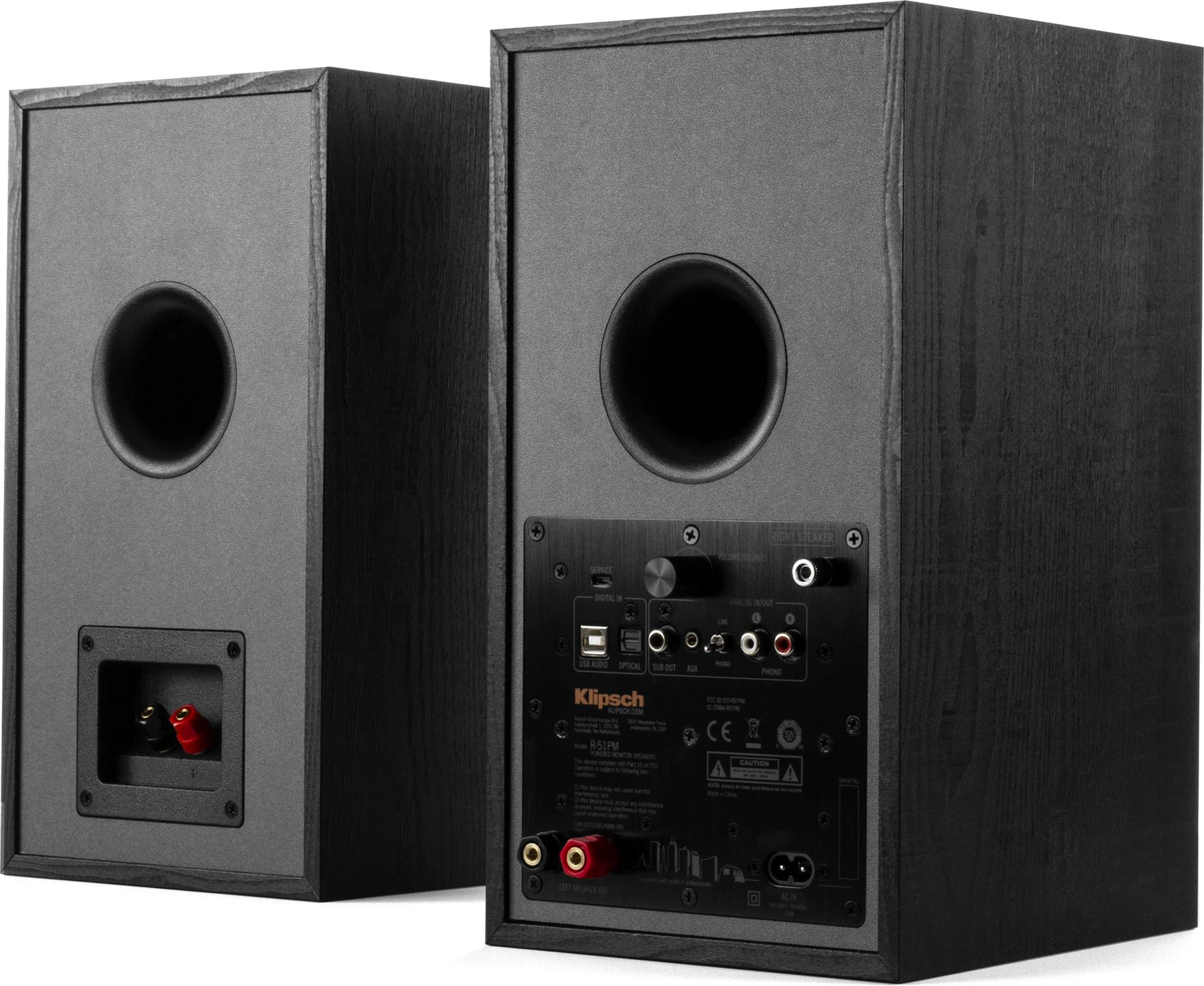
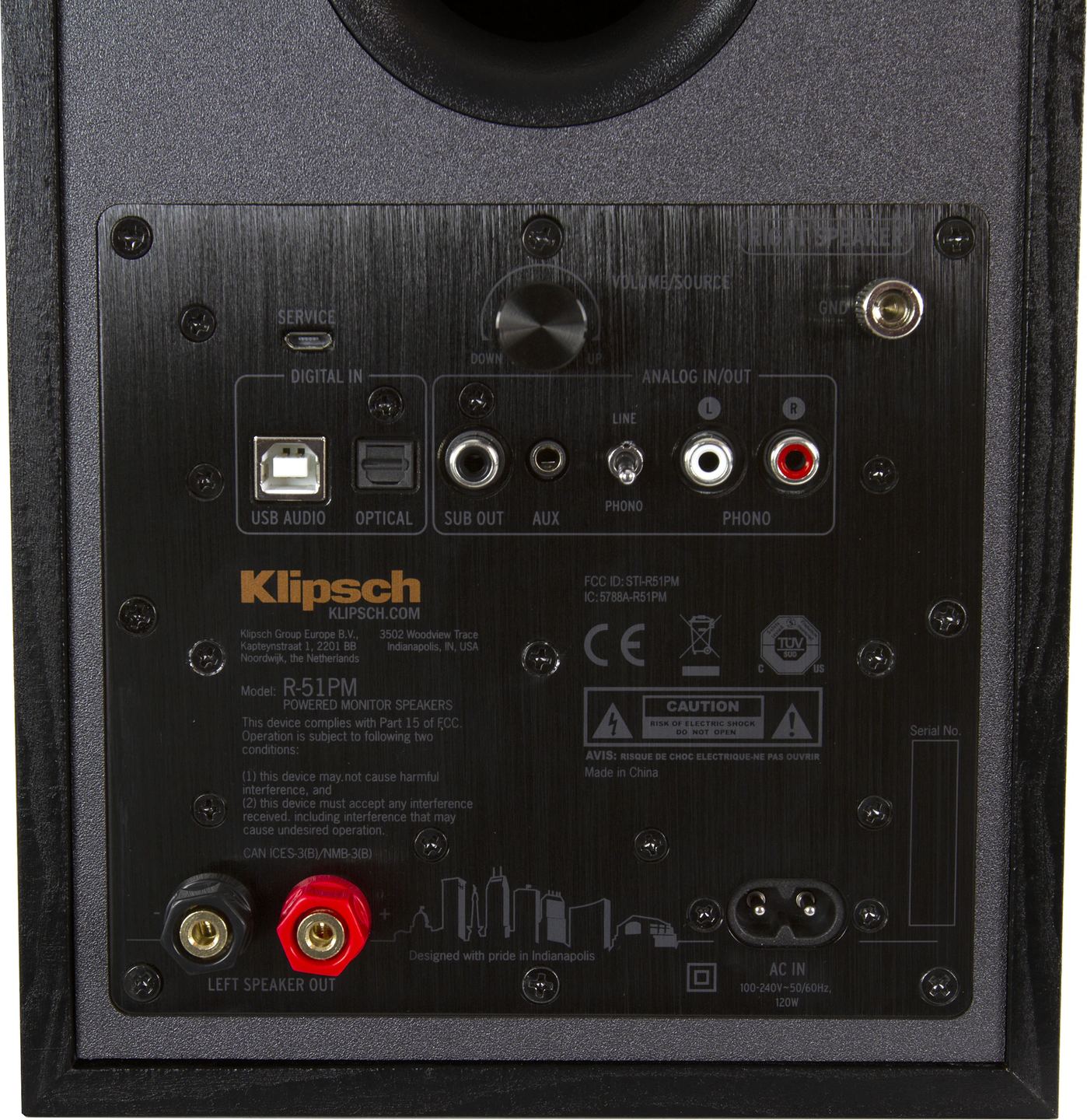
The right speaker is active. It contains the 2 × 60 W digital amplifier (120 W total), the digital-to-analogue converter, the Bluetooth receiver and all the connections. The left one is passive: it receives the amplified signal through a speaker cable attached to screw terminals. A single mains socket is enough, but the roles are fixed. The speaker with the inputs goes to the listener’s right, and the distance between the two depends on the length of the connecting cable (4 metres supplied).
On the back of the right speaker, a knob adjusts the volume and switches sources. The supplied remote control does the same from the sofa, which matters when the speakers sit on a TV unit or are placed up high.
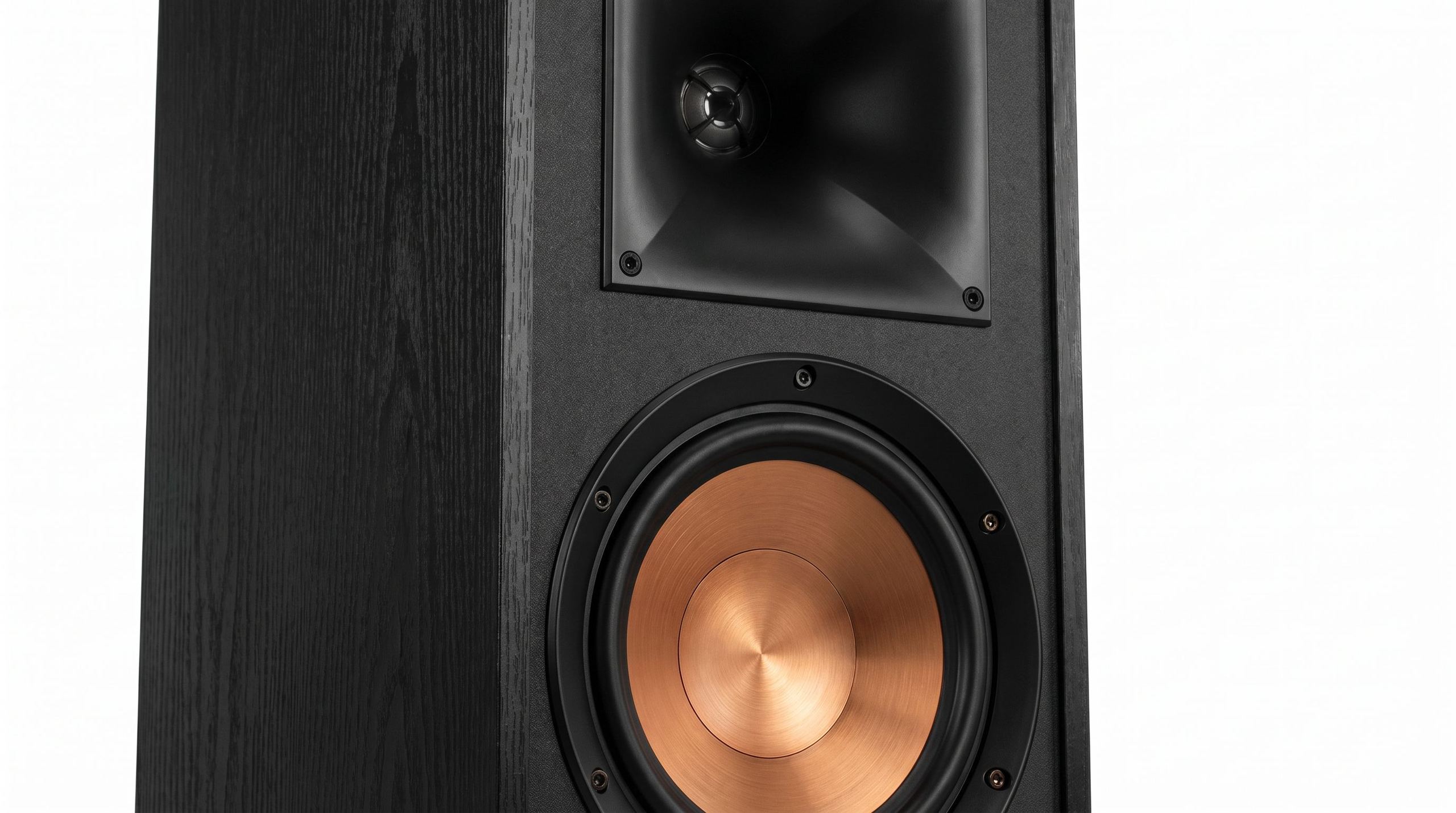
Tractrix horn and copper-coloured woofer, the Klipsch Reference recipe
The tweeter has a 25 mm aluminium dome mounted on a Kapton LTS (Linear Travel Suspension). This suspension guides the diaphragm more linearly, which reduces distortion. The dome opens into a 90° × 90° square Tractrix horn. This horn directs the treble within a precise angle: efficiency increases, and less of the sound is sent towards the walls and ceiling. Vocals and attacks stay clear, even in a room with little acoustic treatment.
The 13.3 cm mid/bass driver is made of IMG (Injection Molded Graphite), injection-moulded graphite that produces a light, rigid cone, covered with a copper-coloured finish. The passive crossover splits the signal between the two drivers at 1,663 Hz. Klipsch specifies a frequency response of 68 Hz to 21 kHz (±3 dB) and a maximum output of 107.3 dB. The MDF cabinet is a bass-reflex design, with a rear port that reinforces the bass.
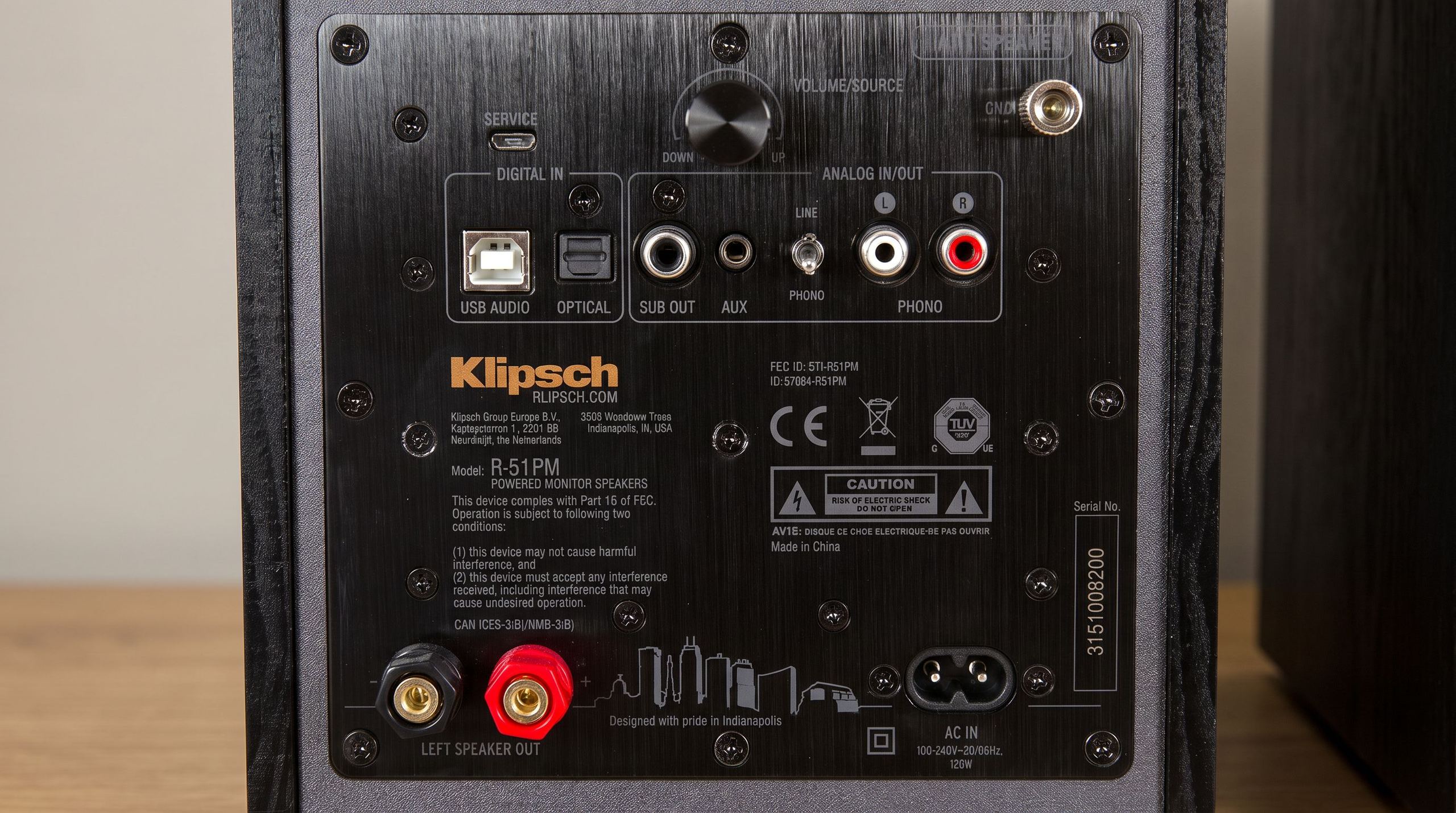
One input per source, from turntable to phone
The analogue RCA input has a phono/line switch and a ground terminal. In phono mode, it goes through the built-in RIAA preamp, which accepts moving magnet (MM) cartridges, the most common type. A turntable that already has its own preamp connects in line mode, so the signal isn’t amplified twice. There is only one RCA input, so a turntable and a CD player cannot be connected to it at the same time. The second device then uses the 3.5 mm mini-jack input.
The TV connects via the Toslink optical input. The optical cable carries no electrical current, which prevents hum caused by ground loops. Connected via USB-B, a computer sends the digital signal straight to the speakers’ converter, at up to 24-bit / 96 kHz, bypassing the motherboard’s headphone output. Bluetooth receives music from a phone or tablet.
Bass that adapts to listening volume
The human ear perceives bass less well as the volume drops. The Dynamic Bass EQ feature takes this into account: the electronics boost the bass at low levels, then reduce this correction as the volume rises. At 35% volume, Klipsch specifies a response extending down to 49 Hz. Low-volume listening, as background music or in the evening, thus keeps its bass foundation.
With a 13.3 cm woofer, bass remains limited at high volume or with an action film. For more, the mono RCA subwoofer output accepts any powered subwoofer with a line input, turning the pair into a 2.1 system.
Size, finish and setup
Each speaker measures 330 × 178 × 216 mm (H × W × D) and weighs about 4.8 kg. The MDF cabinet is wrapped in black wood-grain vinyl. The magnetic grilles come off without tools, so you can hide the drivers or leave the copper woofers on display.
As the port is at the rear, the speaker responds to its distance from the wall. Placed right against the wall, it produces more bass, sometimes too much. A few centimetres of clearance let you fine-tune the bass by ear. Rubber feet are supplied so the speakers can sit on furniture without sliding or making the surface vibrate.
Technical Specifications
Acoustic Design
- Type: 2-way compact speakers
- Enclosure: bass reflex
- 90° × 90° Tractrix horn
- Crossover frequency: 1800 Hz
Drivers
- 25 mm aluminum dome tweeter
- Kapton LTS suspension
- 13.3 cm IMG woofer
- Copper-coated injection-molded graphite cone
Acoustic Performance
- Frequency response: 62 Hz – 24 kHz (±3 dB)
- High sensitivity
Amplification and Electronics
- Built-in amplification: 2 × 50 W RMS
- USB DAC: 24-bit / 96 kHz
- Bluetooth receiver
- Built-in RIAA MM phono preamp
- Switchable
Connectivity
- Inputs: USB-B, Toslink optical, RCA phono / line, 3.5 mm mini-jack
- Subwoofer output: mono RCA
- Screw-type speaker binding posts
Finish
- MDF with wood-look vinyl finish
Included Accessories
- Remote control
- Cables: speaker, RCA, USB-A to USB-B
- Power supply
- Grilles
Dimensions and Weight
- Dimensions (W × H × D): 178 × 318 × 206 mm per speaker
- Weight: 4.7 kg per speaker
Frequently asked questions
How does it differ from the Klipsch R-41PM?
The R-41PM are the smaller siblings in the lineup. They have a 10.2 cm woofer instead of 13.3 cm, a 70 W total amplifier instead of 120 W, and no USB input. The R-51PM go deeper in the bass and play louder, and they can be connected directly to a computer.
Can a turntable fitted with a moving coil (MC) cartridge be connected?
Not directly. The built-in preamp only accepts MM cartridges, and the signal from an MC cartridge is too weak for it. You need to add an MC-compatible phono preamp or a step-up transformer, then connect it to the RCA input set to line mode.
Can the TV send Dolby Digital through the optical input?
No, the speakers do not decode Dolby Digital. In the TV’s audio settings, select the PCM digital output (sometimes called “stereo”). The TV will then convert the soundtrack to stereo itself before sending it.
Do the speakers connect to Wi-Fi or Spotify Connect?
No. For wireless listening, they only have Bluetooth. For network streaming (Spotify Connect, Qobuz, internet radio, multiroom), you need to add a network player via the optical input or the mini-jack.
Should the turntable's ground wire be connected?
Yes, if your turntable has one. Screw it onto the ground terminal located near the RCA input on the right speaker. Without this wire, the phono input may produce a low, continuous hum.
Which subwoofer can be added?
Any active subwoofer with an RCA line input will work. A single RCA cable connects it to the subwoofer output on the right speaker. Subwoofers from the Klipsch Reference range are the best tonal match for the speakers. Set the subwoofer’s crossover frequency around the low-frequency limit of the R-51PM (approximately 70 Hz) so that the bass is not doubled up.
- Eco-contribution included in the sale price.


