

Faller Oskar 2

Overview
When a film’s music drowns out the dialogue, you turn up the volume and the whole living room gets blasted by explosions. Faller tackles the problem from the other end: a small wireless speaker, placed within reach of the person with hearing difficulties, receives the sound from the TV and brings voices to the forefront. This second generation adds an HDMI ARC input, a fourth filtering level and four hours of battery life.
Voices separated from the rest of the soundtrack
The processing is called sonoro Clearvoice Technology 3.0, named after Faller’s parent company, the German manufacturer Sonoro, based in Neuss. A trained speech recognition model identifies speech in the TV signal and separates it from music, effects and background noise. The speaker can then reduce everything other than voices by up to 30 dB. This calculation runs continuously on two multi-core DSP processors, chips that specialise in real-time sound processing.
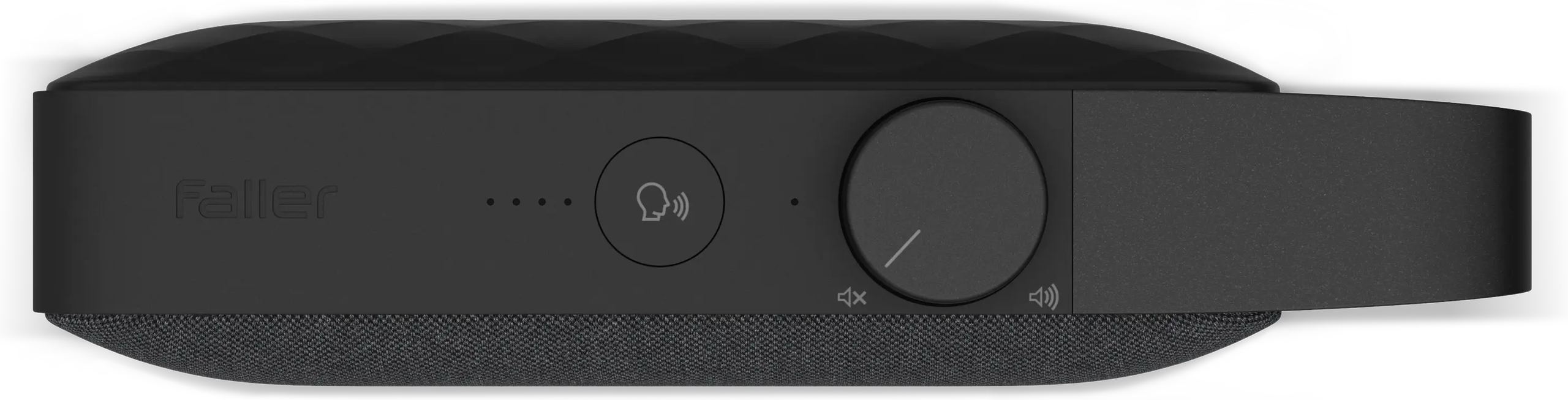
Four filtering levels adjust the intensity of this separation. A Music mode and a News mode avoid treating a concert or a TV news programme like a film scene where the orchestra should take a back seat.
Other settings work in the background. Dynamic hearing loss compensation boosts the speech frequencies that the ear perceives less well with age. Dynamic limiting reduces the gap between a whisper and an action scene: there is no longer any need to reach for the remote every time the scene changes. If the incoming signal is too weak, for example from a TV headphone output set low, it is boosted by up to 10 dB.
A speaker to place near your armchair
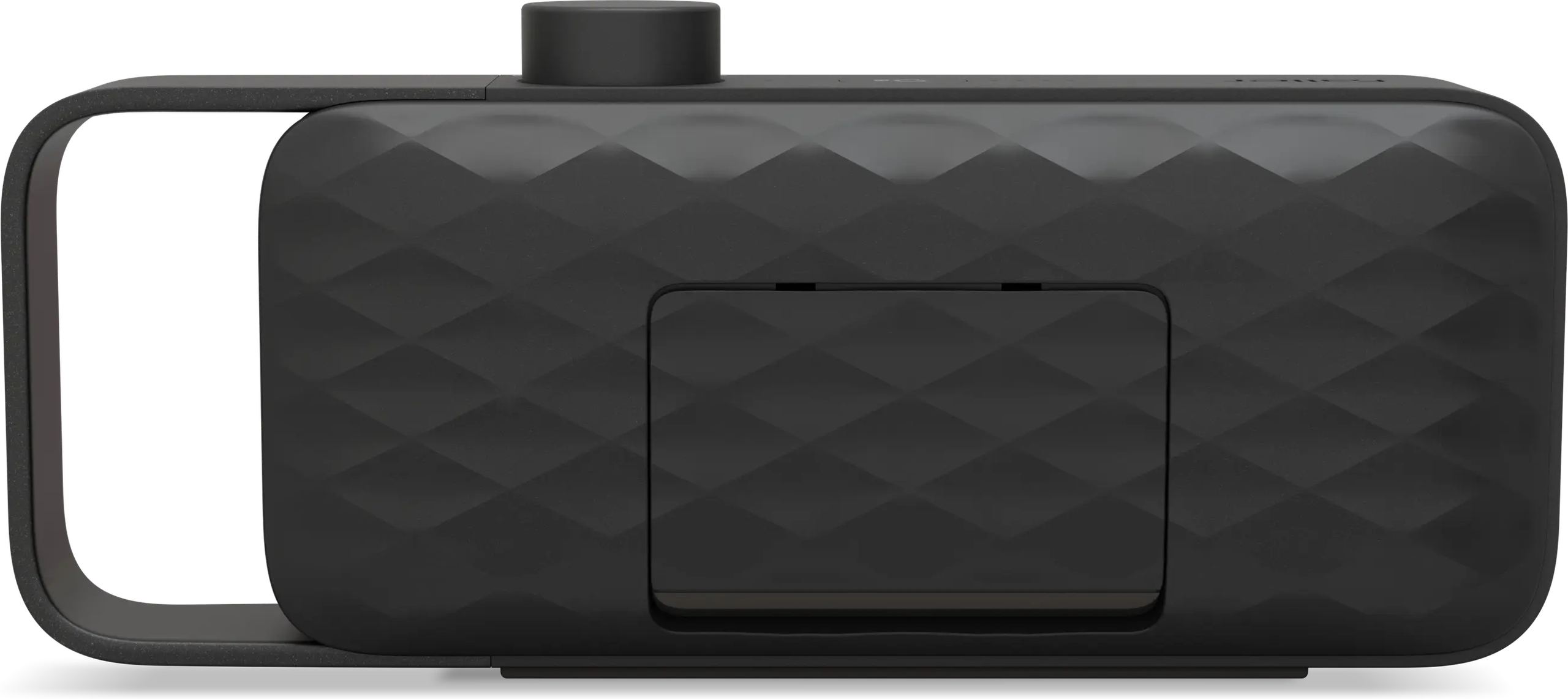
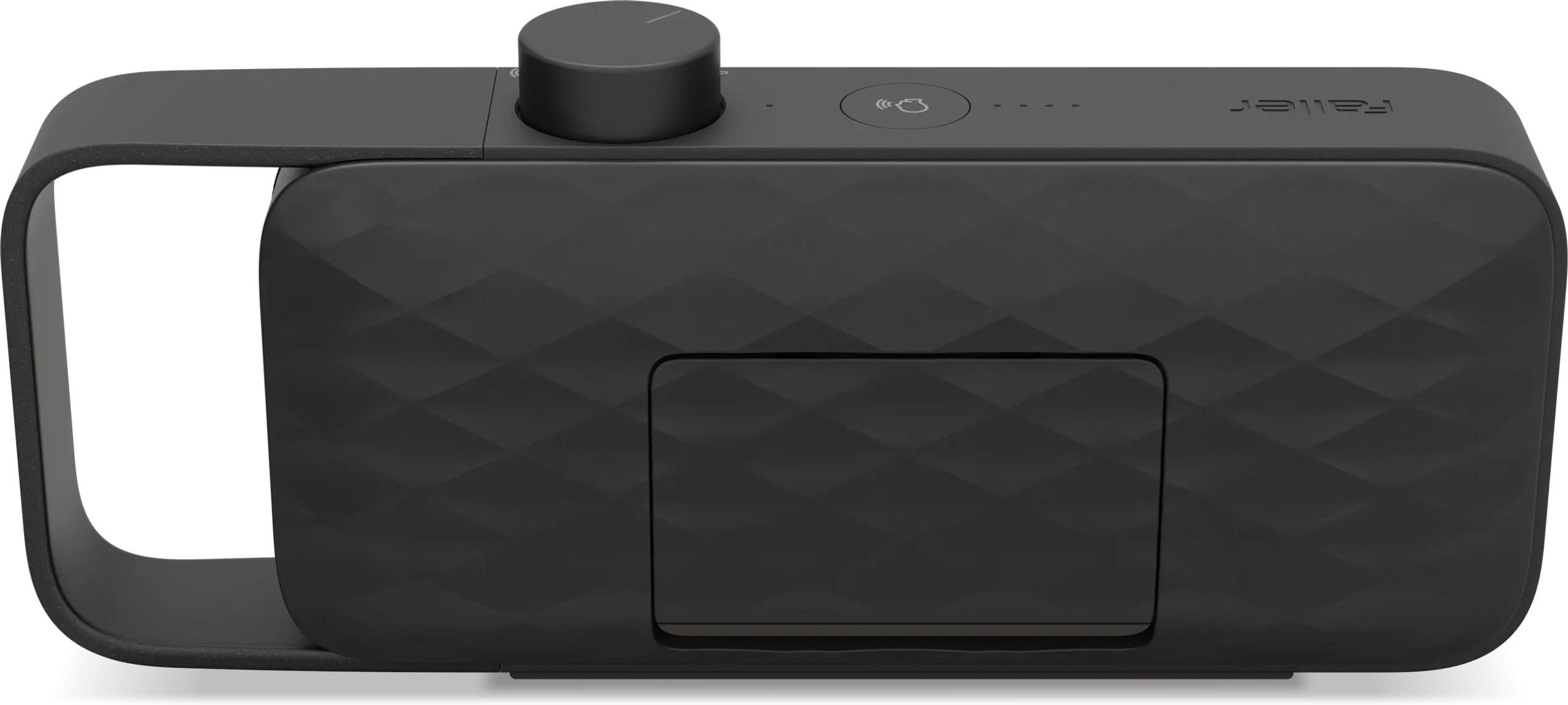
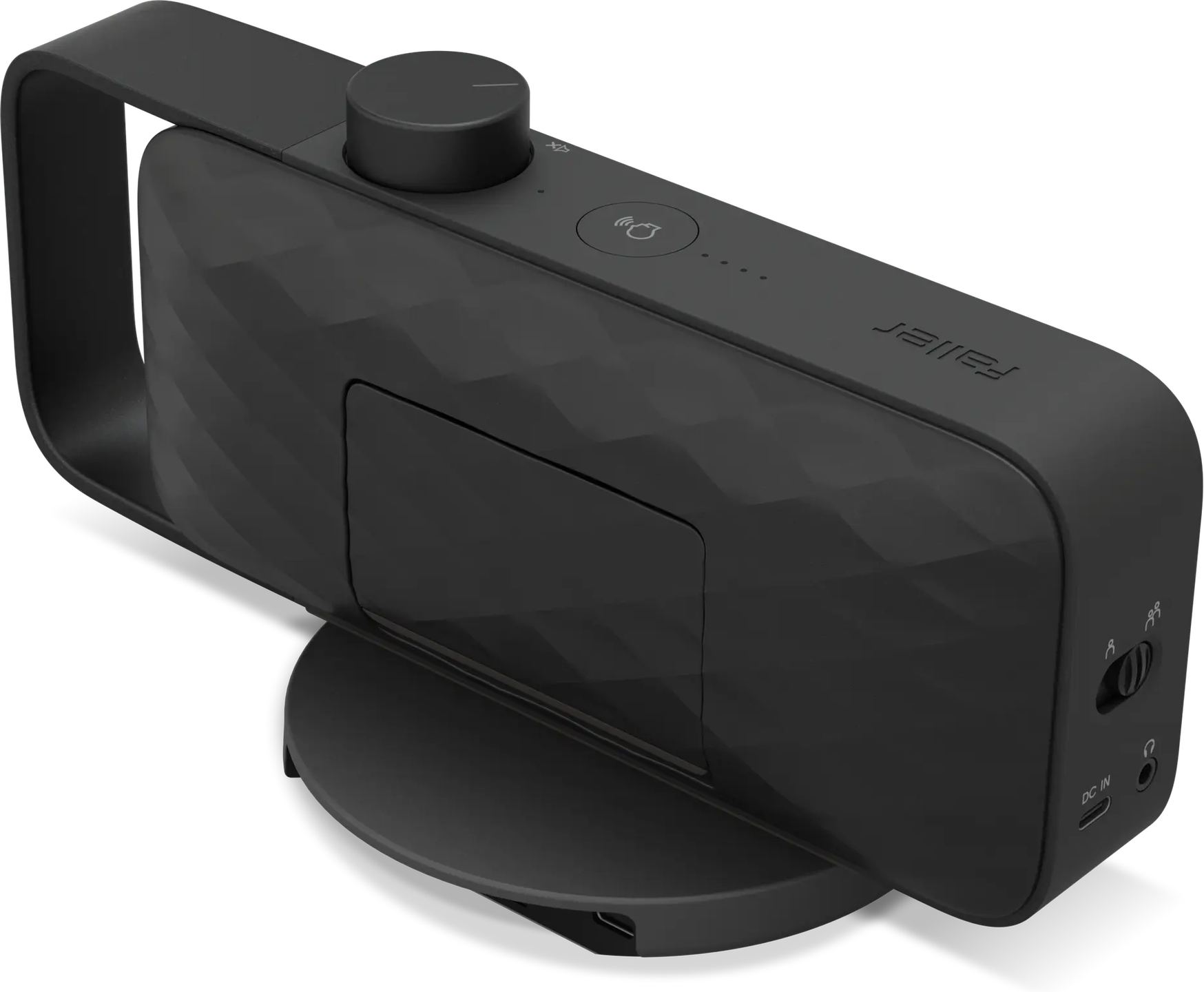
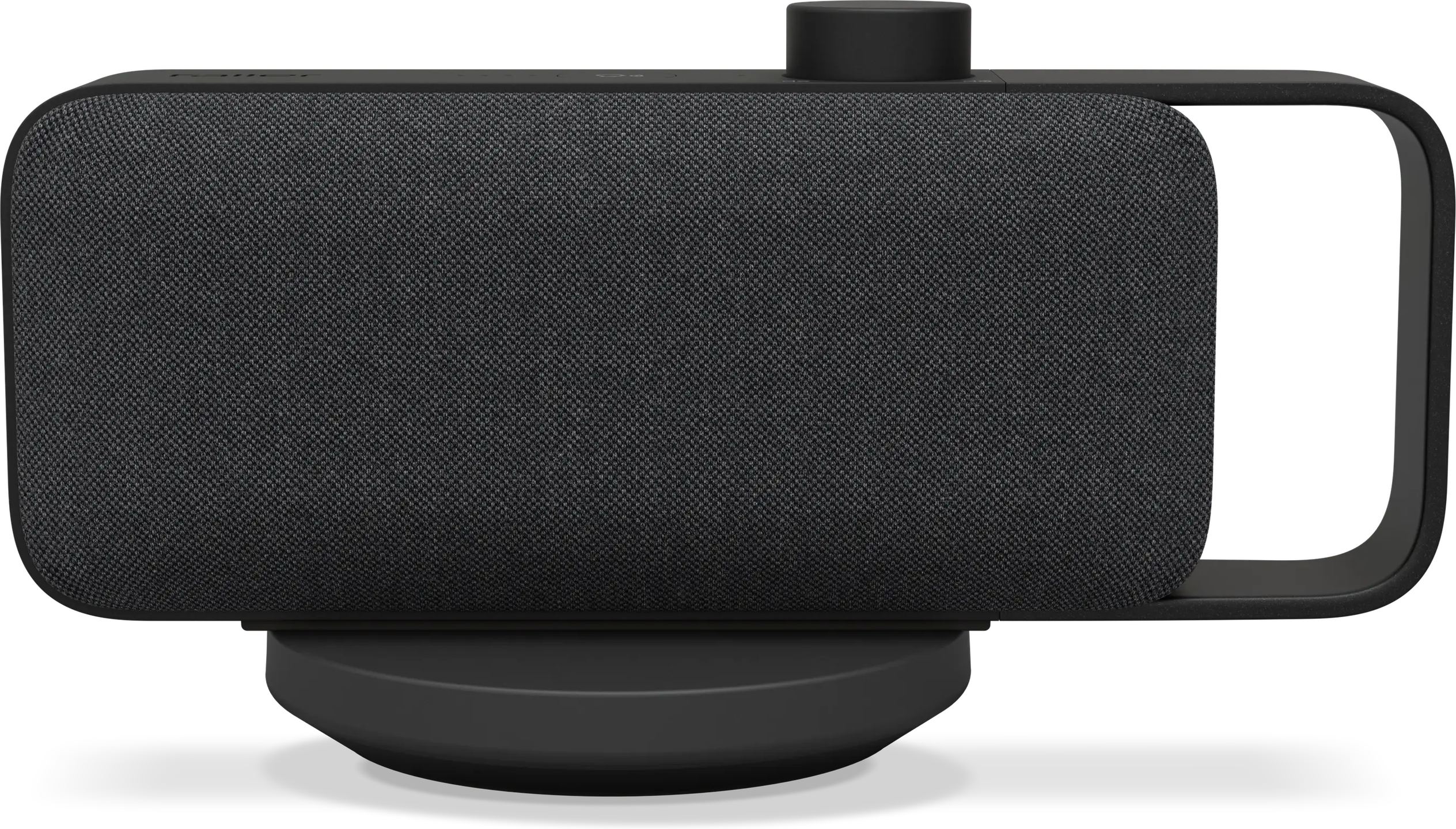
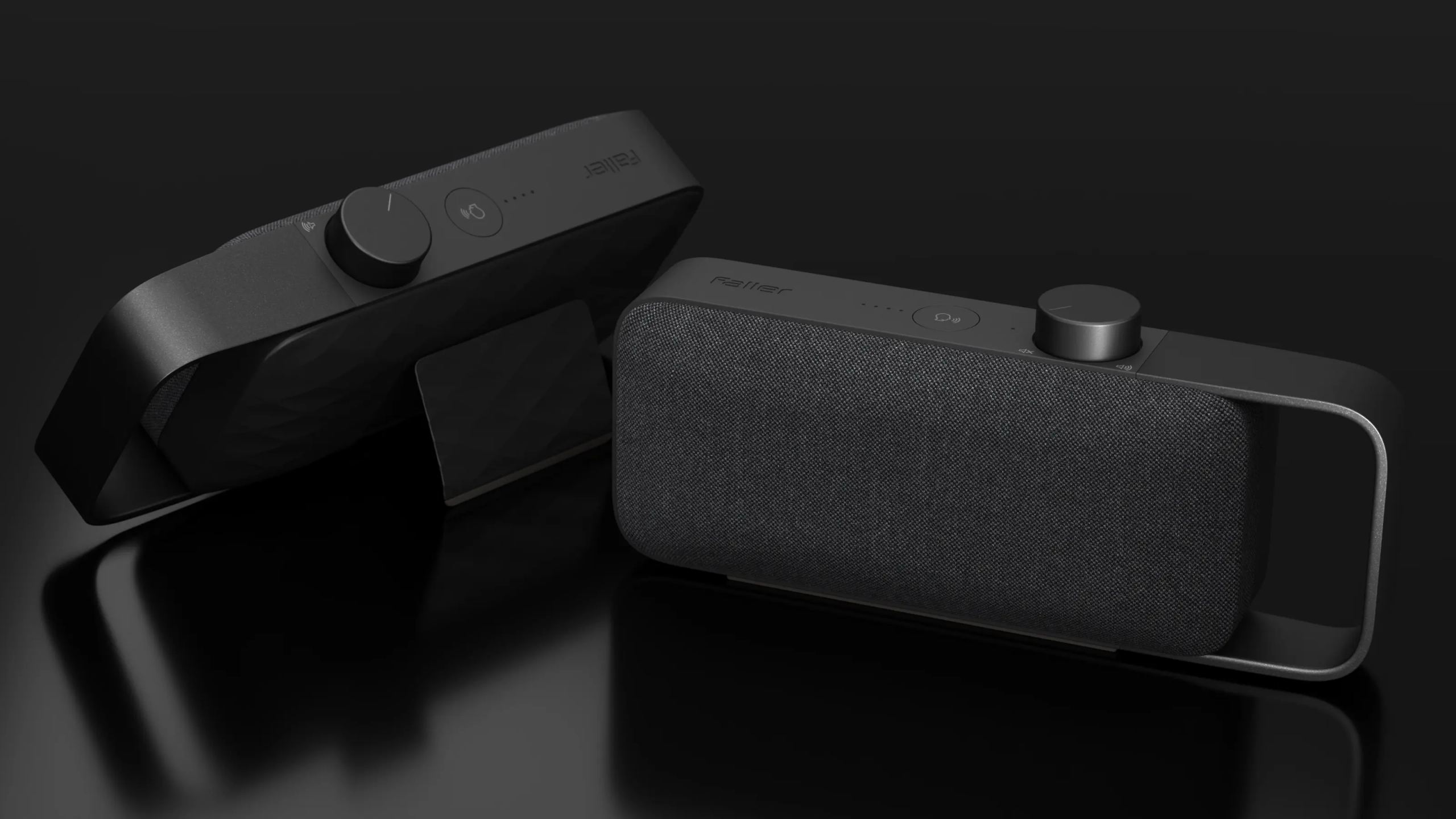
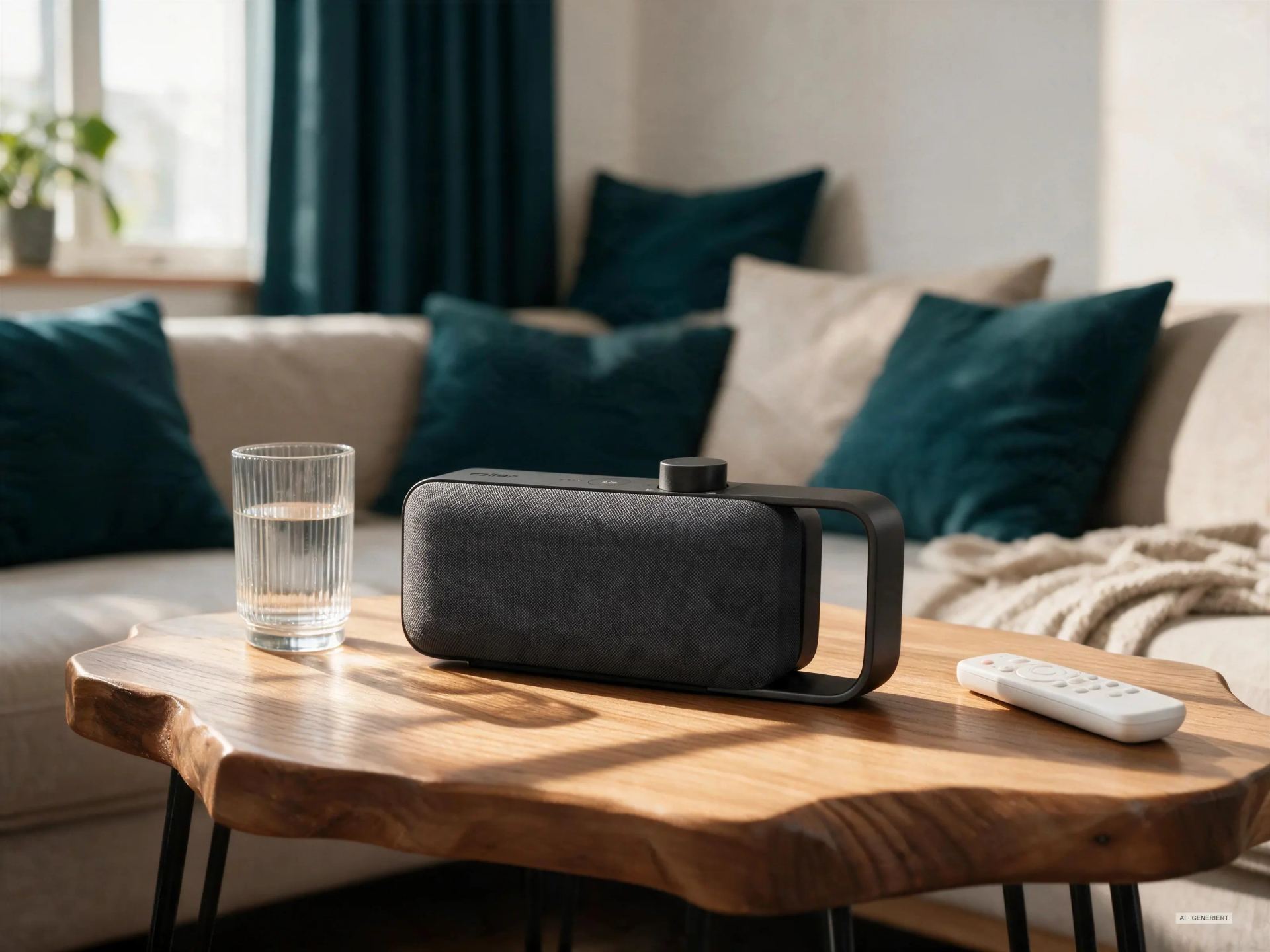
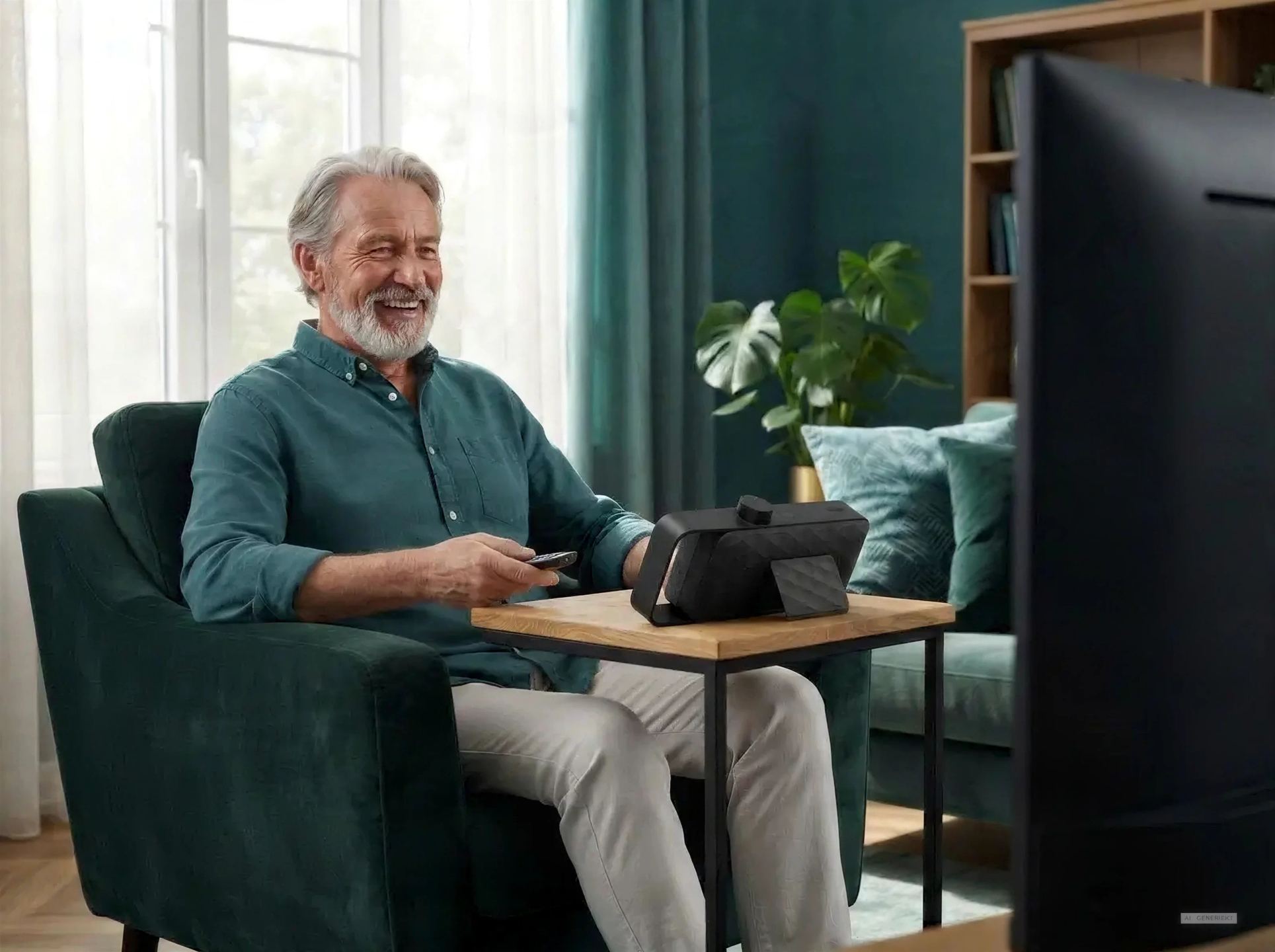
The Oskar 2 does not replace the TV’s speakers. Place it on a coffee table, bedside table or side table next to the sofa, and voices come through clearly, at low volume, right where you are sitting. It measures 240 × 60 × 104 mm and weighs 660 g, with a rear panel made of aluminium, polymer and acoustic fabric. Its two neodymium-magnet drivers, rated at 5 W each, may seem modest, but you listen to it from just a few dozen centimetres away. What matters here is understanding dialogue clearly, not playing loudly.
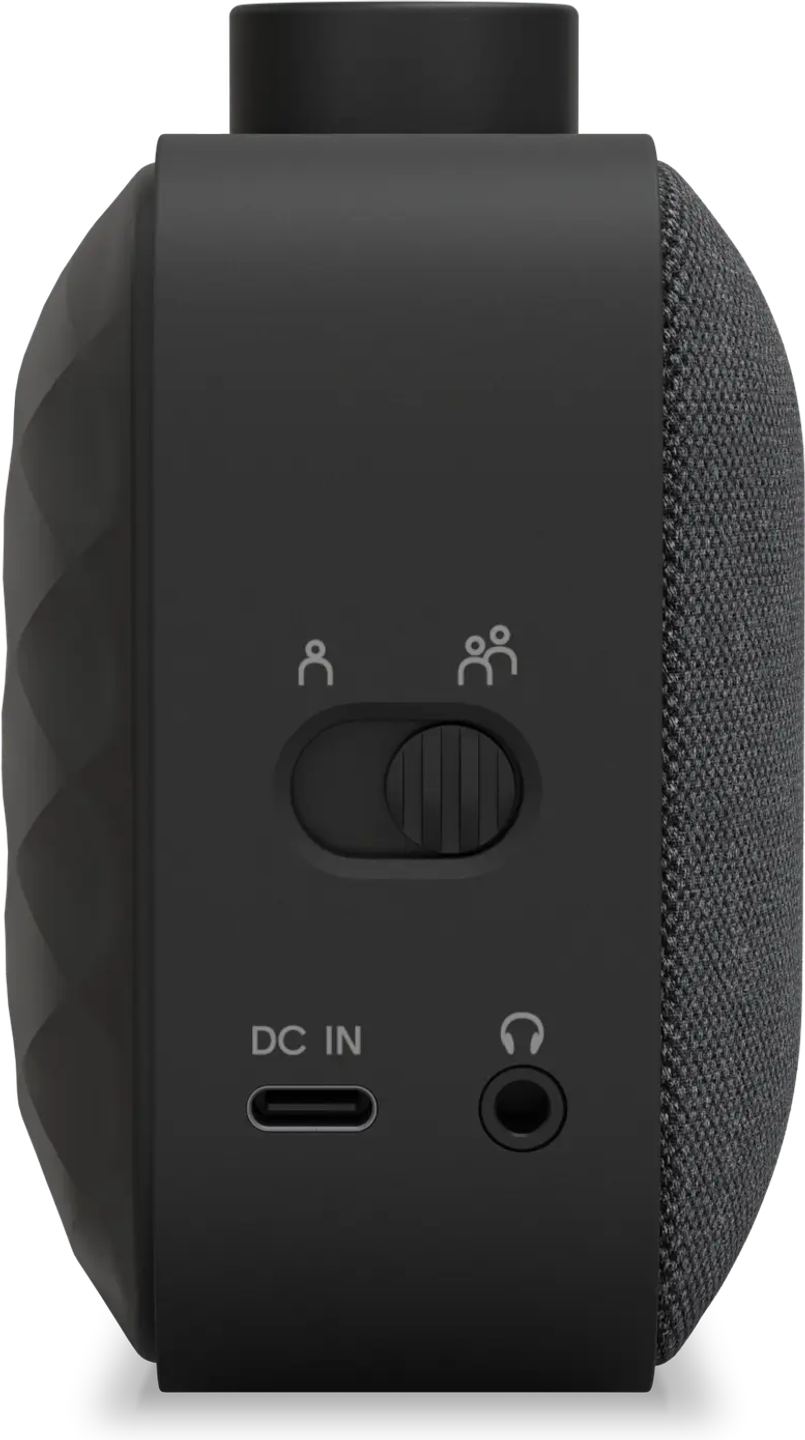
A tilt mechanism angles the front towards your ears, whether you are sunk into a low sofa or sitting upright in an armchair. You can also adjust the sound width: focused on one person or widened for several viewers sitting on the same sofa.
Sound travels wirelessly from the base station to the speaker over the 2.4 GHz band, using the LC3 Plus codec. This low-latency transmission format keeps voices in sync with lip movements. With a range of 30 m, you can follow the end of a debate from the kitchen.
A base station that connects via HDMI ARC
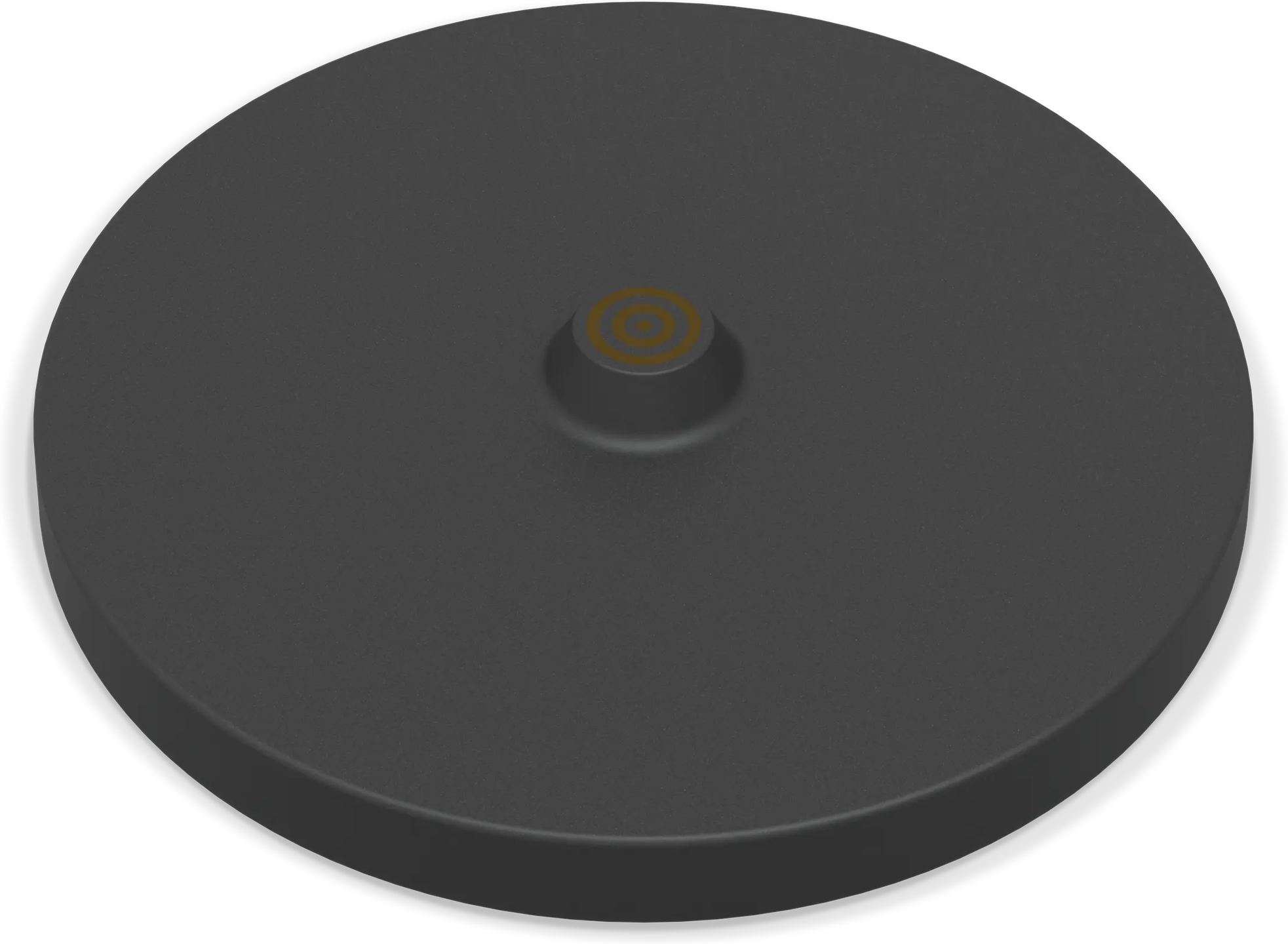
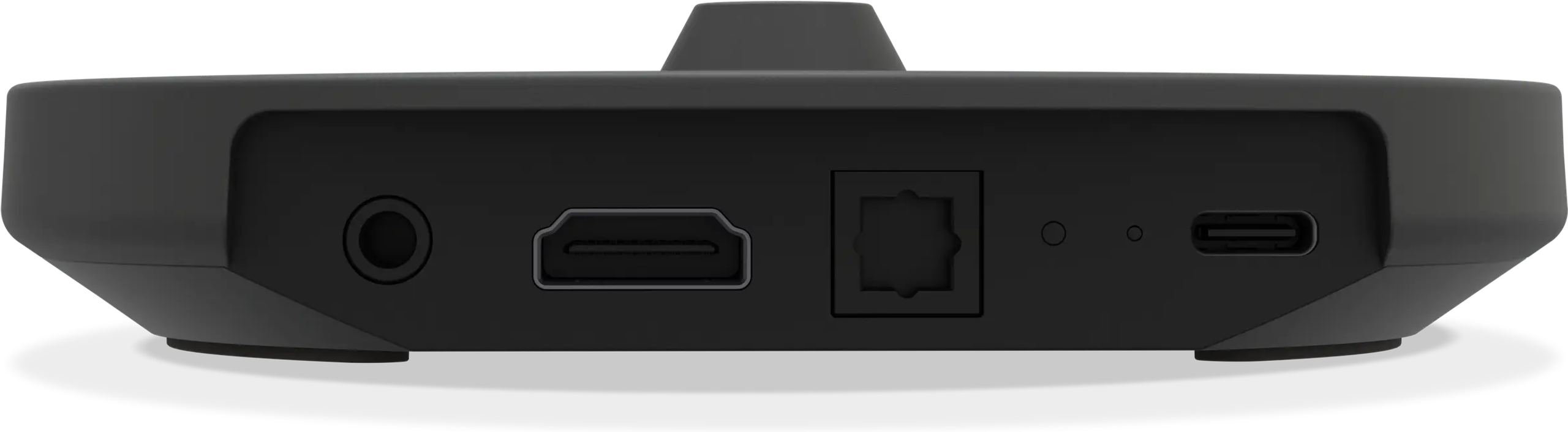
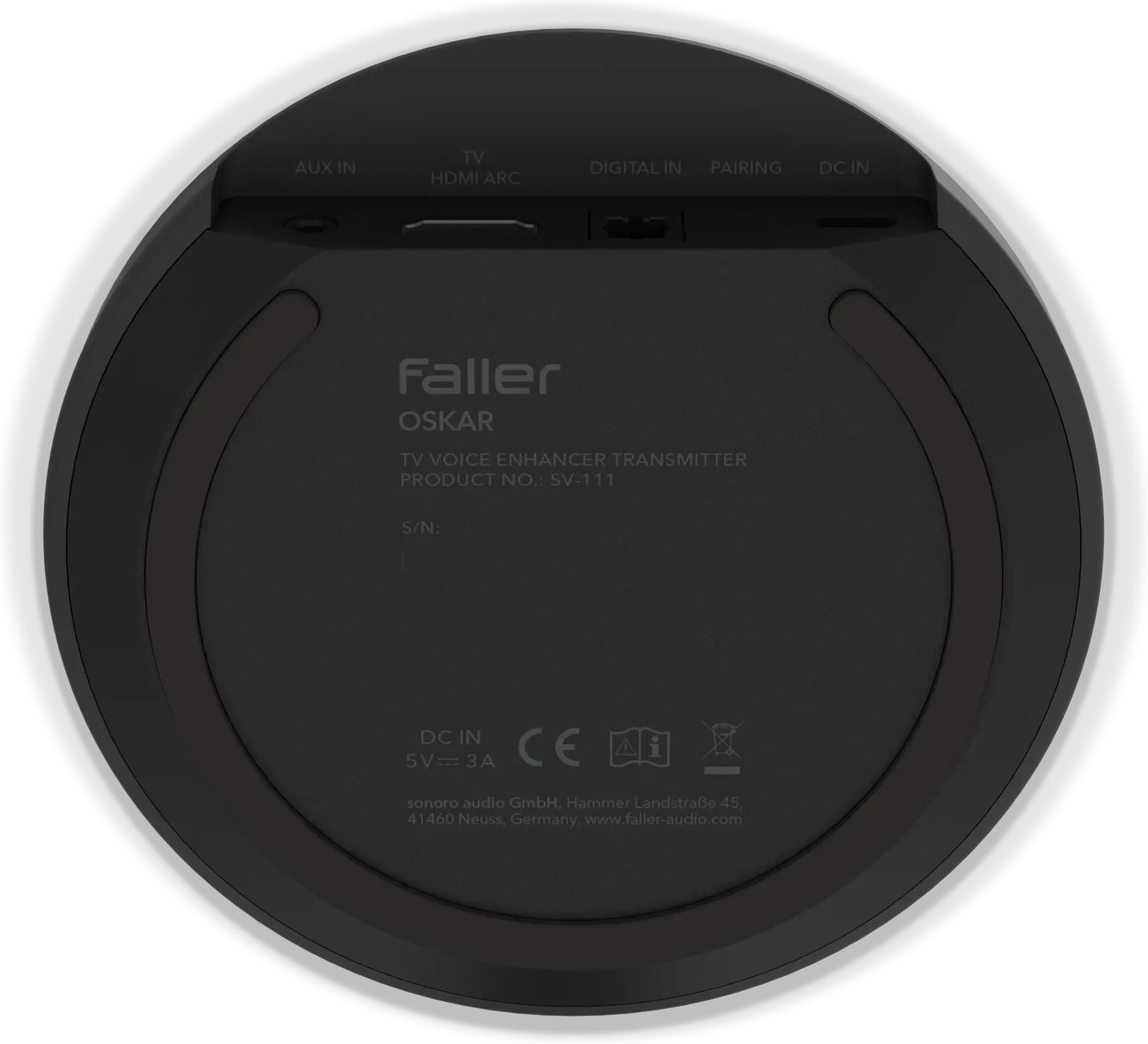
The base station is a square box measuring 121 mm on each side and 26.5 mm thick. It stays near the TV and offers three inputs. The HDMI ARC socket is new to this generation: on a recent TV, the HDMI socket labelled “ARC” can send sound back to an external device, and a single cable is all you need. The Toslink optical input is for older TVs or when the ARC socket is already occupied by a soundbar. The analogue 3.5 mm jack input connects to the TV’s headphone output.
The HDMI and optical inputs accept linear PCM, meaning uncompressed stereo sound. If the TV sends Dolby Digital through its digital output, you need to select “PCM” in its sound menu. This setting only needs to be made once.
The speaker itself has a 3.5 mm jack output for connecting wired headphones. Voice filtering remains active through headphones: you can watch a film late at night without waking the household.
Twenty hours of battery life between charges
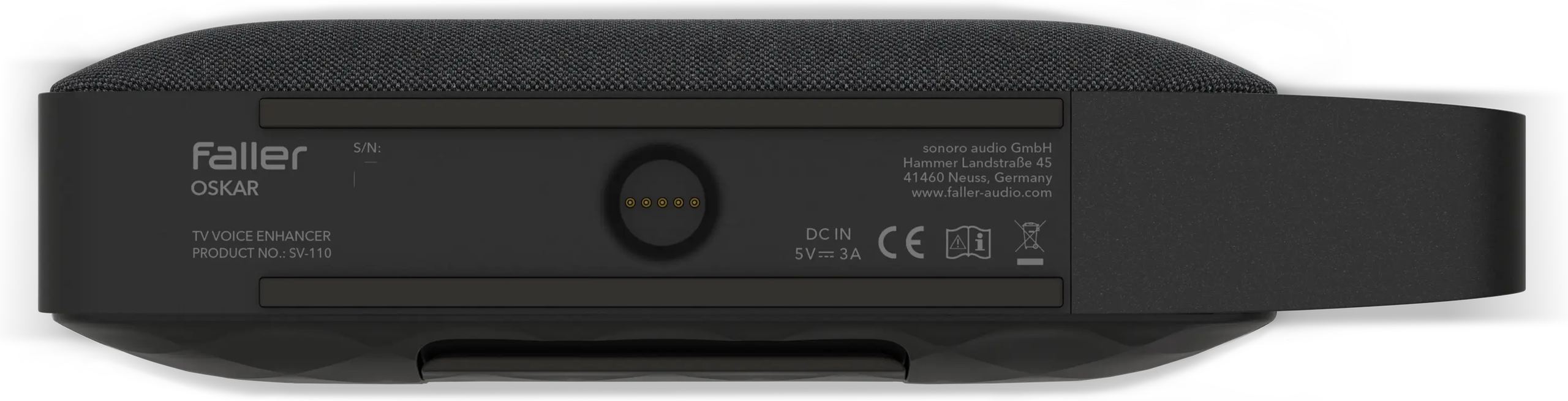
The 3,300 mAh (11.88 Wh) lithium-ion battery lasts up to 20 hours, enough for several evenings of television. A full charge takes around four hours through the speaker’s USB-C port. The base station is also powered via USB-C, at 5 V / 2 A. Since nothing is plugged into the speaker, you can carry it from one armchair to another or into the bedroom without touching the TV’s cables.
HDMI, filtering and battery life updated since the first Oskar
The first Oskar, launched in 2022, connected only via optical or analogue inputs. It had three filtering levels, two 2 W drivers and around 16 hours of battery life, and weighed 770 g. The Oskar 2 adds HDMI ARC and a fourth filtering level. Background noise can now be reduced by up to 30 dB, power increases to 2 × 5 W and battery life to 20 hours, and it weighs 110 g less. Faller also offers the simpler Oskar easy, with version 2.0 of Clearvoice: three filtering levels, noise reduction of up to 15 dB, 16 hours of battery life and an HDMI ARC input too.
Documentation
French
Technical specifications
General
- Type: portable wireless TV voice amplifier
- Compatibility: TVs equipped with an HDMI ARC, optical or AUX output
Audio processing
- Audio technology: sonoro Clearvoice Technology® 3.0
- Signal processing: 2 high-frequency multicore DSP processors
- Noise reduction: up to 30 dB
- Voice filter: 4 levels, with Music and News modes
- Audio processing
- Dynamic hearing loss compensation
- Dynamic limiting
- Amplification of low-level signals up to +10 dB
Sound reproduction
- Speakers: 2 × 5 W neodymium speakers
- Sound field: adjustable, targeted at one person or a group
- Tilt: yes
Wireless transmission
- Codec: low-latency LC3 Plus
- Frequency band: 2.402 to 2.480 GHz
- Range: up to 30 m
Battery
- Type: rechargeable lithium-ion
- Voltage: 3.6 V
- Capacity: 3300 mAh
- Energy: 11.88 Wh
- Battery life: up to 20 hours
- Charging time: approximately 4 hours
Connections
- OSKAR amplifier
- 1 AUX-Out output (3.5 mm jack)
- 1 USB-C port for power
- Base station
- Analog input: 1 AUX-In input (3.5 mm jack)
- HDMI input: 1 HDMI ARC (linear PCM)
- Digital input: 1 Toslink optical input (S/PDIF, linear PCM)
- Power supply: USB-C, 5 V / 2 A
Package contents
- OSKAR TV voice amplifier
- Base station
- USB power adapter: 5 to 15 W, included only with model SV-2000-100
- Cables: USB-C, HDMI, optical, AUX
Dimensions and weight
- OSKAR amplifier
- Dimensions (W × D × H): 240 × 60 × 104 mm
- Weight: 660 g
- Base station
- Dimensions (W × D × H): 121 × 121 × 26.5 mm
- Weight: 200 g
Frequently asked questions
Does the Oskar 2 work with my TV?
It works with any TV that has at least one HDMI ARC port, an optical output or a headphone output. With HDMI or optical, you need to set the TV’s digital audio output to PCM if it outputs Dolby Digital by default. Otherwise, the base station receives no sound.
Can other viewers still hear the TV sound?
It depends on the TV. Some mute their speakers as soon as an HDMI ARC or optical output is active, while others can use both at the same time. If you want the person using the Oskar 2 to hear better without changing the sound for everyone else, check this setting in the TV’s audio menu. Depending on the model, it may be easier to use the headphone output.
Can it be used while wearing a hearing aid?
Yes. You listen to the Oskar 2 like a speaker, without putting anything in your ears: it can therefore be used with hearing aids without any problems. It is not a medical device and does not replace hearing aids. It only improves speech intelligibility on television.
Is the power adapter included?
Only model SV-2000-100 comes with a USB power adapter. For the other models, a 5 to 15 W USB charger, such as a phone charger, is sufficient. The base station requires 5 V / 2 A.
What's in the box?
The Oskar 2 speaker, the base station and four cables: USB-C, HDMI, optical and AUX jack. You have everything you need to connect it, whatever output is available on your TV.
Can you connect anything other than a TV to it?
Yes, via the base station’s analog input. A computer, tablet or radio with a headphone output can be connected using the supplied jack cable. Voice filtering then also applies to a podcast or a video watched on a computer.
How long does the battery last if the Oskar 2 is left on every evening?
At three hours of TV per evening, the 20-hour battery life covers around six evenings. A four-hour recharge, for example during the day, gets you ready for another week.
- Eco-contribution included in the sale price.