François
Very very satisfied.
Comment from January 11, 2021 — Experience from December 21, 2020
Automatically translated — Show original (French)
Super très satisfait.
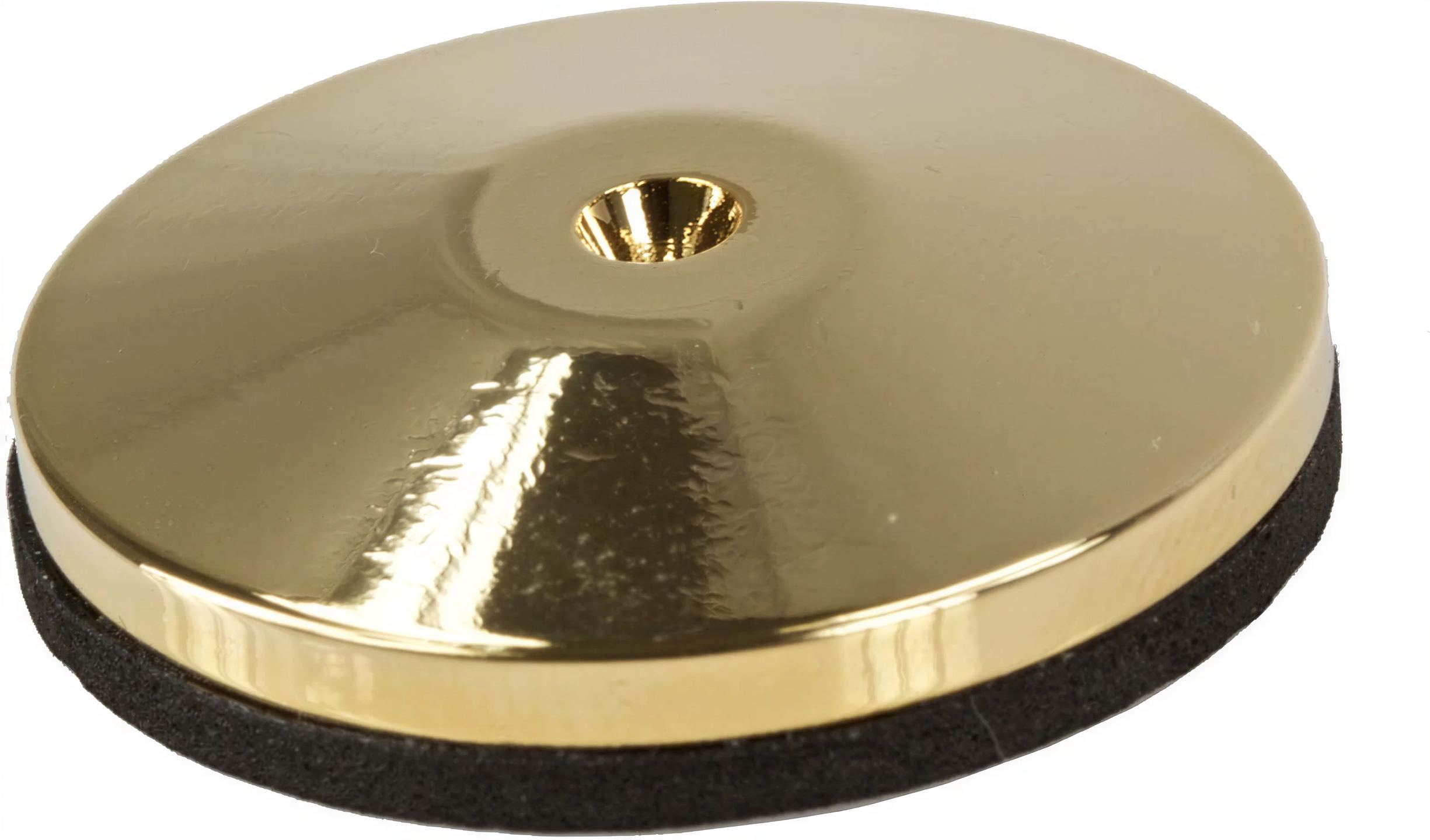
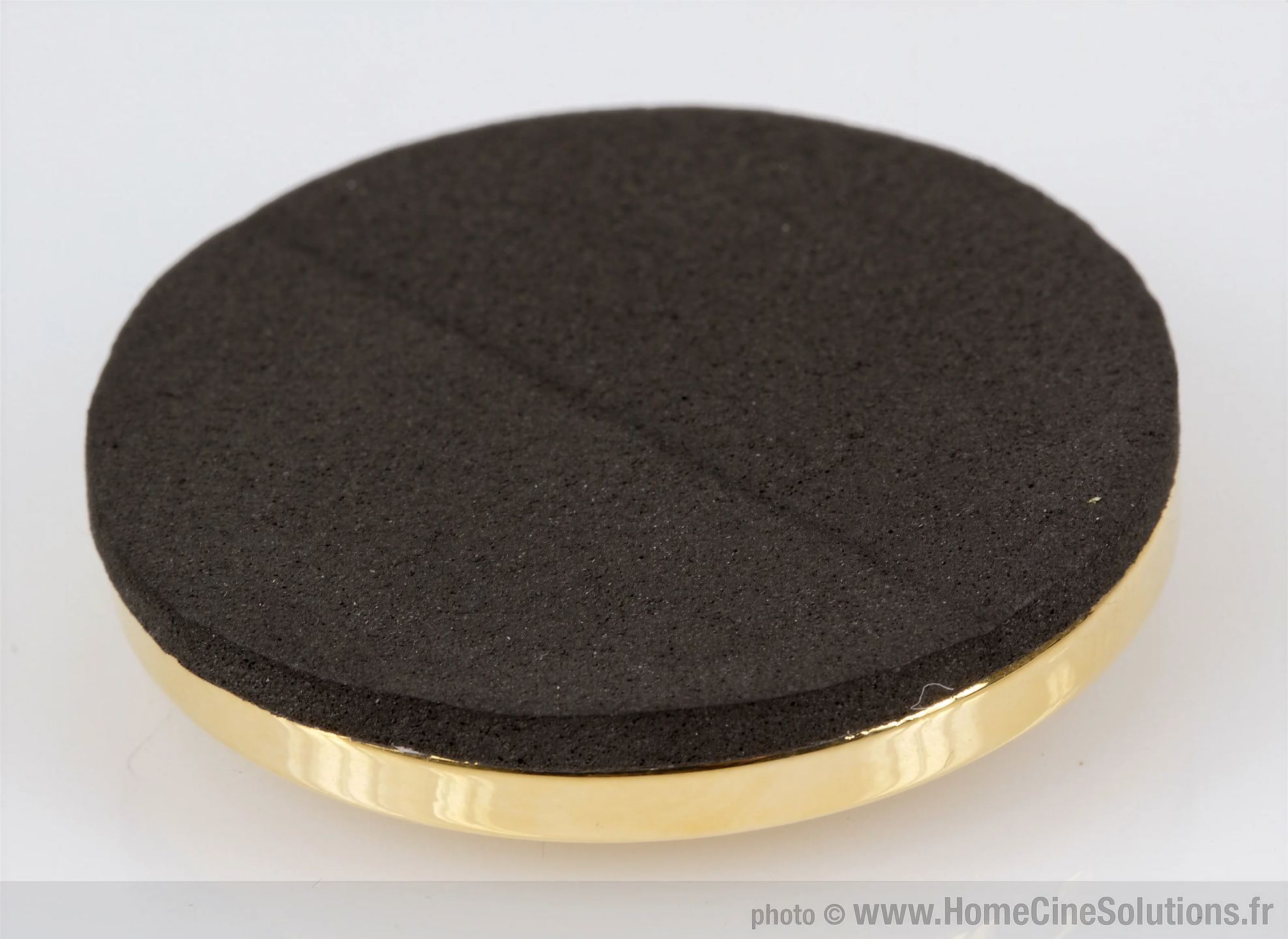
A decoupling spike steadies a speaker, but it marks a wooden floor within a few days and slips on tiles. The spike shoe sits between the two. It is a small 30 mm metal disc with a central recess that holds the tip of the spike, resting on a pad that protects the floor. It slips under a floorstanding speaker, the stand of a bookshelf speaker or an audio rack already fitted with spikes.
The metal body has a low profile. The speaker is raised by only a few millimetres, which makes no difference to the tweeter’s height relative to your ears. On top, a central recess accommodates the spike: it centres it and prevents it from slipping sideways, even when you gently push the speaker while adjusting its position.
The spike concentrates the speaker’s entire weight on a tiny area, and that is what damages the floor. The spike shoe distributes this load over a diameter of 30 mm, a much larger area. The pressure drops accordingly: the wood no longer retains an indentation, and the glaze on tiles does not get scratched. Each spike shoe has a non-slip pad underneath, so the metal never comes into direct contact with the flooring.
A spike’s primary purpose is to give the speaker firm support without rocking, regardless of how level the floor is. The spike shoe preserves this behaviour. The spike stays seated at the bottom of the recess, without lateral play, and the speaker remains supported on three or four points.
The pad adds a thin, flexible layer between the metal and the floor. The connection is therefore not quite as rigid as a spike placed directly on a concrete slab. In return, the assembly stays in place on smooth tiles or sealed wooden flooring, where a bare spike would slide. On a hard, finished floor, most setups benefit from this.
The spike shoe does not screw onto anything. The spikes’ thread size (M6, M8 or otherwise) does not matter: the spike simply sits in the recess. That is what makes it universal. It can be used under floorstanding speakers, under the spikes of a speaker stand, under a hi-fi rack or under an audio or video device mounted on spikes.
Since nothing attaches it to the spike, it must be positioned carefully. The simplest method is to tilt the speaker, slide a spike shoe under one spike, lower it back down, then repeat on the other side. Aligning four spikes with four recesses takes a little patience, and with a heavy floorstanding speaker, it is best to have two people do it.
The CPU660B is sold individually. You need one per spike: four for most floorstanding speakers and furniture, sometimes three for certain speaker stands with three support points. For a pair of floorstanding speakers, you therefore need eight spike shoes.
No. The recess accommodates the tip of a spike, and a flat foot would rest precariously on it. For equipment without spikes, pads or absorbers placed directly under the feet are more suitable.
Yes, preferably. All spike feet have the same height and therefore do not alter the alignment achieved with the spikes alone. First adjust the level and eliminate any rocking by screwing or unscrewing the spikes, then slide the spike feet underneath.
Not much. On thick carpet, a spike needs to pass through the pile to rest on the slab. A spike pad placed on the pile would sink unevenly and reduce stability. It belongs on hard floors: hardwood, tile, polished concrete, stone.
It should be lifted rather than slid. Dragging it could cause the spikes to slip out of their cups and the speaker to tip over. To simply adjust its orientation, lift one side slightly, rotate the speaker, then recenter each spike in its cup.
Its role is mechanical: to protect the floor and keep the speaker firmly in place, without unwanted movement. A speaker that does not rock delivers cleaner bass than one that is poorly positioned. You should not expect anything more from it. The sonic benefit comes mainly from the stability of the setup, which the spike pad preserves.
François
Very very satisfied.
Comment from January 11, 2021 — Experience from December 21, 2020
Andre
Good materials too but be careful they are delivered without the black markers as seen in the photo André thanks to the Home Cinema Solution team
Pros: good.
Cons: none.
Comment from February 18, 2016 — Experience from February 04, 2016
Philippe
Perfect product! Thank you for your professionalism.
Comment from December 31, 2013 — Experience from March 27, 2013