

Why does Netflix sound quieter than regular TV?
August 21, 2026
Contents
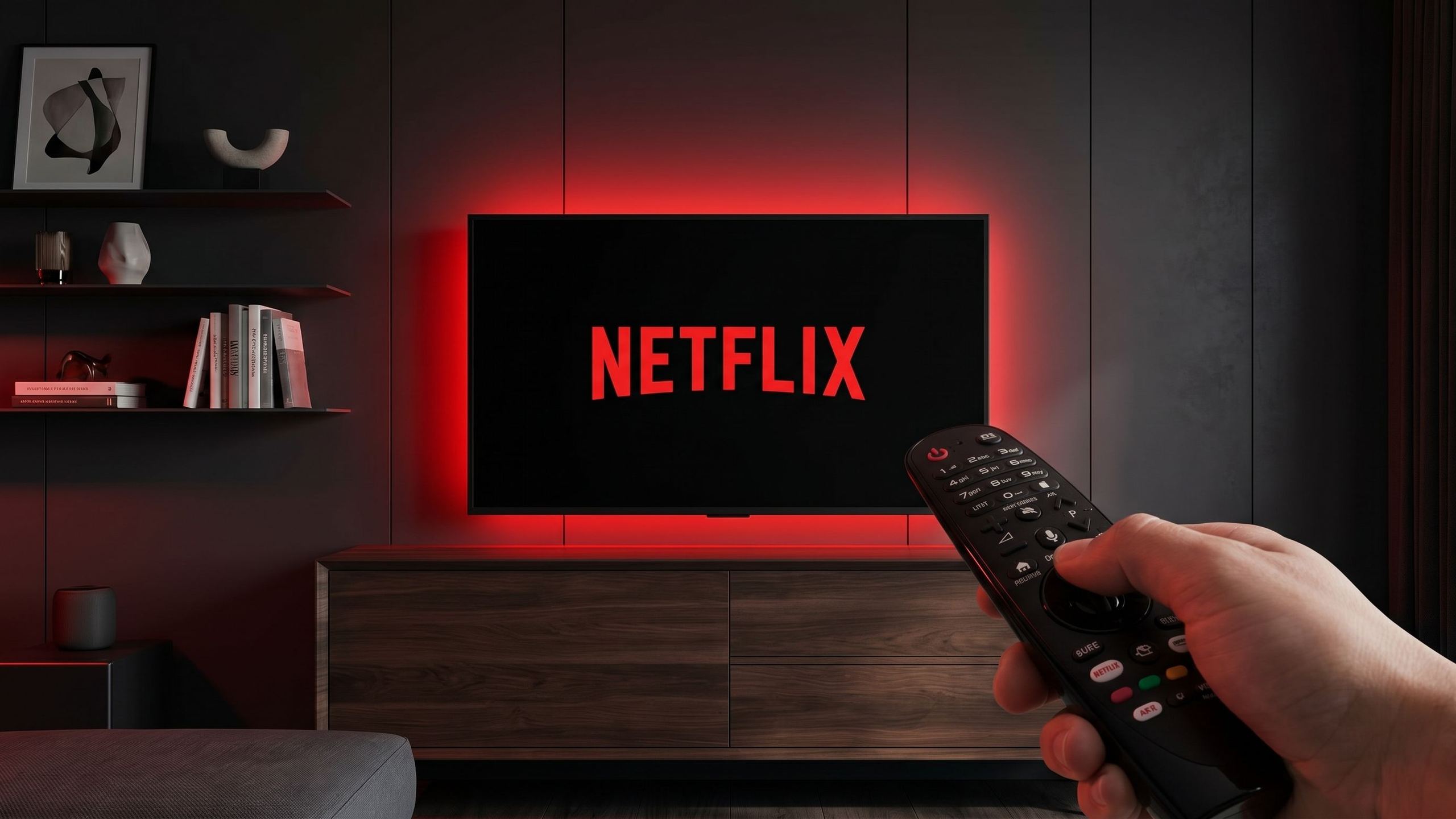
You’re watching the news on digital terrestrial television, you launch a series on Netflix, and you reach for the remote to turn up the volume. This reflex is almost universal. The gap doesn’t reveal any technical flaw: it comes from two ways of setting volume that don’t aim for the same goal. Terrestrial television seeks uniformity from one channel to the next. Streaming seeks to preserve the mix exactly as its creators intended.
DTT targets a constant average level
In France, the sound level broadcast on DTT follows a rule set by Arcom (formerly the CSA) since 2011 and fully in force from early 2013. Every programme, including advertisements and live broadcasts, must have an average loudness of -23 LUFS, with a tolerance of one LU above or below for content longer than two minutes. This value stems from the European recommendation EBU R128, adopted by broadcasters across the continent.
The key point lies in the measurement method. The figure of -23 LUFS applies to the programme as a whole: dialogue, music, effects, and ambience all feed into a single average calculated over the duration. To maintain this average from one channel to the next and avoid sudden jumps between a programme and its commercial break, broadcasters compress the dynamic range. The regulation caps the LRA — that is, the statistical gap between loud and quiet passages — at 20 LU, and keeps dialogue variation close to the average value.
The result is noticeable on screen: on DTT, dialogue and effects remain close in level. You can hear speech clearly without bracing yourself for the next scene.
Netflix anchors its volume to dialogue
Netflix has chosen a different target: -27 LKFS, with a tolerance of two LU and a true peak ceiling of -2 dBTP. LKFS and LUFS refer to the same unit, one coming from the ITU world, the other from the EBU. At first glance, -27 appears four decibels lower than DTT’s -23. The reality is more nuanced, because Netflix is not measuring the same thing.
The platform relies on a dialog-gated measurement, based on Dolby Dialogue Intelligence technology. The principle: analyse only the segments where someone is speaking, setting aside music and effects. Speech then serves as the anchor. The mixer sets the level of the voices, then arranges everything else around them, with as much headroom above as desired.
This approach preserves the dynamic range intended for cinema. A whisper stays a whisper, an explosion retains its power. Netflix accepts a wide dynamic range (LRA) where DTT keeps it contained, then normalises all its deliveries so they play back at the same level within its catalogue, independently of the terrestrial broadcast standard.
Why comparing -27 and -23 is misleading
The misunderstanding arises from opposing two numbers that don’t cover the same calculation. A dialog-gated measurement leaves out the loudest passages, so it produces a lower figure than a measurement taken across the entire programme. Netflix has documented this discrepancy: its content conforming to a historical target of -24 LKFS across the full programme showed dialogue clustered around -27 LKFS when measured using dialog-gated.
Brought back to the DTT measurement method, a Netflix programme would therefore come in around -24 LUFS overall — roughly one decibel below the -23 of terrestrial broadcast. The actual difference in average level remains modest. The sensation of lower volume plays out elsewhere.
The cause lies in the dynamic range. On DTT, speech is brought up close to the level of the loudest moments, and everything sits within a narrow band. On Netflix, speech is deliberately placed lower to leave room for peaks. At the same volume on the television, a dialogue scene feels quieter in streaming, then an action scene sends you reaching for the remote in the other direction.
The television’s speakers affect voice clarity
A second factor comes into play during playback, independently of any standards. Netflix films and series arrive in 5.1, or even in Dolby Atmos. In these formats, dialogue is carried on a dedicated centre channel. A television equipped with two speakers must fold this multichannel signal down to stereo, and this conversion lowers the centre channel: Netflix’s specification accounts for a three-decibel drop in the centre during downmix. Voices, already placed low in the mix, recede further.
DTT, often broadcast in stereo or in a less ambitious 5.1, is less affected by this downmix. The behaviour of the decoder adds to this. Dolby streams carry a metadata value — the dialnorm — which the television or decoder interprets to adjust level and compression. Depending on the device and its settings, two identical sources can output at noticeably different volumes.
Reducing the gap without altering the mix
Several options are available. Night mode, found in the audio settings of most televisions, soundbars, and amplifiers, compresses the dynamic range: it lowers the loudest effects and raises quiet passages while keeping speech at a stable level. This is the most effective compromise for achieving comfort close to that of DTT.
On devices that offer it, a dialogue enhancement function acts directly on the frequency range of the voice. Choosing the stereo track rather than the 5.1 track, when the app allows it, often produces more present voices on television speakers, since the decoder no longer has to manage the multichannel downmix. On a home cinema setup, raising the centre channel level by a few decibels in the amplifier settings achieves the same effect without touching the other channels.
A soundbar with a centre channel, or one equipped with a dedicated voice mode, remains the most lasting solution for those who watch a lot of content with a cinematic mix.
The two philosophies serve different purposes. DTT protects the comfort of viewers who channel-surf, even at the cost of flattening the dynamic range. Netflix protects the mixers’ intentions, even at the cost of requiring a little help from the hardware. Adjusting your television with an informed understanding of the situation is far better than putting up with the gap, remote in hand.
Popular products


You may also like to read
 How to choose a soundbar suited to your TV and living roomComparisons and buying guides
 Sony launches its first True RGB TVs with the Bravia 9 II and 7 IIHi-fi and home cinema news
 TCL TVs 2026: SQD-Mini LED, a new alternative to RGB Mini LEDHi-fi and home cinema news
 Panasonic unveils its new 2026 OLED and Mini-LED TV lineupHi-fi and home cinema news
 What size 4K TV should you choose based on your viewing distance?Tutorials and practical guides


