Contents
Wireless gaming headsets are almost all closed-back. You picture them being worn in a shared living room, in a bedroom where someone is sleeping or in a noisy LAN gaming room, and sealed earcups are useful in these situations. The MMX 130 wireless takes the opposite approach: open-back earcups, a 40 mm driver with a titanium-coated diaphragm, a battery rated for more than 80 hours and a retail price of €129. Beyerdynamic already offered an open-back gaming headset, the MMX 330 PRO, but it was wired and cost almost twice as much. Available since October 2026 in black and Arctic White, the MMX 130 brings this formula to a wireless headset that connects via dongle, Bluetooth or cable.
Open-back earcups: more space, less isolation
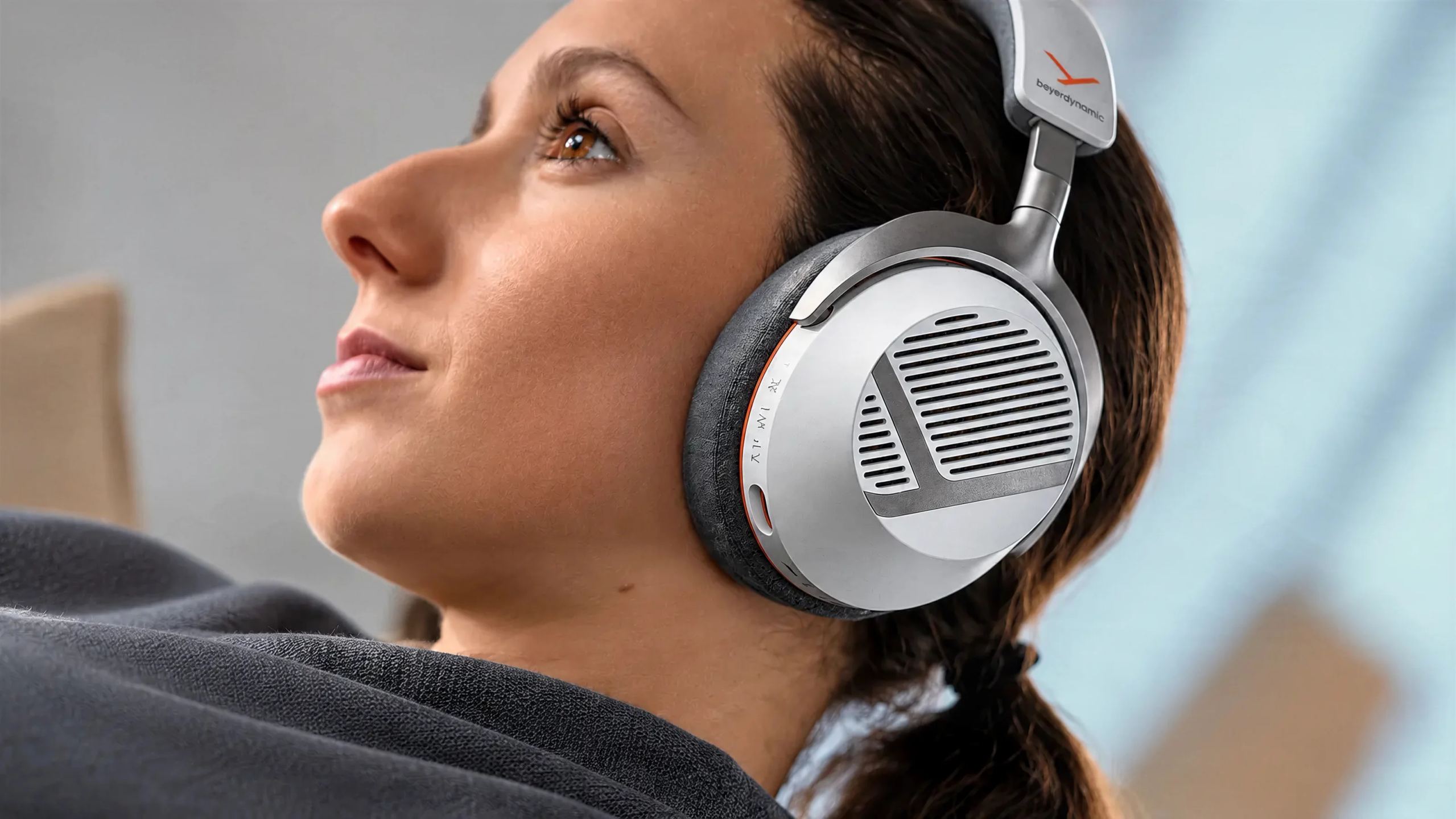
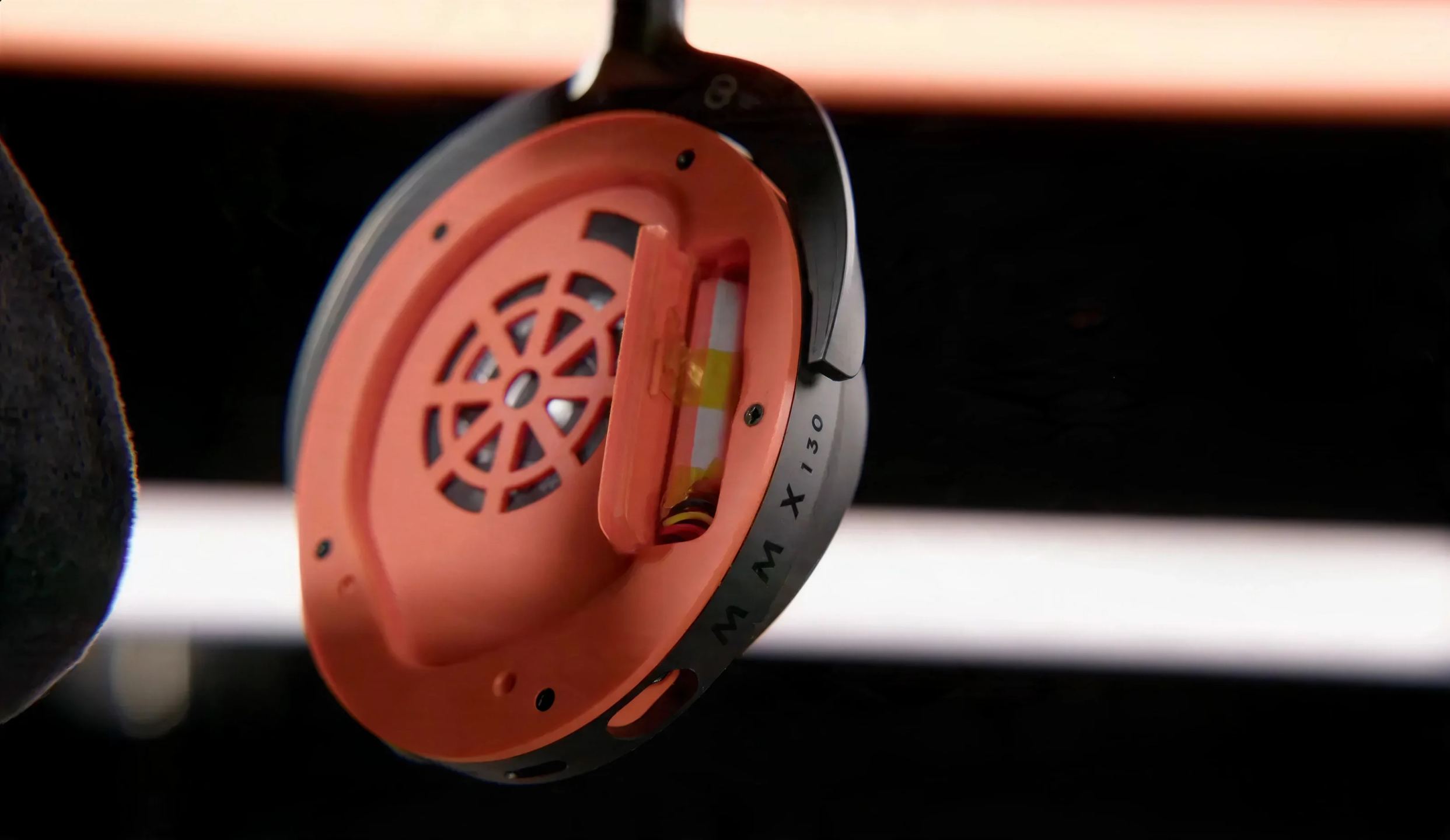
In a closed-back headset, the sound wave emitted from the rear of the diaphragm remains trapped in a small volume of air. These reflections colour the sound and often make it feel as though it is forming in the middle of your head. On the MMX 130, the backs of the earcups are vented, allowing this wave to escape outwards. The sound seems further away from your head, and ambient sounds are more easily positioned around you, which matters in open-world games, role-playing games and simulations, where you find your way as much by ear as by what is on screen.
You have to accept the trade-offs. Sound travels both ways: people in the room can hear the game, and outside noise reaches your ears without any noise cancellation to counter it. On the upside, air circulates around your ears and less heat builds up during long sessions. Voice chat benefits too: because your ears are not blocked, your own voice retains its natural tone instead of resonating inside your head, and you no longer instinctively speak too loudly into the microphone.
A 40 mm driver with a titanium-coated diaphragm
The MMX 130 uses a 40 mm dynamic driver that covers 20 Hz to 20 kHz. Its diaphragm has a thin coating of titanium. The principle is well known in audio: a metallic coating stiffens the diaphragm without adding much weight. It therefore continues to move back and forth as a single unit up to higher frequencies before deforming, making the treble clearer. The MMX 100 wireless, the closed-back model released at the same time, retains a driver of the same diameter but without this coating. This is the only technical difference between the two transducers.
The MMX 130 has nothing in common with the 45 mm STELLAR.45 transducer in the MMX 300 PRO and 330 PRO, which remain at the top of the brand’s gaming range. It makes an open-back headset accessible at an entry-level price. It is not a wireless version of the 330 PRO.
Dongle, Bluetooth 6.0 or cable: three ways to connect
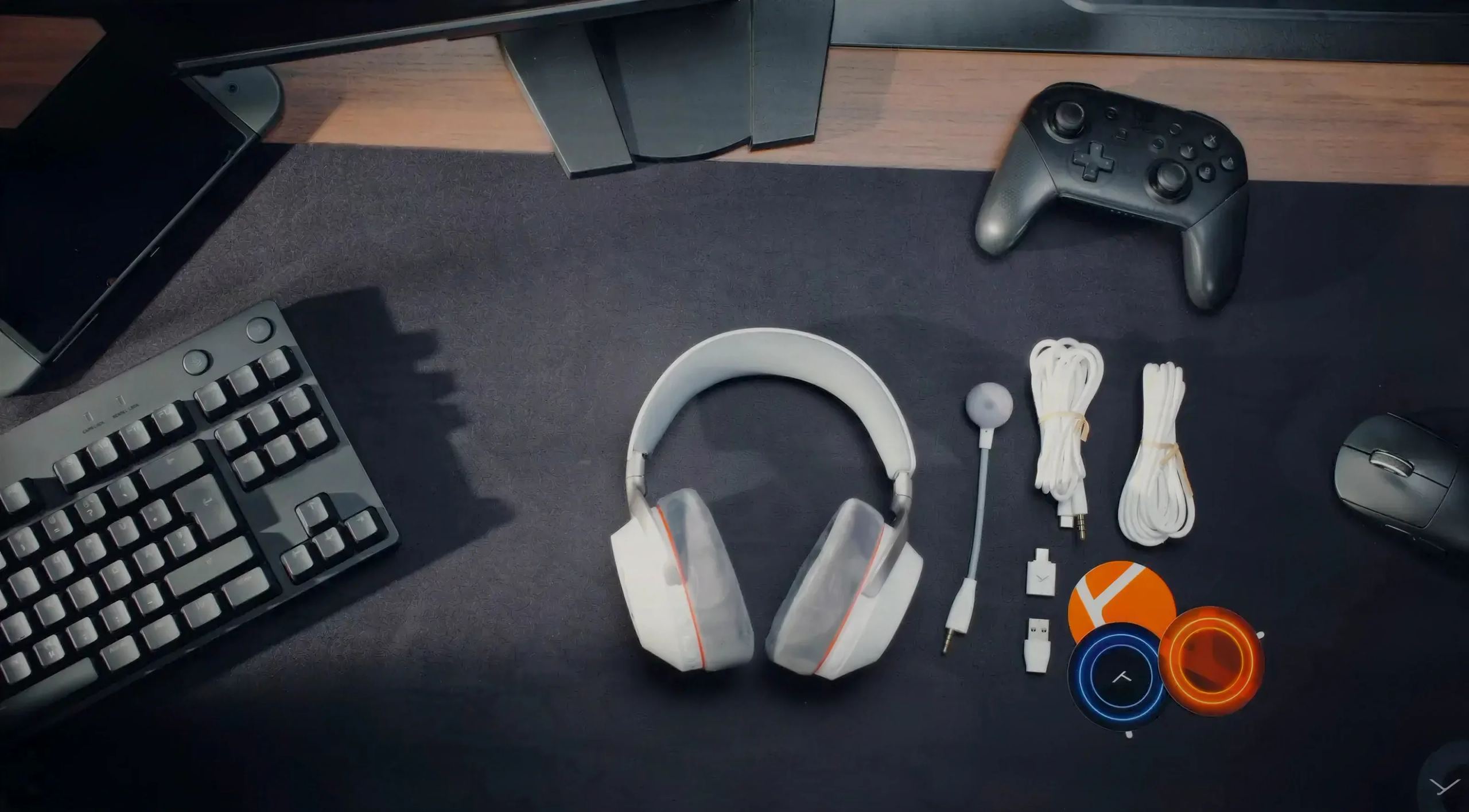
For gaming, the most direct connection is through the low-latency USB-C dongle included in the box, with a USB-A adapter for computers and consoles that do not have a USB-C port. Its range reaches 10 metres. Bluetooth 6.0 has a range of up to 15 metres and supports the A2DP profile for music and HFP for calls. This distinction has practical consequences: as soon as the microphone is activated over Bluetooth, the connection switches to the HFP profile, which has much narrower bandwidth, and the game’s sound quality drops during the conversation. For online chat, it is therefore better to use the dongle. Bluetooth is better suited to listening to music on a smartphone. On Nintendo Switch and Switch 2, the microphone does not work over Bluetooth at all.
On Xbox, only the analogue connection works: you plug the supplied 1.8-metre 3.5 mm jack cable into the controller. A USB-C cable of the same length completes the package. It charges the headset, and you can use it during a game without waiting for charging to finish.
80 hours and a replaceable battery
For a gamer who spends three hours a day wearing the headset, more than 80 hours of battery life means almost four weeks between charges. Beyerdynamic has also made the battery replaceable and offers a downloadable replacement guide. Once the battery has lost some of its capacity after a few years, you can simply change it instead of replacing the whole headset. The ear cushions can also be ordered separately.
The MMX 130 weighs 265 grams, 10 grams less than the MMX 100 wireless. Its ear cushions are made of two layers of velour over memory foam, and the headband is padded. The velour lets air through, complementing the open-back earcups during long sessions.
META VOICE microphone and beyerdynamic app
The META VOICE microphone can be removed when listening to music or watching a film, then put back in place for gaming. It comes with a pop filter, which reduces bursts of air on consonants such as “p” and “b”. The beyerdynamic app, available on iOS and Android, offers sound presets for different game types (shooting, racing, adventure) and an equaliser for adjusting the curve yourself.
MMX 130 or MMX 100 wireless: the room decides
The two headsets share the same connectivity, battery life, microphone and driver diameter. The MMX 100 wireless costs €99, and its closed-back earcups isolate you from ambient noise. It is better suited to gaming in a living room where others are watching television, late at night near someone who is sleeping, or in a noisy environment. The MMX 130 is worth the extra €30 if you play in a room of your own and spend as much time on atmospheric games as on competitive matches. Its open-back earcups also make it more enjoyable for listening to music or watching a film once the console is switched off.