

Rose RS151 vs RS150B: The Evolution of a Reference Streamer

Contents
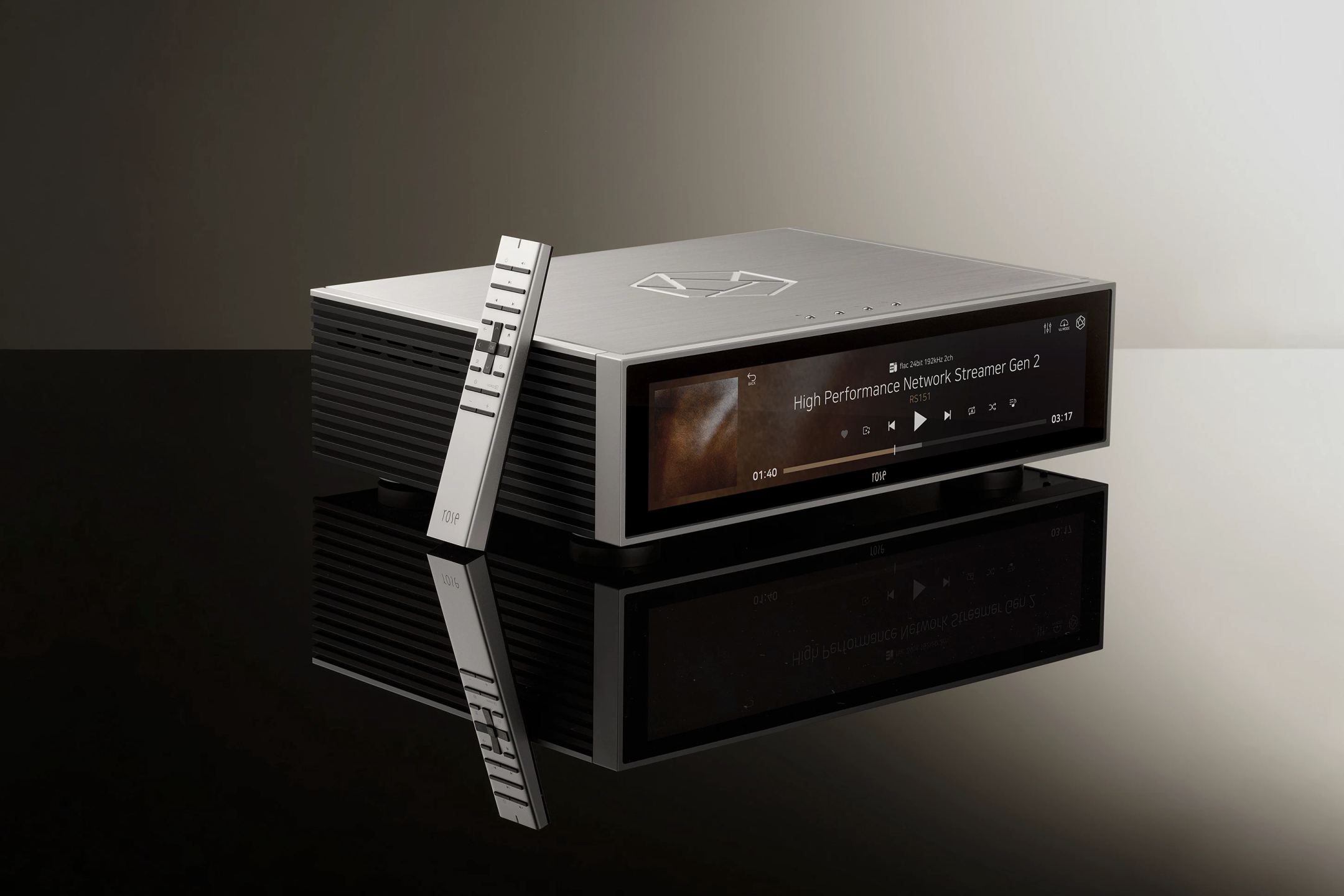
HiFi Rose has just unveiled the RS151, the successor to the highly acclaimed Rose RS150B black. This update promises to bring significant improvements to a device already considered a benchmark in the world of high-end network players. Let’s take a detailed look at the advancements introduced in this new version.
What are the major upgrades in this new version?
- ES9039PRO DAC and Femto clock for better digital-to-analog conversion
- Internal circuit design based on RD160 for improved components and clearer sound
- 8-core processor for faster processing and enhanced graphics
- 15.4-inch Full HD screen from the RS130 for a better user experience
A reimagined technological core
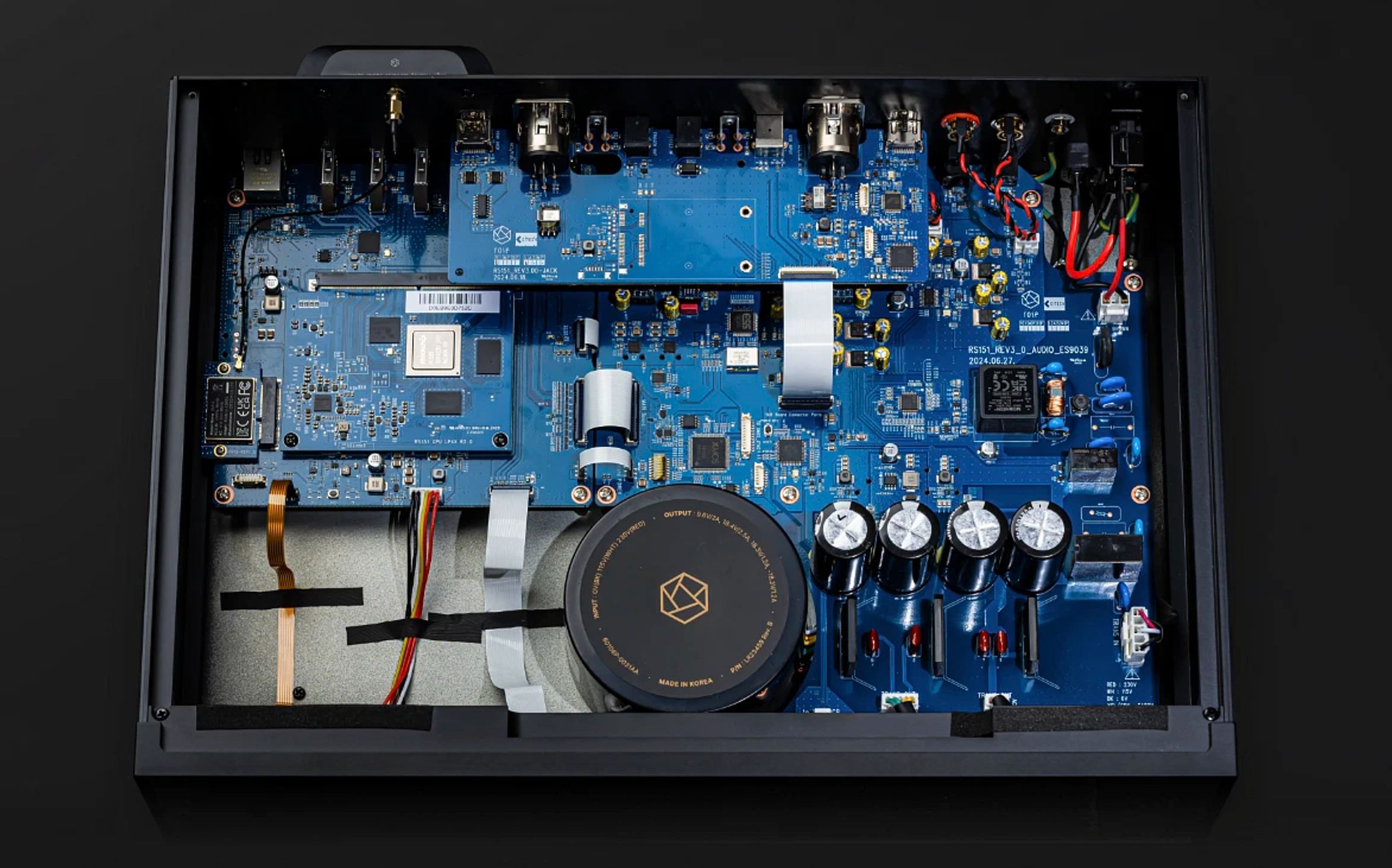
At the heart of the RS151 is a new ES9039PRO DAC, replacing the ES9038PRO from the RS150B. Using 4th generation Hyperstream technology, this DAC, combined with a high-precision Femto clock, significantly reduces jitter and improves linearity in the digital-to-analog conversion process.
The digital and analog signal paths, as well as the 8 channels, are physically separated, ensuring that each circuit operates independently, guaranteeing optimal precision and exceptional channel separation. The processor is also upgraded with an octa-core RK3588 chip, offering four times the data processing performance and eight times the graphics capabilities compared to the previous model. RAM is increased to 8 GB LPDDR4X, and internal storage to 32 GB eMMC, for an even smoother user experience.
The major innovation lies in the integration of the Digital Processing Core (DPC) module, inherited from the brand’s RD160 DAC. This module synchronizes the digital signal received by the DAC with a high-precision Femto clock, minimizing jitter and enhancing sound clarity. The isolation of this module from the rest of the CPU circuit significantly reduces distortion and interference, contributing to a purer and more natural sound reproduction.
Extended connectivity for seamless integration
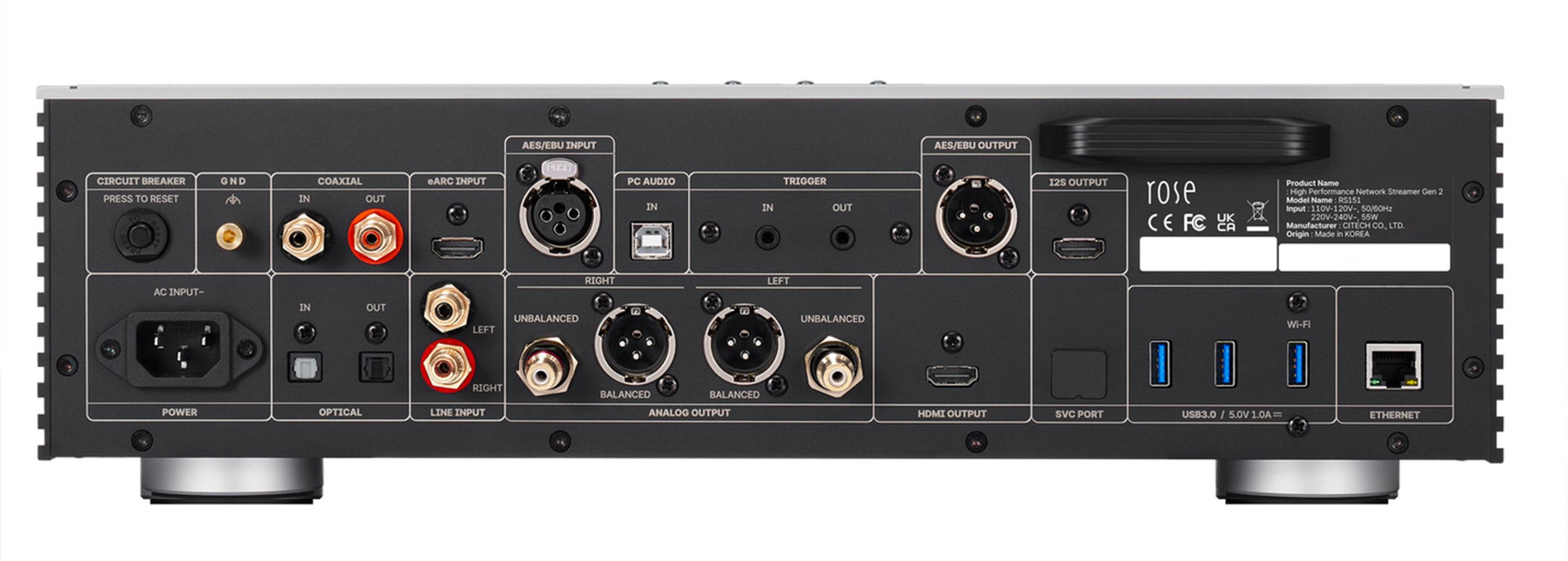
The RS151 expands its connectivity capabilities with the addition of HDMI eARC, enabling the transmission of uncompressed high-resolution audio signals up to 24-bit/192 kHz. This feature is particularly appreciated by audiophile movie enthusiasts looking to integrate the streamer into their home theater system.
Wireless connectivity is also enhanced with the integration of Bluetooth 5.4 aptX, offering increased range and stability for audio streaming from mobile devices. The digital and analog inputs and outputs remain numerous, facilitating the integration of the RS151 into complex audio setups:
- Digital inputs: USB 2.0 Type-B, Coaxial, Optical, AES/EBU, HDMI eARC
- Analog input: Line In
- Digital outputs: USB 3.0 Type-A, Coaxial, Optical, AES/EBU, I2S-HDMI
- Analog outputs: Unbalanced (RCA), Balanced (XLR)
- Video output: HDMI 2.0 (4K UHD / 60Hz)
An enhanced user experience
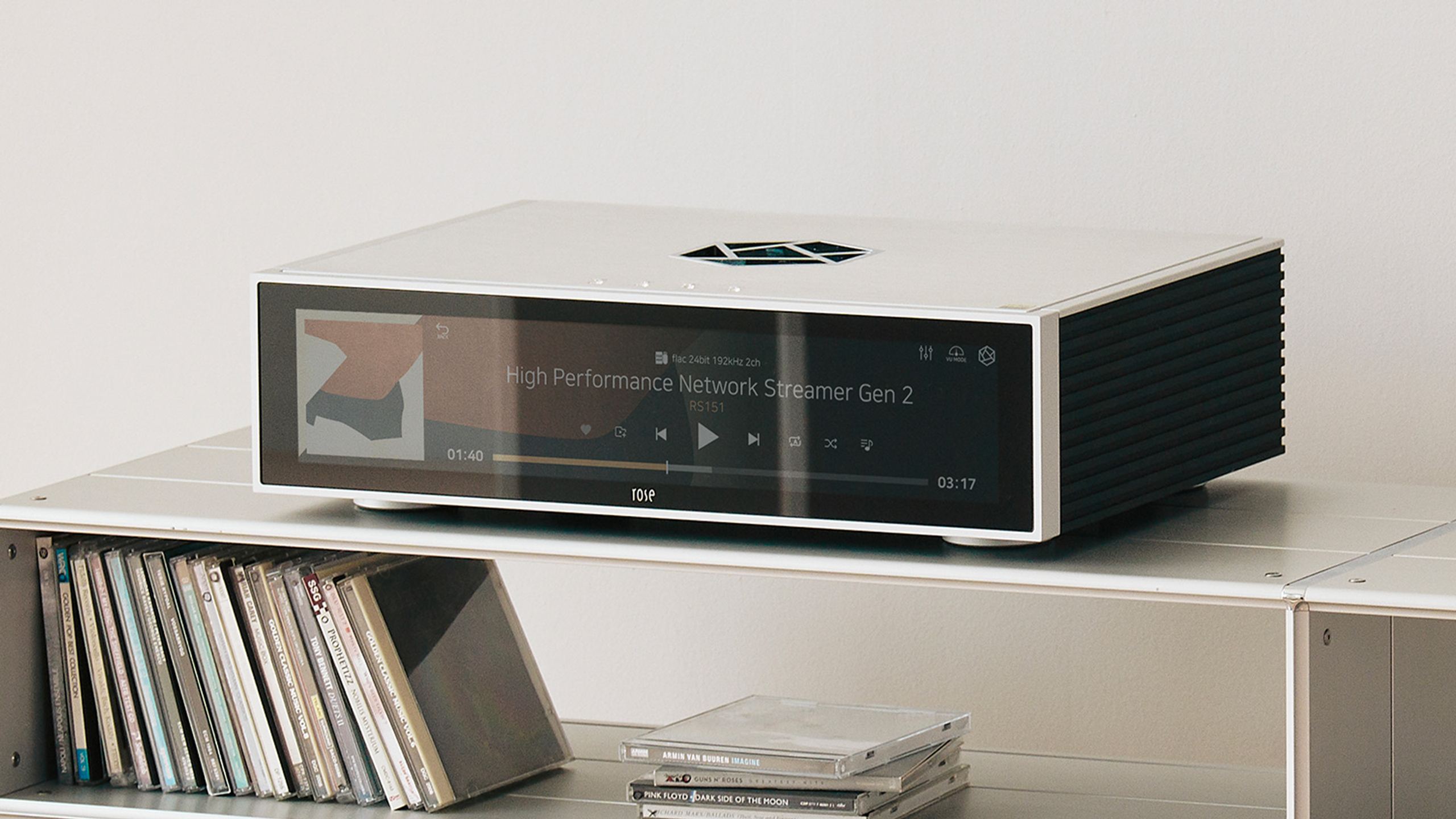
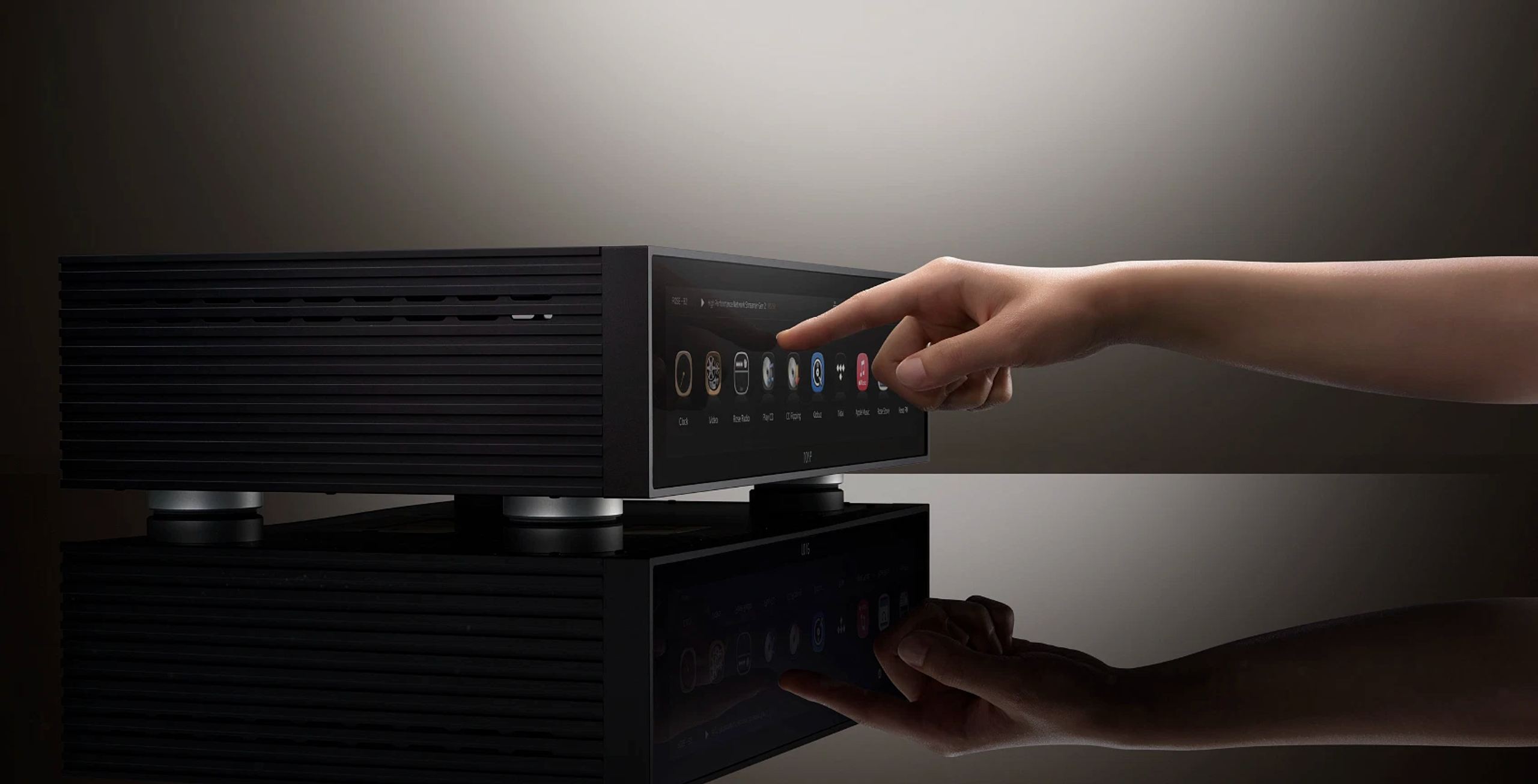
The RS151’s user interface benefits from a 15.4-inch Full HD touchscreen, an increase from the RS150B’s 14.9 inches. This larger display area offers better readability and more comfortable navigation through menus and album covers.
The ROSE OS operating system, based on Android, brings improvements in fluidity and functionality. Managing larger music libraries is now possible, with a tripled capacity allowing for over a million tracks. The RS151 also supports streaming protocols such as AirPlay, DLNA/UPnP, Roon Ready, and Spotify Connect.
A perpetual quest for sound perfection
Rose has paid particular attention to optimizing the audio signal path. The use of high-precision MELF resistors and WIMA film capacitors in the I/V conversion and operational amplification stages aims to improve linearity and minimize distortion. A single-point grounding design eliminates ground loops and suppresses noise. Low ESR and high ripple decoupling capacitors stabilize the power supply by filtering high-frequency noise.

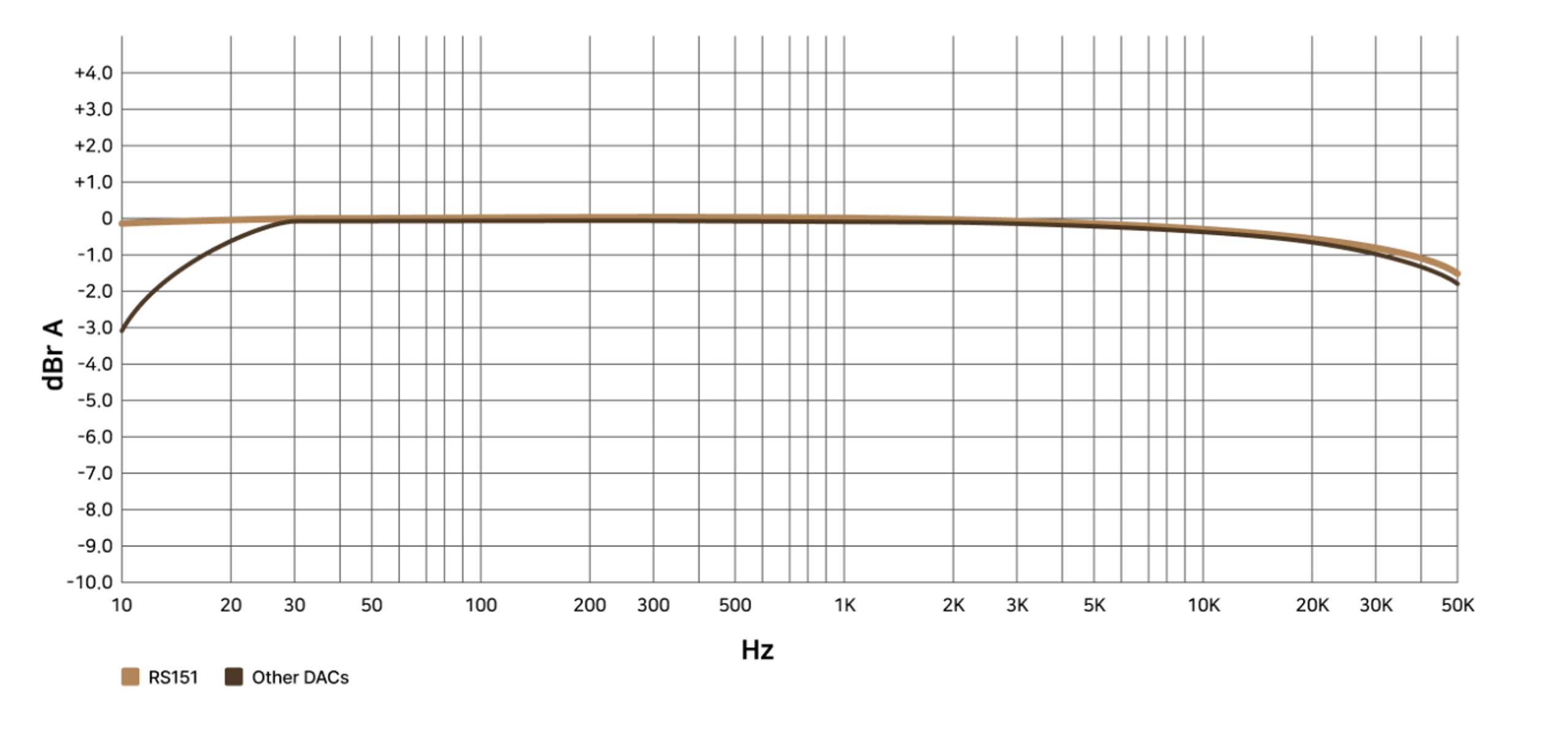
The introduction of the Noise Reduction Analog (NRA) filter in the analog stage promises to further eliminate noise and deliver an extremely flat frequency response, even in the low frequencies. These improvements should result in a more precise stereo image and excellent channel separation. The RS151 achieves remarkable measurement values, with an SNR of 131.4 dB (XLR) and a THD+N of 0.0002% (XLR).
A refined design serving performance
The RS151’s chassis is made from aluminum and stainless steel, with CNC-machined aluminum plates. This robust construction aims to optimize heat dissipation and suppress internal vibrations, contributing to performance stability even during prolonged use.
Minimal assembly joints enhance structural rigidity, further reducing unwanted vibrations. This attention to construction does not come at the expense of aesthetics, as the RS151 retains the brand’s characteristic elegant lines.
A step closer to audiophile excellence
The Rose RS151 stands out as a thoughtful and substantial evolution of the RS150B. The improvements touch every aspect of the device, from sound quality to user experience, connectivity, and construction.
While the RS150B had already won over many audiophiles, the RS151 seems poised to further raise the standards of high-end audio streaming. It remains to be seen how these improvements will translate into real listening experiences, but the announced specifications suggest a significant evolution that could appeal to both RS150B owners looking for an upgrade and newcomers to the Rose universe.




You may also like to read
 4K concerts and FLAC sound: Symphony Premium comes to Rose OSHi-fi and home cinema news
 Network player, streamer or transport: what are the differences?Comparisons and buying guides
 ROSE One: HiFi Rose retires ROSE Connect Premium in favor of a redesigned appHi-fi and home cinema news
 Fender unveils the MIX, a headset with a replaceable battery and record-breaking battery lifeHi-fi and home cinema news
 Triangle Black Friday: up to 45% off a selection of speakersOffers & promotions
 Class A, AB, D: Amplification Types Explained SimplyTutorials and practical guides