

Valerion VisionMaster Max: a 4K UHD triple-laser projector with dazzling specifications
29 April 2025

Contents
Valerion VisionMaster Max, the flagship of the brand’s lifestyle range, stands out as a unique technical device at the crossroads of home cinema, gaming, and multimedia worlds.
Triple RGB Laser System: Pure Light
At the heart of the VisionMaster Max, the choice of a triple RGB (red, green, blue) laser light source is no coincidence. While many projectors settle for a blue laser combined with phosphors, Valerion opts for three separate lasers, each dedicated to a primary color. This technical approach achieves 110% coverage of the Rec.2020 standard—one of the widest color gamuts ever offered in a consumer projector. Saturated hues, subtle gradients, and color fidelity benefit from an unmatched level of precision, whether for HDR movies, video games, or professional content.
Light management doesn’t stop there. The integration of a real-time controlled mechanical iris allows the aperture to be adjusted according to the brightness of each scene. Unlike the dynamic contrast software processing (EBL) often found in competitors, this physical device modulates the amount of projected light, optimizing both black depth and highlight brightness. The result: a dynamic contrast ratio of 15,000:1, delivering images with remarkable density and clarity on screen, even in the most demanding scenes.
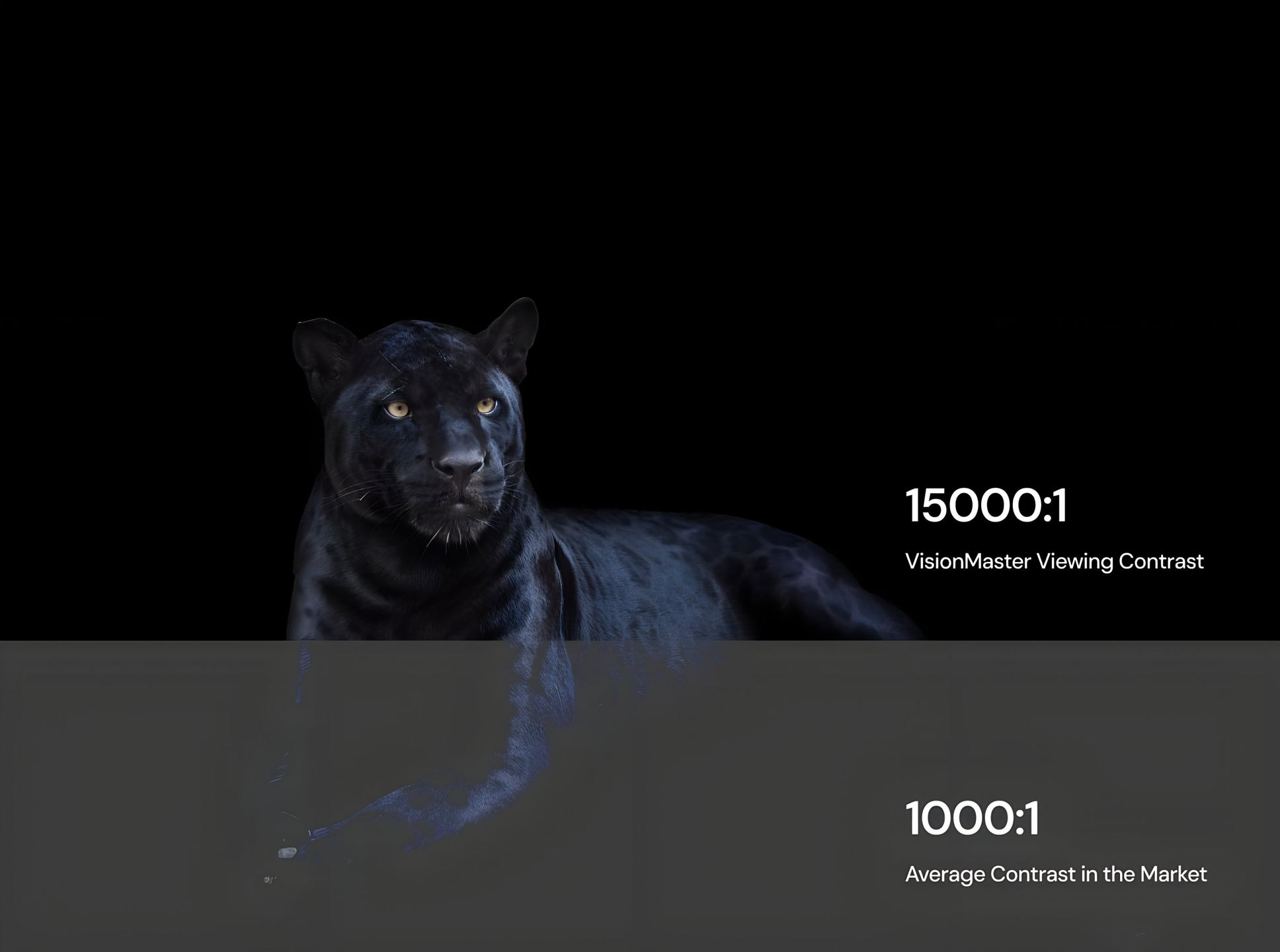
Image Processing and Built-in Intelligence: The MT9618 Chip in Action
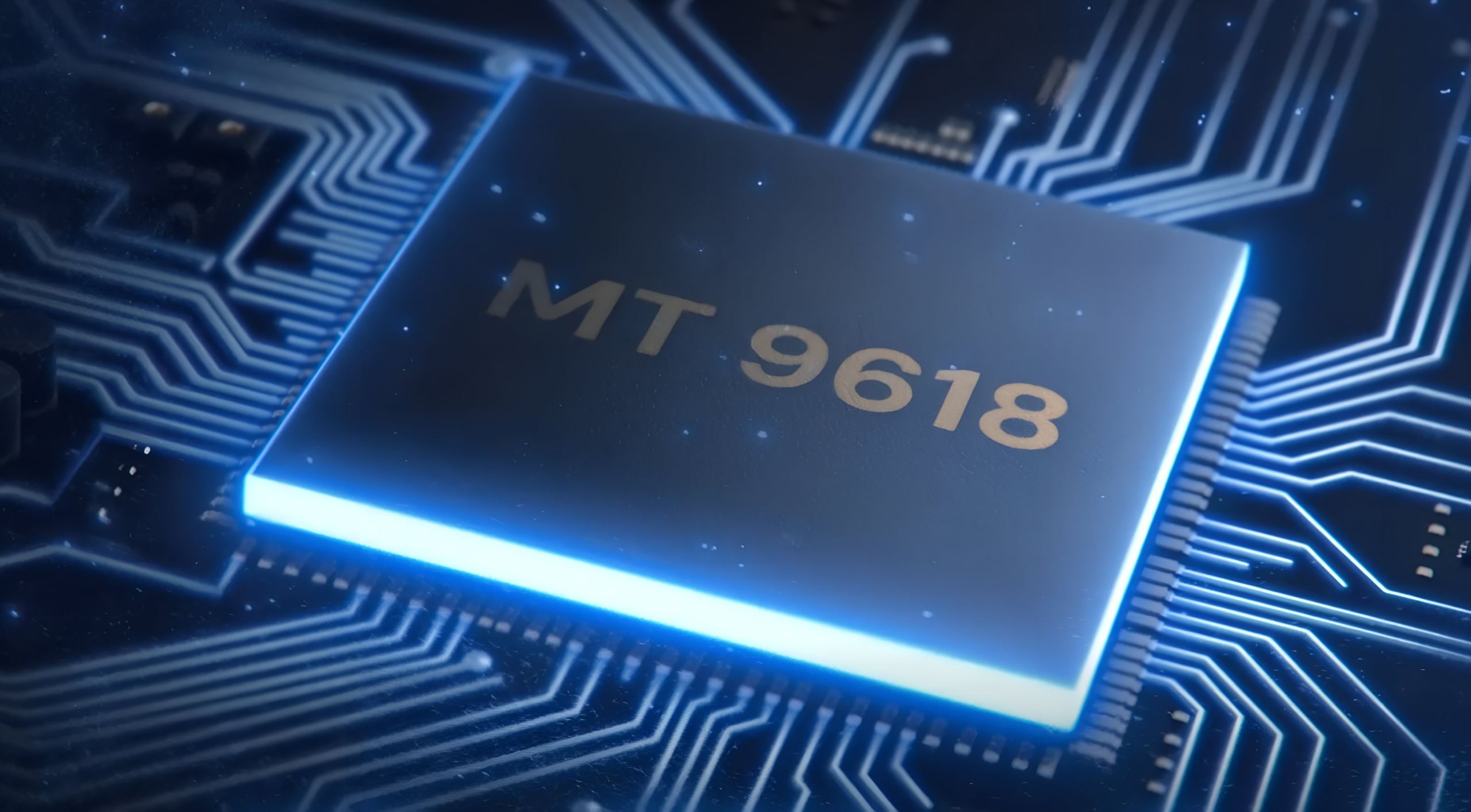
Where the VisionMaster Max truly raises the bar is in its adoption of the AI-SoC MT9618 chip, previously reserved for high-end TVs. This processor, supported by 4 GB of RAM and 128 GB of storage, orchestrates real-time image processing of rare sophistication. The AI Super Resolution algorithm analyzes each frame, detects patterns, and reconstructs missing details, delivering stunningly effective upscaling of Full HD content to 4K. Motion smoothness is ensured by MEMC (Motion Estimation, Motion Compensation) technology, which inserts intermediate frames to eliminate any judder, even during fast-paced sequences.
The MT9618 chip goes beyond image processing: it propels the projector into the smart home era. Google TV, Chromecast, AirPlay, Miracast… The VisionMaster Max becomes a true multimedia hub, capable of handling apps, streaming, and smart home integration without the need for an external box. This convergence of advanced video processing and connected features clearly sets this model apart from its competitors.
Display Precision: XPR Technology and the 0.47” DMD Chip
The VisionMaster Max’s 4K UHD resolution (3840 x 2160 pixels) is based on Texas Instruments’ XPR technology, paired with a 0.47” DMD chip. Instead of generating each pixel individually, the system rapidly shifts the micro-mirrors to simulate a native 4K image. While some purists may see this as a trick, the resulting visual perception rivals that of “full native” 4K matrices, while allowing for a more compact design and optimized thermal management. ISF certification (Imaging Science Foundation) also ensures professional-grade color calibration, a guarantee of fidelity for the most demanding cinephiles.
Extreme Versatility: From Cinema to Gaming Without Compromise
The VisionMaster Max doesn’t just excel at movie projection. Its responsiveness makes it a top choice for gamers: 4 ms input lag at 240 Hz in 1080p, 4K support up to 144 Hz, ALLM (Auto Low Latency Mode) compatibility, and ultrawide aspect ratio support (21:9, 32:9). These features, usually reserved for gaming monitors, open the door to competitive or immersive uses without sacrificing image quality.
HDMI 2.1 connectivity, eARC for multichannel audio, and support for the most demanding HDR formats (Dolby Vision, HDR10+, IMAX Enhanced, Filmmaker Mode) complete this versatility. The projector adapts just as well to a dedicated theater room as to a bright living room, thanks to its 3000 ISO lumens and flexible optics (0.9-1.5:1 zoom, vertical lens shift +/-105%, keystone correction).

Comparison: VisionMaster Max vs. the Competition
| Model | Light Source | Dynamic Contrast | Color Gamut Coverage | Input Lag (Gaming) | HDR Compatibility | Smart Platform |
|---|---|---|---|---|---|---|
| Valerion VisionMaster Max | Triple RGB laser | 15,000:1 | 110% Rec.2020 | 4 ms (1080p/240 Hz) | Dolby Vision, HDR10+, IMAX | Google TV |
| Hisense PX3-PRO | Triple RGB laser | 2,000:1 (ANSI) | 107% Rec.2020 | 16 ms | HDR10, HLG | Android TV |
| Samsung The Premiere LSP9T | Triple RGB laser | 2,800:1 (ANSI) | 106% Rec.2020 | 53 ms | HDR10+ | Tizen |
| Epson EH-LS12000B | Laser (blue + phosphor) | 2,500,000:1 (software) | 85% DCI-P3 | 20 ms | HDR10, HLG | Android TV |
The VisionMaster Max stands out with its combination of mechanical dynamic contrast, superior color gamut coverage, minimal latency, and a comprehensive smart platform, whereas competitors often compromise on one or more of these aspects.
Advanced Uses and Technical Nuances
Beyond home cinema, the VisionMaster Max is aimed at competitive gamers, image professionals (graphic designers, designers), and anyone seeking a projection solution capable of adapting to a variety of contexts. Support for ultrawide formats, active 3D compatibility, and the ability to project up to 300 inches open up new possibilities, from large-format movie viewing to interactive content projection at events or professional presentations.
ISF certification, rarely highlighted on lifestyle projectors, ensures high-level color calibration, while advanced tone mapping management (dynamic HDR curve adaptation) guarantees faithful HDR content reproduction, without crushed blacks or blown-out highlights.


You may also like to read
 XGIMI or Hisense: which projector should you choose?Comparisons and buying guides
 Can a projector really replace a TV for everyday use?Comparisons and buying guides
 What are the best OLED TVs in 2026?Comparisons and buying guides
 Samsung S95H or Panasonic W95C: which TV should you choose in 2026?Comparisons and buying guides
 Epson EH-LS5000, LS6000, LS7000 and LS7500: 4K laser 3LCD drops below €3,000Hi-fi and home cinema news
 Tandem OLED: what is it and which TVs use it?Concepts and technologies


