Eddy
One of my best headphone listening experiences.
Comment from May 01, 2022 — Experience from September 21, 2019
Automatically translated — Show original (French)
Une de mes meilleures écoutes au casque.


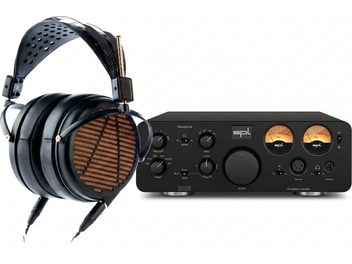
A reference headphone that requires one to four watts to perform at its best seriously limits the choice of electronics placed upstream. This was the most common criticism levelled at the LCD-4, released in 2015 with a 200-ohm impedance. Audeze answered it in 2018 with a low-impedance voice-coil and lightweight chassis variant, retaining the in-house transducer mechanics in their entirety.
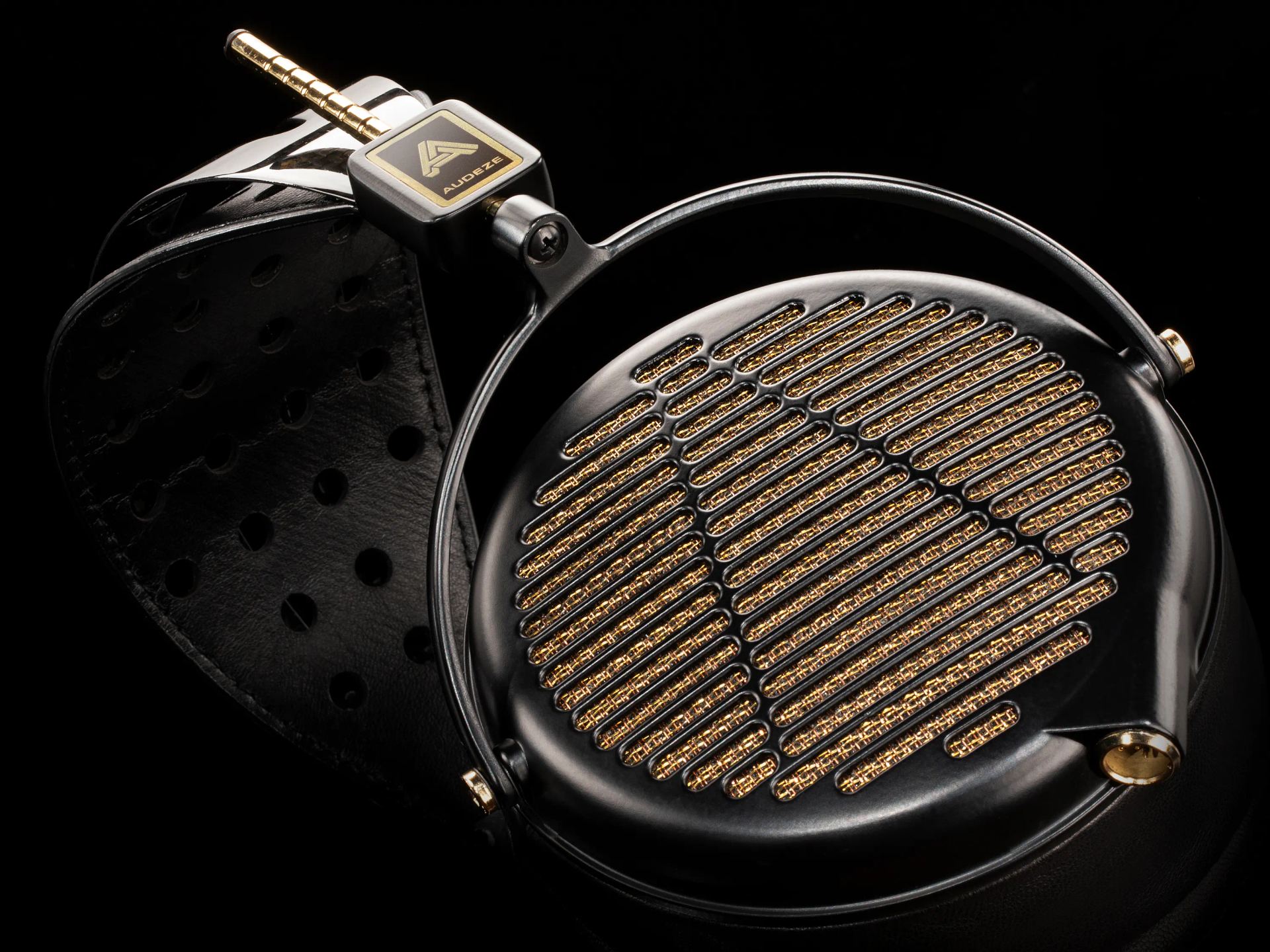
The “z” denotes a redesigned voice coil: the conductive traces etched onto the diaphragm have been redrawn to reduce impedance from 200 to 15 ohms, with a sensitivity of 98 dB for 1 mW measured at the eardrum reference point. Audeze presents this version as a variant rather than a replacement for the 200-ohm model, with both coexisting in the catalogue.
The constraint changes in nature rather than disappearing. Delivering 1 W to an LCD-4 requires around 14 V at the headphone terminals for 70 mA. The 250 mW recommended for the LCD-4z require less than 2 V, but nearly 130 mA. Voltage is no longer the limiting factor: it is the source’s ability to supply current into a 15-ohm load. Yet many portable headphone outputs have their power specified at 32 ohms and restrict it below that, without the specification sheet mentioning it.
Two clarifications are worth making. The impedance of a planar transducer remains virtually constant across the entire frequency range, unlike that of a dynamic speaker: a source with high output impedance reduces level without altering tonal balance. Conversely, 15 ohms combined with 98 dB make the slightest residual hiss from noisy electronics audible, and the volume potentiometer operates very low in its range.
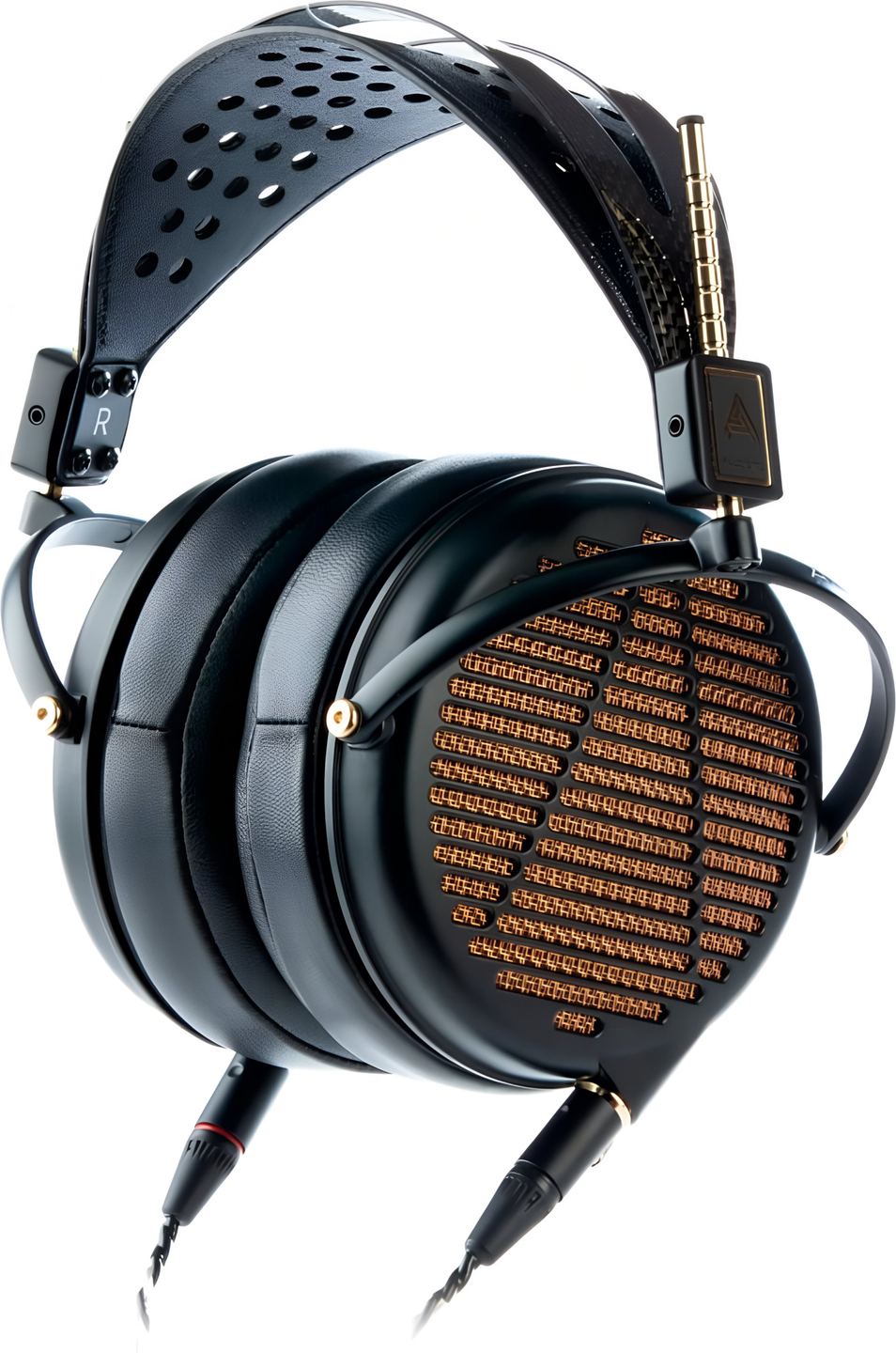
Where the LCD-4 mounts its transducers in Macassar ebony rings topped with chrome plates, the LCD-4z uses cast magnesium rings and yokes, with gold-finished rear grilles. Magnesium was chosen for its rigidity and low resonance, but the main reason for the substitution is weight: Audeze claims a reduction of more than 20% compared with the wooden version, listed at 560 g by the manufacturer and 570 g on most distributor listings.
Still, 570 g remains substantial for headphones. Distribution matters just as much as the figure: the suspended carbon-fibre headband and ventilated leather support strap spread pressure across the head, while the deep leather earpads distribute pressure around the ears rather than on them. The result works when seated during long sessions. It works far less well standing up, and not at all while moving. Each unit is assembled and inspected in the brand’s Californian workshop.
The planar principle consists of printing a conductive circuit onto a very thin film stretched between two arrays of magnets: the driving force is applied across the entire diaphragm surface instead of passing through a voice coil glued to the centre of a cone. With a 106 mm diameter, the LCD-4z uses the largest transducer in the LCD series.
Three elements define the active section. The Double Fluxor array places N50 neodymium magnets on both sides of the diaphragm for a claimed flux density of 1.5 tesla. The Uniforce diaphragm, less than 0.5 microns thick, features traces of varying widths according to their position, in order to equalise the force applied between the centre and the edges. Finally, the Fazor elements are waveguides placed in front of the transducer that organise the path of air towards the ear canal and correct the phase defects that the cavity would otherwise produce.
The stated figures follow: total harmonic distortion below 0.1% at 100 dB, response from 5 Hz to 20 kHz with usable extension up to 50 kHz, maximum sound pressure above 130 dB. The open-back design avoids the air compression of a closed enclosure and extends low-frequency reach, at the cost of zero isolation in either direction.
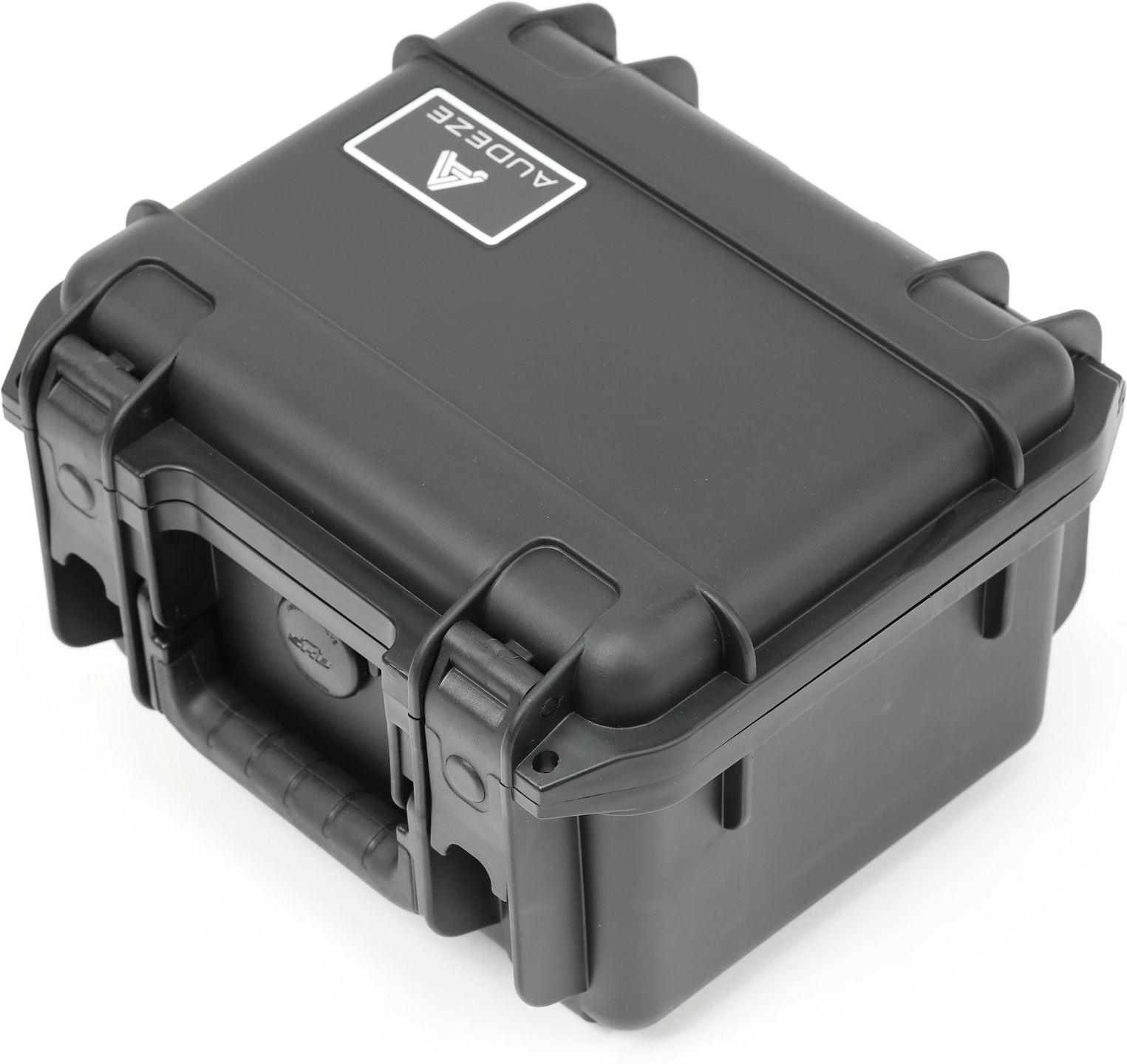
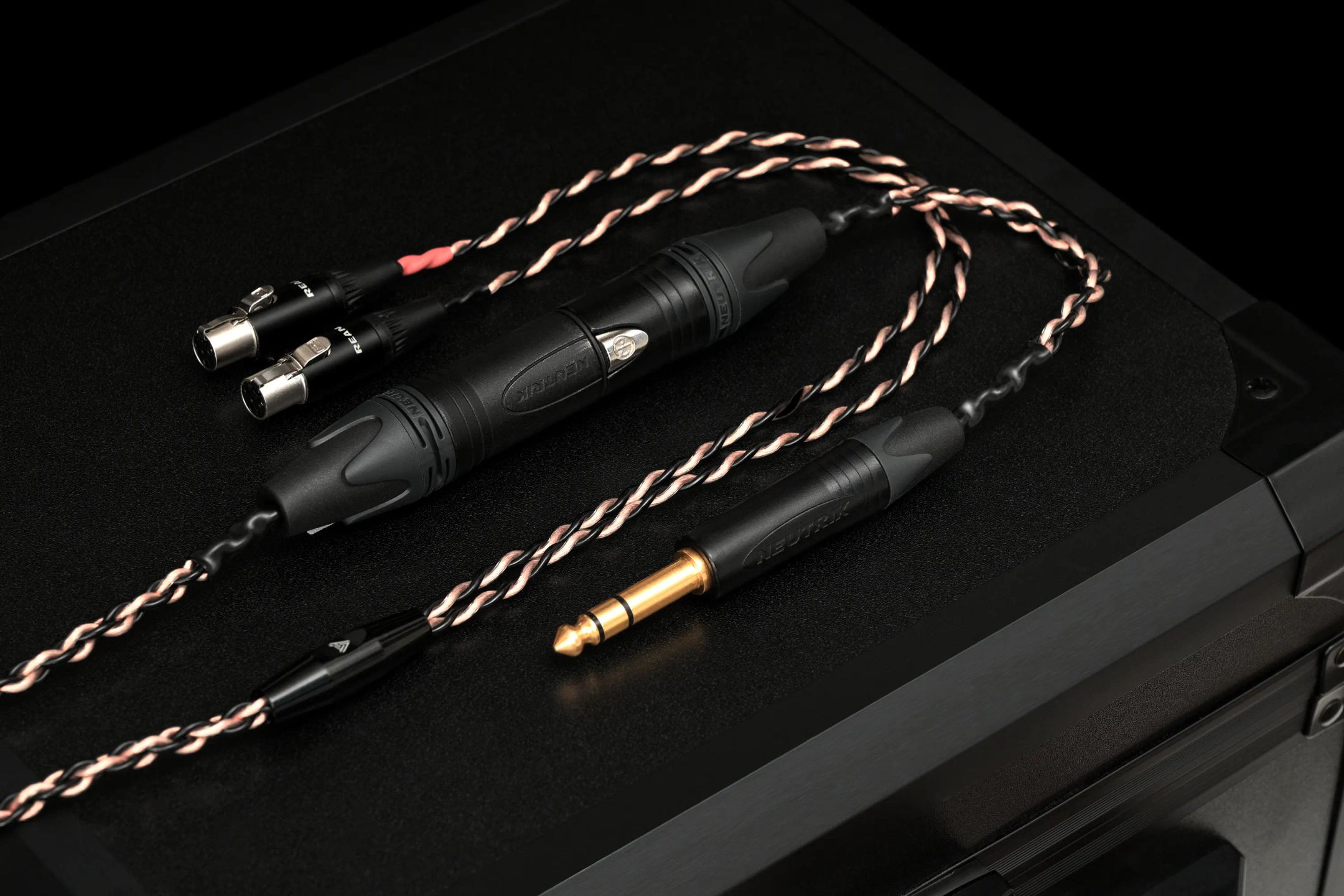
The supplied cable is 2.5 m long, braided, with two 4-pin mini-XLR connectors on the earcup side and a balanced 4-pin XLR termination on the source side. A 6.35 mm jack adapter accompanies the headphones in the hard case, covering the unbalanced outputs of headphone amplifiers and desktop converters.
Audeze specifies 100 mW as the minimum and 250 mW as the recommended power. At 15 ohms, a decent desktop DAC/amplifier, audiophile player or the headphone output of an integrated amplifier can reach these values without difficulty. The caution lies elsewhere: in the quality of the low-impedance output stage, and in the listening level, which rises faster than with the 200-ohm version and invites excess that the headphones, with their 130 dB of headroom, do not prevent.
The open back settles the question of use: everything played through the headphones can be heard a metre away, and everything happening in the room can be heard through the headphones. Shared offices, transport and occupied living rooms are out of the question, regardless of ease of driving.
That leaves stationary listening in a quiet room and studio work. Its neutral reproduction, with slightly full midrange and bass that reaches deep without encroaching, has found lasting acceptance in mixing and mastering, where the aim is to hear what a recording contains rather than a headphone signature. The low impedance serves a specific use: moving from a console to a laptop or portable player without changing the listening reference.
In terms of volume, yes: 15 ohms and 98 dB are enough to reach a comfortable listening level through a USB-C adapter. The caveat concerns peaks. The output power of these small adapters is generally measured at 32 ohms and does not translate directly to 15 ohms; the bass loses control and dynamics long before the average level seems insufficient. A portable player or an adapter with greater current capability behaves differently.
Audeze states that both versions share the same sound signature and positions them as complementary. The physical differences are limited to the voice coil, earcup rings, and weight: the diaphragm, magnetic array, and Fazor guides are identical. A direct comparison depends mainly on the amplification used, since the same source will inherently disadvantage the 200-ohm version if its power reserves are limited.
Yes. Each earcup has a 4-pin mini-XLR connector, shared with the LCD series, and the cable can be removed without disassembly. As the original termination is a 4-pin XLR, a portable player with a 4.4 mm balanced output requires a third-party cable or adapter, neither of which is included.
No. The 4-pin XLR to 6.35 mm adapter makes the headphones usable with any unbalanced output. Balanced mode doubles the available voltage on amplifiers offering both, an advantage that matters with high-impedance headphones and much less here: at 15 ohms, a 6.35 mm output properly sized for current already delivers the recommended 250 mW.
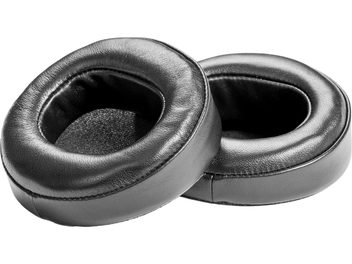
Audeze sells replacement earpads for the LCD series. Replacing them is routine maintenance, not just a matter of comfort: a compressed earpad brings the ear closer to the driver, reduces the enclosed air volume, and alters the tonal balance, especially in the low frequencies. Headphones that seem to have lost bass after a few years often have their explanation there.
For mixing and mastering, no. For recording a microphone take in the same room, yes: sound from the headphones leaks into the microphone and ends up on the track. Closed-back headphones remain the solution in the booth, with the LCD-4z coming into play afterward, once the takes are done.
It depends on its wiring. Many integrated amplifiers derive their headphone output from the speaker terminals through high-value resistors, resulting in an output impedance of several tens of ohms. With a flat-impedance planar transducer, the consequence is a loss of level and dynamic headroom, not tonal coloration. A headphone output with its own amplification stage, as found on recent integrated amplifiers, produces a noticeably different result.
Eddy
One of my best headphone listening experiences.
Comment from May 01, 2022 — Experience from September 21, 2019