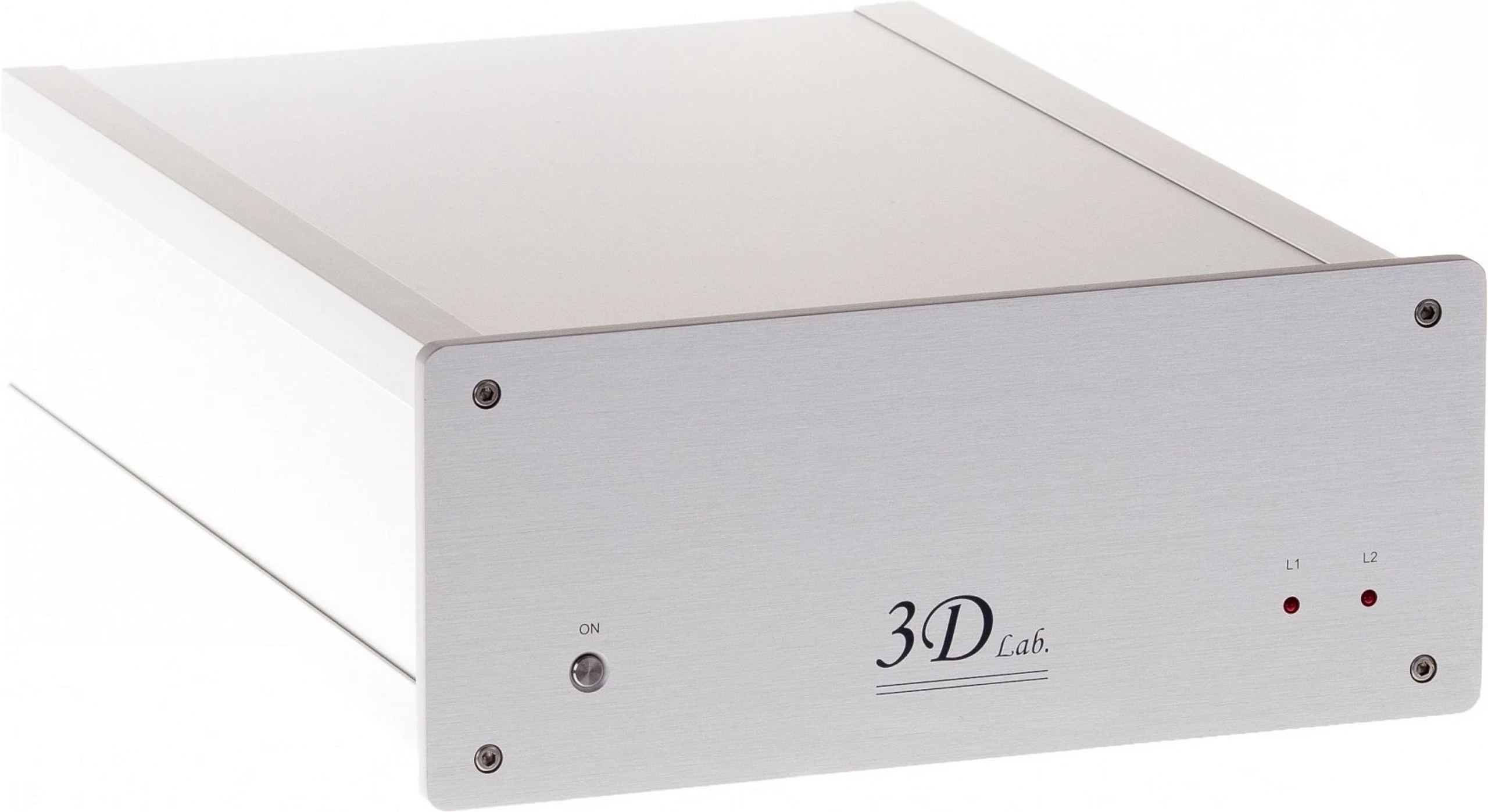
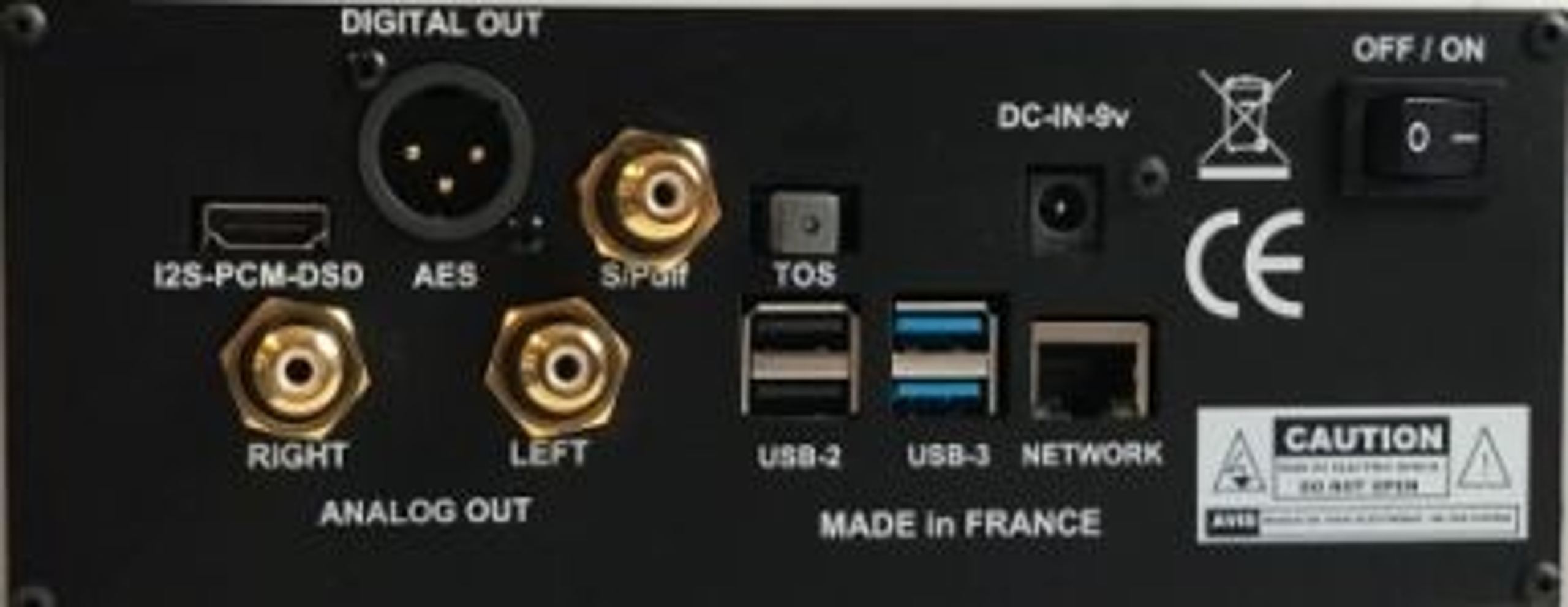
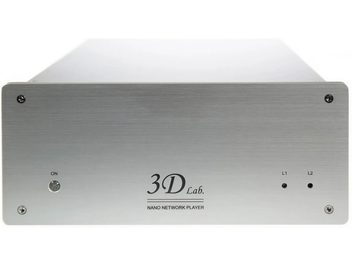
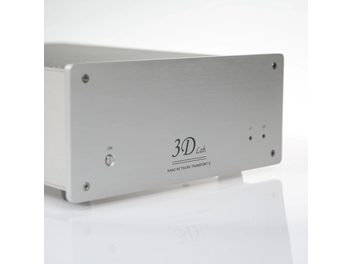
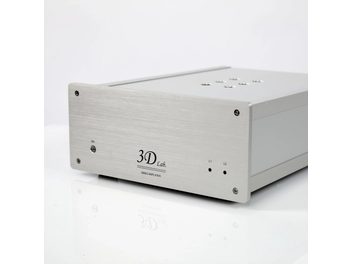
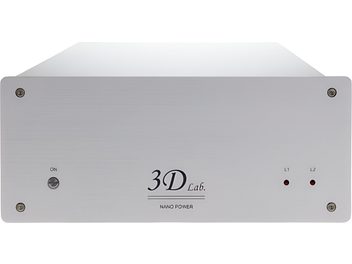
Reader with incredible features, it has an extraordinary musicality, undoubtedly one of the best readers in the world.
These are in no way PCs disguised as audio players, just a very powerful FPGA with a linear power supply. A computer is an excellent choice for storing audio files, it is a poor player. It is by no means an uncompromising player. In NANO players, digital signals are completely reformatted and resynchronized. A powerful anti-jitter equips the Nano players. The characteristics meet professional standards. Equipped with a double clock with a phase noise of -173 dB, this player has extraordinary characteristics.
The management of sound flows is carried out with a very powerful FPGA. A pico computer acts as a manager for the various applications, the sound production is entirely shaped and decoded by the FPGA. Finally, the power supply is external to the main box in order to limit any noise interference. A second power supply with 2 circuits 3.3v and 5v is implanted in the main box as close as possible to the various circuits in order to limit the noise to the maximum.
Dual Power
In order to obtain the lowest possible noise and to avoid having 230 volts in the main box, the power supply is done in two parts. A first box lowers the voltage to 9 volts. A second very high performance power supply is in the main box. The overall noise is therefore massively reduced.
ULNP: Ultra Low Noise Power Supply
The power supply of the players uses very high performance circuits to achieve noise levels never before achieved in the audio world. The power supply noise is 1µVRMS, and 0.8µVRMS on Signature models.
ULNC: Ultra Low Noise Clocking
The clocks that equip the network players are of very high technology and allow an extraordinary precision. The phase noise on the Signature models is -173dB.
Super Synchronization
The FPGA architecture allows perfect synchronization of digital signals. The I2S bus is perfectly synchronized. The jitter rate beats records never reached before; it has never been so low in a network player (see below: conclusions)
Super Monitoring Flux
In order to obtain the lowest possible jitter level, the FPGA controls the nano-computer which acts as an IP stack. Network flows are captured by this nano-computer on intranet and internet networks. The audio stream is entirely controlled and managed by the FPGA. In electronic language, the nano computer is the slave, the FPGA the master. In a classic architecture where the nano-computer is master (the vast majority of solutions available on the market) the jitter rate on the I2S bus is 1000 pico seconds. Thanks to this innovative technology (SMF) the rate collapses to 36 pico seconds, which is colossal.