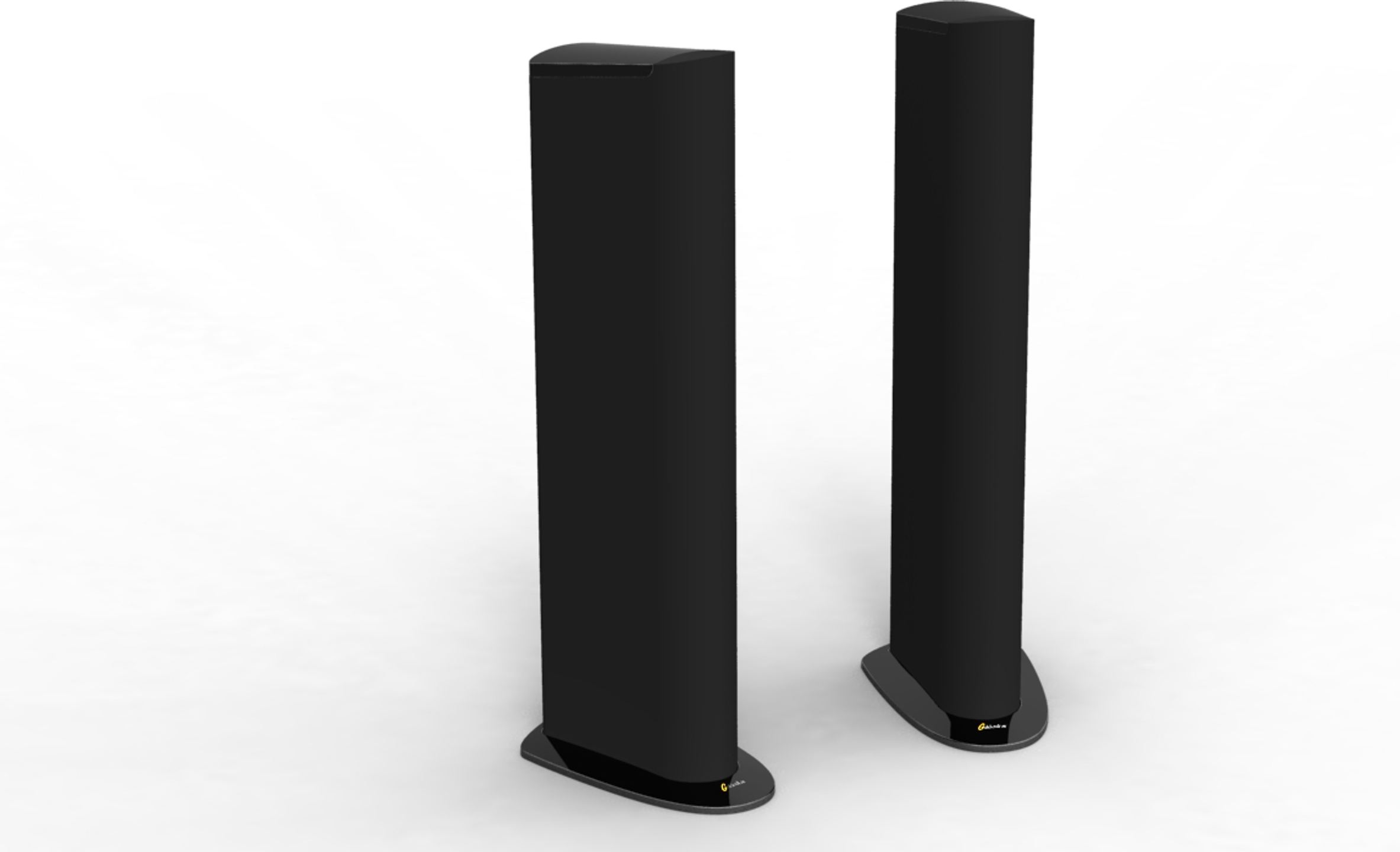
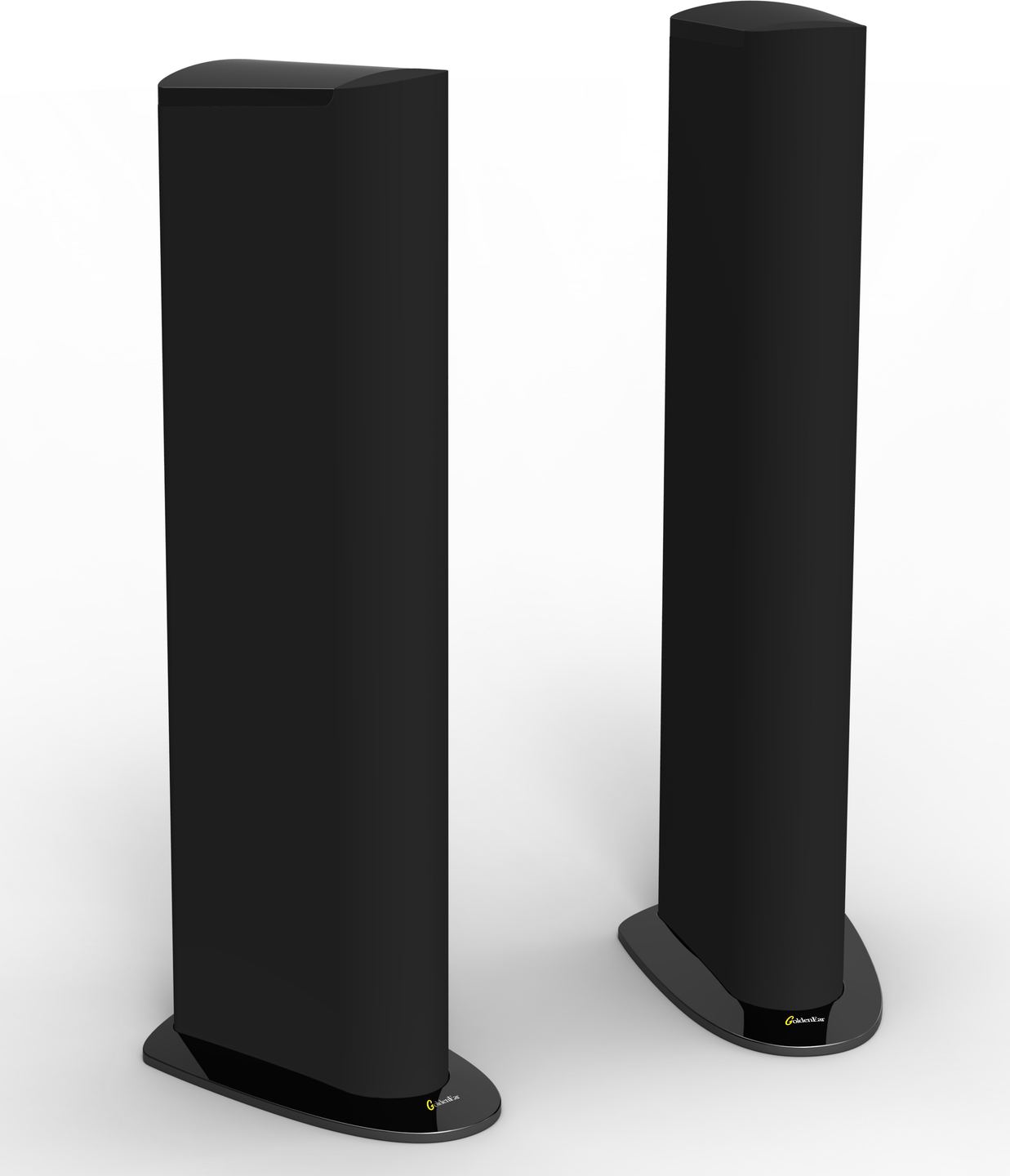
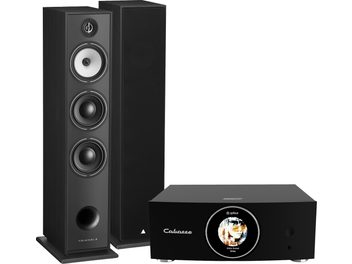
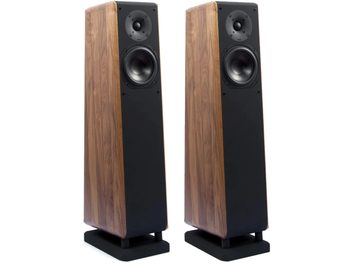
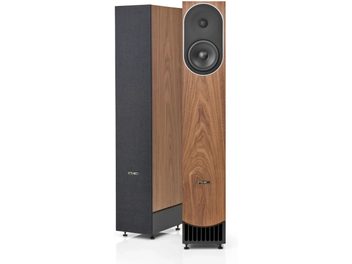
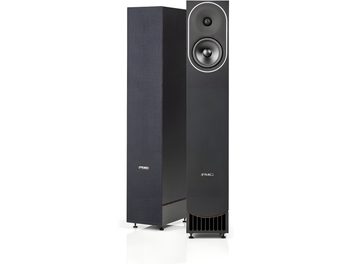
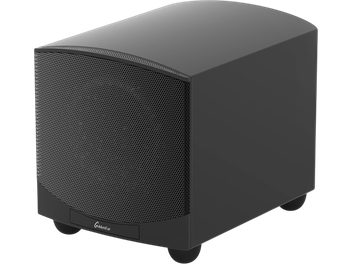
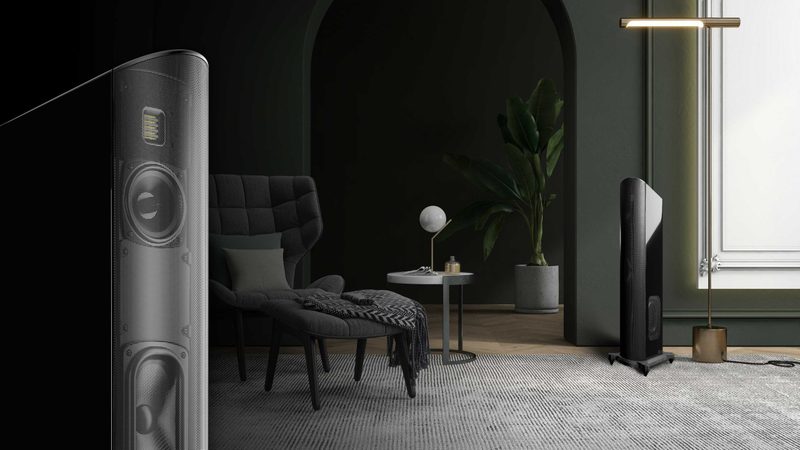
The Triton Two+ is a semi-active floorstanding speaker standing 122 cm tall, featuring a 1200-watt powered bass section. It incorporates technologies developed for the higher-end models in the GoldenEar range, with a frequency response that can reach as low as 16 Hz. Its design aims to deliver consistent performance across the entire audio spectrum, combining detailed high-frequency reproduction, balanced midrange, and powerful bass.
A Folded Ribbon Tweeter That Transcends Conventions
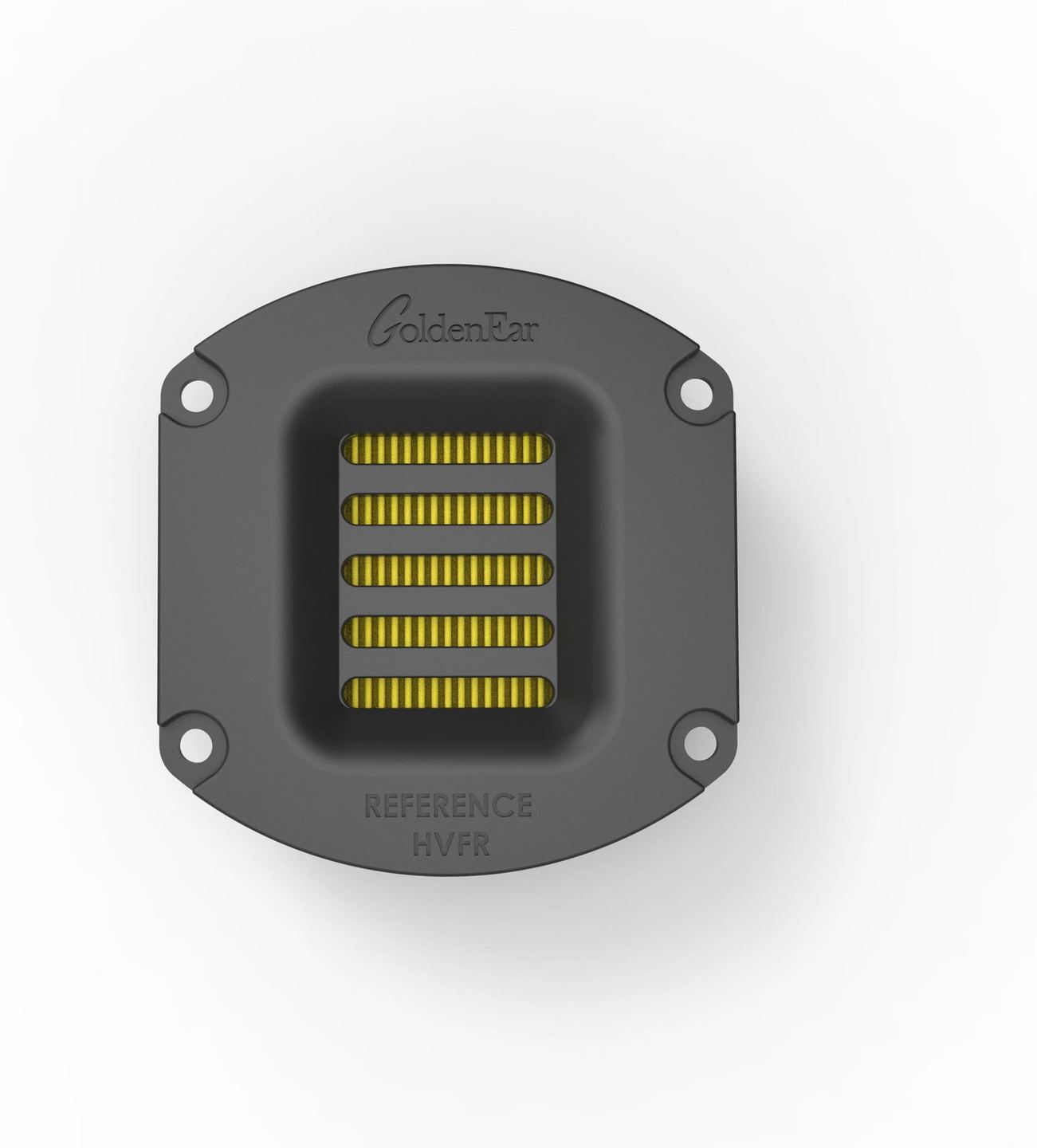
At the heart of the Triton Two+’s acoustic design is the HVFR (High-Velocity Folded Ribbon) tweeter, a GoldenEar-exclusive technology that pushes the boundaries of high-frequency reproduction. Unlike traditional dome tweeters that move air via a piston motion, the HVFR compresses air between the folds of its high-temperature film diaphragm, functioning like a miniature accordion. This approach provides a radiating surface area significantly larger than that of a classic dome, while maintaining the same footprint on the baffle.
The pleated diaphragm material, combined with a powerful neodymium magnet, gives the tweeter exceptional speed and reproduction accuracy. The frequency response extends up to 35 kHz, well beyond the audible spectrum, ensuring the reproduction of upper harmonics with rare finesse. This technology eliminates the parasitic resonance modes typical of metal domes, offering fatigue-free listening even during long sessions—a particularly appreciated feature for extended listening.
The HVFR’s horizontal dispersion surpasses that of conventional ribbons, creating a wide listening area where every listener enjoys a precise and stable stereo image. This technical feature translates into a three-dimensional soundstage that seems to extend well beyond the physical boundaries of the speakers.
D’Appolito Configuration and MVPP Drivers: The Perfect Balance
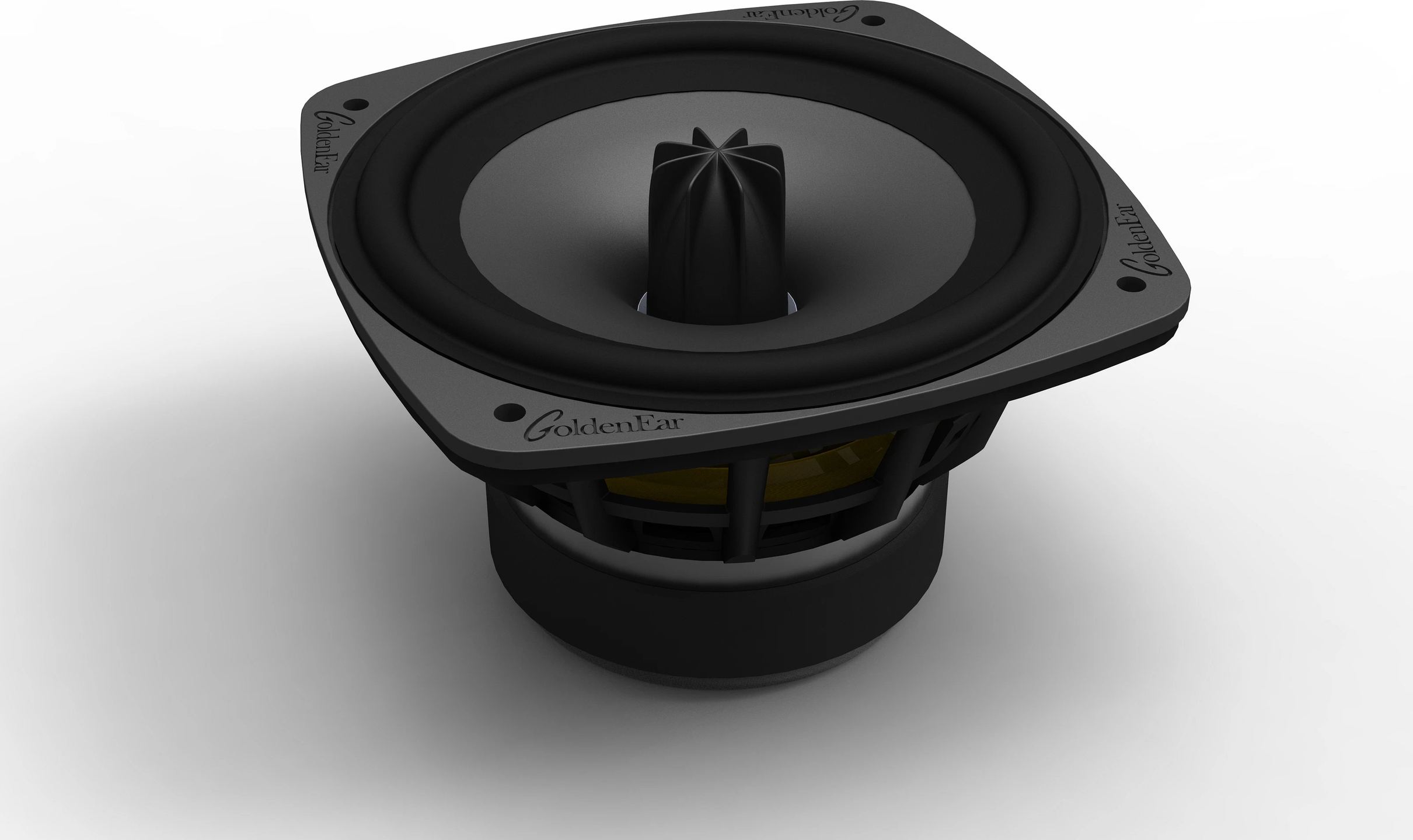
The two 11.4 cm mid/bass drivers use GoldenEar’s exclusive MVPP (Multi-Vaned Phase Plug) technology. These transducers, mounted in a D’Appolito configuration with the HVFR tweeter positioned between them, create a coherent and perfectly integrated sound source. The cone, whose topology has been optimized through computer modeling, minimizes breakup modes and the distortions inherent to conventional diaphragms.
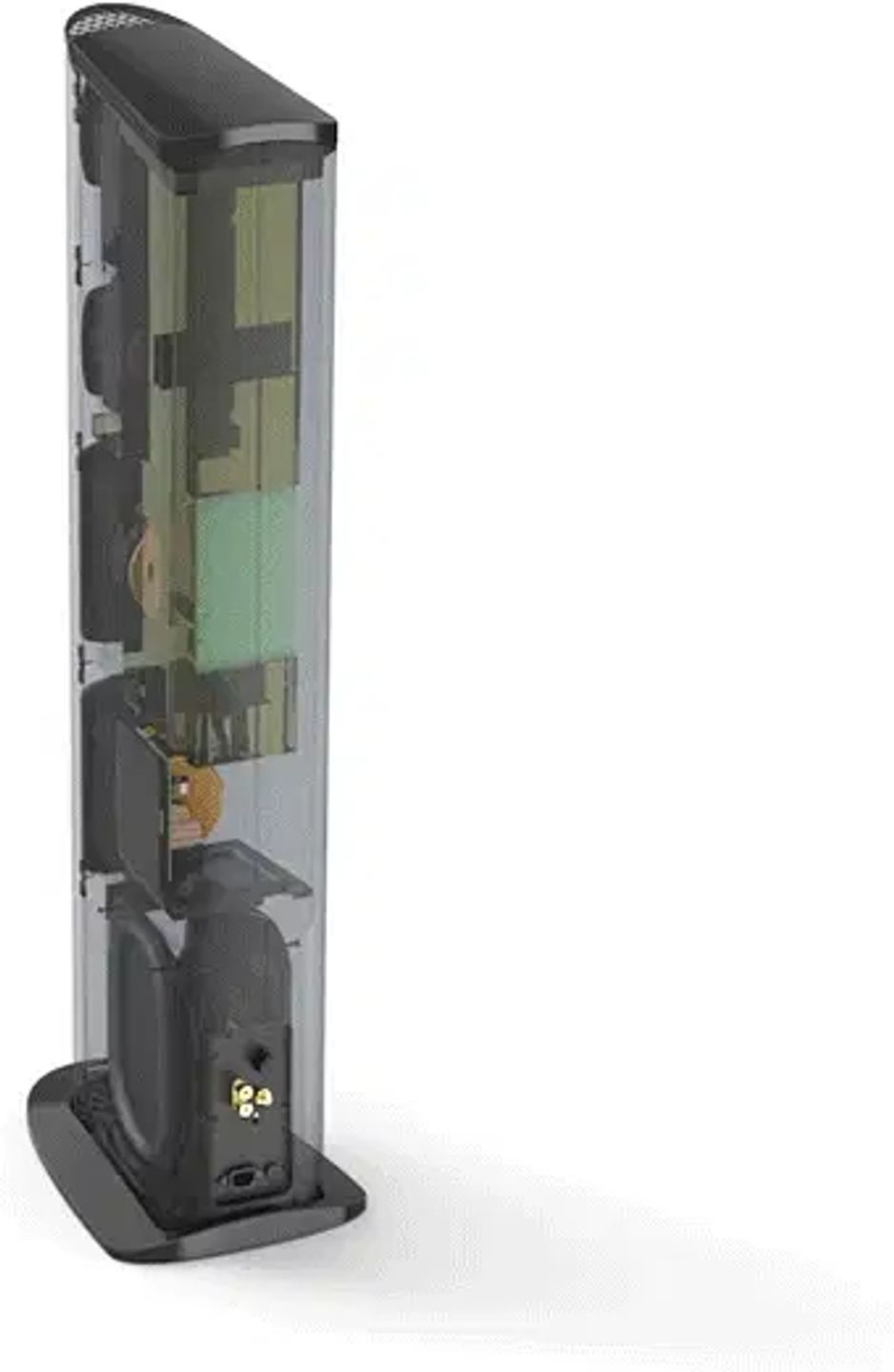
Each driver has its own discrete sealed chamber, acoustically isolating the transducers from vibrations generated by the active bass section. This physical separation preserves the clarity of the midrange, which is crucial for the natural reproduction of voices and acoustic instruments. The 25 mm Kapton voice coils, a material renowned for its lightness and thermal resistance, ensure fast transient response and exemplary power handling.
The passive crossover, completely redesigned to incorporate a balanced topology, uses high-quality film capacitors. This symmetrical design, where components are distributed on both sides of the drivers rather than just one, reduces stray capacitance in the magnetic gap and significantly improves sonic transparency.
Active Bass Section: Controlled Power and Abyssal Extension
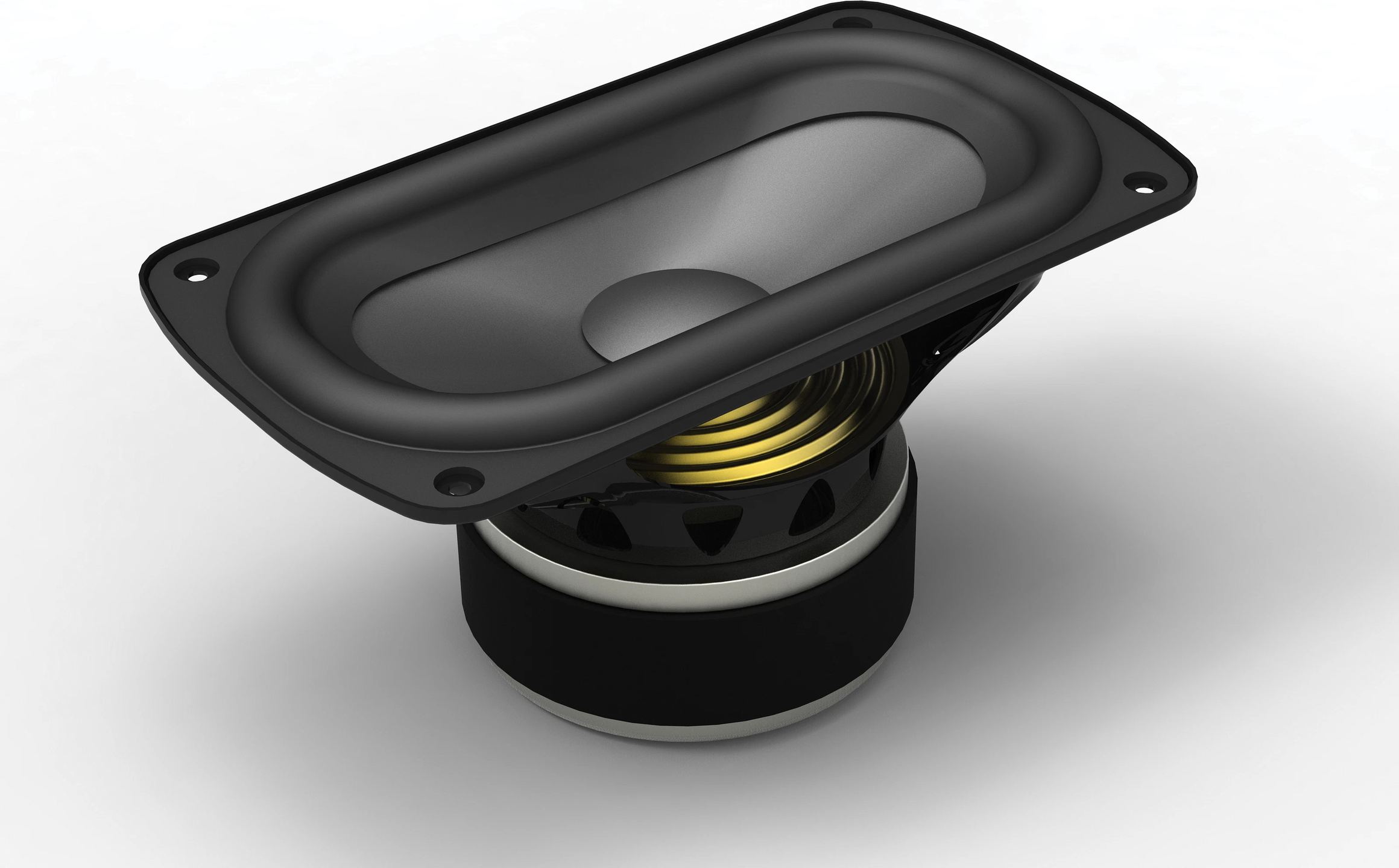
The distinctive feature of the Triton Two+ lies in its integrated bass section, powered by a 1200-watt ForceField digital amplifier. This considerable power drives two 127 × 229 mm active rectangular drivers mounted on the front. The square format of these transducers, far from being an aesthetic choice, offers substantial acoustic advantages: increased resistance to circular resonance modes and an optimized radiating surface for minimal footprint.
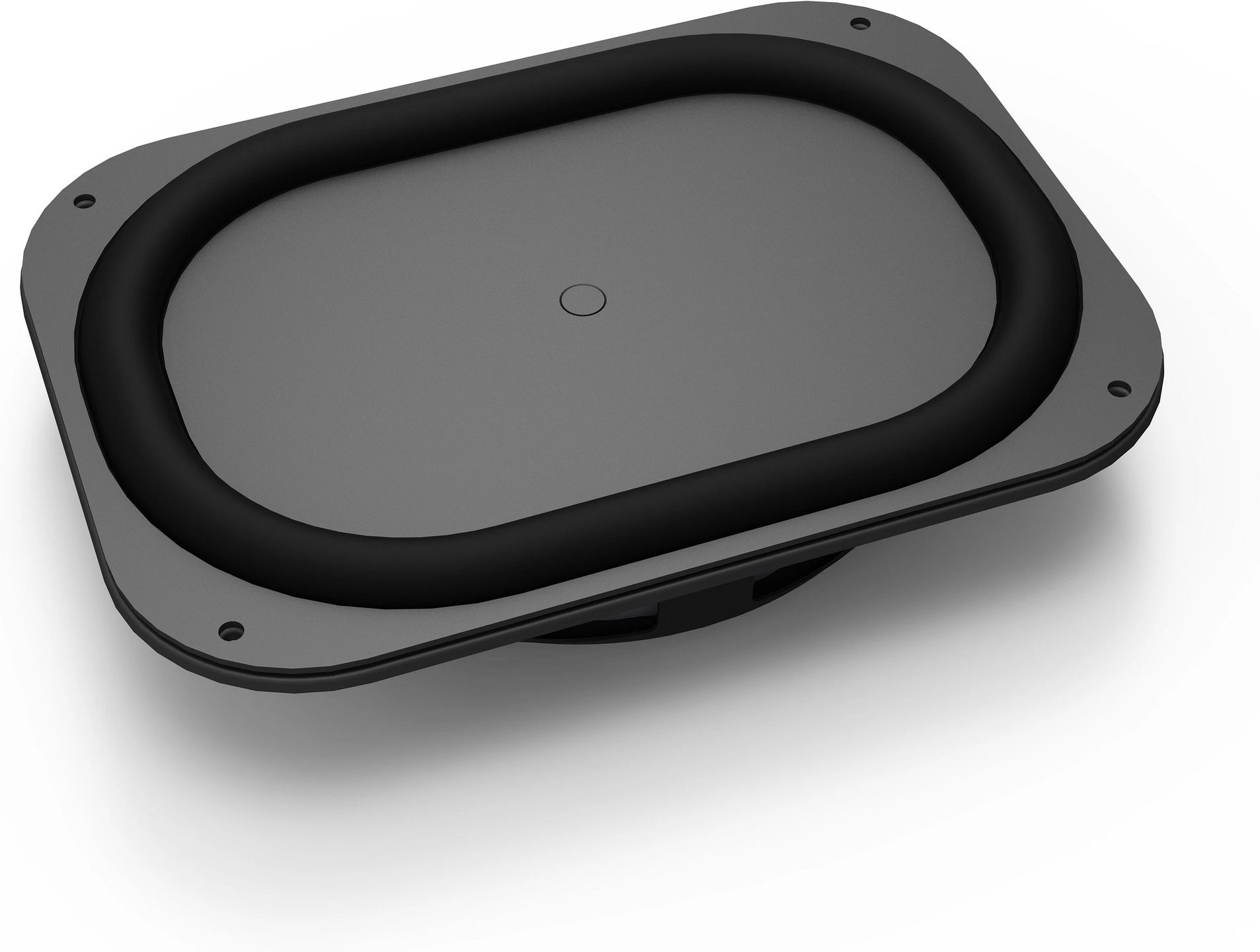
The two 178 × 254 mm side passive radiators, using planar quadratic technology, work in synergy with the active drivers. Mounted in opposition on the sides of the speaker near the floor, they leverage coupling with room surfaces to naturally reinforce the bass. This inertia-balanced configuration cancels out reaction forces and minimizes cabinet vibrations, thus preserving the purity of the sound message in the other frequency ranges.
The integrated DSP processor manages the amplifier’s operating parameters in real time. Beyond simple level control, it dynamically optimizes frequency response, manages progressive limiting to protect the transducers, and adjusts discreet multiband compression. This onboard intelligence delivers bass that is deep, articulate, and perfectly integrated with the rest of the spectrum, reaching down to 16 Hz with authority.
Construction and Integration: Engineering in the Service of Acoustics
The high-density MDF cabinet features strategically placed bracing to eliminate unwanted resonances. The non-parallel side panels break up internal standing waves, a technique borrowed from professional recording studios. This asymmetrical geometry, combined with the narrow front baffle (13.3 cm) that gradually widens toward the rear (19 cm), minimizes edge diffraction and helps the speakers acoustically disappear within the soundstage.
The rear panel connectivity highlights the versatility of the Triton Two+. In addition to gold-plated binding posts compatible with banana plugs, spades, and large-gauge bare wire, the speaker offers an RCA LFE input. This direct connection allows the Triton Two+ to be perfectly integrated into a multichannel home theater setup, with the surround processor directly controlling the active bass section in .1 mode. The subwoofer level knob allows for fine adjustment according to room acoustics and listening preferences.
The nominal 4-ohm impedance, compatible with 8-ohm amplifier outputs, combined with the high sensitivity of 91 dB, makes the Triton Two+ particularly accommodating in terms of amplification choice. A 20-watt amplifier is sufficient for comfortable listening levels, while the ability to handle up to 500 watts allows you to fully exploit the speaker’s dynamic potential with more ambitious electronics.