



Guido
Top product for a very good price!
Comment from 5 June 2026 — Experience from 25 May 2026
Automatically translated — Show original (Dutch)
Top product voor zeer goed prijs!
This product is no longer available for sale!
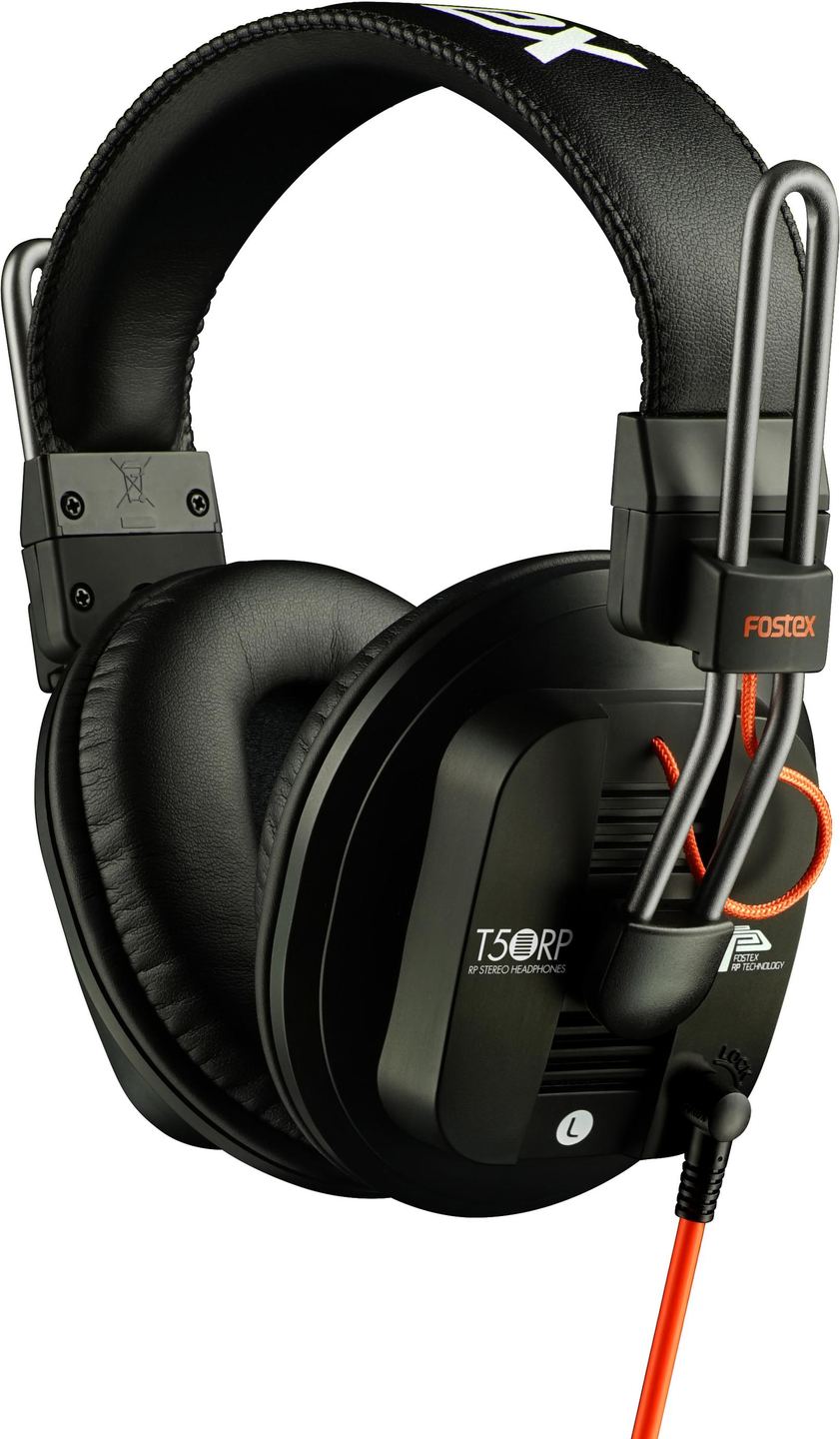
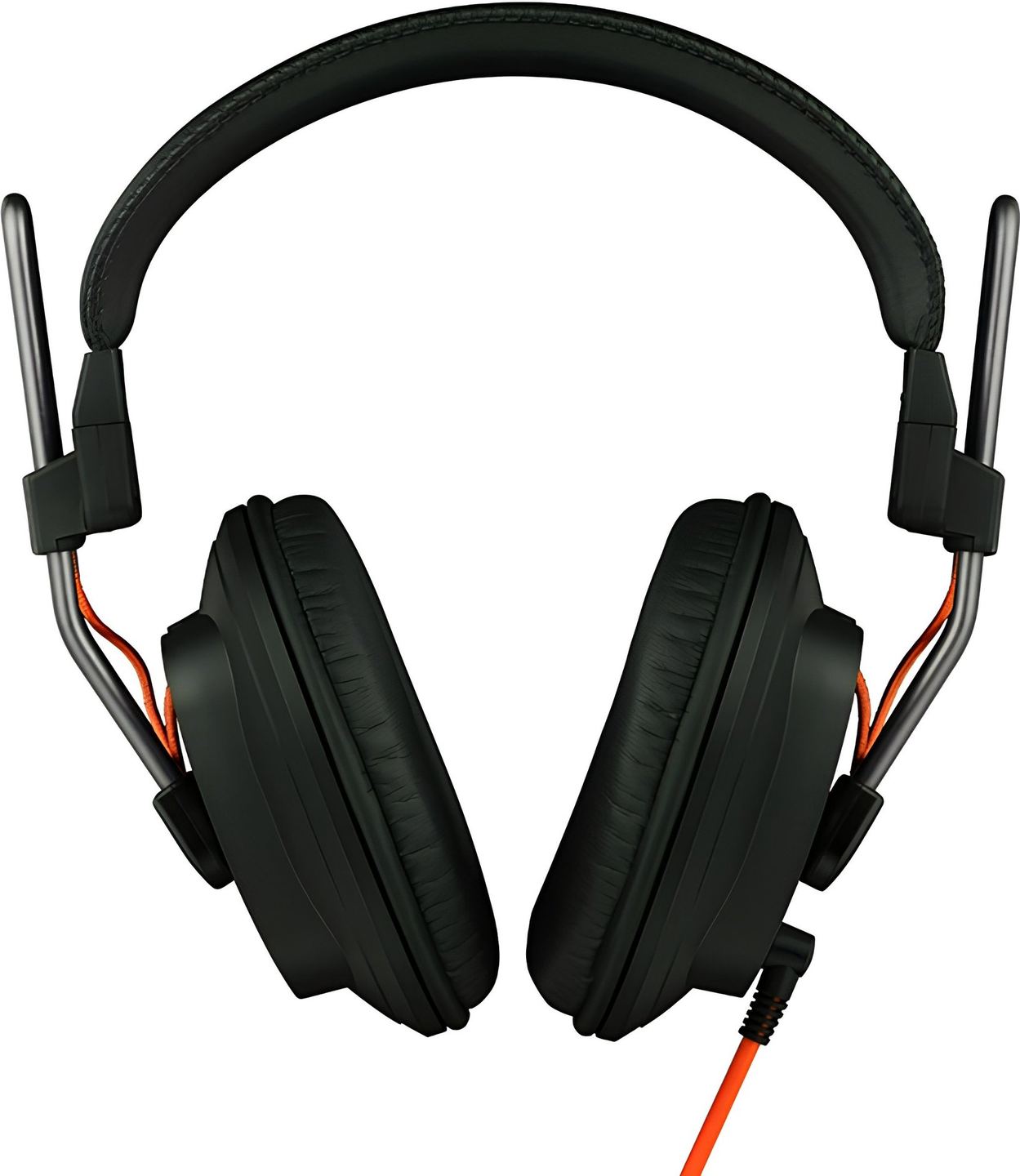
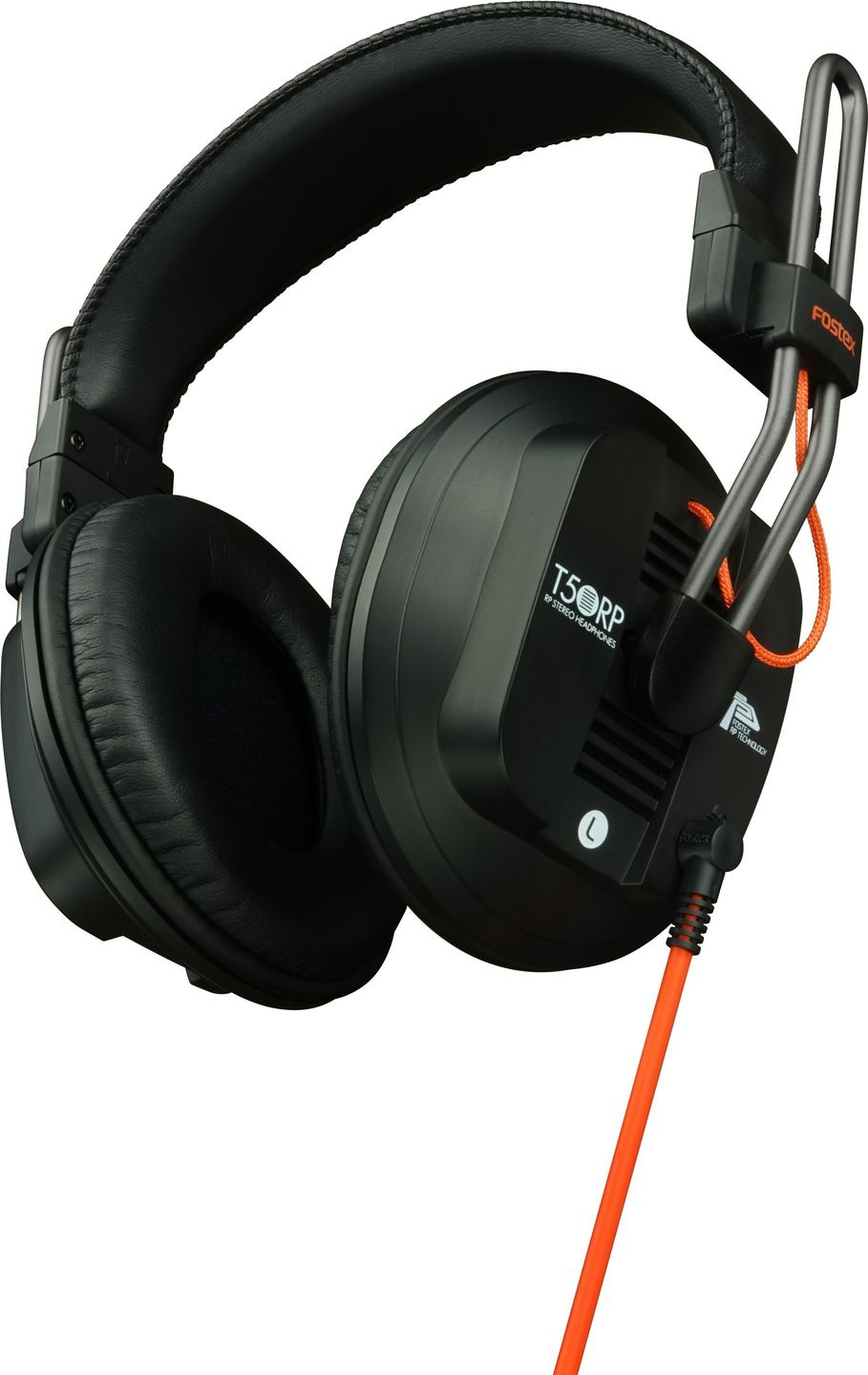
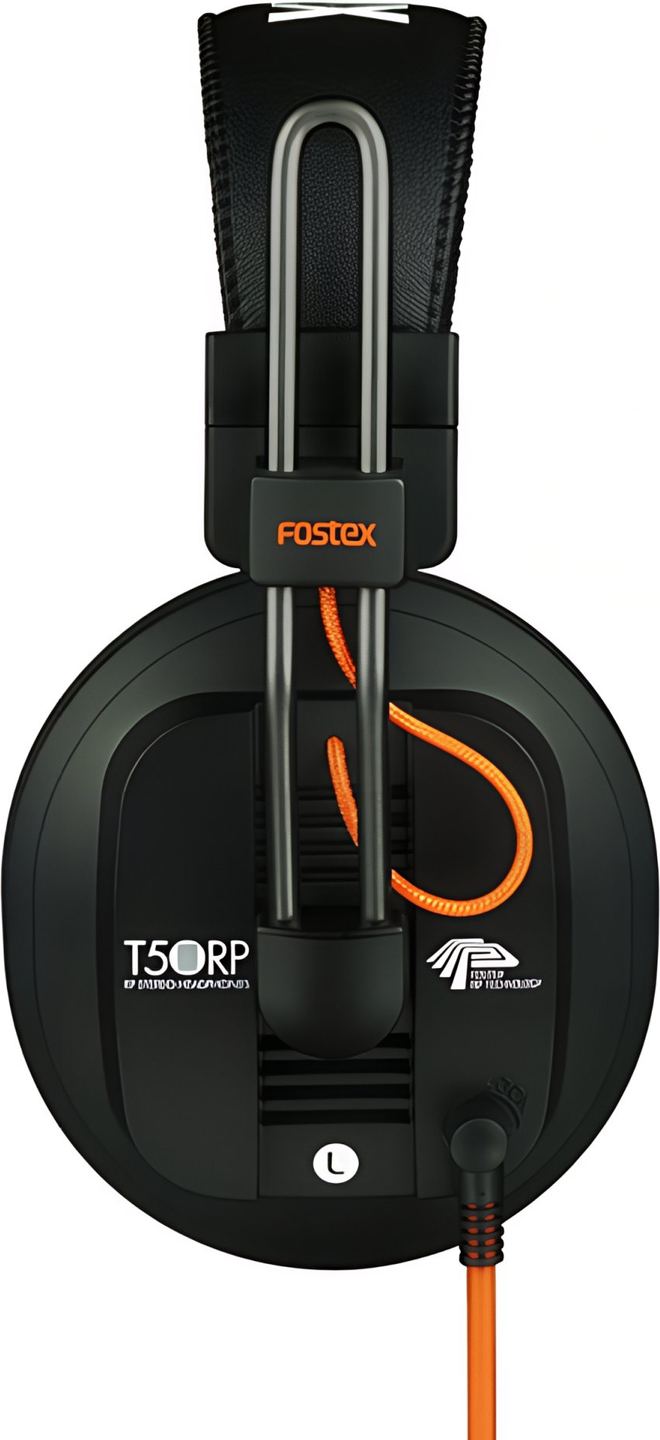
Third generation of a line born in 2001, the T-50RP MK3 is built on the Regular Phase planar magnetic technology that Fostex has been developing since 1974. Half a century of expertise condensed into a 50-ohm semi-open headphone, designed for studio monitoring but adopted far beyond that setting. Its planar driver, robust construction, and responsiveness to modifications have made it one of the most discussed headphones in the audio community.
At the heart of the T-50RP MK3 is its RP (Regular Phase) driver, a technology patented by Fostex as early as 1975. The diaphragm, a polyimide film on which a copper circuit is etched in a zigzag pattern, vibrates between two symmetrically arranged neodymium magnets. This symmetrical flux structure distributes the magnetic field evenly across the entire surface of the diaphragm, which promotes uniform movement of the film.
In practice, this results in fast transient response and particularly clear mids and vocals. The frequency response extends from 15 Hz to 35 kHz, well beyond the audible range. With a power handling of 3000 mW, the headphone handles the high levels that prolonged monitoring sessions may require without flinching.
The choice of a semi-open format is no accident. The partially vented earcups let the driver breathe while limiting sound leakage compared with an open-back headphone. The result: a more spacious soundstage than a closed-back headphone, with perceptible separation between layers, but without the full diffusion of an open model like the T-20RP from the same range.
This compromise has its limits. In noisy environments, isolation remains modest. And in a studio where a microphone picks up everything, the sound that escapes can be an issue during vocal takes. For mixing, mastering, or fixed-position listening, semi-open remains a very consistent choice.
The transition from the MK2 to the MK3, which took place in 2015, changed several elements. Fostex reworked the paper filter located behind the driver, which directly affects the tonal balance. The MK3 sounds more balanced than its predecessor: the mids are less veiled, the highs more present without becoming aggressive, and the response in the low end gains linearity between 100 and 400 Hz. The headband was redesigned with new padding, and the memory foam earpads (low-resilience urethane) replace the previous models. The cable is now detachable, an appreciable improvement for the headphone’s durability.
Sensitivity has dropped slightly compared with the MK2: at 92 dB/mW, the T-50RP MK3 requires a headphone amplifier worthy of the name to perform at its best. A smartphone or portable player generally will not have enough power to drive it properly.
The design of the T-50RP MK3 does not try to seduce. The square black plastic earcups, metal sliders, and overall look evoke a professional tool more than a display piece. This sobriety has an advantage: solidity. Headphones in the RP series are known for their longevity in studios, where they undergo daily handling for years.
The weight of 315 g (without cable) remains reasonable for a planar headphone. The faux-leather earpads filled with memory foam conform to the shape of the ears, and the clamping force is moderate. For sessions lasting several hours, comfort holds up well, even if some users will find the earpads a little too shallow: the ears sometimes touch the inner fabric.
The T-50RP MK3 comes with two detachable cables that connect to the left earcup. The first, terminated with a 6.35 mm jack, measures 3 meters: this is the studio cable, long enough to work freely behind a console. The second, with a 3.5 mm mini-jack and 1.2 m long, is suitable for use with a compact audio interface or a desktop headphone amplifier.
The headphone-side connection uses a mini-jack with a proprietary locking mechanism. This point deserves attention: the connector has sometimes been criticized for intermittent contact issues on some units. The detachable cable at least makes it easy to replace.
The T-50RP occupies a unique place in the world of headphones: it is probably the most modified model in the world. Entire companies have been built around transforming this headphone (ZMF Headphones and Dan Clark Audio, among others, got started with modified T-50RPs). The simple enclosure design, ease of disassembly, and the planar driver’s responsiveness to damping changes make it a playground for anyone who wants to tailor the sound to their preferences.
Changing the earpads noticeably alters the sound signature. Adding damping materials inside the earcups (acoustic foam, wool, modeling clay) helps control internal reflections and adjust the bass. Even without touching the inside of the headphone, a simple pad replacement can transform the sound. For those who prefer the headphone as is, the factory MK3 offers a signature close to neutrality with slightly emphasized highs.
With a sensitivity of 92 dB/mW and an impedance of 50 ohms, this headphone needs a source capable of delivering enough current. A smartphone or laptop will produce sound, but at limited volume and without unlocking the driver’s full potential. A dedicated headphone amplifier or an audio interface with a powerful headphone output is recommended.
All three models share the same RP driver and a very similar enclosure. The T-40RP is closed-back (better isolation, more pronounced bass), the T-20RP is open-back (wider soundstage, flatter response), and the semi-open T-50RP sits between the two. Fostex positions the T-50RP as the most neutral model in the range.
Yes. The earpads can be removed and reinstalled easily. Many third-party brands offer compatible earpads in velour, leather, alcantara, or hybrid materials, allowing you to adjust comfort and influence the sound response.
The semi-open design lets sound leak out. If a sensitive microphone is used nearby, the leakage may be picked up. For vocal takes, the T-40RP (closed-back) is a more suitable choice.
The semi-open format’s soundstage and the precision of the planar driver allow for good spatial sound localization. The headphone does not have a built-in microphone: an external mic will be necessary for in-game communication.
Guido
Top product for a very good price!
Comment from 5 June 2026 — Experience from 25 May 2026


