Each year, dozens of European journalists gather to select the best electronic products of the year. Awarded by a diverse and impartial jury, the EISA (Expert Imaging and Sound Association) awards recognize exceptional products for their performance, design, or ergonomics.
Overview
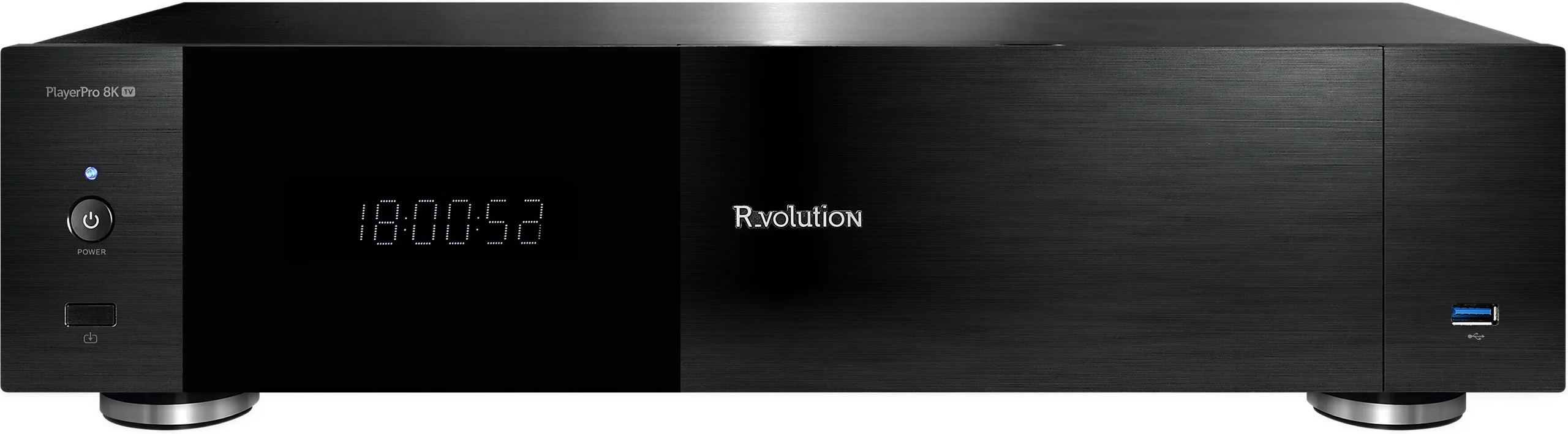
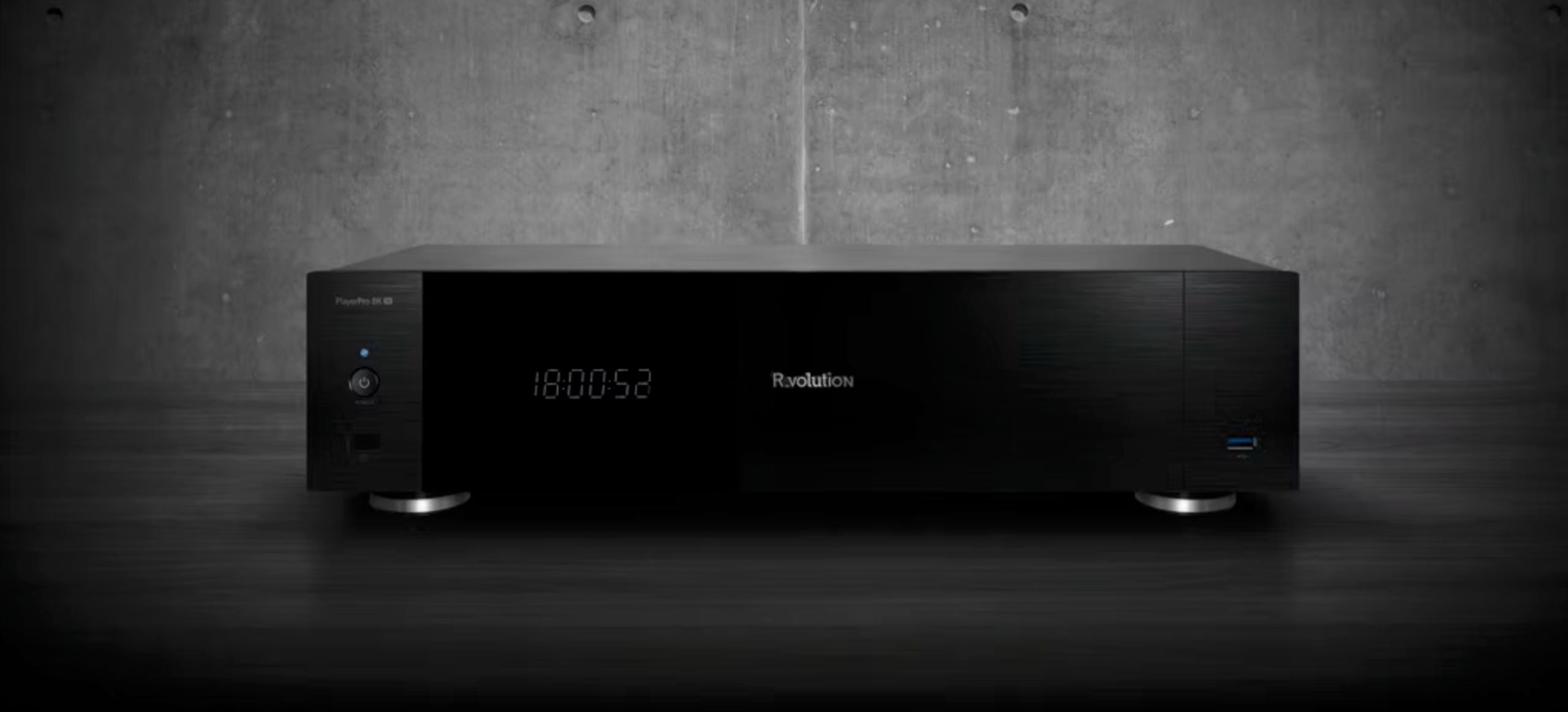
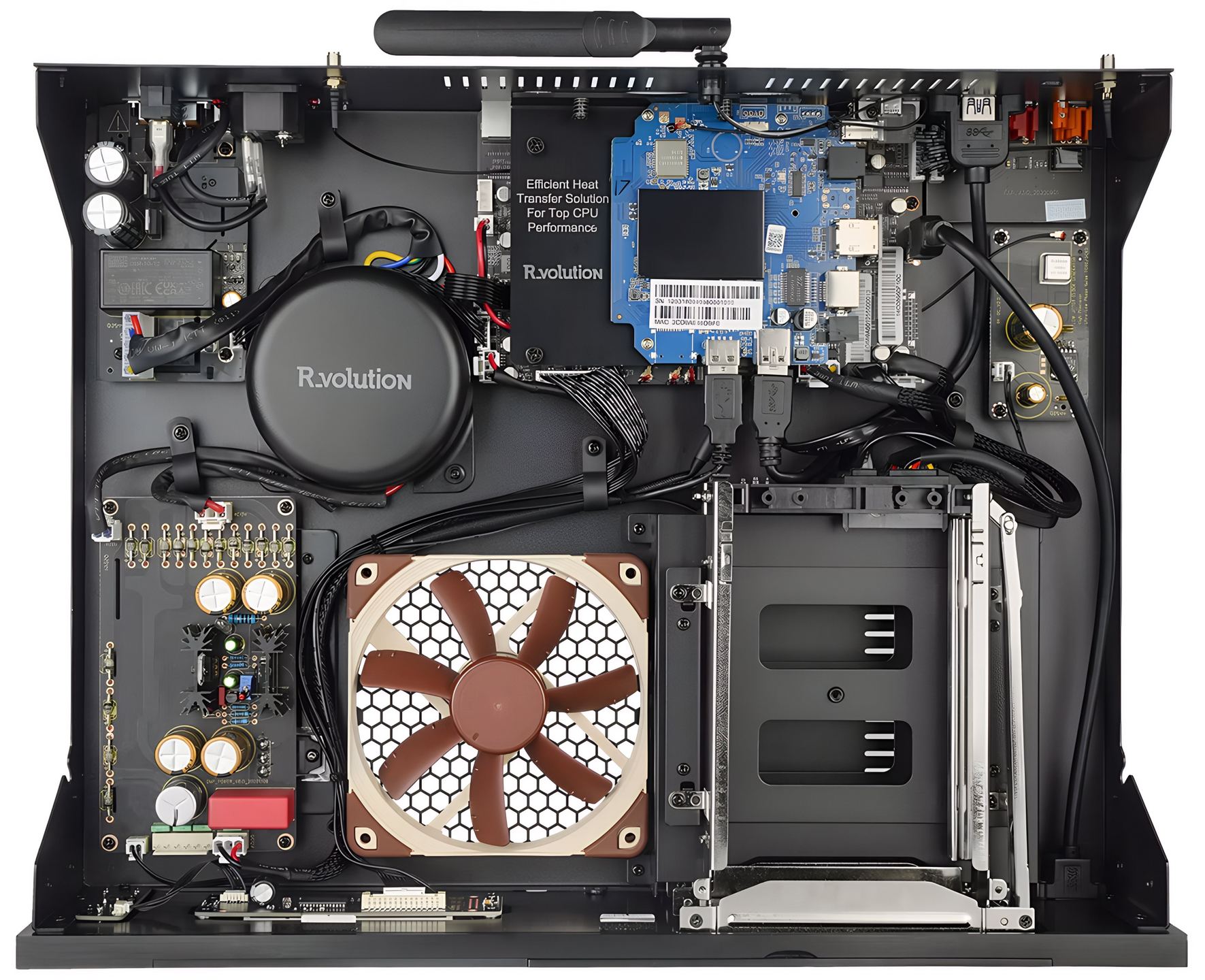
Two processors, a linear power supply with toroidal transformer, a TCXO clock, and certified Android TV in a single 10 kg aluminum chassis: the PlayerPro 8K TV builds on the foundations of the PlayerPro 8K and adds native access to streaming platforms in 4K HDR Dolby Vision. This French media player does not replace a source; it centralizes them all, local files and online services, behind a single HDMI 2.1a 8K output.
Two processors, two systems, one device
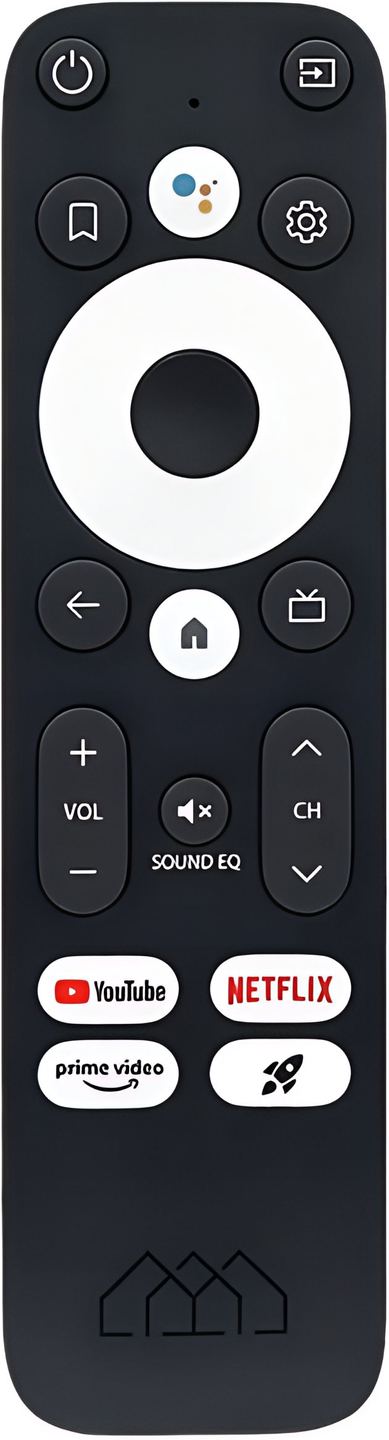
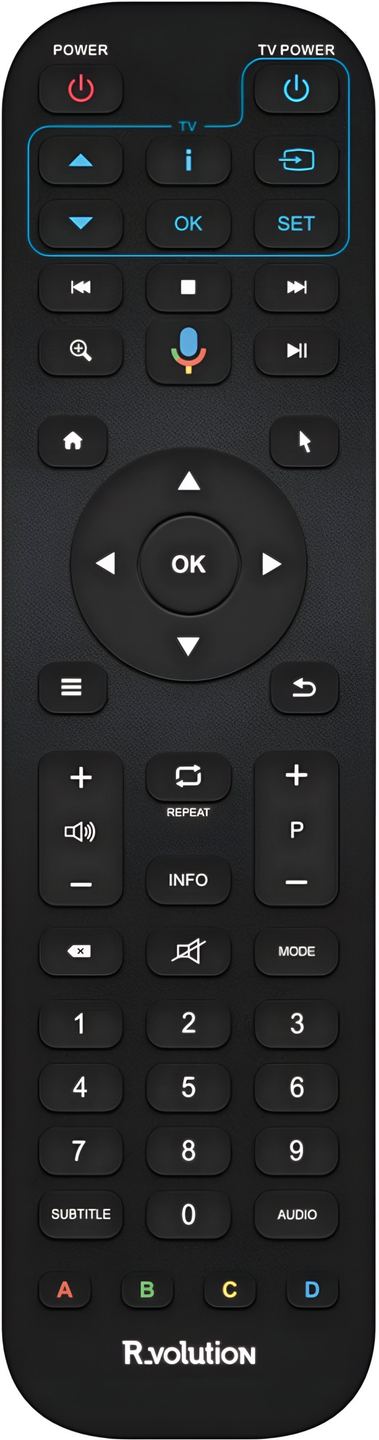
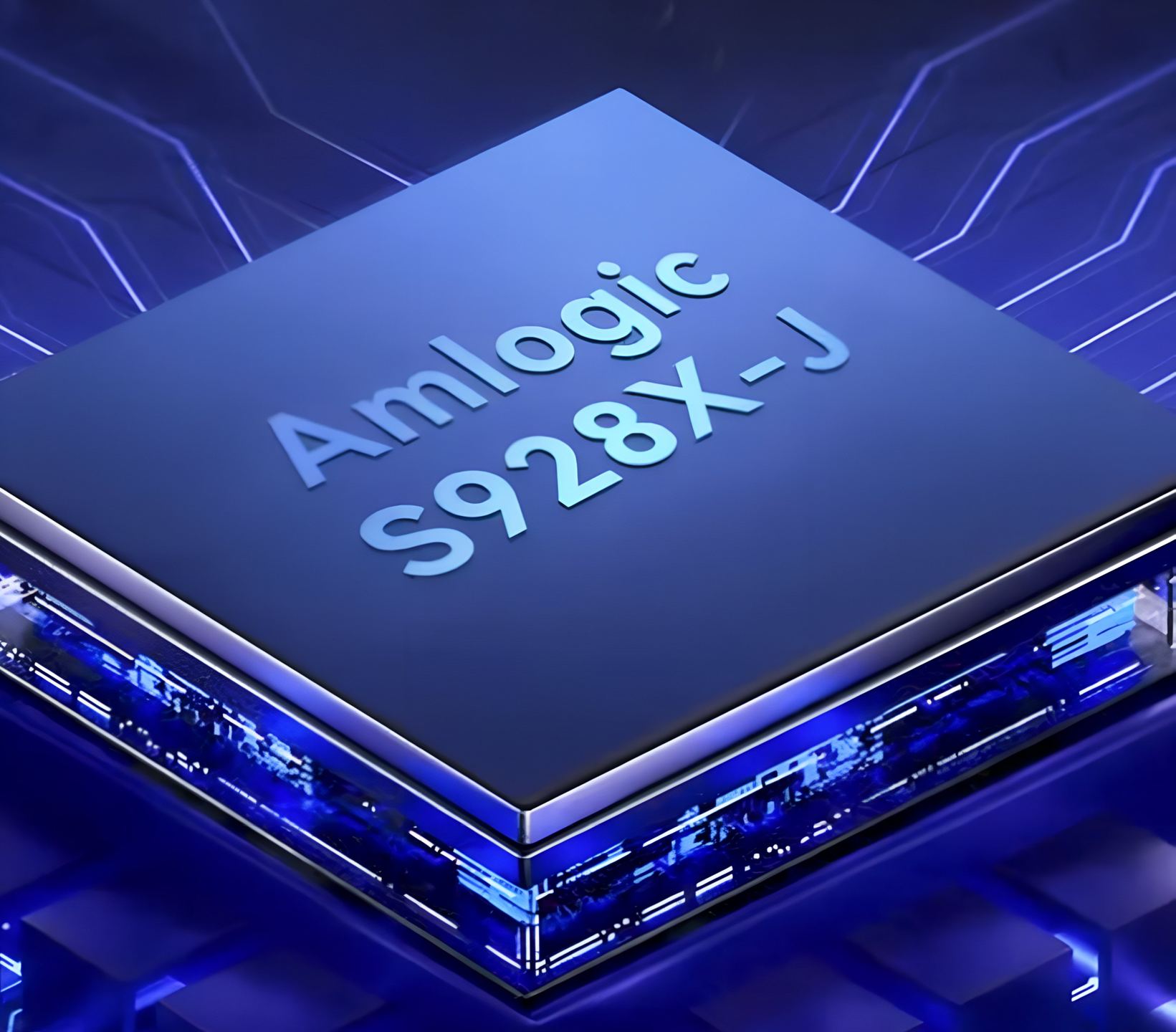
The PlayerPro 8K TV features two distinct Amlogic SoCs. The S928X, the main processor, combines four ARM Cortex-A55 cores at 2.0 GHz and one ARM Cortex-A76 core at 1.9 GHz, plus one core dedicated to system tasks. It handles video file playback, image processing, and the R_video interface. The second processor, an S905X4-K (four ARM A55 cores at 2.0 GHz), manages the Android TV side. This separation is not insignificant: each environment operates autonomously, which explains the presence of two remote controls in the box, one complete and backlit for multimedia, the other compact with Netflix, Prime Video, and YouTube shortcuts.
Memory has doubled compared with the PlayerPro 8K: 8 GB of LPDDR4X RAM and 64 GB of eMMC storage. The Mali-G57 GPU handles graphics rendering. R_volution announces an Antutu score above 300,000 points.
A power supply section borrowed from the Hi-Fi world
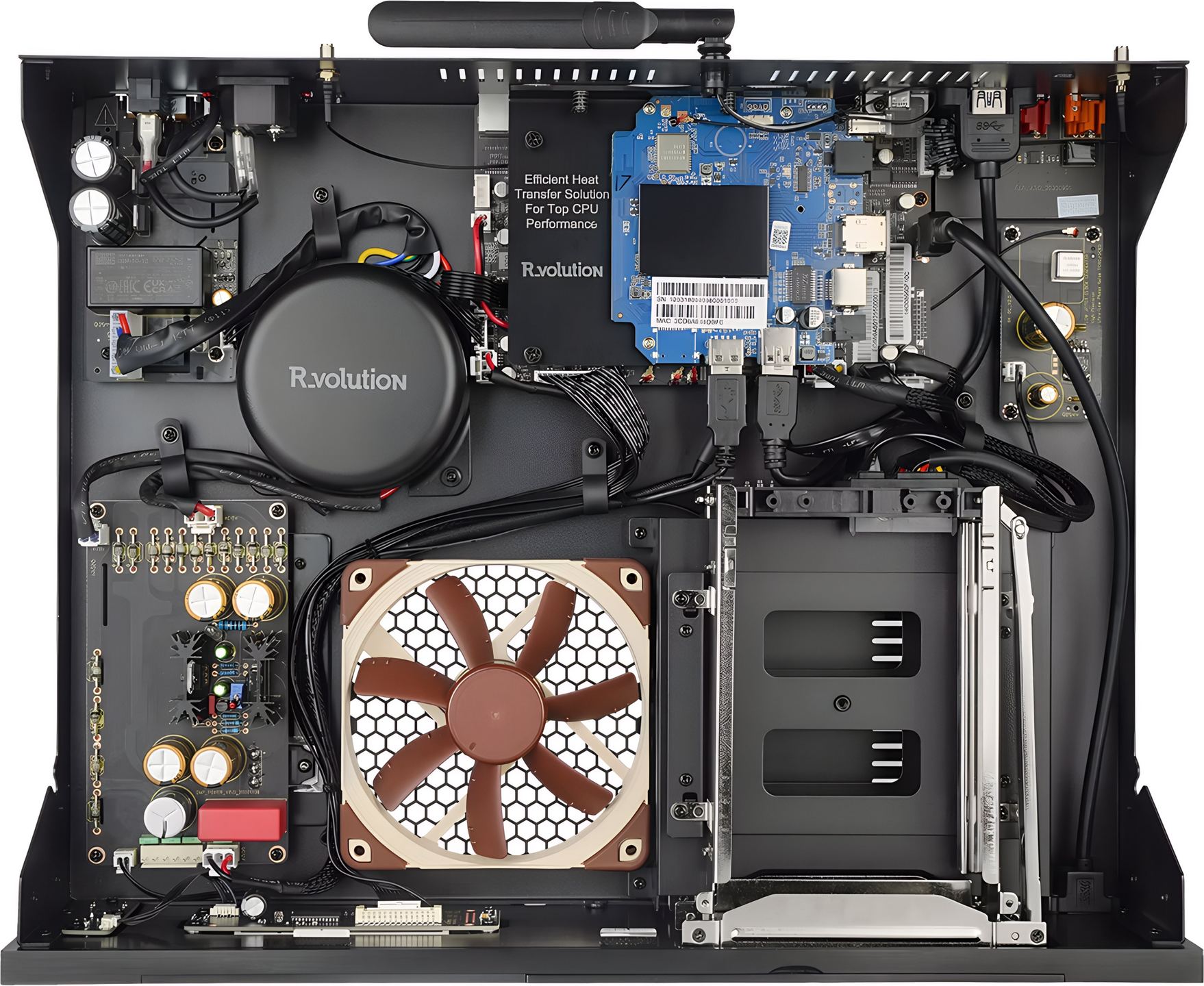
What sets the PlayerPro 8K TV apart from most media players is its linear power supply. An 81 W toroidal transformer made of oxygen-free copper powers a Toshiba linear voltage regulator, complemented by a Lintec LDO (Low Dropout) regulator. Nichicon and Nippon Chemical capacitors, usually reserved for audio circuits, equip the power supply board.
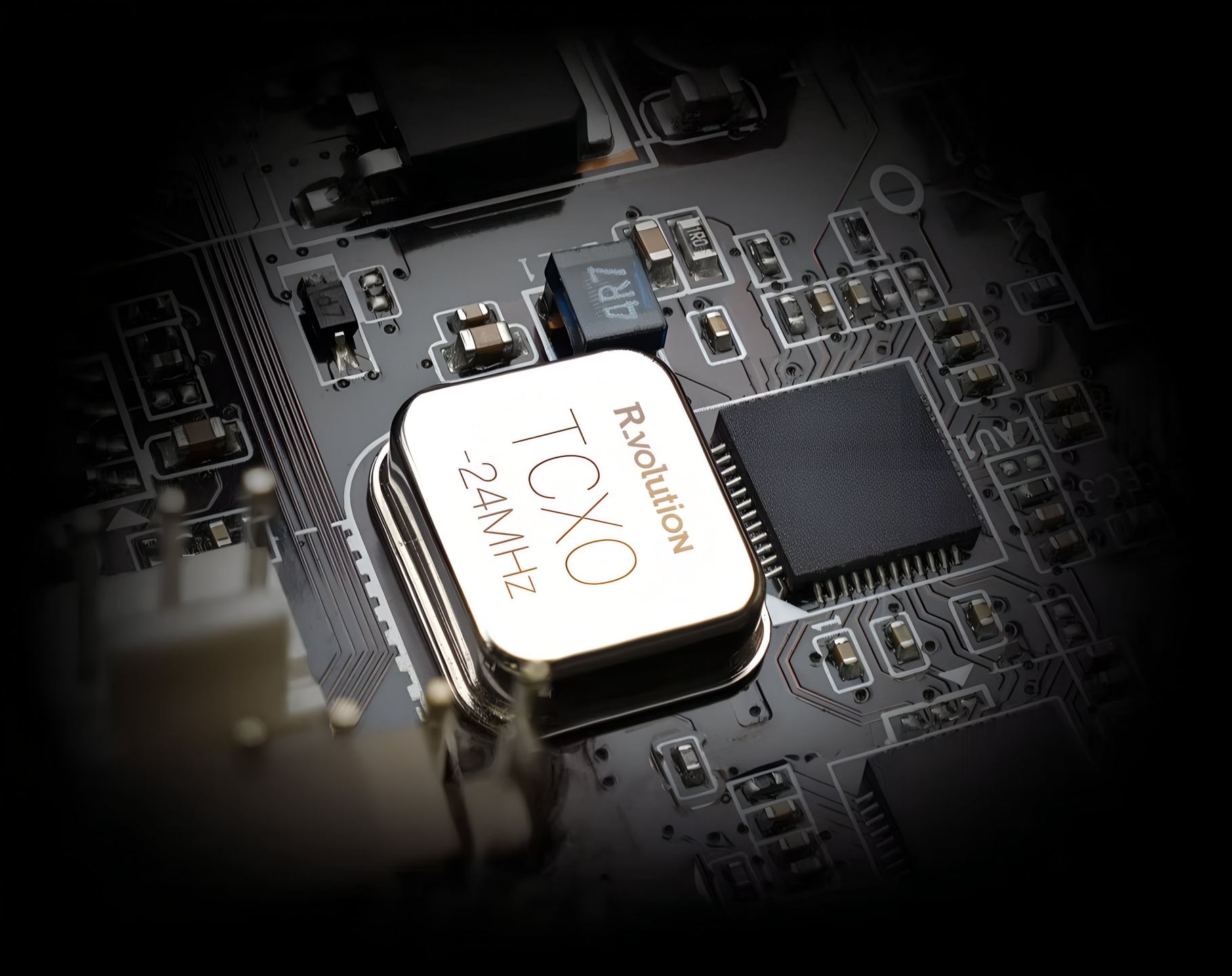
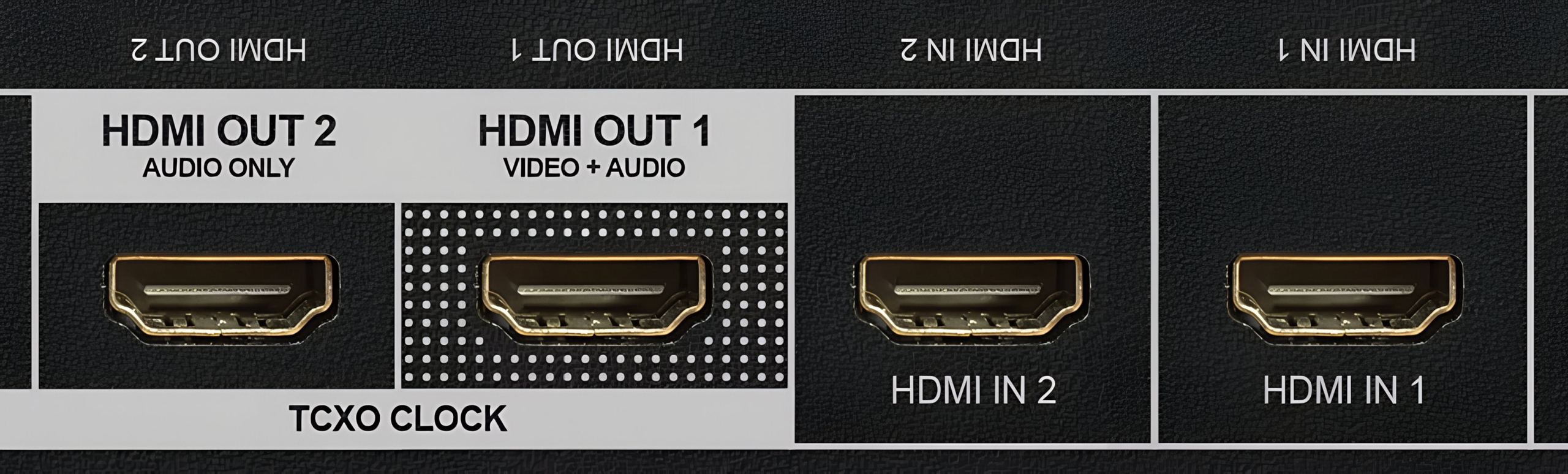
The goal is to reduce electrical noise upstream of video and audio processing. In practice, R_volution claims deeper blacks, more faithful colorimetry, and a cleaner audio signal than with a conventional switching power supply. The TCXO clock (temperature-compensated crystal oscillator) running at 24 MHz, an exact multiple of 48 kHz in audio and 24 Hz in video, reduces jitter and maintains stable synchronization between picture and sound regardless of ambient temperature. Both HDMI outputs benefit from this clock.
Video processing: from SDR to 8K HDR
The Dolby VS10 engine, integrated into the main SoC, processes the image in 12-bit. It handles conversion between SDR, HDR, and Dolby Vision, which makes it possible to enjoy HDR content even on a TV without Dolby Vision: the player performs tone mapping and adapts the signal to the screen’s capabilities. This 12-bit processing limits posterization (banding) artifacts visible in gradients.
Two artificial intelligence enhancement functions complete the video pipeline. AI-PQ (Artificial Intelligence Picture Quality) dynamically adjusts local contrast and colorimetry according to the content of each image. AI-SR (Artificial Intelligence Super Resolution) improves sharpness, detail, and reduces video noise when upscaling Full HD or 4K content to 8K. These AI processes are active only for local file playback; streaming applications do not benefit from them, but they do benefit from the linear power supply and the TCXO clock.
The player supports AV1 codecs (up to 8K 60p), HEVC/H.265, VP9, and AVC, and plays MKV, MP4, Blu-ray ISO, and BDMV files. It reproduces the full menus of Blu-ray and UHD Blu-ray discs as if you were playing the physical disc. Dolby Vision compatibility covers profiles P5, P7 (MEL and FEL), and P8; HDR10+ with dynamic scene-by-scene tone mapping is also supported.
The FFRS (Flicker-Free Resolution/Framerate Switching) function switches the video mode before playback starts, eliminating the usual screen flicker when launching a movie. Real Cinema technology preserves the original frame rate of films at 23.976 frames per second, correcting the micro-stutter caused by players that round to 24 Hz.
Multichannel audio and dedicated outputs
Audio support covers Dolby Atmos, DTS:X, and Auro-3D formats in HDMI passthrough, as well as internal decoding of these formats into multichannel PCM (2.0, 5.1, or 7.1) thanks to the Dolby MS12 license. The player can therefore feed a stereo amplifier or a home theater system without a built-in decoder. High-resolution FLAC, DSD, AIFF, ALAC formats, and SACD ISOs are played natively, with a configurable sampling rate up to 192 kHz.
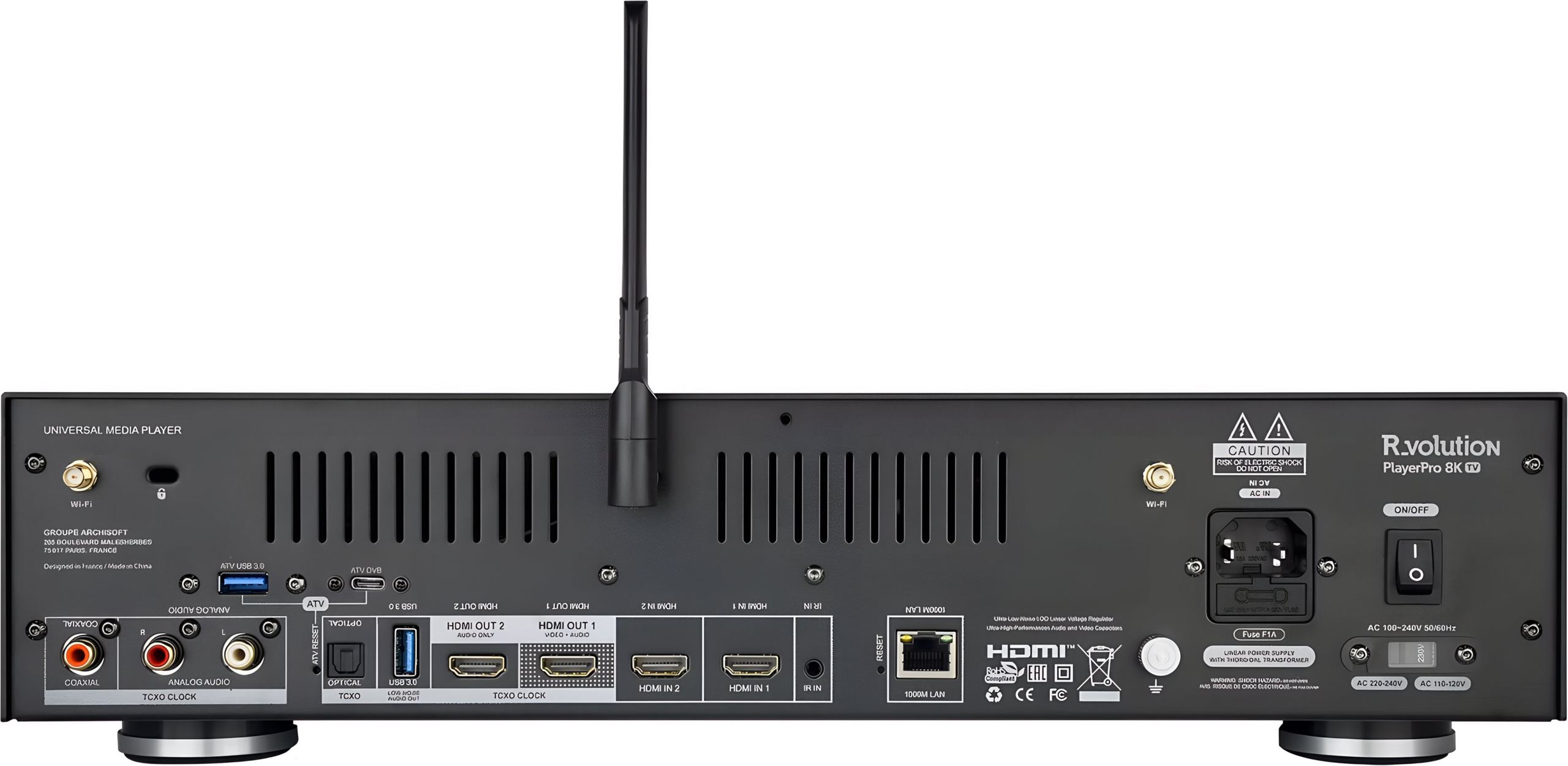
Audio connectivity includes an HDMI 1.4a output dedicated to sound (audio/video separation possible), a TOSLINK optical output, a 75 Ohm coaxial output, and a pair of analog RCA outputs. A low-noise USB audio output makes it possible to connect an external digital-to-analog converter (DAC) for the most demanding setups. The PlayerPro 8K TV does not include a built-in high-end DAC: this is a deliberate choice by the brand, which positions it as a digital transport designed to deliver the purest possible signal to the amplifier.
Integrated storage and network management
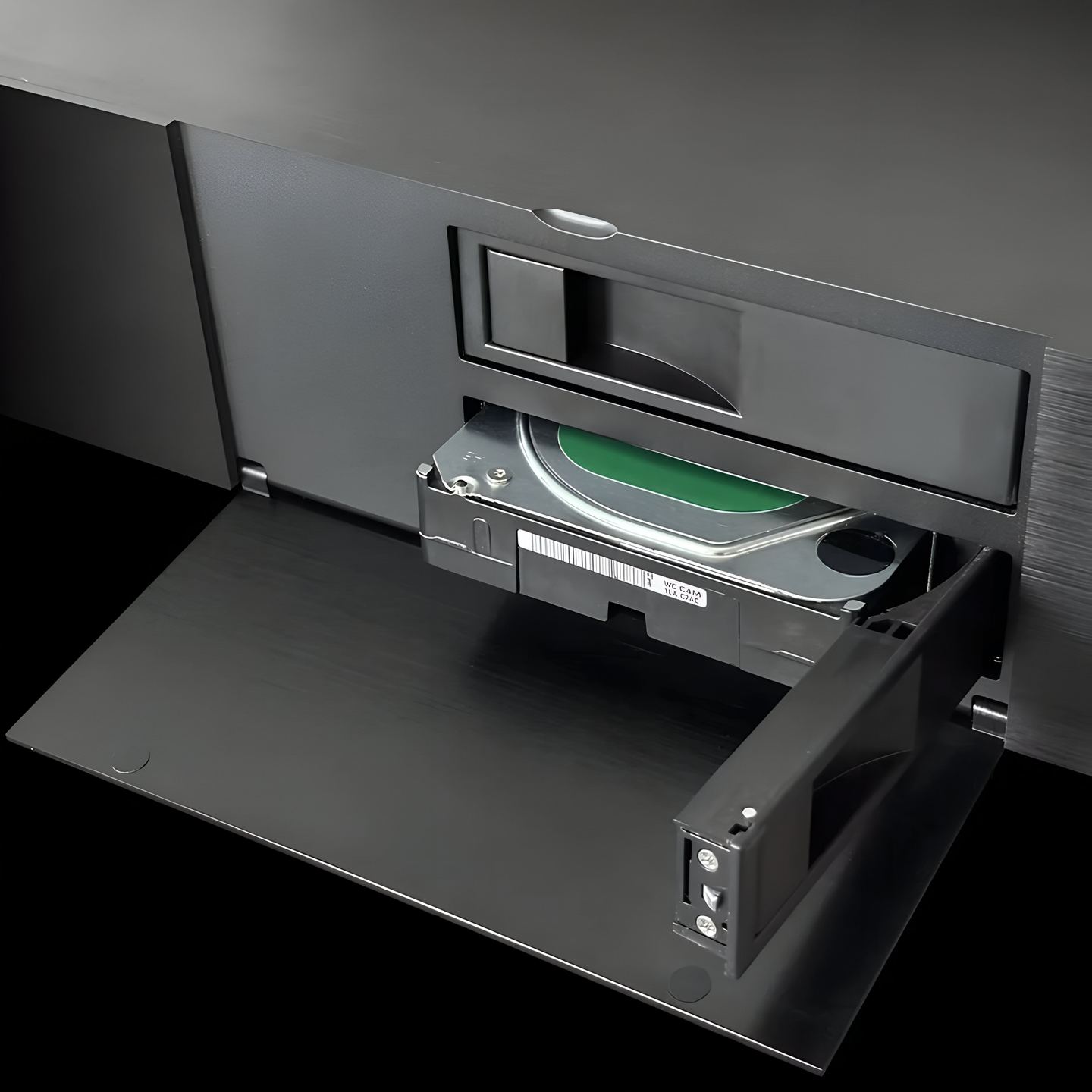
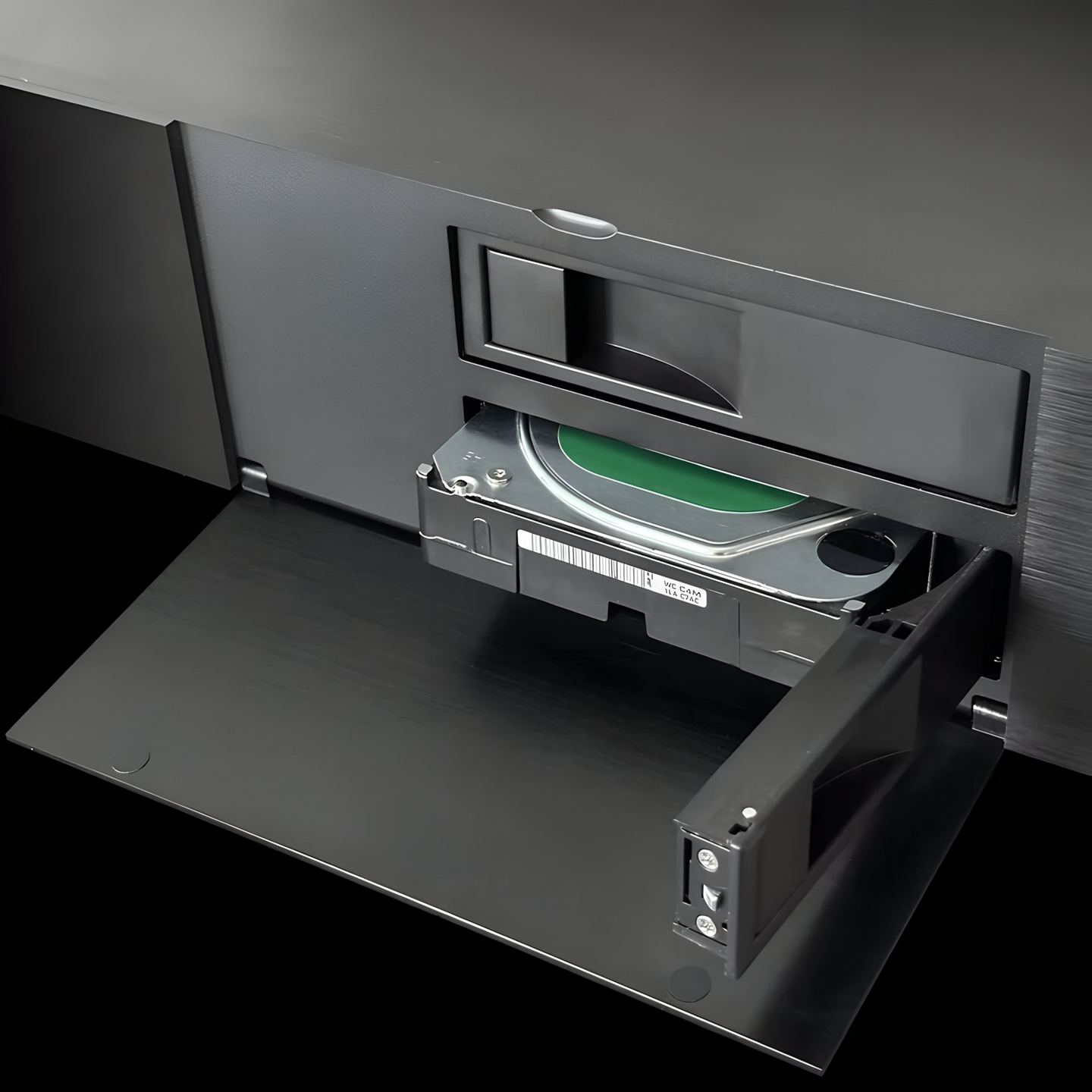
The dual 3.5-inch SATA rack accepts two hard drives, each up to 32 TB, for a total of 64 TB (the equivalent of about 1,600 Blu-rays or 800 UHD Blu-rays). Insertion is done from the front: open the flap, slide the drive in three-quarters of the way, and closing the door completes the locking. FAT32, NTFS, exFAT, EXT2/3/4, and BTRFS partition formats are supported for read-write; HFS+ (Mac) is read-only. Formatting is possible directly from the player’s interface for drives up to 16 TB.
The player also works as an SMB client to access files stored on a NAS or a computer on the local network. In the other direction, the R_Share function turns the PlayerPro 8K TV into a Samba server: other R_volution players (or compatible Zappiti units) can read content stored on its internal or USB drives, in up to five rooms simultaneously (two streams in 4K UHD, only one in 8K). The three rear USB 3.0 ports and the front USB 2.0 port allow connection of external drives, USB flash drives, or an optional DVB-T TV tuner.
R_video: a video library organized by film, not by file
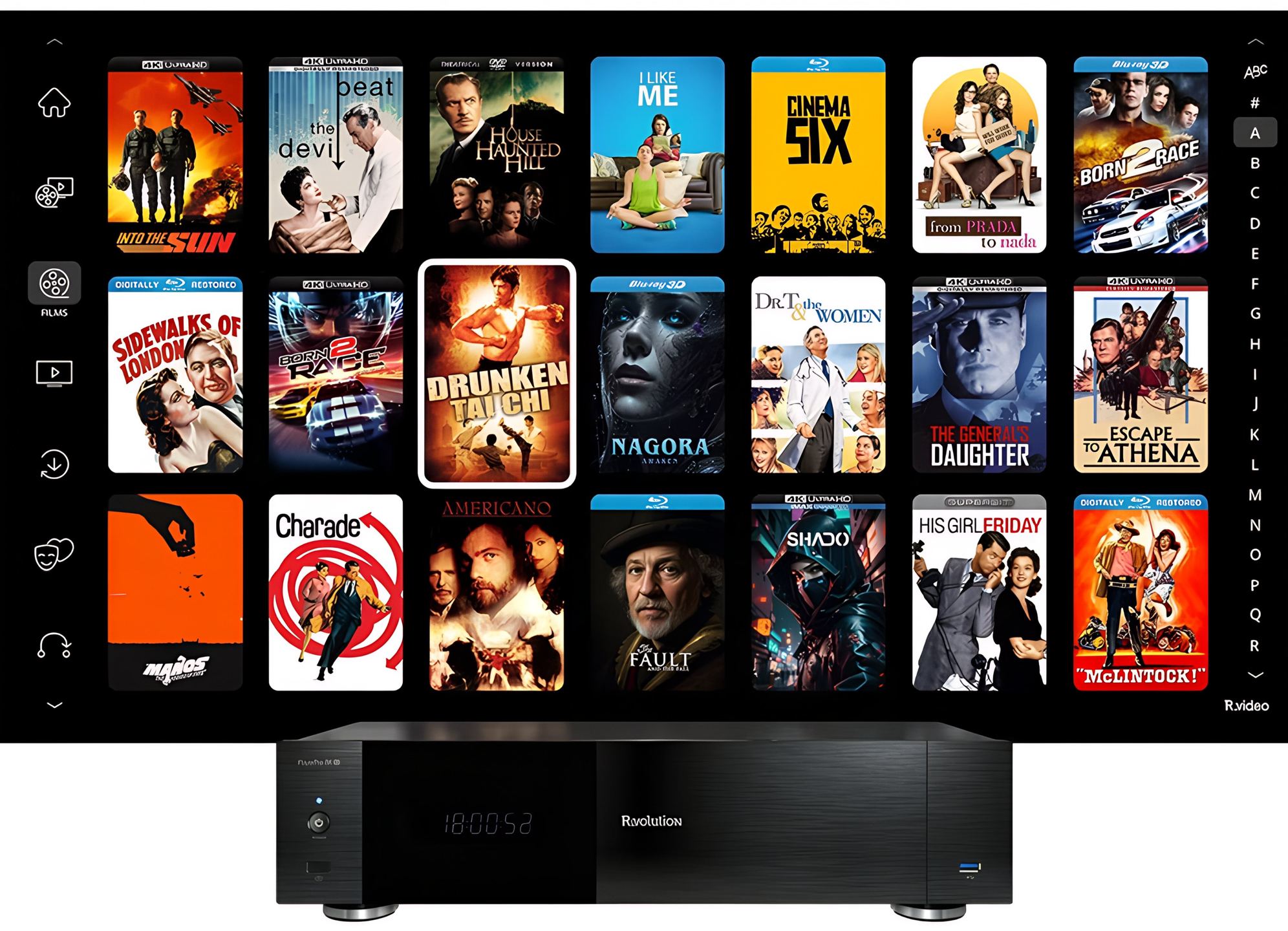
The R_video media center, included without subscription, scans video files stored locally or on the network and automatically retrieves covers, backgrounds, synopses, cast lists, trailers, and original soundtracks. Navigation is by cover art with filters by genre, duration, release date, rating, or director. Sagas are grouped and sorted chronologically. An internal search engine finds a film by title, actor, or director in just a few keystrokes.
Series playback automatically chains episodes. The “Next” module displays films or episodes in progress or to resume. You can create custom categories, apply special banners to covers (Director’s Cut, IMAX, THX…), and enable parental control with a PIN code. File identification relies on the TMDB database and on R_video DB, a proprietary database powered by the user community. The R_cloud service backs up the collection (metadata and covers, not the files) and restores it in case of device change.
Android TV and streaming in 4K Dolby Vision
The integration of certified Android TV provides access to the Google Play Store and the main streaming platforms: Netflix (up to 4K Dolby Vision and Dolby Atmos), Disney+, Prime Video, Apple TV, YouTube, Max, Hulu, Paramount+, Canal+, and others. Netflix certification in 4K HDR Dolby Vision is a notable point: few media players outside TVs obtain it. Switching between the R_video multimedia interface and the Android TV environment is done from the main remote control, without rebooting.
One point to keep in mind: automatic frame rate adjustment (Auto Framerate) on Android TV depends on each application. For Netflix to display in 4K, the Android TV resolution must be set to 59.94 Hz or to automatic mode. AI-PQ and AI-SR image processing do not apply to streaming application feeds.
Connectivity and smart home integration
The rear panel includes one HDMI 2.1a output (8K audio + video), one HDMI 1.4a output (audio only), two HDMI inputs (switch function for connecting other sources), three USB 3.0 ports, one Gigabit Ethernet port, Wi-Fi 6 antenna connectors (dual-band), and digital and analog audio outputs. The front panel houses one USB 2.0 port, an LCD screen, and an infrared receiver. A grounding connector on the rear allows the chassis to be connected to a grounding point to reduce electrical interference.
The player is compatible with Crestron, Control4, RTI, Elan, Savant, and ProControl home automation control systems via IP or infrared. Control4 integration makes it possible to browse the R_video library and start a film from any Control4 interface (touchscreen, remote control), with bidirectional feedback: the lights can turn off when a film starts and turn back on when paused. The R_volution mobile app (iOS and Android) offers smartphone control.
A chassis designed for home theater
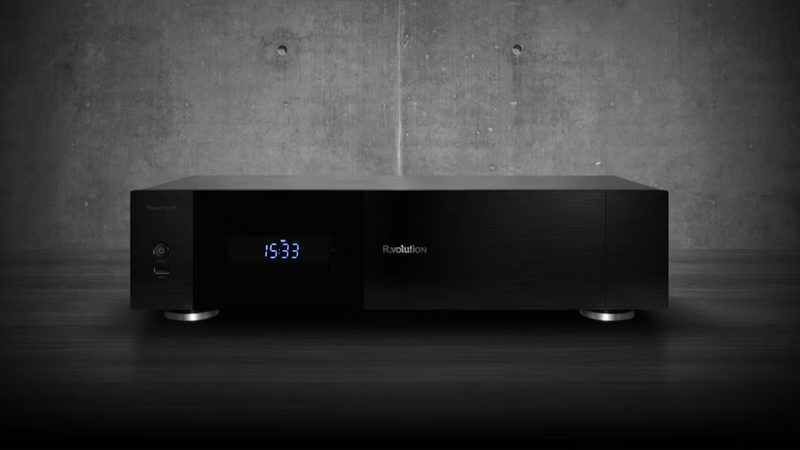
The black aluminum case measures 43 × 11 × 34 cm and weighs 10 kg without hard drives, a size that reveals the presence of the toroidal transformer and the two drive racks. The front LCD screen displays playback information. The rear voltage selector (100-240 V) allows worldwide use, and the box contains four power cables (EU, US, UK, AU). Power consumption is about 40 W in operation and 0.02 W in low standby.
The player does not support 3D (limitation of the Amlogic S928X chipset). The analog RCA outputs, which rely on the motherboard converters, offer decent quality but without audiophile ambitions: for Hi-Fi use, the coaxial output or the USB audio output to an external DAC remain the recommended options.
Artificial intelligence video processing (AI-PQ and AI-SR)
Advanced multimedia interface with R_video
Performance
Processors: Amlogic S928X and S905X4-K
CPU: ARM Cortex-A55 and A76
GPU: Mali-G57
RAM: 8 GB
Internal storage: 64 GB eMMC
Operating system: Android TV and Linux
Video
Resolution: up to 8K 60p
Supported codecs: AV1, HEVC, H.265, VP9, AVC
Supported formats: MKV, MP4, ISO Blu-ray, BDMV
Picture technologies:
Dolby Vision (profiles P5, P7, P8)
HDR10+
AI upscaling to 8K
SDR ↔ HDR conversion
Full Blu-ray and UHD menu playback
ISO support (original uncompressed quality)
Automatic frame rate (23.976 / 24 / 60 Hz)
Audio
Supported formats:
Dolby Atmos
DTS:X
Auro-3D
FLAC, DSD, AIFF, ALAC
Outputs:
Dedicated audio HDMI
Optical (TOSLINK)
75 Ohm coaxial
Analog RCA
Storage
Dual 3.5” HDD rack
Maximum capacity: 64 TB (2 × 32 TB)
Compatibility with internal drives, USB, and NAS
Connectivity
HDMI 2.1 (audio and video)
HDMI 1.4 (audio only)
Dual HDMI input
3 USB 3.0 ports and 1 USB 2.0 port
Gigabit Ethernet
Wi-Fi 6 (dual-band)
Bluetooth, infrared, radio frequency
R_video Interface
Automatic organization of movies and series
Posters, synopses, cast, trailers
Creation of custom categories
Automatic episode playback
Streaming and applications
Access to major platforms: Netflix, Disney+, Prime Video, Apple TV, YouTube, Max, Hulu, Paramount+
Quality up to 4K / 8K depending on the services
Design and ergonomics
Premium chassis with LED display
Smartphone control (iOS / Android)
Home automation compatibility (Crestron, Control4)
Dimensions and weight
Dimensions: 43 × 11 × 34 cm
Weight: 10 kg (without packaging)
Power supply and consumption
Power supply: AC 100-240 V
Consumption:
~40 W in use
0.02 W in low standby
Box contents
2 remote controls (Bluetooth / RF and infrared)
8K HDMI cable
Wi-Fi antennas
Rack kit
Power cables (EU / US / UK / AU)
Frequently Asked Questions
Can the PlayerPro 8K TV play Blu-ray and UHD Blu-ray menus?
+
Yes. ISO and BDMV files are played with their full menus, like on a physical disc player. Menu navigation is done with the main remote control.
Are hard drives included with the player?
+
No. The dual rack accepts 3.5-inch SATA hard drives (up to 32 TB each), to be purchased separately. Preformatted drives are available on the R_volution store.
What is the difference between the PlayerPro 8K and the PlayerPro 8K TV?
+
The TV model adds a second processor (S905X4-K) dedicated to Android TV, which provides access to certified streaming applications (Netflix 4K Dolby Vision, Disney+, etc.). It also doubles RAM (8 GB versus 4 GB) and eMMC storage (64 GB versus 32 GB), and adds two HDMI inputs in switch mode.
Is Wi-Fi sufficient for playback of 4K UHD files?
+
Dual-band Wi-Fi 6 is functional for streaming and connection to R_volution servers, but high-bitrate 4K UHD files (Blu-ray ISO, remux) require a wired Gigabit Ethernet connection for smooth playback.
Which file systems are supported for internal hard drives?
+
The player reads and writes FAT16, FAT32, NTFS, exFAT, EXT2, EXT3, EXT4, and BTRFS partitions. HFS/HFS+ (macOS) partitions are accessible in read-only mode. Formatting can be done directly from the player’s Explorer interface for drives up to 16 TB.
User reviews
Alessandro
It is certainly a good product; the build is sturdy and well made, and it comes with a wide range of connectors. The onboard software is very basic; the Cinema section, which creates the collection and manages movies, is a bit slow at finding new videos and struggles to recognize and match them. Sometimes, if the MKV container is a slightly older version, it needs to be remuxed, otherwise it is not detected. Therefore, with very large libraries, a very long and demanding manual check is required. The Android side is good, allowing streaming apps to be used with full functionality. It is a valid product, with a few flaws, including the remote control, which I hope will be supported for a long time. For the price it costs, I give it one star less, because it is not a trivial purchase; there are much less expensive devices that, with a few more compromises, offer a better choice.
Comment from August 12, 2026 — Experience from August 01, 2026
Automatically translated — Show original (Italian)
Si tratta sicuramente di un buon prodotto, la struttura è robusta e ben fatta, e c'è ampia dotazione di connettori.
Il software di bordo è molto spartano, la parte Cinema che crea la collezione e gestisce i film, è un po' lenta a trovare nuovi video e fa fatica a riconoscerli ed abbinarli, a volte se il container MKV è un po' vecchio di versione, va remuxato altrimenti non lo individua, perciò in caso di librerie molto grandi, occorre fare una verifica manuale molto lunga ed onerosa.
Buona la parte Android che permette di sfruttare le app di streaming a piene funzionalità.
E' un prodotto valido, con qualche pecca, anche sul telecomando, che spero venga supportato a lungo.
Per la cifra che costa dò una stella in meno, perché non è un acquisto banale, ci sono dispositivi molto meno costosi che con qualche compromesso in più offrono una scelta migliore.
To better understand our visitors, measure marketing effectiveness and personalise ads, we and our partners use cookies and mobile advertising identifiers on your device. This data makes it possible to display personalised and non-personalised ads and measure their performance. Some cookies, which are technically necessary, are exempt from consent. You can accept those that require your consent, refuse them by clicking "Refuse", or customise your choices via the settings screen.
To find out how Google uses the data collected once you have given your consent, see Google’s Business Data Responsibility site.
You can change or withdraw your consent at any time via the "Consent and cookies" link. Your choices will apply on our site for 12 months.