R_volution PlayerPro 8K TV: when the media player meets Android TV
February 11, 2026
Contents
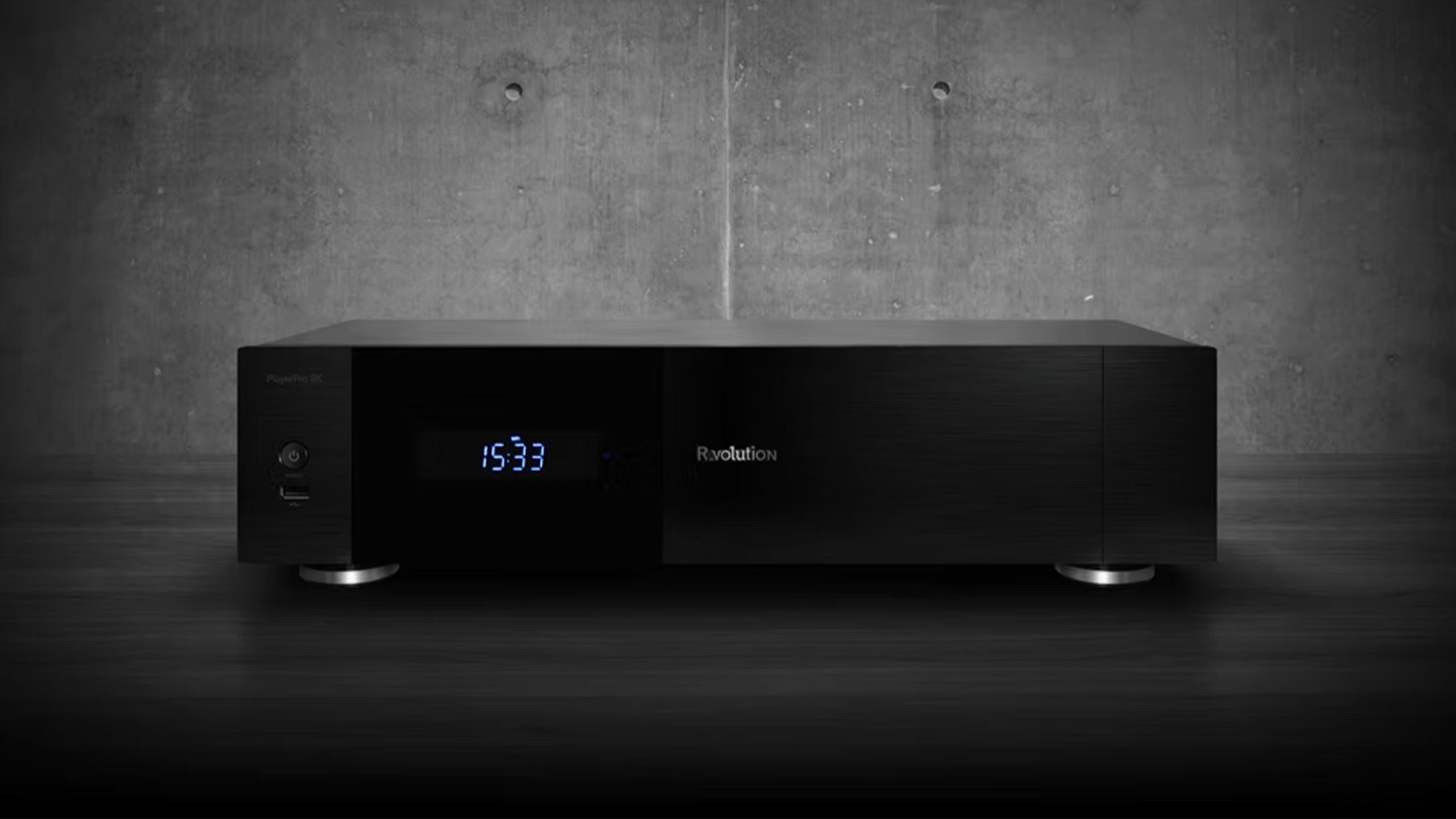
Presented at the ISE 2026 show in Barcelona (from February 3 to 6), the R_volution PlayerPro 8K TV does more than just add two letters to the name of its predecessor. Behind a designation almost identical to the PlayerPro 8K, the French company Archisoft delivers a device whose philosophy differs significantly: merging a high-end media player and an Android TV box in a single chassis.
Two devices in one
The PlayerPro 8K, sold for €1,299, is a file player. Period. It plays MKVs, Blu-ray ISOs, high-resolution audio files, and it does it very well. But to access Netflix, Disney+ or YouTube in 4K Dolby Vision, you need an additional device in the chain. The PlayerPro 8K TV eliminates this constraint by embedding a certified Android TV layer, which opens access to all streaming platforms: Netflix, Disney+, Prime Video, Apple TV, Canal+, Paramount+, Max, YouTube, and more, all in Ultra HD 4K with support for HDR10 and Dolby Vision across all profiles.
In concrete terms, the PlayerPro 8K TV integrates two distinct processors. The main SoC is still the Amlogic S928X-K/J, with its four ARM A55 cores at 2.0 GHz, its ARM A76 core at 1.9 GHz, and an additional core dedicated to the system. A second processor, the Amlogic S905X4-K (four ARM A55 cores at 2.0 GHz), supports the first and manages the Android TV part. This dual-processor architecture is also one of the reasons why R_volution supplies two remote controls: one to operate all multimedia functions via R_video, the other, more compact, dedicated to streaming with direct access buttons for Netflix and YouTube.
What changes (and what doesn’t)
Connectivity has evolved significantly. The PlayerPro 8K TV has a second HDMI 2.1a output dedicated to audio only, which allows you to separate audio and video streams to an amplifier and a display without any bandwidth compromise. Two HDMI 2.1a inputs also make their appearance with an integrated switch function, an addition that reduces the need for an external HDMI selector.
On the video processing side, R_volution announces an AI model for Picture Quality enhancement and Super Resolution upscaling. The rest of the architecture is shared with the PlayerPro 8K: VS10 video processing developed by Dolby (12-bit, SDR-to-HDR and reverse conversion), compatibility with all Dolby Vision profiles, HDR10, HDR10+ with dynamic tone mapping, upscaling up to 8K, and support for the AV1 codec in 8K 60p HDR via the HDMI 2.1 output.
On the audio front, you’ll find decoding for DTS:X Pro, Dolby Atmos and on-the-fly conversion of multiple formats (FLAC, AC-4, HE-AAC, AAC, AIFF, multichannel WAV) to PCM 5.1 or 7.1 via the Dolby MS12 process. High-resolution audio formats up to 192 kHz/24-bit, DSD and SACD ISO are supported.
Storage is unchanged as well: a dual 3.5-inch SATA rack capable of housing two hard drives of 64 TB each, for a total of 128 TB. The linear power supply with toroidal transformer and the 24 MHz TCXO clock (a multiple of 48 kHz for audio and 24 Hz for video) are retained.
One point to note: the first version of the announcement mentioned a doubling of RAM and Flash memory compared to the PlayerPro 8K (8 GB of RAM and 64 GB of Flash versus 4 GB and 32 GB). R_volution has since corrected this information: the memory amounts are identical between the two models.
R_video and the multiroom ecosystem
The PlayerPro 8K TV comes with R_video, R_volution’s in-house media center. The software scans files stored on internal drives or on a network NAS, automatically retrieves cover art, synopses, cast lists and the technical metadata of each title. It groups movie sagas together, offers navigation filters (title, actor, director, genre, duration, release date) and can launch trailers directly from the interface.
The R_Share function, already present on other players in the range, allows content to be distributed to other R_volution players (or compatible Zappiti models) in different rooms of the same home. Former Zappiti player owners can also use R_video on their existing hardware, subject to a subscription.
Positioning and context
R_volution was created at the end of 2023, after the court-ordered liquidation of Zappiti AV. Groupe Archisoft, the historical founder of the Zappiti brand, rebooted the activity under this new identity by bringing back the lead developer and product designer from the Zappiti era. Compatibility between the Zappiti and R_volution ecosystems has been maintained, allowing some orphaned users to recover a functional software environment.
In the high-end media player market, competition remains limited: the Dune HD Max 8K shares a similar chip and a comparable linear power supply but offers only a single hard drive bay; the Zidoo UHD5000 integrates a high-end Sabre DAC but does not reach the same richness of interface; and the Nvidia Shield TV Pro, while running Android TV and supporting Netflix in Dolby Vision, does not offer the same level of raw audio/video quality nor the same library management features. The addition of Android TV to the PlayerPro 8K TV puts R_volution on a playing field that these competitors partially occupy, but none covers in such an integrated way: top-quality local file playback and certified streaming in the same box.

You may also like to read
 R_video is now compatible with ultra-wide screensHi-fi and home cinema news
 R_Volution launches "R_video Media Center" for Mac or PC home theater on subscription.Hi-fi and home cinema news
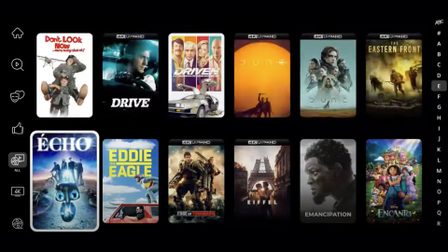 R_video 1.10.42: performance boost, multiroom playback, and new featuresHi-fi and home cinema news
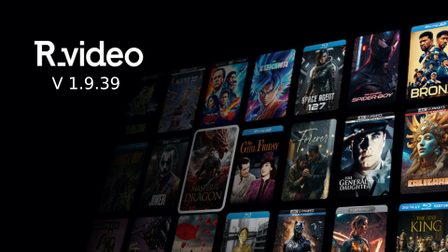 R_video version 1.9.39 adds "favorite scenes" features and multiple categorizationHi-fi and home cinema news
 A new life for your Zappiti NAS with the R_evolution upgrade packHi-fi and home cinema news
 Canton Movie 200 and Movie 400: two 5.1 speaker packages to simplify your home theater setupHi-fi and home cinema news