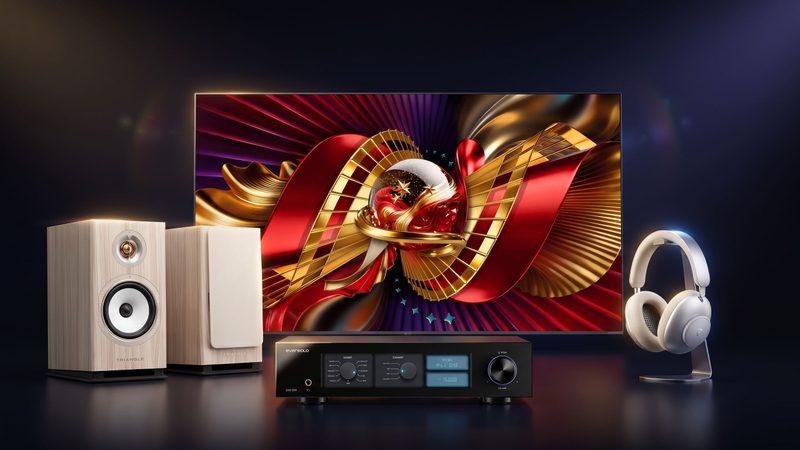
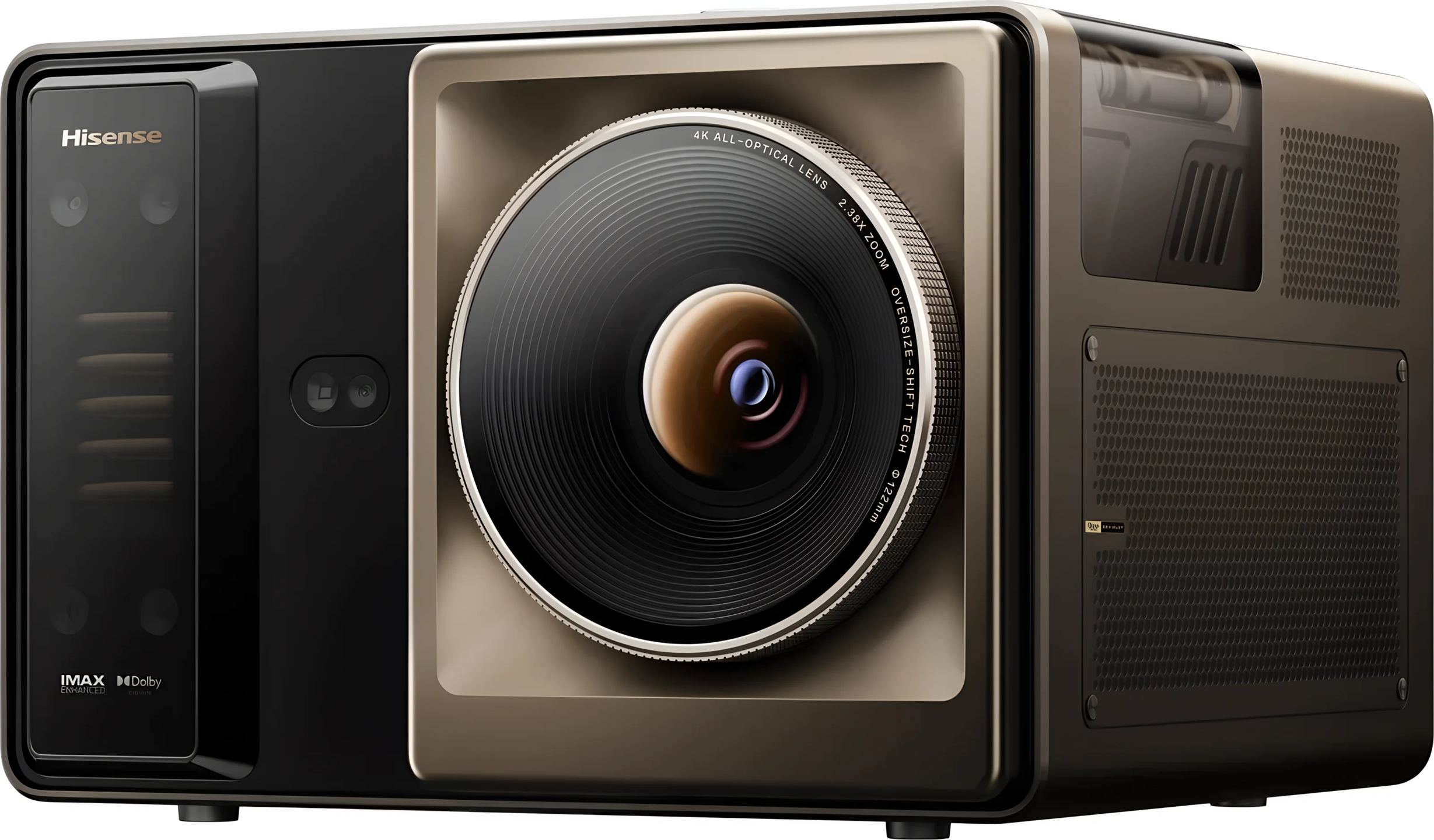
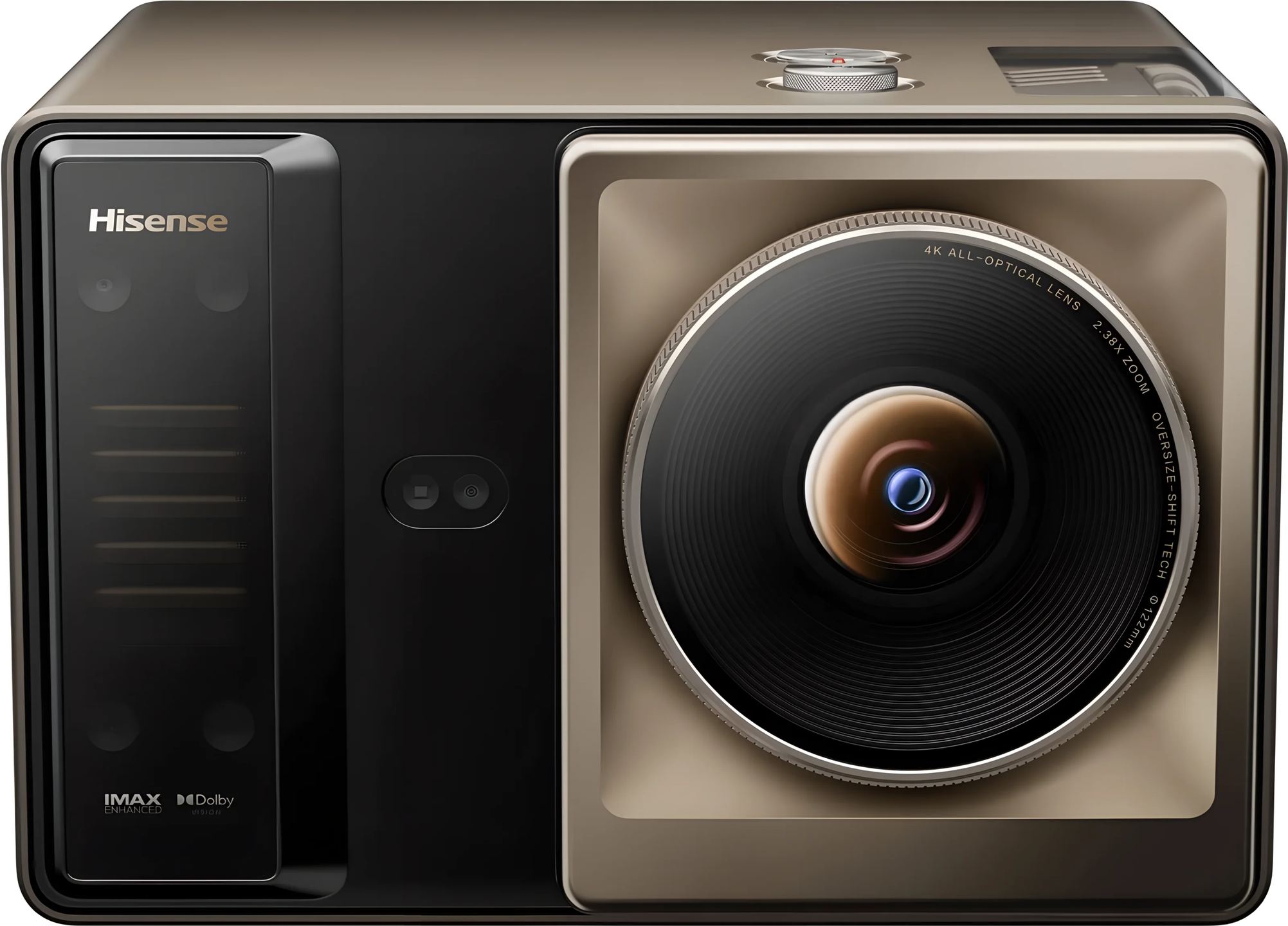
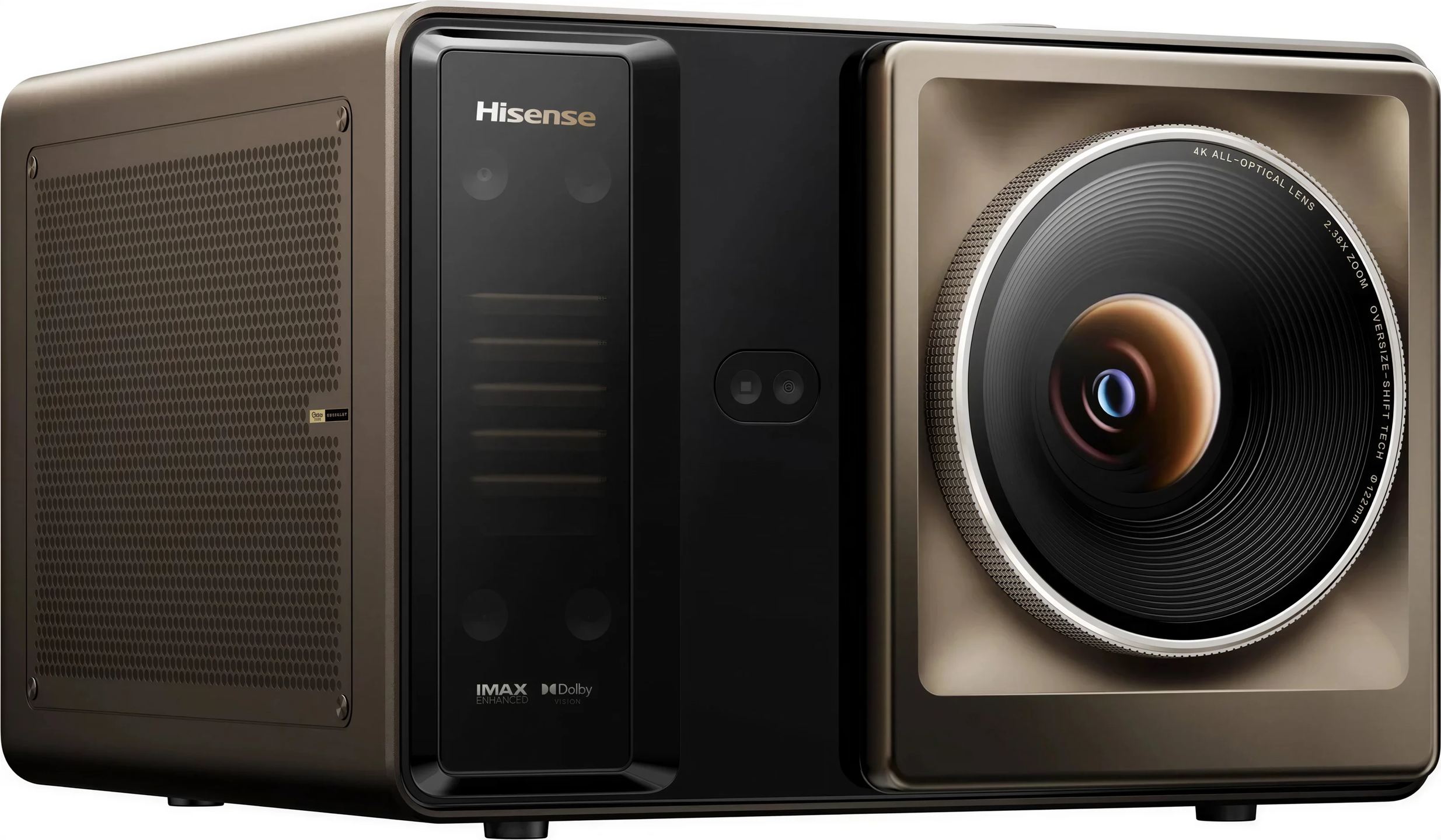
Hisense XR10


Specifications and features


Awards

EISA Awards: Award-Winning Product
Each year, dozens of European journalists gather to select the best electronic products of the year. Awarded by a diverse and impartial jury, the EISA (Expert Imaging and Sound Association) awards recognize exceptional products for their performance, design, or ergonomics.
Overview
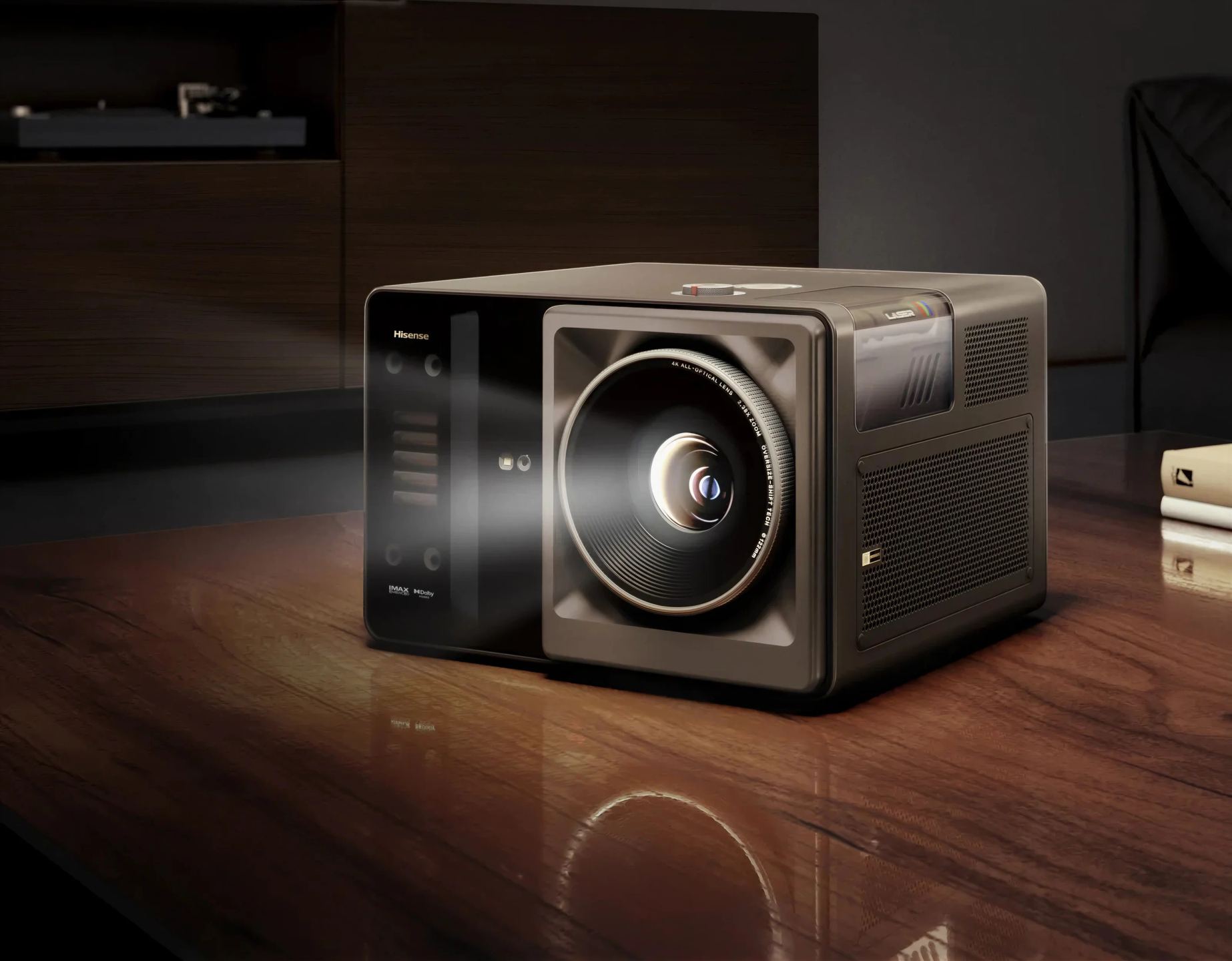
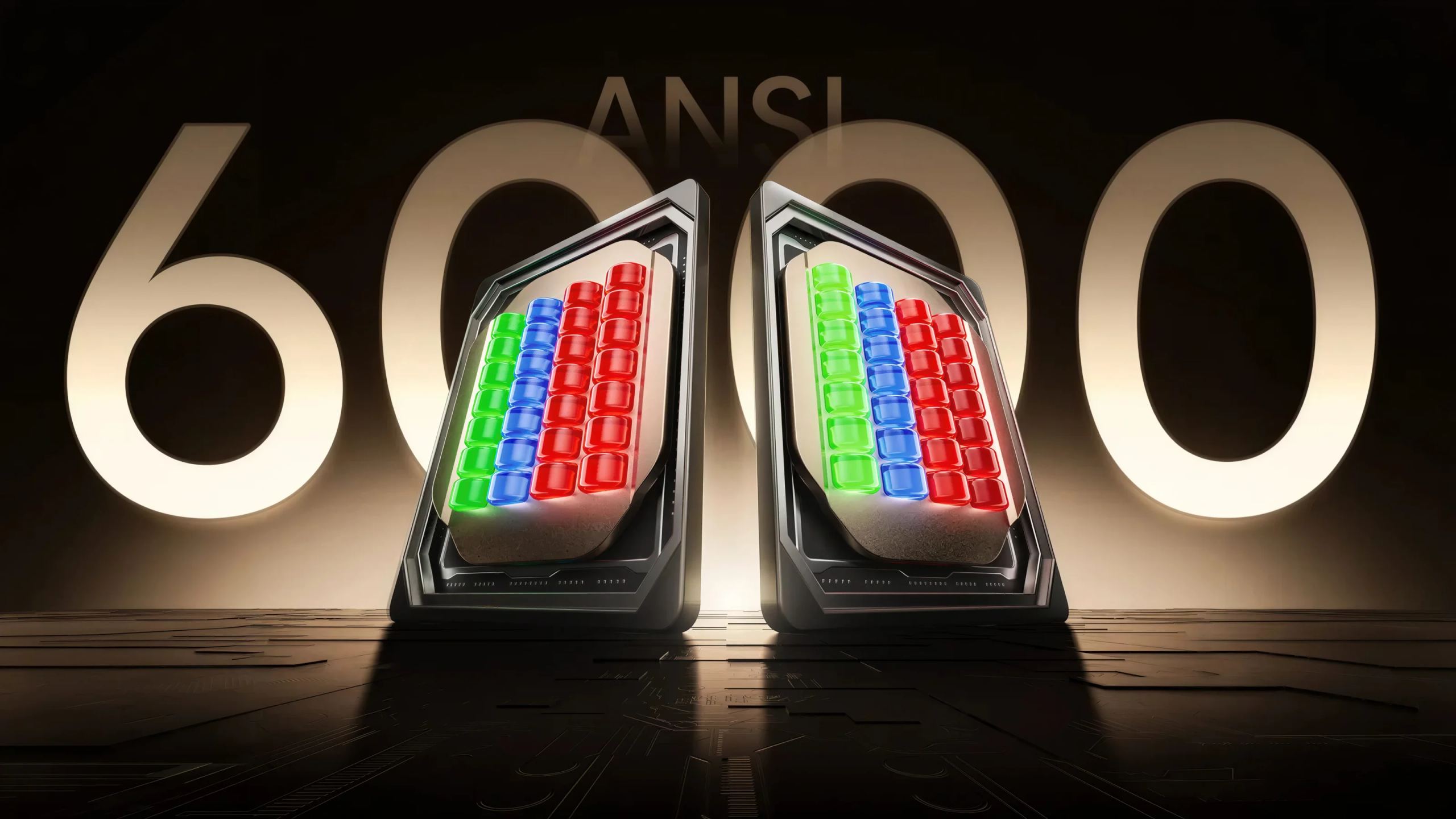
Triple-laser technology has mainly been found in ultra-short-throw projectors placed against a wall. Hisense brings it to a conventional front-projection chassis, with optical zoom and motorized lens shift. The result: 6000 ANSI lumens and an image reaching up to 762 cm diagonally, without sacrificing the placement flexibility of a living-room projector.
An RGB triple-laser engine and expanded color
The XR10 introduces Hisense’s LPU 3.0 laser engine. Rather than a single laser source paired with phosphor, it combines three pure red, green, and blue lasers. This source covers 118% of the BT.2020 color space (manufacturer data), a wider gamut than that of single-laser projectors. With a 10-bit signal, this translates into 1.07 billion colors and more vivid primary hues.
The well-known downside of this type of source is speckle, the shimmering grain that can sometimes appear with lasers on certain screens. Hisense announces integrated speckle reduction in the LPU 3.0 engine. A wall-color adaptation sensor also adjusts the rendering when projection is not performed on a perfectly neutral screen.
Brightness that remains available in calibrated mode
Hisense announces 6000 ANSI lumens (7500 ISO lumens). This figure describes a maximum, not the output of every picture mode. The XR10’s appeal lies elsewhere: its most accurate settings remain among the brightest, whereas many projectors reserve their full power for overly saturated, less faithful presets. You therefore do not have to choose between an accurate image and one with punch.
As for contrast, the native ratio is 6000:1, with dynamic contrast rising to 60,000:1 thanks to the iris. This seven-level mechanical iris deserves attention: on a large screen in a dark room, the image can be brighter than necessary, and closing the iris improves real contrast while bringing brightness back to a comfortable level. For the deepest blacks in a completely dark room, projection technologies dedicated to home theater still go one step further. The XR10, meanwhile, makes use of its light reserve in bright living rooms and pairs well with an ambient-light-rejecting screen.
Optical zoom, lens shift, and automatic adjustment
The optics are one of the XR10’s strengths: an all-glass 17-element assembly, a throw ratio of 0.84 to 2.0:1, and optical zoom. This focal range, broad for a DLP, allows for varied placement options, from a low cabinet positioned fairly close to the screen to a more distant installation. Motorized lens shift (±130% vertically, ±46% horizontally) moves the image without moving the unit and without reducing resolution, unlike digital correction.
For setup, Hisense relies on a multi-camera system and a 3D time-of-flight sensor: autofocus, nine-point geometric correction, and AutoMagic 3.0 obstacle detection, which prevents projection onto a frame or light switch. Eye protection dims the beam if someone walks in front of the lens. Liquid cooling keeps the system nearly silent, even when the lasers are running at full power, and the source is rated for 25,000 hours.
HDR formats and picture modes
The XR10 supports the main HDR formats: Dolby Vision, HDR10+, HDR10, and HLG, with IMAX Enhanced certification and a Filmmaker mode. Dolby Vision support remains rare on a front-projection projector, an advantage for those who watch a lot of streaming content or Ultra HD Blu-ray discs.
The projector offers a long list of modes, from calibrated cinema presets (Filmmaker, IMAX Cinema) to brighter modes suited to well-lit rooms. As mentioned above, cinema modes retain high brightness, avoiding the need to compromise between accuracy and visual impact. One hardware limitation remains: the most saturated HDR hues do not always reach the full luminance targeted by the master, a limitation inherent to this generation of laser projectors and barely noticeable in real scenes. MEMC motion interpolation and Ultra HD 4K upscaling complete the image processing.
Low latency and high refresh rate for gaming
The XR10 is not limited to cinema. A dedicated Game mode and latency stated at under 20 ms make it suitable for controller-based gaming on a very large screen. 4K resolution is capped at 60 Hz, but the unit accepts 1080p up to 240 Hz, with latency dropping well below 20 ms in this mode. Both HDMI 2.1 inputs support ALLM, which automatically switches to low latency as soon as a console launches a game. In fast-paced shooting or sports titles, high-refresh-rate 1080p delivers motion clarity that 4K at 60 Hz cannot reproduce.
Sound tuned with Devialet
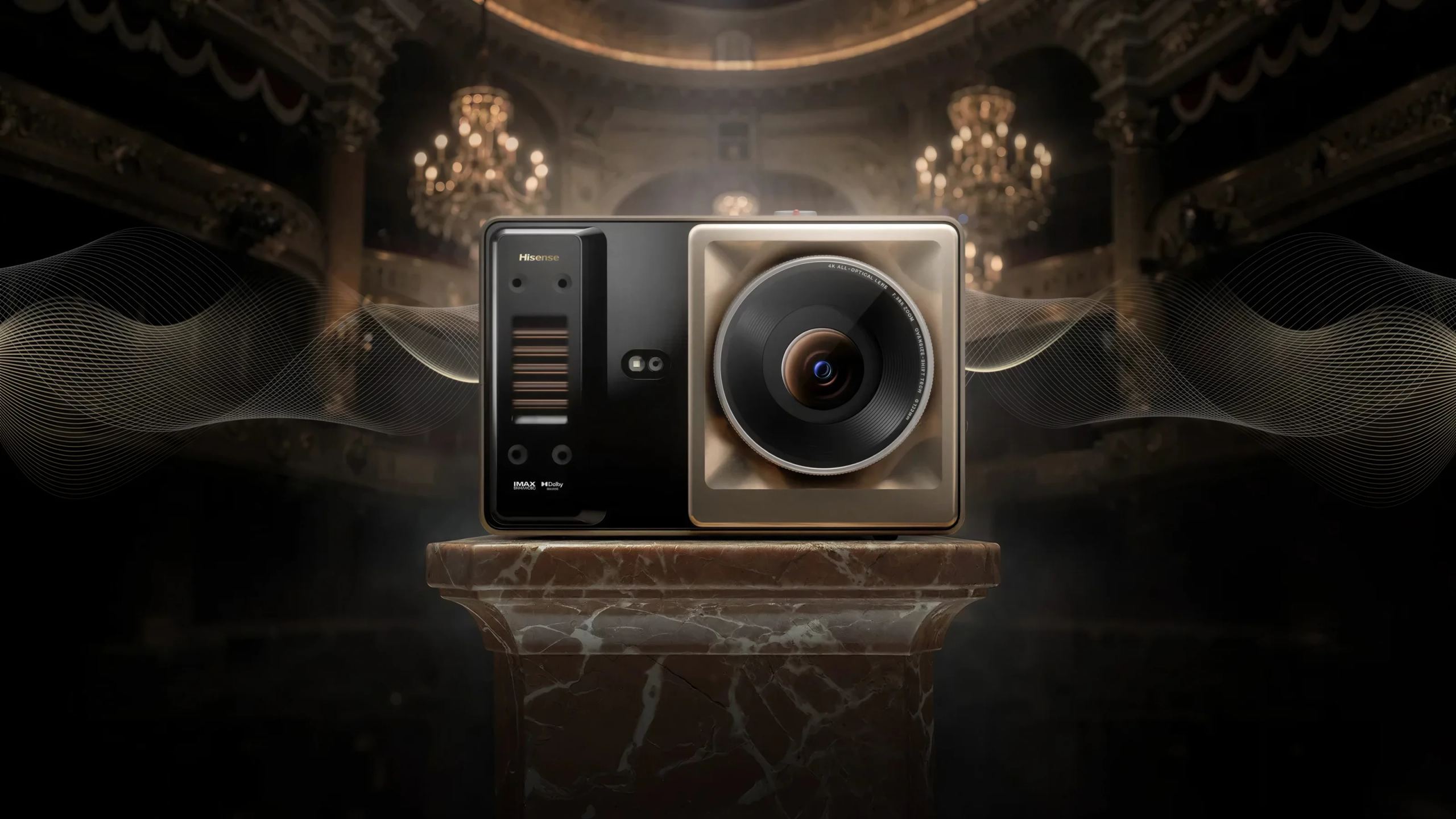
The audio system was tuned with Devialet and voiced with the Paris Opera. Specifically: two 8 W speakers and a 15 W subwoofer, for a total of 31 W, with Dolby Audio, DTS:X, and a virtual Dolby DAP surround mode. Five sound modes (Standard, Cinema, Music, Voice, Night) and an advanced equalizer adjust the rendering according to the content.
For an integrated system, Devialet tuning takes care of the midrange and voice intelligibility, while the subwoofer reaches lower than the average projector. It does not replace true cinema bass below 40 Hz: to recover the impact of explosions or the LFE channel, an external system will be required. HDMI eARC compatibility is designed precisely for this, sending audio, including Dolby Atmos, to a soundbar or home theater amplifier.
VIDAA, connectivity, and everyday use
The XR10 runs on VIDAA U9, Hisense’s in-house system, with the VIDAA Voice voice assistant, Alexa compatibility, AirPlay 2, Miracast, and an app store. Wireless connectivity is up to date: Wi-Fi 7 and Bluetooth 5.4.
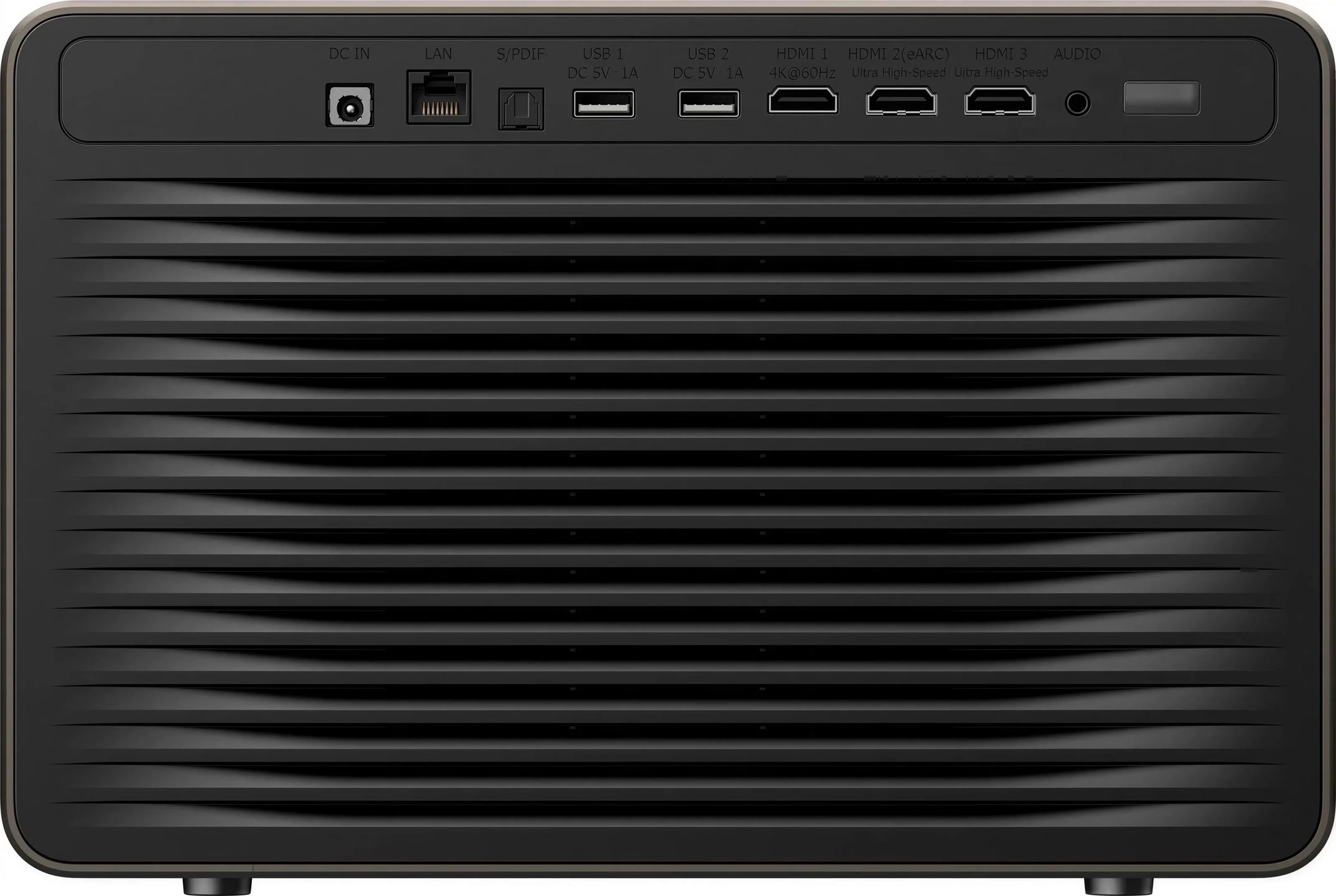
On the wired side, there are three HDMI inputs (two HDMI 2.1 and one HDMI 2.0), including one eARC-compatible input for sending audio to an external system, two USB 3.0 ports, an Ethernet port, an optical audio output, and a mini-jack input. A Hotel mode and Control4 compatibility open the door to integrated installations. Compact (293 × 273 × 213 mm, 10.6 kg), the chassis can be placed on a cabinet or ceiling-mounted, and comes with a backlit voice remote control.
What the press says
Particularly spectacular and key to its success is its ability to deliver both extreme levels of brightness and some of the deepest, most convincing blacks the HDR projection world has to offer. [...] Hisense's new showcase projector ultimately justifies its premium price tag with its combination of a startlingly powerful sound system and the best picture quality we've seen from any lifestyle or, more accurately, lifestyle/home theatre crossover projector before. [...] Aside from some DLP rainbow striping with very extreme contrast content, you need to be prepared to tinker with a few of the projector's settings to get the best from it.
Documentation
French
Technical specifications
Projection
- Projection technology: DLP 0.47” SST DMD Triple Laser
- Light source: RGB Triple Laser
- Native resolution: Ultra HD 4K (3840 × 2160)
- Image size: 203 to 762 cm (80 to 300 inches)
- Throw ratio: 0.84 – 2.0:1
- Brightness: 6000 ANSI lumens (7500 ISO lumens)
- Native contrast: 6000:1
- Dynamic contrast: up to 60,000:1 with dynamic iris (7 levels)
- Lens Shift: ±130% vertical, ±46% horizontal
- Zoom: optical and digital
- Geometric correction: automatic and manual (9 points)
- Built-in 3D TOF sensor
- Speckle reduction
- Liquid Cooling
- Light source lifespan: 25,000 hours
- Automatic eye protection
- Automatic obstacle detection and avoidance (AutoMagic 3.0)
Image quality
- Dolby Vision compatibility
- HDR10+, HDR10, HLG
- IMAX Enhanced
- Filmmaker Mode
- MEMC (motion compensation)
- Ultra HD 4K upscaling
- Wide color gamut: 118% BT.2020
- Color depth: 10 bits
- 1.07 billion colors
- Automatic adaptation to wall color
Video games
- Dedicated Game Mode
- Input lag ≤ 20 ms
- Refresh rate:
- 4K up to 60 Hz
- 2K up to 120 Hz
- 2K up to 240 Hz
Audio
- Integrated Devialet – Paris Opera audio system
- Speakers: 2 × 8 W
- Built-in subwoofer: 15 W
- Total power: 31 W
- Dolby Audio
- DTS:X
- Dolby DAP (virtual surround)
- Advanced equalizer
- Sound modes: Standard, Cinema, Music, Voice, Night
Smart TV
- VIDAA U9 system
- VIDAA Voice voice assistant
- Amazon Alexa compatible
- AirPlay 2
- Internet browser
- Media player
- Miracast
- DLNA
- App store
- Hotel Mode
- Control4 compatible
Connectivity
- 2 × HDMI 2.1
- 1 × HDMI 2.0
- 1 × HDMI eARC
- 2 × USB 3.0
- 1 × Ethernet (RJ45)
- 1 × optical audio output (S / PDIF)
- 1 × 3.5 mm mini-jack audio input
- 1 × service port
Wireless connectivity
- Wi-Fi 7
- Bluetooth 5.4
- AirPlay 2
- Miracast
- DLNA
Supported formats
- Video: MP4, MKV, AVI, MOV, TS, WMV, WEBM
- Video codecs: MPEG-1 / 2 / 4, AVC, HEVC, VC-1, VP8, VP9
- Audio: MP3, WAV, WMA, AAC, FLAC, OPUS, Vorbis
- Images: JPEG, PNG, BMP, GIF
Power supply and consumption
- Power supply: 100 – 240 V
- Power consumption during operation: 360 W
- Standby power consumption: ≤ 0.5 W
Dimensions and weight
- Dimensions (W × D × H): 293 × 273 × 213 mm
- Weight: 10.6 kg
Packaging
- Box dimensions (W × D × H): 608 × 463 × 423 mm
- Weight with packaging: 19.09 kg
Included accessories
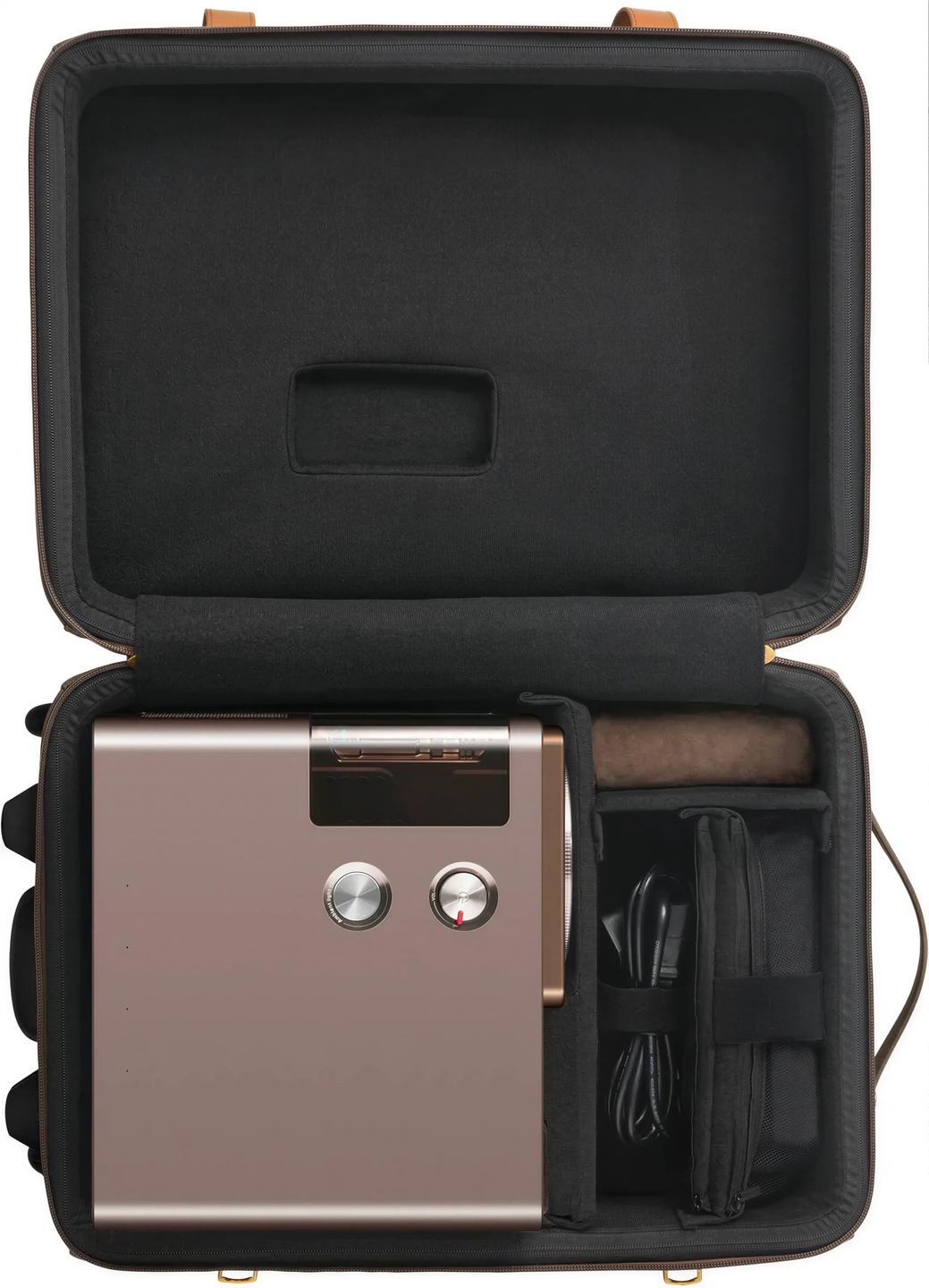
- Voice remote control
- 2 AAA batteries
Security
- Kensington anti-theft compatibility
Frequently Asked Questions
How far from the screen should the XR10 be placed?
The 0.84 to 2.0:1 throw ratio offers plenty of flexibility. For a 120-inch diagonal image (approximately 2.65 m wide), the projection distance ranges from about 2.2 m at the shortest to 5.3 m at the longest, depending on the zoom position. Lens shift then adjusts the image height without tilting the unit, making installation on a low cabinet or off-center ceiling mounting relative to the screen easier.
Is the XR10 suitable for a bright living room, or does it require a dark room?
Its 6,000 ANSI lumens make it viewable in ambient light, where a less powerful projector would fade. A matte screen also avoids the specular reflections of a TV panel. That said, controlling light (curtains, indirect lighting) remains the best way to preserve contrast, especially for dark scenes.
Does it need to be paired with a specific screen?
No specific screen is required. In a dark room, a neutral white screen with a gain of 1.0 already delivers good results. In a room with some ambient light, an ambient light-rejecting screen enhances perceived contrast; the XR10’s high brightness reserve allows it to accommodate this type of screen, which is generally less bright, without compromising image quality.
Is the rainbow effect of DLP projectors noticeable?
Like all single-chip DLP projectors, the XR10 displays colors sequentially, which a minority of viewers perceive as brief colored flashes in high-contrast areas. On this model, the effect remains discreet. Anyone who knows they are sensitive to this effect would be well advised to see the device in operation before making a decision.
Can you enjoy Dolby Atmos with this projector?
The built-in speakers form a 2.1 system and do not reproduce true spatial Atmos. However, the eARC-compatible HDMI port transmits the original Atmos stream to a compatible soundbar or amplifier, which then handles decoding and spatialization.
Does the laser source need to be replaced over time?
No, there is no lamp to replace. The triple laser light source is rated for 25,000 hours, or around seventeen years at four hours per day. Unlike a lamp, a laser loses brightness very gradually rather than abruptly.
- Eco-contribution included in the sale price.
- Manufacturer reference: 20019544
- GTIN / EAN: 6942351440262