

iFi Audio iDSD GR 2


Specifications and features


iFi Audio iDSD GR 2: pocket-sized power and versatility
Four years after the xDSD Gryphon, iFi Audio revisits the formula that made its portable DAC a success and reworks it from top to bottom. New conversion chip, redesigned amplification, colour touchscreen, lossless Bluetooth: the unit still fits in a pocket, but it now drives far more power-hungry headphones. An overview of this second generation and what it brings to everyday listening.
The PCM1795, a first for iFi
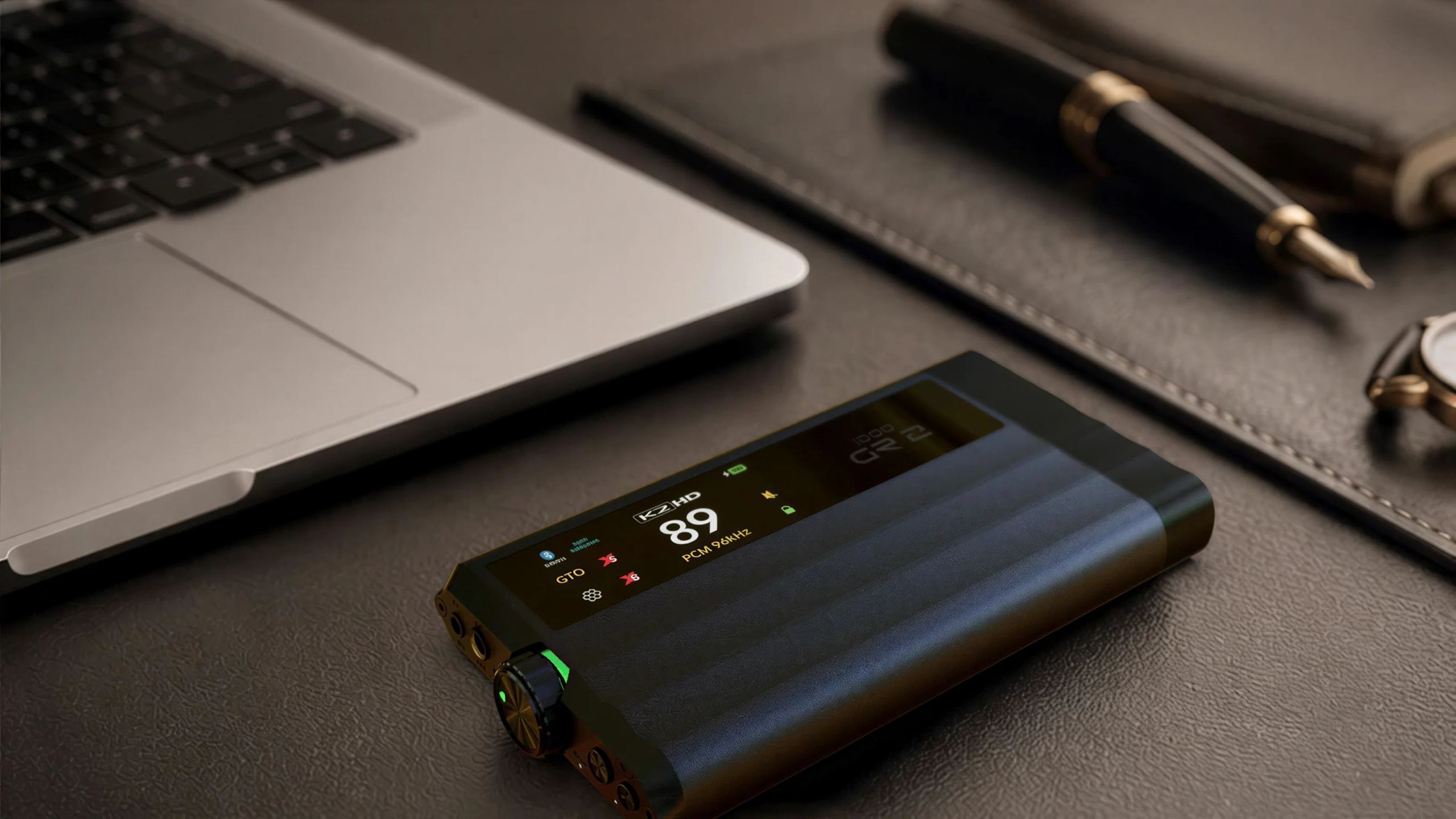
The GR 2 is iFi Audio’s first device to feature the Burr-Brown PCM1795 chip. This converter operates with current output rather than voltage output, a choice that gives engineers greater freedom to design the analogue stage placed immediately afterwards. The result: native 32-bit resolution, a lower distortion floor and an extended dynamic range, while retaining the warm, slightly analogue character that is the brand’s signature. In terms of formats, playback reaches up to PCM 768 kHz and DSD512, enough to handle the most demanding high-resolution files available today.
Balanced amplification and power reserve
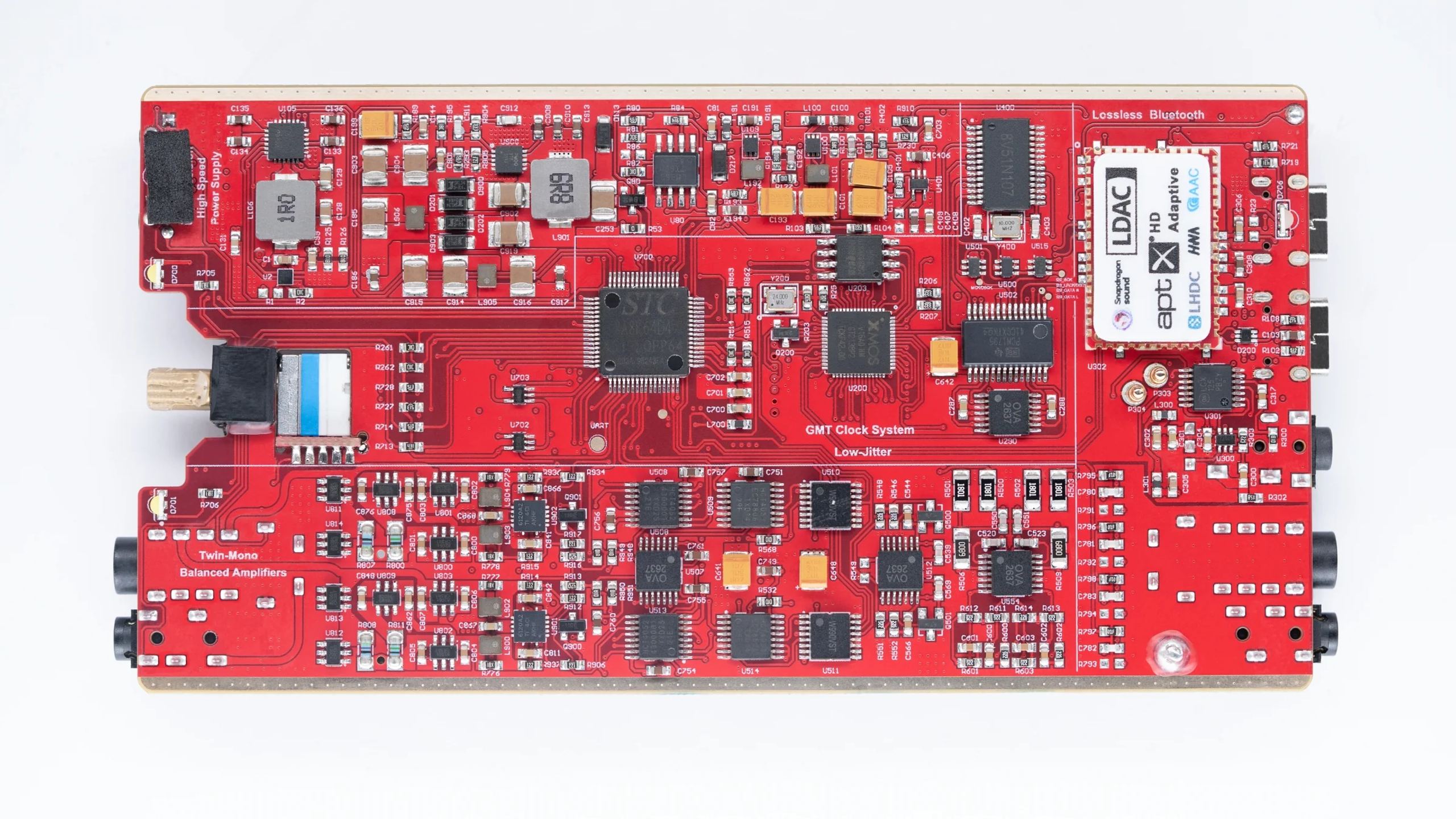
The amplification stage has been completely redesigned. The circuit is now balanced from end to end, with Class A operational amplifiers that provide a more natural sound and lower distortion. Through the 4.4 mm balanced output, the GR 2 delivers up to 1513 mW RMS into 32 ohms, which is 50% more power than the xDSD Gryphon. In practical terms, demanding headphones retain controlled bass and crisp transients even when the volume is turned up. The 3.5 mm single-ended output remains more modest, at around 567 mW into 32 ohms, but it adopts iFi’s S-Balanced mode, which reduces crosstalk and background noise compared with a conventional mini-jack socket.
Users of sensitive in-ear earphones have not been forgotten. The iEMatch circuit, enhanced with low-impedance MOSFETs, lowers the output level to prevent hiss and preserve adjustment range on the volume dial. The measurements reflect this work: 115 dBA signal-to-noise ratio across all outputs, total harmonic distortion of 0.006% into 16 ohms with headphones and 0.0005% at line output.
A touchscreen paired with the Nexis app
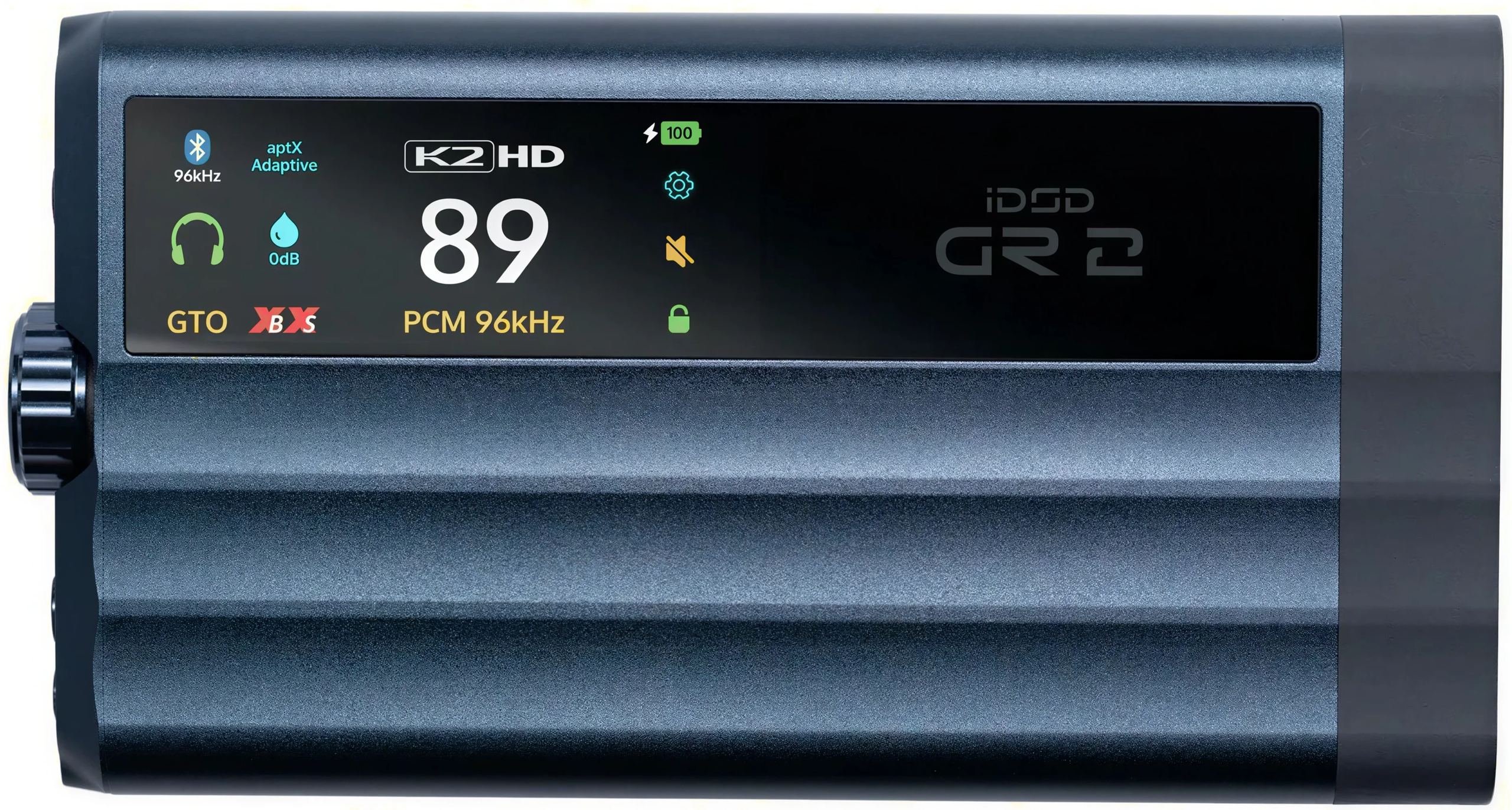
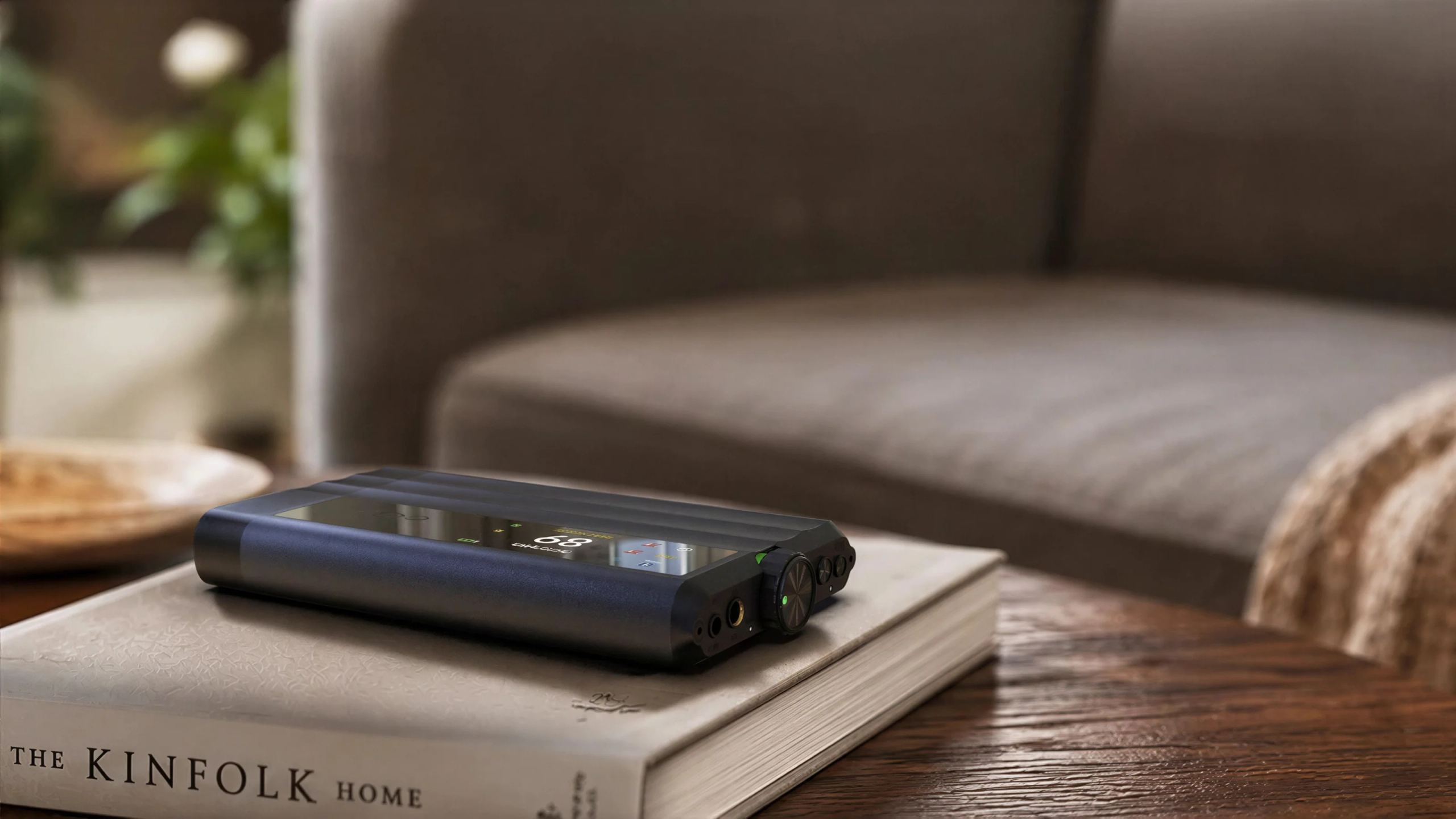
The most visible change is the colour OLED display, now capacitive and touch-sensitive. Common settings (volume, input, filters, processing) are directly accessible on the screen, without having to navigate through nested menus. The interface has been designed to be quick to use and easy to read at a glance.
For finer adjustments, the GR 2 connects to the iFi Nexis app. It provides additional customisation options and handles over-the-air (OTA) updates, leaving the door open for new features after purchase. One caveat, however: USB features through Nexis are reserved for Android devices.
Bluetooth 5.4 and lossless transmission
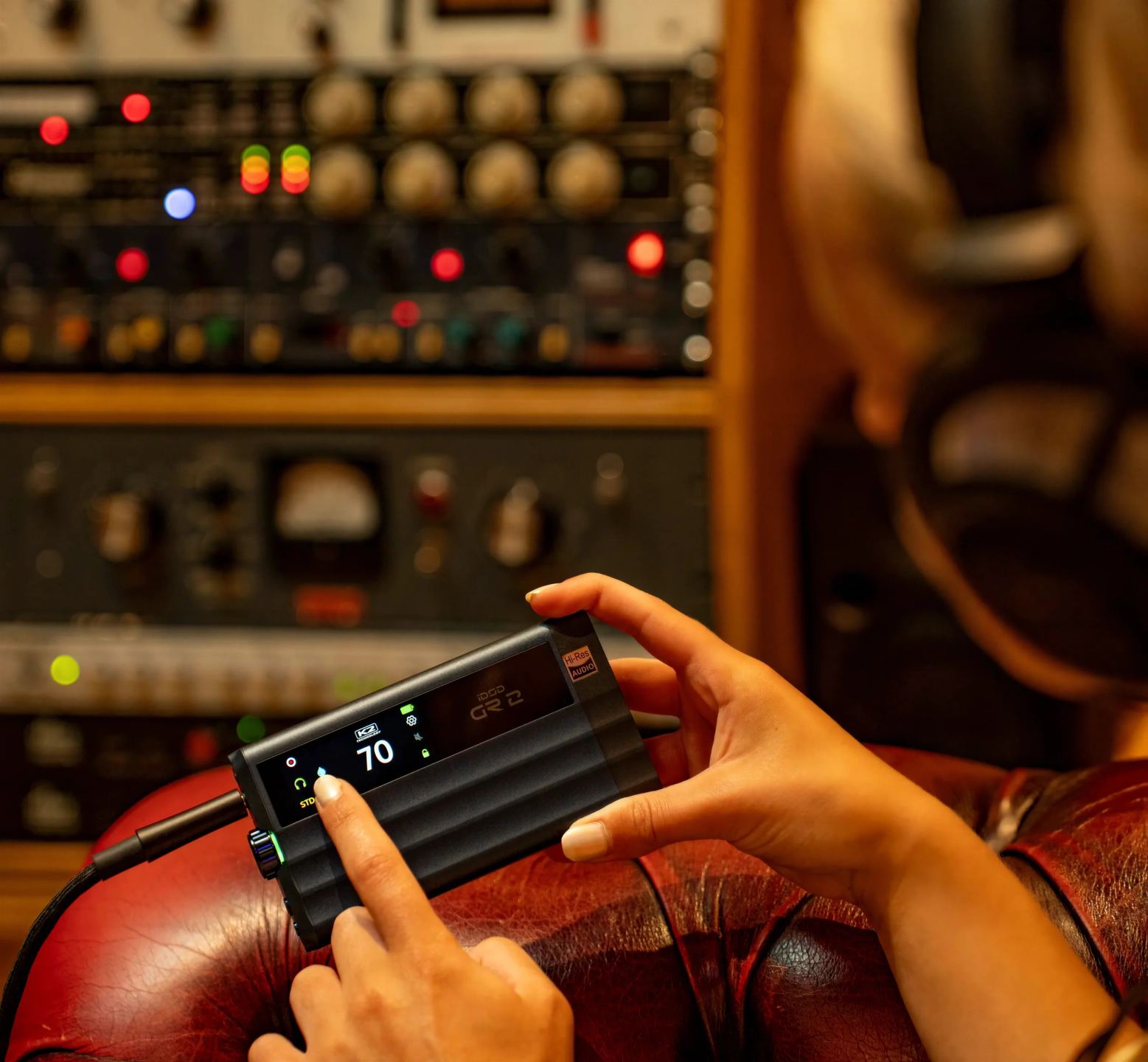
Wireless connectivity benefits from Bluetooth 5.4 and, above all, support for aptX Lossless. This codec transmits a lossless CD-quality stream (44.1 kHz, 16-bit), provided the source supports it too. For sources that prioritise bitrate, LDAC reaches up to 990 kb/s. The GR 2 also supports aptX Adaptive, aptX, LHDC / HWA, AAC and SBC, covering virtually all smartphones and music players on the market.
K2HD, restoring body to digital files
Borrowed from JVCKENWOOD, K2HD processing aims to restore the harmonic details that digitisation tends to smooth over. The idea is to recover some of the depth and timbre of the original recording, for a less rigid and more lively sound. Those who prefer a lighter touch can activate K2 mode, which delivers a comparable improvement without upsampling. Both can be switched off with a single gesture if you want to stay as close as possible to the source file.
All sources in one unit
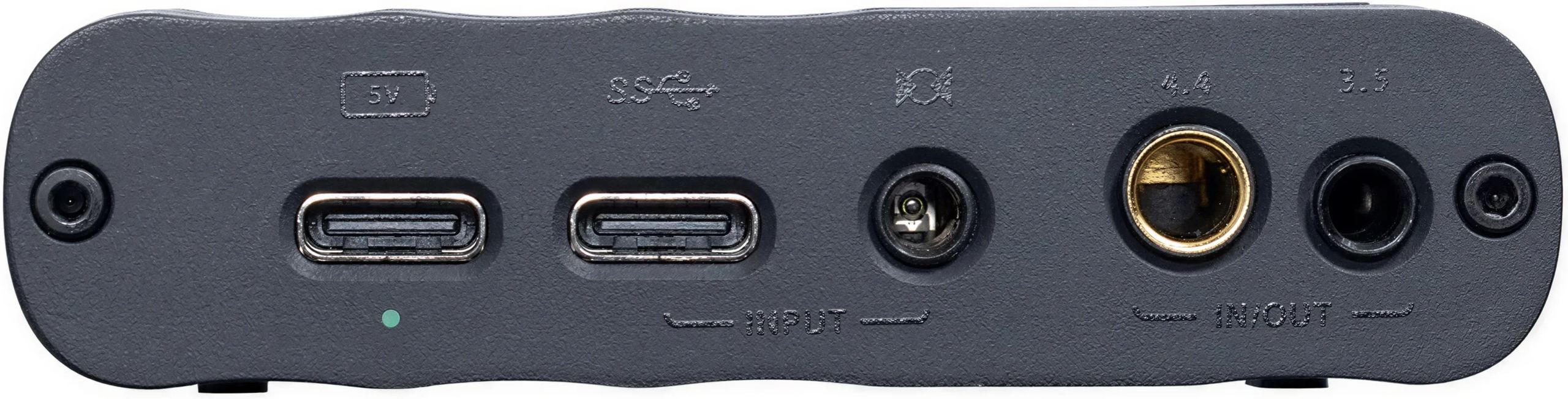
The connectivity partly explains the GR 2’s versatility. On the digital input side, there is a USB-C port, an S / PDIF input (optical and coaxial) and Bluetooth 5.4. Two analogue inputs complete the package, with 4.4 mm balanced and 3.5 mm single-ended connections for connecting a line-level source.
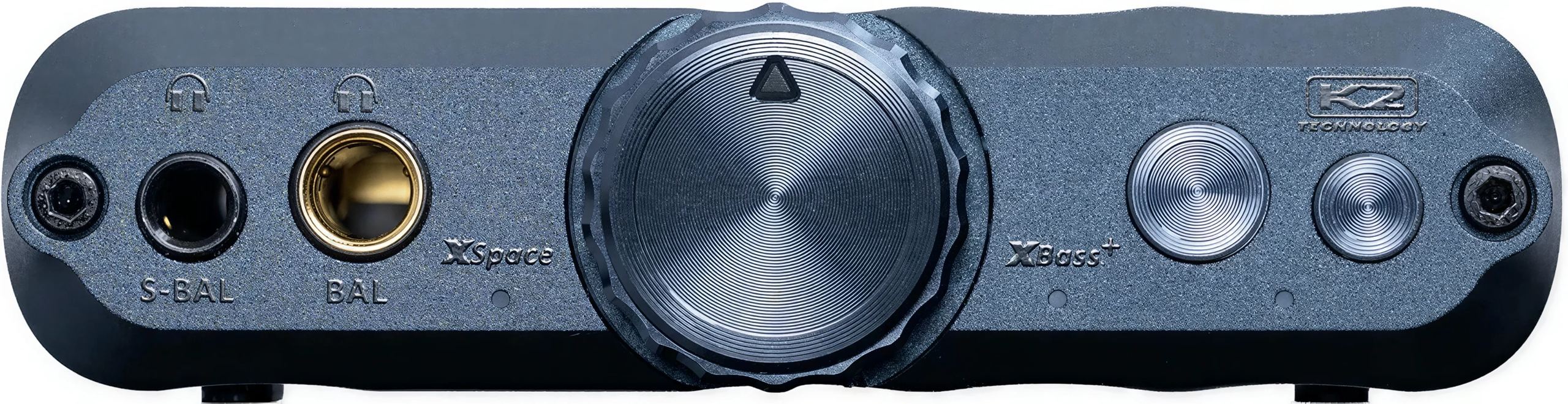
The GR 2 does more than drive headphones. Its 4.4 mm and 3.5 mm line outputs allow it to be used as a converter and preamplifier within a larger system, connected to an amplifier or active speakers. Two headphone sockets are available: the 4.4 mm balanced output to make the most of its power, and the 3.5 mm S-Balanced output for standard connections. At 141 x 75 x 19 mm and weighing 268 g, the GR 2 retains a pocket-friendly format close to that of the Gryphon, to the point that cases for the previous model fit it. iFi also offers a dedicated case, the iDSD GR2 Case, sold separately.
Battery life and hybrid power supply
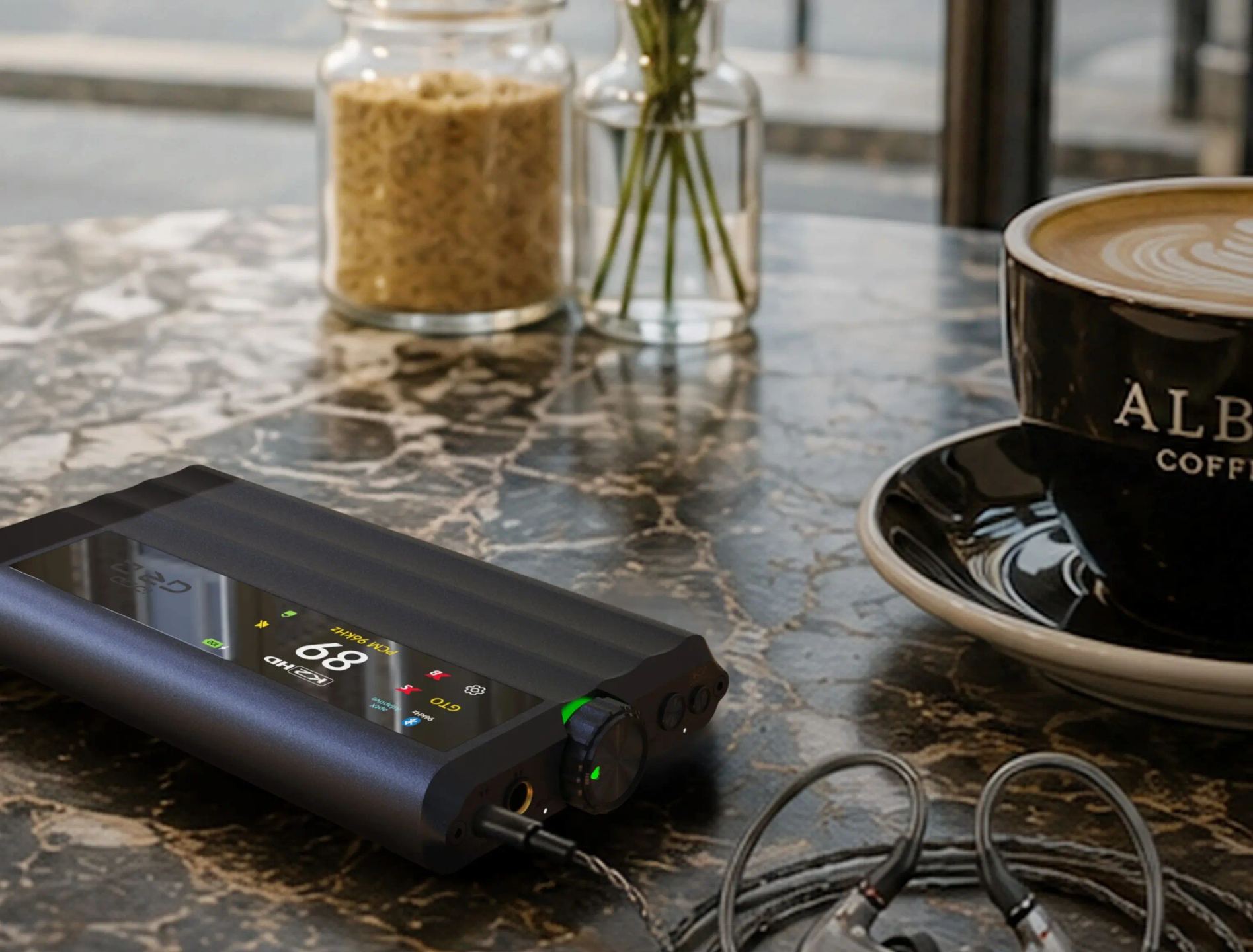
The 4900 mAh lithium-polymer battery provides around 7 hours of listening, with a full recharge in three and a half hours via USB-C (5 V, over 1.8 A). Above all, the GR 2 introduces a hybrid power mode that intelligently manages mains power and battery operation. When an external power supply is connected, it is used as a priority; if a demand peak occurs, the battery takes over, then mains power resumes as soon as consumption drops. You can therefore leave the GR 2 connected for long listening sessions without constantly drawing on the battery, helping to preserve its lifespan.
Technical specifications
Overview
- Redesigned successor to the xDSD Gryphon, featuring a new DAC chipset and refined architecture
- Most versatile portable DAC in the range, combining high-resolution digital inputs, advanced analog connectivity and lossless Bluetooth
- Compatible with the iFi Nexis app for extended control and remote updates (OTA)
- Advanced settings and in-depth customization via the app
- OTA updates to evolve the device over time
- USB features via Nexis exclusive to Android devices
Digital-to-analog conversion
- Burr-Brown PCM1795 current-output chipset
- Native 32-bit resolution
- Reduced distortion and expanded dynamic range
- iFi signature warm analog character
- Custom analog output stage fully exploiting the chipset’s potential
- “Music First” design prioritizing minimal PCM signal processing
High-resolution support
- PCM up to 768 kHz
- DSD up to DSD512
Audio processing
- JVCKENWOOD K2HD technology
- Restores depth, timbre and musicality
- Reintroduces subtle harmonic details
- K2 mode offering comparable enhancement without upsampling
- XSpace for soundstage expansion
- XBass+ for low-frequency enhancement
Amplification
- Class A operational amplifiers for natural analog reproduction
- Fully balanced circuit from end to end
- Enhanced iEMatch circuit with low-impedance MOSFET
- Reduced distortion, increased transparency and stable performance over time
Output power
- Up to 1513 mW RMS, representing 50% more power than the xDSD Gryphon
- 4.4 mm balanced output
- 6.94 V / 1513 mW into 32 Ω
- 8.60 V / 119 mW into 600 Ω
- 3.5 mm single-ended output (S-Balanced)
- 4.26 V / 567 mW into 32 Ω
- 4.27 V / 30 mW into 600 Ω
- Dynamic headroom suited to demanding headphones
User interface
- 2.3-inch (5.84 cm) color touchscreen OLED display
- Capacitive touchscreen panel
- Direct access to main settings without menu navigation
- Interface designed for speed and readability
- Large multifunction dial with light indicator
- Dedicated buttons for input selection, K2HD, XSpace and XBass+
- Volume Ramp for gradual volume increase
- Device Lock to lock the controls
Wireless connectivity
- Bluetooth 5.4
- Supported codecs: aptX Lossless, aptX Adaptive, aptX, LDAC, LHDC / HWA, AAC, SBC
- aptX Lossless for lossless CD-quality transmission (44.1 kHz / 16-bit)
- LDAC up to 990 kb / s
Inputs
- Digital
- 1 × USB-C
- 1 × S / PDIF (optical / coaxial)
- Bluetooth 5.4
- Analog
- 1 × 4.4 mm balanced
- 1 × 3.5 mm single-ended
Outputs
- Analog (line)
- 1 × 4.4 mm balanced
- 1 × 3.5 mm single-ended
- Headphone
- 1 × 4.4 mm balanced
- 1 × 3.5 mm S-Balanced
Measured performance
- Output impedance
- Balanced: ≤ 0.4 Ω; ≤ 4.5 Ω with iEMatch
- Single-ended (S-Balanced): ≤ 0.2 Ω; ≤ 4.4 Ω with iEMatch
- Signal-to-noise ratio and dynamic range: 115 dBA on all outputs
- THD + N
- 0.006% into 16 Ω (headphone outputs)
- 0.0005% at 0 dBFS (line outputs)
Power supply and battery life
- 4900 mAh lithium-polymer battery
- Battery life of approximately 7 h
- Required power supply: 5 V / > 1.8 A via USB-C
- Charging time of approximately 3.5 h
- Intelligent hybrid power mode
- Priority given to external power when available
- Automatic battery assistance in the event of peak demand
- Automatic return to external power as soon as demand decreases
- Enables extended use without unnecessary charging cycles
Dimensions and weight
- Dimensions: 141 × 75 × 19 mm
- Net weight: 268 g
Available accessories
- iDSD GR2 Case protective case (sold separately)
Frequently Asked Questions
Can the GR 2 be used as a stationary unit, permanently connected to the mains?
Yes. Thanks to its hybrid power mode and line outputs, the GR 2 is equally suited to portable use and stationary installation. Left plugged into the mains, it operates without unnecessarily drawing on its battery and can drive headphones or serve as a converter within a system.
Is an Android device required?
No. The GR 2 works with a smartphone, tablet, Windows or macOS computer, or a simple Bluetooth source. The restriction only applies to Nexis app-controlled USB features, which are exclusive to Android. In any case, the touchscreen provides access to the main settings without using the app.
Is the GR 2 compatible with an iPhone via USB-C?
Yes, via its USB-C input. iPhones equipped with a USB-C port connect directly to the GR 2 using a USB-C to USB-C cable, which is included in the box.
What’s in the box?
The GR 2 comes with a USB-A to USB-C cable, a USB-C to USB-C cable, a microfiber protective pouch, and a manual. The iDSD GR2 Case hard case must be ordered separately.
Can the GR 2 stream to a hi-fi system via Bluetooth?
Yes. It receives a Bluetooth signal (aptX Lossless, LDAC and other codecs) and outputs it through its 4.4 mm or 3.5 mm line outputs. Connected to an amplifier or active speakers, it becomes a high-quality Bluetooth receiver for an existing system.
Is breath noise controlled with highly sensitive in-ear monitors?
In principle, yes. The iEMatch circuit was designed specifically for this use case: it lowers the output level to limit hiss and provide more usable volume range. The 3.5 mm output in S-Balanced mode also helps keep the background noise clean.
How does the GR 2 differ from the xDSD Gryphon?
The GR 2 retains the Gryphon spirit but changes a lot under the hood. It introduces the Burr-Brown PCM1795 chip, delivers 50% more headphone power, adopts a color touchscreen instead of physical controls, upgrades to Bluetooth 5.4 with aptX Lossless, and integrates K2HD processing. Its form factor remains very similar, to the point that it shares cases with the previous generation.
- Eco-contribution included in the sale price.




