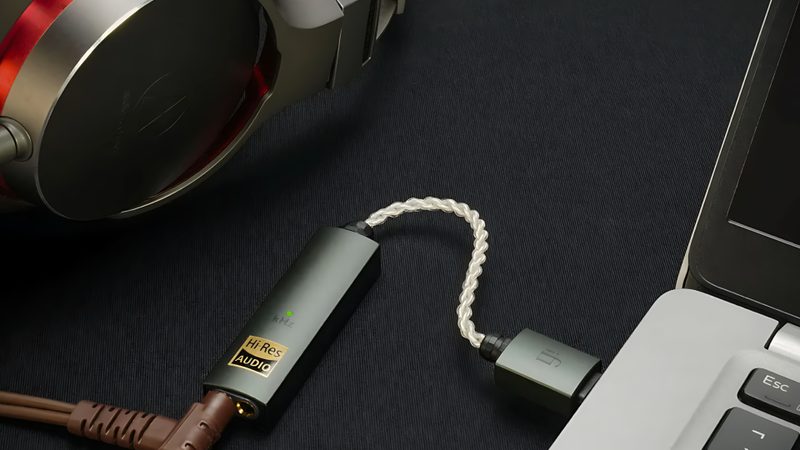
iFi Audio xDSD Gryphon black



Specifications and features


Overview
The xDSD Gryphon from iFi Audio is a portable digital-to-analog audio converter. It combines a high-resolution digital section using a Burr-Brown MultiBit chip with a PureWave analog section delivering 1,000 mW at 32 Ω. Designed for both high-impedance headphones and sensitive in-ear monitors, it offers a battery life of 6 to 8 hours depending on usage.
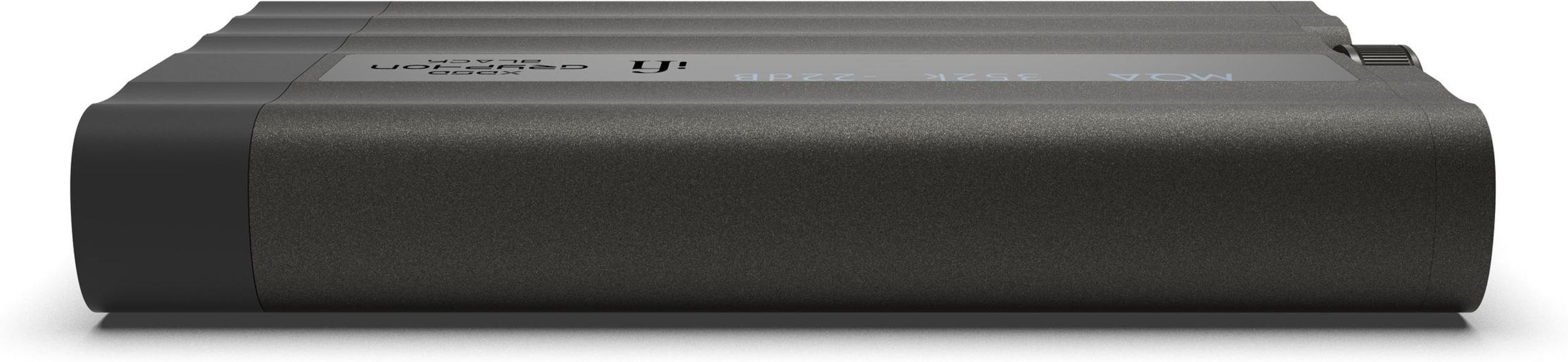
A chassis designed for mobility and durability
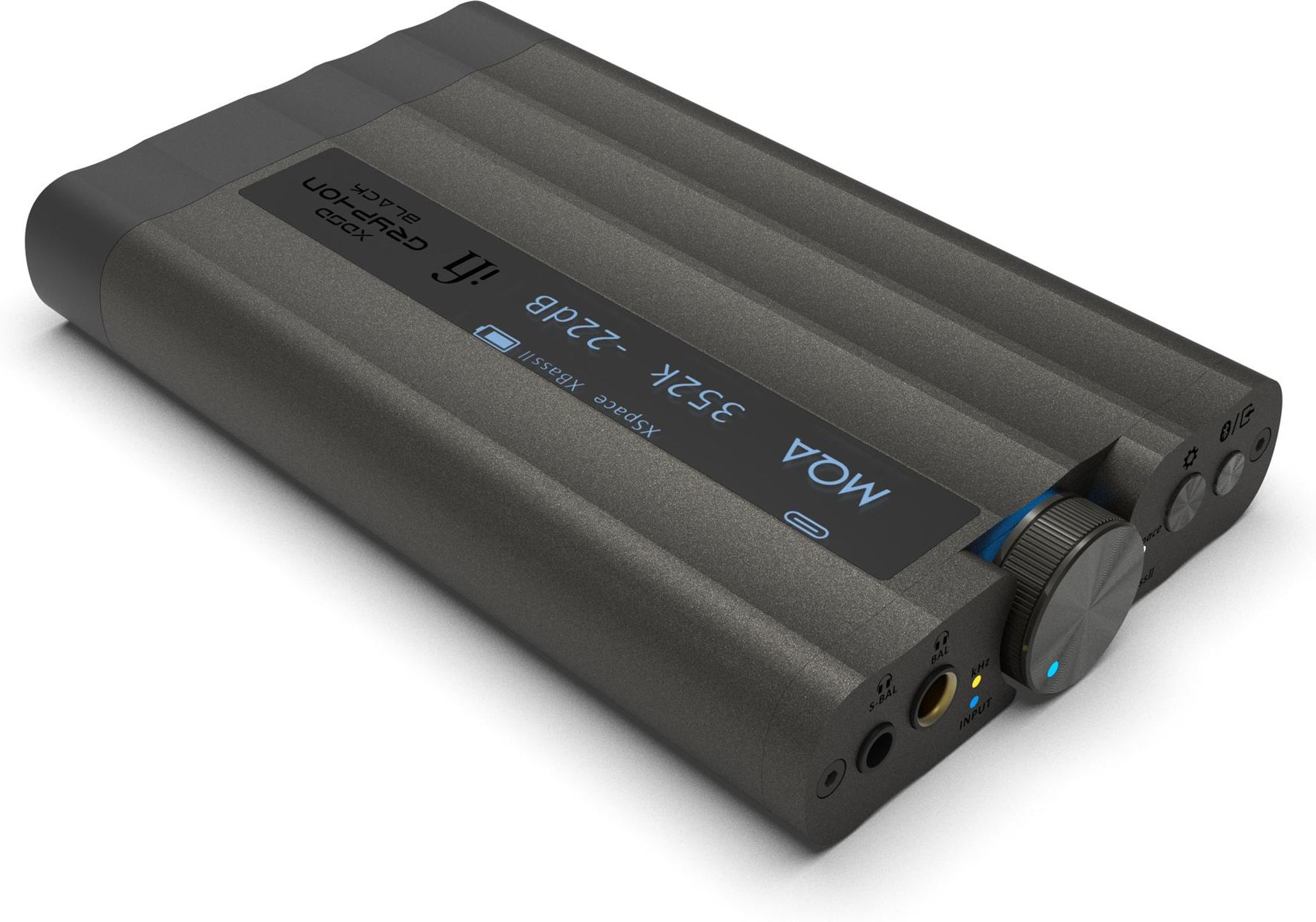
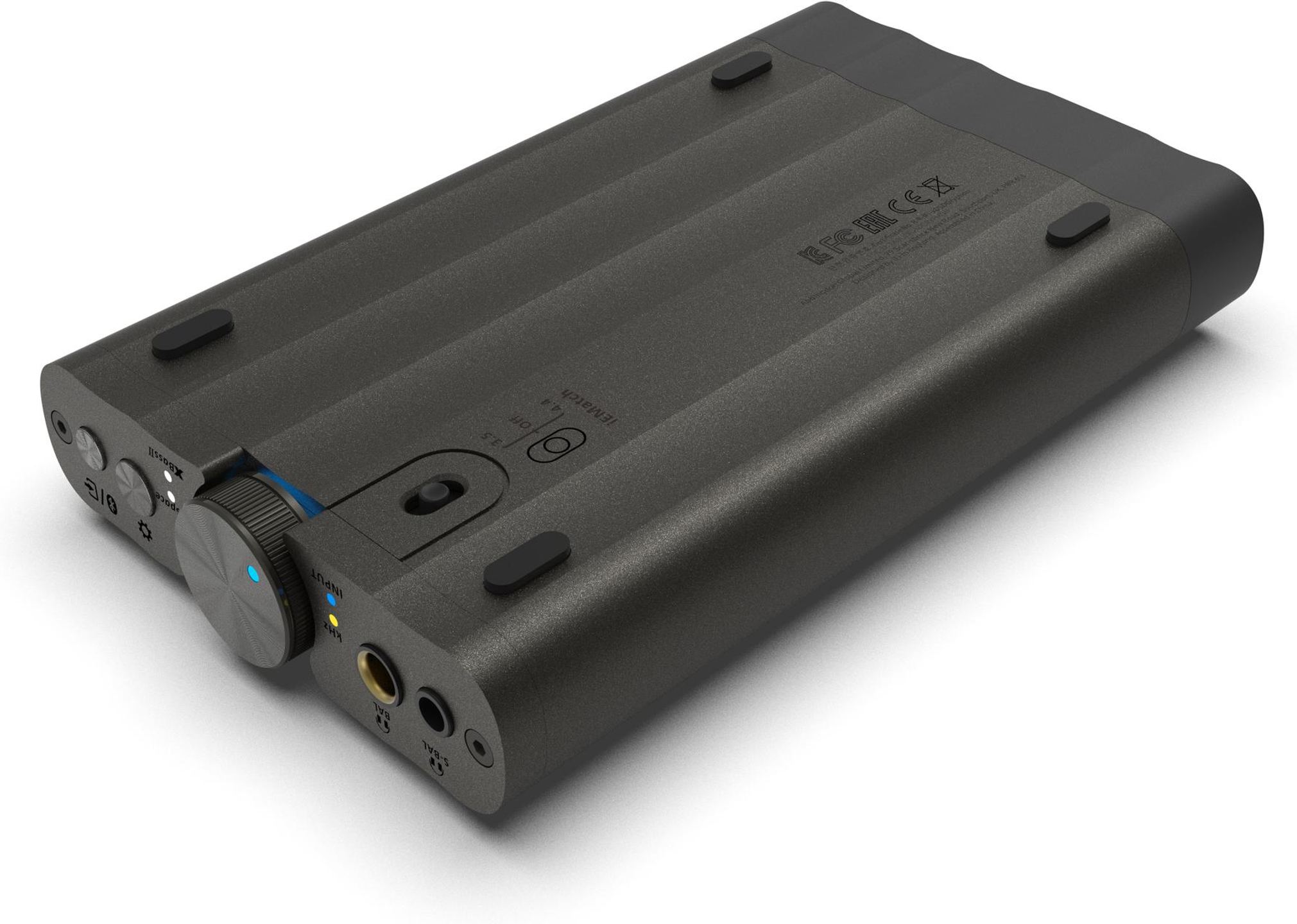
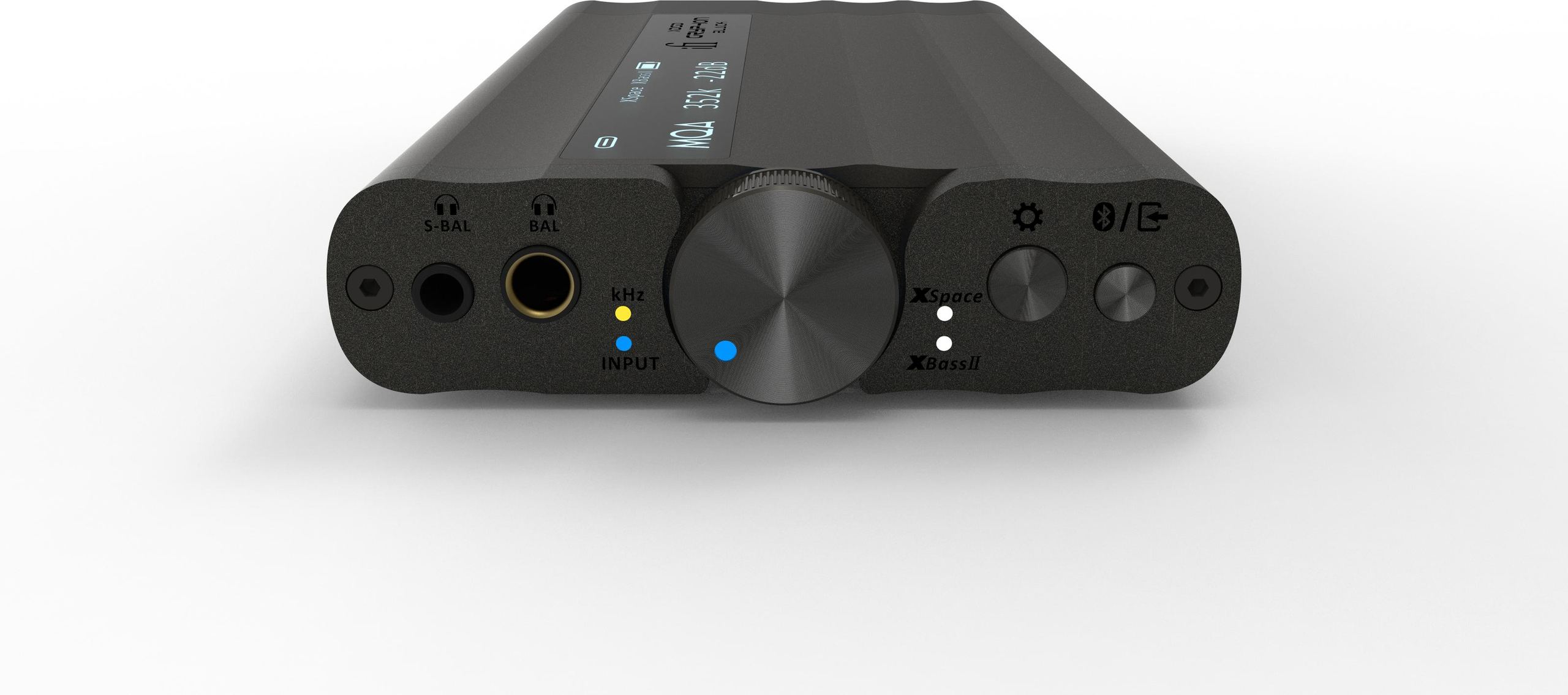
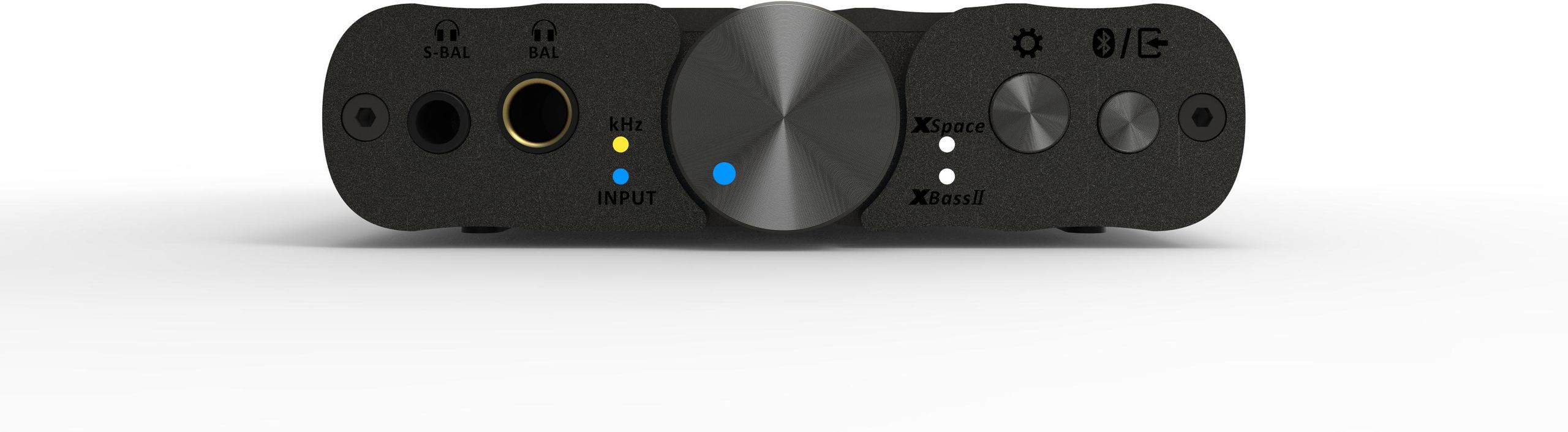
The central multifunction knob acts as a power button, volume control, and playback control. It produces a tactile click at each volume step and includes an LED indicator that changes color according to the volume level. On the front panel, two headphone outputs sit side by side: a 3.5 mm S-Balanced mini-jack and a 4.4 mm balanced Pentaconn output. To the right of the knob, one button selects the inputs (USB, Bluetooth, S/PDIF, analog line), while another controls the XBass II and XSpace functions.
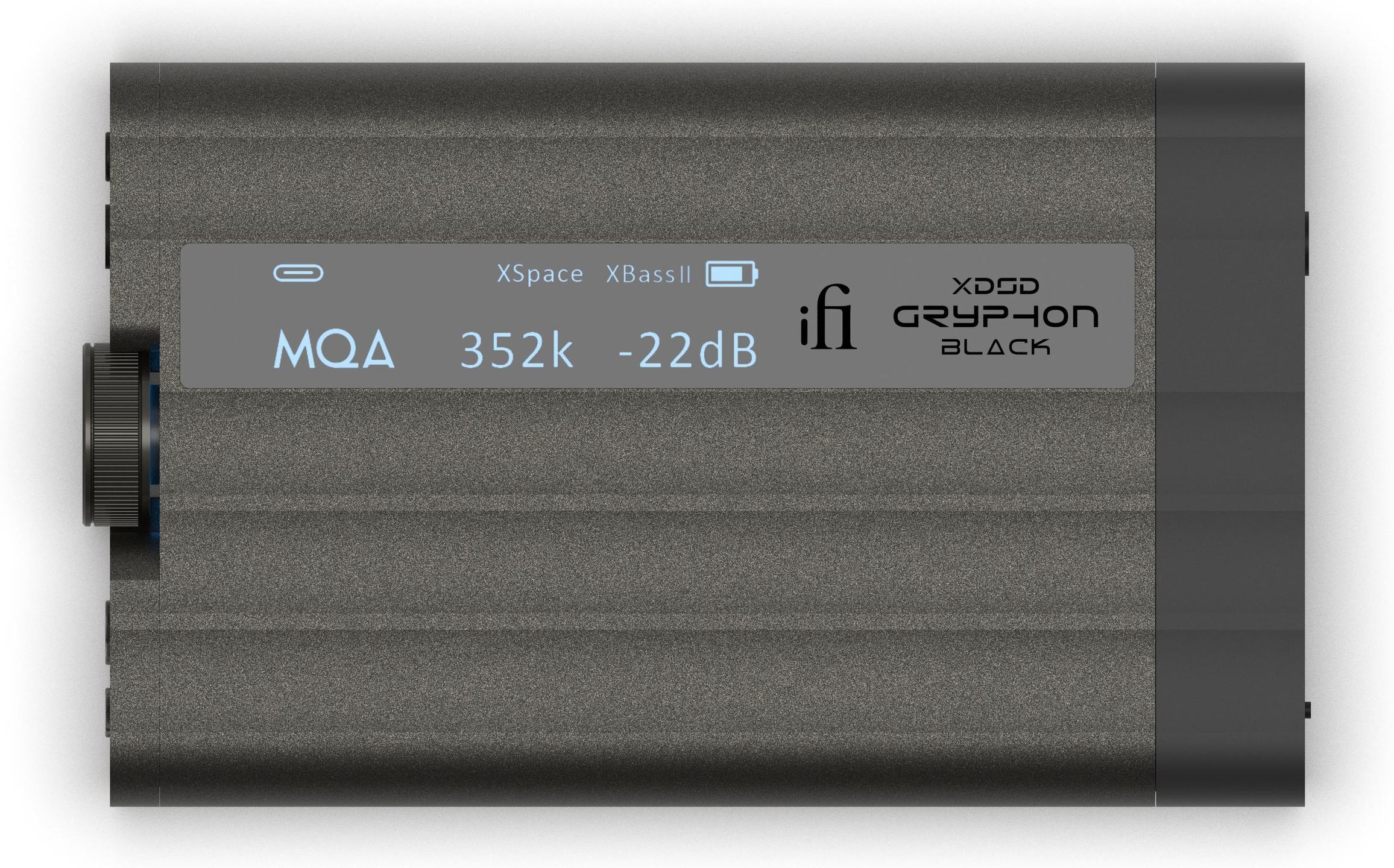
The OLED screen on the top displays all essential information: battery level, selected source, audio format (PCM, DSD, DXD, MQA), sampling rate, and digital volume. This SilentLine technology guarantees the absence of electrical interference with the audio signal, as the microcontroller only activates when a setting is changed.
Separate stages for maximum isolation
Unlike many portable DACs that pack all functions into a single circuit, the Gryphon physically separates three sections: Bluetooth, DAC, and amplification. This segmentation limits electrical interference between the different processing stages.
For Bluetooth 5.1 reception, iFi Audio uses the Qualcomm QCC5100 chip, compatible with all current codecs: aptX, aptX HD, aptX Adaptive, aptX Low Latency, LDAC, HWA/LHDC, AAC, and SBC. 24-bit formats are supported up to 48 kHz for aptX Adaptive and aptX HD, while LDAC and LHDC reach 96 kHz. The device stores up to seven paired Bluetooth devices. The Bluetooth processing chain includes a Global Master Clock to reduce jitter before conversion by the Burr-Brown DAC.
The 16-core XMOS processor handles digital processing, offering enough computing power to decode the most demanding formats in real time. Via USB, the Gryphon accepts PCM files up to 32-bit/768 kHz, DSD up to DSD512 (22.5 MHz), DXD up to 768 kHz, and performs full MQA unfolding. The 3.5 mm coaxial S/PDIF input works up to 24-bit/192 kHz and also accepts optical signals via a mini-Toslink adapter.
PureWave and OptimaLoop: a rethought analog section
The Gryphon’s amplification section is based on the PureWave architecture, a dual-mono fully balanced topology with short, direct signal paths. This approach completely separates the left and right channels to minimize crosstalk and noise. The four Direct Drive amplifiers operate at 0 V DC bias, eliminating the need for bulky coupling capacitors that could color the sound.
iFi Audio has developed OptimaLoop, a multi-path negative feedback system. Instead of a single global feedback loop, which can introduce phase shifts and group delay, OptimaLoop uses several local feedback loops, each optimized for a specific function. These loops work together to correct errors while preserving signal coherence.
The 4.4 mm balanced output delivers up to 6.7 V with more than 1000 mW at 32 Ω and 74 mW at 600 Ω. The 3.5 mm S-Balanced output reaches 3.5 V with 320 mW at 32 Ω and 40 mW at 600 Ω. This S-Balanced configuration applies the benefits of a balanced circuit to conventional unbalanced headphones. The signal-to-noise ratio exceeds 115 dB(A), while total harmonic distortion remains below 0.005% (1 V at 16 Ω).
Analog inputs and versatile use
The Gryphon includes 4.4 mm balanced and 3.5 mm unbalanced analog inputs, turning the device into a pure amplifier when connected to another source. These same connectors can operate as line outputs, allowing you to use the Gryphon as a DAC feeding an external amplifier. Volume control remains active in line-out mode, and the XBass II and XSpace processing also applies to the line outputs, making it possible to use the Gryphon as a preamplifier.
This flexibility extends usage scenarios beyond mobile applications. The Gryphon can be connected to a desktop system, used as a conversion stage between a network player and an amplifier, or simply as a headphone amplifier with a high-quality analog source.
Analog sound tuning: XBass II, XSpace, and iEMatch
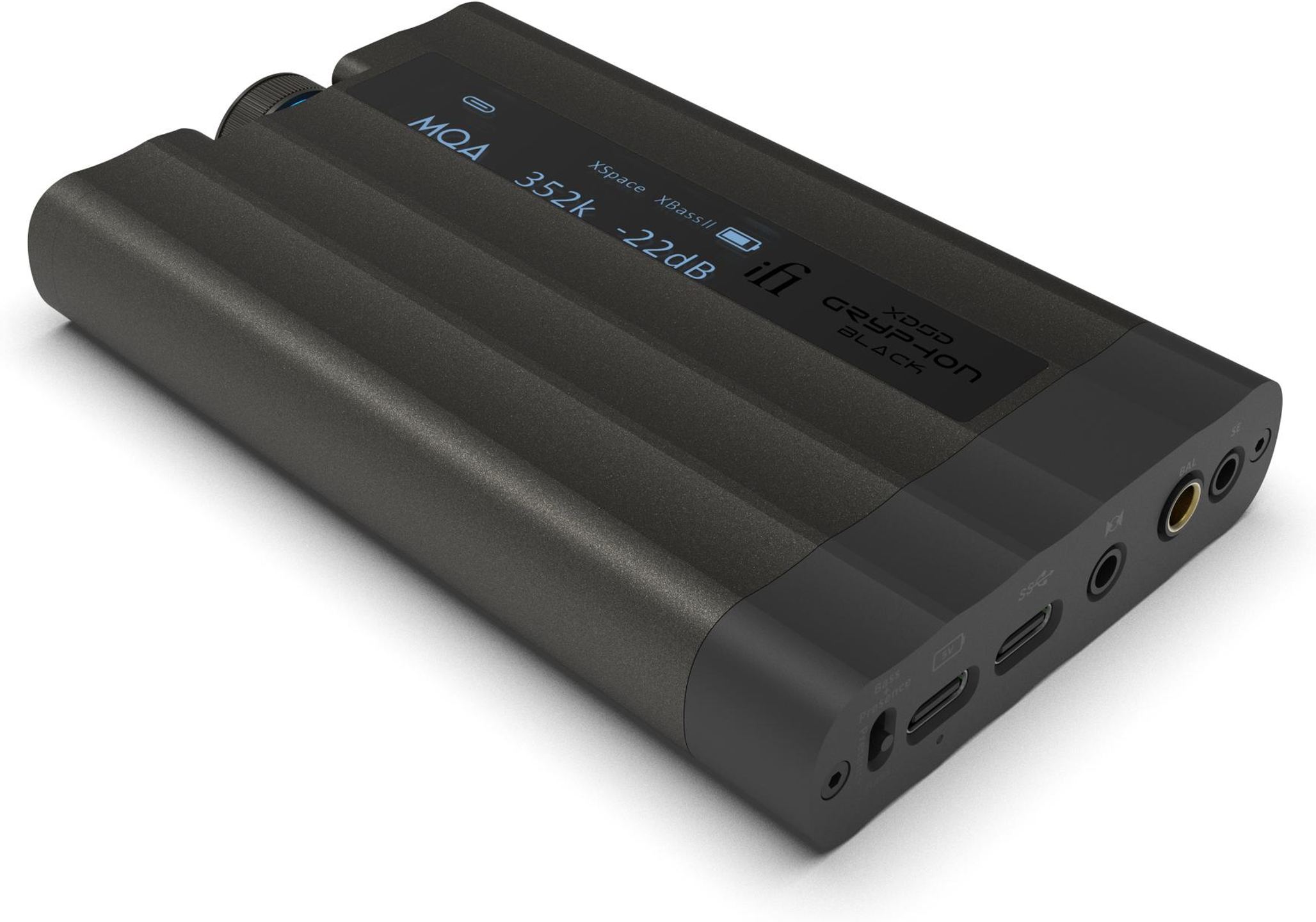
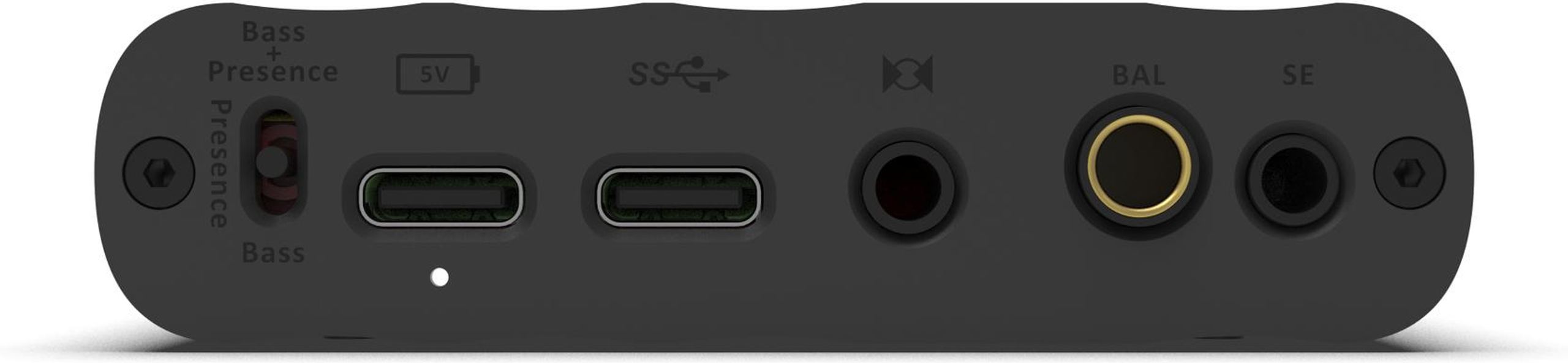
The front settings button activates XBass II and XSpace, two fully analog processing circuits that do not interfere with the digital signal. A three-position switch on the back of the device refines the behavior of XBass II: Bass position (lows only), Presence position (upper mids/treble around 3 kHz), or combined Bass + Presence position.
XBass II compensates for the bass response of open-back headphones or restores low-frequency impact on certain recordings. Unlike a simple volume boost, this circuit corrects specific response dips without spilling into the rest of the spectrum. The Presence function targets upper mids to give more presence to voices and instruments in that area.
XSpace widens the soundstage to counter the typical “in-the-head” localization effect of headphone listening. This analog circuit recreates a spatialization close to speaker listening, adding air and depth to the stereo image. Depending on the recordings and listening preferences, XSpace can make the music feel less confined.
The iEMatch switch on the underside of the device selects the 3.5 mm or 4.4 mm output to apply specific attenuation for very sensitive in-ear monitors. This function eliminates audible hiss that can occur with certain IEMs without sacrificing dynamic range or maximum output level. Three positions are available: Off, 3.5 mm, or 4.4 mm.
Digital filters and sound customization
The menu accessible via the settings button offers three digital filters that act on signal reconstruction: Bit-Perfect (BP), Standard (STD), and GTO (Gibbs Transient Optimised). The Bit-Perfect filter preserves the signal without alteration, maintaining the original recording as much as possible. The Standard filter applies moderate filtering, while the GTO filter up-samples to 384/362 kHz with no pre-ringing, minimal filtering, and limited post-ringing.
These filters allow for subtle tuning of the sonic character depending on personal preferences or the equipment used. The GTO filter is particularly suitable for listeners sensitive to reconstruction artifacts, while Bit-Perfect mode satisfies those seeking absolute transparency.
Power supply and charging management
The high-density 3600 mAh lithium-polymer battery is recharged via the dedicated USB-C port, accepting up to 1900 mA with BC V1.2 fast charging. A full charge takes about three hours. Battery life ranges from six to eight hours depending on headphone load and listening level.
A menu lets you configure the power source, optionally separating power and signal in desktop use. This separation can improve sound quality by isolating the power supply from audio data. The device features two USB-C ports: one for charging and one for audio data. Dual Port mode maintains the battery at 3.88 V when the Gryphon is connected to a computer, avoiding repeated charge-discharge cycles during extended stationary use.
Evolution compared to the original xDSD
The xDSD Gryphon succeeds the xDSD launched in 2018 and the xCAN, a complementary portable amplifier. iFi Audio has merged the features of these two devices into the Gryphon while adding extra capabilities. The original model lacked an OLED screen, used a less capable DAC, and offered lower amplification power.
The Gryphon improves the soundstage, a weak point of the original xDSD, which could feel constrained. Instrument separation and transparency have also advanced, while the overall tonal body remains fuller. The chassis benefits from a better finish, with a fingerprint-resistant surface treatment and a more robust construction. Pre-installed rubber feet stabilize the device on a flat surface.
The user interface has been completely redesigned with the addition of the OLED screen and the CyberSync OS, making navigation more intuitive. New functions such as XBass II configuration (bass only, presence only, or combined) and digital filter selection broaden customization options.
Documentation
Technical specifications
Additional features
- OLED screen for viewing audio formats and levels
- Analog volume control via multifunction knob
- Analog sound customization
- Bass Boost amplification
- XSpace headphone spatialization for an immersive experience
- Integrated iEMatch: compatible with all in-ear monitors, even very sensitive models
- High-end components: Murata, KEMET, ALPS, Texas Instruments
- Ultra-low-noise power supply
- High-fidelity audio circuits
Audio formats and resolution
- PCM: up to 32-bit / 768 kHz, 705.6 kHz, 384 kHz, 352.8 kHz, 192 kHz, 176.4 kHz, 96 kHz, 88.2 kHz, 48 kHz, 44.1 kHz via USB
- Native DSD: DSD512, DSD256, DSD128, DSD64
- DXD: 768 kHz, 705.6 kHz, 384 kHz, 352.8 kHz
- Full MQA: up to 384 kHz, 352.8 kHz
- High-resolution Bluetooth: up to 96 kHz
- Supported codecs: aptX HD, aptX Adaptive, LDAC, HWA / LHDC, AAC, SBC
- Bluetooth 5.1 module at 96 kHz
Connectivity and inputs
- USB-C port
- Bluetooth 5.1
- Coaxial S/PDIF input
- Analog inputs
- Balanced: 4.4 mm jack
- Unbalanced: 3.5 mm jack
Digital-to-analog conversion
- Burr-Brown bit-perfect DSD and DXD converter
- Selectable digital filters: bit-perfect (BP), GTO, standard (STD)
- PureWave architecture: fully balanced dual-mono analog circuit for exceptional linearity and ultra-low distortion
- OptimaLoop technology: optimized multi-path negative feedback
Line outputs
- Balanced output
- Maximum voltage: 6.7 V (variable)
- Output impedance: ≤ 200 Ω
- Signal-to-noise ratio: ≥ 110 dB(A)
- THD+N: ≤ 0.007%
- Unbalanced output
- Maximum voltage: 3.5 V (variable)
- Output impedance: ≤ 100 Ω
- Signal-to-noise ratio: ≥ 110 dB(A)
- THD+N: ≤ 0.015%
Headphone outputs
- Balanced output
- Maximum voltage: 6.7 V at 600 Ω
- Output power: > 1,000 mW at 32 Ω, > 74 mW at 600 Ω
- Output impedance: < 1 Ω
- Signal-to-noise ratio: 116 dB(A)
- THD+N: < 0.005% (1 V at 16 Ω)
- Unbalanced output
- Maximum voltage: 3.5 V at 600 Ω
- Output power: > 320 mW at 32 Ω, > 40 mW at 300 Ω
- Output impedance: < 1 Ω
- Signal-to-noise ratio: 115 dB(A)
- THD+N: < 0.005% (1 V at 16 Ω)
Battery and power supply
- High-density lithium-polymer battery
- USB-C charging compliant with BC V1.2
- Charging current: up to 1,900 mA
Dimensions and weight
- Dimensions: 123 x 75 x 19 mm
- Weight: 215 g
Frequently asked questions
Can the xDSD Gryphon charge its battery while in use?
Yes, the Gryphon can operate while charging via its dedicated USB-C port. A menu setting allows you to activate Dual Port mode, which keeps the battery at a stable level (3.88 V) when the device is connected to a computer, preventing constant charge-discharge cycles during prolonged desktop use.
Which headphones work best with the Gryphon?
The Gryphon drives dynamic headphones up to 600 Ω effectively thanks to its maximum balanced output voltage of 6.7 V. Planar-magnetic headphones of medium sensitivity work well, but the most demanding models may reach the device’s power limits. In-ear monitors benefit from iEMatch, which removes background hiss without reducing dynamics.
Do the XBass II and XSpace settings really change the sound, or are they subtle effects?
XBass II and XSpace have an audible yet controlled impact. XBass II adds weight in the low end or presence in the upper mids depending on the rear switch position, without creating excessive boominess. XSpace noticeably widens the soundstage and reduces the typical centered localization effect of closed-back headphones. The extent of these changes depends on the headphones and source equipment, as some recordings respond better than others.
Does the Gryphon’s Bluetooth rival a wired USB connection?
The quality gap between Bluetooth and USB has narrowed considerably on the Gryphon. With LDAC or LHDC codecs at 96 kHz, the quality approaches that of a wired connection for most listeners. The separate processing chain (QCC5100 chip, master clock, Burr-Brown DAC) minimizes the usual wireless compromises. Users of high-resolution PCM files (192 kHz and above) or DSD will still prefer USB to preserve native resolution.
Does the Gryphon replace a desktop DAC?
The Gryphon uses the same DAC components as much more expensive iFi Audio desktop devices. In stationary use, it behaves like a high-quality converter. Its multiple inputs/outputs, amplification power, and signal-processing options make it a versatile device. Larger desktop DACs still hold advantages in raw power for the most demanding headphones, stabilized mains power supplies, and sometimes additional features, but the Gryphon covers most needs in a compact form factor.
Why three digital filters, and how should I choose?
The three filters (Bit-Perfect, Standard, GTO) subtly modify the reconstruction of the digital signal into analog. The Bit-Perfect filter suits purists seeking maximum transparency. The Standard filter balances technical performance and natural listening. The GTO filter eliminates pre-ringing (artifacts before transients) at the cost of slight post-ringing, making it preferable for those sensitive to metallic-sounding artifacts on certain recordings. The choice is subjective and depends on the system and individual preferences.
- Eco-contribution included in the sale price.
- Manufacturer reference: IFI0011B
- GTIN / EAN: 5061043052864