FiiO BR15 R2R black



Specifications and features


FiiO BR15 R2R: a Bluetooth receiver with R2R conversion
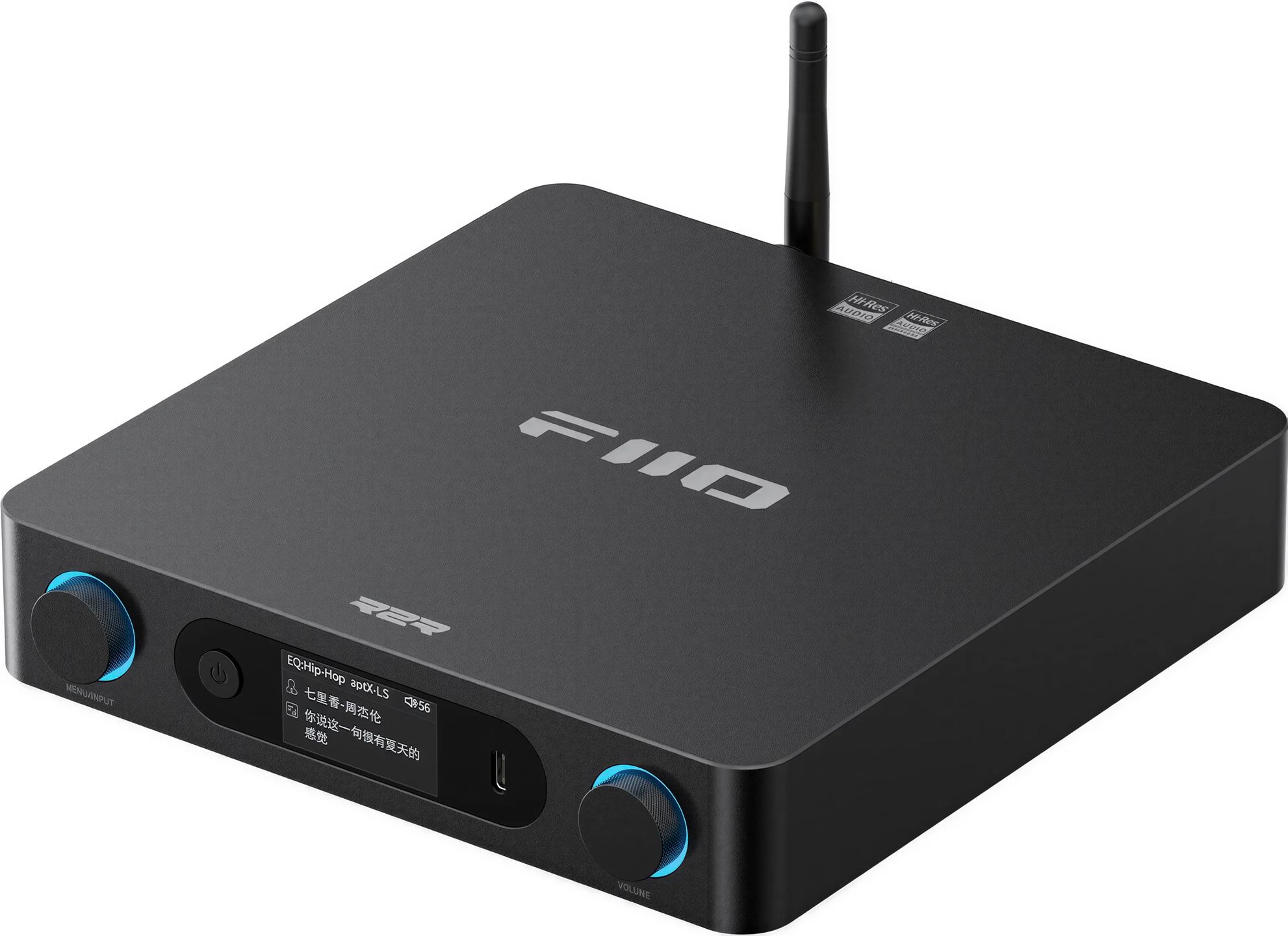
Bringing wireless streaming into a serious hi-fi system while preserving signal quality is the goal of this desktop unit from FiiO. It receives Bluetooth 6.0 in lossless codecs, converts it using an in-house developed R2R module, then sends the signal to active speakers or an amplifier. A fully fledged source component, permanently installed in an existing system.
An in-house R2R conversion module
Two major families of digital-to-analog converters share the market: the dominant delta-sigma chips and R2R resistor ladders, which are rarer and more expensive to develop. FiiO has chosen the latter approach with an in-house developed module, already used in its desktop R2R range.
Specifically, each channel uses 48 thin-film resistors, or 192 in total for this fully differential four-channel, 24-bit converter. These resistors are matched to 0.1% accuracy, with thermal drift limited to 30 ppm—two figures that determine the signal’s linearity and long-term stability.
Two conversion modes are available. NOS mode reads the file without oversampling, staying as close as possible to the original data, with the somewhat distinctive texture sought by R2R enthusiasts. OS mode oversamples up to 384 kHz (96, 192 or 384 kHz settings, 192 kHz by default) for smoother playback. The choice is made by ear, depending on the track and the rest of the system.
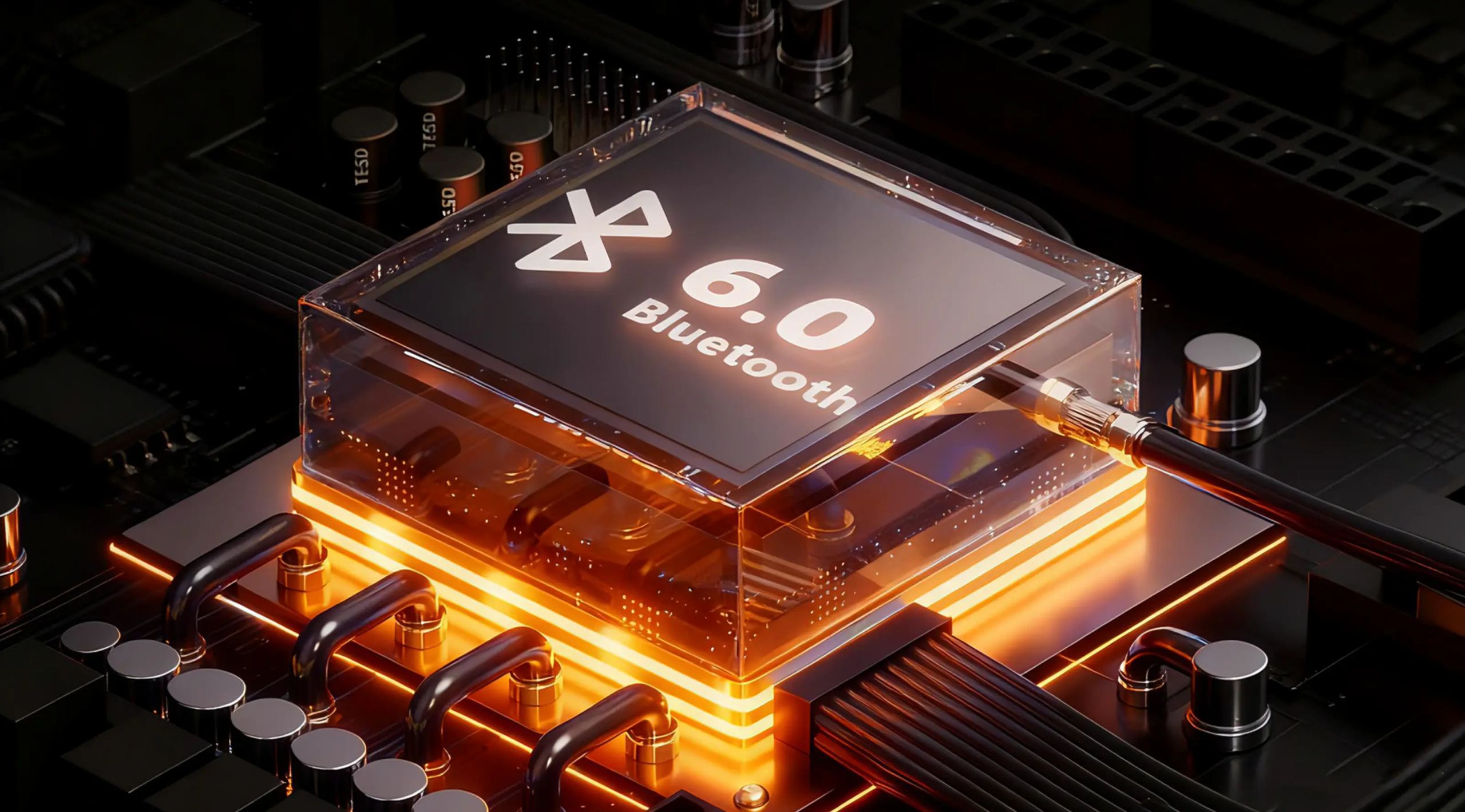
Bluetooth 6.0 and lossless codecs
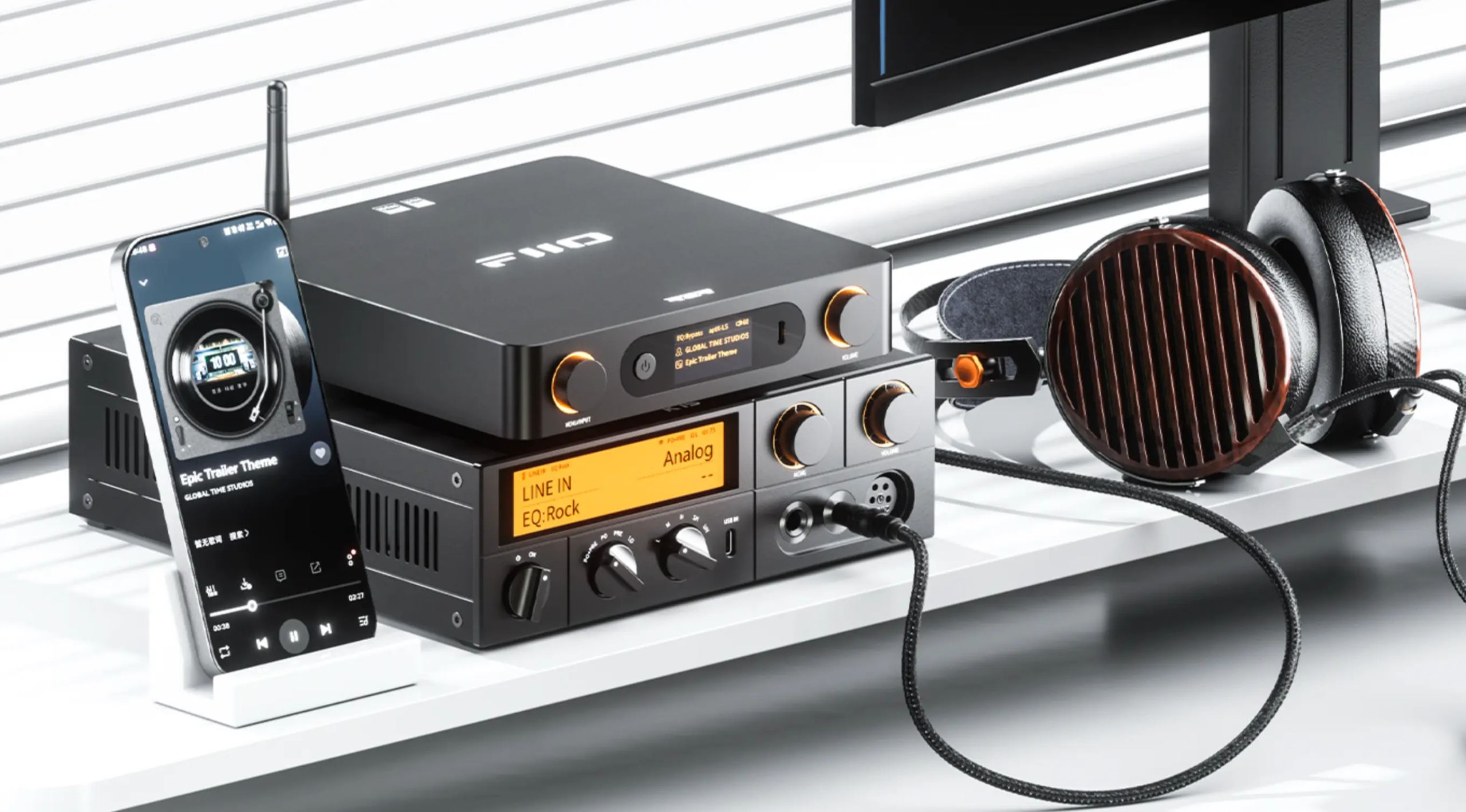
Wireless connectivity is handled seriously here. The Qualcomm QCC5181 chip, a high-end model, supports Bluetooth 6.0 and the LE Audio standard, with throughput reaching up to 2.1 Mbit/s. A dedicated external antenna improves range and connection stability.
On the codec side, the list is extensive: LDAC, aptX Lossless, aptX Adaptive, aptX HD, aptX, LC3 and SBC. aptX Lossless targets CD-equivalent wireless quality, provided the transmitting phone or computer also supports it. Otherwise, the connection falls back to a more common codec, which remains listenable but without the benefit of lossless transmission.
A hub of inputs and outputs
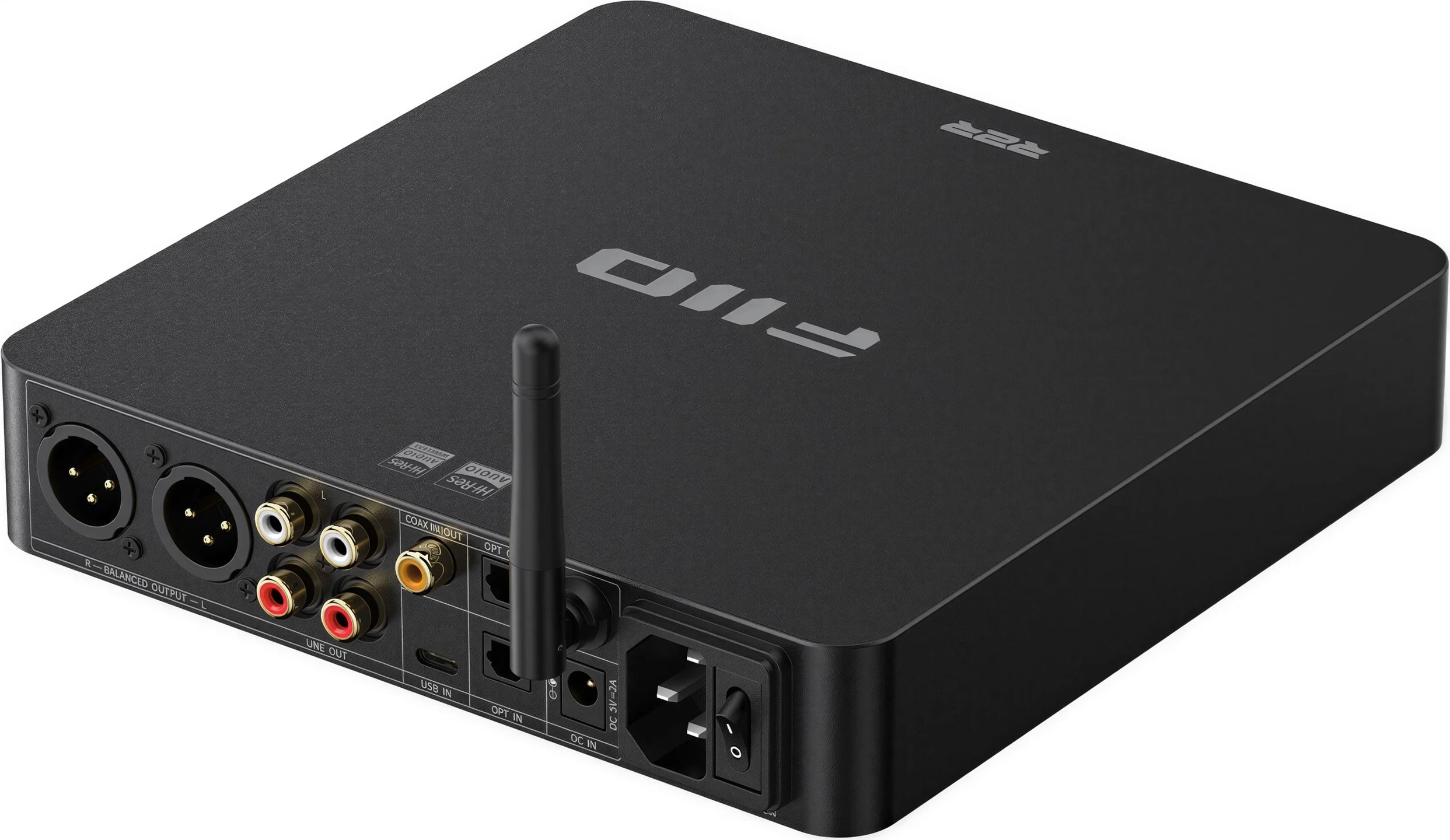
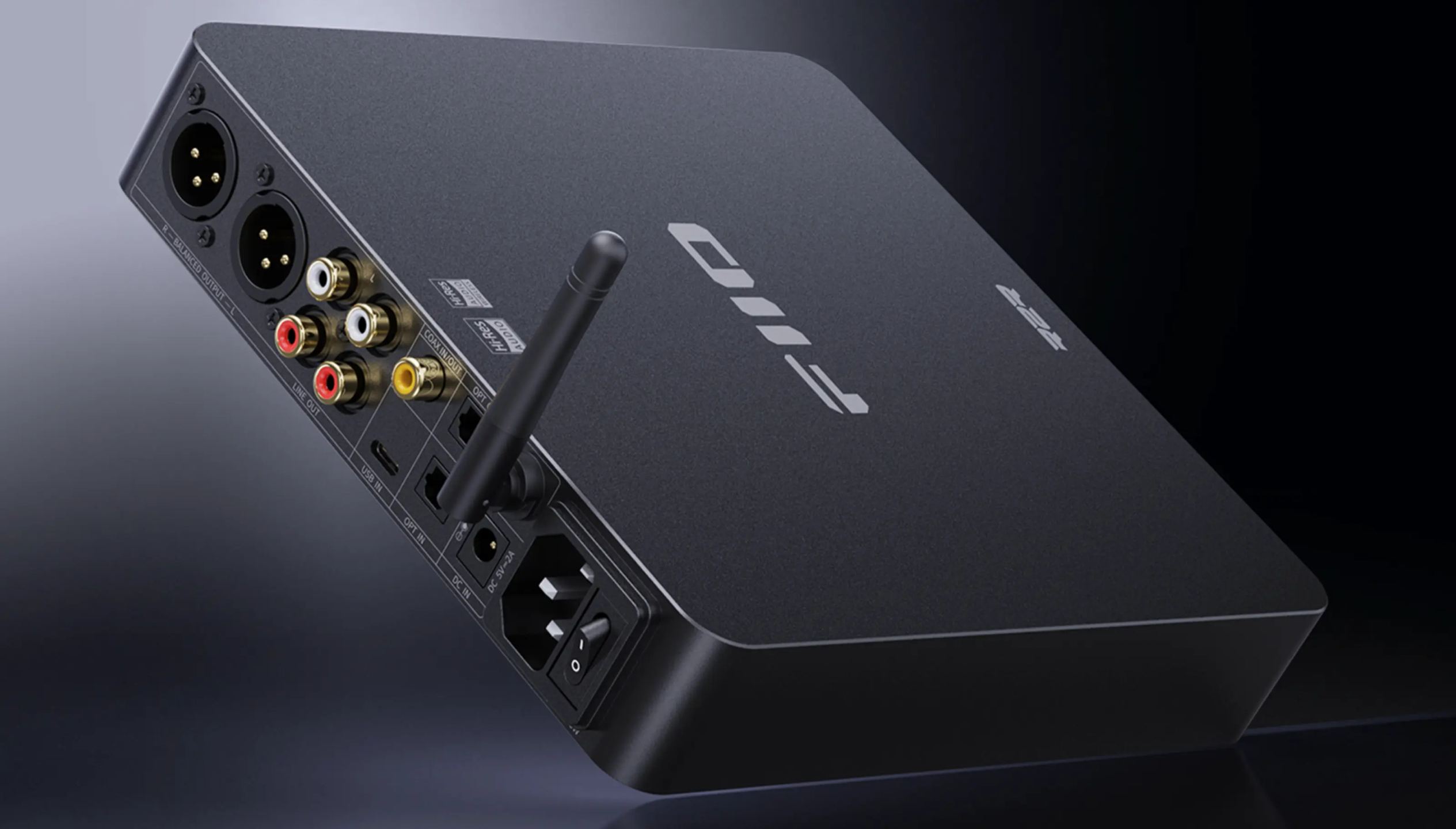
The BR15 R2R can fit into very different systems. As inputs, it accepts USB-C, RCA coaxial, Toslink optical and Bluetooth. USB supports up to 384 kHz / 32-bit and DSD256; coaxial and optical digital inputs are limited to 192 kHz / 24-bit and DSD64. A driver-free mode avoids having to install software on a computer.
On the output side, two unbalanced RCA sockets and a balanced XLR output sit alongside optical and coaxial digital outputs. The latter allow it to be used as a simple bridge to another converter, without using its analog stage. The coaxial port serves as both an input and output depending on the configuration.
Full MQA decoding is included, provided the equalizer is disabled, as both processes cannot be applied at the same time. Native 1-bit DSD is also supported.
Preamplifier for active speakers
The analog outputs operate at fixed or variable level. At variable level, the BR15 R2R becomes a preamplifier: volume is adjusted with the knob or remote control, and active speakers can be driven directly via RCA or XLR. At fixed level, it returns to being a conventional line-level source placed before an amplifier.
Measurements reflect the care taken with the output stage. The balanced XLR connection is rated at 4.4 Vrms, with an A-weighted signal-to-noise ratio of 119 dB or higher and distortion of around 0.015%. The unbalanced RCA output remains in the same range, at 2.2 Vrms and 116 dB. Values that leave plenty of headroom for most active speakers.
Correcting sound band by band
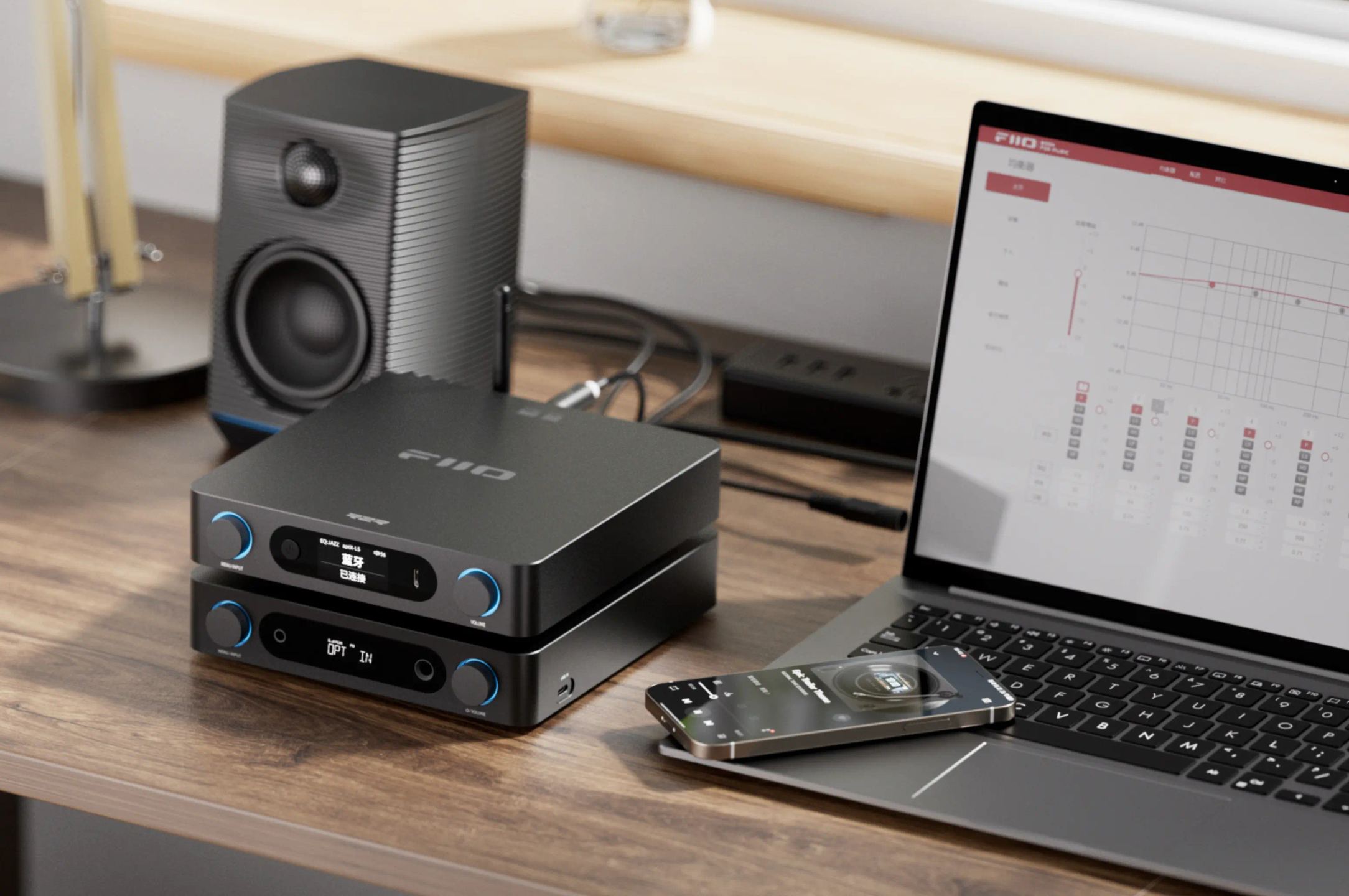
The parametric equalizer has ten bands, applied globally regardless of the input mode. The FiiO Control app allows presets to be loaded, custom curves to be created and shared. The AUTO EQ function goes further: it brings the response closer to a target curve and adjusts the bands automatically.
The 1.47-inch (3.73 cm) color LCD screen displays bitrate, volume, equalizer status, active Bluetooth codec, current mode and even lyrics in real time. An RGB light ring surrounds the knob, in a fixed color or pulsing mode, with adjustable brightness. Two knobs and an infrared remote control complete the controls, all housed in an aluminum chassis measuring approximately 210 × 188 × 42 mm and weighing 760 g on the desk.
Mains or external linear power supply
Two power options are available. A universal mains input (100-240 V, 50/60 Hz) is sufficient for most installations. A 5 V DC power input (5.5 × 2.1 mm jack) also accepts an external linear power supply, for those wishing to further reduce power supply noise. Switching to the DC input occurs automatically as soon as it is connected.
Technical Specifications
Hardware Architecture
- Type: high-resolution Bluetooth audio receiver / converter (DAC)
- ESP32-S3 main controller
- Proprietary FiiO R2R DAC
- XU316 USB decoding
- Qualcomm QCC5181 Bluetooth decoding
Digital-to-Analog Converter
- In-house quad-channel, fully differential, 24-bit R2R DAC
- 48 thin-film resistors per channel (192 total)
- 0.1% precision
- 30 ppm thermal drift
- Conversion modes: NOS (non-oversampling), OS (oversampling up to 384 kHz)
- Oversampling: OFF, 96K, 192K, 384K
Decoding Features
- Operating modes: USB DAC, coaxial decoding, optical decoding, Bluetooth reception
- Full MQA decoding (PEQ disabled)
- Native 1-bit DSD support
- 10-band parametric PEQ equalizer + AUTO EQ
- Driver-free mode supported
Bluetooth Connectivity
- Bluetooth 6.0 version (LE Audio compatible)
- Dedicated external antenna
- Supported codecs: LDAC, aptX Lossless, aptX Adaptive, aptX HD, aptX, LC3, SBC, AAC
- Maximum bitrate: up to 2.1 Mbps
Connections
- 2 USB Type-C ports (data transmission)
- 1 RCA coaxial input / output (shared input / output port)
- 1 Toslink optical input
- 1 Toslink optical output
- 1 XLR3 balanced line output (fixed or variable)
- 2 RCA unbalanced line outputs (fixed or variable)
- Physical power button
Maximum Supported Bitrates (PEQ disabled)
- USB decoding: 384 kHz / 32 bits, DSD256
- Coaxial decoding: 192 kHz / 24 bits, DSD64
- Optical decoding: 192 kHz / 24 bits, DSD64
- Coaxial output: up to 192 kHz / 24 bits, DSD64
- Optical output: up to 192 kHz / 24 bits, DSD64
User Interface and Control
- 1.47-inch (3.73 cm) color LCD screen displaying bitrate, volume, EQ, Bluetooth codec, mode and lyrics
- Control wheel indicator with customizable color and brightness, fixed or RGB pulsing mode
- Volume control via wheel or remote control
- Infrared remote control (supplied model only)
- FiiO Control app
Unbalanced Line Output Measurements
- Conditions: RCA, USB DAC / coaxial / optical, 192K oversampling
- THD+N: approximately 0.017% (1 kHz / 0 dB @ 10 kΩ)
- Signal-to-noise ratio: ≥ 116 dB (A-weighted)
- Crosstalk: ≥ 110 dB
- Noise floor: < 3.3 µV (A-weighted)
- Dynamic range: ≥ 110 dB
- Frequency response:
- 20 Hz - 20 kHz: attenuation < 0.2 dB
- 20 Hz - 65 kHz: attenuation < 2.9 dB
- Output level: 2.2 Vrms (1 kHz @ 10 kΩ)
Balanced Line Output Measurements
- Conditions: XLR3, USB DAC / coaxial / optical, 192K oversampling
- THD+N: approximately 0.015% (1 kHz / 0 dB @ 10 kΩ)
- Signal-to-noise ratio: ≥ 119 dB (A-weighted)
- Crosstalk: ≥ 112 dB
- Noise floor: < 5.1 µV (A-weighted)
- Dynamic range: ≥ 112 dB
- Frequency response:
- 20 Hz - 20 kHz: attenuation < 0.2 dB
- 20 Hz - 65 kHz: attenuation < 2.9 dB
- Output level: 4.4 Vrms (1 kHz @ 10 kΩ)
Power Supply
- AC 100-240 V ~ 50 / 60 Hz mains power or DC 5 V / ≥ 2 A (selectable, automatic switch to DC)
- External DC input: 5.5 × 2.1 mm jack, compatible with external linear power supply
General Overview
- Dimensions: approximately 210 × 188 × 42 mm (including feet)
- Weight: approximately 760 g
Included Accessories
- Quick installation guide
- Power adapter
- USB-C cable
- Remote control
Frequently Asked Questions
Can headphones be connected to the BR15 R2R?
No. It includes neither a headphone output nor a headphone amplifier. Its purpose is to serve as a source and line preamplifier, sending the signal to active speakers, an amplifier, or another converter. To listen through headphones, you need to add a headphone amplifier downstream from its RCA or XLR outputs.
Can it directly power passive speakers?
No, because it does not have a power amplifier stage: its outputs operate at line level. It must therefore be paired either with active (powered) speakers or with an amplifier that will drive passive speakers.
Does lossless Bluetooth work with any source?
Quality depends on the transmitting phone or computer. To benefit from aptX Lossless or LDAC, the source device must support these codecs. Otherwise, the connection falls back to a common codec such as SBC, which is listenable but below lossless quality.
Do I need to install a driver on my computer?
Not necessarily: a driverless mode is provided for immediate USB use. Advanced settings and the equalizer are accessed via the FiiO Control app.
Can it be used as a simple gateway to another converter?
Yes. Its optical and coaxial digital outputs transmit the signal received via Bluetooth, USB or SPDIF to an external converter, without passing through its own analogue stage. Handy for adding lossless Bluetooth to a DAC that lacks it.
Are there any constraints for MQA decoding?
Yes. Full MQA decoding requires disabling the parametric equalizer, as the two processes cannot be applied simultaneously. Simply turn off the PEQ to restore full MQA unfolding.
Does the remote control work with other FiiO devices?
The supplied infrared remote control is designed for this model only. Volume control and navigation remain available via the front-panel knobs and the app.
- Eco-contribution of €0.12 included in the sale price.
- Manufacturer reference: FIIBR15R2RBK
- GTIN / EAN: 6953175792055