What Is an R2R DAC and Does It Make a Difference Compared with Delta-Sigma?
October 01, 2026
Contents
Two acronyms come up as soon as you look at the specifications of a digital-to-analog converter: delta-sigma, found in the vast majority of devices sold today, and R2R, long reserved for very expensive models and now available at accessible prices. A DAC performs a task that is simple to describe: it takes a stream of numbers, from a CD, a file or a streaming service, and turns it back into an electrical voltage that the amplifier can reproduce. Two schools of thought differ on how to achieve this, and the question many people ask is a legitimate one: can you really hear the difference when switching from one to the other?
The resistor network that sums the bits
The R2R principle is named after its acronym: a network of resistors with two values, R and 2R, wired in a ladder arrangement. Each bit of the digital word controls a switch that adds or removes a fraction of voltage weighted according to its position. The most significant bit accounts for half of the amplitude, the next for a quarter, the next for an eighth, and the sum of all these fractions directly reconstructs the sample value. For a 24-bit signal, twenty-four precision stages are required. Conversion is direct and simultaneous: the converter reads a sample, and the voltage appears at the output. This is also the principle known as multibit, as opposed to delta-sigma.
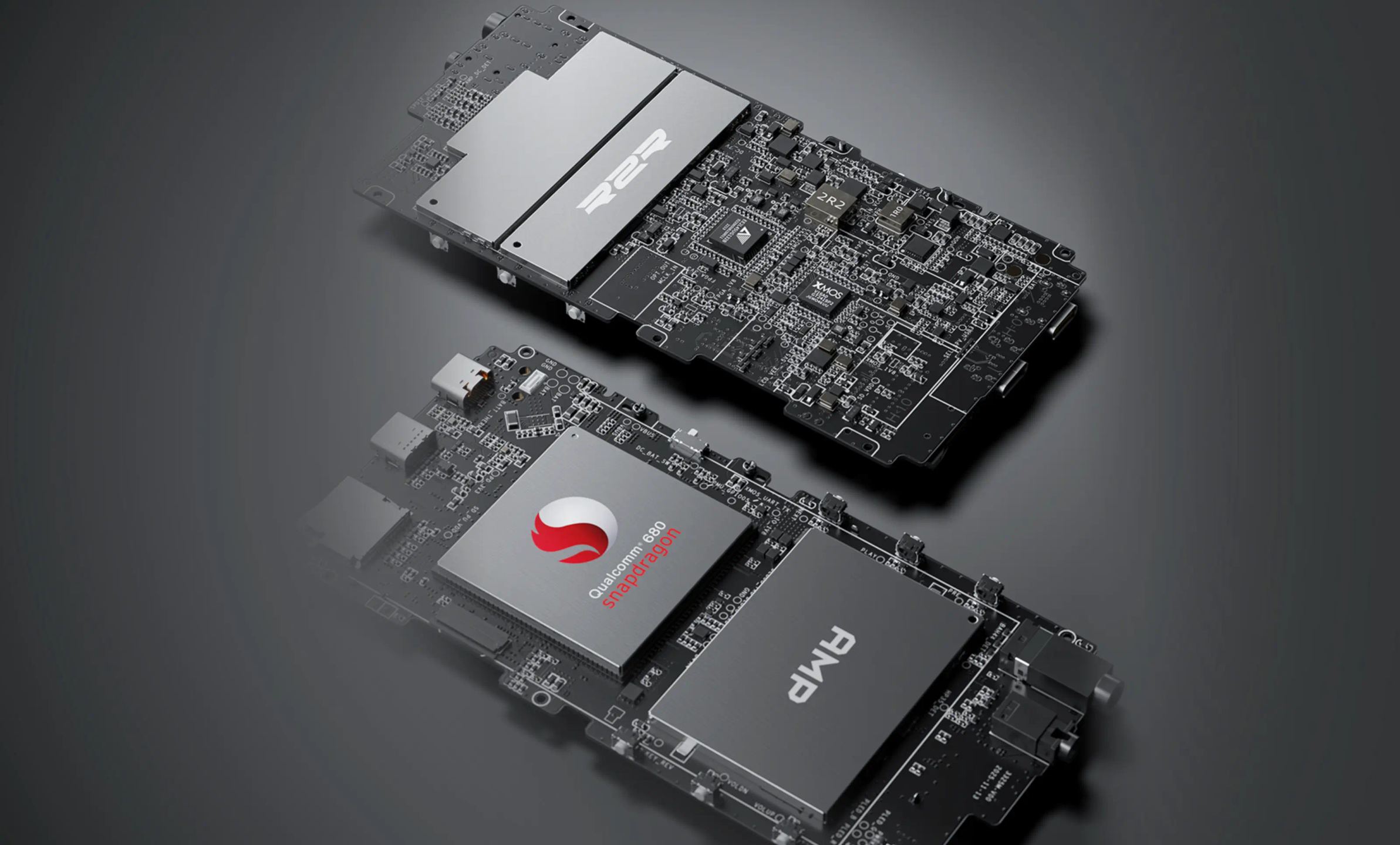
The quality of this sum depends entirely on resistor accuracy. If one deviates from its theoretical value, the corresponding step in the voltage staircase is slightly off, and this error results in distortion. Manufacturers therefore select matched components with tight tolerances: recent R2R converters from FiiO, for example, use 192 thin-film resistors sorted to a 0.1% tolerance, with controlled temperature drift.
Delta-sigma: oversampling then filtering
Delta-sigma approaches the problem from the other direction. Rather than converting each sample into a precise voltage in one go, it generates a very high-rate stream, often using a single bit or a few bits, clocked at several megahertz—dozens to hundreds of times the frequency of the original signal. This stream does not directly encode amplitude: it is the density of the pulses, their proportion over time, that represents the signal level. An analog output filtering stage averages this pulse train and extracts the waveform.
The technical feat lies in a technique called noise shaping. Encoding a continuous signal with a finite number of values generates an unavoidable error, quantization noise, and single-bit conversion produces a great deal of it. The delta-sigma modulator uses computation to push it toward very high frequencies, outside the audible band, where the output filter removes it. The measured result is excellent, and the circuit fits into a chip just a few square millimeters in size. This combination of performance and low cost explains its dominance.
Why delta-sigma became widespread
The very first CD players of the early 1980s were multibit. The Philips TDA1541, released in 1985, converted each 16-bit word through a resistor network, and Burr-Brown followed by Analog Devices produced benchmark R2R chips such as the PCM1704 and AD1862 for two decades. These components were expensive to manufacture and calibrate, because etching perfectly matched resistors onto silicon remains difficult.
Delta-sigma changed the economic equation in the late 1980s. Once noise shaping had been mastered, a converter became almost entirely digital: no more precision resistors sorted one by one, as performance came from computation. Costs collapsed, measurements improved, and major chipmakers (ESS, AKM, Cirrus Logic, Burr-Brown, integrated into Texas Instruments) focused their efforts on this approach. By the mid-1990s, R2R chips had disappeared from catalogues. Today, opening a network player, connected amplifier or Bluetooth headset almost always means finding a delta-sigma modulator.
The return of resistor converters
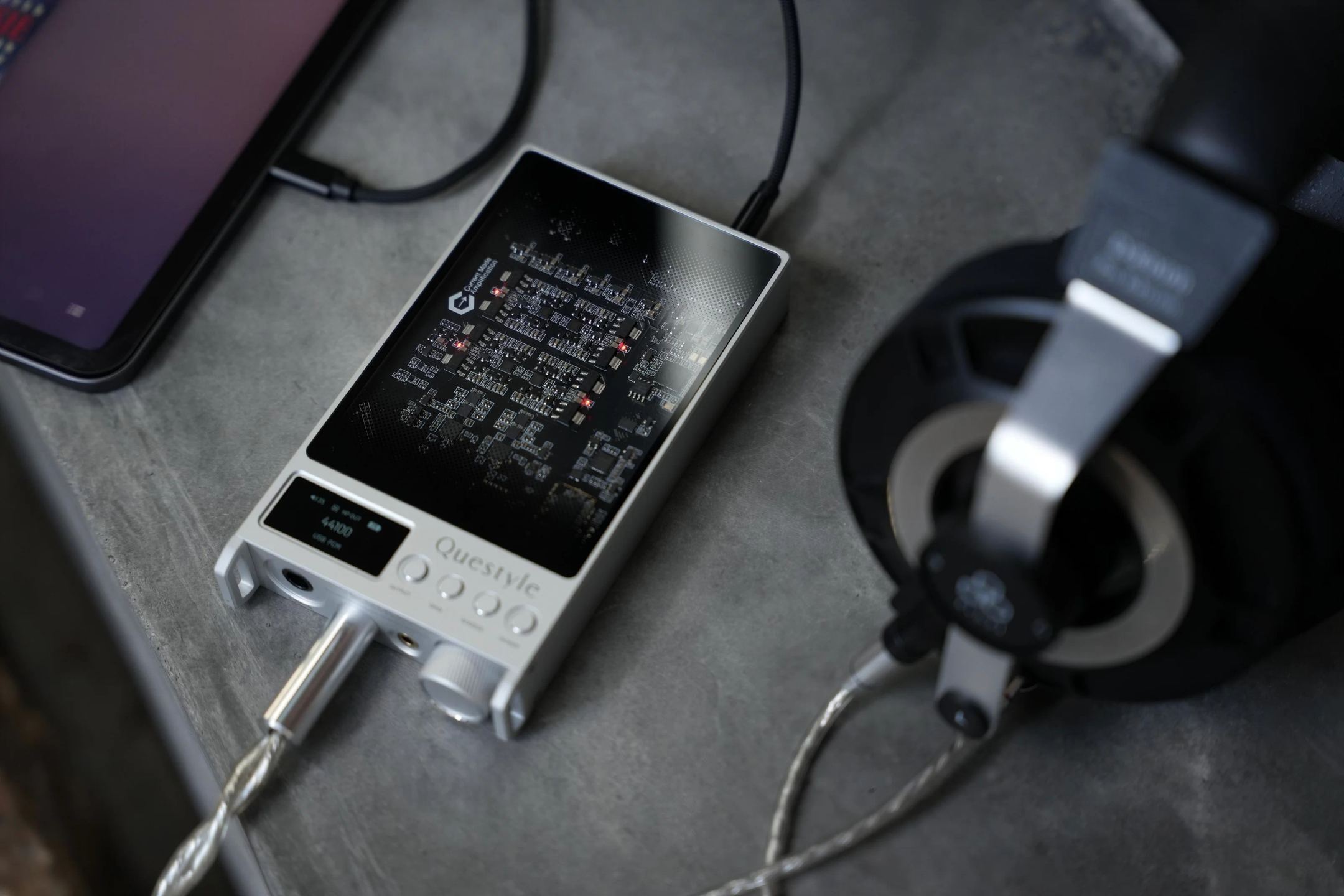
R2R did not disappear: it came back through another door. Since the major multibit chips are no longer manufactured, builders committed to this principle recreate the resistor ladder using discrete components, mounted one by one on the circuit board. Specialist manufacturers initially kept R2R alive in the high-end segment, where Rockna, for example, builds its Wavedream converters around a discrete resistor network. A more recent wave of brands then brought it back at accessible prices.
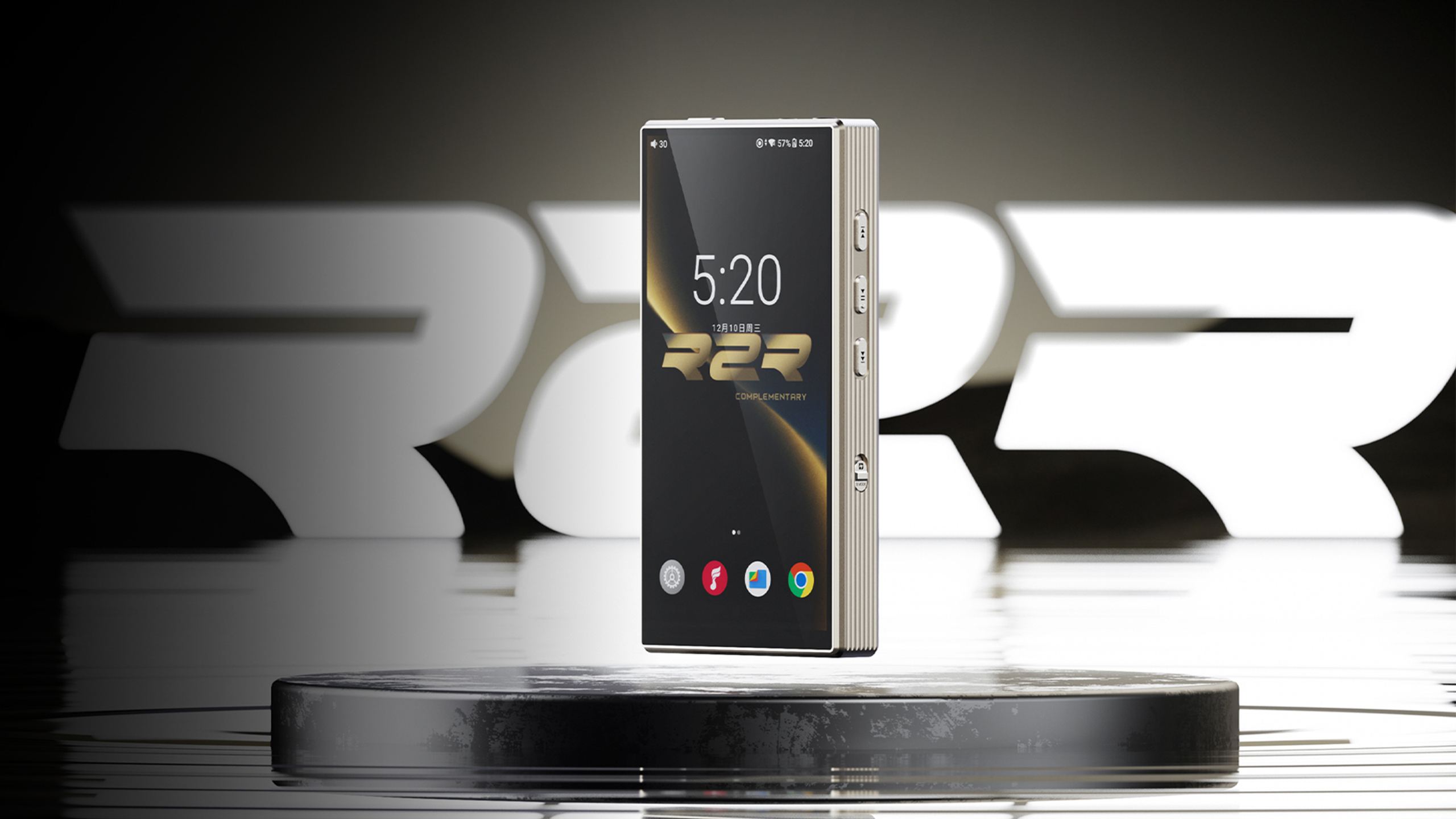
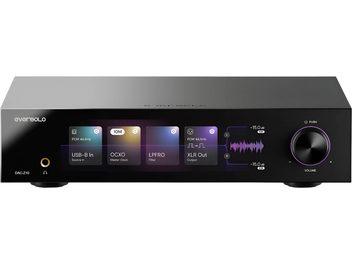
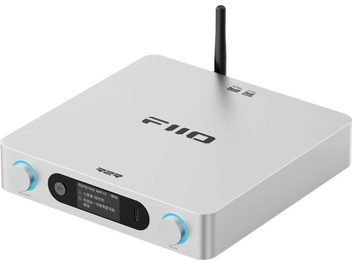
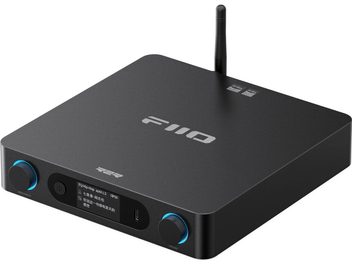
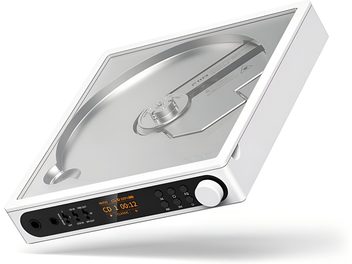
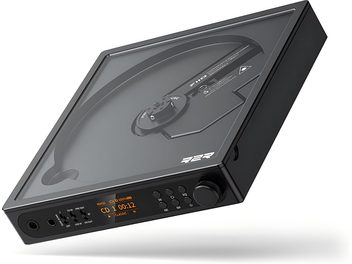
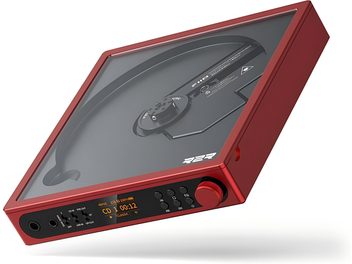
This second wave comes from consumer manufacturers that developed their own R2R network to install in affordable devices. FiiO has rolled out its in-house conversion in desktop DACs, a portable CD player and, in early 2026, its first R2R portable player. Shanling did the same in a portable CD player. Eversolo offers a dedicated R2R converter. The principle has gone from a curiosity reserved for very expensive systems to an option that can be considered without breaking the bank. The market now ranges from a few hundred euros to several tens of thousands.
Resistor accuracy and linearity
On the test bench, delta-sigma retains the advantage. Its linearity—that is, its ability to reproduce each level in exactly the same proportion—is difficult to fault, and its signal-to-noise ratio reaches values that a discrete resistor network struggles to match. R2R’s weakness is concentrated at very low levels: when the signal only uses the last bits, small errors in resistor values carry proportionally more weight, and linearity deteriorates. This is where a poorly implemented resistor converter reveals its limitations.
This reality deserves to be stated plainly, because R2R marketing sometimes suggests the opposite. A properly designed delta-sigma generally measures better than a similarly priced R2R. The “R2R” label on a unit indicates the conversion principle, not the quality of implementation: between a carefully designed resistor network and a poorly executed one, the difference in results is greater than between the two main families.
NOS mode and the digital filter
One practical difference often separates the two worlds: oversampling. Delta-sigma oversamples by nature. Many R2R converters, meanwhile, offer a non-oversampling mode, NOS, which sends samples directly to the resistor network without passing through a digital reconstruction filter.
This filter, present in almost every modern digital chain, removes signal replicas that appear above the audible band. Removing it has two opposing effects. It avoids the pre-echo and ringing that some filters introduce around transients, which NOS advocates describe as a more direct presentation. In return, it allows slight treble roll-off and frequency images above 20 kHz to pass through, the real effect of which remains debated. R2R converters offering both modes, such as certain FiiO desktop DACs, allow users to compare for themselves: OS mode delivers better measurements and cleaner filtering, while NOS mode offers a more immediate presentation but is technically less clean.
Can you hear it, and for whom?
This is the fundamental question. The honest answer has two parts. First, the conversion principle matters less than everything else: the power supply, analog output stage, clock management and overall care in construction do more for the result than the choice between R2R and delta-sigma. An excellent delta-sigma will outperform a mediocre R2R, and the reverse is also true.
Then, when the comparison is conducted at matched levels, the differences exist but remain subtle, and their description varies from one listener to another: a texture perceived as more organic, a different sense of note decay on acoustic instruments. These differences are real for some listeners and undetectable for others, especially in blind testing. Indeed, the only clearly audible change often comes from NOS mode more than from R2R itself, since it changes the filtering.
One useful guideline when choosing: if the goal is the cleanest possible measurements and neutrality, a good delta-sigma remains the rational choice. If you are looking for a particular character, or simply the pleasure of an old principle brought up to date, R2R is worth considering, provided you choose a serious implementation.
R2R in the current catalogue
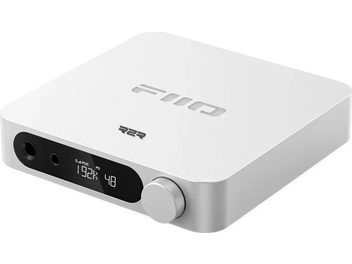
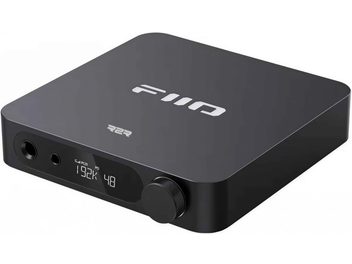
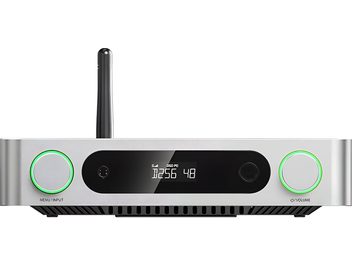
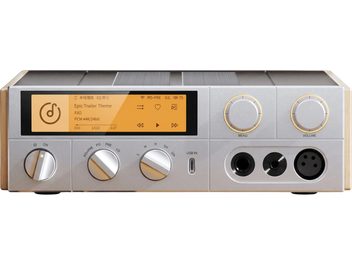
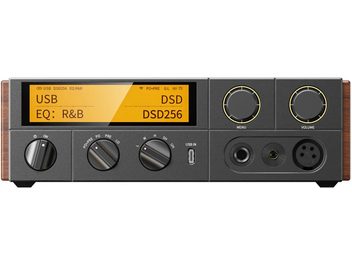
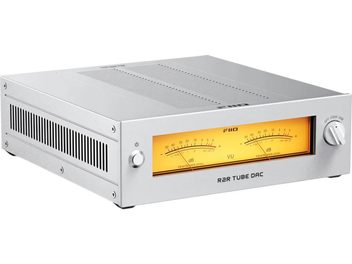
Affordable R2R is currently concentrated among a few brands. At FiiO, the in-house 192-resistor conversion is used in desktop DACs with integrated headphone amplifier, such as the K13 R2R and K17 R2R Pro, the latter adding network streaming, as well as the M33 R2R portable player and a portable CD player. Shanling has integrated it into its EC Zero T portable CD player, which combines the resistor network with a pair of tubes. Eversolo offers the DAC-R8, an R2R converter with NOS and OS modes. Further up the range, Rockna builds its Wavedream converters around a discrete resistor network.
By contrast, delta-sigma remains everywhere else: most network players, connected amplifiers, soundbars and wireless headphones rely on this type of chip. For a first converter, or for a home theater system, there is nothing questionable about this default choice. R2R becomes interesting when you already have a system capable of revealing it and the desire to explore another way of converting.
The debate between the two families will not be settled, because it pits two compromises against each other rather than a good and a bad solution. Delta-sigma delivers measured performance and low cost; R2R offers a direct principle and a character that some seek. Knowing what each acronym covers above all allows you to read a specification sheet for what it really says, and then to listen—which remains the best judge.
Featured products








You may also like to read
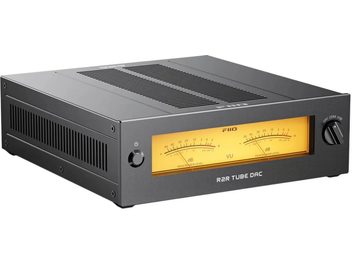
 FiiO K17 R2R Pro: R2R DAC, headphone amplifier and built-in streamingHi-fi and home cinema news
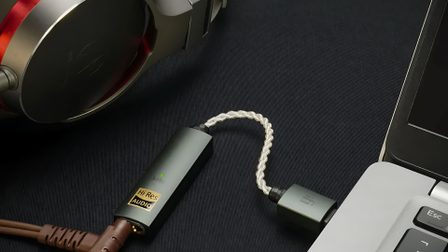 Portable DACs 2026: which model for your headphones?Comparisons and buying guides
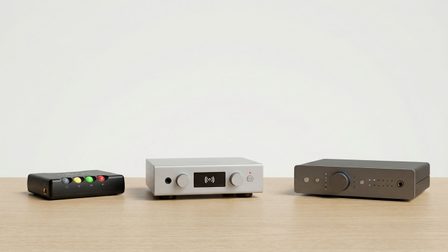 Which external DAC around €500 should you choose? Audiolab D7, Chord Mojo 2 and DacMagic 200M comparedComparisons and buying guides
 What Is a DAC and Why Do You Need One?Tutorials and practical guides
 Questyle Sigma: a portable DAC with a headphone amp that changes the gameHi-fi and home cinema news