

FiiO K11 R2R Black


Specifications and features


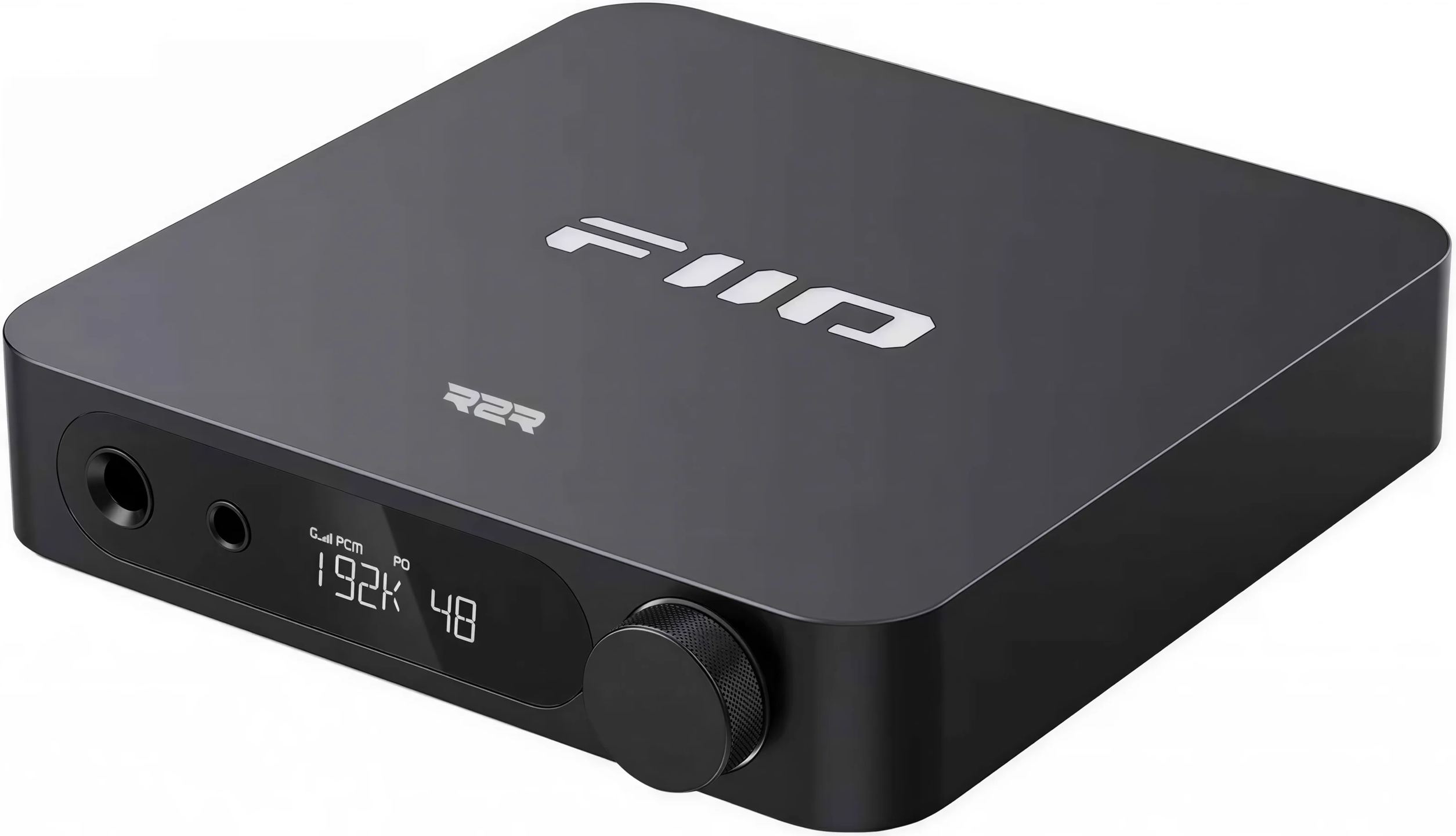
FiiO K11 R2R, desktop DAC and headphone amplifier
Resistor ladder converters had almost disappeared from audio catalogues when delta-sigma chips took over the market: too expensive to manufacture, too delicate to calibrate. FiiO chose to develop its own rather than buy a ready-made chip, and house it in the compact K11 enclosure. The result retains the latter’s connectivity and format, with an entirely different conversion stage.
An in-house DAC with 192 resistors
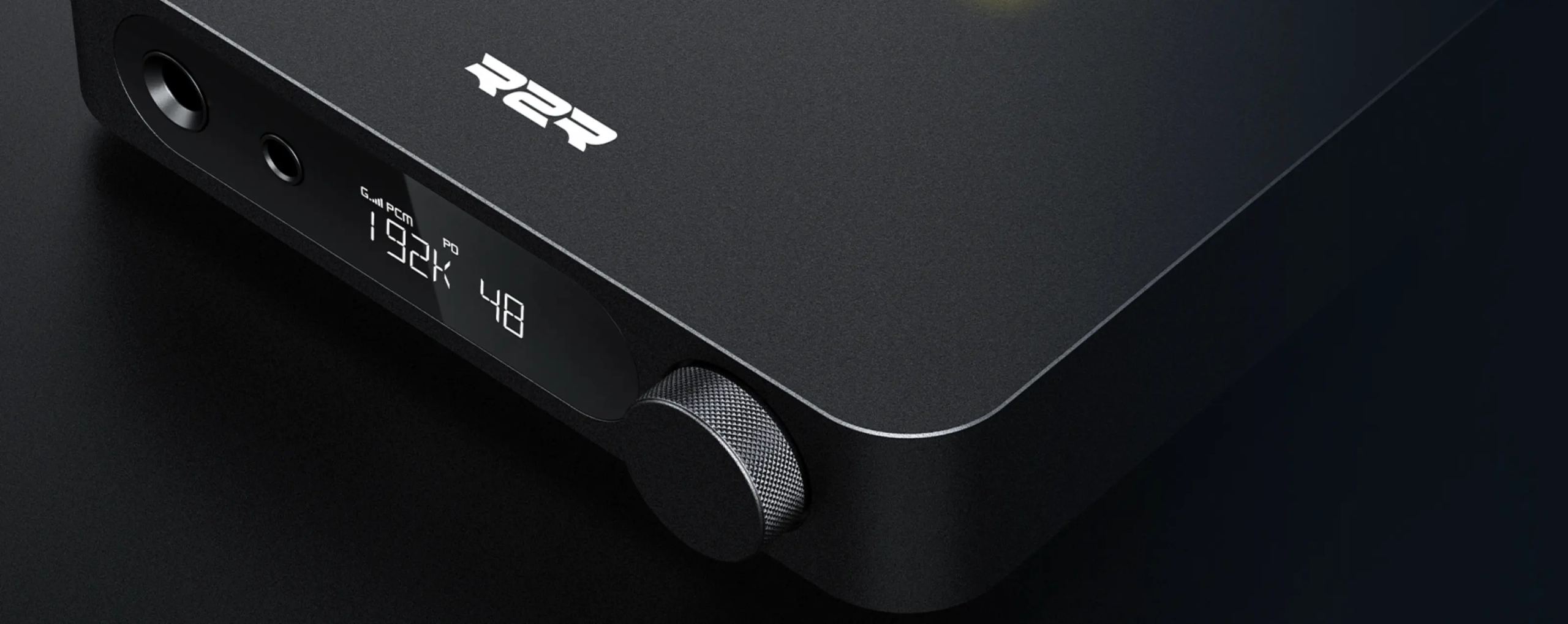
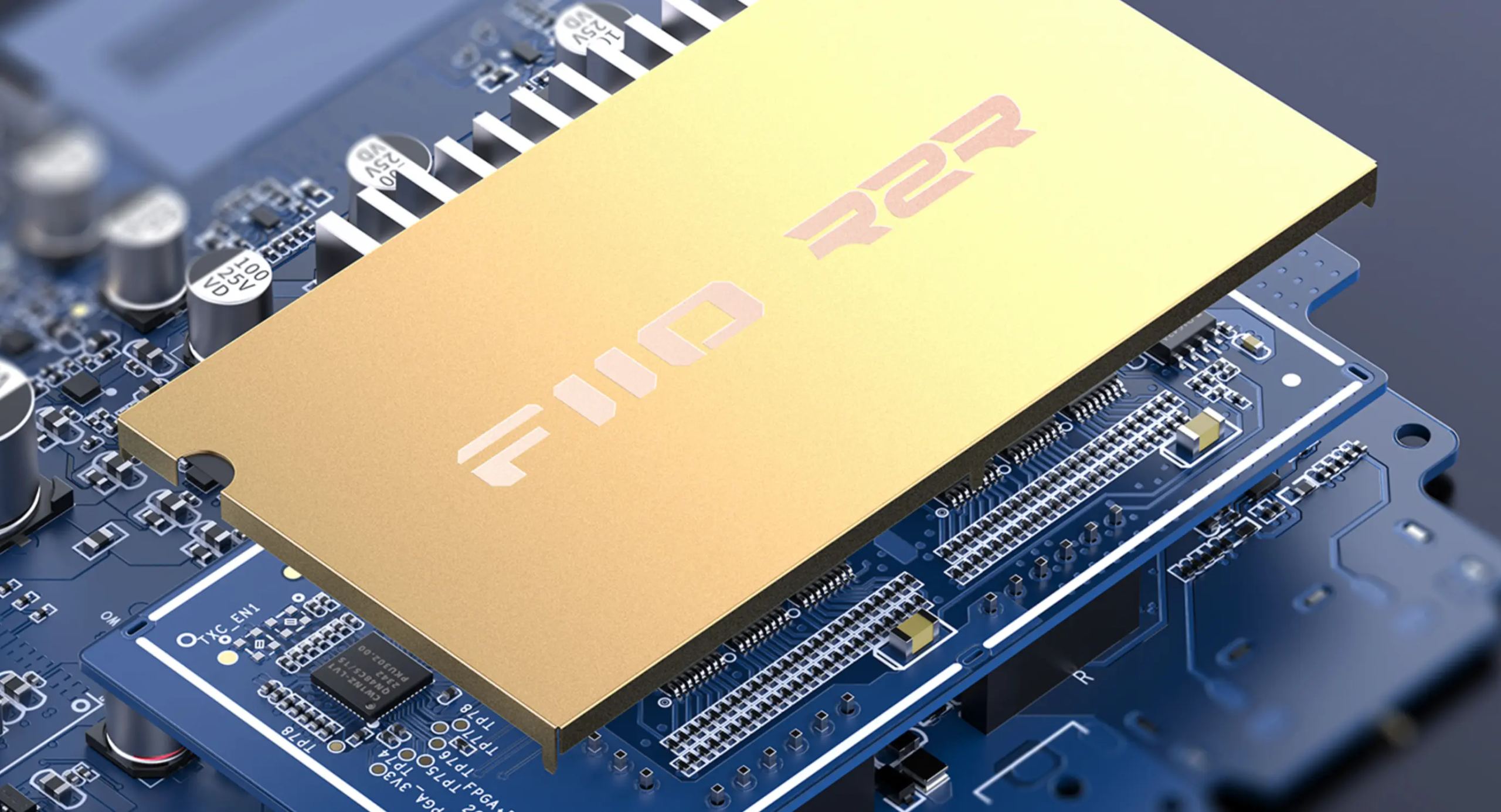
The R2R principle can be summed up in one sentence: each bit of the digital signal switches a resistor network that directly produces an analogue voltage, without high-frequency modulation or noise shaping. FiiO selected a so-called sign-magnitude conversion design, with two networks of 48 thin-film resistors per channel, or 96 per channel and 192 in total, matched to 0.1% and rated for a thermal drift of 30 ppm. The assembly operates in fully differential mode across four paths, lowering the noise floor compared with a single-ended design.
The signal path runs through an SA9312L USB receiver, an audio bridge and then an FPGA that feeds the resistor networks. At the conversion output, two Texas Instruments OPA1642 op-amps provide low-pass filtering and single-ended conversion, volume is managed by an NJW1195A electronic controller, and the output stage is based on two SGM8262 modules. Power supply circuitry uses 17 low-noise LDO regulators and two DC-DC converters separating analogue and digital circuits; the metal chassis incorporates phosphor copper shielding and an aluminium heatsink.
The precision of an R2R DAC depends entirely on resistor matching, whereas a delta-sigma chip pushes noise outside the audible band through processing. The measurements published by FiiO reflect this: 0.025% distortion, 115 dB signal-to-noise ratio, 107 dB dynamic range. Solid figures, though not those of a massively oversampling stage. The brand embraces this positioning and describes its R2R as smoother in the bass and fuller on vocals than the delta-sigma chip-equipped K11, with the latter retaining the advantage in pure definition.
NOS or oversampling, two processing options
OS mode brings all streams to 384 kHz before conversion. NOS mode decodes at the original rate, without an interpolation filter: response rolls off slightly in the highest treble and aliasing images above the audio band are no longer removed, producing a presentation that some find more direct on 44.1 kHz recordings. The difference between the two modes remains subtle, and the choice is a matter of taste rather than performance.
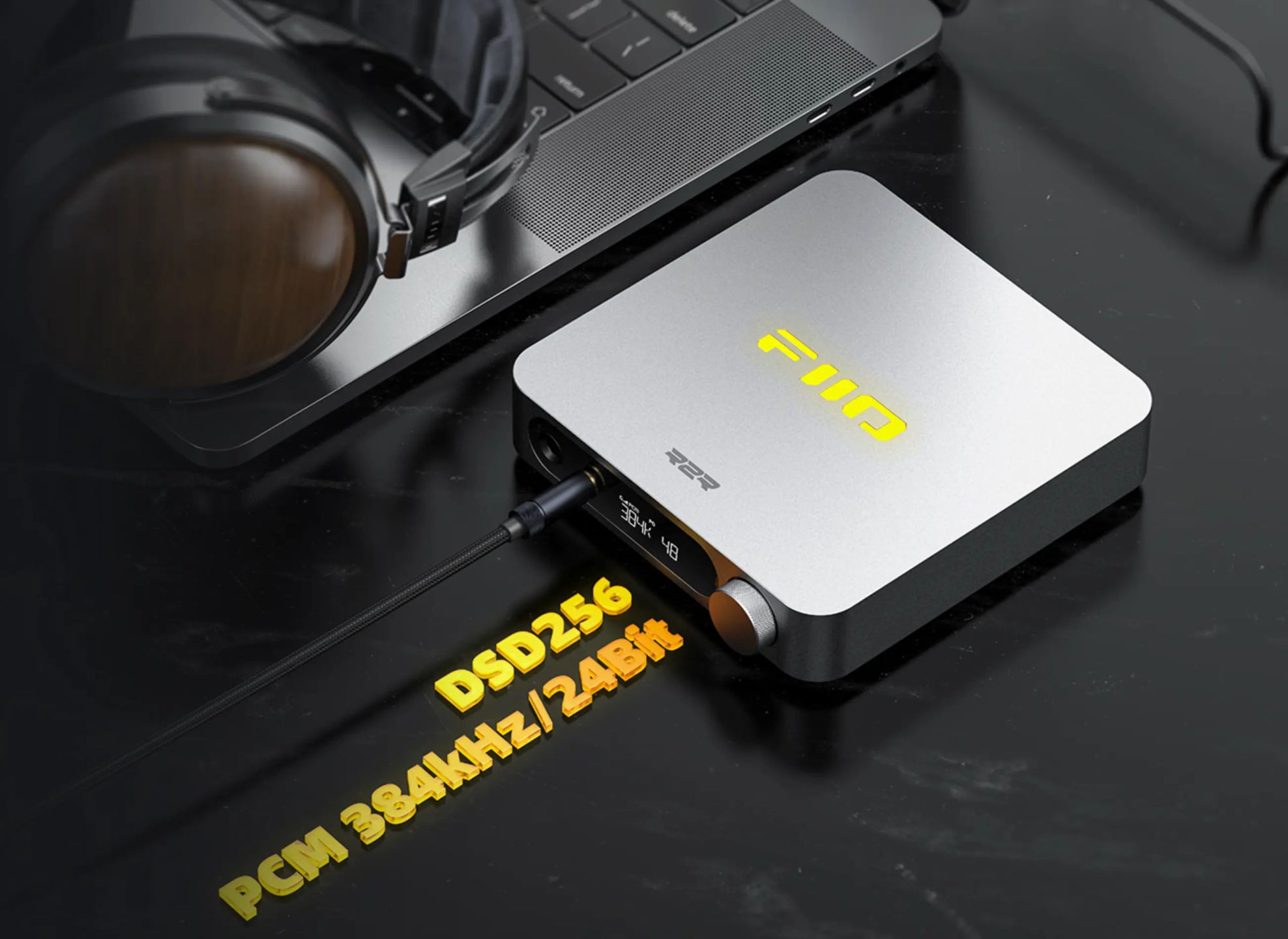
This switch replaces the K11’s selection of digital filters, unavailable here since R2R conversion does not operate in the same way. PCM is accepted up to 384 kHz at 32 bits via USB and DSD256 is supported, with one limitation to be aware of: the DSD stream is internally converted to PCM before reaching the resistor networks, and the source must be set to native DSD output for it to be recognised.
1,300 mW into 32 ohms balanced
Headphone amplification follows the same differential structure. The 4.4 mm socket delivers 1,300 mW per channel into 32 ohms, 520 mW into 16 ohms and 220 mW into 300 ohms; the 6.35 mm socket provides 460, 660 and 50 mW respectively. FiiO specifies an impedance range of 8 to 350 ohms in balanced mode and 8 to 150 ohms in single-ended mode, with three gain levels and three associated volume curves.
These differences have practical consequences. A 300-ohm dynamic headphone will have far more headroom from the balanced output, whose channel separation reaches 107 dB versus 72 dB in single-ended mode. For highly sensitive IEMs, the logic is reversed: the measured noise floor is 14.1 µV balanced versus 7.2 µV single-ended, and output impedance is 1.5 ohms versus less than 1 ohm. The 6.35 mm socket at low gain remains the best starting point with low-impedance headphones. A headphone protection circuit and a switching-noise suppression system complete the output stage.
The RCA output makes it a preamplifier
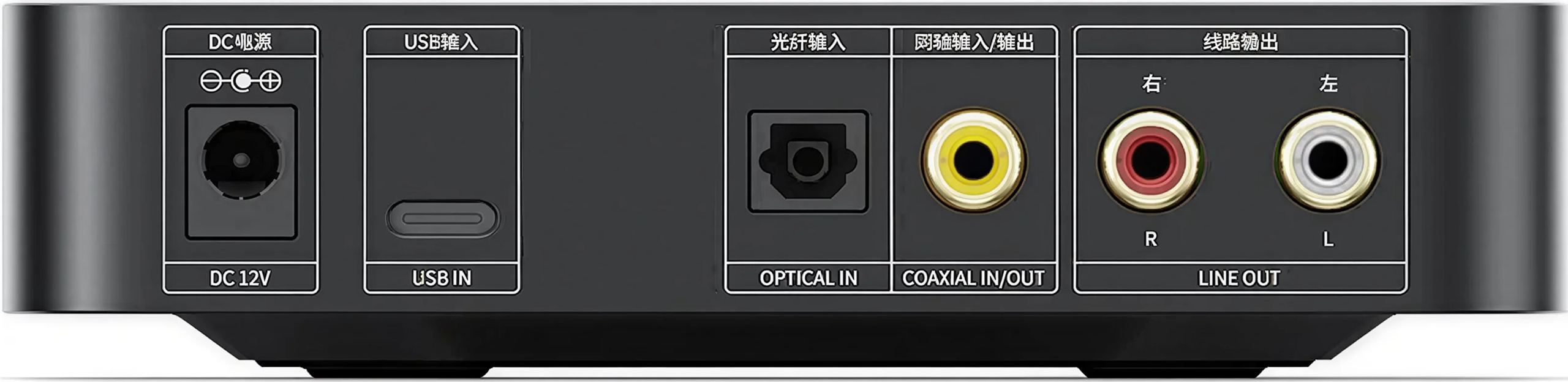
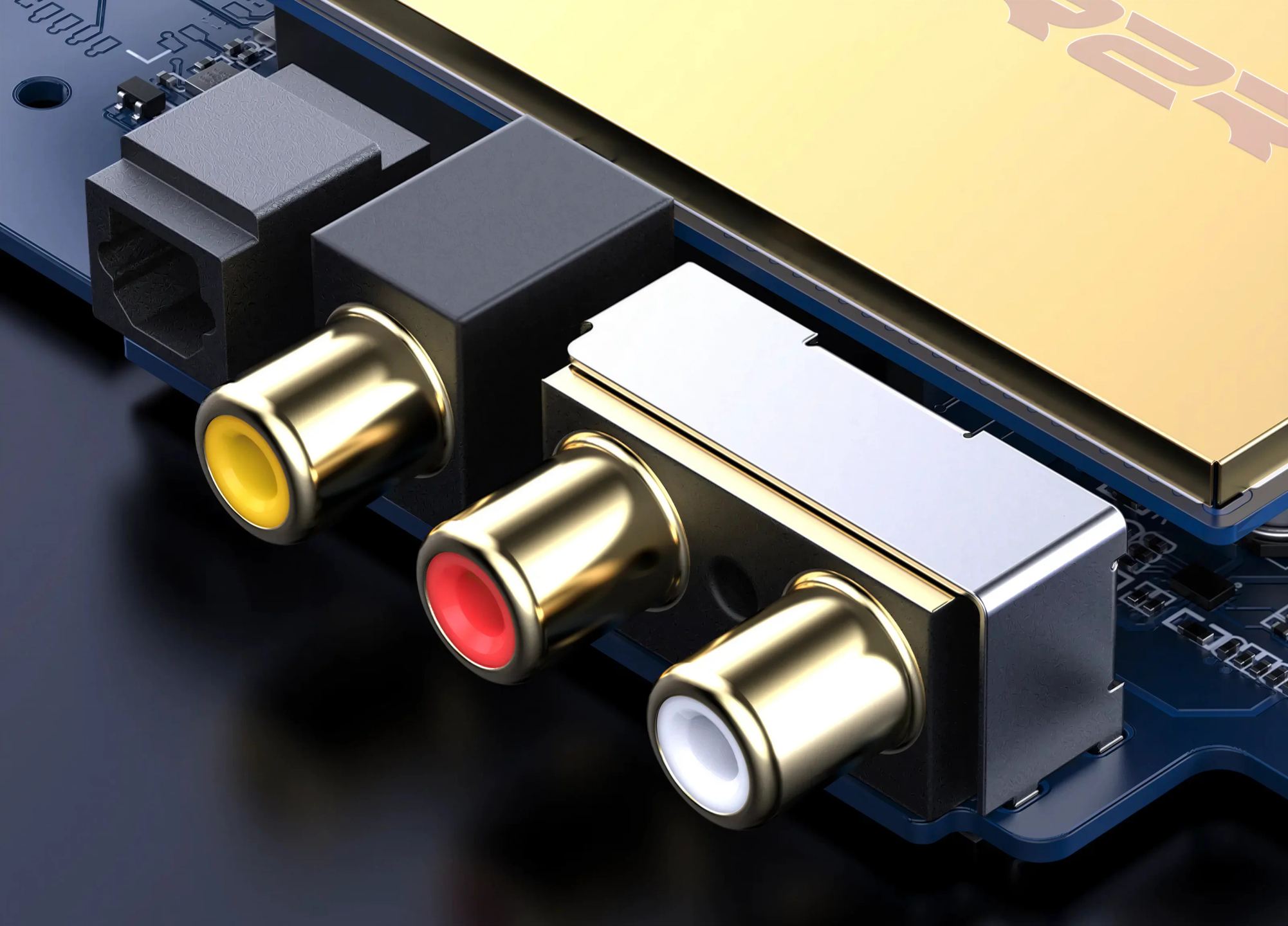
At the rear, the RCA line output delivers 2.7 Vrms and operates at fixed level or variable level controlled by the knob. In the first case, the device serves as a DAC for an integrated amplifier; in the second, it drives active speakers or a power amplifier directly, without an intermediate preamplifier. This dual function accounts for much of its versatility on a desk where headphones and speakers coexist.
Digital inputs include USB-C, Toslink optical and coaxial, with different limits: 384 kHz at 32 bits via USB, 192 kHz at 24 bits via coaxial, and 96 kHz at 24 bits via optical. The coaxial socket serves as both input and output, and the output function is active only in USB mode, allowing a stream to be sent from a computer to another DAC.
Control comes down to a single knob
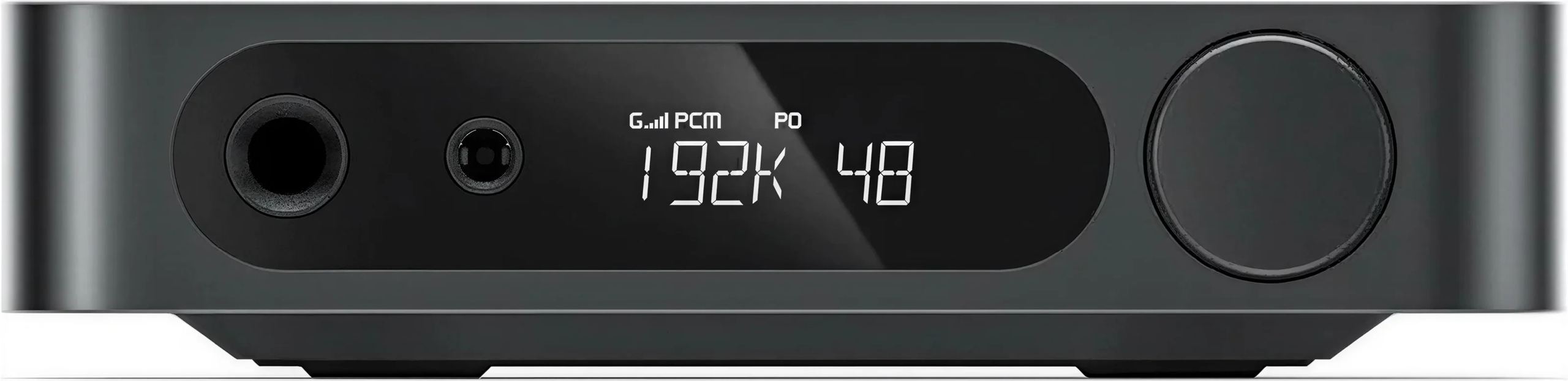
The unit is operated using a rotary encoder and a small monochrome LCD screen displaying volume, gain, active output and current sampling frequency. The backlit logo on the top panel changes appearance according to the type of stream received—standard resolution, high resolution or DSD—providing an immediate indication of what the source is actually sending. Automatic standby has been added compared with the K11.
The enclosure measures 147 × 133 × 32.3 mm including feet and weighs 420 g, a format close to that of a CD case that slips beneath a computer monitor. Power is supplied by an external 12 V / 2 A adapter, and firmware updates are performed via the USB port.
Technical Specifications
Key Features
- 24-bit passive R2R DAC developed by FiiO
- Hi-Res Audio playback up to 32-bit / 384 kHz and DSD256
- High power output up to 1300 mW per channel
- 4.4 mm balanced and 6.35 mm single-ended headphone outputs
- Compatible with headphones from 8 to 350 Ω
- USB DAC, headphone amplifier and preamplifier functions
Digital-to-Analog Converter
- High-precision R2R DAC
- Fully differential architecture
- Passive R2R conversion with 192 precision resistors
- 96 resistors per channel
- Tolerance: ±0.1%
- Two conversion modes:
- NOS (non-oversampling)
- OS (oversampling up to 384 kHz)
- Compatible formats:
- PCM up to 24-bit / 384 kHz
- DSD256
- Hi-Res Audio
Headphone Amplification
- Fully differential balanced architecture
- Compatible with headphones from 8 to 350 Ω
- Three gain levels: low, medium, high
- Output power:
- 4.4 mm balanced output: up to 1300 mW per channel at 32 Ω
- 6.35 mm single-ended output: up to 460 mW per channel at 32 Ω
Preamplifier Function
- RCA analog output
- Operating modes:
- Fixed level
- Variable level with volume adjustment via knob
Integrated Technologies
- Texas Instruments OPA1642 operational amplifiers
- SG Micro SGM8262 amplification modules
- NJW1195A digital volume control
- Direct current (DC) protection
- Switching noise reduction (Pop)
Components and Design
- Fully differential dual-mono architecture
- 17 high-precision LDO regulators
- Solid beryllium capacitors
- Internal phosphor bronze shielding
- Aluminum heat sink
Connectivity
- Digital inputs:
- 1 × USB-C digital audio
- 1 × TosLink optical
- 1 × coaxial
- Outputs:
- 1 × 6.35 mm jack headphone
- 1 × 4.4 mm balanced headphone
- 1 × XLR-4 headphone
- 1 × RCA analog output
- 1 × coaxial digital output
User Interface
- Multifunction knob
- High-visibility monochrome LCD display
- Displayed information: volume, gain level, output mode, sampling rate
- RGB logo indicating audio stream type
Audio Performance
- 4.4 mm balanced output:
- Power: 1300 mW at 32 Ω
- Distortion: 0.025%
- Signal-to-noise ratio: 115 dB
- Frequency response: 20 Hz – 50 kHz
- Channel separation: 107 dB
- 6.35 mm single-ended output:
- Power: 460 mW at 32 Ω
- Distortion: 0.025%
- Signal-to-noise ratio: 115 dB
- Frequency response: 20 Hz – 50 kHz
- Channel separation: 72 dB
General Information
- Type: USB DAC, headphone amplifier and preamplifier
- Dimensions (W × H × D): 147 × 32 × 133 mm
- Weight: 420 g
Frequently Asked Questions
Can the K11 R2R be adjusted from an app?
No. FiiO does not support its FiiO Control app on this model: all settings—gain, oversampling mode, RCA output behavior—are adjusted using the knob and screen. Firmware updates are performed via the USB port from a computer.
Can it be used with a smartphone or a game console?
Yes. The device features a USB Audio Class 1.0-compatible driverless mode, recognized by PS5- or Switch-type consoles, and connects to a smartphone using a USB-C to USB-C cable. Under Windows, installing the FiiO driver is recommended to take advantage of the highest resolutions.
Is a special power supply required?
The supplied power adapter delivers 12 V and 2 A. The device does not contain a battery and cannot be powered solely by the USB port, unlike a portable converter: you will therefore need a power outlet near the desk.
What is the difference compared with the standard K11?
The chassis, connectivity and output power are shared. The K11 uses a CS43198 delta-sigma chip and offers a choice of digital filters; the K11 R2R replaces this chip with an in-house resistor network, does away with filters and adds NOS/OS modes as well as automatic standby. Distortion and noise measurements are similar for both models; the difference lies in sound reproduction.
Is it suitable for highly sensitive in-ear headphones?
With a few precautions. Low gain and the 6.35 mm unbalanced output, which has the lower noise floor of the two, deliver the best results; a 6.35-to-3.5 mm adapter is included. The most sensitive models may reveal a slight hiss on the balanced output, whose benefits are mainly apparent with headphones that require high voltage.
What happens if the source sends 32-bit?
The USB interface accepts streams up to 384 kHz at 32 bits, but the resistor networks perform conversion at 24 bits. The additional bits provide no audible benefit: the actual dynamic range of a converter remains well below the theoretical 144 dB of 24-bit.
- Eco-contribution of €0.12 included in the sale price.
- Manufacturer reference: FIIK11R2RNR
- GTIN / EAN: 6953175710721