

FiiO K17 R2R black



Specifications and features


FiiO K17 R2R: resistor ladder conversion and four watts per channel
Converting a digital stream with a matched resistor network requires space, carefully selected components, and a well-designed power supply. FiiO applies this recipe at the top of its desktop K series: the K17’s delta-sigma chip-based conversion section gives way to an in-house 24 + 5-bit segmented resistor network, while the rest of the unit remains identical or nearly so, including a four-watt discrete amplifier, network playback, and a 31-band equalizer.
A 24 + 5-bit segmented resistor network
The R2R principle consists of reconstructing the analog voltage by switching a resistor ladder, one per bit, without modulation or noise shaping. Its known weakness lies in the transitions of the most significant bits: even the slightest value drift in these resistors results in an error that accumulates at the exact moment the signal crosses zero. FiiO addresses this issue by splitting the network, called R2R PRO, into two parts. The 24 least significant bits remain in a conventional ladder, while the 5 most significant bits are thermometer-decoded across 31 resistors: each step is exactly equal to the previous one, distributing the error rather than concentrating it.
Two conversion modes are available. In NOS, the signal is reproduced at its original frequency, without oversampling: filtering is gentler at the top end of the spectrum, with the relaxed sound sought by resistor DAC enthusiasts. In OS, an interpolated filter takes over and narrows the bandwidth. Switching between the two is most noticeable with 44.1 kHz files and is a matter of taste rather than technical hierarchy. The signal path remains fully differential from the converter to the headphone output, including current-to-voltage conversion and low-pass filtering, with low-noise Texas Instruments operational amplifiers in the sensitive stages.
Four watts per channel and five gain settings
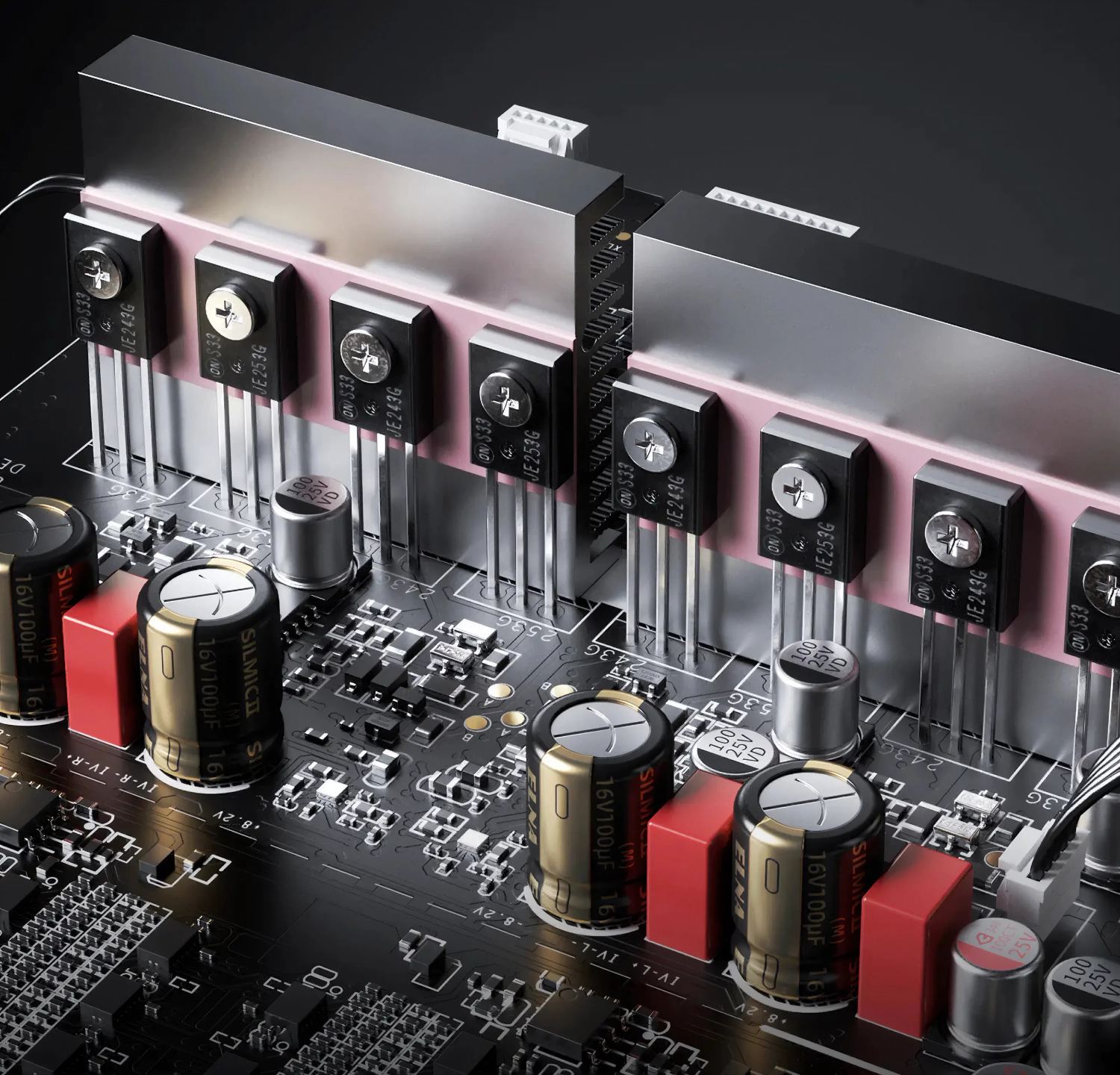
The headphone stage is a discrete Class AB circuit with current boosting, built around the ON Semiconductor MJE243 and MJE253 transistor pair. It delivers 4000 mW per channel into 32 Ω balanced and 1850 mW unbalanced, respectively 950 mW and 240 mW into 300 Ω. These figures set a very high bar for a desktop unit and make it possible to get more than merely adequate volume from low-sensitivity planar headphones.
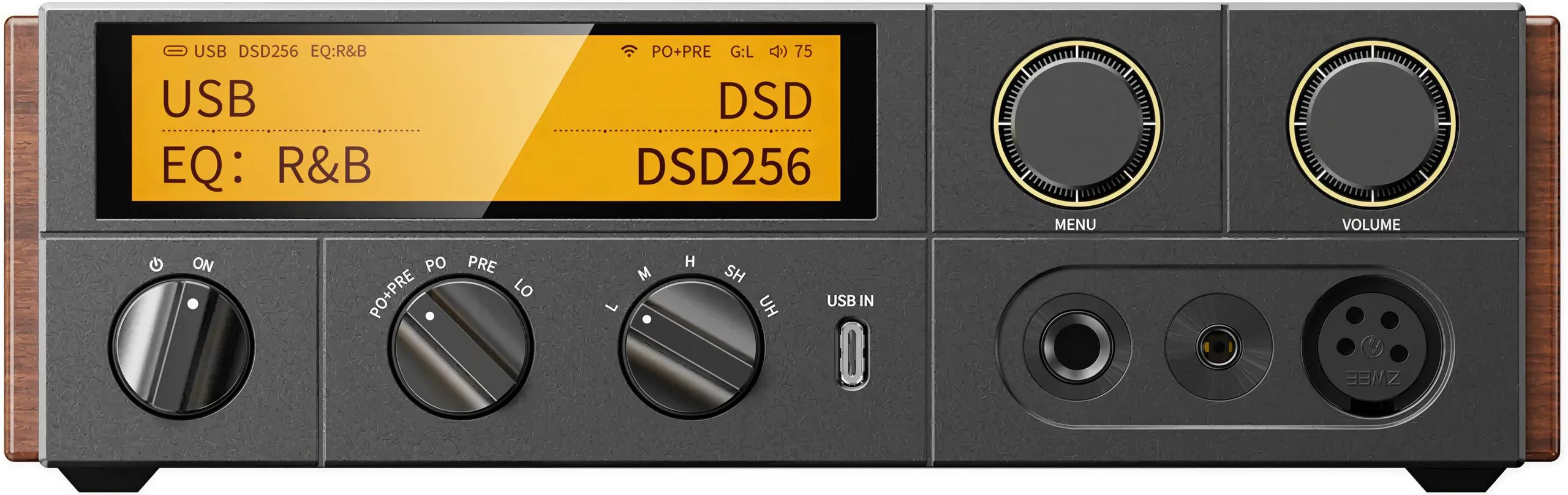
This power calls for a counterpart: it must be controlled. The five gain settings, from L to UH, exist precisely for this purpose. A multi-balanced-armature IEM should be connected in L, otherwise the useful volume range is reduced to just a few degrees of knob rotation. FiiO’s stated low output impedance avoids the other pitfall with sensitive earphones: bass coloration caused by interaction between the amplifier and an uneven load impedance. Three sockets share the front panel: 6.35 mm jack, 4.4 mm balanced, and 4-pin XLR, whereas the original K17 only includes a 3.5 mm unbalanced output.
Eight operating modes, one remote control
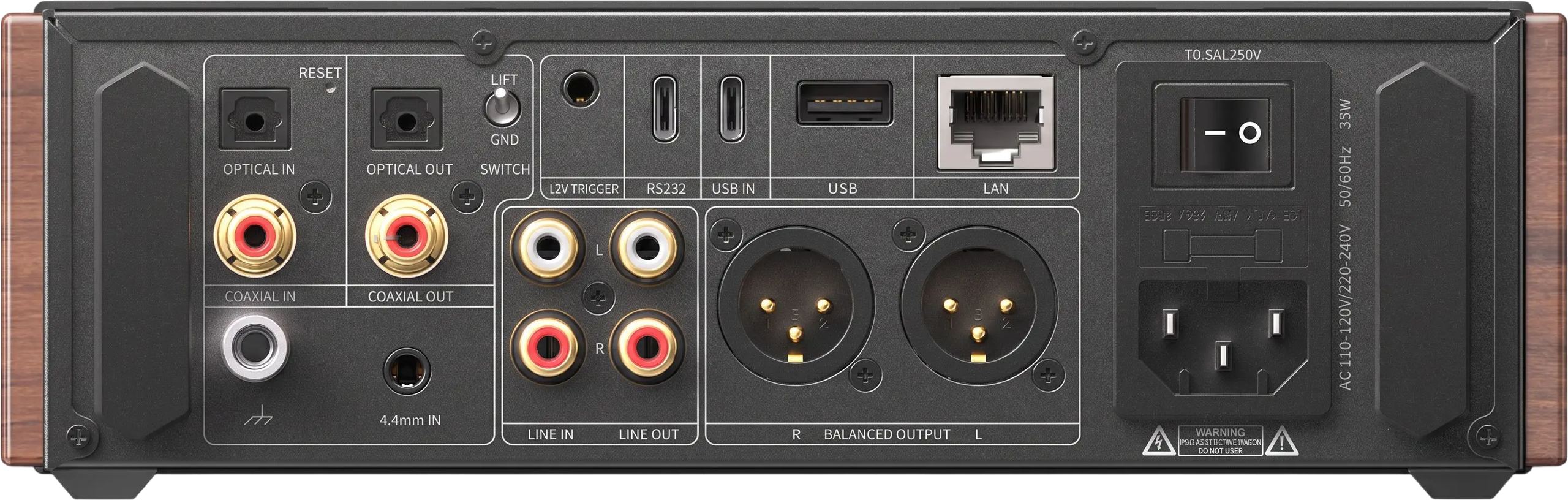
The source list is extensive: network playback, local playback from a USB drive or disk via USB-A, USB DAC, Bluetooth reception, optical, coaxial, balanced 4.4 mm analog input, and unbalanced RCA input. On the network side, the unit is Roon Ready certified, supports AirPlay and QPlay, and directly plays NAS shares over both SMB and NFS, all via Gigabit Ethernet or dual-band Wi-Fi, up to 384 kHz / 32-bit and DSD256.
One point is worth knowing before purchase: the Linux system carried over from the K17 does not include a Tidal, Qobuz, or Spotify app, nor their Connect services. Playback from these platforms therefore goes through Roon, AirPlay, or a source connected via USB. The XMOS XU316 USB interface supports up to 768 kHz / 32-bit and native DSD256, with one USB-C port on the front for a portable player and another on the rear for a computer. Bluetooth 5.1 relies on a Qualcomm QCC5125 chip supporting LDAC and the aptX family. S/PDIF inputs accept 192 kHz / 24-bit over coaxial but remain limited to 96 kHz / 24-bit over optical, a limitation of the format rather than the unit.
The front-panel analog output selector determines what is powered: headphones only, preamplifier only, both together, or fixed-level line output. The line outputs deliver 2.5 Vrms via RCA and 5 Vrms via balanced XLR, enough to drive a power amplifier or a pair of active speakers. 12 V trigger input and output, an RS232 port, and a chassis ground terminal complete a rear panel clearly intended for integration into an installed system.
Thirty-one equalizer bands, including analog inputs
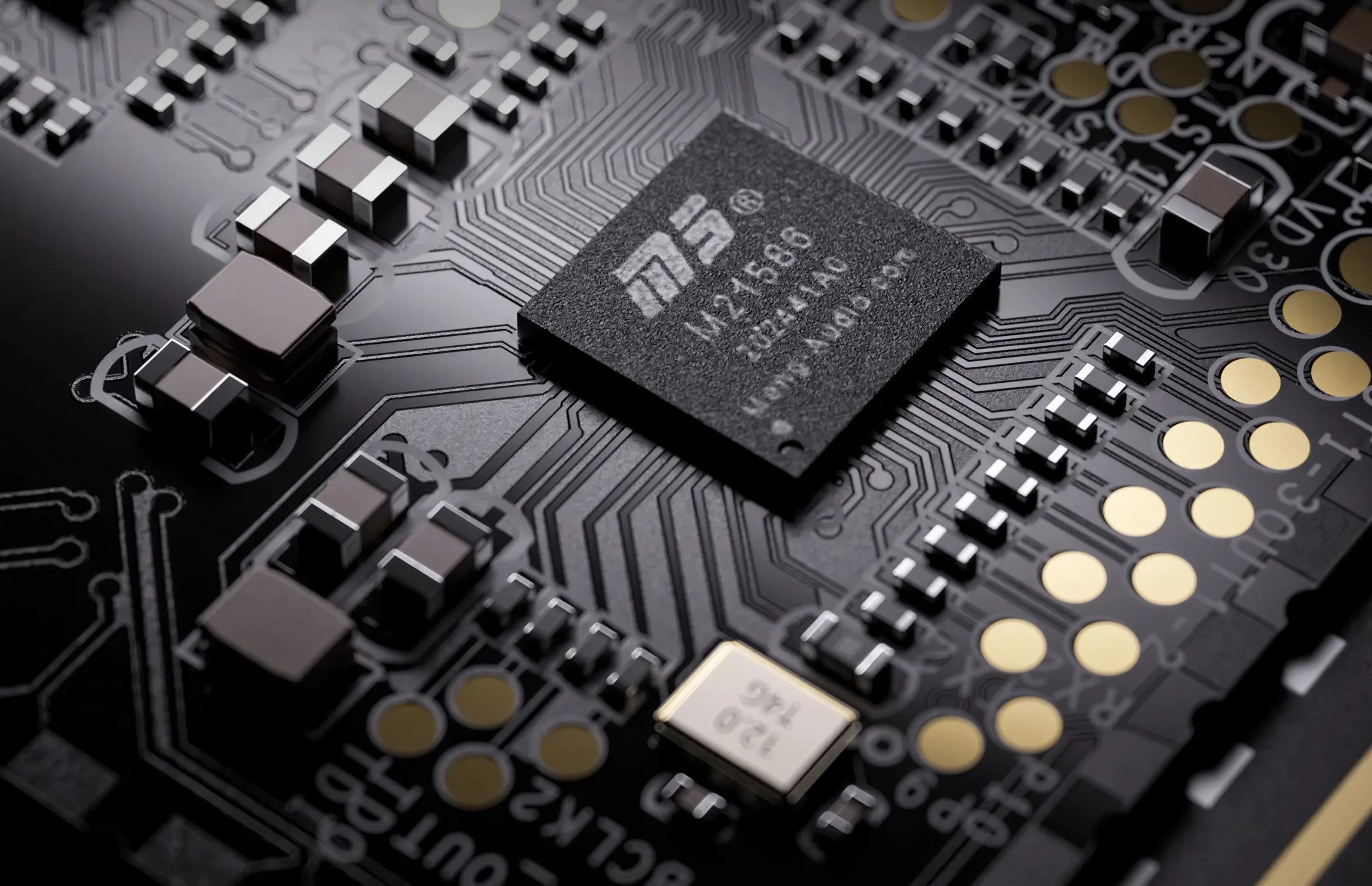
Signal processing is handled by a dedicated M21586Q processor, operating in 64-bit floating point at 360 MHz. It manages a 31-band parametric equalizer, with adjustable gain from +12 to -24 dB and a Q factor down to 0.4, plus a limiter and dynamic compressor. FiiO claims processing without resampling for PCM streams from 44.1 to 96 kHz, i.e., the majority of music libraries. Profiles can be exported, imported, and shared, while the AUTO EQ function directly applies a correction curve corresponding to the headphones in use.
A useful feature: equalization remains active on all inputs, including analog ones. This requires digitizing the incoming signal through an ES9821Q analog-to-digital converter, then routing it back to the R2R network. Correcting the response of demanding headphones from an analog source therefore becomes possible, provided this round trip is acceptable. Those who want to retain an untouched analog signal path will leave the equalizer inactive on these inputs.
Linear power supply and physically separated boards
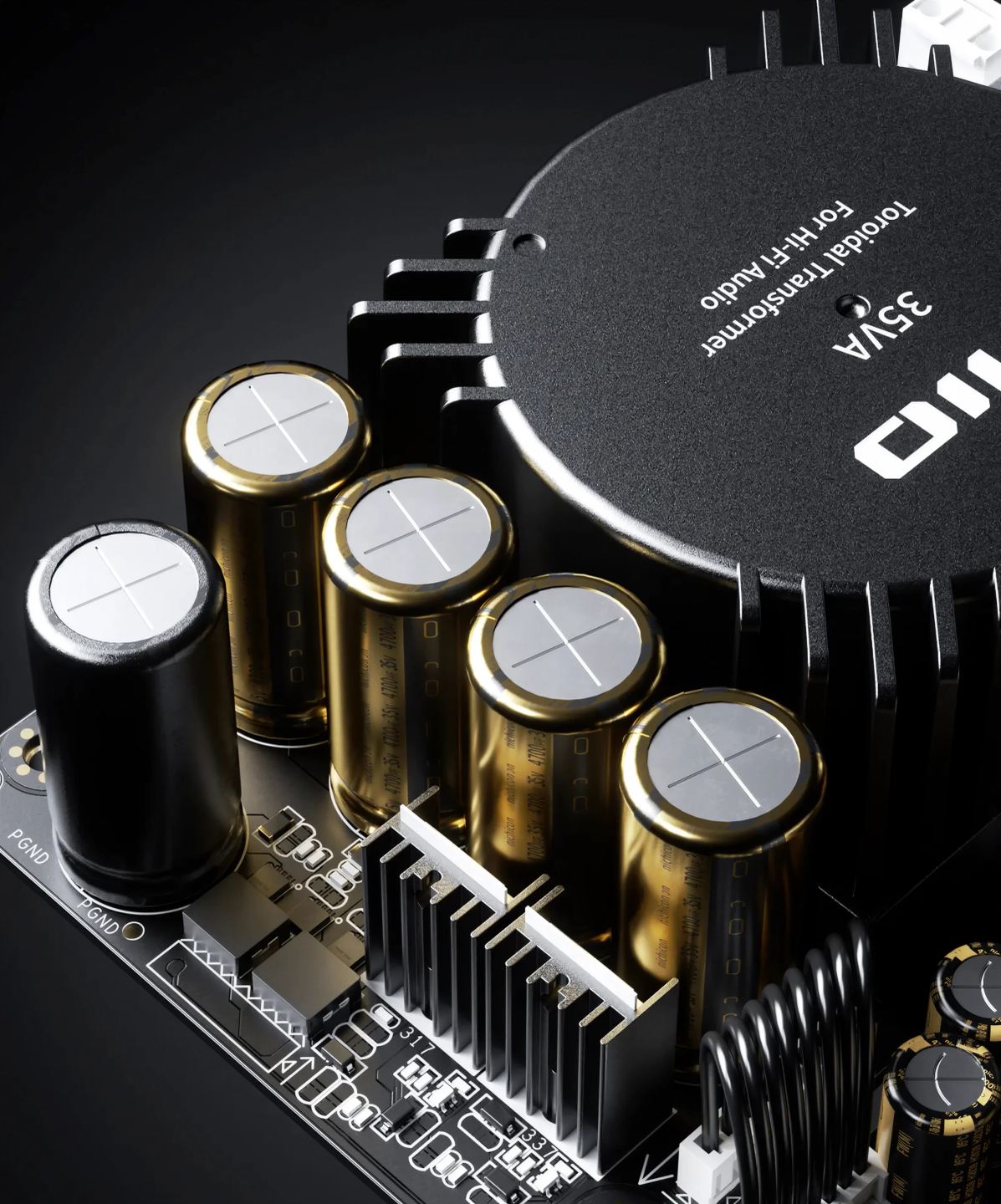
The power supply is linear, with a custom-made 35 W transformer and five 4700 µF filtering capacitors in reserve. The analog and digital sections are separated, regulation is carried out in several stages with low-noise regulators, and the digital, analog, and power supply boards occupy separate PCBs to limit interactions. Three femtosecond oscillators clock the system, including two ACCUSILICON AS318-L units at 45.1584 and 49.1520 MHz, one for each sampling-frequency family.
The component selection follows the same logic: Nichicon, ELNA, Rubycon, and WIMA capacitors in the analog section, silver-plated oxygen-free copper internal wiring, and gold-plated Neutrik connectors. Protection circuits monitor amplifier and transformer temperature, output overload, DC component, and power supply.
Machined aluminum and solid wood side panels
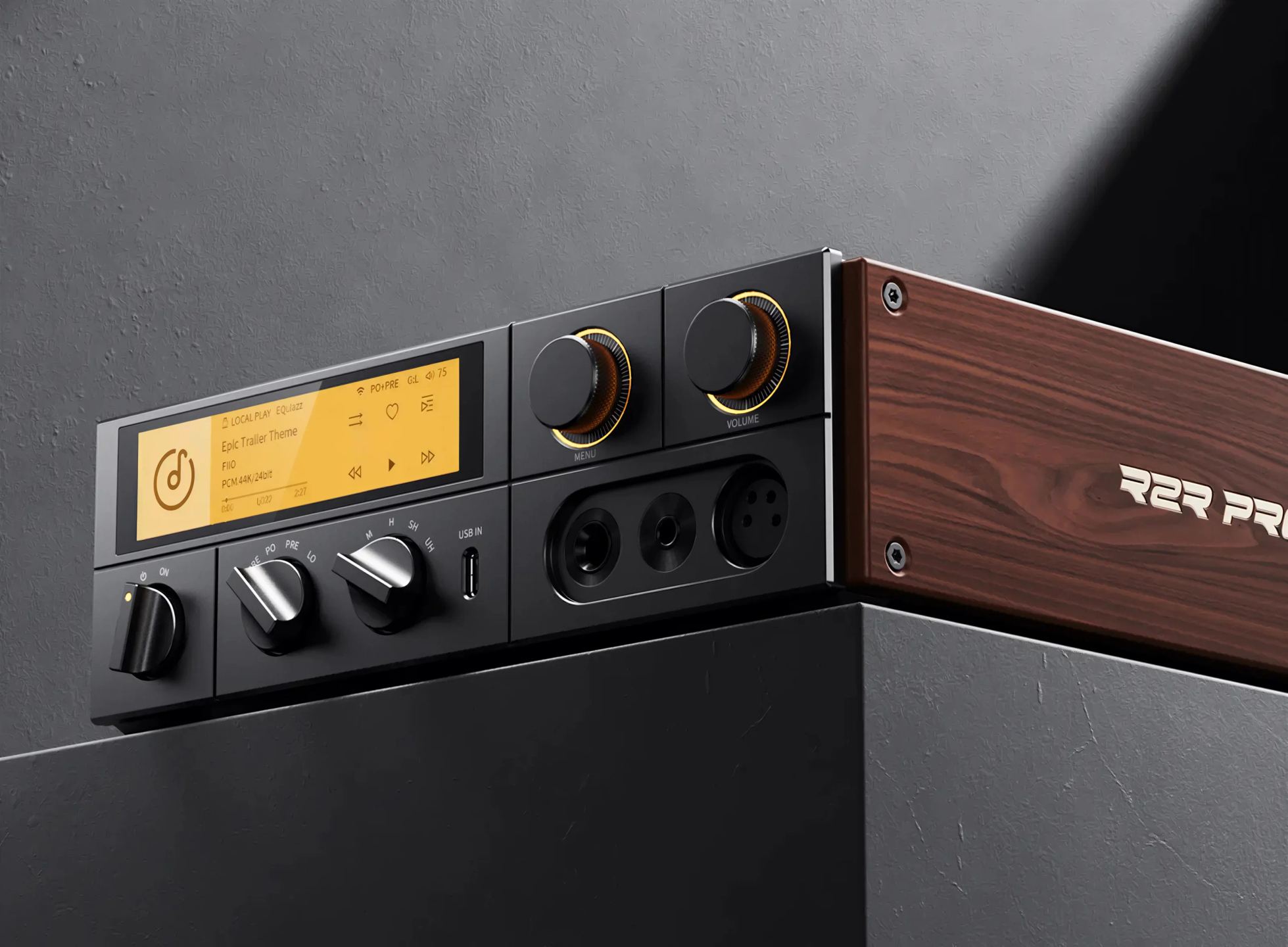
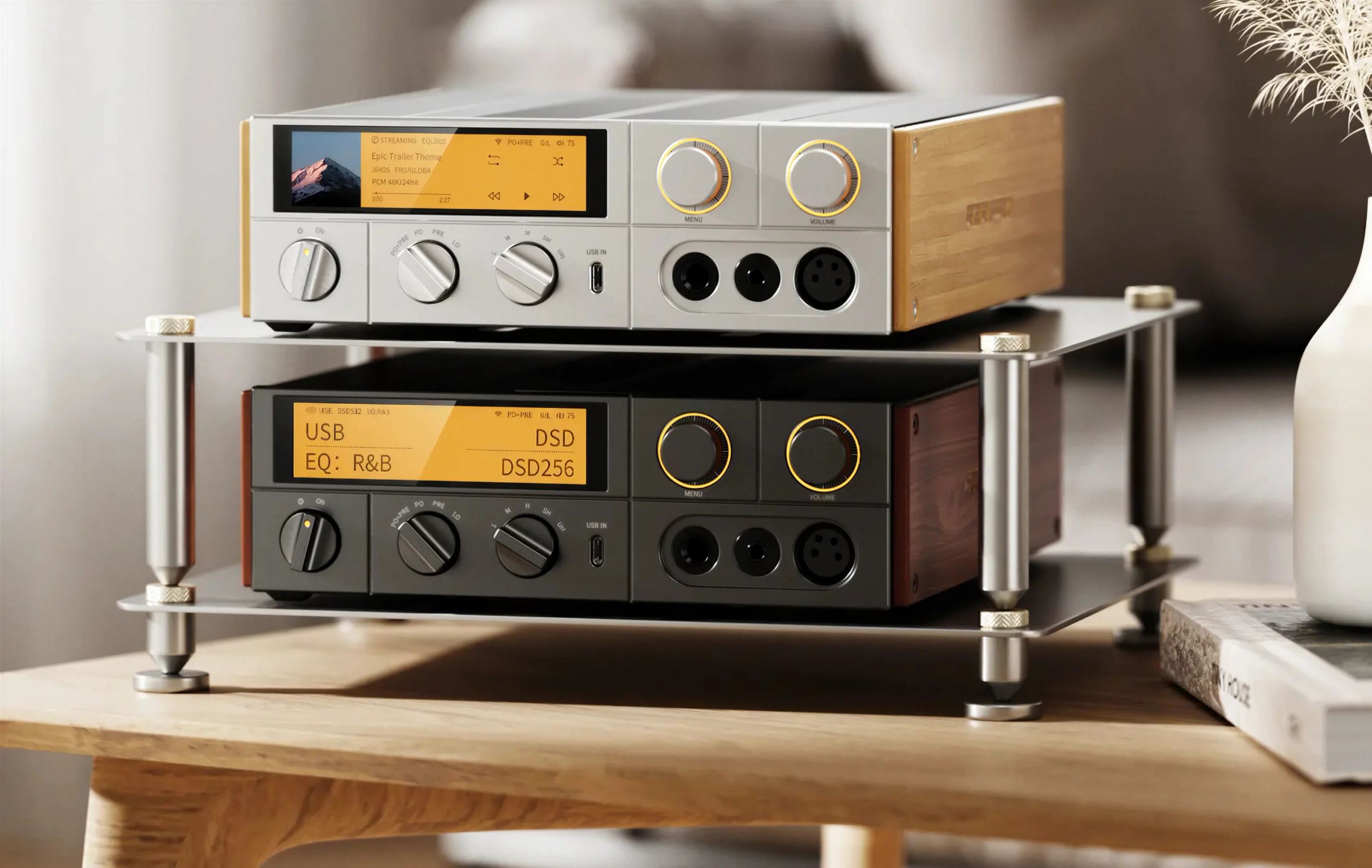
The enclosure retains the square, rounded-corner design of the K series, with two North American solid wood side panels that visually distinguish this model from the K17: white ash on the silver finish and black walnut on the black finish. As the grain is natural, no two units are ever identical. The upper grille provides heat dissipation, a point to bear in mind before installing the unit in a closed cabinet, as a Class AB power stage generates heat continuously.
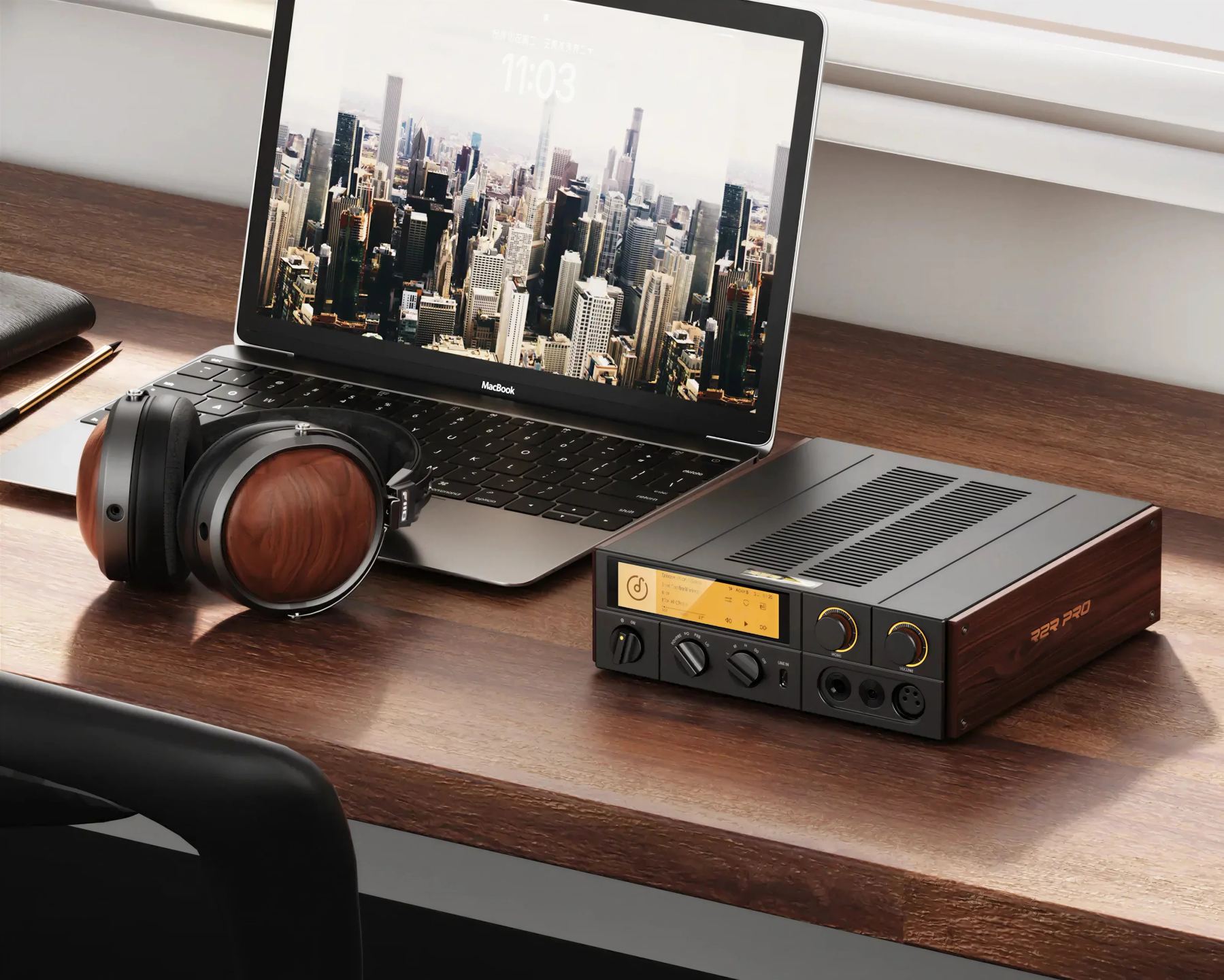
Control is based on a 3.93-inch touchscreen, five rotary controls on the front panel, including two clickable controls for volume and menu navigation, and an aluminum infrared remote control. The FiiO Control app completes the package for NAS management and equalizer profiles. At 245 × 223 × 69 mm and 2.9 kg, the unit remains a desktop device, slightly deeper and heavier than the K17 due to its wooden side panels.
Technical Specifications
Overview
- Digital-to-analog converter, network player, preamplifier and headphone amplifier
- Fully differential R2R DAC developed by FiiO
- Dual-mono balanced architecture
Digital-to-analog conversion
- Proprietary R2R PRO resistor network, segmented 24 + 5 bits
- Thermometer decoding of the 5 most significant bits across 31 resistors
- Two switchable conversion modes
- NOS without oversampling
- OS with interpolated filter
- Fully differential signal path from the converter to the headphone output, including current-to-voltage conversion and low-pass filtering
- Low-noise Texas Instruments operational amplifiers in the signal path
- Physically separated digital, analog and power supply boards
- Three femtosecond oscillators, including two ACCUSILICON AS318-L
- Natural and detailed audio signal reproduction
- Optimized for high-resolution audio files
Headphone amplification
- Discrete Class AB circuit with current enhancement
- ON Semiconductor MJE243 and MJE253 output transistors
- Output power
- 4000 mW + 4000 mW into 32 Ω balanced
- 1850 mW + 1850 mW into 32 Ω unbalanced
- 950 mW + 950 mW into 300 Ω balanced
- 240 mW + 240 mW into 300 Ω unbalanced
- Five gain settings: L, M, H, SH, UH
- Low output impedance, compatible from sensitive IEMs to demanding planar headphones
- Designed to power audiophile headphones, high-impedance headphones and high-end in-ear monitors
Operating modes
- Network playback
- Local playback from USB storage
- USB DAC
- Bluetooth reception
- Optical input
- Coaxial input
- Balanced analog input
- Unbalanced analog input
- Analog output selector: headphones only, preamplifier only, both, or fixed-level line output
Network playback and sources
- Gigabit Ethernet and dual-band Wi-Fi
- Roon Ready, AirPlay, QPlay
- Direct playback from NAS shares via SMB and NFS
- Network playback up to 384 kHz / 32 bits and DSD256 via DoP
- Local playback up to 384 kHz / 32 bits and DSD256
- XMOS XU316 USB interface: PCM up to 768 kHz / 32 bits, native DSD256
- Coaxial input: 192 kHz / 24 bits, DSD64
- Optical input: 96 kHz / 24 bits
- Bluetooth 5.1 with Qualcomm QCC5125 chip
- Supported codecs: LDAC, aptX Adaptive, aptX HD, aptX LL, aptX, SBC
Signal processing
- Dedicated M21586Q signal processor with 64-bit floating point at 360 MHz
- 31-band parametric equalizer without loss or resampling
- Active equalization in all operating modes, including analog inputs
- Gain, Q factor, dynamic processing, limiter and compressor adjustment
- Importable, exportable and shareable equalization profiles
- AUTO EQ function applying a correction curve for each headphone
- Stored listening presets
Power supply
- 35 W linear power supply with custom-made transformer
- Five 4700 µF filtering capacitors
- Separate analog and digital rails
- Multi-stage regulation, low-noise LDO regulators
- IEC mains inlet with fuse holder and main power switch
Front-panel connectivity
- USB-C port
- 6.35 mm jack headphone output
- 4.4 mm balanced headphone output
- 4-pin XLR headphone output
- Power switch with indicator
- Analog output selector
- Gain selector
- Menu knob and volume knob, both clickable
Rear-panel connectivity
- Toslink optical input
- Toslink optical output: 192 kHz / 24 bits
- RCA coaxial input
- RCA coaxial output: 192 kHz / 24 bits, DSD64
- Unbalanced RCA line input
- Balanced 4.4 mm line input
- RCA line output: 2.5 Vrms
- Balanced XLR line output: 5 Vrms
- USB-C port
- USB-A port for storage device
- RJ45 Ethernet port
- 12 V trigger input and output
- RS232 port
- Ground switch and chassis ground terminal
- Wi-Fi and Bluetooth antennas
- Reset hole
Controls and display
- 3.93-inch LCD touchscreen (approximately 9.98 cm)
- Five rotary controls on the front panel
- Intuitive user interface
- Additional control via the FiiO Control app
- Ingenic X2000 processor assisted by an ESP32-S3 controller
- Protection against amplifier and transformer temperature, output overload, DC offset and power supply issues
Stated measurements
- Frequency response: 20 Hz to 80 kHz, attenuation below 3 dB
- Signal-to-noise ratio: greater than or equal to 125 dB, A-weighted
- Noise floor: below 2.6 µV, A-weighted
- Total harmonic distortion plus noise: below 0.0052% at 1 kHz, -8 dB into 32 Ω
Build and dimensions
- Machined aluminum enclosure with solid North American wood side panels
- White ash on the silver finish
- Black walnut on the black finish
- Unique grain on each unit
- Nichicon, ELNA, Rubycon, Panasonic and WIMA capacitors in the analog section
- Silver-plated oxygen-free copper wiring, gold-plated Neutrik connectors
- Optimized heat dissipation
- Dimensions: 245 × 223 × 69 mm
- Weight: 2.9 kg
Package contents
- K17 R2R
- Power cord
- Aluminum infrared remote control
- 4-pin XLR plug
- Fuse
- Two USB cables
- Headphone jack adapter
- Warranty card
- Quick start guide
Frequently Asked Questions
Can the K17 R2R be used as a preamplifier for a power amplifier?
Yes. The front-panel output selector offers a variable-level preamp position, controlled by the volume knob and remote control, on both RCA and XLR outputs. Conversely, the line position provides a fixed level of 2.5 Vrms via RCA and 5 Vrms via XLR, intended for use when volume is managed by a downstream integrated amplifier. The combined position feeds the headphones and preamp output simultaneously, which is convenient when a pair of active speakers and headphones share the same desk.
What is the ground switch on the rear panel for?
It changes how the signal ground is connected to the chassis. When several interconnected devices are each grounded, a ground loop can form and produce a 50 Hz hum. Flipping this switch is often enough to make it disappear. The chassis ground terminal, meanwhile, is used to connect a device requiring an external ground point, such as a turntable, if a phono preamp is connected upstream.
Should you prefer the 4.4 mm output or the 4-pin XLR?
Both drive the same balanced circuit and deliver the same power. The choice comes down to the headphone cable: 4-pin XLR has traditionally been used for stationary headphones supplied with a thick cable, while 4.4 mm has become the standard for portable use and recent replacement cables. A passive adapter between the two formats works without degrading the signal.
Does the USB-A port support an external hard drive?
It is designed for a storage device, USB stick or drive, whose contents can be browsed from the touchscreen or the app. A platter-based drive powered solely by the USB port may exceed the available current: a flash-memory model or a drive with its own power supply remains safer. For a large library, network playback from a NAS avoids physically handling the storage device.
Is NOS mode suitable for all recordings?
Not necessarily, and that is precisely why the mode is switchable. The absence of oversampling allows components above the audible band to come through and softens the extreme treble, which can flatter analog recordings or somewhat harsh-sounding tracks. On modern productions that are already heavily compressed, OS mode with an interpolated filter often delivers sharper definition. Trying it with your own discs is a better guide than any rule.
- Eco-contribution of €0.12 included in the sale price.
- Manufacturer reference: FIIK17R2RBK
- GTIN / EAN: 6953175711209