Astell&Kern PD5



Specifications and features


Overview
Eight converters housed in a casing that fits in one hand, two operating modes to choose from and up to twenty-eight hours of playback on a single charge: the PD5 takes over the role held by the A&norma SR35 and brings it into the PD series. An aluminum audiophile player, it runs full Android and is designed for portable listening from morning to night, without recharging during the day.
Eight converters, two ways to listen
The PD5 features eight Cirrus Logic CS43198 DAC chips, divided into two modes that can be switched from the settings. In Quad-DAC mode, four chips are active: playback consumes less power and battery life is extended, with the natural sound signature that characterizes the brand. In Octa-DAC mode, all eight chips operate in parallel and the PD5 gains in dynamics and channel separation.
Doubling the number of converters mainly improves measurements: dynamic range and crosstalk improve by a few decibels, with the analog output stage then setting the limit. The difference between the two modes is therefore more apparent in the figures than in any spectacular audible difference. At 1 kHz, the signal-to-noise ratio reaches 125 dB on the unbalanced output and 129 dB on the balanced output, while total harmonic distortion plus noise remains at 0.0006%.
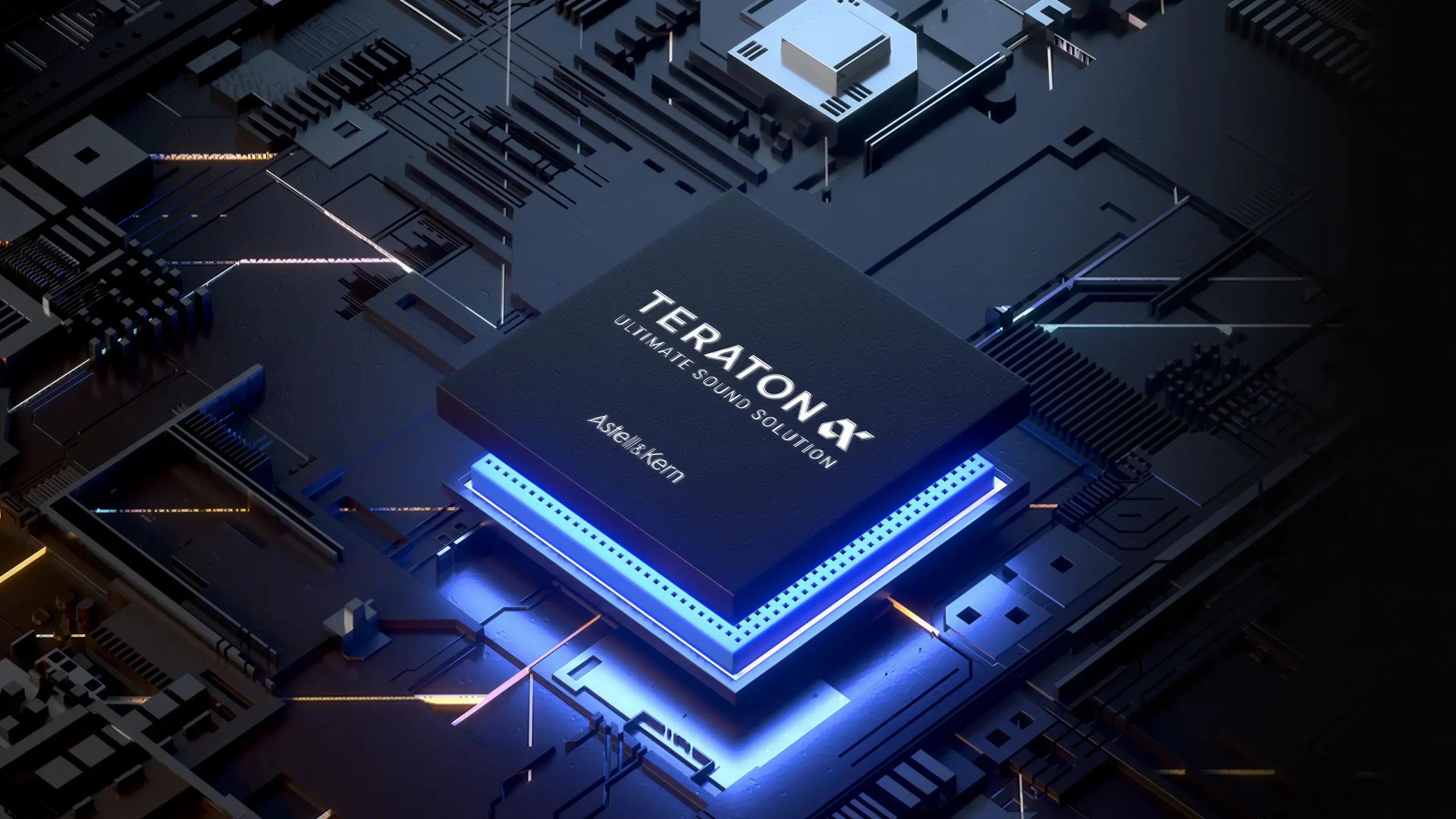
In Octa-DAC mode, the headphone output delivers up to 4 Vrms via the 3.5 mm jack and 8 Vrms via the 4.4 mm balanced socket, enough voltage for demanding headphones. Output impedance remains low, at 0.6 Ω in 3.5 mm and 1.2 Ω in 4.4 mm, preventing coloration of low-impedance, sensitive in-ear earphones. Power and amplification management relies on TERATON ALPHA, Astell&Kern’s in-house processing designed to reduce power-supply noise and provide stable amplification.
The battery life behind its name
The 4000 mAh lithium-polymer battery earns the PD5 its “All Day Player” nickname. In Quad-DAC mode, it provides up to 28 hours of continuous playback; in Octa-DAC mode, the eight active converters reduce that figure to 15 hours. Choosing full conversion resolution therefore roughly halves battery life. These figures apply to uninterrupted playback of local files: Wi-Fi streaming, the screen being on and high volume levels reduce them. Charging is via USB-C and takes around two and a half hours for a full charge, with USB Power Delivery 3.0.
EnviroTune and tuning tools
Astell&Kern brings together a range of listening settings on the PD5 under the Sound Studio name. The most visible feature, EnviroTune, analyzes ambient noise in real time and adapts the sound reproduction to the environment: a noisy subway and a quiet room do not require the same correction.
ESA (Enhanced Signal Alignment) processing addresses group delay, the slight time offset with which different frequencies travel through an audio circuit and do not all reach the ear at the same time; by realigning them, it tightens the sound. DAR (Digital Audio Remaster) upsamples files, up to 384 kHz in PCM and up to DSD128, to approach the refinement of higher sampling frequencies.
Also included are four digital conversion filters (Low Latency and Phase Compensated, each in Fast or Slow versions), a Crossfeed mode that partially blends the left and right channels to simulate speaker listening, adjustable in frequency, gain and level, as well as ReplayGain normalization, which equalizes the perceived level from one file to another. All these processing options can be disabled.
A format that fits in one hand
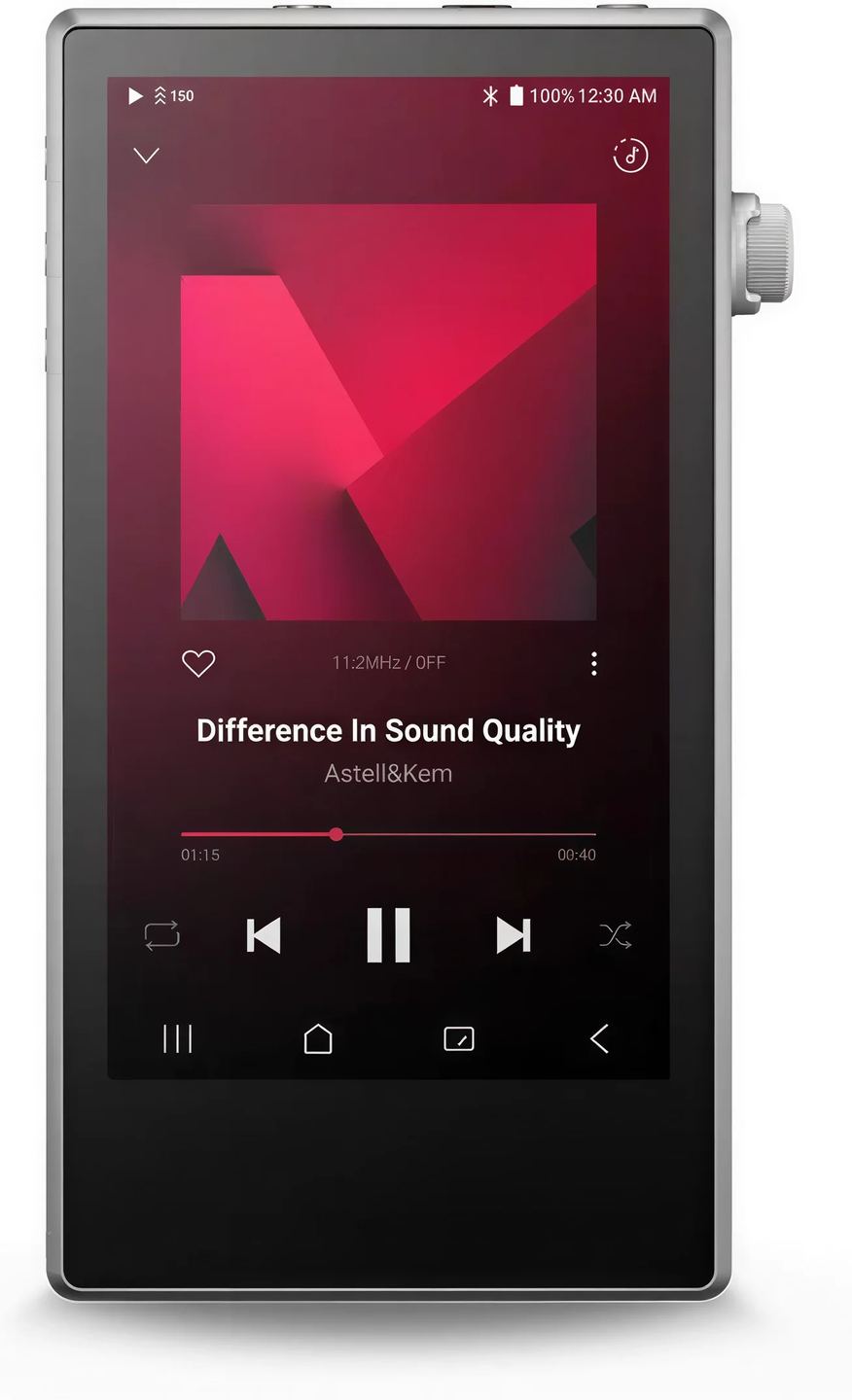
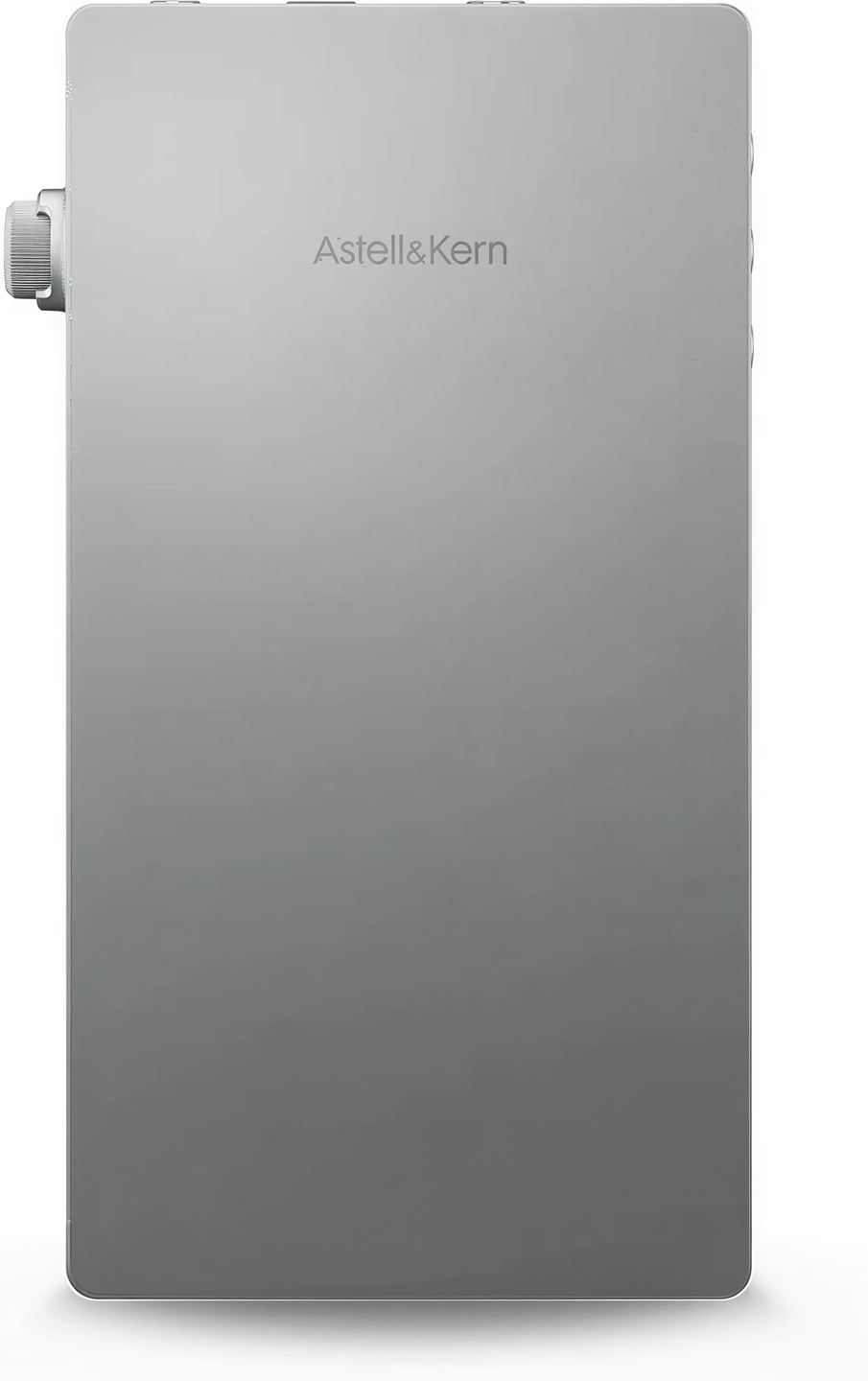
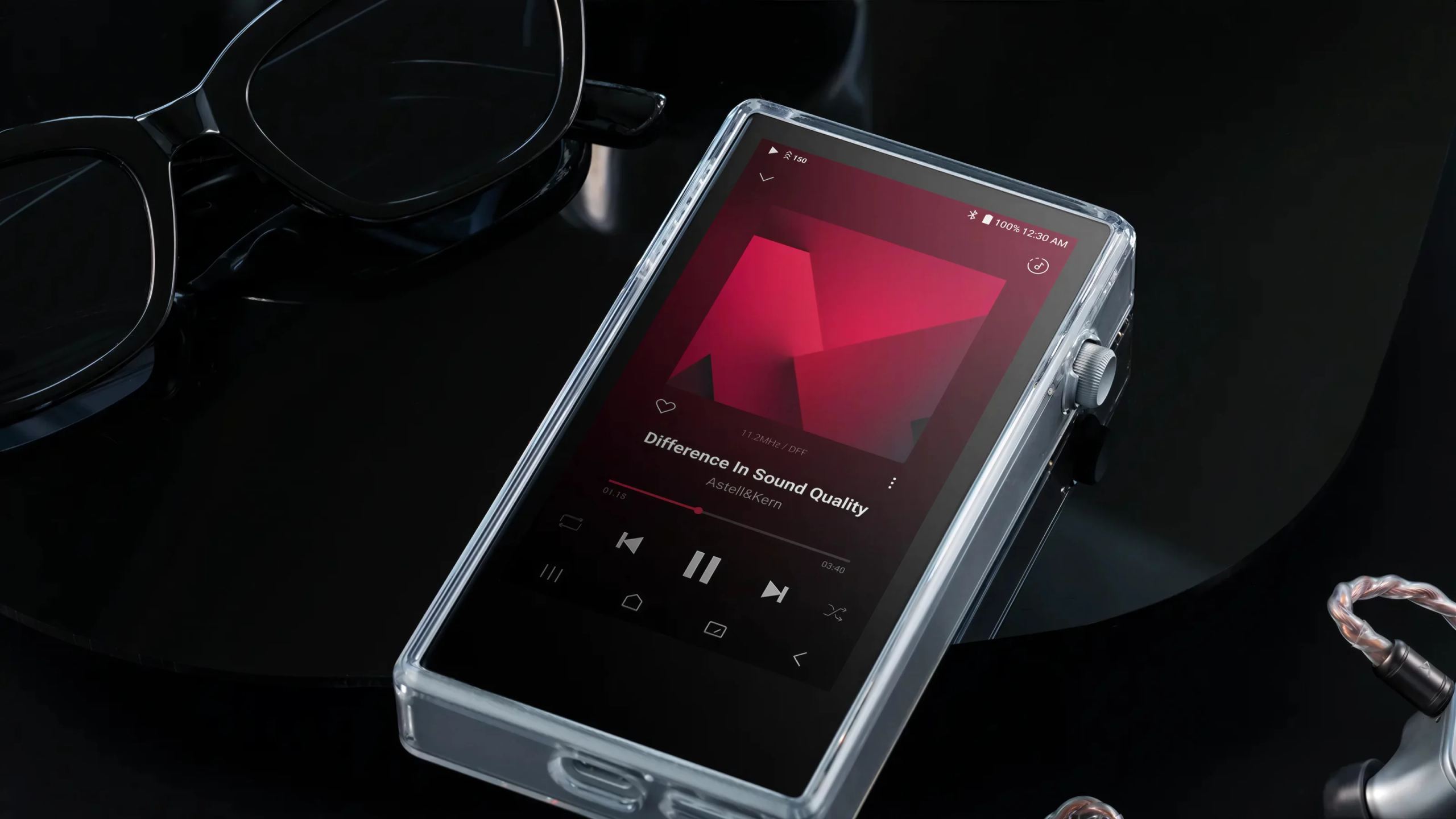
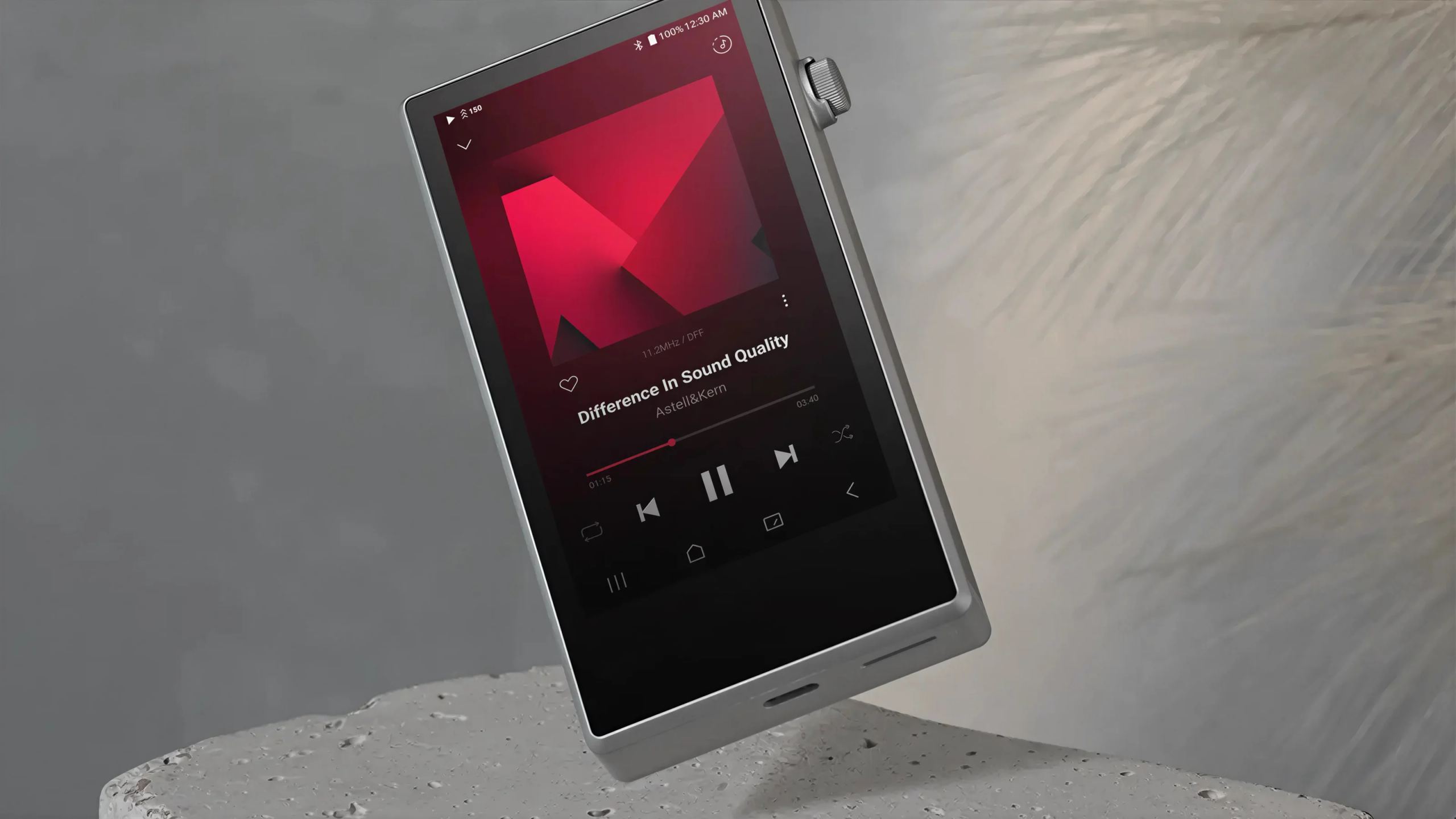
The chassis is aluminum, with a silver finish, measuring 69.7 mm wide, 119.7 mm high and 16.1 mm thick, and weighing around 198 g. The 4.1-inch touchscreen (720 × 1280 pixels) occupies the front panel, with a curved cutout that falls naturally under the fingers. The whole unit can be operated with one hand, without the weight or bulk of larger players.
On the output side, the 4.4 mm balanced socket uses the five-pole Pentaconn standard: standard 4.4 mm balanced cables connect directly. The 3.5 mm unbalanced jack completes the headphone connectivity.
Android, streaming and wireless connections
The PD5 runs a full version of Android with the Google Play Store available from startup: Qobuz, Tidal or another streaming app can be installed just like on a phone. An octa-core processor powers the interface. Wi-Fi is dual-band (2.4 and 5 GHz, 802.11 a/b/g/n/ac standard), while Bluetooth 5.3 supports aptX HD, LDAC and LHDC codecs, in addition to SBC and AAC.
The PD5 is Roon Ready and Qobuz Connect compatible, allowing it to be controlled from these environments. The Bluetooth Sink function reverses the usual direction: the PD5 then receives audio from a phone or computer and acts as a wireless converter and amplifier for wired headphones. The 64 GB internal storage can be expanded with a microSD card accepted up to 1.5 TB, while USB-C handles both charging and connection to a Windows or macOS computer.
Where the PD5 fits in the range
The PD5 succeeds the A&norma SR35 released in 2023, but the A&norma name disappears: the player joins the PD series. Above it, the PD10 and PD20 use AKM converters and offer higher resolution, up to 768 kHz and DSD512. The PD5 plays PCM up to 32-bit/384 kHz and native DSD256, the same ceiling as the SR35 it replaces.
Its place in the lineup is therefore defined by its compact format and battery life rather than maximum resolution or output power, which are reserved for the higher-end PD models. Supported file formats include WAV, FLAC, WMA, MP3, OGG, APE, AAC, ALAC, AIFF, DFF and DSF.
Technical specifications
General
- Model: PD5
- Colour: silver
- Construction: aluminium
- Dimensions (W × H × D): 69.7 × 119.7 × 16.1 mm
- Weight: approximately 198 g
- Operating temperature: 0 to +40 °C
Display and interface
- 4.1” touchscreen – 720 × 1280 pixel resolution
- Octa-Core processor
- OTA firmware update
Audio architecture
- DAC: 8 × Cirrus Logic CS43198 – Octa-DAC architecture
- Switchable DAC mode: Quad-DAC / Octa-DAC
- PCM decoding: up to 32-bit / 384 kHz Bit-to-Bit
- Native DSD:
- DSD64 (2.8 MHz)
- DSD128 (5.6 MHz)
- DSD256 (11.2 MHz)
- Supported audio formats: WAV, FLAC, WMA, MP3, OGG, APE, AAC, ALAC, AIFF, DFF, DSF
Audio outputs
- 3.5 mm unbalanced output: up to 4 Vrms in Octa-DAC mode
- 4.4 mm balanced output: up to 8 Vrms in Octa-DAC mode
- Balanced output: 4.4 mm 5-pole jack only
- Output impedance:
- 0.6 Ω (3.5 mm)
- 1.2 Ω (4.4 mm)
Measurement performance
- Frequency response:
- ±0.011 dB (20 Hz – 20 kHz)
- ±0.130 dB unbalanced (20 Hz – 70 kHz)
- ±0.143 dB balanced (20 Hz – 70 kHz)
- Signal-to-noise ratio at 1 kHz:
- 125 dB unbalanced
- 129 dB balanced
- Crosstalk at 1 kHz:
- -145 dB unbalanced
- -147 dB balanced
- THD+N at 1 kHz: 0.0006% unbalanced and balanced
- SMPTE IMD:
- 0.0003% unbalanced
- 0.0001% balanced
- Clock jitter: 25 ps (typ.)
- Reference clock jitter: 250 femtoseconds
Signal processing and technologies
- EnviroTune: real-time analysis of ambient noise and automatic adjustment of sound reproduction
- ESA (Enhanced Signal Alignment): group delay reduction technology
- DAR (Digital Audio Remaster): conversion up to 384 kHz in PCM / DSD128
- DAC filters (4 filters): Low Latency Fast, Low Latency Slow, Phase Compensated Fast, Phase Compensated Slow
- Crossfeed: speaker-like listening simulation with Shelf Cutoff, Shelf Gain and Mixer Level settings
- ReplayGain: automatic volume level normalisation between different files
Wireless connectivity
- Wi-Fi 802.11 a / b / g / n / ac – 2.4 / 5 GHz
- Bluetooth 5.3: A2DP, AVRCP, aptX HD, LDAC, LHDC, SBC, AAC
- Bluetooth Sink: wireless audio reception from an external device
Streaming and services
- Roon Ready
- Qobuz Connect compatible
Wired connectivity and storage
- USB Type-C: charging and PC / Mac connection
- Internal memory: 64 GB NAND
- Memory expansion: 1 × microSD up to 1.5 TB
Power and battery life
- 4000 mAh / 3.8 V Li-Polymer battery
- Charging time: approximately 2.5 h with PD 3.0 charging
- Battery life:
- Up to 28 h in Quad-DAC mode
- Up to 15 h in Octa-DAC mode
System compatibility
- Windows 8 / 10 / 11 (32 / 64 bit)
- macOS X 10.7 and later
Frequently Asked Questions
Can the PD5 be used as a converter for a computer?
Yes. It connects via USB-C and can be used as an external converter for a computer, with driver compatibility covering Windows 8, 10 and 11 (32- and 64-bit) as well as macOS 10.7 and later versions. The same USB-C port is used for charging and file transfer.
Which headphones and earphones can the PD5 power?
In Octa-DAC mode, the balanced 4.4 mm output reaches 8 Vrms and the unbalanced 3.5 mm output 4 Vrms: this voltage headroom is suitable for high-impedance headphones. For sensitive in-ear monitors, the low output impedance (0.6 and 1.2 Ω) prevents altering their sound signature. Voltage does not tell the whole story about the available power, but it provides a good indication of the headroom for demanding loads.
Does the 4.4 mm balanced connector support standard cables?
Yes. The 4.4 mm socket uses the five-pole (Pentaconn) format, the standard for 4.4 mm balanced cables on the market. A cable fitted with a standard 4.4 mm plug connects to it without an adapter.
Do I need specific apps for streaming?
The PD5 features full Android and the Google Play Store: simply install the desired streaming apps directly, just like on a smartphone. Dual-band Wi‑Fi handles the connection, while Qobuz Connect and Roon Ready protocols also allow playback to be controlled from these environments over the local network.
How many files can be stored?
Internal storage is 64 GB. A single microSD slot accepts a card up to 1.5 TB, leaving room for a large high-resolution library, including DSD.
Why does the PD5 stop at 384 kHz and DSD256?
This is the maximum for its conversion section, the same as on the SR35 it replaces; the PD10 and PD20 go higher with different converters. In practice, the vast majority of commercially available recordings are well below this, and the difference in resolution at higher values remains difficult to hear. The DAR can also upsample files up to 384 kHz.
Can the signal be listened to without EnviroTune, DAR or Crossfeed processing?
Yes, these processing options are optional and can be disabled individually. You can listen to the signal without realignment, oversampling, or crossfeed, or activate only those that suit a particular pair of headphones and situation.
- Eco-contribution included in the sale price.