

Astell&Kern PD20

Specifications and features


Overview
Calibrate the sound to your own ears before listening to anything: the PD20 introduces this approach on an audiophile music player. Developed with Audiodo, a Swedish specialist in audio personalization, this player includes a hearing test that analyzes each ear separately to generate a custom correction profile. Around this calibration, Astell&Kern has built an entirely new device, unrelated to the PD10, centered on the concept “Craft Your Sound”: shaping your own sound.
A built-in hearing test, a first for this type of device
The Personal Sound system relies on measurement earphones supplied with the PD20. The test, performed directly on the device, evaluates the frequency sensitivity of the left ear and right ear independently. The player then generates a compensation profile that corrects any asymmetries or hearing loss. This technology already exists in some wireless earphones (Nothing, Noble Audio), but this is the first time it has appeared in a dedicated high-resolution player.
Once created, the profile remains active regardless of the headphones connected afterward. The correction is applied upstream of any manual equalizer adjustment, making it possible to fine-tune the sound on a foundation already adapted to your own perception. Personal Sound works up to 32-bit / 192 kHz.
Four ESS DACs and group delay correction
The digital section is based on four ESS ES9027PRO chips in a Quad-DAC configuration. Each converter processes an independent signal to reduce inter-channel interference and improve stereo separation. This architecture enables native playback up to 32-bit / 768 kHz in PCM and DSD512.
Astell&Kern developed ESA (Enhanced Signal Alignment) technology to correct group delay, a phenomenon in which the different frequencies of an audio signal do not arrive at the output at exactly the same time. Without correction, this time shift can blur attacks and soften transients. ESA aligns the signals for greater temporal coherence. The audible benefit results in cleaner attacks, better intelligibility of micro-details, and a more stable stereo image.
The TERATON ALPHA platform, common to Astell&Kern products, contributes to reducing power supply noise, amplification stability, and output interface quality.

Three amplifier architectures selectable by switch
The amplification adopts a Triple AMP structure controlled by a physical switch on the side of the device. No software menu: switching is instantaneous.
Class A mode favors a dense, harmonically rich reproduction, with an analog-like texture and minimal distortion. Class AB mode prioritizes the balance between dynamics and energy efficiency, with good articulation and power handling. Hybrid mode combines the two approaches for a different balance.
In Class A and Hybrid modes, a second switch allows the amplification current to be adjusted across three levels (Low, Mid, High). This setting changes the energy density and circuit behavior depending on the headphones used. The Low level reduces background noise for sensitive IEMs. The Mid level balances density and resolution. The High level maximizes power and soundstage for demanding headphones.
The stated measurements are low: signal-to-noise ratio of 124 dB unbalanced and 127 dB balanced, THD+N of 0.0003% unbalanced. Output voltage reaches 5 Vrms on the 3.5 mm jack and 10 Vrms on the 4.4 mm balanced output.
The Sound Master Wheel: 160 adjustment steps per band
The wheel positioned on the top of the device controls a three-band equalizer (bass, mids, treble) with 160 levels per band, from −8.0 dB to +8.0 dB. This adjustment is made in real time, without interrupting playback, without going through menus. Touch contact with the wheel is enough.
The Audiodo equalizer also offers a Tilting function that shifts the tonal balance toward the bass or treble while preserving the overall character of the sound. These adjustments work in addition to the Personal Sound profile, on an already corrected foundation. The equalizer supports files up to 32-bit / 192 kHz.

Harmonic restoration and digital remastering
The PD20 takes over the Advanced DAR (Digital Audio Remaster) introduced on the SP4000. This processing works in two stages. The signal first passes through VSE (Virtual Sound Extender), which virtually restores harmonics lost during recording or compression. The enriched signal is then upsampled by the DAR engine. This two-step process aims for a rendering richer in micro-information without altering the intent of the recording. The processing can be disabled.
The Audiosphere function adds three-dimensional spatialization to the stereo signal. Four presets are available: Subtle, Balanced, Immersive, Echoic. It works up to 32-bit / 96 kHz.
Ergonomics inspired by studio equipment
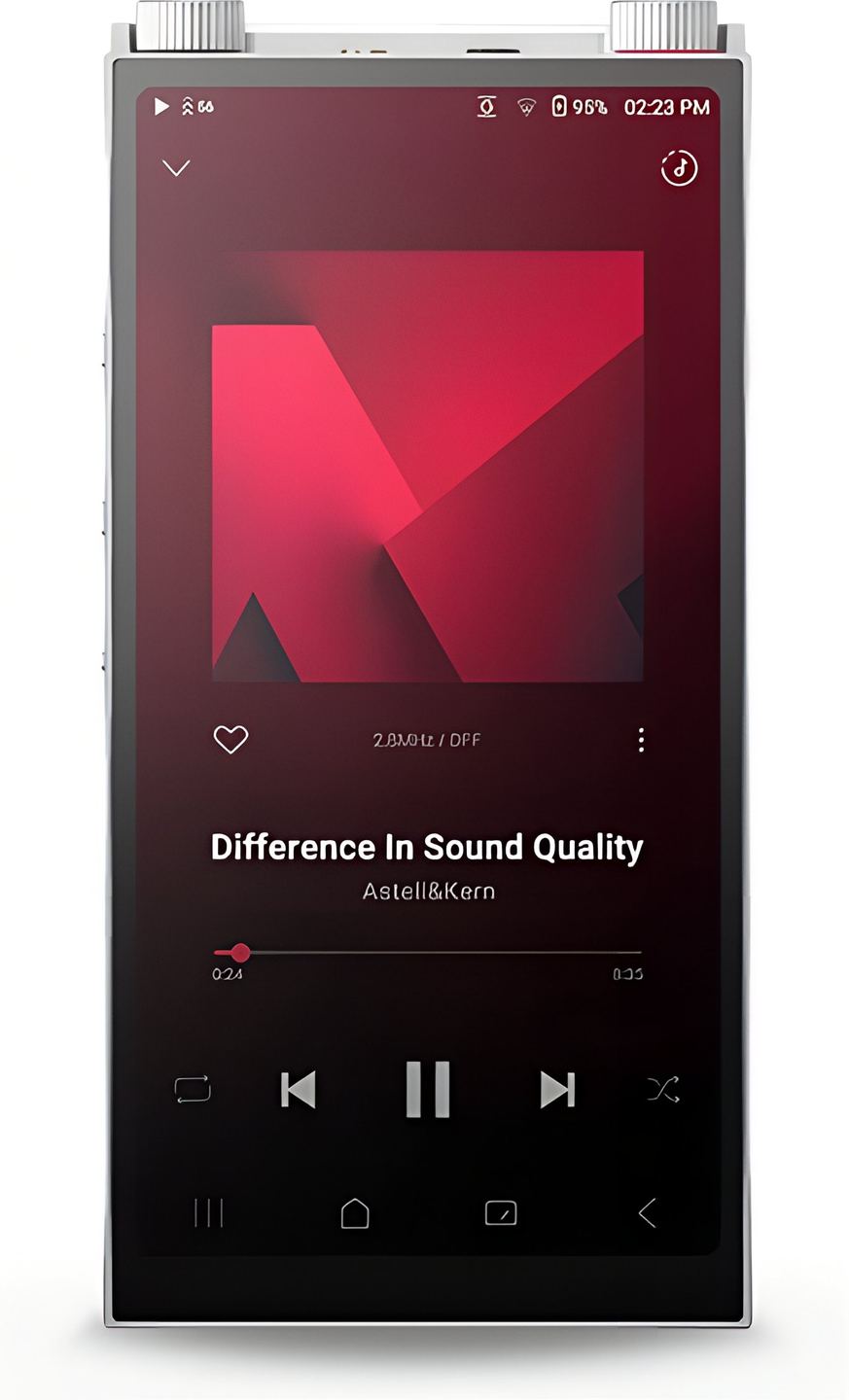
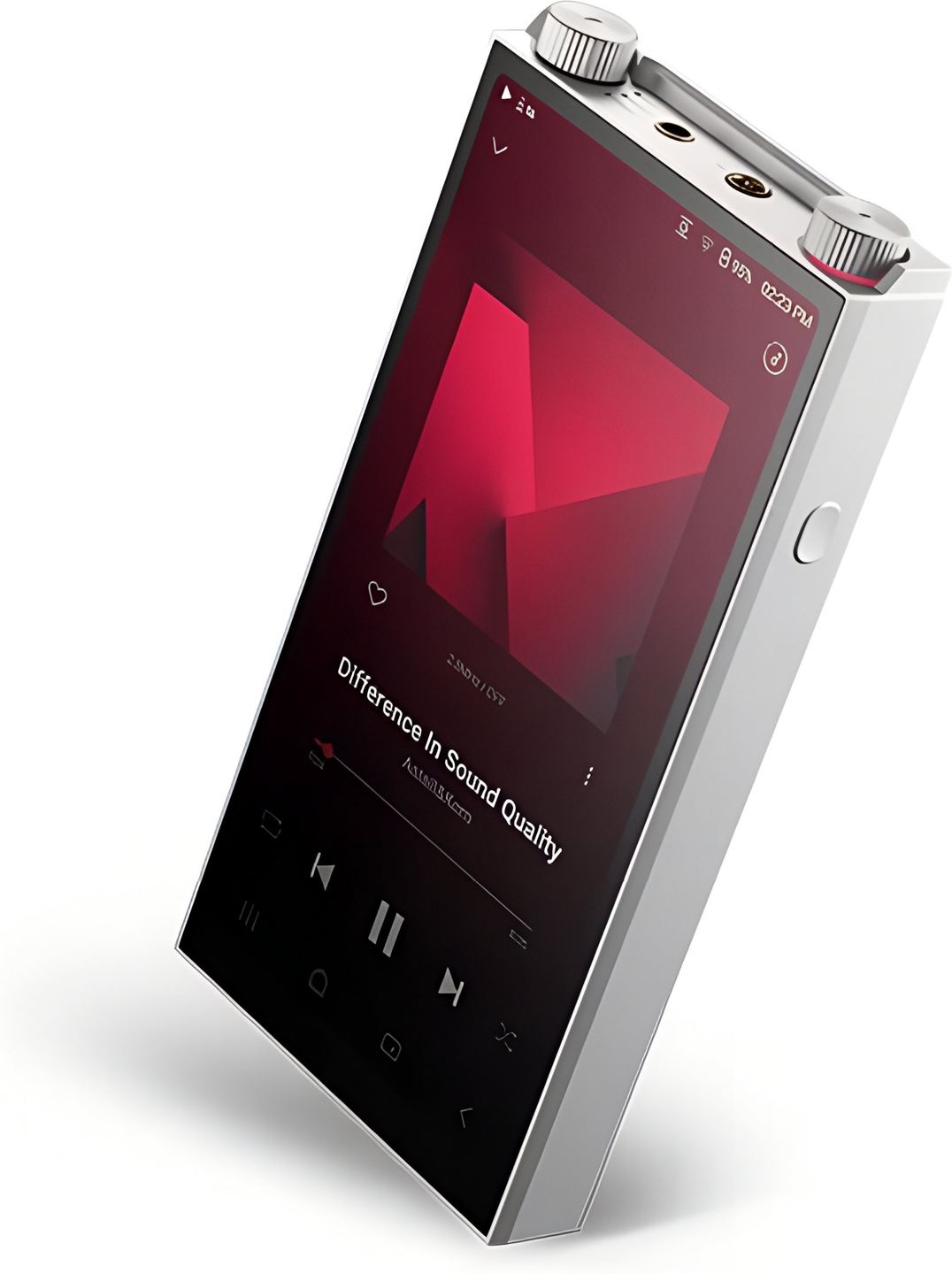
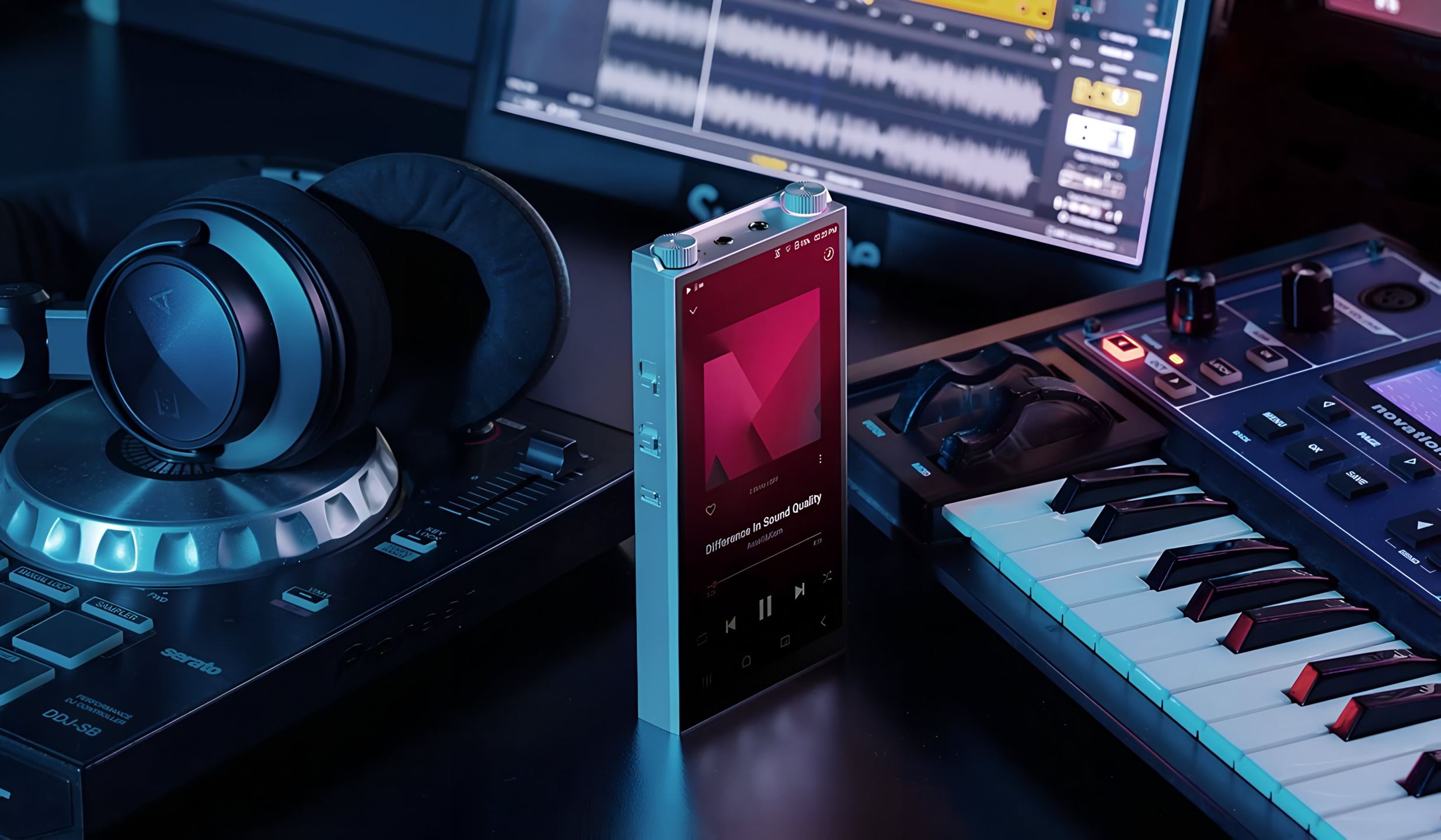
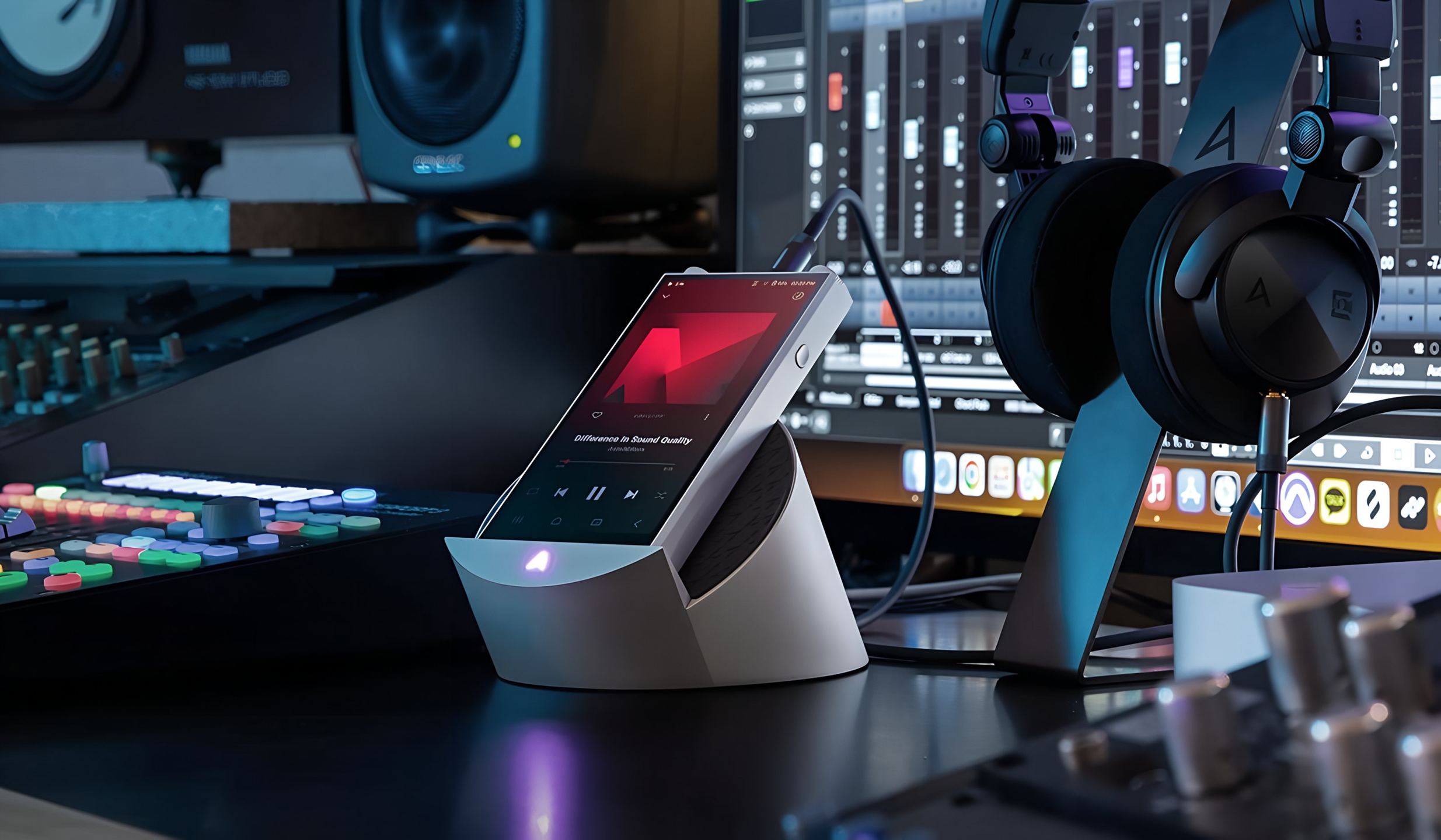
The “Sound Lab Control” design draws inspiration from professional equipment. The two top wheels physically separate sound adjustment (Sound Master Wheel) and volume control. The AMP and CURRENT switches are placed on the side for direct access without turning on the screen. The multifunction button naturally falls under the thumb.
An LED indicator surrounds the power button and displays the resolution of the current file: one color per bit depth (16, 24, 32-bit, DSD). This visual information makes it possible to instantly check the playback format without looking at the screen.
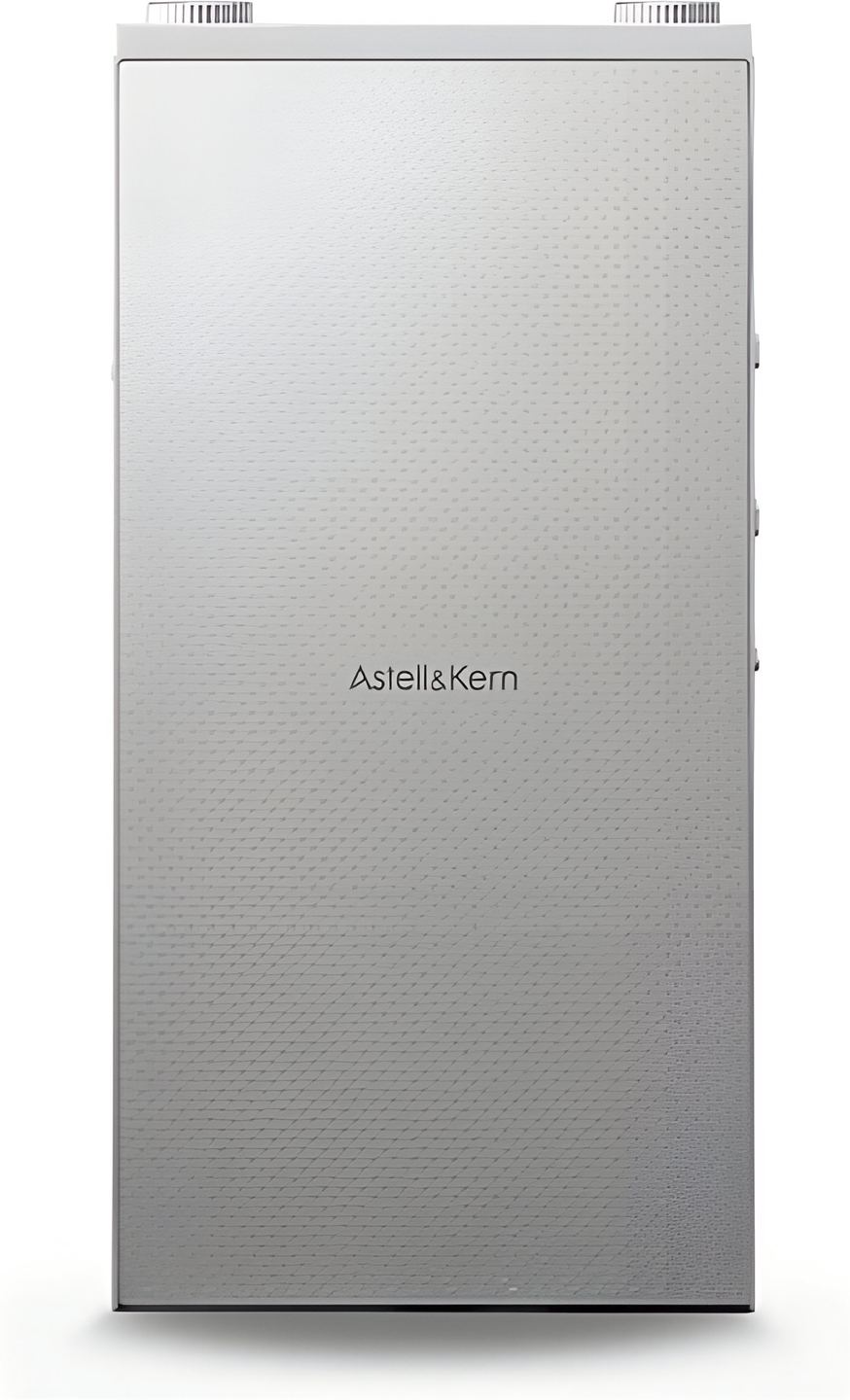
The aluminum chassis measures 77.5 × 155.7 × 17.3 mm for a weight of 313 g. The 6-inch touchscreen displays a resolution of 2160 × 1080 pixels.
Storage, connectivity, and battery life
The PD20 includes 256 GB of internal memory, expandable up to 2 TB via microSD card. Wireless connectivity includes Wi-Fi 802.11 a/b/g/n/ac (2.4 and 5 GHz) and Bluetooth 5.3 compatible with aptX HD, LDAC, LHDC, SBC, and AAC. The BT Sink function allows the PD20 to be used as a Bluetooth receiver for a smartphone or computer.
The device can serve as a USB DAC on Mac and Windows PC. Wired outputs include a 3.5 mm headphone jack (unbalanced), a 3.5 mm optical output, and a 4.4 mm five-pole balanced jack.
The 5,770 mAh Li-Polymer battery provides around 14 hours of playback (FLAC 16-bit / 44.1 kHz, volume at 50%, Class AB mode, screen off). A full charge via USB PD 3.0 takes around 4 hours.
Documentation
French
Technical specifications
Screen and chassis
- 15.24 cm (6-inch) touchscreen
- Resolution: 2160 × 1080 pixels
- Chassis material: aluminum
- Dimensions: 77.5 × 155.7 × 17.3 mm
- Weight: approximately 313 g
Processor and storage
- Processor: Octa-Core
- Internal memory: 256 GB (NAND)
- Expansion: microSD (up to 2 TB)
Digital-to-analog conversion
- DAC: ESS ES9027PRO × 4 (Quad-DAC architecture)
- Audio decoding: up to 32-bit / 768 kHz (Bit-to-Bit playback)
- Clock
- Clock jitter: 25 ps (typical)
- Reference clock jitter: 250 femtoseconds
Amplification architecture
- Triple AMP Class amplification
- Class A
- Class AB
- Hybrid mode (A + AB)
- Amplification current setting (Class A / hybrid)
- Low, Mid, High
Proprietary audio technologies
- TERATON ALPHA
- ESA (Enhanced Signal Alignment)
- Advanced DAR (Digital Audio Remaster) with VSE (Virtual Sound Extender)
Personalization and spatialization
- Personal Sound technology (Audiodo) with personalized hearing calibration
- Operation up to 32-bit / 192 kHz
- Audiosphere (Audiodo): 3D audio spatialization
- Modes: Subtle, Balanced, Immersive, Echoic
- Support up to 32-bit / 96 kHz
Equalization
- Sound Master Wheel with touch control
- 160 adjustment levels per band
- Bands: bass, mids, treble
- Range: −8.0 dB to +8.0 dB
Audio formats and resolutions
- Supported formats: WAV, FLAC, WMA, MP3, OGG, APE, AAC, ALAC, AIFF, DFF, DSF
- PCM: 8 kHz to 768 kHz (8 / 16 / 24 / 32-bit)
- Native DSD
- DSD64 (2.8 MHz)
- DSD128 (5.6 MHz)
- DSD256 (11.2 MHz)
- DSD512 (22.4 MHz)
Connectivity
- Input
- USB-C (charging, PC and Mac transfer)
- Outputs
- 3.5 mm headphone output (single-ended)
- 3.5 mm optical output
- 4.4 mm balanced headphone output (5-pole)
- Output level (measurement without load)
- Single-ended: 5 Vrms
- Balanced: 10 Vrms
Wireless connectivity
- Wi-Fi: 802.11 a / b / g / n / ac (2.4 / 5 GHz)
- Bluetooth 5.3
- Supported Bluetooth codecs: Qualcomm aptX HD, LDAC, LHDC, SBC, AAC
- Profiles: A2DP, AVRCP
Audio performance
- Frequency response
- ±0.005 dB (20 Hz – 20 kHz) single-ended
- ±0.010 dB (20 Hz – 20 kHz) balanced
- ±0.020 dB (20 Hz – 70 kHz)
- Signal-to-noise ratio
- 124 dB (single-ended)
- 127 dB (balanced)
- Crosstalk
- −133 dB (single-ended)
- −140 dB (balanced)
- THD+N
- 0.0003% (single-ended)
- 0.0004% (balanced)
- IMD SMPTE: 0.0006% (800 Hz / 10 kHz)
- Output impedance
- 3.5 mm: 0.7 Ω
- 4.4 mm: 1.7 Ω
- Measurements performed in Class AB amplification mode
Battery and battery life
- Capacity: 5770 mAh (3.8 V Li-Polymer)
- Charging time: approximately 4 hours (PD 3.0)
- Battery life: up to 14 hours (FLAC 16-bit / 44.1 kHz – volume 50 – Class AB – screen off)
Additional features
- Audio resolution LED indicator (16 / 24 / 32-bit and DSD)
General information
- Model: PD20
- Color: silver
- Operating temperature: 0 °C to +40 °C
- System compatibility
- Windows 8 / 10 / 11 (32 and 64-bit)
- macOS X 10.7 and later versions
Frequently Asked Questions
Does the PD20 replace the PD10?
No. Astell&Kern presents the PD20 as a distinct product, developed from scratch. The PD10 remains in the catalog with AKM DACs (AKM4191EQ + AKM4498EX), while the PD20 uses ESS ES9027PRO chips. The two devices coexist in the range.
Can the Personal Sound profile be used with any headphones?
Yes. The hearing test is carried out with the supplied measurement earphones, but the correction profile is then applied to all audio sources, regardless of the connected headphones. The system compensates for the user’s hearing characteristics, not those of the headphones.
Are the DAC filters configurable?
The PD20 offers seven digital filters that modify impulse response and high-frequency roll-off. Each filter influences sound texture, transient clarity, and spatial presentation. The default filter is Minimum Phase.
Which DSD formats are supported natively?
The PD20 plays DSD natively up to DSD512 (22.4 MHz), including DSD64, DSD128, and DSD256. This native playback preserves the DSD stream without conversion to PCM.
What is the difference between the three amplification current levels?
The Low level reduces background noise for sensitive IEMs. The Mid level balances sound density and resolution for extended listening. The High level maximizes power and soundstage for demanding headphones. This setting is available only in Class A and Hybrid modes.
- Eco-contribution included in the sale price.
- Manufacturer reference: AK-PD20




