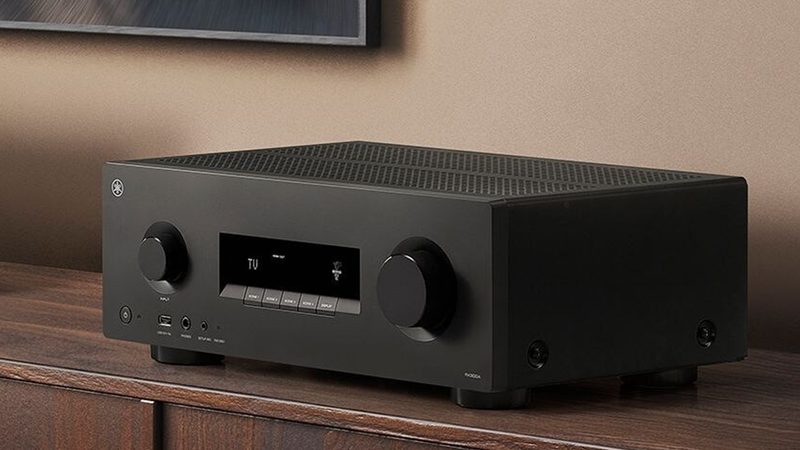
Yamaha RX300A



Buy as a bundle and save
- Yamaha RX300A
- Triangle Pack Borea BR02 black
Specifications and features


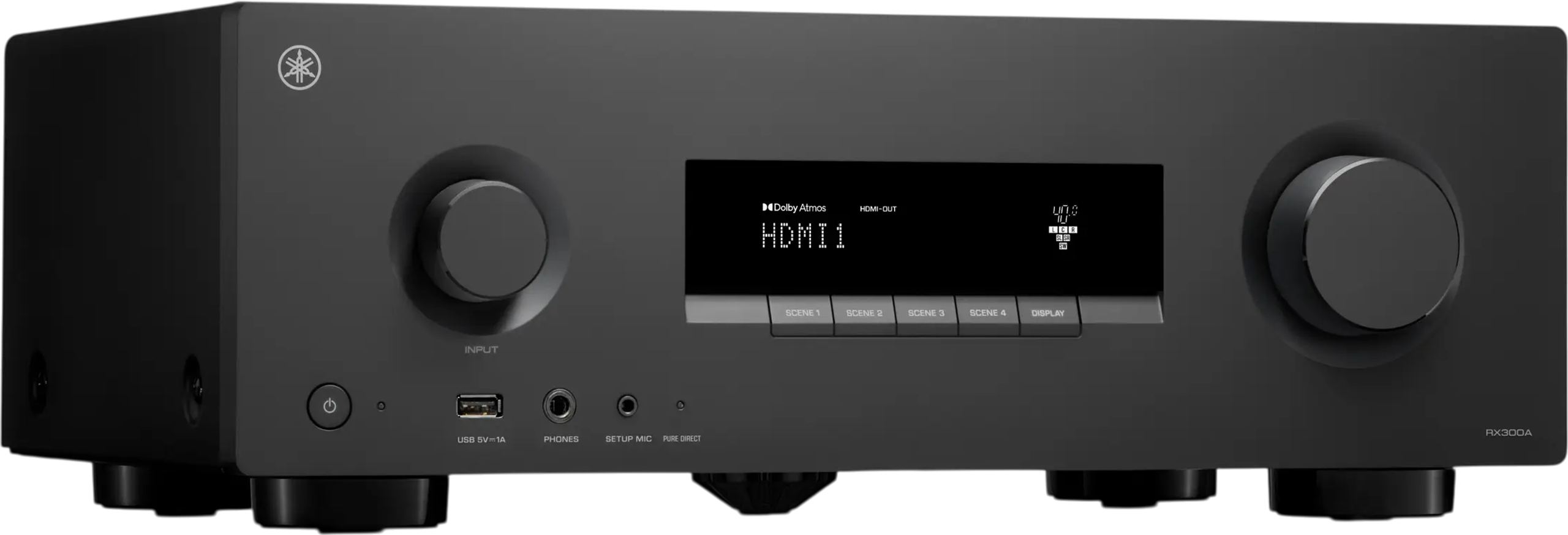
Yamaha RX300A: the 5.2 home theater AV receiver with HDMI 2.1
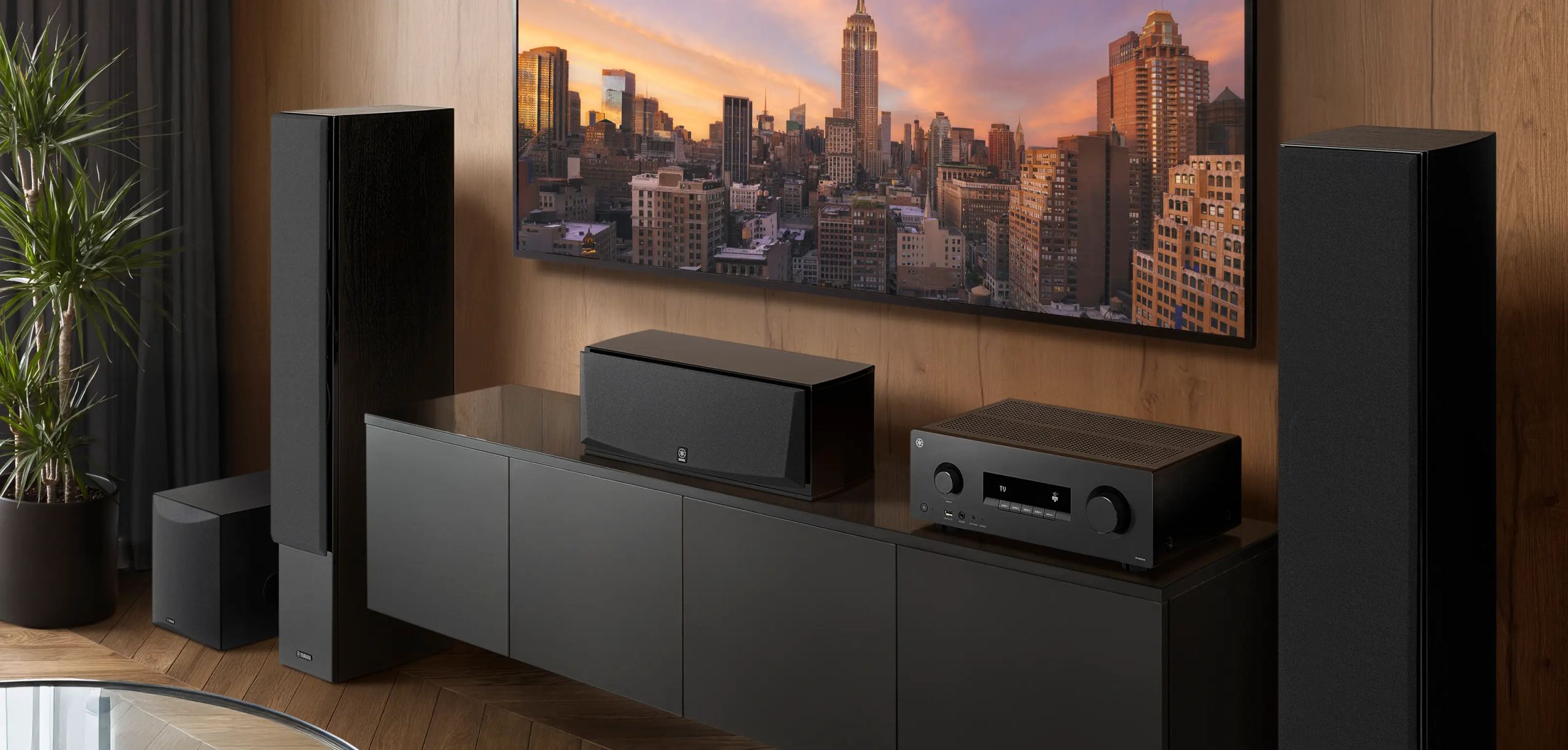
Building a home theater system without spending the whole weekend on it, decoding Dolby Atmos tracks from Blu-ray discs and streaming platforms, and passing a 4K gaming signal at 120 frames per second to the TV: that is the territory covered by this entry-level five-channel Yamaha. It is designed as a first living-room setup, with modern video connectivity and automatic room calibration.
Five amplified channels and two subwoofer outputs
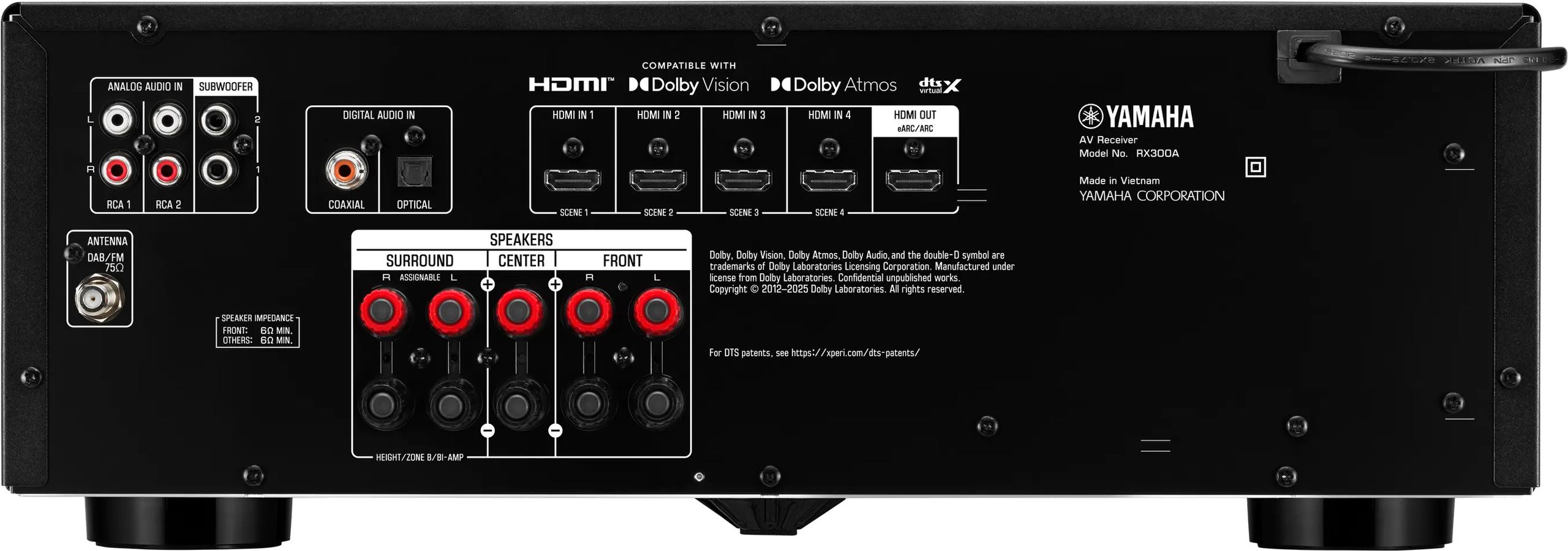
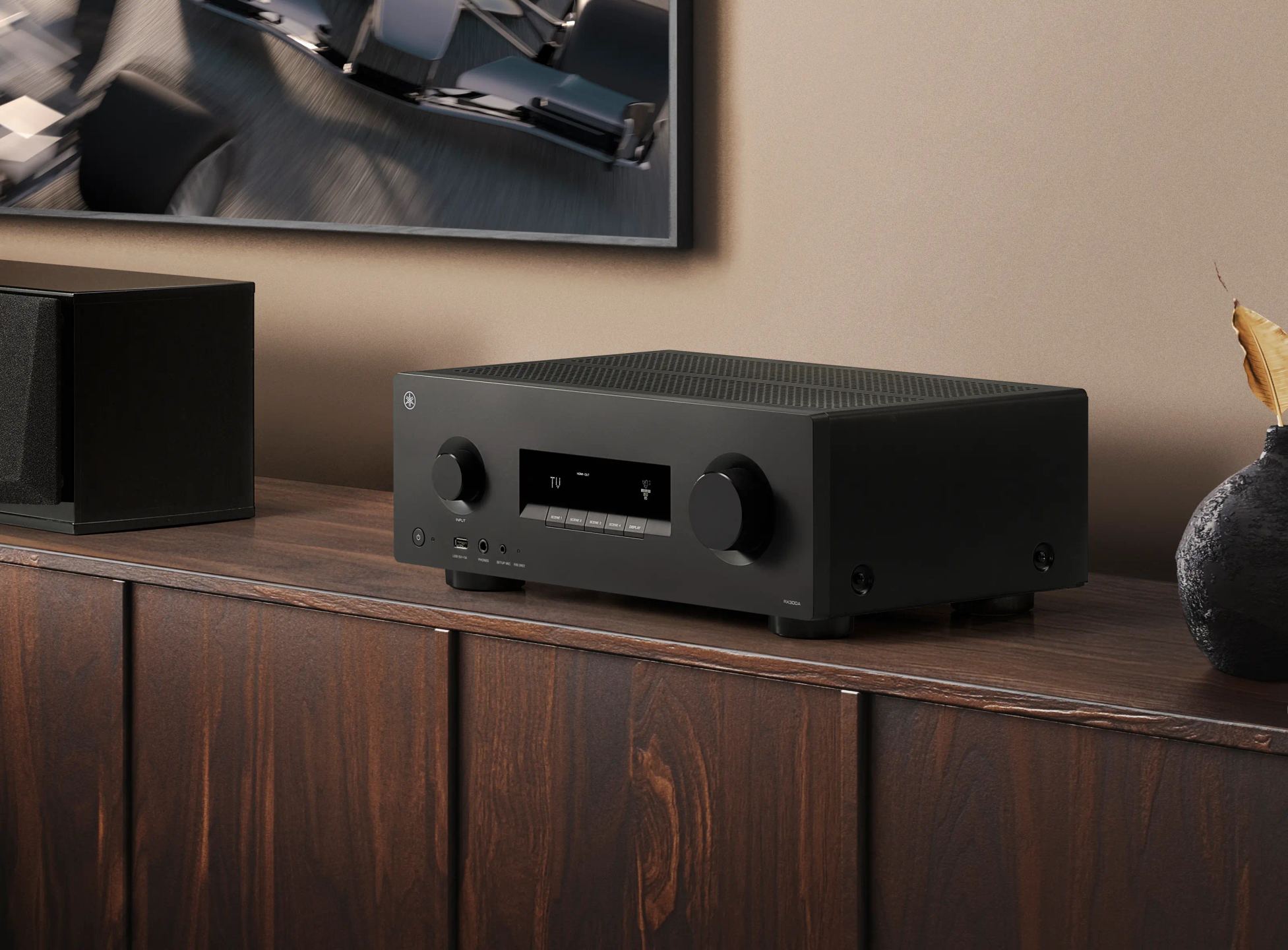
The RX300A provides five amplification channels, enough to power a conventional 5.1 system: three speakers at the front, two at the rear, plus a subwoofer. Yamaha adds a second subwoofer output, hence the 5.2 designation. Both sockets receive the same signal and are mainly used to distribute bass around the room or to relieve a single subwoofer.
On the power side, two figures are quoted. The first, 70 watts per channel into 8 ohms, is measured across the full audible range (20 Hz to 20 kHz) with two channels driven and 0.09% distortion. This is the figure to consider when assessing the receiver’s headroom. The second, 145 watts, is measured on a single channel, at 1 kHz, with 10% distortion: a measurement peak that inflates the number without describing real-world listening. The two are not comparable.
The five speaker outputs use screw terminals, accepting bare wire or spade connectors. The receiver remains comfortable with 6- or 8-ohm speakers. Bi-amping is possible on the front channels: the receiver then uses the two rear channels to double the power supply to the main speakers, meaning rear sound is sacrificed.
Height effects with five channels
The receiver decodes Dolby Atmos, Dolby TrueHD, Dolby Digital Plus and Dolby Digital tracks, as well as DTS soundtracks. Dolby Surround mode expands a stereo or 5.1 source across all available speakers.
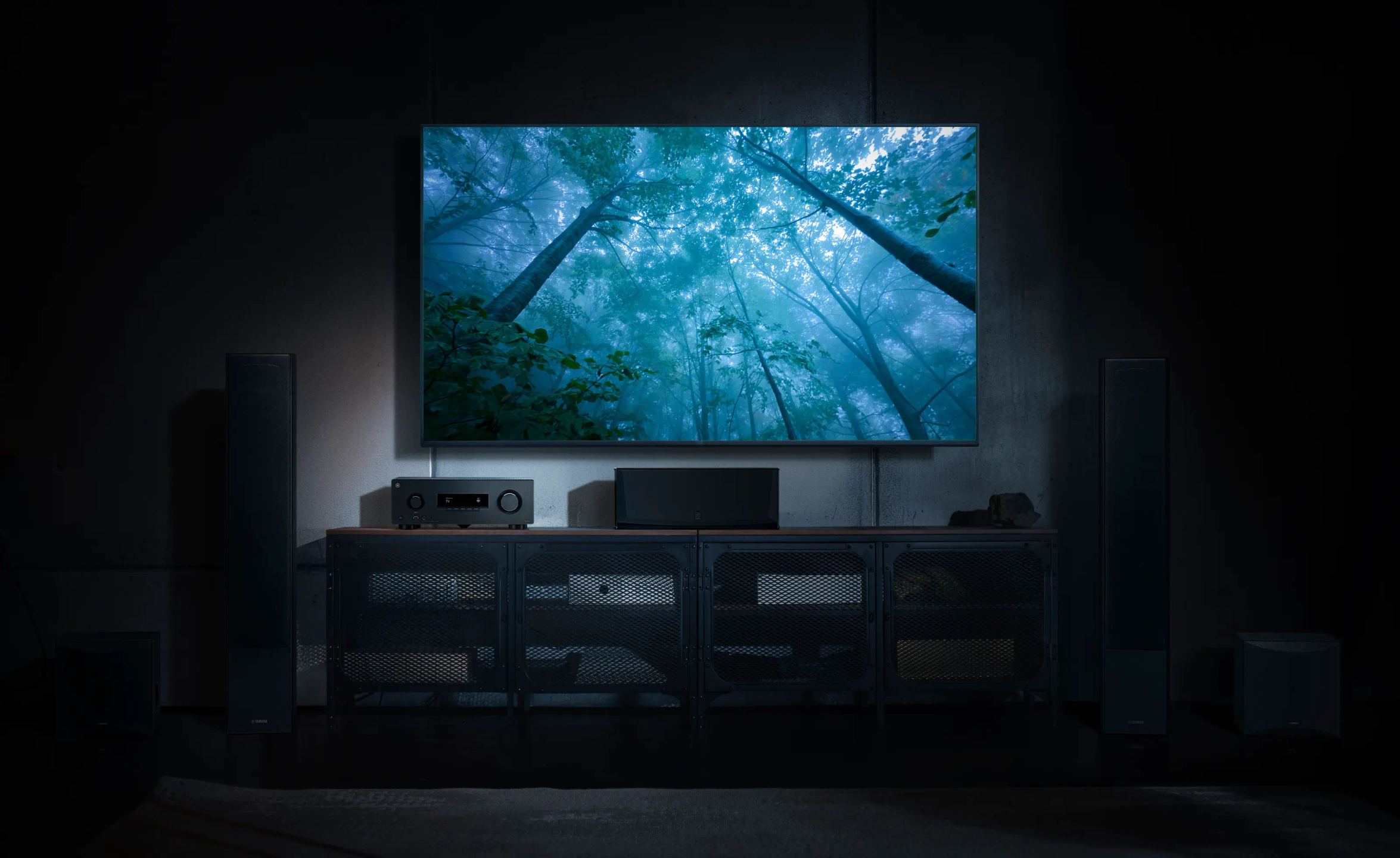
Dolby Atmos adds a vertical dimension to sound, placing a helicopter or rain above listeners’ heads. With five amplification channels, the RX300A offers two ways to achieve this. The first retains the floor-level 5.2 configuration and simulates height effects through processing, with no additional speakers. The second uses 3.2.2: three front speakers, two subwoofers and two real height speakers, recessed into the ceiling or upward-firing to reflect sound off it. This second setup does without rear speakers, as their channels are then used for the height speakers. The choice depends on the room: simulated height for simplicity, physical height for more precise sound placement.
8K video, 4K120 and gaming features
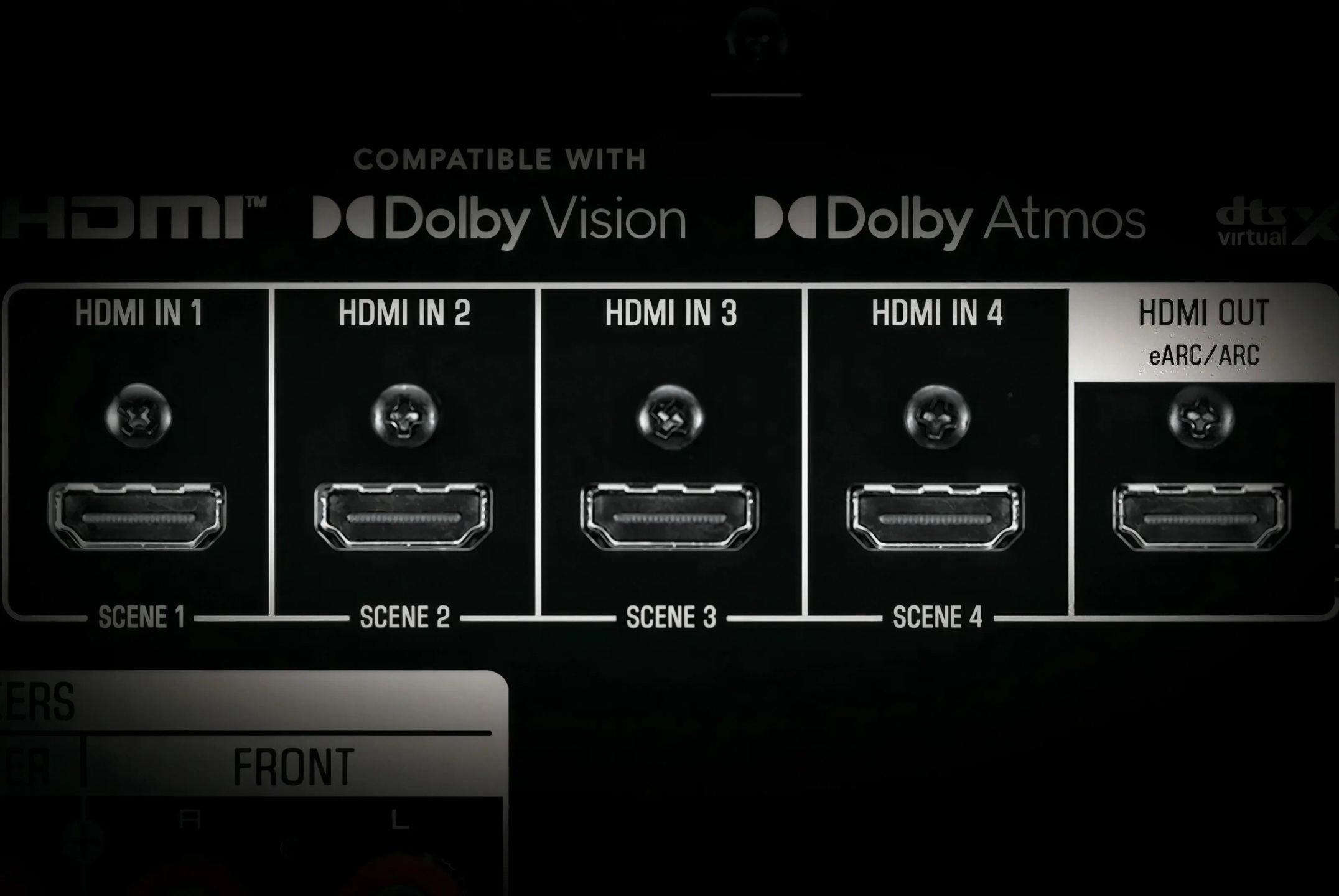
Four HDMI inputs accommodate sources (console, Blu-ray player, set-top box, media streamer), while one output connects the receiver to the TV. All comply with the HDMI 2.1 standard and pass video up to 8K at 60 Hz and 4K at 120 Hz without degrading the signal.
For gaming, the receiver supports VRR, which synchronizes the display with the console’s frame rate to prevent screen tearing, and ALLM, which switches the TV to low-latency mode as soon as a game starts. QMS smooths refresh-rate changes without a black screen during transitions. On the picture side, expanded dynamic range is supported in HDR10+, Dolby Vision and HLG, formats that enhance contrast and colors in compatible movies and channels.
The HDMI output supports eARC. The TV can then send its own audio back to the receiver through the same cable, including high-definition tracks from apps built into the TV.
Guided setup and room correction
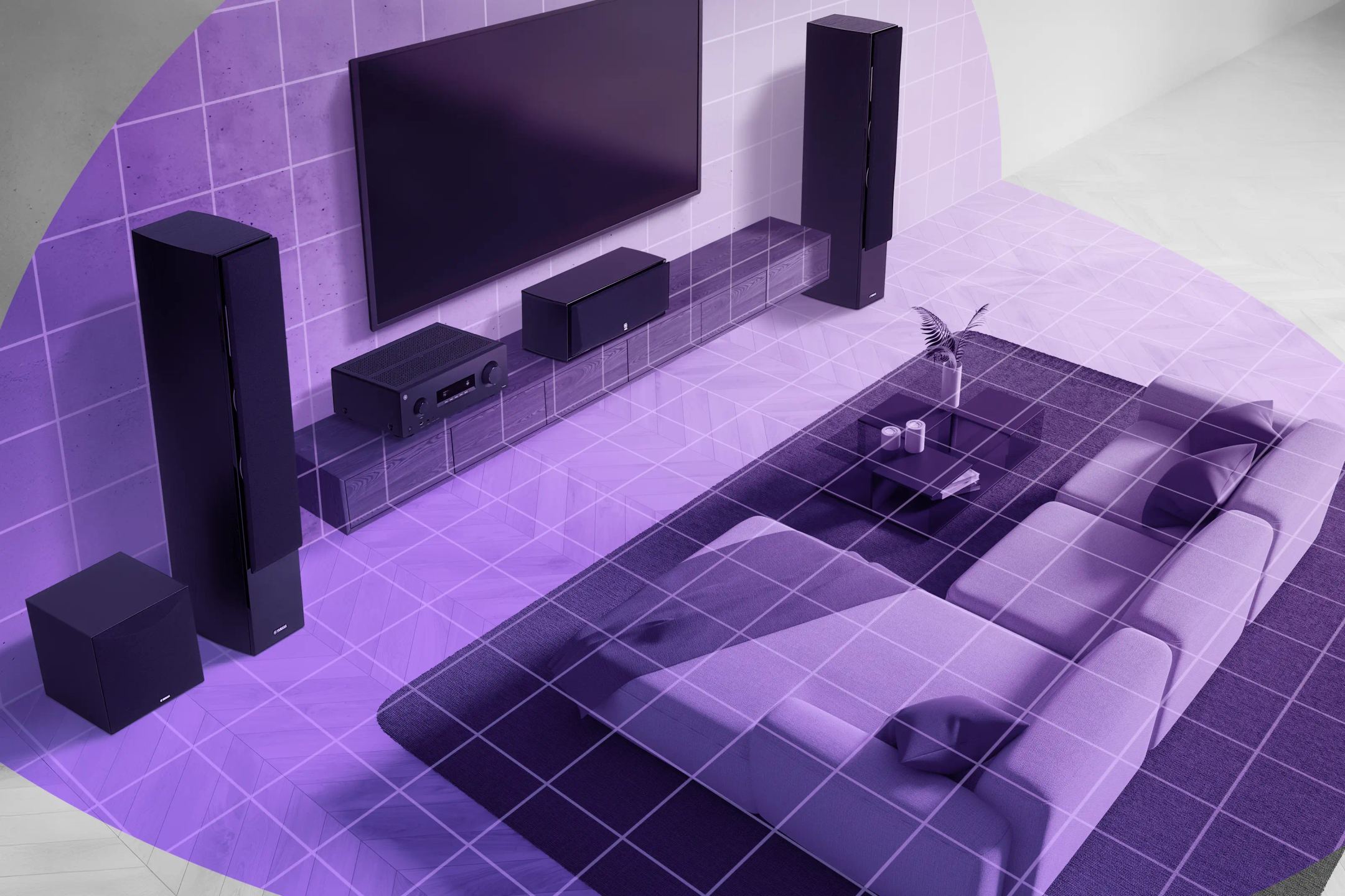
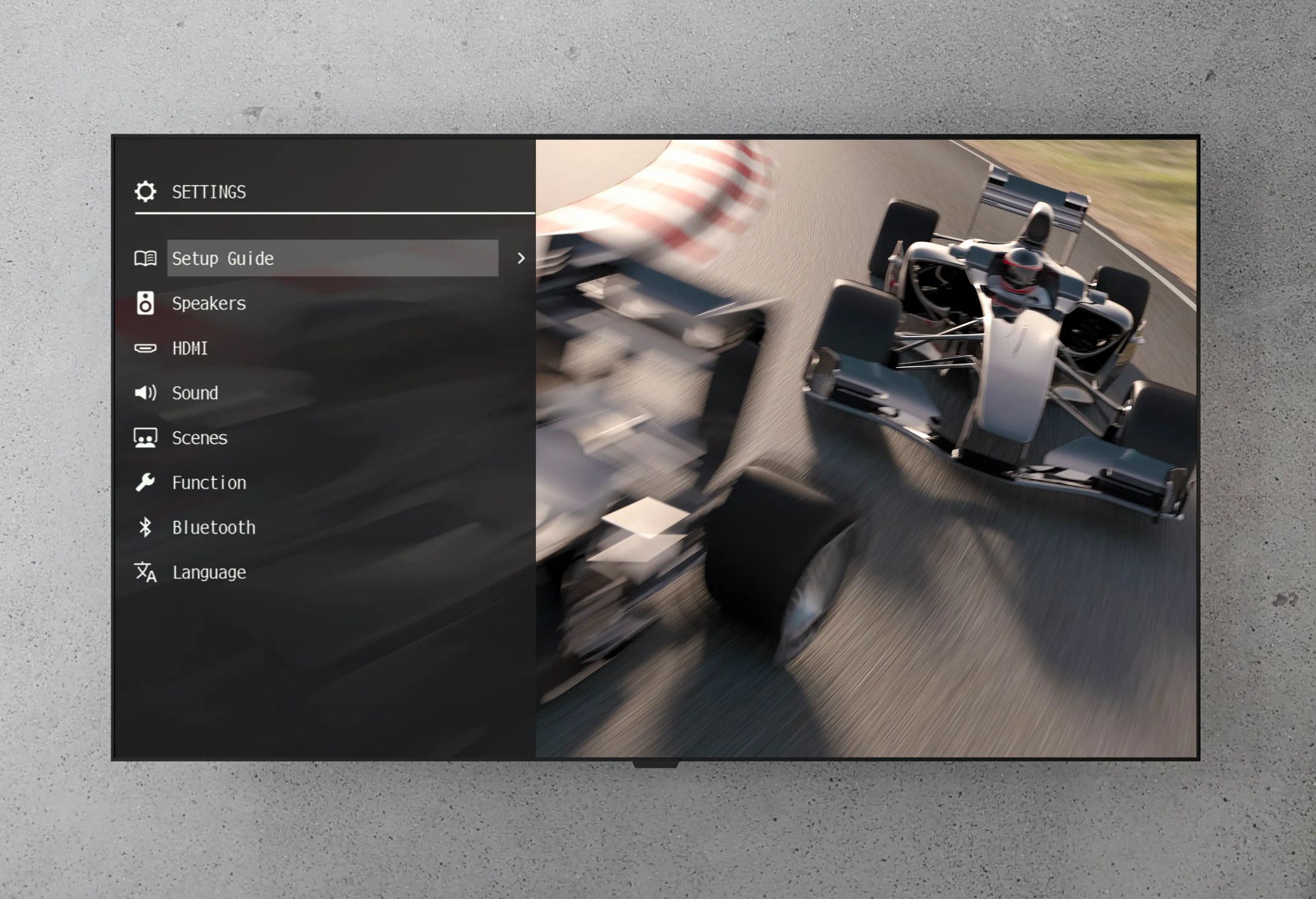
At first start-up, an on-screen assistant guides connection of the speakers, TV and sources, followed by input selection. Audio settings are adjusted from the same menu, with no obscure manipulation required.
A measurement microphone and stand are supplied with the receiver. Placed at the listening position, it is used for the Room Correction function: the receiver emits test signals, measures the room response and the characteristics of each speaker, then adjusts levels, distances and equalization. A room always alters sound: a nearby wall boosts bass, a sofa absorbs treble; this calibration corrects some of these differences to balance the system as a whole.
Chassis, heat dissipation and central foot
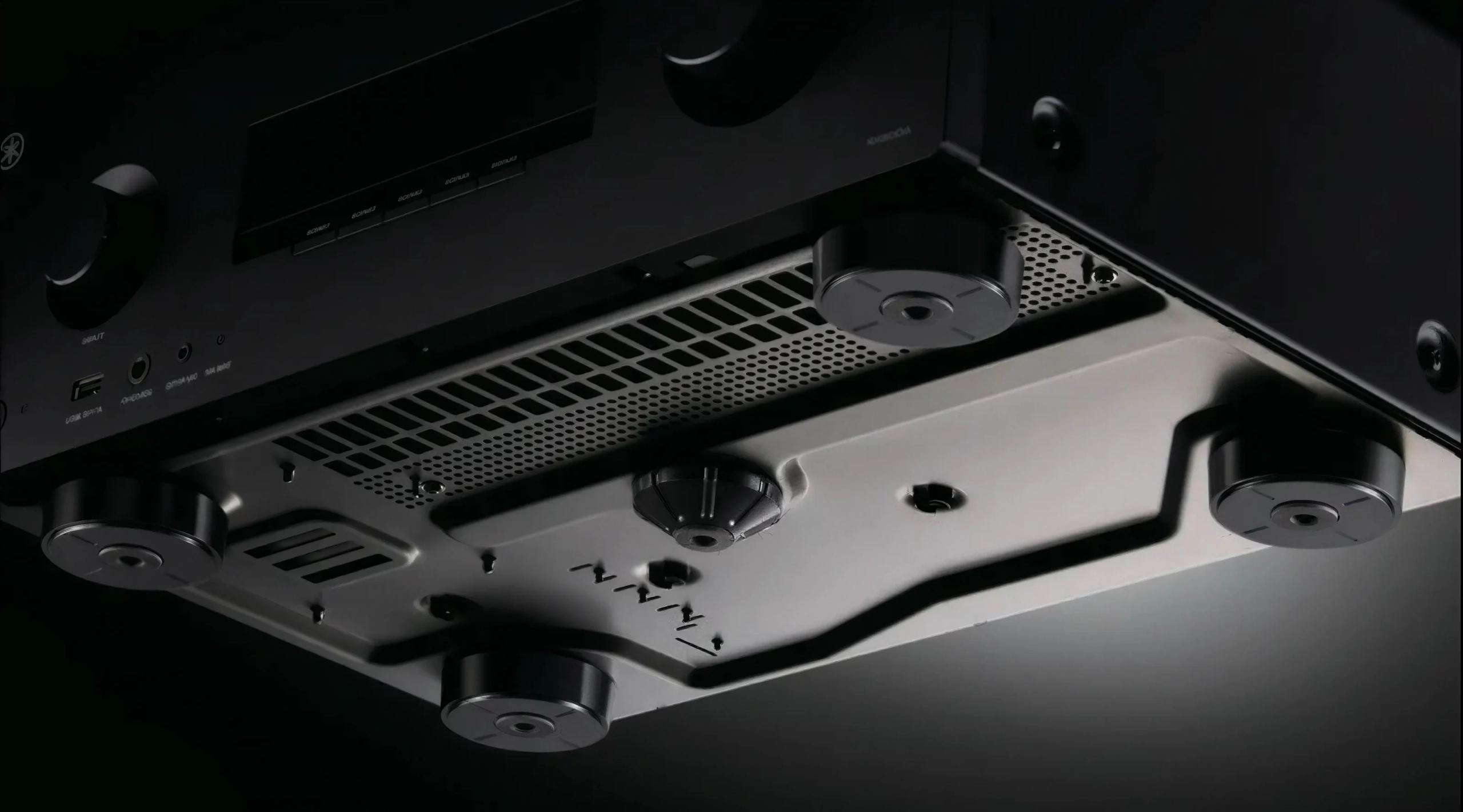
Switching high-bandwidth HDMI signals generates heat. A large heat sink positioned above the HDMI circuits dissipates it and protects the HDMI components and digital processor, ensuring long-term stability for both picture and sound.
Under the chassis, Yamaha uses a system derived from its higher-end audio-video receivers: the Anti-Resonance Technology Wedge, a fifth central foot. Combined with the four corner feet, it disperses vibrations coming up from the furniture and from the receiver itself, for tighter bass and a more focused soundstage.
The receiver measures 434 mm wide, 157 mm high and 319 mm deep, weighing 7.6 kg. Yamaha has been developing DSP sound processing since the DSP-1 in 1986, and part of this acoustic expertise powers the RX300A’s sound modes.
Multipoint Bluetooth, tuner and wired inputs
Wireless connectivity is handled by Bluetooth 5.3. The multipoint function remembers two devices at the same time, such as a phone and a laptop, and switches between them without pairing again. This is the only wireless streaming option: the receiver has no Wi-Fi or network app. To listen to Qobuz, Spotify or another platform, playback must come from the phone or a wired source.
Radio is available in DAB+ and FM, with a wire antenna supplied; the AM band is not supported. As for wired inputs, two analog RCA sockets, one optical input and one coaxial input accommodate a CD player, TV or older source. The USB port plays audio files (MP3, AAC, WMA, WAV) from a USB drive and receives internal updates. A front headphone jack enables private listening, while the Zone B function sends the current source to a second listening area.

Listening modes and Scene presets
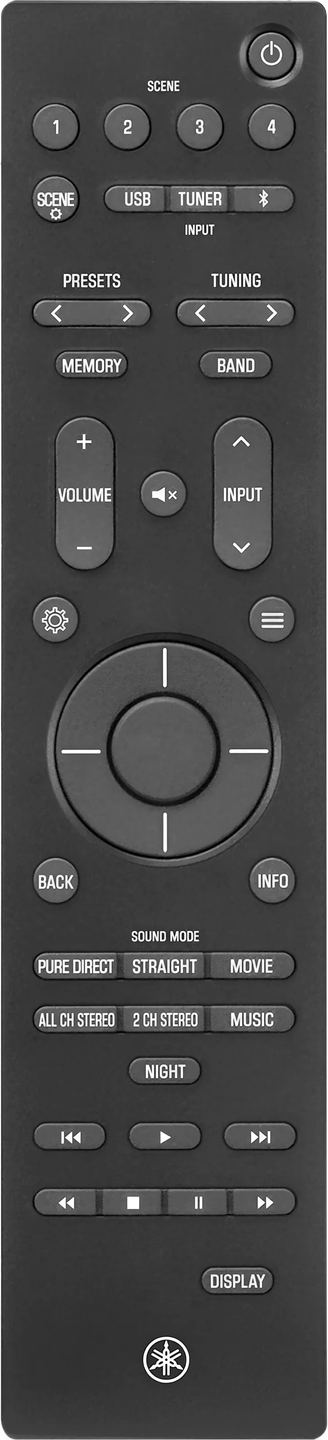
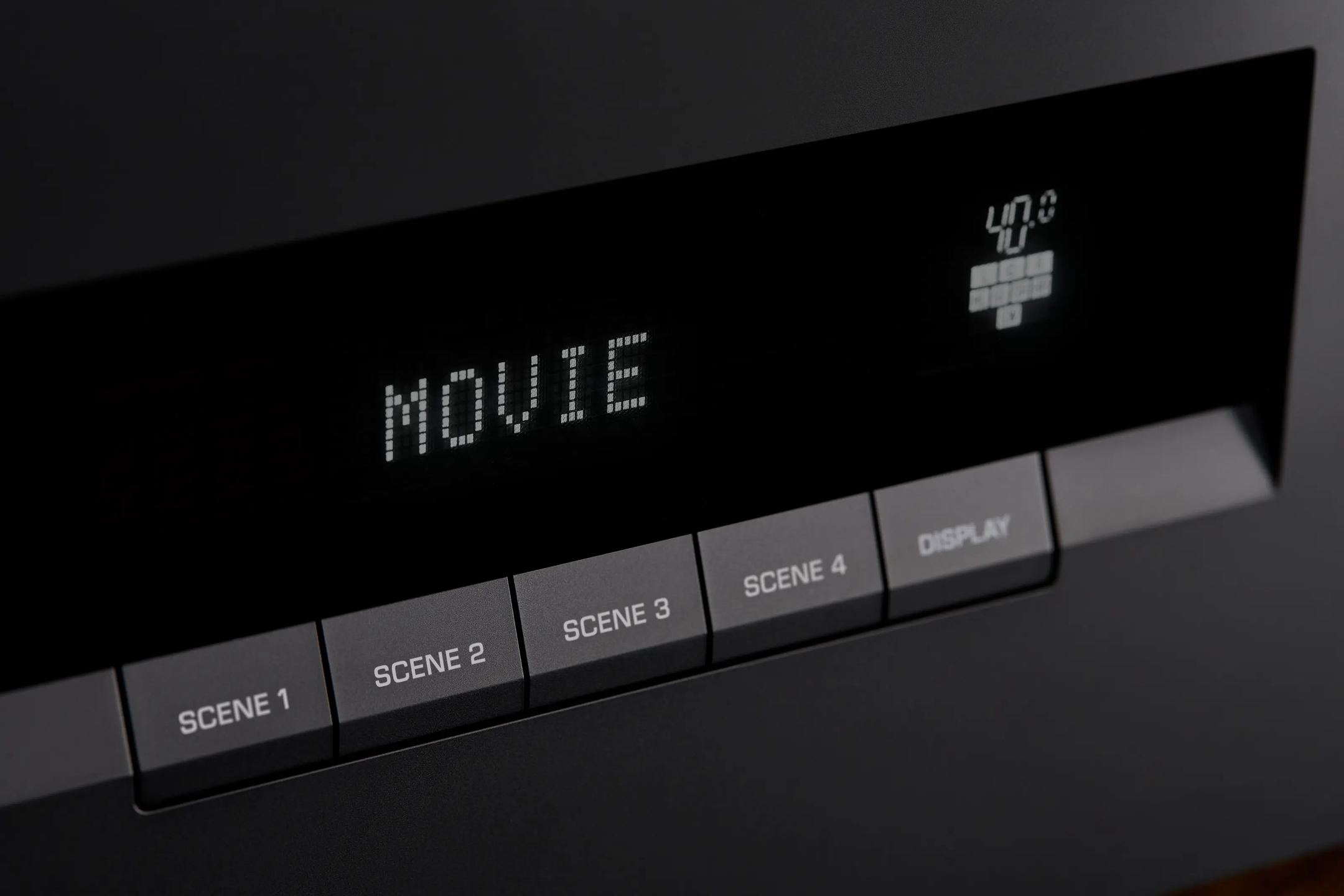
Several listening modes cover living-room uses. Pure Direct shortens the signal path and disables unnecessary processing for stereo playback as close to the source as possible. Straight plays the track in its original format, with no added effects. Movie expands film soundtracks across all speakers, while Music mode and All Channel Stereo distribute music throughout the room. Night mode narrows the gap between loud and quiet passages, useful for watching a movie late at night without waking the household.
Fine adjustments complete the package: a dialogue level to make voices more intelligible, Subwoofer Trim to adjust the subwoofer level, Extra Bass to reinforce bass from small speakers, and lip sync to align sound with the picture.
Scene buttons store up to four settings. Each combines a specific input with its audio settings, recalled with a single press: one button for the console, another for the Blu-ray player, each with the right mode already selected.
Technical specifications
General configuration
- Channels: 5.2
- Decoding: 5.1
- Amplification channels: 5
- Bi-amping compatible: yes
Amplification
- Output power
- 70 W (8 ohms, 20 Hz - 20 kHz, 0.09% THD, 2 channels driven)
- 145 W (6 ohms, 1 kHz, 10% THD, 1 channel driven)
Audio and decoding
- Surround sound decoding formats: Dolby Atmos, Dolby True HD, Dolby Digital Plus, Dolby Digital, DTS
- Post-surround sound decoding formats: Dolby Surround
- USB decoding formats: MP3, MPEG4-AAC, WMA, WAV
- HDMI decoding formats: PCM (max. 8 channels)
- Sound modes: Pure Direct, Straight, Movie, All Channel Stereo, 2 Channel Stereo, Music, Night
- Zone B: yes
- Audio adjustment functions: Dialogue level, Subwoofer Trim, Extra Bass, lip sync
- Room calibration: Room Correction
HDMI connectivity
- Inputs / outputs: 4 inputs / 1 output
- HDMI 2.1 standard
- Supported resolutions: 8K60Hz / 4K120Hz
- Features: eARC, ARC, VRR / ALLM / QMS, HDCP 2.3, CEC, automatic lip sync, Deep Color, x.v. Color, HD audio playback
- High dynamic range (HDR) support: HDR (High Dynamic Range), HDR10+, Dolby Vision, Hybrid Log-Gamma
Other connections
- Headphone output: 1
- Speaker outputs: 5 (screw terminals)
- Subwoofer outputs: 2
- Analogue RCA inputs: 2
- Optical input: 1
- Coaxial input: 1
- USB port: 1 (audio file playback, firmware updates)
Network and wireless functions
- DAB+ and FM tuner
- Bluetooth: yes (version 5.3, Multipoint)
Power supply
- Power consumption: 260 W
- Standby power consumption: ≤ 0.3 W
- Automatic standby: yes
Dimensions and weight
- Product dimensions: 434 (W) x 157 (H) x 319 (D) mm
- Carton dimensions: 525 (W) x 230 (H) x 400 (D) mm
- Product weight: 7.6 kg
- Total carton weight: 9.1 kg
Included accessories
- Remote control
- Batteries
- FM antenna
- Setup microphone
- Microphone stand
- Quick start guide
- Safety instructions
Frequently asked questions
Can rear speakers and height speakers be connected at the same time?
No. The amplifier has five amplification channels. They can be used either for a 5.1 floor-level setup (front, center, rear), or for a 3.2.2 setup that replaces the rear speakers with two height speakers. A system retaining both rear and height speakers simultaneously requires a seven-channel amplifier or more.
Does the RX300A decode DTS:X?
It decodes DTS soundtracks from Blu-ray and DVD discs. For sound with height effects, the Dolby Atmos system is supported, using one of two possible setups: a 5.2 configuration with simulated height, or a 3.2.2 configuration with real height speakers.
How can I listen to music online without built-in Wi-Fi?
Wireless streaming is via Bluetooth. You launch Qobuz, Spotify, Deezer, or a radio station from your phone or tablet, and the sound reaches the amplifier. For higher network quality and app-based control, a network player connected via optical, coaxial, or RCA takes over.
What room size and which speakers are suitable for it?
Its 70 watts per channel are sufficient for an average-sized living room. It supports 6- and 8-ohm speakers. High-efficiency speakers (high sensitivity) make the most of this level of power and retain headroom during action peaks in movies.
Can it be used as a simple stereo amplifier for music?
Yes. 2 Channel Stereo mode and Pure Direct focus listening on the two front speakers, while both subwoofer outputs remain available to extend the bass. However, the amplifier includes neither a phono input nor network playback; a turntable therefore requires a separate phono preamp.
Does bi-amping provide an audible improvement?
It dedicates two additional amplification channels to the front speakers, separating power delivery for bass and treble on speakers with dual binding posts. The benefit remains limited and requires giving up the rear speakers, since their channels are reassigned to the front. This setup is mainly intended for music listening in a reduced configuration.
- Eco-contribution of €2.58 included in the sale price.
- Manufacturer reference: VJJ3440
- GTIN / EAN: 4957812724463