Kenwood M-9500S, all-in-one connected micro system
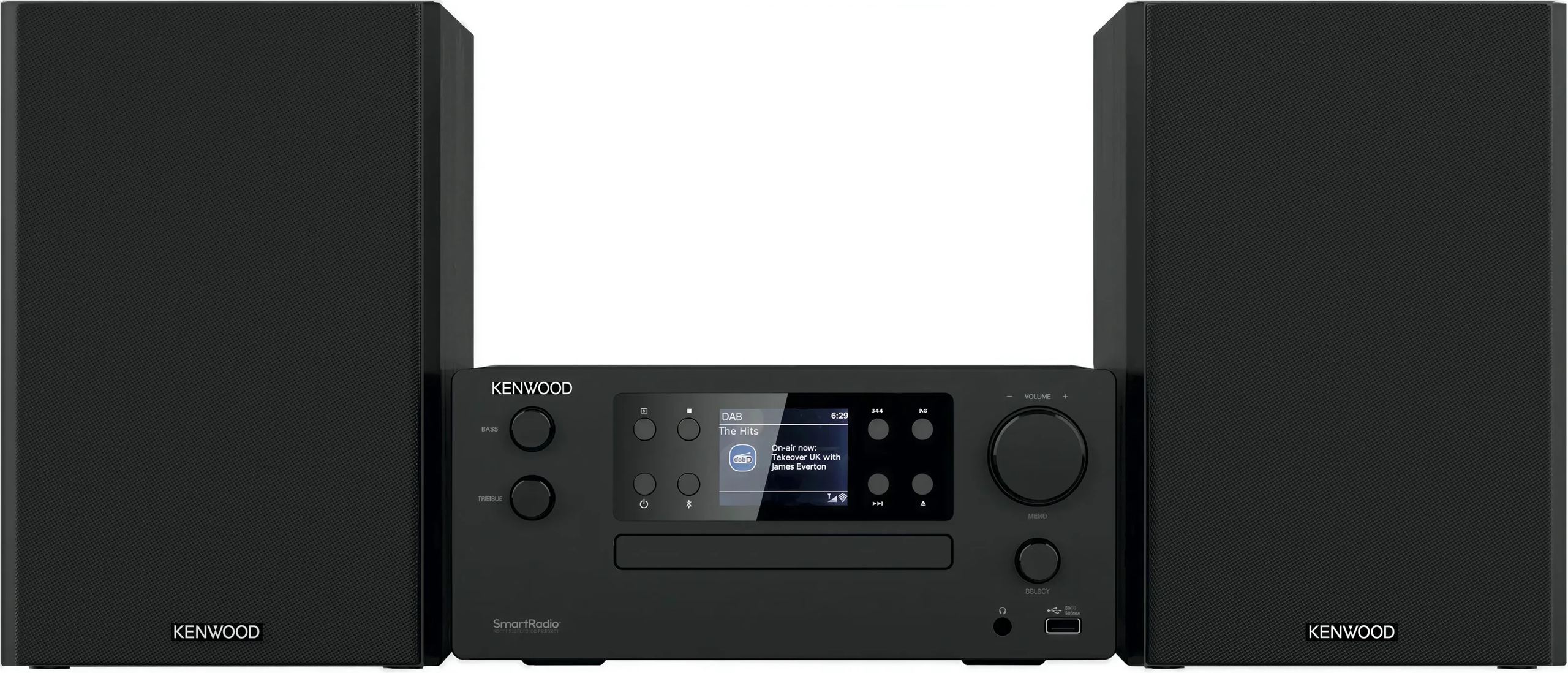
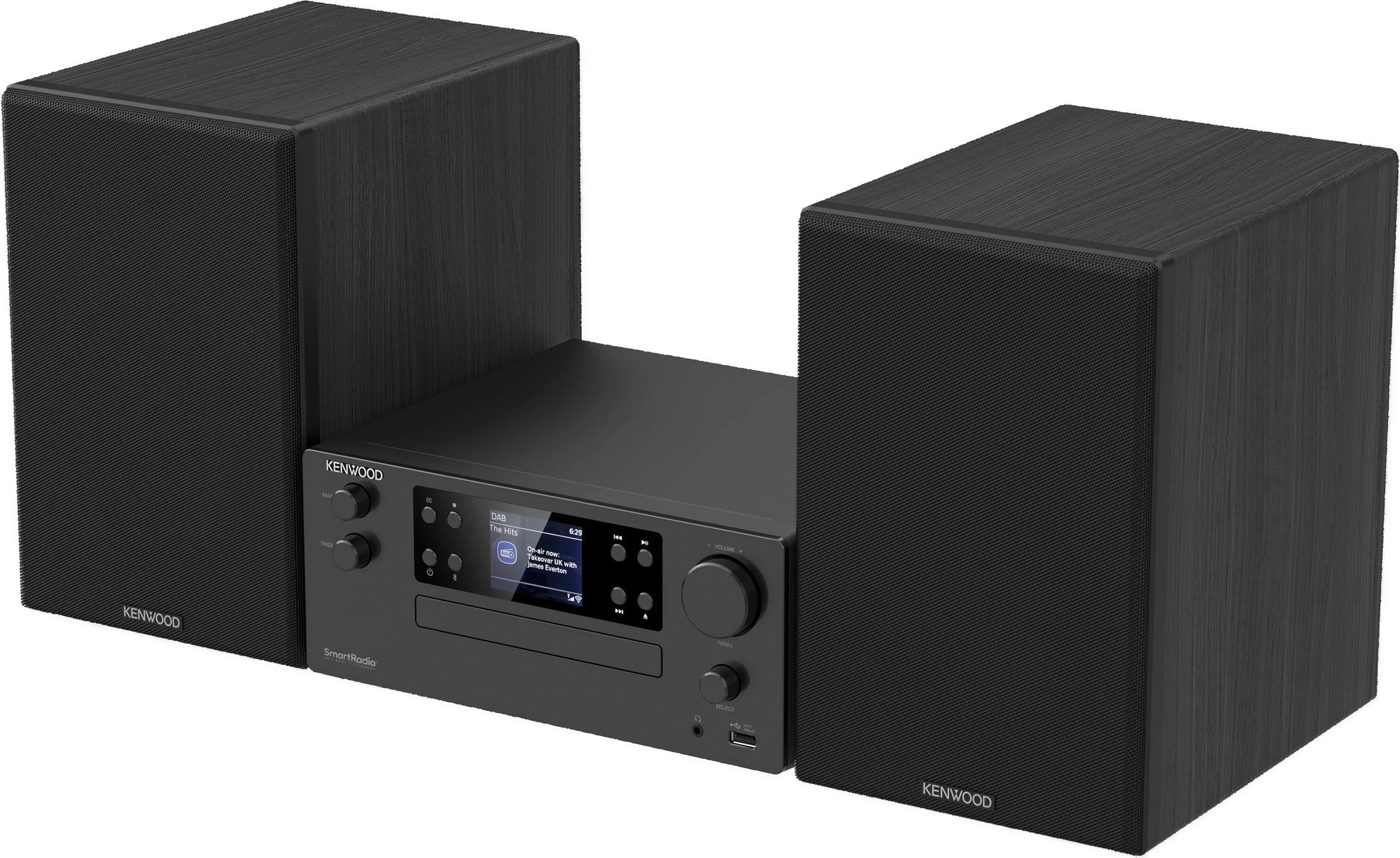
A CD player, radio in its three forms, wireless streaming and even TV sound, all brought together in a compact unit placed on a piece of furniture: that is what this micro system from Kenwood offers. Two small speakers, a central unit with an aluminium front panel, and everything needed to provide sound for a bedroom, kitchen or small living room without stacking devices. Everything can be controlled with the remote control or from a smartphone.
All radio stations in one unit
Three ways of listening to radio coexist here. DAB+, terrestrial digital radio, broadcasts stations without the hiss and interference of the FM band, and displays the station name and current track on screen. FM is still included, with RDS also retrieving broadcast information. Then there is internet radio: as soon as the micro system joins the Wi-Fi network, it provides access to thousands of web radios and podcasts, without being limited to locally received frequencies. These three sources are grouped under the SmartRadio name.
Disc and streaming side by side
The integrated player handles both commercially released audio CDs and burned CDs filled with MP3 files, while the front USB port also plays these MP3 files. Both inputs support shuffle and repeat playback. FLAC or high-resolution collections, however, cannot be played this way.
On the wireless side, there are two options. Spotify Connect uses Wi-Fi: the phone acts as a remote control while the micro system retrieves the stream itself, leaving the smartphone free to take a call without interrupting the music. Bluetooth 5.2 (A2DP profile) takes over for everything else, whether it is a preferred streaming app or the audio from a video.
Connect the TV and add a subwoofer
The rear of the central unit offers more than just the basics. A Toslink optical input receives sound from a TV or Blu-ray player via a simple optical cable, enough to replace the often mediocre speakers of a flat-screen TV. An analogue line input accommodates a conventional source: a portable player, console, or turntable, provided it has its own preamplifier or is connected via an external phono preamp, as there is no dedicated phono input.
For bass, a subwoofer output awaits an active subwoofer. The two compact speakers do not naturally extend very low, and this connection opens the door to reinforcement in the lower end of the spectrum. A 3.5 mm headphone jack on the front panel finally allows private listening, at night or in a shared room.
Speakers, amplifier and sound adjustment
Each speaker is a two-way bass-reflex design: a 130 mm woofer-midrange driver for the body of the sound, a 30 mm dome tweeter for the highs, and a port that extends bass response lower. The integrated amplification delivers 2 × 50 watts RMS, ample power for a modest-sized living space. Five equaliser presets adjust the tonal balance according to the music style or the mood of the moment, without tedious manual adjustment.
Aluminium front panel, colour screen and control
The front panel and buttons are made of aluminium, a material that stands out from the plastic commonly found in this format and gives the central unit an understated appearance. At the centre, a 2.4-inch (6.1 cm) TFT colour screen displays the source, station and track information. The M-9500S is available in black only.
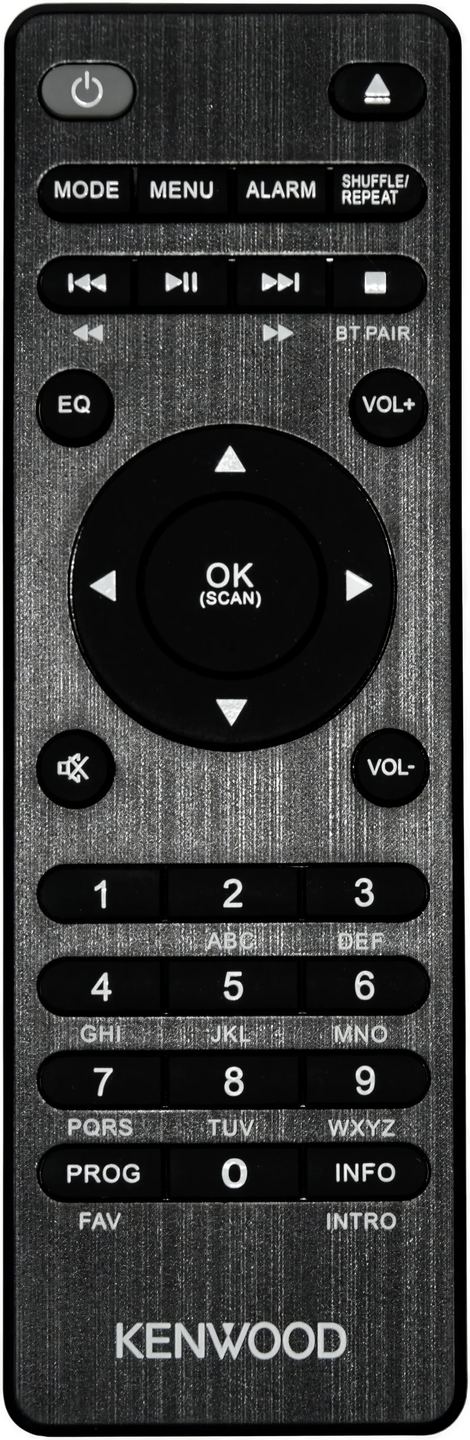
Control is provided by the supplied infrared remote control, or from a smartphone using the UNDOK and OKTIV apps (iOS and Android). These apps are used for initial network setup, source selection, management of favourites and stored stations, equaliser control and volume adjustment. The clock function completes the package with a dual alarm and sleep timer, handy for falling asleep to a web radio station.
Place it in a bedroom or kitchen
The dimensions remain compact: the central unit measures 260 mm wide, 116 mm high and 260 mm deep, weighing 2 kg, while each speaker measures 172 × 263 × 242 mm and weighs 2.4 kg. Enough to find a place on a worktop, bedside table, desk or shelf in a small living room.
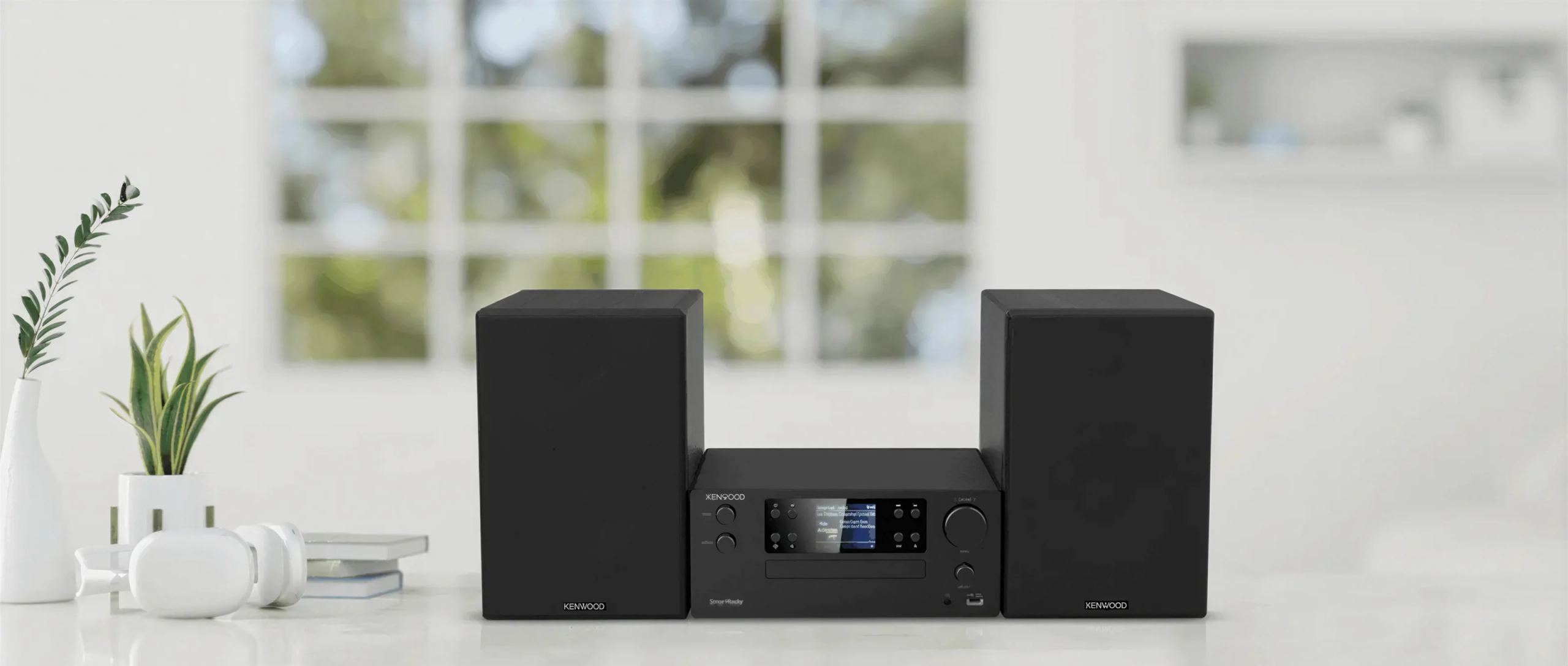
Its number of sources makes it a versatile base for a secondary room: radio in the kitchen in the morning, a CD or Spotify playlist in an office, TV sound connected via optical input in a bedroom. The dual alarm and wake-up function via DAB+ or web radio also make it well suited to the bedside.
Maximum range: approximately 10 m (varies depending on environmental conditions)
CD player
Compatible discs: CD-DA, CD-R, CD-RW, MP3
Repeat playback: current track, current folder (MP3 only)
Shuffle playback
Signal-to-noise ratio: greater than 65 dB
Dynamic range: greater than 60 dB
USB port
USB-A host port (playback)
USB 1.1 full-speed standard
Compatible media: USB mass storage devices
Compatible files: MP3
MP3 sampling frequency (stereo): 44.1 kHz
MP3 bit rate (CBR / VBR): 32 to 320 kbps
Repeat playback: current track, current folder, all tracks
Shuffle playback
Connectivity
Rear Toslink optical digital input (TV, Blu-ray player)
Rear 3.5 mm mini-jack analogue line input
RCA subwoofer output for powered subwoofer: 25 Hz to 250 Hz (± 3 dB)
Front 3.5 mm mini-jack headphone output
Power supply
Mains power supply: 100 to 240 V AC (50 / 60 Hz)
Power consumption: 40 W
Standby power consumption: 0.9 W
Network standby power consumption: 0.9 W
Operating temperature range: 5 °C to 45 °C
Dimensions and weight
Central unit: 260 × 116 × 260 mm (W × H × D), 2.0 kg
Speaker: 172 × 263 × 242 mm (W × H × D), 2.4 kg each
Frequently asked questions
Can FLAC or high-resolution files be played?
+
Not directly: the CD player and USB port are limited to MP3 files (the player also supports standard audio CDs). For a FLAC file or a high-resolution track, you need to use Bluetooth from a phone or tablet. Web radio and Spotify Connect, meanwhile, are streamed and do not depend on your files.
Is a Wi-Fi connection required?
+
No. The CD player, DAB+ and FM radio, Bluetooth, optical input and line input work without a network. Wi-Fi is only required for internet radio, podcasts and Spotify Connect.
Can a turntable be connected to it?
+
Yes, via the analog line input, but on one condition: the turntable must have a built-in or external phono preamp. Without a dedicated phono input on the micro system, a turntable without a preamp would produce sound that is far too weak.
How do I use it for TV sound?
+
Simply connect the TV’s optical audio output to the main unit’s Toslink input using an optical cable, then select this input. The sound will then play through both speakers, a clear improvement over a flat-screen’s built-in speakers.
Can you listen with headphones without disturbing others?
+
Yes, thanks to the front-mounted 3.5 mm jack. Plugging in headphones mutes the speakers, making it suitable for nighttime listening or in a shared room.
User reviews
Martine
good unit except for the speakers, which I replaced . it's good value for money.
Comment from 9 November 2026 — Experience from 29 October 2026
Automatically translated — Show original (French)
bon appareil sauf les enceintes que j'ai remplacées . c'est un bon rapport qualité prix.
Eco-contribution of €2.58 included in the sale price.
* Attention ! Un crédit coûte de l'argent et doit être remboursé
Pour un achat de 300 € en 4 fois : acompte de 75 €, puis 3 mensualités de 75 €. Crédit de 225 € au taux débiteur fixe de 0% sur 3 mois. Coût du crédit 0 €. Montant total dû 300 €. TAEG 0%. Le coût du crédit est pris en charge par l'enseigne.
Sous réserve d'acceptation par Alma SAS (almapay.com), société de financement agréée par l'ACPR (code CIB : 17408). RCS Nanterre 839100575. Contact : support@almapay.com