

Kaiku Oak Lite


Complementary product
Kaiku Lite oak, the Finnish wired headphones in wood and aluminum
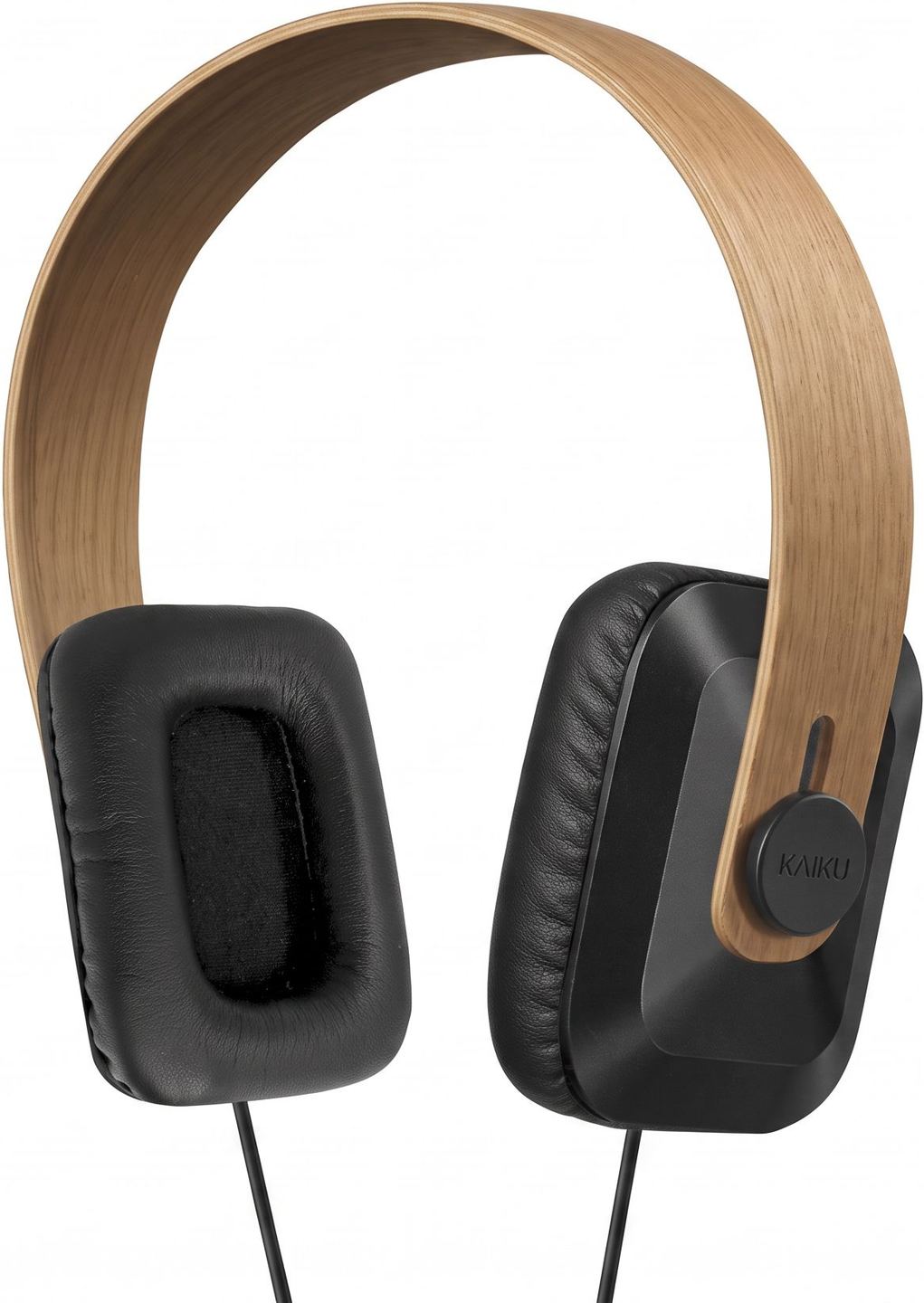
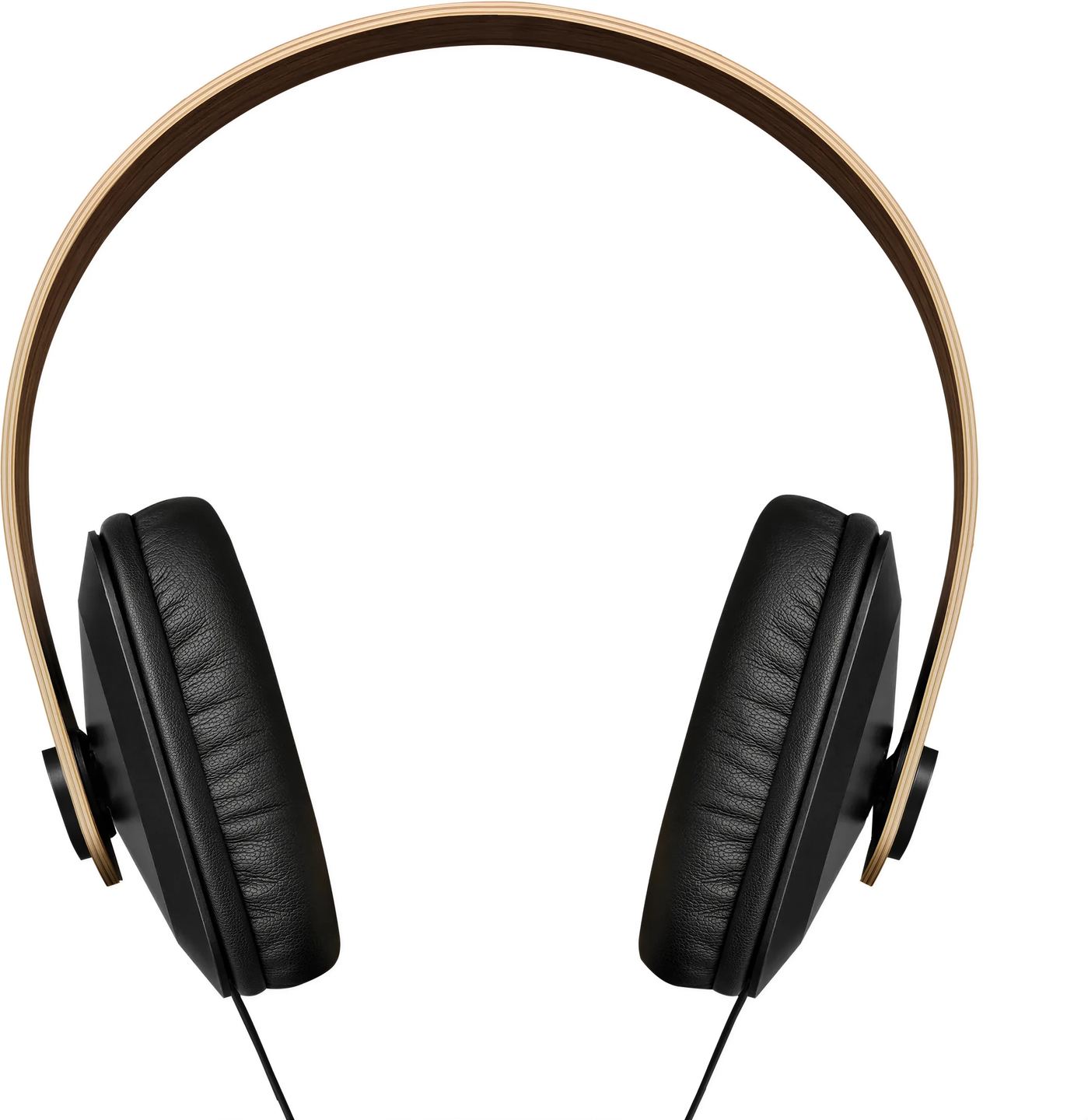
Kaiku Acoustics has reduced its wired headphones to just a few elements: a hand-bent oak headband, two earcups, aluminum parts, and a jack cable. There is no battery or pairing, and the headphones weigh just 190 g. Handcrafted in Finland, they are equally suited to listening to an album in the living room or to a long day of work at the computer. Each unit has its own unique wood grain.
Bent oak and aluminum, with nothing superfluous
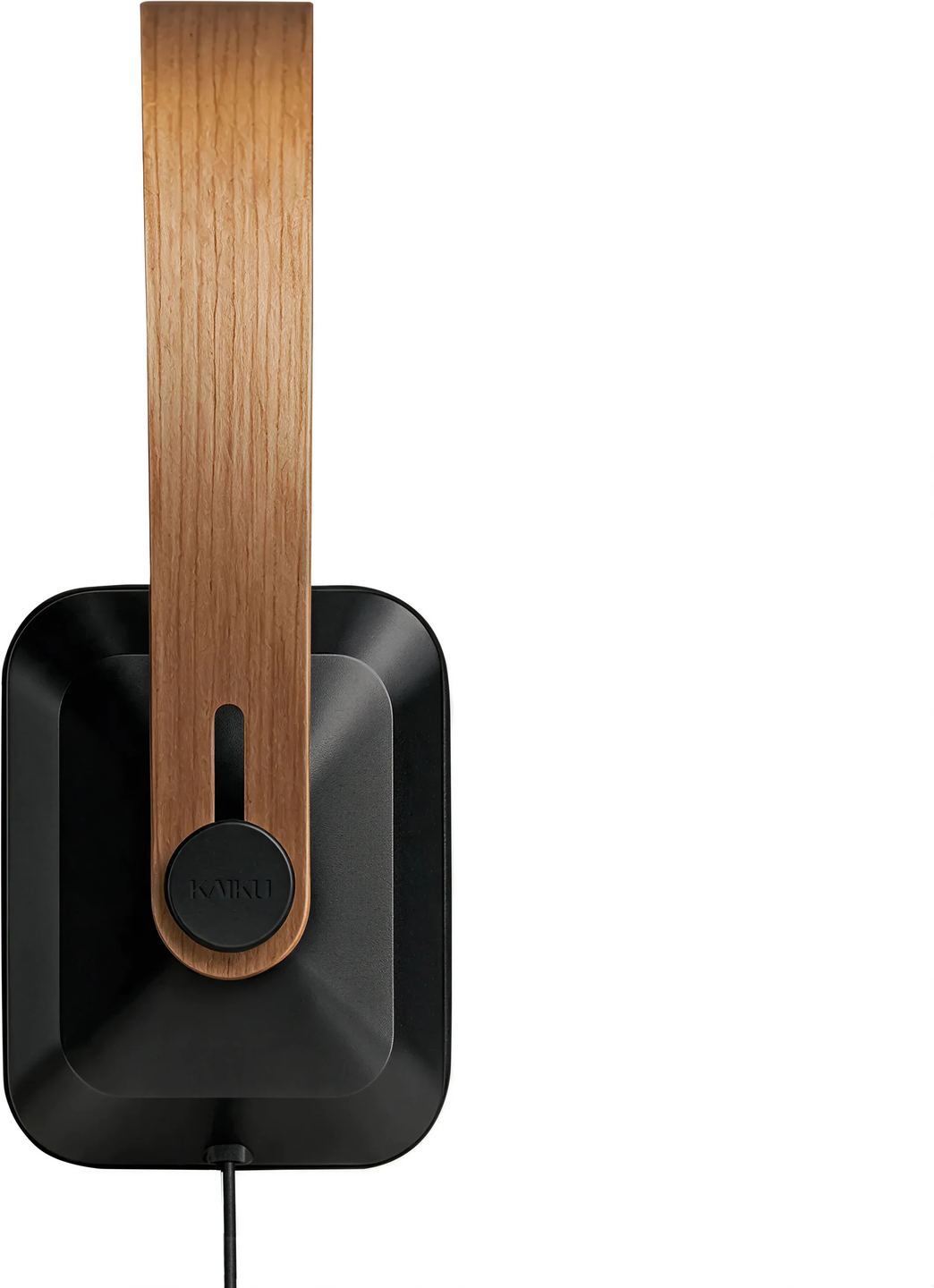
The headband is a flexible oak strip, shaped by hand. It spreads slightly when the headphones are put on, then returns to its position. The wood itself does the work of the spring that keeps the earcups against the head: it follows the shape of the skull rather than squeezing it, whereas a conventional headband generally combines a metal strip and a padded cushion. The oak brings a light tone and pronounced grain that varies from one pair of headphones to another, so no two units are ever quite identical.
The structural parts are made of aluminum. They provide rigidity at the points under stress and a clean finish, without the slightly hollow feel of plastic. Kaiku has chosen to leave the engineering visible: the assembly elements and cable are part of the design instead of being hidden beneath covers. The result is Scandinavian minimalism in which every visible part has a function.
The entire unit is made entirely by hand in Finland. The headband is shaped individually, then the headphones are assembled piece by piece, which explains the small differences in appearance from one unit to another.
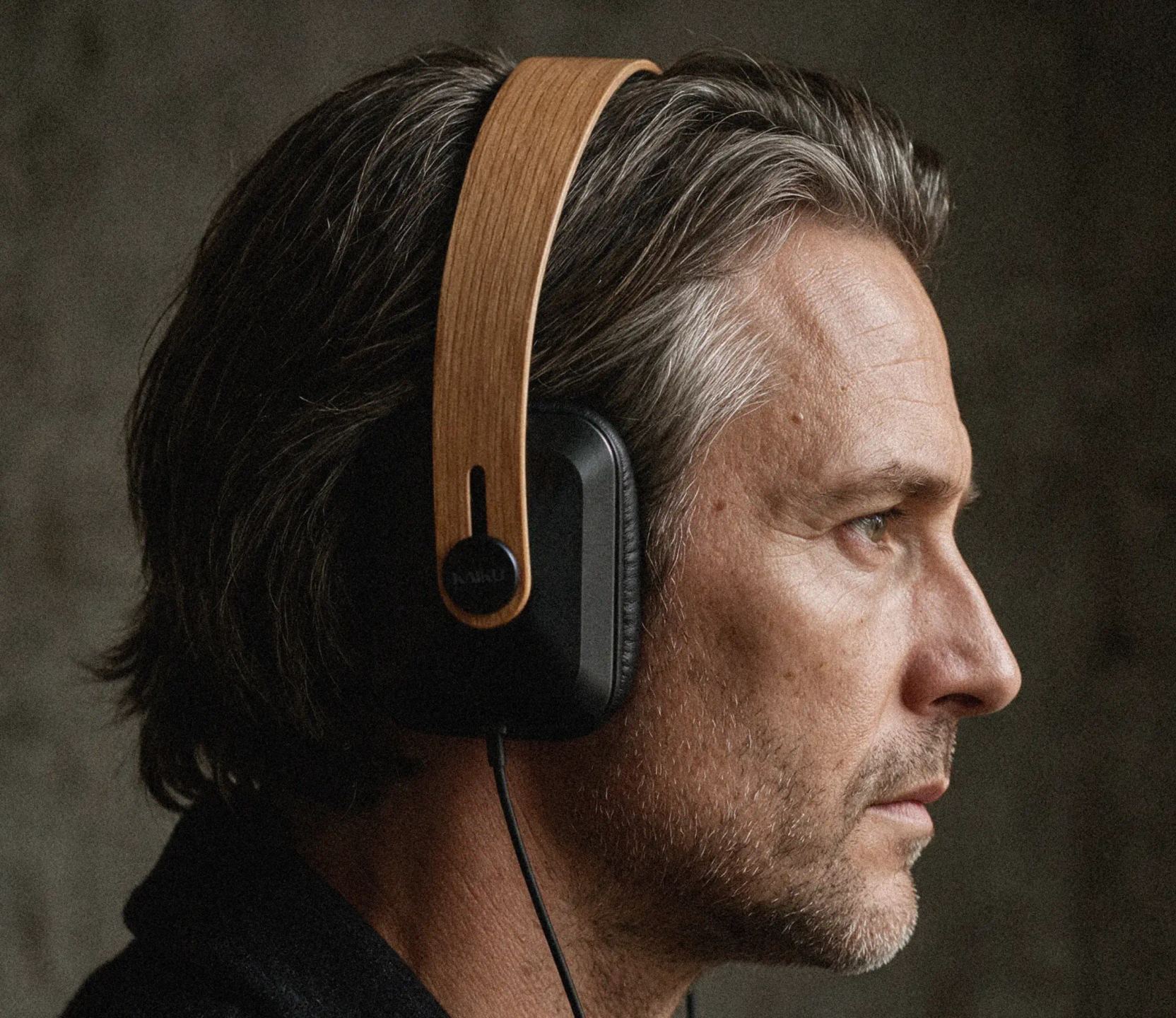
190 grams for long listening sessions
The Lite is an over-ear headphone: its earpads fully surround the ear rather than resting on it, distributing pressure around the pinna. This format is often heavier, and at 190 g the Lite sits at the lower end of the range. For comparison, the brand’s wireless Kaiku Tone weighs 280 g. This lightness, combined with the flexibility of the wood, limits pressure on the top of the skull and the temples when the headphones remain in place for several hours.
Its uses follow the same logic: listening to music at home, office work with music, audio or video editing where the headphones stay on your ears for a good part of the day.
Neutral reproduction, faithful to recordings
Each earcup houses a 40 mm driver, meaning the small speaker that produces sound. Its frequency response ranges from 20 Hz to 20 kHz, covering the entire range audible to the human ear, from the lowest notes of an organ to the finest harmonics of a cymbal.
The tuning is neutral. The bass is not boosted, and the treble is not raised to create an artificial impression of detail. Many consumer headphones scoop out the midrange to sound spectacular on first listen. The Lite instead aims to preserve the balance and character that the sound engineer gave the recording. With this type of sound signature, a double bass stays in its place behind the piano instead of covering it, and a voice retains its original timbre.
This choice has a trade-off. Fans of very pronounced bass in electronic music or hip-hop will find the sound more restrained than on headphones with a fun tuning curve. A poor recording will not be disguised either.
A direct connection between the source and the headphones
The connection is wired only. The signal goes directly from the source to the headphones, without the compression generally applied to sound transmitted over Bluetooth. The absence of a battery has two advantages: there is nothing to recharge, and the headphones will not lose battery life as they age.
The 1.5 m cable ends in a 3.5 mm jack, the standard format for headphone outputs. This length is suitable for a desk, a portable player, or an amplifier placed near an armchair. It becomes short for connecting a television to a sofa.
Technical specifications
Overview
- Category: wired hi-fi headphones
- Format: circumaural (over-ear), the ear pads fully surround the ear
- Uses: home music listening and everyday professional use
- Style: Scandinavian minimalist
Acoustic performance and sound reproduction
- Drivers: 40 mm, one per earcup
- Frequency response: 20 Hz to 20 kHz, covering the full range audible to the human ear
- Sound signature: natural, balanced and precise
- Reproduction: preserves the details and original character of recordings, without boosting bass or treble
Connectivity and compatibility
- Connection: wired, direct between the source and the headphones, without compression
- Cable: 1.5 m
- Plug: 3.5 mm jack
- Power: none, no battery to recharge
- Bluetooth: no
- Compatible sources: headphone amplifiers, converters (DACs), portable audio players, computers, hi-fi equipment and smartphones with a headphone jack
- Smartphones without a headphone jack: USB-C or Lightning to 3.5 mm jack adapter required
Construction and materials
- Weight: 190 g, lightweight for circumaural headphones
- Headband: flexible wood, naturally adapts to the shape of the head
- Structural parts: aluminium, for strength and finish
- Appearance: wood grain unique to each unit
Comfort
- Design intended for long listening and work sessions
- Flexible wooden headband that conforms to the shape of the head
Design and manufacturing
- Approach: simple, visible technology integrated into the headphones’ aesthetics
- Manufacturing: entirely handmade in Finland
- Assembly: hand-shaped headband, carefully assembled piece by piece
- Uniqueness: each pair of headphones is one of a kind
Frequently Asked Questions
How do I connect headphones to a smartphone without a headphone jack?
You need a USB-C to 3.5 mm jack adapter, or a Lightning to 3.5 mm jack adapter for older iPhones. These adapters contain a small converter, and their quality varies from one model to another. To go further, a portable DAC (a more sophisticated adapter, with a genuine amplification stage) significantly improves playback from a phone.
Is a headphone amplifier necessary?
No. The headphones work directly with a computer, smartphone or portable music player. An external amplifier or DAC becomes useful when the built-in output hisses (a common occurrence on laptops) or lacks precision when adjusting the volume at low levels. In all cases, start listening at a low volume before gradually increasing it.
Can it be connected to a hi-fi amplifier equipped with a 6.35 mm jack?
Yes, with a 3.5 mm female to 6.35 mm male jack adapter. Most integrated amplifiers and home headphone amps use this larger plug format.
Can it be used in front of the TV or on a console?
Yes, as long as the device has a headphone output. In front of a TV, a 3.5 mm male-to-female jack extension cable makes up for the 1.5 m length of the original cable. Depending on the model, the headphone output either mutes the TV speakers or works in parallel. A wired connection introduces no delay between picture and sound, unlike Bluetooth. On consoles, PS5, Xbox Series and Nintendo Switch controllers have a 3.5 mm jack for game audio.
Is the headset compatible with high-resolution audio?
Its frequency response stops at 20 kHz, the limit of human hearing. The “Hi-Res Audio” label, meanwhile, requires an extension up to 40 kHz for headphones. This does not prevent you from listening to high-resolution files: the source’s converter decodes the file, and the headphones reproduce everything the ear can perceive.
What is the difference compared with the Kaiku Wave?
The Kaiku Wave is a Bluetooth 5.4 wireless headphone. It supports SBC, AAC, aptX, aptX HD and aptX Adaptive codecs, with active noise cancellation up to 36 dB and up to 100 hours of battery life. The Lite takes the opposite approach: no noise cancellation, no battery, a direct wired connection and entirely handcrafted production in Finland. The Wave is suited to transport and noisy open-plan offices, while the Lite is ideal for relaxed listening from a fixed source or portable player.
- Eco-contribution included in the sale price.
- Manufacturer reference: 5010