

EPSON EH-LS7500

Specifications and features


Overview
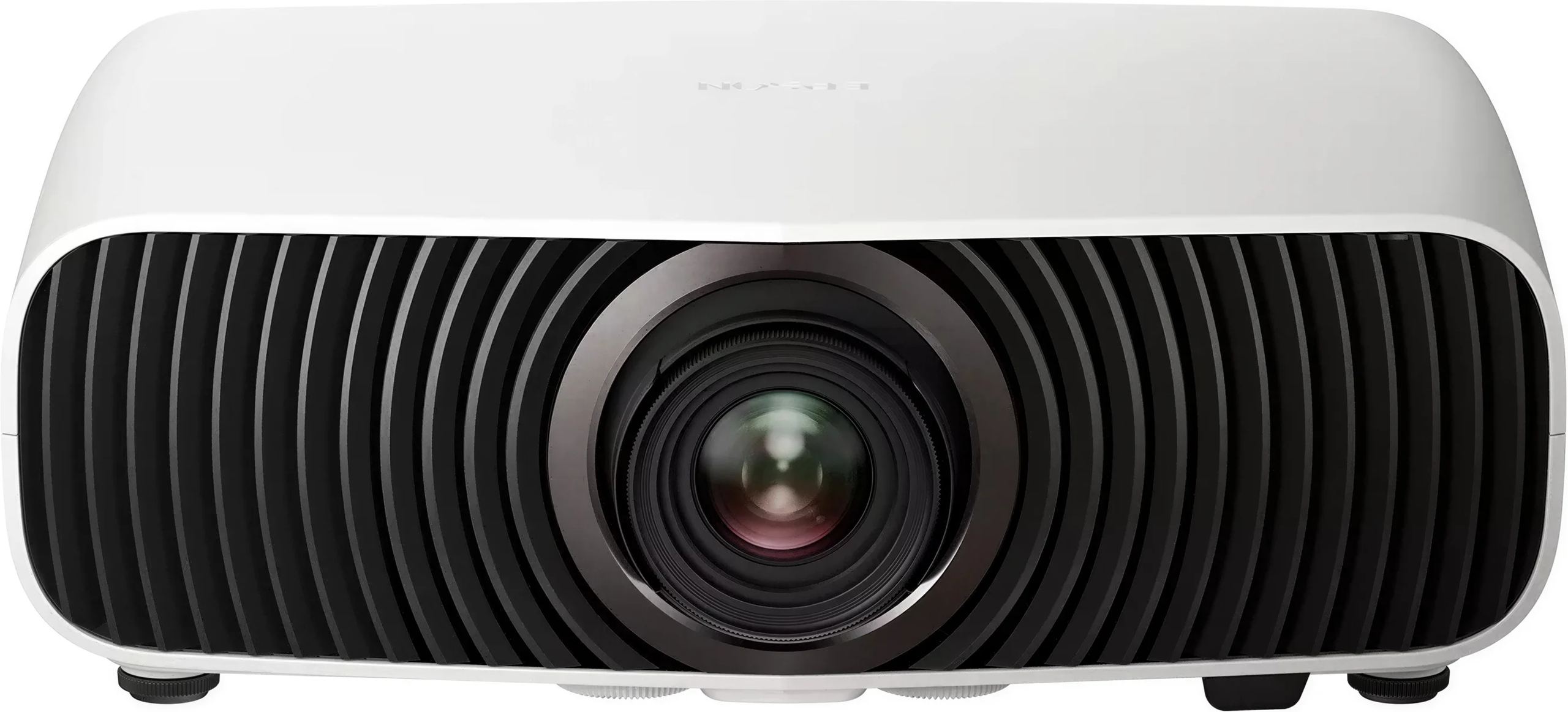
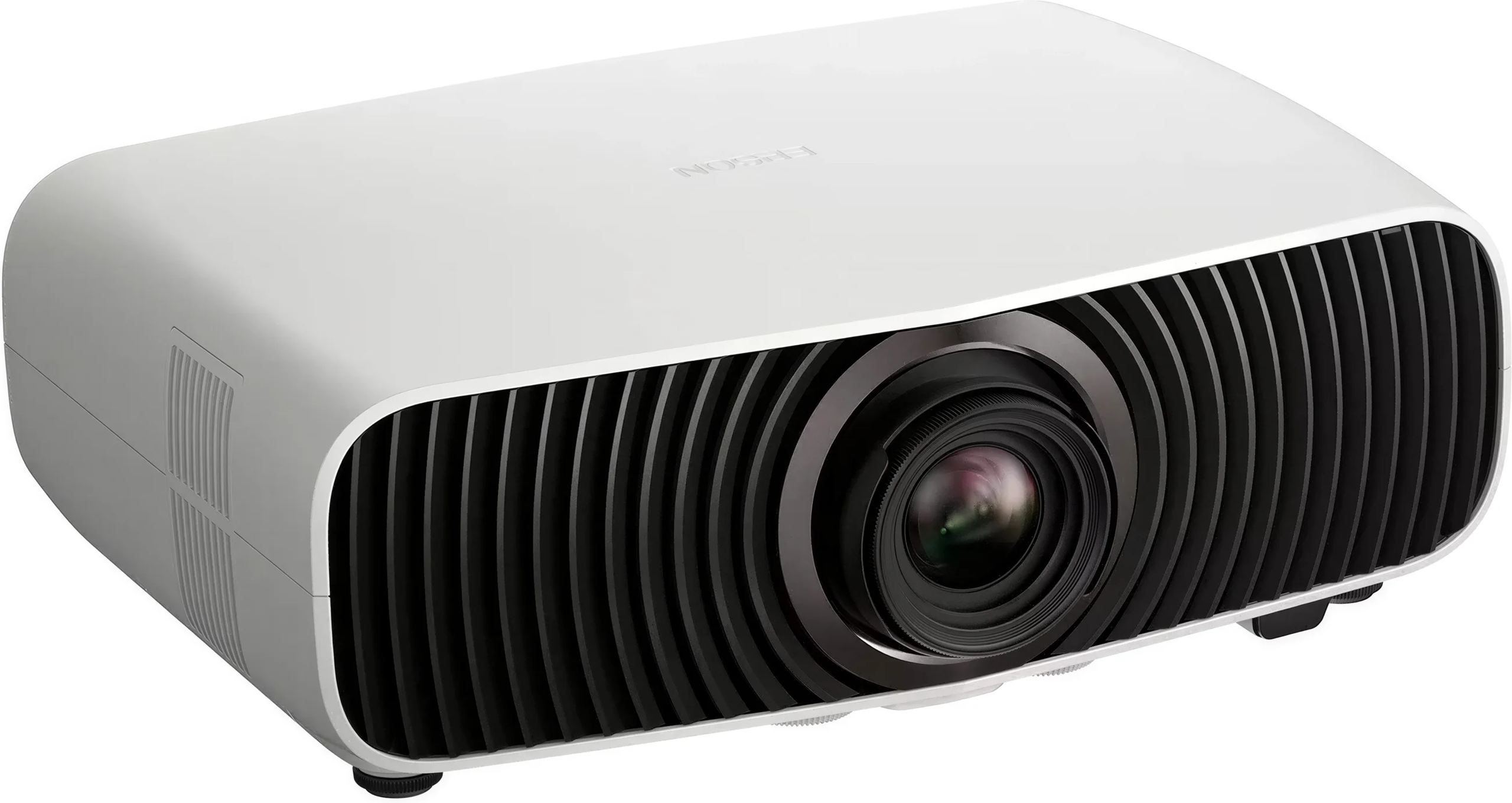
Get a 100-inch image with barely more than two meters of throw distance: that is what this 4K laser projector delivers, the only short-throw model in Epson’s new home theater range. It shares the three LCD panels, laser light source and AI-assisted image processing of its siblings, but its optics shorten the installation distance, bringing big-screen viewing to compact living rooms, multipurpose spaces and golf simulators.
Short-throw optics for rooms with limited space
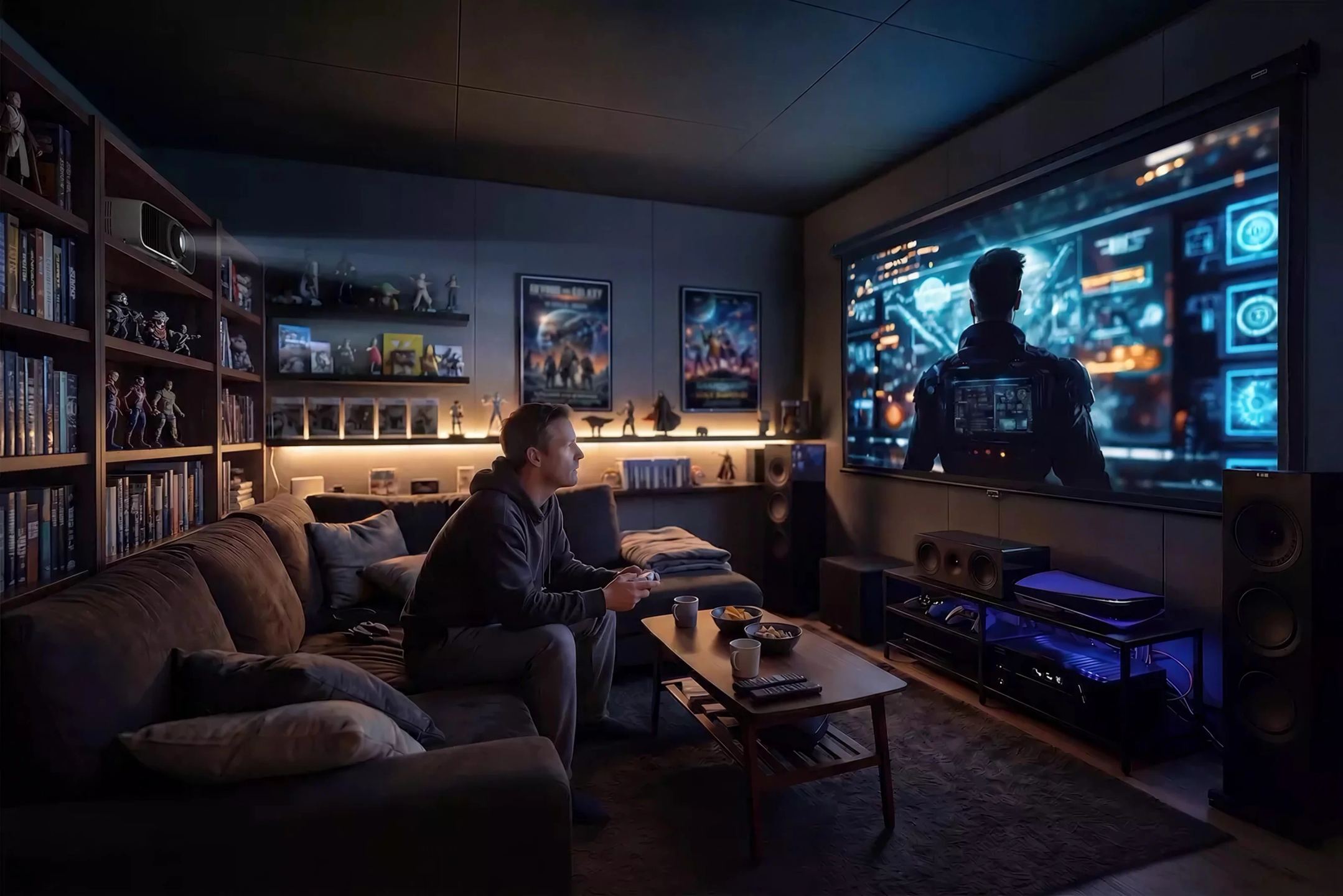
The EH-LS7500’s throw ratio ranges from 1.00 to 1.31:1. This figure divides the distance between the lens and the screen by the image width: at 1.00, a 100-inch screen (around 2.21 m wide) is achieved with 2.2 m of throw distance, while the 1.3× manual zoom extends this distance to around 2.9 m. The projector can therefore be placed on a coffee table, shelf or ceiling mount above the sofa, where a standard-throw model would require the depth of an entire room.
It should not be confused with an ultra-short-throw projector, placed against the wall at the base of the screen. The EH-LS7500 projects from the front like a conventional projector, across image sizes from 40 to 300 inches. Its manual lens shift moves the image by ±59% vertically and ±21% horizontally without distortion, allowing the image to be centered without perfectly aligning the unit with the screen. The Quick Corner function, which corrects geometry corner by corner, remains a fallback solution: any digital correction recalculates the image and slightly reduces its sharpness, whereas optical shift keeps it intact.
Three LCD panels and a 4K image
Epson’s 3LCD technology dedicates one panel to each primary color (red, green, blue) and displays them simultaneously. Color brightness therefore matches white brightness, at 3,500 lumens in both cases, while the absence of a color wheel eliminates the colored trails that some people see on single-chip projectors, known as the “rainbow effect.”
The three panels measure 0.62 inches and the displayed image contains 8.3 million pixels, matching the 3840 × 2160 resolution of Ultra HD content. Video processing is performed at 10-bit depth, for 1.07 billion shades, and the covered color space corresponds to the DCI gamut used for grading films intended for movie theaters.
Brightness, contrast and HDR content playback
With 3,500 lumens measured according to the ISO 21118 standard governing projector brightness measurement, the EH-LS7500 maintains a viewable image in a living room that is not completely darkened, a common use when it projects from a short distance in a living area. The laser light source benefits from LD Boost technology, which according to Epson adds up to 12% brightness without increasing fan noise. Economy mode halves brightness (1,750 lumens) and reduces operating noise from 25 to 22 dB(A), a relevant setting in a dark room or with a modestly sized screen.
Two contrast figures coexist and do not measure the same thing. The 1900:1 native contrast expresses the difference between white and black present in the same image: it is what determines black depth in a scene combining bright and dark areas. The dynamic contrast, greater than 5,000,000:1, results from laser light source modulation from one scene to the next, which significantly darkens night scenes and black screens. In a room with light-colored walls, light reflected by the room itself limits blacks anyway, and the treatment of the walls and ceiling matters as much as the stated figure.
The projector plays HDR content in HDR10 format, the most widespread on Ultra HD Blu-ray discs and streaming platforms, and HLG, used by television channels for high dynamic range broadcasts. Four picture modes are available (Dynamic, Natural, Cinema, Bright), while ISF certification allows a professional calibrator to create and lock measured settings, such as day and night modes tailored to the room.
AI-assisted image processing
The AI Picture Quality function analyzes the scene in real time, recognizes certain elements such as faces, then adjusts color, contrast and sharpness. AISR super resolution works on standard-definition or high-definition sources (TV channels, older DVDs, compressed videos) to reconstruct detail before scaling it up to screen size.
Other processing features complete the package. Frame interpolation calculates intermediate frames to smooth fast motion, an advantage for sports, although it is best disabled for movies in order to preserve the original cinematic cadence. The decontouring filter smooths visible banding in gradients (sky, solid backgrounds) on heavily compressed streams, while the dynamic color enhancer boosts saturation according to content. On a well-mastered Ultra HD disc, these functions are best used in moderation.
Video games, sports and golf simulation
Game consoles and gaming PCs connect to one of the two HDMI inputs, and Epson lists 4K video games among the EH-LS7500’s uses. The absence of the rainbow effect matters in fast-paced games, where constant camera movement makes this flaw more visible on a color-wheel projector. For improved responsiveness, it is best to disable frame interpolation and the most demanding image processing features during gameplay, as each adds processing time before display.
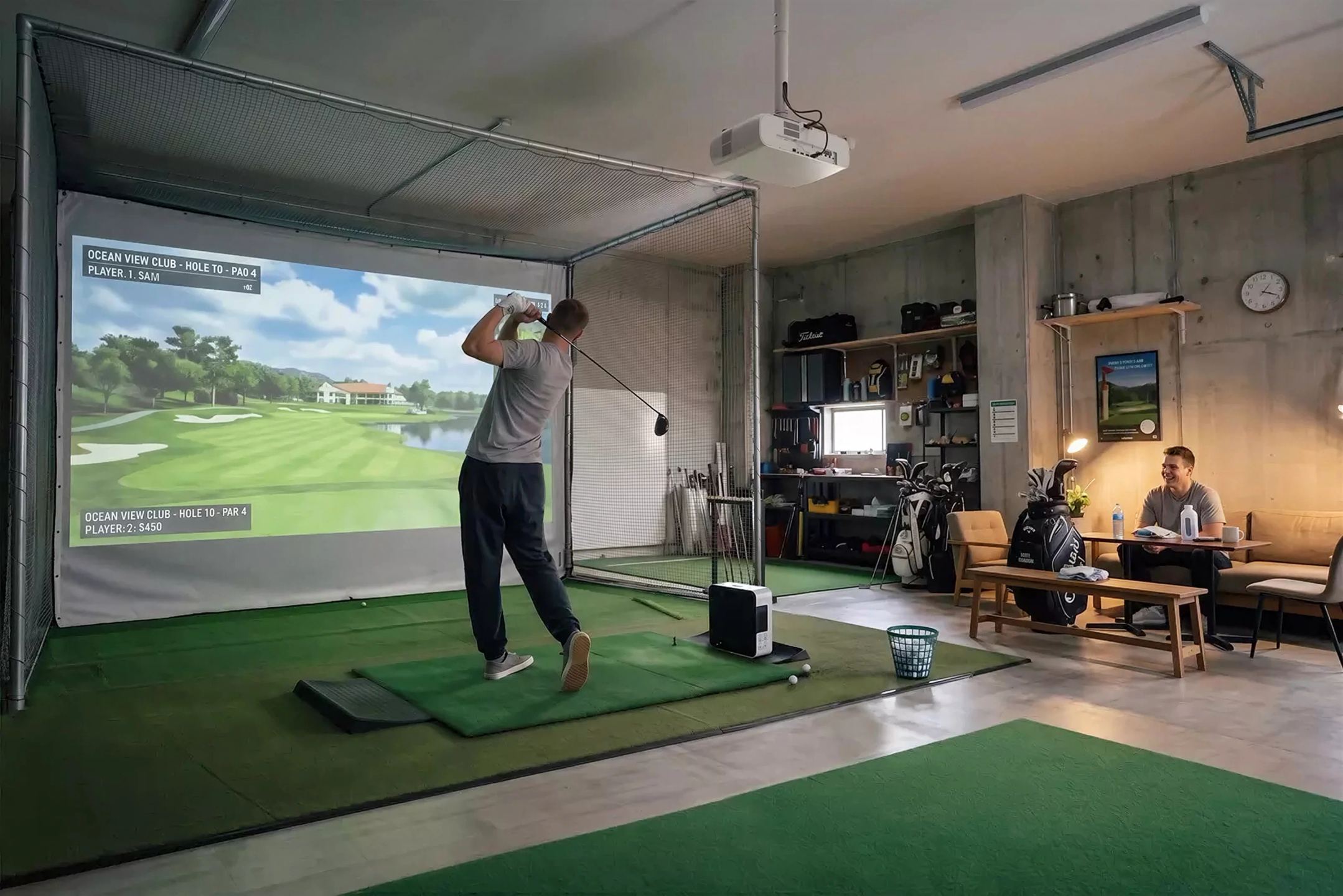
Epson lists indoor golf simulation among the EH-LS7500’s uses, whether in a dedicated room or a converted garage. Ceiling-mounted at a short distance from the impact screen, it produces a large image without the player standing in the beam and casting a shadow on it. Its 3,500 lumens allow for a lit room, while lens shift helps align the image with the screen without having to move the mount once it has been installed.
Connectivity and smart home integration
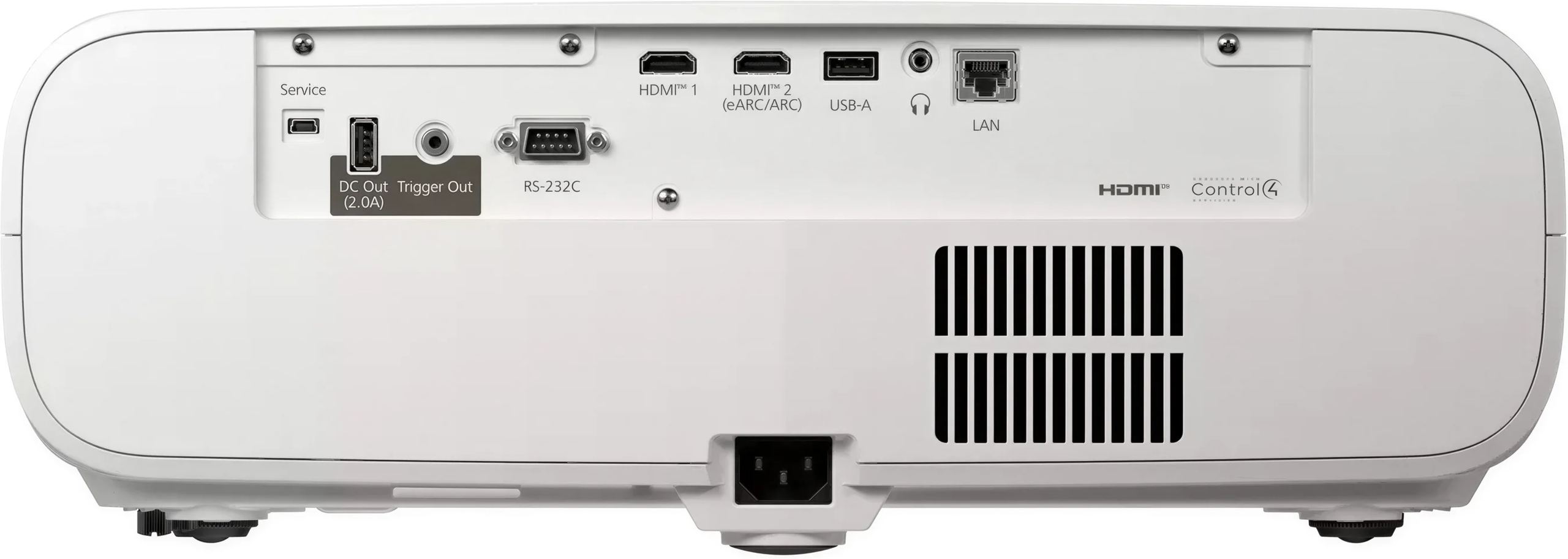
The projector features two HDMI inputs, one of which is ARC/eARC compatible. The EH-LS7500 has no built-in speaker: this port sends audio from connected sources to a home theater amplifier or a soundbar. A headphone output and Bluetooth audio transmission complete the audio section for discreet listening, with either wired or wireless headphones.
For integration, the EH-LS7500 includes an Ethernet port, an RS-232C port, PJLink and ESC/VP.net protocols, and can be controlled through AMX and Control4 systems. Its trigger output sends a control signal when powered on, for example to lower a motorized screen equipped with a 12 V trigger input. Matter compatibility connects it to smart home applications such as Google Home, allowing it to be turned on or off by voice or included in a scenario (blinds closed, dimmed lights, image on). The Wi-Fi 6E module is used for network connectivity and updates.
A compact enclosure for tabletop or ceiling installation
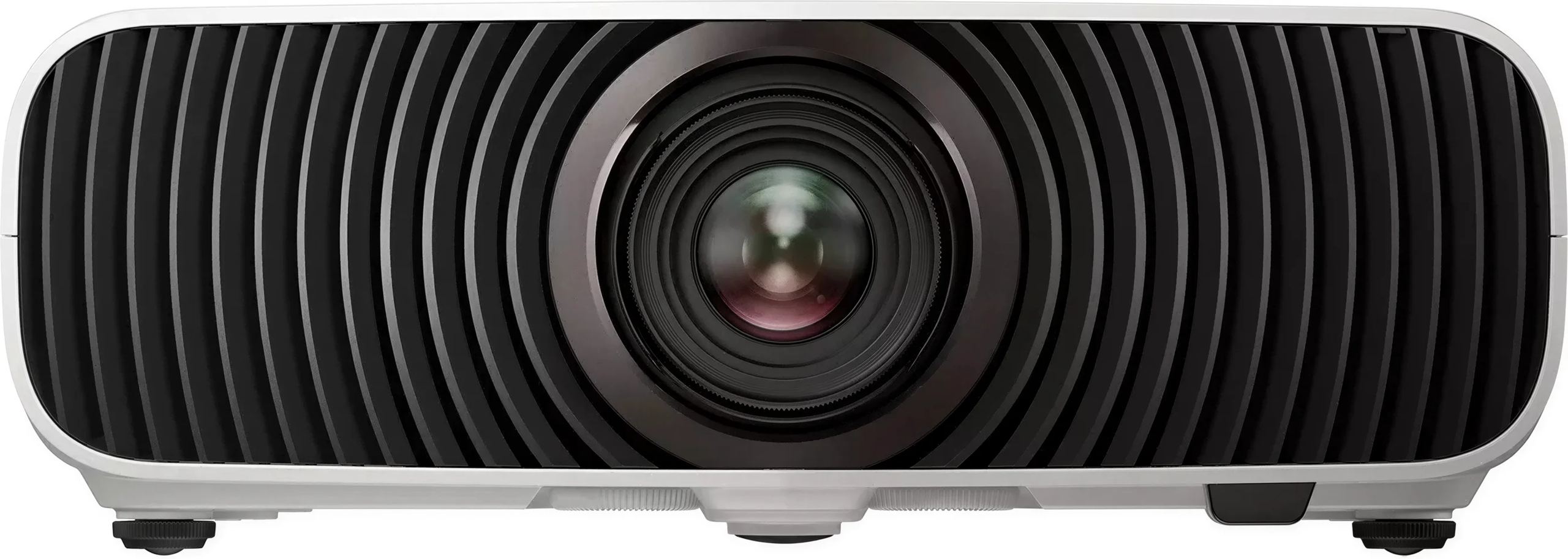
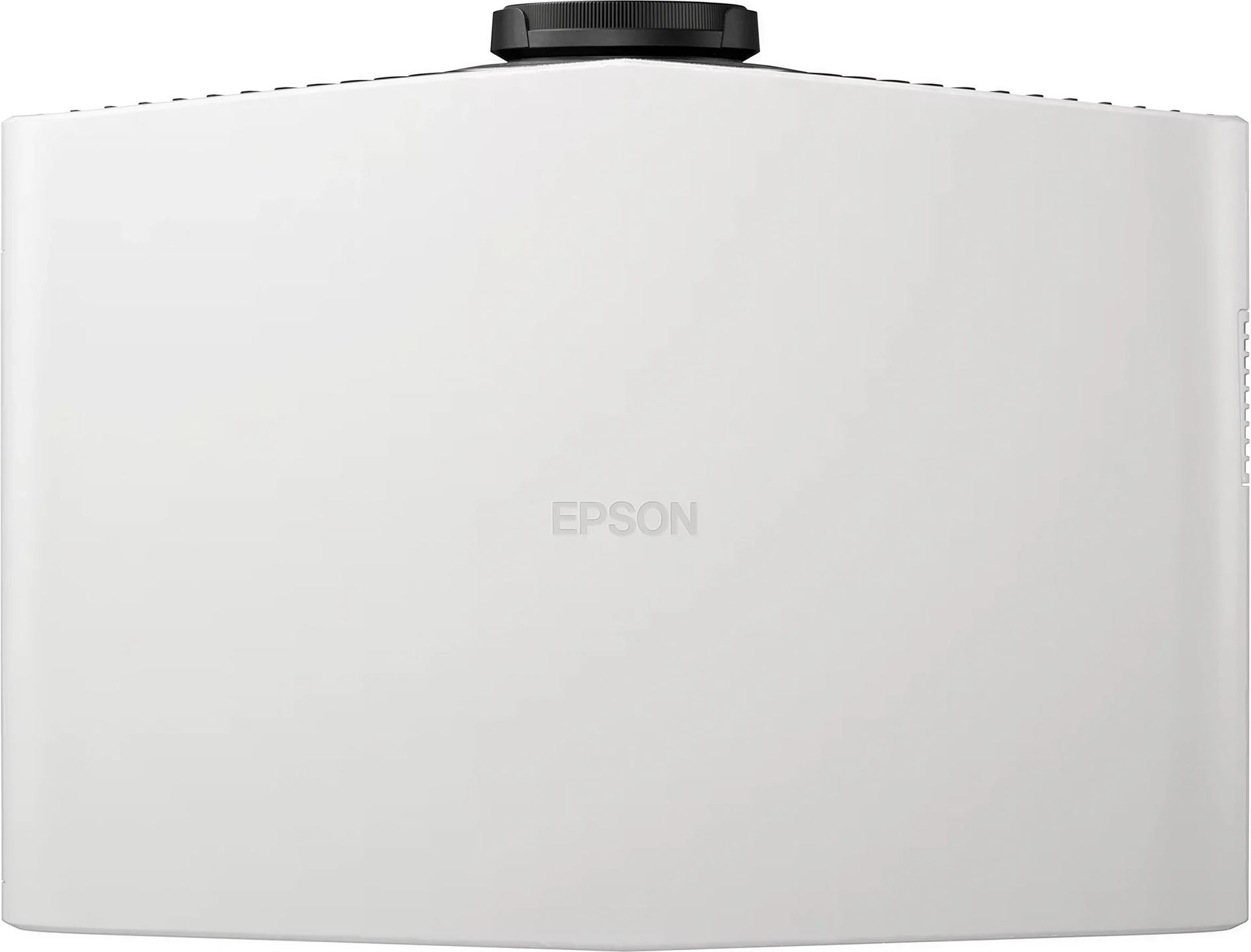
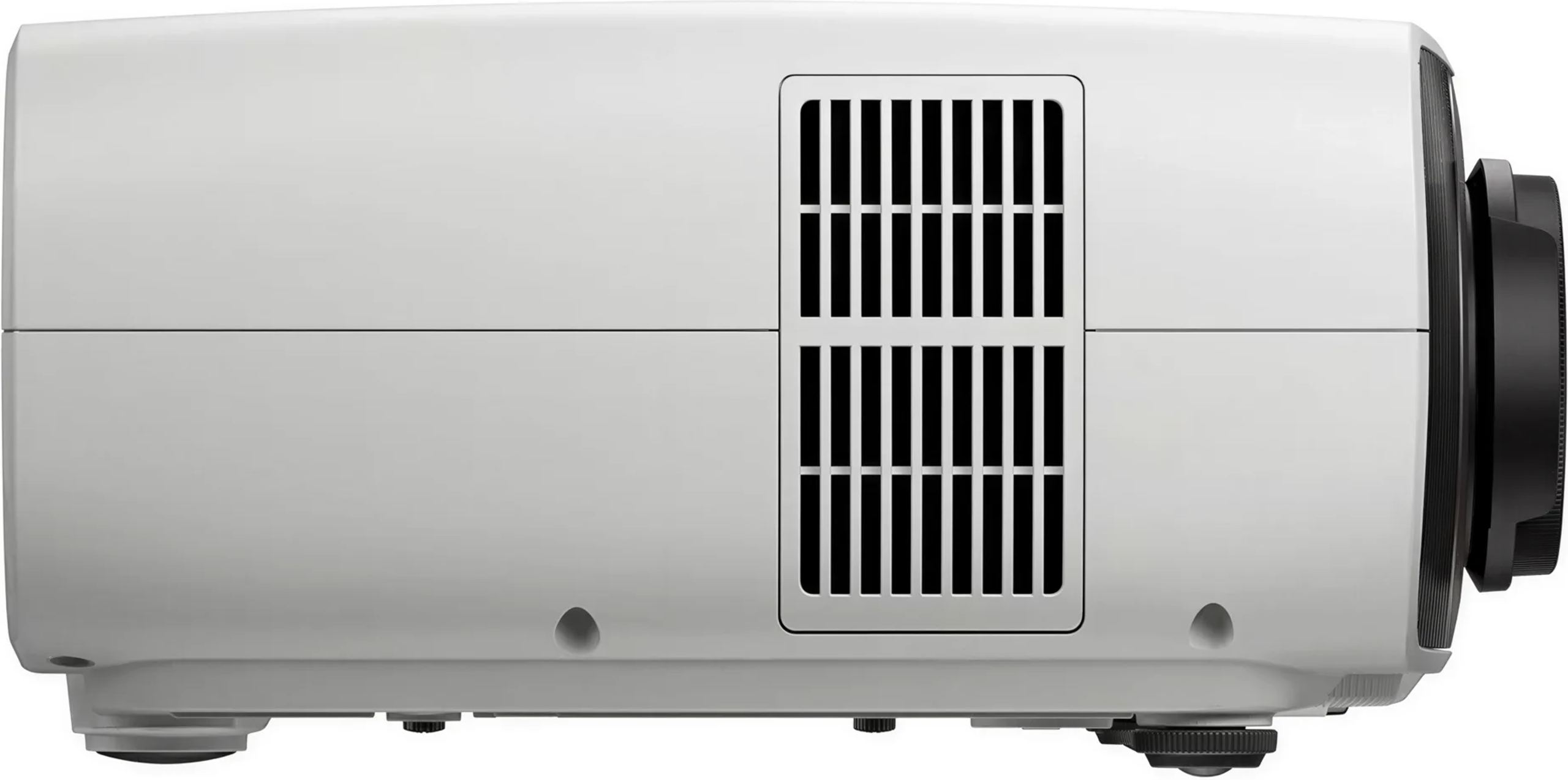
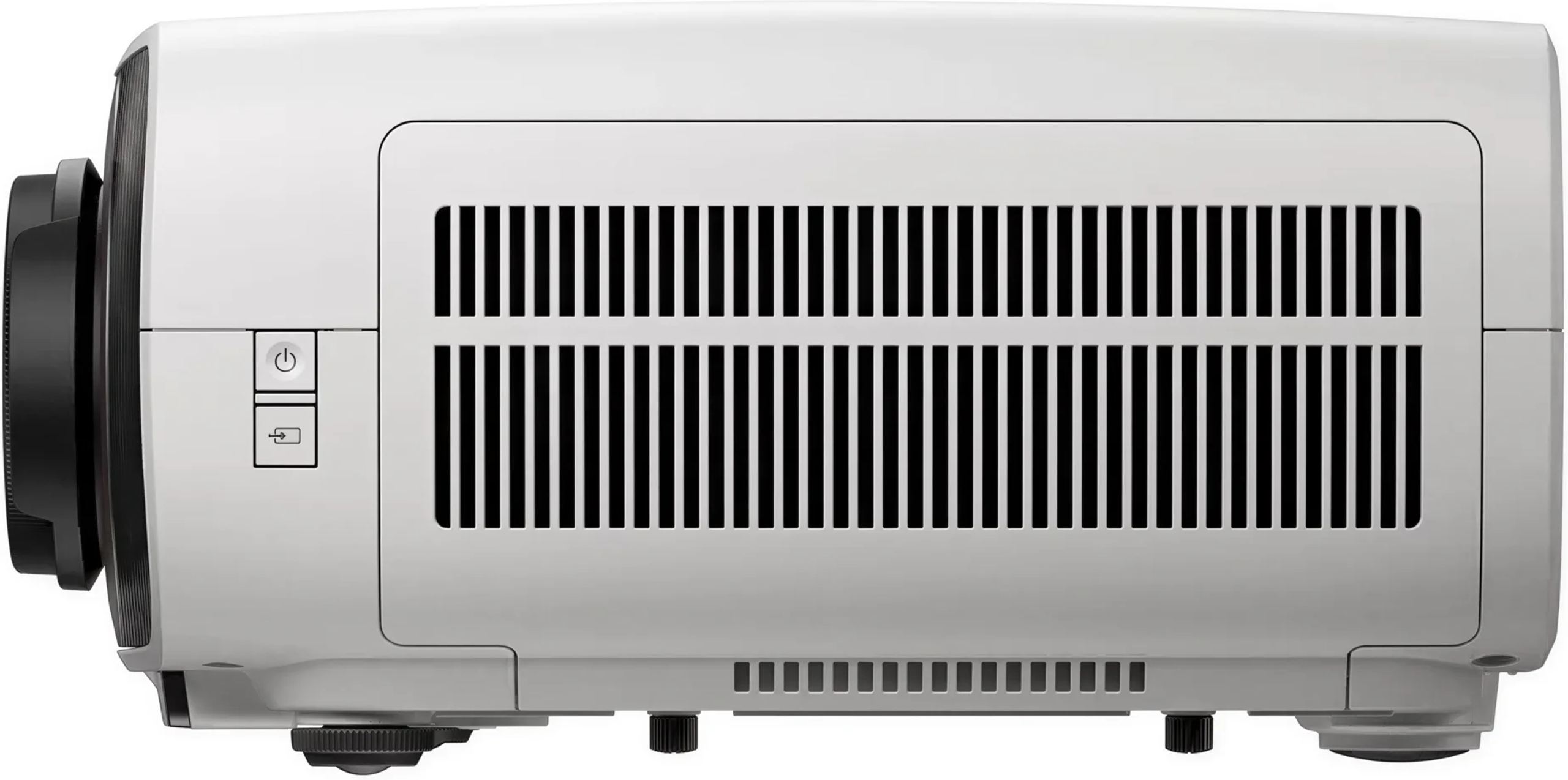
The enclosure combines a white finish with a black front panel, measures 44 × 33.2 × 16 cm and weighs 8.2 kg. It can be placed on furniture or ceiling-mounted using optional Epson mounts (ELPMB22 or ELPMB30, with 450 or 700 mm extension poles), supplemented by a safety cable. The box includes the power cable and remote control with batteries.
Power consumption is 260 W in normal mode, 168 W in Economy mode and 0.5 W in standby. The laser light source is rated for 20,000 hours of operation without lamp replacement, and the operating range is 5 to 35 °C, which matters for installation in a garage or lightly heated outbuilding.
Documentation
French
Technical specifications
Type and technology
- Short-throw 4K laser projector
- Projection technology: 3LCD, RGB liquid crystal shutter
- LCD panel: 0.62”
- Light source: laser
- Laser light source lifespan: up to 20,000 hours
Image and resolution
- Resolution: 4K, 3840 × 2160 pixels
- Number of pixels: 8,294,400
- Aspect ratio: 16:9
- Number of colours: up to 1.07 billion
- Video processing: 10-bit
- 2D vertical refresh rate: 400 to 480 Hz
- DCI colour gamut
- HDR: HDR10, HLG
Brightness and contrast
- Colour brightness: 3500 lumens, 1750 lumens in Economy mode
- White brightness: 3500 lumens, 1750 lumens in Economy mode
- Dynamic contrast: over 5,000,000:1
- Native contrast: 1900:1
Lens and projection
- Throw ratio: 1.00 to 1.31:1
- Zoom: manual, 1 to 1.3× factor
- Lens aperture: f/1.49 to 1.61
- Focal length: 13.9 to 18.1 mm
- Focus: manual
- Vertical Lens Shift: manual, ±59%
- Horizontal Lens Shift: manual, ±21%
- Lens memory: 10 positions
- Image size: 40 to 300” depending on specifications
- Projection distance for 100”: 2.23 to 4.48 m
Image functions and processing
- AIPQ, artificial intelligence image quality enhancement
- AISR, artificial intelligence super resolution
- Frame interpolation
- De-contouring
- Dynamic colour enhancer
- ISF certification
- Quick Corner
- Automatic power on / off
- A/V Mute
Picture modes
- Dynamic
- Natural
- Cinema
- Bright
Connectivity
- 1 × HDMI
- 1 × HDMI with ARC / eARC
- USB 2.0 Mini-B
- Self-powered USB
- RS-232C
- Ethernet 100 Base-TX / 10 Base-T
- Trigger output
- Headphone output
- Wi-Fi 6E
- Wi-Fi IEEE 802.11a / b / g / n / ac
- Network protocols: HTTPS, IPv6, ESC/VP.net, PJLink
Control and compatibility
- Smart Matter compatible
- Control via AMX and Control4
General specifications
- Power consumption: 260 W in normal operation, 168 W in Economy mode
- Standby power consumption: 0.5 W
- Noise level: 25 dB(A) in Normal mode, 22 dB(A) in Economy mode
- Power supply: 100 to 240 V, 50 / 60 Hz
- Dimensions: 440 × 332 × 160 mm
- Weight: 8.2 kg
- Colour: white / black
- Placement: desk or ceiling
Operating conditions
- Operating temperature: 5 to 35 °C
- Operating humidity: 20 to 80%
Warranty
- 60-month return-to-workshop warranty or 12,000 h
Applications
- Home cinema
- Films and series
- 4K video games
- 4K streaming
- Sporting events
- Television and video on demand
- Indoor golf simulation
Frequently Asked Questions
What is the difference compared with the EH-LS7000?
Both models share 3LCD technology, a laser light source, artificial intelligence processing, ISF certification, and control protocols for installers. The EH-LS7000 uses a standard throw lens, which requires more distance for the same image size. The EH-LS7500 is the short-throw version, chosen when the room does not allow enough distance between the screen and the installation point.
What viewing distance should you allow for a 120- or 150-inch screen?
For a 120-inch 16:9 screen (approximately 2.66 m wide), allow around 2.65 m to 3.50 m between the lens and the screen, depending on the zoom position. For 150 inches (approximately 3.32 m wide), the distance ranges from approximately 3.30 m to 4.35 m. These values are based on a throw ratio of 1.00 to 1.31:1 and should be checked using Epson’s distance calculator before drilling into the ceiling.
Do you need a special screen for a short-throw projector?
No. The EH-LS7500 projects from the front, like a conventional model, and works with a traditional white screen. Ambient light-rejecting screens designed for ultra-short-throw projectors, whose surface is shaped to reflect light coming from below, are not suitable: with this projector, they would produce an uneven or darkened image.
Does the projector include streaming apps?
No, the EH-LS7500 does not include a video streaming system. Epson lets you choose the source: an Apple TV, Fire TV or Google TV box, a console or an Ultra HD Blu-ray player can be connected via HDMI, and the source can be replaced over the years without having to change the projector. Its self-powered USB port supplies the power needed for a streaming stick, eliminating the need for an additional power adapter.
Does it support Dolby Vision or HDR10+?
Supported HDR formats are HDR10 and HLG. A film offered in Dolby Vision or HDR10+ remains playable: Ultra HD Blu-ray discs and most streaming players and set-top boxes then transmit the HDR10 version of the program, without the dynamic metadata specific to these two formats.
What does the five-year warranty cover?
Epson guarantees the projector for 60 months with return-to-workshop service or up to 12,000 hours of use, whichever comes first ending the coverage. The announced 20,000-hour lifespan for the laser light source corresponds to the estimated time before its brightness drops to half its initial value, not to a failure.
Can it be used as a TV on a daily basis?
Yes, provided you connect a source device (set-top box, DTT decoder, streaming box) and an audio system via the eARC port. Automatic power-on when a signal is detected, Matter control and the absence of a lamp to replace make frequent use easier. The quieter, more energy-efficient Eco mode is often sufficient for watching the evening news or a series.
- Eco-contribution included in the sale price.
- Manufacturer reference: V11HC36040
- GTIN / EAN: 8715946749396




