

SIM2 Domino 4H
Specifications and features


SIM2 Domino 4H: 4K laser projector
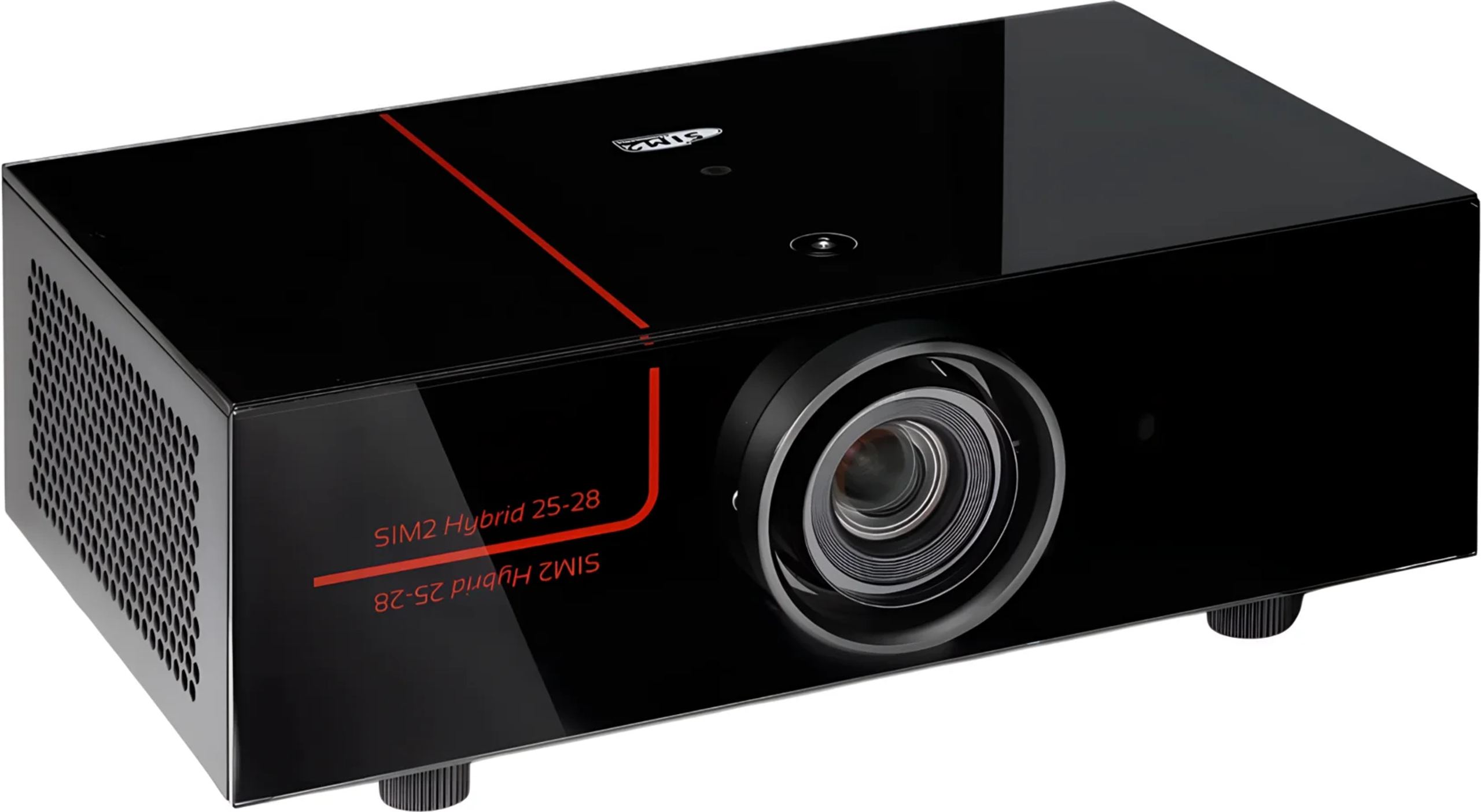
Between a dedicated home theater and a family living room, many spaces call for a refined projected image without room for a bulky device. This is where this entry-level model in the SIM2 2025-2028 range comes in: a 3200-lumen laser source, a 4K DLP chip and the HDR processing of the Italian manufacturer’s higher-end projectors, brought together in a 13 kg chassis clad in crystal glass.
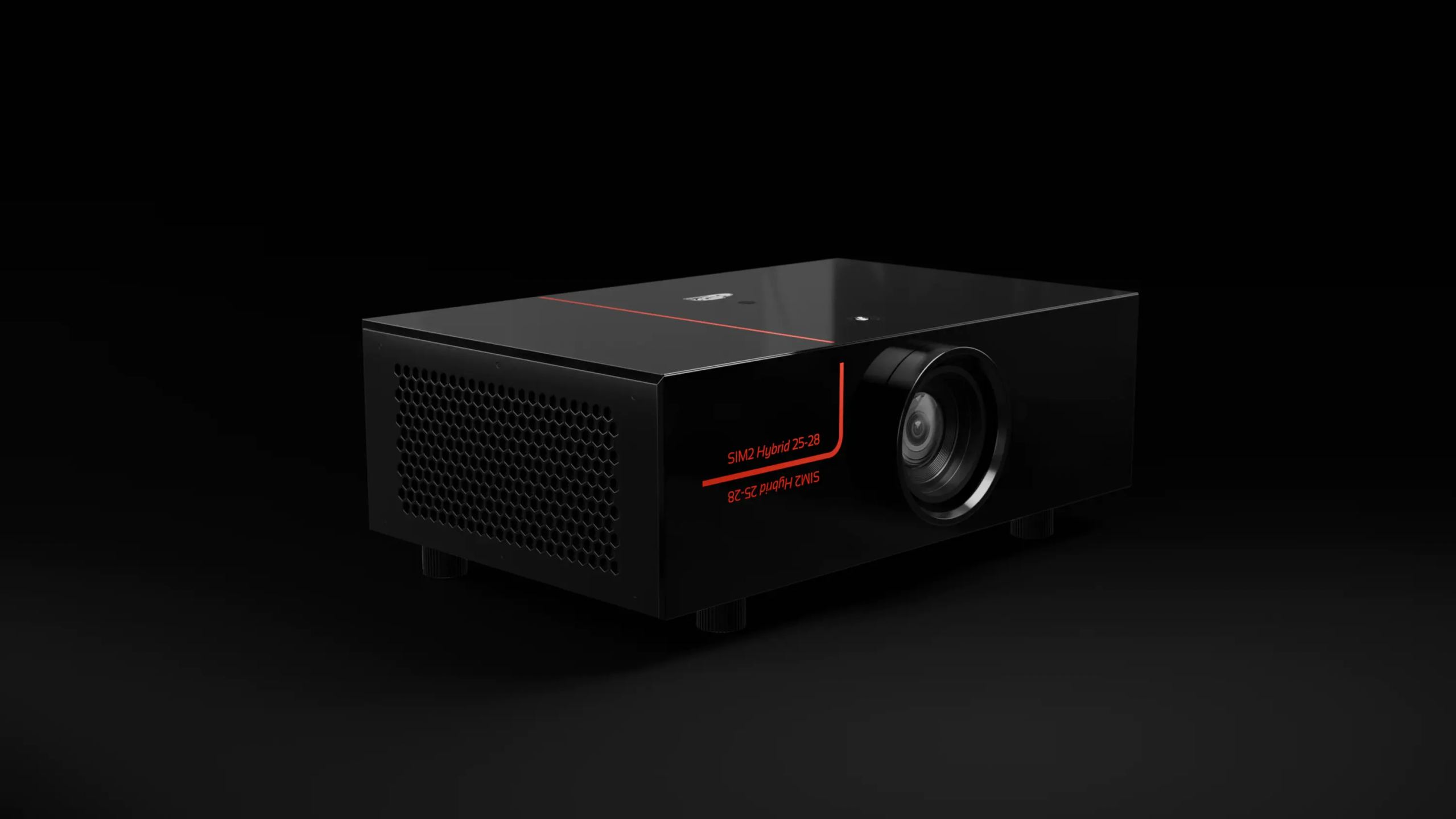
A compact crystal glass chassis
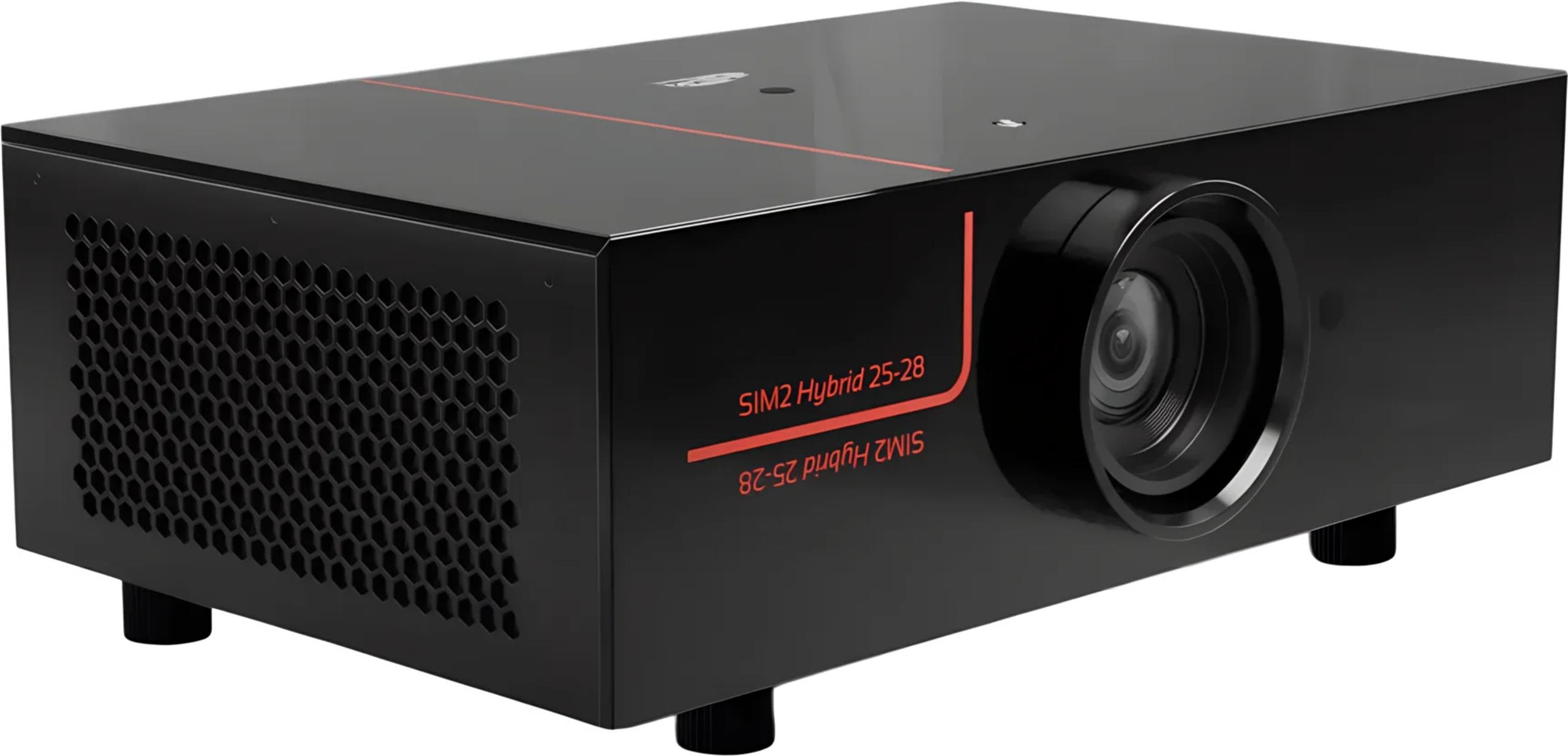
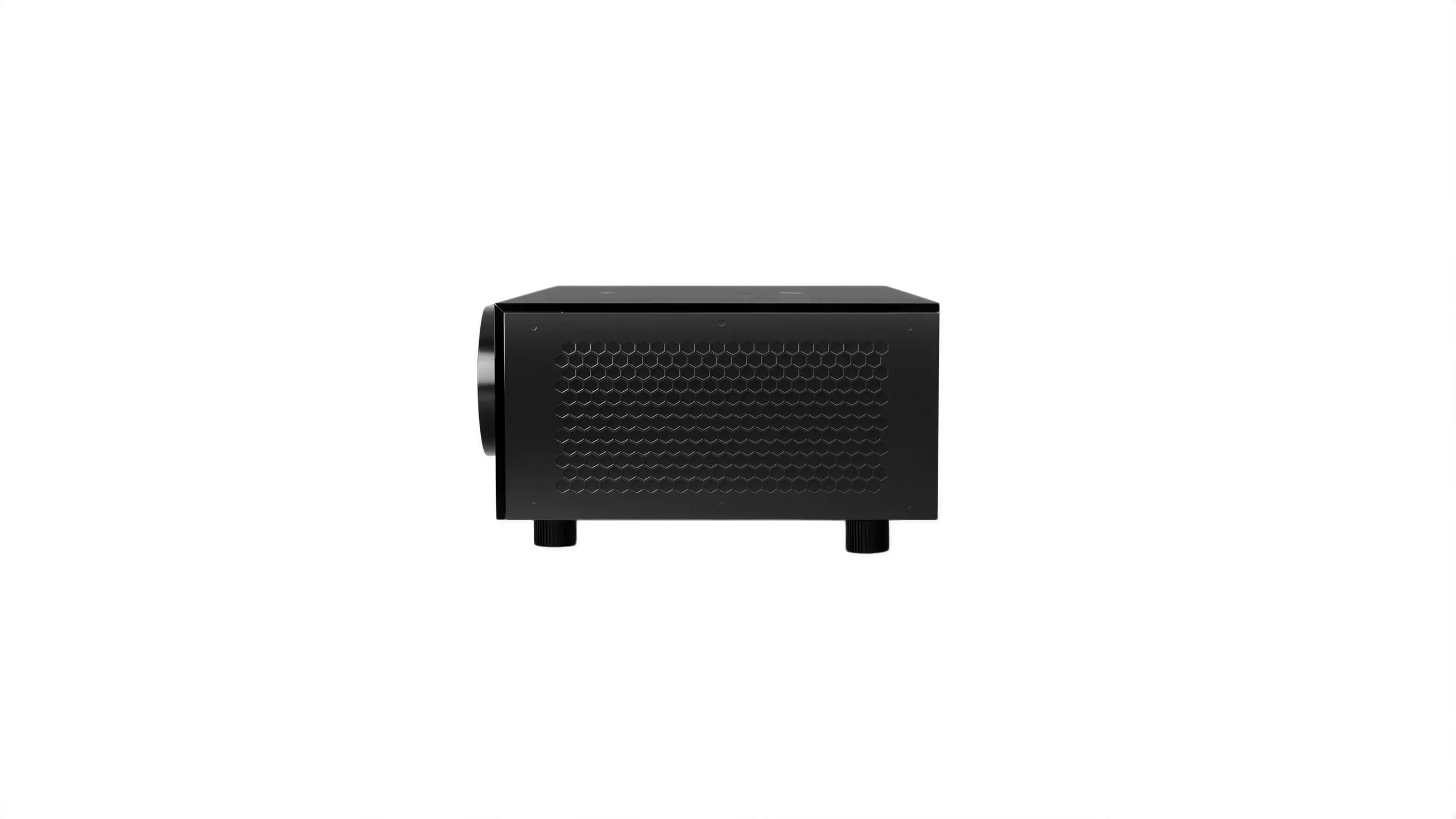
The top and front of the chassis are covered in black crystal glass, a finish that reflects the room’s light and makes the projector look more like a decorative object than a piece of technical equipment. Measuring 481 mm wide, 176 mm high and 300 mm deep, the Domino 4H is more compact and lighter than the Crystal 4SH positioned above it in the catalog, making it easier to accommodate on a rear shelf, on a stand or on the ceiling. SIM2, based in Roveredo in Piano, near Pordenone, introduced this range for its thirtieth anniversary in 2025, hence the “25-28” designation appended to the name in its documentation.
A 0.66-inch DLP chip for UHD images
The image is produced by a 0.66-inch Texas Instruments DLP chip, which SIM2 uses in all its projectors and distinguishes from the 0.47-inch version fitted to more modest models. Its micromirrors tilt thousands of times per second, and a very rapid optical shift of the image displays all 3840 × 2160 UHD pixels on screen. With a single chip, the three colors are necessarily aligned down to the pixel, without the convergence errors that can occur in three-chip systems. Motion compensation offers three settings: it smooths out panning shots and sports broadcasts, at the cost of a more “video-like” look that users will often prefer to disable for films shot at 24 frames per second.
Hybrid laser and colors meeting the digital cinema standard
Light comes from blue lasers, some of which excite a phosphor to produce the rest of the spectrum, hence the term hybrid laser. A four-segment color wheel, with red, green, yellow and clear segments, then splits this light into successive colors. The yellow and clear segments help boost brightness, and SIM2 nevertheless claims an accurate white point and a color gamut that reaches the DCI standard used by digital cinema projectors. The 3200 lumens are enough to illuminate a large screen or maintain a clearly visible image when the room is not completely dark.
The laser source has no bulb to replace and a claimed lifespan of 25,000 hours. For calibration, the menu provides access to the primary and secondary colors as well as the white point, with programmable 12-bit RGB settings: enough to have an installer calibrate the projector for your own screen.
HDR processing from higher-end models
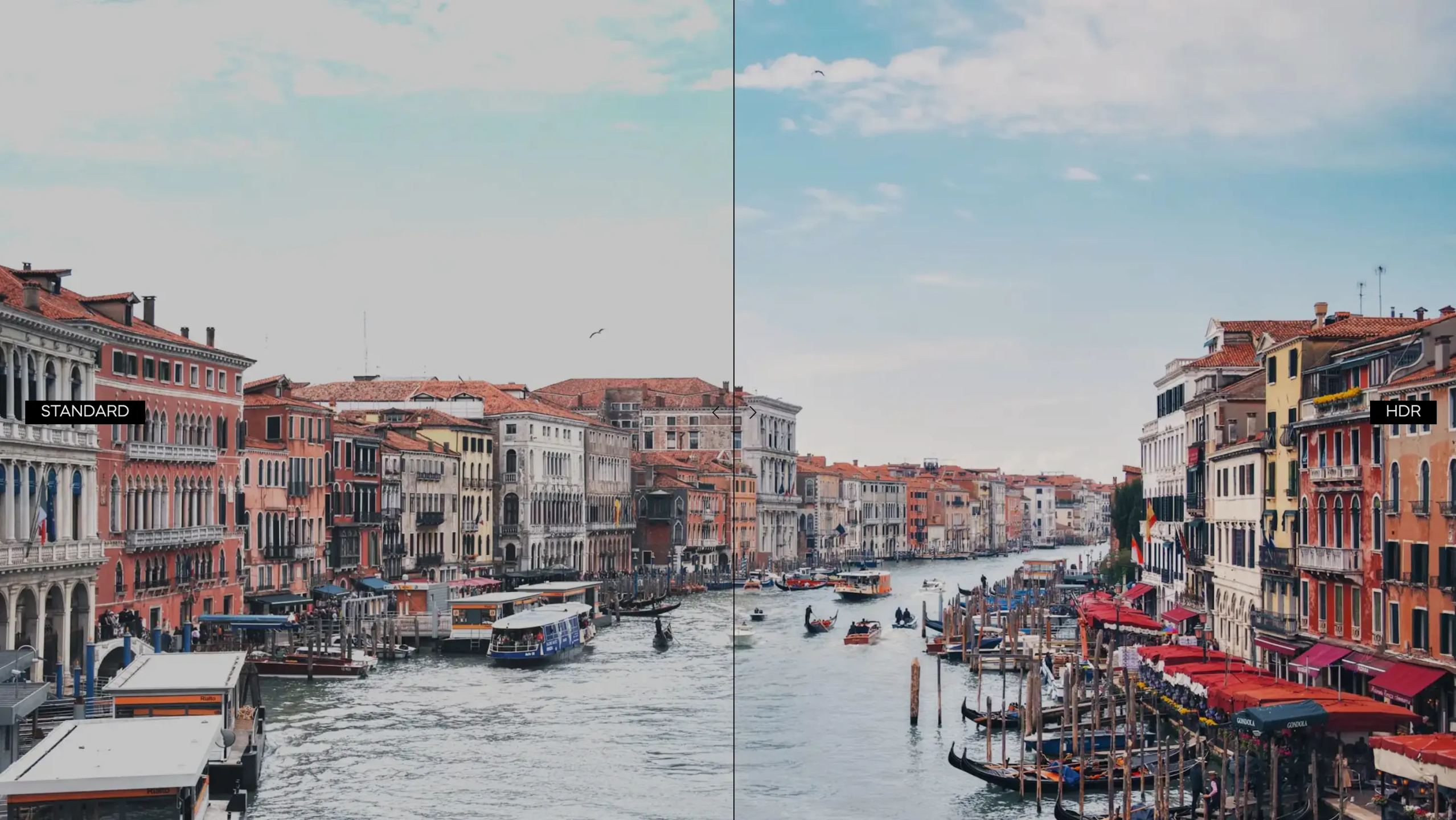
SIM2 has been working on high dynamic range for more than thirteen years, in professional monitors as well as projection, and the Domino 4H adopts the HDR processing of the projectors above it in the range. HDR films are graded for displays capable of several thousand nits, a brightness level no projector can achieve on a projection screen. The challenge is to compress this dynamic range without clipping highlights or crushing shadows, and that is the role of the EOTF, the curve that translates the signal into displayed brightness. The projector handles HDR10 and HLG (the format used for HDR television) with dedicated EOTF modes and four presets for this curve, to be selected according to screen size and the light level actually achieved on screen.
Projection distances and vertical lens shift
The glass lens with manual 1.6× zoom offers a throw ratio of 1.4:1 to 2.24:1, meaning a distance between 1.4 and 2.24 times the image width. For a 2.50 m-wide screen (approximately 113 inches in 16:9), the projector is positioned between 3.50 m and 5.60 m away; for a 3 m-wide screen, between 4.20 m and 6.70 m. This range covers most rooms, from a projector placed at the back of a living room to a ceiling mount behind the sofa.
The optical engine has a 100% offset: when placed on furniture, the projector projects the image entirely above the lens axis, and the reverse when mounted upside down on the ceiling. Vertical lens shift adds fine adjustment of 15% of the image height, or around twenty centimeters on a 2.50 m-wide screen. There is no horizontal shift, so the projector must be centered on the screen. The Digital Perfect Fit function digitally modifies the image format to switch from a 16:9 screen to a 2.35:1 CinemaScope screen, using only a portion of the chip’s pixels.
Connectivity geared toward installation
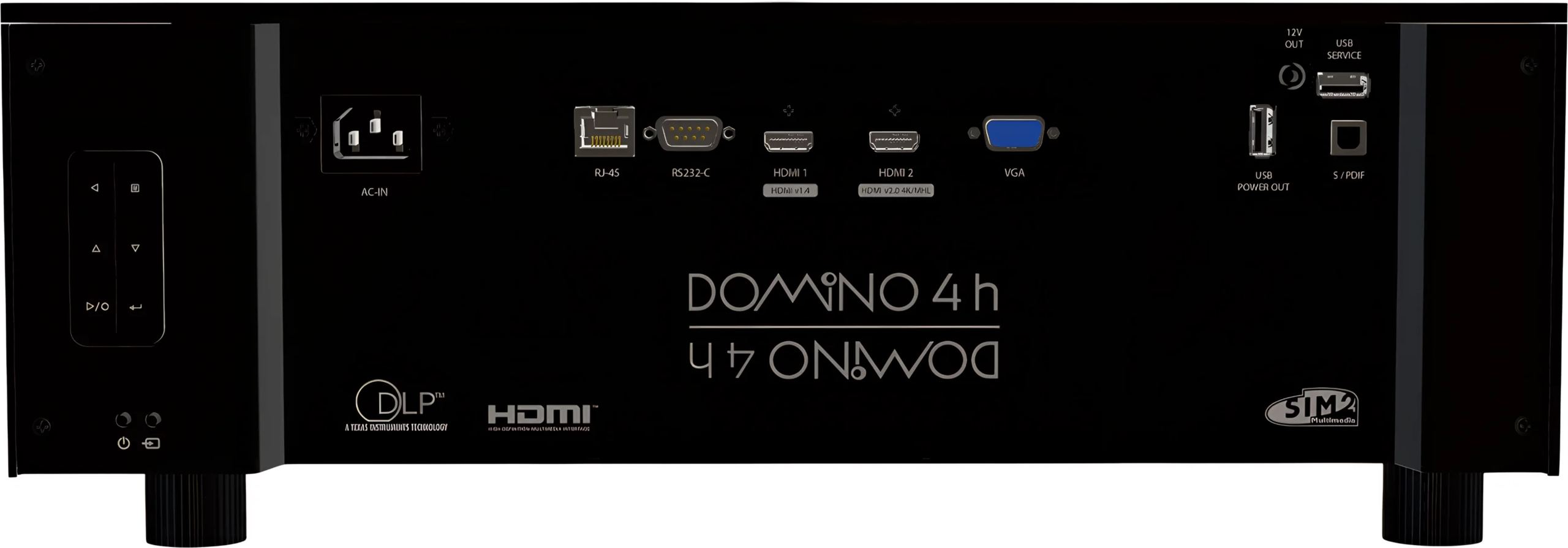
4K HDR sources, a UHD Blu-ray player, streaming box or console, connect to the HDMI 2.0 input compatible with HDCP 2.2 and MHL 2.1. The second HDMI 1.4a input, limited to HDCP 1.4, is suitable for high-definition sources, while a VGA input accommodates a computer. The projector has no built-in app system: playback requires an external source, and the 5 V / 1.5 A USB port directly powers a streaming stick connected to one of the HDMI inputs.
For automation, the 12 V trigger output lowers a motorized screen when the projector is switched on, while the RS-232 port and RJ-45 network socket connect the projector to a home automation system or its browser-based control interface. A second USB port is reserved for servicing and firmware updates. The power supply accepts 100 to 240 V with automatic adjustment to the mains voltage.
Technical specifications
Display technology
- Display technology: 1.6764 cm DLP UHD UMD
- Chip: 1.7018 cm DLP DarkChip UHD, single-chip architecture
- Stated native resolution: UHD 4K, 3840 × 2160 pixels
- Motion compensation: 3 settings available
- Image size: up to 406.4 cm
Light source and color performance
- Lighting technology: new SIM2 UHD hybrid laser light source
- Light source: blue lasers and phosphors
- Stated maximum brightness: 3200 ANSI lumens
- Stated lifespan: up to 25000 hours
- Color reproduction: natural rendering, optimized color accuracy, enhanced saturation
- Color space: stated coverage of the DCI standard
- Color settings:
- Primary and secondary color adjustment
- Precise white point adjustment
- Programmable 12-bit RGB color settings
- Dual color wheel: more precise color reproduction
- Listed colors: red, green, yellow, clear
Video processing and HDR
- High dynamic range (HDR) signal compatibility: HDR10, HLG
- SIM2 HDR processing: dedicated electronics for processing high dynamic range signals for greater image detail
- Electro-optical transfer function (EOTF) management: dedicated modes with 4 presets
- Video processing: advanced processing electronics to optimize different video sources
Optics and installation
- Lens: high-definition optics with pure glass lenses
- Light engine positioning: 100% optical offset according to the manufacturer’s design
- Vertical lens shift: +15% according to the manufacturer’s specifications
- Projection angle: 12° as indicated in the documentation
- Throw ratio: 1.4:1 to 2.24:1, with a tolerance of ±5%
- Optical zoom: 1.6 ×
- Installation: adapts to different projection distances using the zoom
- Focus adjustment: manual or according to the integrated optical system
Connectivity and control
- HDMI 2.0: 1 input with HDCP 2.2 and MHL 2.1 compatibility
- HDMI 1.4a: 1 input with HDCP 1.4
- VGA: 1 HD15 input
- USB Type-A: 1 dedicated power port, 5 V / 1.5 A
- Service USB Type-A: port for maintenance and firmware updates
- 12 V trigger output: 1 control output for compatible equipment
- RJ-45: communication connection and support for control via a web interface
- RS-232: 1 serial interface on a 9-pin D-Sub connector
Frequencies and power supply
- Vertical scan frequency: 24 to 120 Hz
- Supply voltage: 100 to 240 V AC, ±10%
- Mains frequency: 50 to 60 Hz
- Mains voltage adaptation: automatic
Chassis, dimensions and weight
- Chassis color: black
- Dimensions:
- Width: 481 mm
- Height: 176 mm
- Depth: 300 mm
- Weight: 13 kg
Frequently asked questions
How does it differ from the Domino 4H released in 2023?
The current model belongs to the 2025-2028 range and replaced the first version in the catalogue in spring 2025. It retains the 0.66-inch DLP chip, hybrid laser source and HDR processing, with brightness increased from 3000 to 3200 lumens.
Does the Domino 4H play Dolby Vision or HDR10+ content?
The projector supports HDR10 and HLG. UHD Blu-ray discs encoded in Dolby Vision or HDR10+ contain a base HDR10 layer, and players, like most streaming boxes, send this HDR10 signal when the connected device does not report support for dynamic formats. The film is then displayed in HDR10 with SIM2 processing.
Can you play in 4K at 120 Hz?
The HDMI 2.0 standard caps UHD at 60 frames per second, which corresponds to the most common 4K mode on current consoles. The projector’s refresh rate range, which goes up to 120 Hz, applies to lower-resolution signals.
What is the rainbow effect, and does it affect this projector?
On a single-chip DLP projector, colors are displayed one after another in sync with the color wheel. Some viewers notice brief colored fringes around bright objects moving against a dark background, while others never see them. Sensitivity varies greatly from person to person, and a demonstration before purchase remains the surest way to find out whether you are sensitive to this effect.
What type of screen should be paired with the Domino 4H?
In a dark room, a white screen with a gain of 1.0 faithfully reproduces the colour accuracy specified by SIM2. In a living room where light cannot be fully controlled, an ambient light rejecting screen for long-throw projection maintains better contrast. The Domino 4H’s laser phosphor light source is compatible with these screens, unlike triple RGB laser projectors, which require specific surfaces. The 3200 lumens allow for large screen sizes, exceeding 3 m in width in a dark room.
How does it differ from the Crystal 4SH in the same range?
The Crystal 4SH reaches 3800 lumens and uses two color wheels, one with phosphors and the other with dichroic filters, along with a SuperHybrid mode that continuously adjusts the image settings and laser source to enhance contrast. It is also larger and offers a black or white glass finish. The Domino 4H shares its HDR processing and 0.66-inch chip in a more compact chassis.
How long does the laser source last?
SIM2 claims 25,000 hours. At four hours of projection per day, that amounts to more than seventeen years of use, with no lamp to replace or maintenance costs associated with the light source.
- Eco-contribution included in the sale price.


