

SIM2 UltraNero 4
Specifications and features


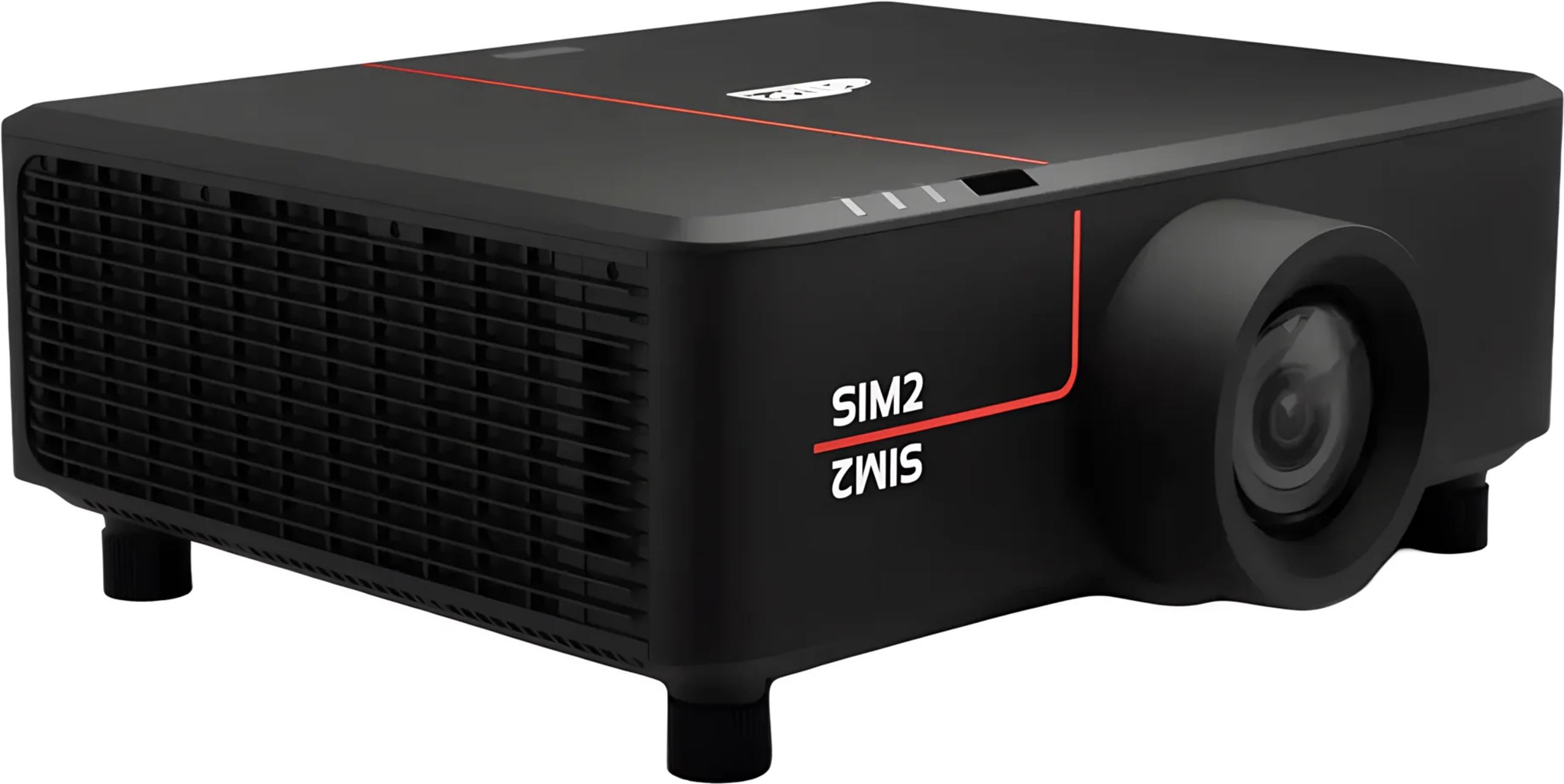
SIM2 UltraNero 4, 4K laser projector
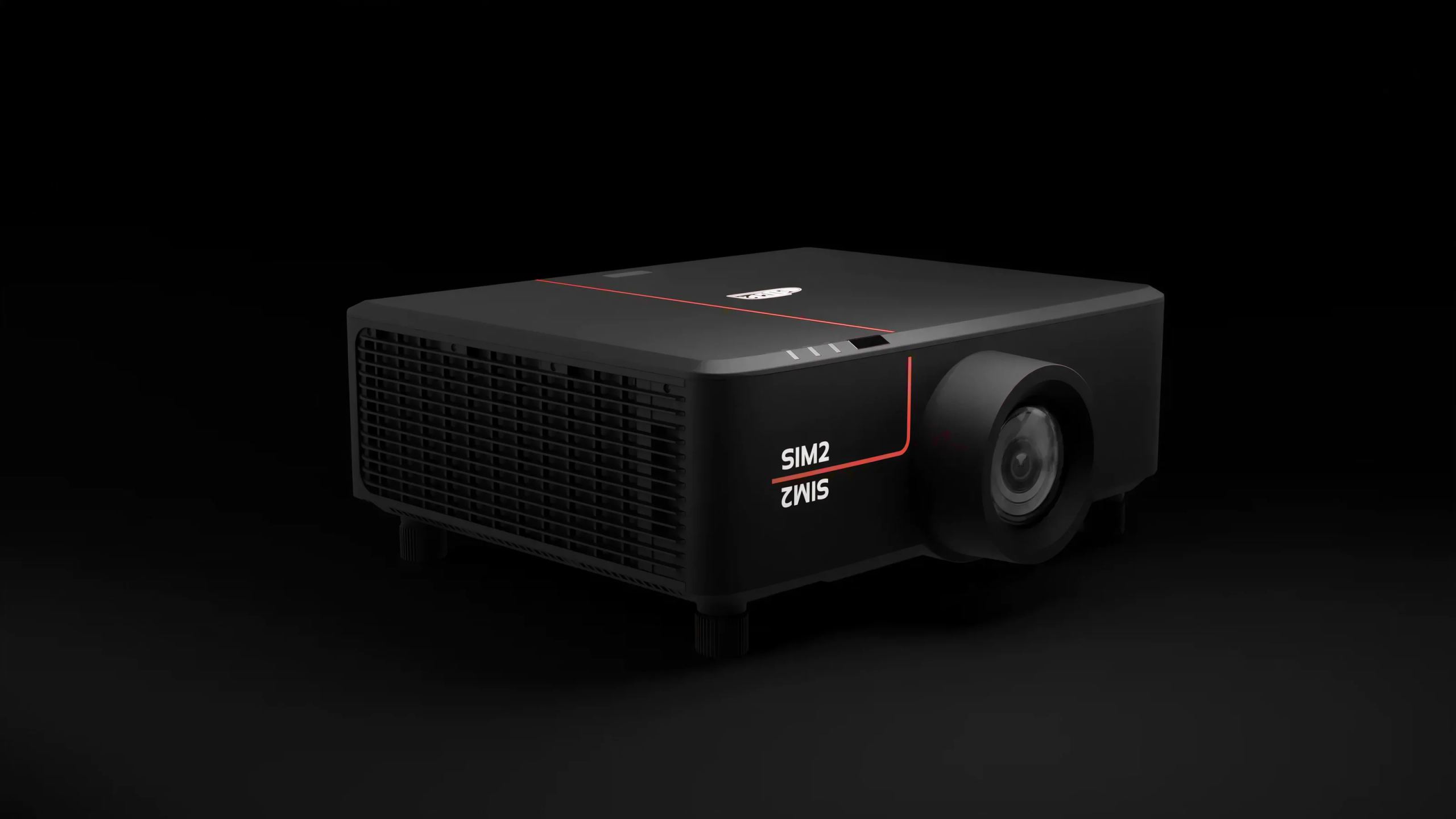
Filling a screen four or five meters wide without the image fading in bright scenes requires a reserve of light that few home projectors possess. Italian manufacturer SIM2 has brought together a 7,000-lumen hybrid laser source, fully motorized optics and proprietary HDR processing in this model, housed in a 14.5 kg chassis that stays below 30 dBA. It is the brightest single-engine projector in the SIM2 range distributed in Europe.
A hybrid laser source with ceramic phosphors
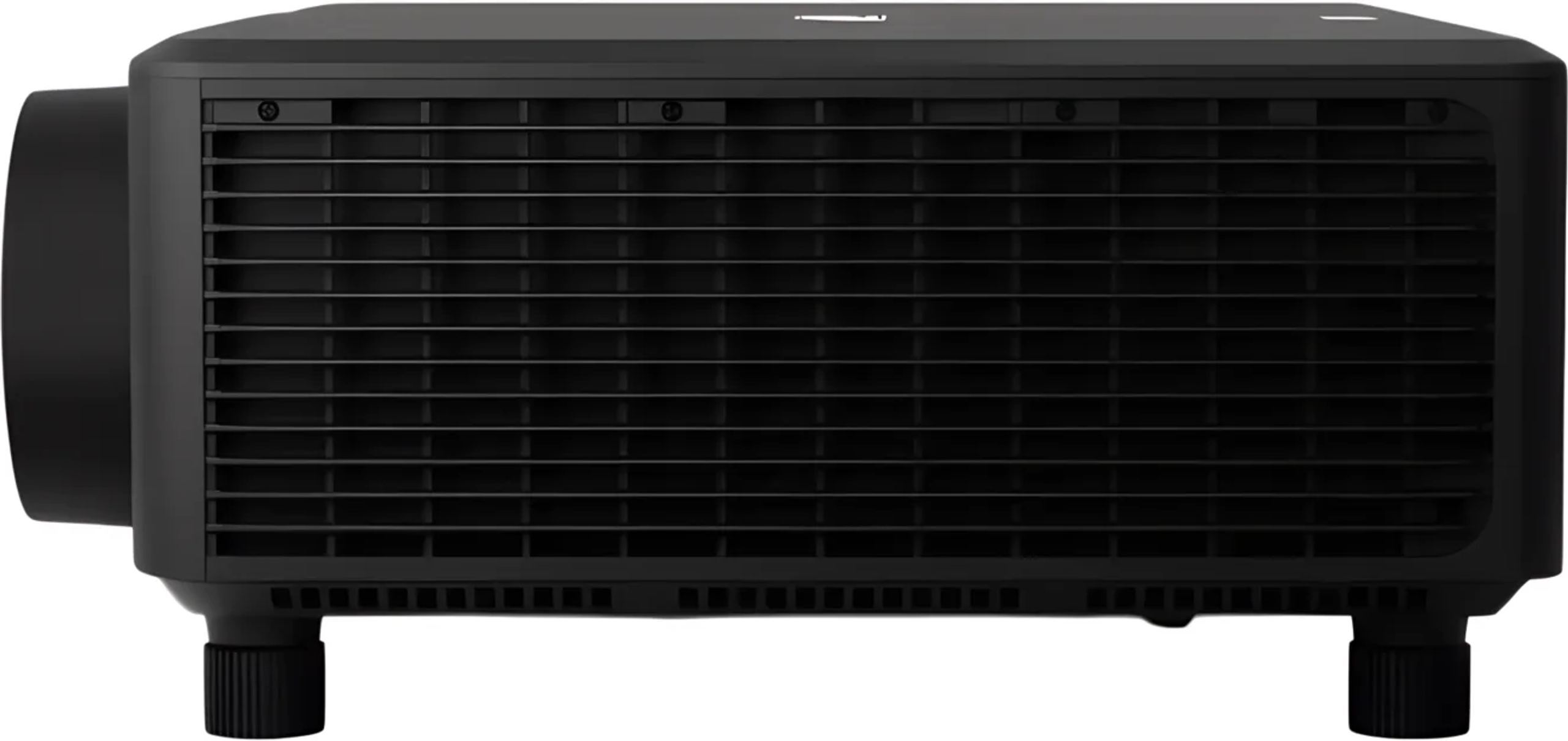
The light starts with blue laser diodes. Part of this beam strikes a phosphor-coated wheel, which converts it into a broader spectrum, then a color wheel successively filters the primary colors before they reach the DLP chip. This combination of laser, phosphors and a color wheel is what gives the source its hybrid name. On the UltraNero 4, the phosphors are fixed to a ceramic substrate rather than embedded in resin: ceramic withstands the laser’s heat much better, preserving light output and color stability over time while reducing cooling requirements, resulting in quieter operation. The source’s lifespan is estimated at 20,000 hours, equivalent to more than thirteen years at four hours of projection per day, with no lamp to replace.
Seven thousand lumens for very wide screens
The figure becomes meaningful when related to the screen area. On a 16:9 screen 4 m wide with a gain of 1.0, 7,000 lumens provide a maximum luminance close to 250 cd/m², and still nearly 160 cd/m² on a 5 m-wide screen, while the standard for movie theaters targets 48 cd/m². This maximum value corresponds to the brightest mode, and a calibrated setting sacrifices some of it, but there is still ample headroom. This primarily benefits HDR, whose highlights and bright skies demand power, followed by rooms that are not completely dark, such as an equipped living room or a multipurpose space. The lens maintains uniformity above 95% across the entire surface: on an image this large, a center brighter than the edges would quickly become noticeable in a sky or a solid background.
HDR processing developed by SIM2
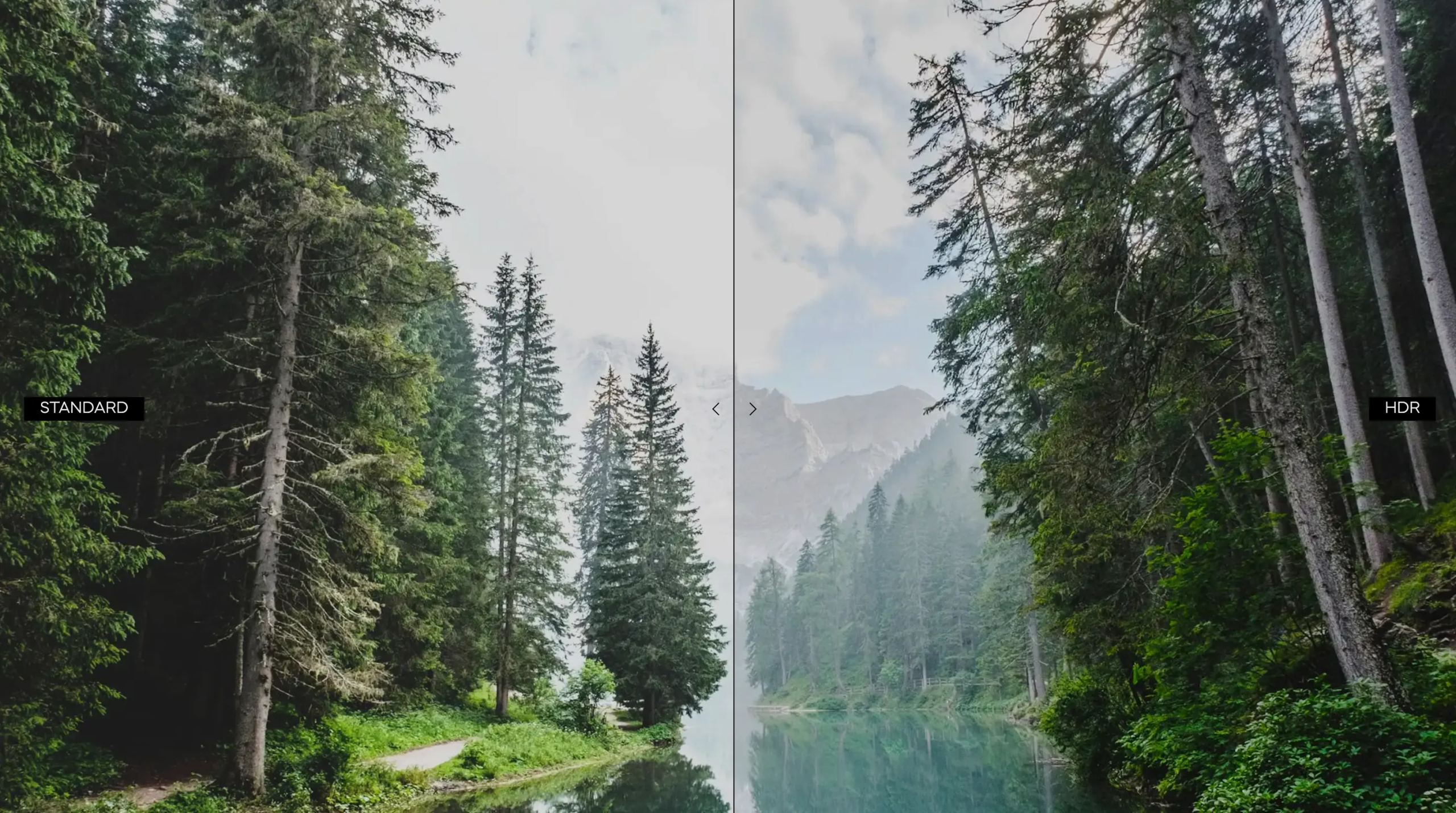
No projector reaches the peak brightness levels at which HDR movies are mastered. The electronics must therefore recalculate the luminance curve to fit the image within the device’s actual capabilities without losing highlight detail or crushing shadows. SIM2 has been working on this issue for more than thirteen years, with both flat-panel monitors and projection, and the UltraNero 4 incorporates its processing. The 4K UHD image (3,840 × 2,160 pixels) comes from a single DLP chip that reconstructs the full resolution through very rapid shifting of its micromirrors. A single chip also means no color convergence errors, since all three primary colors pass through the same matrix. Particular attention has been paid to the light path to improve optical contrast, and the color temperature can be adjusted to the desired reference.
Motorized optics that simplify installation
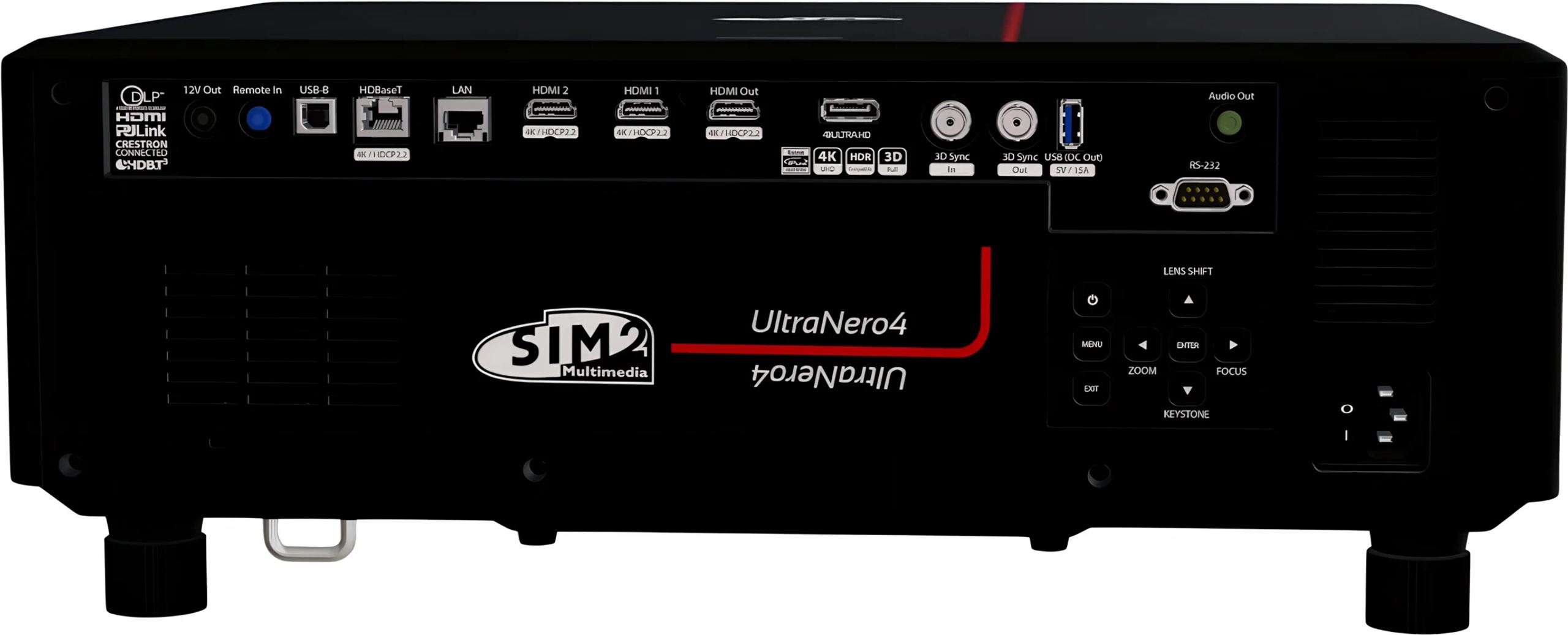
Zoom, focus and lens shift are controlled from the remote. The throw ratio ranges from 1.26 to 1.98 thanks to the 1.6× zoom, placing the device approximately 3.80 m to 5.95 m from a 3 m-wide screen. Vertical lens shift reaches ±55% and horizontal lens shift ±25%, allowing the projector to be ceiling-mounted or placed on a rear shelf without tilting the image. Installation is possible on the floor or ceiling, for front projection or rear projection behind a translucent screen.
The Perfect Fit function switches projection from 16:9 to 2.35:1 by adjusting the optics, so that a widescreen CinemaScope screen remains completely filled by movies shot in this format, without an additional anamorphic lens. For more challenging situations, digital keystone correction of ±20° on both axes, electronic adjustment of each corner and the warping function compensate for an off-center projector or a curved screen. These corrections recalculate the image and sacrifice a little precision: lens shift remains the preferred solution, with digital correction used for final adjustments.
Connectivity designed for integration
Two HDMI inputs receive sources, and an HDBaseT interface accepts video and control signals over a simple RJ45 network cable, over distances approaching one hundred meters. This is the solution for rooms where sources remain in an equipment room. An HDMI output forwards the signal to a second display. The USB Type-A port delivers 5 V at 1.5 A, enough to power an active optical HDMI cable or a streaming stick. The 12 V trigger lowers a motorized screen when the projector is switched on, and 3D synchronization has dedicated input and output connections, with stereoscopic display at 120 Hz. Control is available via the local network, RS-232 port, USB Type-B or HDBaseT connection, leaving a choice of home automation system.
Unobtrusive for a device this powerful, the UltraNero 4 measures 485 × 180 × 430 mm and does not exceed 30 dBA during operation: placed above or behind viewers, its fan is masked by the soundtrack. Manufactured in Roveredo in Piano, near Pordenone, it comes in packaging with shock-absorbing inserts.
Technical specifications
Projection technology and image quality
- Display technology: DLP® UHD 4K
- Resolution: 3840 × 2160 pixels
- Maximum brightness: up to 7000 lumens
- Optical contrast: high performance thanks to an optimized optical design
- Stated brightness uniformity: greater than 95% across the entire screen
- HDR processing: advanced dynamic range management for detailed reproduction of dark and bright areas
- Color performance: accurate color reproduction and optimized stability
- Color temperature: adjustable and selectable
Light source
- Light technology: hybrid laser system
- Phosphor wheel: innovative ceramic phosphor technology
- Color system: dedicated color and ceramic phosphor wheels
- Estimated light source life: 20000 hours
- Stated benefits: luminous efficiency, color stability, quiet operation, durability
Optics and motorized adjustments
- Lens: high-performance optics
- Throw ratio: 1.26:1 to 1.98:1
- Motorized optical zoom: 1.6 ×
- Focus: motorized
- Motorized lens shift:
- Horizontal: ±25%
- Vertical: ±55%
- Perfect Fit function: adapts projection to 16:9 and 2.35:1 aspect ratios
Geometric correction and installation
- Digital keystone correction:
- Horizontal: ±20°
- Vertical: ±20°
- Geometric image warping: function available
- Electronic corner positioning: adjustable using the remote control
- Floor installation: front or rear projection
- Ceiling installation: front or rear projection
- Recommended applications and uses: high-end private cinema, large and very large image widths, very large screens, multipurpose spaces, medium to large projection installations
Scanning frequencies and 3D compatibility
- Horizontal scanning frequency: 15.375 to 91.146 kHz
- Vertical scanning frequency: 24 to 85 Hz
- 3D compatibility:
- Vertical frequency: up to 120 Hz
- Dedicated synchronization: 1 3D Sync input and 1 output
Video connectivity and control interfaces
- Professional connectivity:
- HDMI inputs: 2 connectors
- HDMI output: 1 connector
- HDBaseT: 1 RJ-45 interface, with remote control
- USB Type-A: 1 USB power port, 5 V / 1.5 A
- Screen control: 1 12 V trigger jack connector
- Other remote control interfaces:
- Local area network: 1 RJ-45 interface
- USB Type-B: 1 port
- RS-232: 1 remote control port
Power supply and noise level
- Mains voltage: 110 to 240 V AC, ±10%
- Mains frequency: 50 to 60 Hz
- Maximum power consumption:
- At 110 V: 530 W
- At 220 V: 520 W
- Standby power consumption: 0.5 W
- Stated noise level: below 30 dBA
Dimensions, weight and packaging
- Dimensions:
- Width: 485 mm
- Height: 180 mm
- Depth: 430 mm
- Weight: 14.5 kg
- Packaging: packaging with shock protection
Frequently asked questions
Does the brightness decrease over time?
Like any phosphor laser light source, it loses efficiency very gradually over thousands of hours, without the sudden drop of a lamp at the end of its life. The estimated 20,000 hours reflect this slow wear, and the 7,000-lumen reserve provides headroom to maintain a bright image long after installation.
What type of screen should I pair with this projector?
In a dedicated, dark room, a white screen with neutral gain (around 1.0) delivers the most uniform image from all viewing angles. In a room with some stray light, an ambient light rejecting screen designed for long-throw projection improves perceived contrast. An acoustically transparent screen, which allows speakers to be placed behind the image, absorbs a little light, a loss that the UltraNero 4’s power easily compensates for.
Can you play games in 4K at 120 Hz?
No. In 2D, the vertical frequency ranges from 24 to 85 Hz: games in 4K at 60 frames per second are supported, but the 120 Hz modes on recent consoles cannot be used. 120 Hz is reserved for 3D display. SIM2 lists gaming among the possible uses, with a suitable factory setting.
How does 3D work?
3D relies on active glasses, which alternately block each eye in sync with the image displayed at 120 Hz. The 3D Sync output powers the transmitter that controls these glasses, and the 3D Sync input receives an external synchronization signal when the installation includes one.
What's the difference compared to the UltraNero 4S and 4S DUO?
The UltraNero 4S and 4S HC are reserved for the US market. The UltraNero 4S DUO is a system with two laser projection engines with complementary roles, which superimpose their images on the screen. The UltraNero 4 platform served as the basis for developing this dual system. In France, the UltraNero 4 is the brightest single-engine model in the range.
Is special ventilation required?
Yes, if the projector is housed in a soundproof enclosure, a recess or a suspended ceiling. It consumes up to 520 W at 230 V, and almost all of this energy is released as heat: air must be able to circulate around the casing so that the fans can run at low speed. In standby, power consumption drops to 0.5 W.
Can you project from behind the screen?
Yes. The installation menu reverses the image for rear projection, whether floor-mounted or ceiling-mounted. This requires a special translucent screen and clear space behind it corresponding to the projection distance, between 1.26 and 1.98 times the image width.
- Eco-contribution included in the sale price.


