

Contents
Six acronyms for a single question: which one should you put in your living room. QLED, OLED, Mini LED, QD-OLED, and more recently RGB backlighting are competing for shelf space, often with in-house names that blur the picture. In 2026, performance gaps are narrowing at the high end, but the trade-offs remain very real. Here’s what each term covers, and how to connect it to your room and your budget.
Two major families behind all the acronyms
Before comparing brand names, a single technical marker is enough to make everything clear: how the screen produces its light. On one side, self-emissive panels, where each pixel generates its own light and can switch off completely. OLED, QD-OLED, and Micro LED belong to this category. On the other, LCD panels, lit by a backlight placed behind the image: standard LED, QLED, Mini LED, and the new RGB backlighting are part of it. Everything else follows from this difference: black levels, contrast, brightness, price.
QLED, an LCD boosted with quantum dots
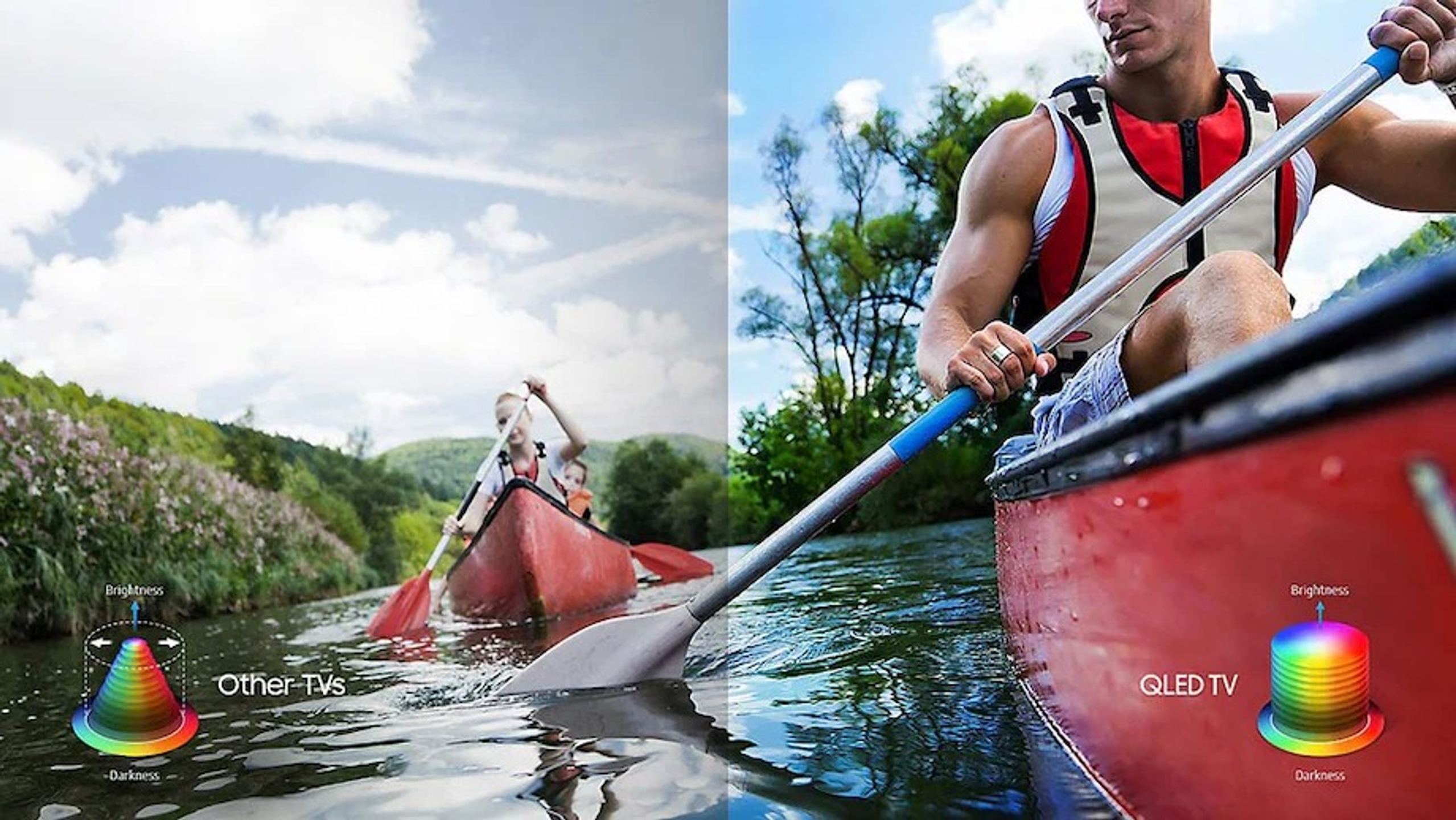
The QLED acronym refers to an LCD panel with an added quantum dot layer (the famous quantum dots), nanocrystals that, when excited by the backlight, reproduce purer and brighter colors than a traditional color filter. It is a real step forward in color reproduction, driven mainly by Samsung. It is also a marketing term: a QLED remains a backlit screen. Its quality therefore depends as much on the type of backlight behind the panel as on the quantum dot layer itself. An entry-level QLED lit by a few LEDs along the edge of the screen has very little in common, in terms of contrast, with a high-end model equipped with Mini LED backlighting.
Mini LED, more precise backlighting
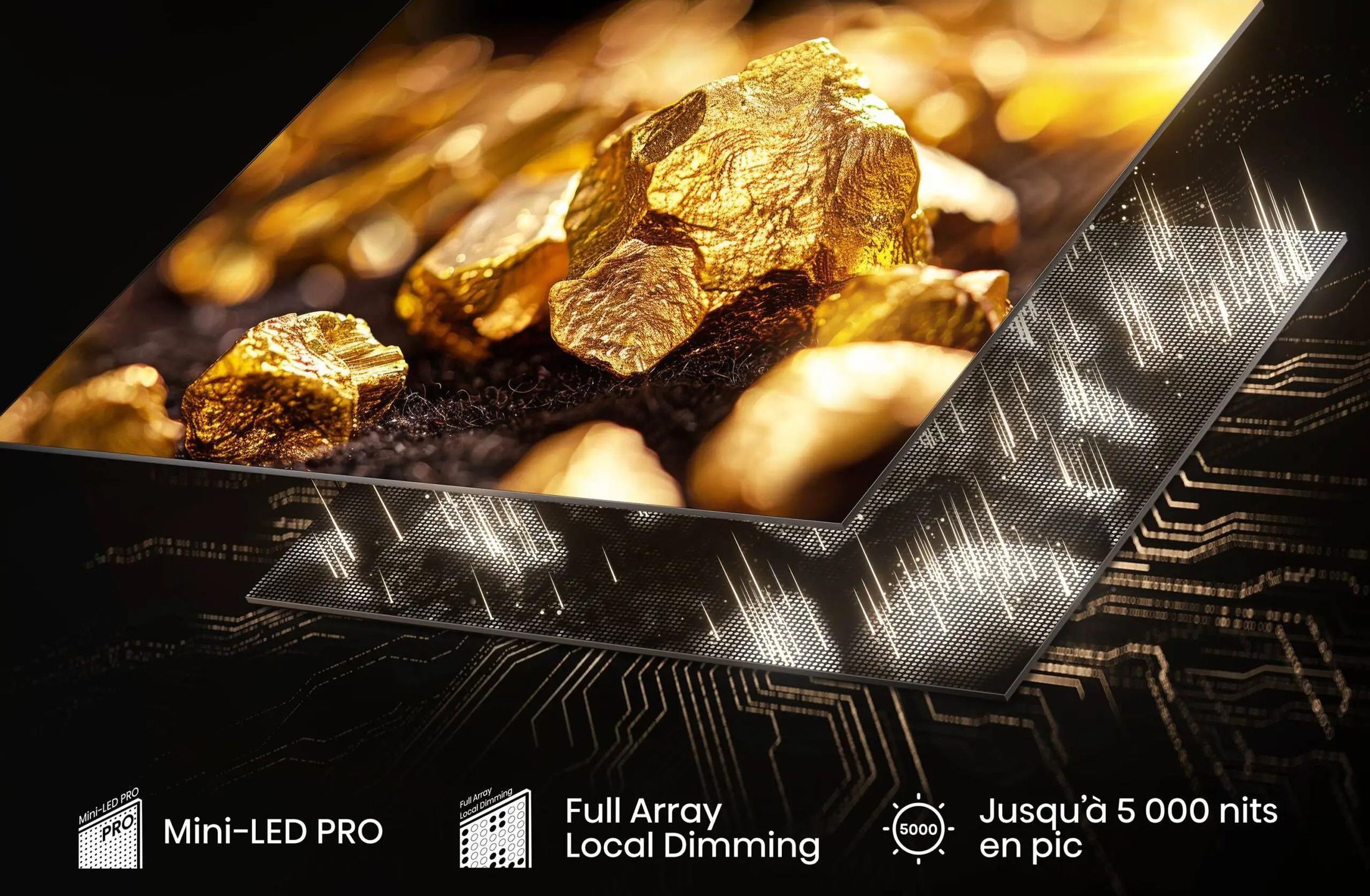
Mini LED does not change the nature of the screen, it changes its backlighting. Where a standard LCD TV relies on a few dozen large LEDs, a Mini LED panel lines up thousands of them, grouped into hundreds or thousands of independent dimming zones. Each zone brightens or darkens according to the image, bringing contrast closer to OLED without reaching its precision. A 2026 flagship model like the TCL QM8K exceeds 5,000 zones in its 85-inch version.
Each manufacturer has its own name for this combination of Mini LED and quantum dots: Neo QLED at Samsung, QNED at LG, ULED at Hisense. Behind these names, the same logic: lots of light, vivid colors, no risk of burn-in. The limitation lies in zone-based light control. On an isolated bright object in a dark scene, a slight halo (blooming) may appear, and uniform areas such as a stadium field sometimes reveal small lighting irregularities.
OLED and its absolute blacks
On an OLED panel, there is no backlighting: each of the millions of pixels produces its own light and switches off completely to display black. That is where its strengths come from, all tied to this self-emission. The contrast is said to be infinite, blacks remain perfect even in a very dark scene, viewing angles stay wide, response time is around 0.1 ms (the fastest on the market), and the panel is only a few millimeters thick.
Its weaknesses come from the same technology. Brightness, long OLED’s Achilles’ heel, used to top out far below the best LCDs, especially full-screen. Permanent burn-in remains possible when a fixed element, such as a channel logo or game interface bar, is displayed for hours on end, day after day. And the entry price remains higher. Only two manufacturers produce the OLED panels on the market: LG Display and Samsung Display. They share the same names as the consumer brands, but they are separate companies, and their two technologies do not work the same way.
Three OLED recipes: WOLED, QD-OLED, and tandem
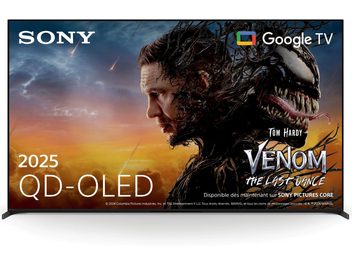
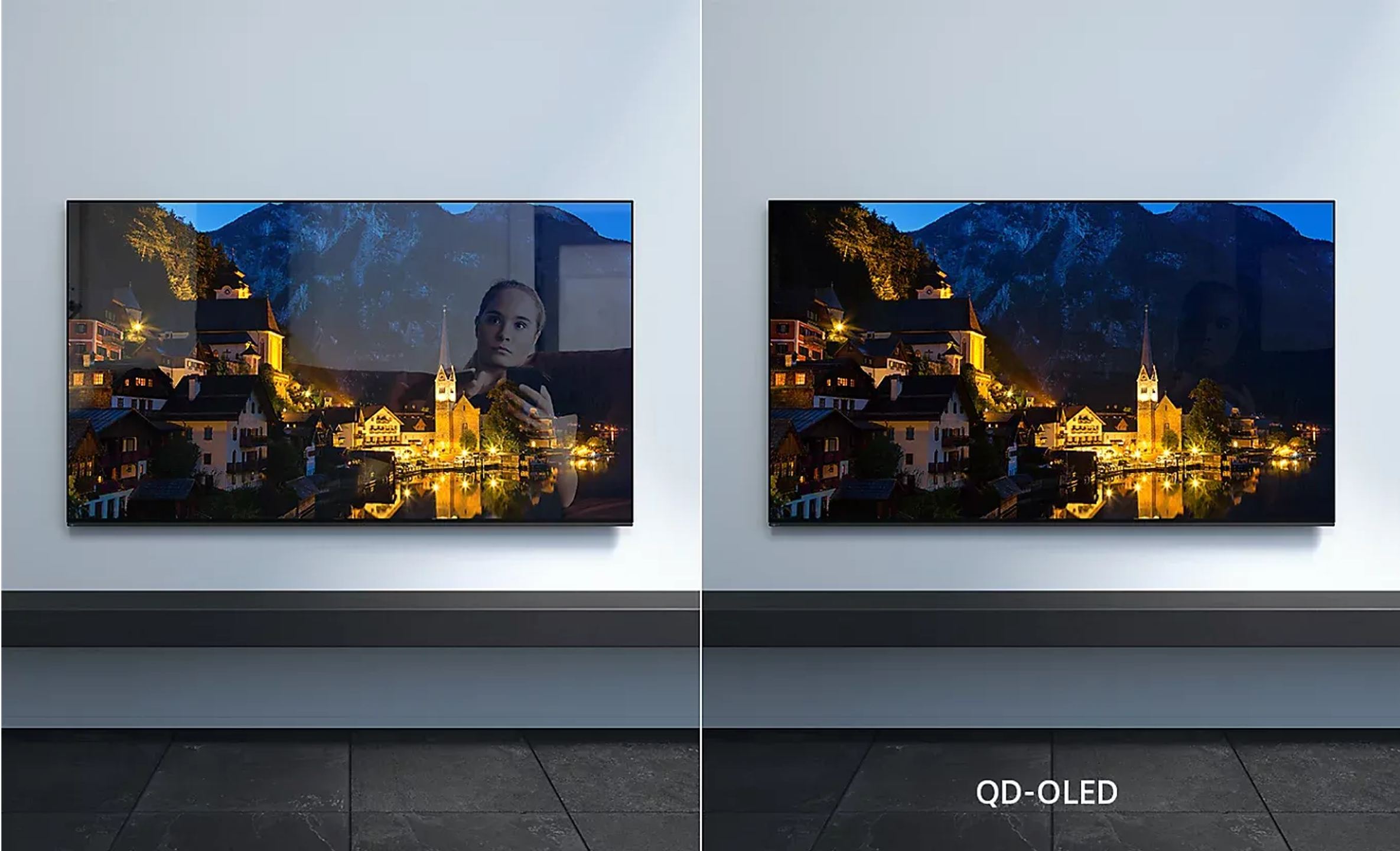
LG Display’s WOLED starts from filtered white light, with a white subpixel added to red, green, and blue to gain brightness. Samsung Display’s QD-OLED starts from blue light converted by a quantum dot layer, without a color filter. The result: more saturated colors, better color volume at high brightness, and even wider viewing angles. QD-OLED keeps one small flaw: in strong ambient light, its blacks rise slightly. Only Samsung and Sony market QD-OLED TVs, while LG, Panasonic, and Philips rely on LG Display’s WOLED panels.
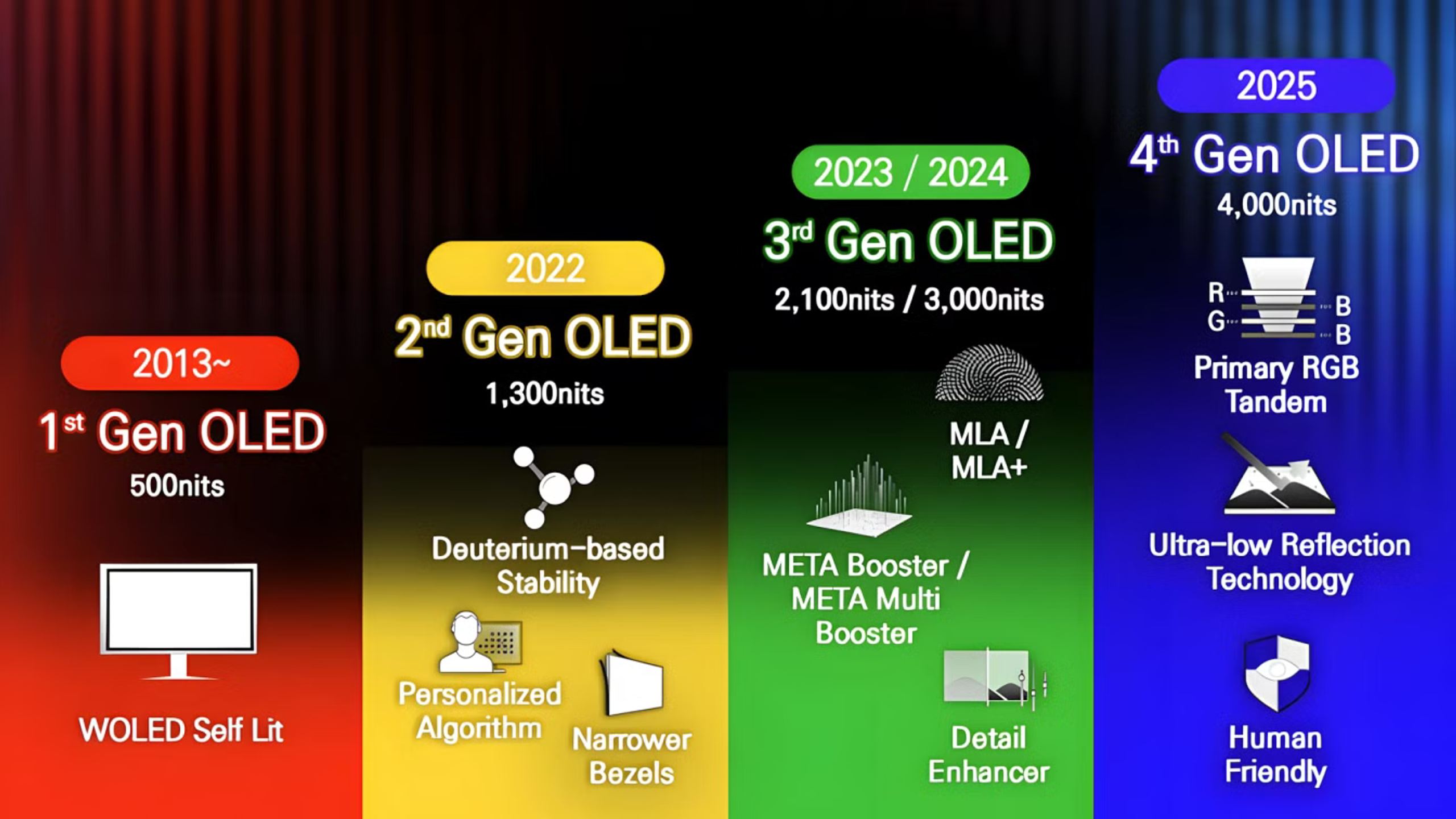
The new development of the last two years is called tandem. By stacking two emissive layers, LG Display has dramatically increased the brightness of its WOLED panels: the LG G5 from 2025 reaches around 2,400 nits peak, compared with nearly 1,650 nits on the 2024 G4, the biggest jump ever measured on a living room OLED. The 2026 generation, called Primary RGB Tandem 2.0, equips the G6 and gains even more brightness, with an anti-reflective treatment that halves perceived reflections according to LG. A sign that the technology is moving downmarket: the 77- and 83-inch LG C6 models inherit this tandem panel, while the smaller sizes keep a standard WOLED panel.
One detail to know before buying: on some mid-range references, the same series name can hide either a QD-OLED or WOLED panel depending on size or region. The Samsung S90F is a typical example, with QD-OLED on the 65-inch and WOLED on the 55-inch. It is better to check the exact panel of the model you are targeting.
RGB backlighting makes its debut
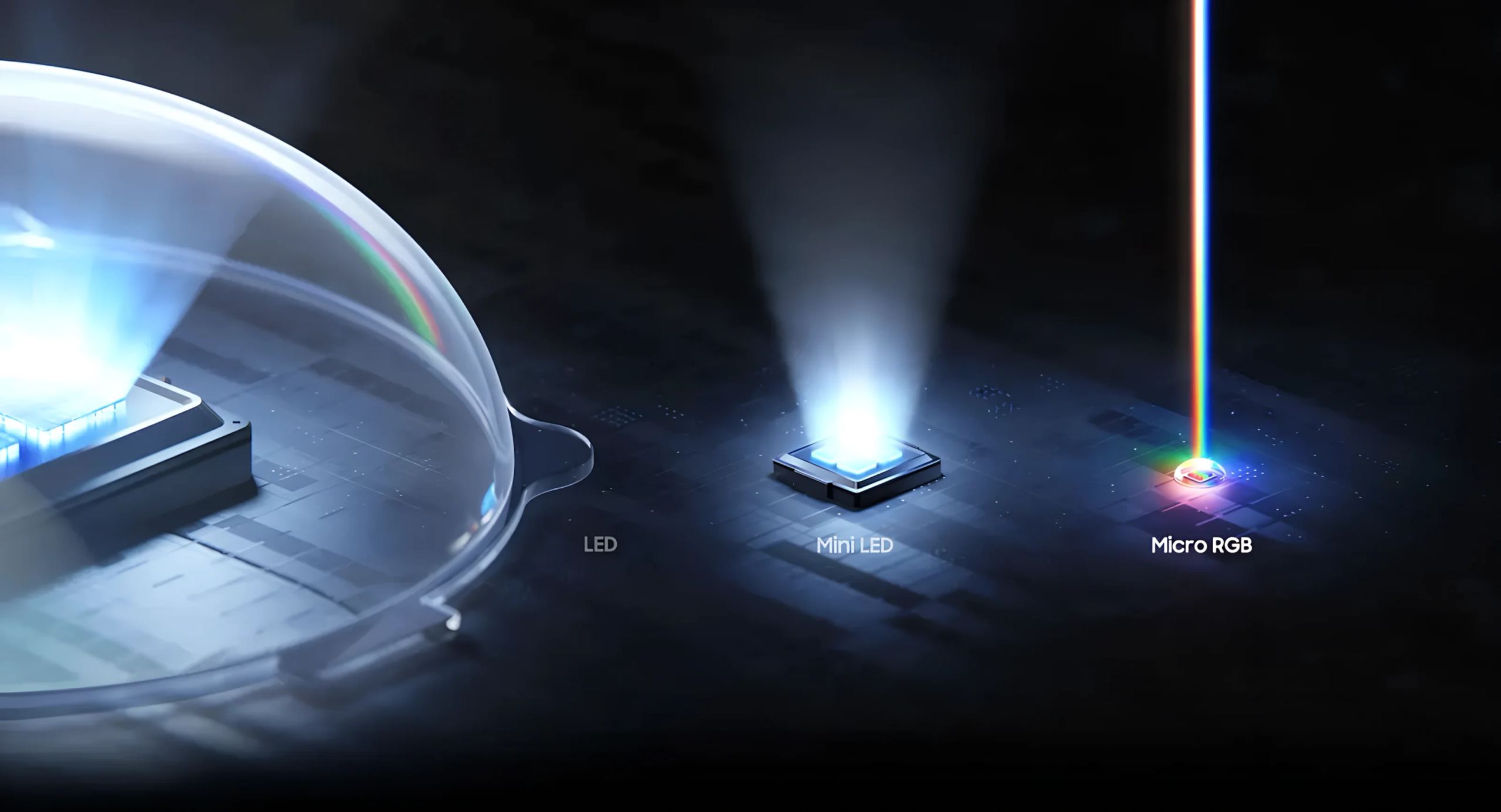
Since 2025, an LCD evolution has been settling into the high end: RGB backlighting. The principle is simple to state. Instead of lighting the panel with white or blue LEDs whose color is then corrected by a filter, the screen uses separate red, green, and blue LEDs, which produce the color directly at the source. Less wasted light, more saturated and brighter hues, finer control in dark scenes.
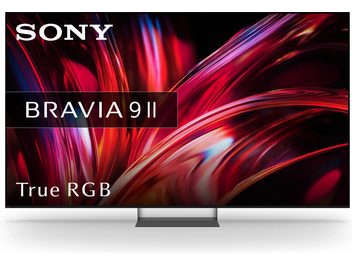
The gain is measured above all in color volume: these panels cover up to 100% of the BT.2020 space, the HDR color reference, whereas the best standard LCDs remain lower. All this with no risk of burn-in, since it remains a backlit LCD. Hisense led the way in 2025 and markets the technology under the name RGB Mini LED, with prices starting at around €1,500 in 55 inches for the UR8S series. Samsung talks about Micro RGB (LEDs smaller than 100 microns) on its R95H and R85H, Sony about True RGB on its Bravia 9 II and 7 II expected in June 2026, and TCL is preparing its own models. At Sony, the Bravia 7 II starts at around €1,799 in 50 inches, while the Bravia 9 II targets the very high end, up to a 115-inch version reserved for a handful of buyers.
One confusion should be cleared up. Despite its name, Samsung’s Micro RGB is not Micro LED: it is an LCD screen with RGB backlighting, not a self-emissive panel. The shortcut is easy, the technological gap is significant.
Micro LED remains out of reach
Micro LED, the real one, combines the best of both families: microscopic inorganic LEDs, driven pixel by pixel like OLED, but capable of reaching very high brightness (up to 10,000 nits) with no risk of burn-in. On paper, it is the endgame. In practice, the technology remains modular, limited to very large screen sizes and sold at prices that place it outside the regular home market. Samsung offers it under the name The Wall, and Hisense showed a 163-inch model with four primaries (red, green, blue, yellow) at CES 2026, still at the demonstration stage. For a living room, it is not an option in 2026, more a path for the years ahead.
Trade-offs to know before buying
No technology wins across the board, and that is what makes the choice interesting. For black levels and contrast, OLED and QD-OLED remain untouchable: a switched-off pixel reflects no light, something no zone-based backlighting can reproduce perfectly. For peak brightness, the advantage goes to LCD, whether Mini LED or RGB: the best models exceed 3,000 nits, Sony announces nearly 4,000 nits on its True RGB, while a tandem OLED tops out around 2,400 nits peak and much lower full-screen. In a very bright room, that light reserve matters for image readability.
Viewing angles favor OLED, whose image remains faithful even from the side, whereas LCD panels with a VA matrix lose contrast as soon as you move away from the center. For gaming, OLED keeps an almost instantaneous response time and therefore less motion blur, but Mini LED retains one advantage: with no risk of burn-in, it handles fixed interfaces and game HUDs without flinching. Both families now offer HDMI 2.1, VRR, and 4K at 120 Hz, or even 165 or 180 Hz on some recent models.
Burn-in itself no longer carries the same weight it once did. Built-in protections in 2026 (pixel shifting, logo dimming, automatic panel refresh) make the phenomenon rare in varied home use, and several manufacturers now cover burn-in with a three- to five-year warranty. Price remains the main factor shaping the decision: at the same size, a good Mini LED often costs 30 to 40% less than an OLED, entry-level OLED starts around €1,590 in 65 inches with the LG B5, and RGB backlighting, being newer, still comes at a premium. In terms of lifespan, both families exceed 50,000 hours, enough to last far longer than the TV will remain current.

Which technology for which living room
The right choice depends less on the spec sheet than on three concrete elements: the light in your room, your main use, and your budget.
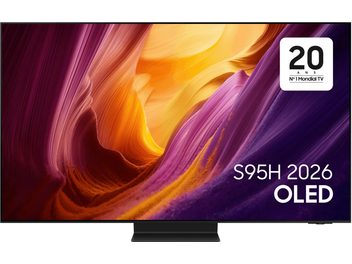
In a dark living room or a room dedicated to home cinema, OLED keeps a lead. A mid-range WOLED like the LG C5 delivers perfect blacks at a price that has become reasonable, while a QD-OLED (Samsung S95, Sony Bravia 8 II) will appeal to those looking for the boldest colors. It is also the best ground for gaming, provided you vary content to protect the panel.
In a room flooded with light, for sports or very large screen sizes, LCD regains the advantage. A good Mini LED (Neo QLED, QNED, Hisense U series) remains very comfortable in daylight and ignores burn-in, which makes it stress-free for news channels or interfaces displayed continuously. If color accuracy and range matter most and the budget allows, RGB backlighting pushes this reasoning further, at the cost of a still high entry price.
For a tight budget, two options make sense: a recent Mini LED, which offers most of the contrast and brightness for much less than an OLED, or a refurbished previous-generation OLED model, often superior to a new LCD sold at the same price. In both cases, a few points are worth checking: 4K resolution, at least one HDMI 2.1 port for a recent console, and a connected system still supported by updates.
| Situation | Recommended technology | Why |
|---|---|---|
| Dark living room, home cinema | OLED (WOLED or QD-OLED) | Perfect blacks, infinite contrast, smooth gaming |
| Bright room, sports | Mini LED or RGB backlighting | High brightness, no risk of burn-in |
| Large screen size at a controlled price | Mini LED | Lots of inches and brightness without OLED pricing |
| Maximum colors, high budget | QD-OLED or RGB backlighting | The widest color volume on the market |
| Tight budget | Recent Mini LED or refurbished OLED | Best value for money at purchase |
The 2026 landscape no longer has a single winner. High-end LCD panels are closing in on OLED in color and surpassing it in brightness, while OLED is gradually erasing its light deficit. So the right question is not which technology is the best, but which one matches your room, what you watch, and how much you are willing to spend on it. That is where perceived picture quality is decided, much more than by the acronym printed on the box.