Breaking in your new speakers: complete run-in guide
February 09, 2026
Contents
Breaking in new speakers: essential step or waste of time? Your new speakers come out of the box, you connect them, and the sound disappoints you: constrained bass, cramped midrange. Don’t panic. This phenomenon is normal. Speakers need a few dozen hours to unleash their potential. Here’s why, and how to proceed.
Why you need to break in a new speaker
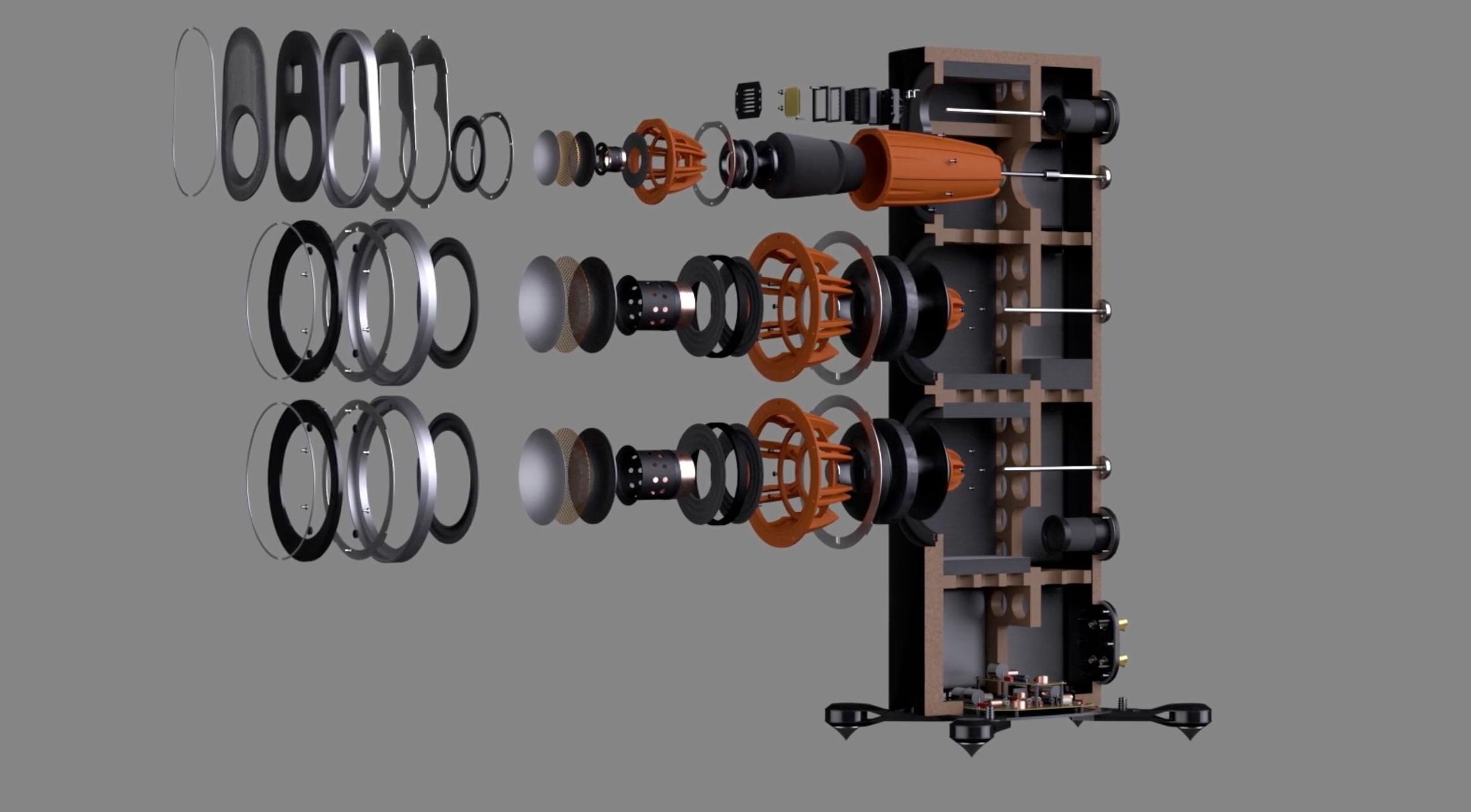
A speaker contains several moving parts: the diaphragm, the surround, and the spider. The latter, a corrugated component, keeps the voice coil centered in the magnetic gap. These elements are made from impregnated fabrics, rubber, treated paper, or foam.
When they leave the factory, these materials have a stiffness that does not correspond to their optimal operating state.
Dr. Jack Oclee-Brown, Vice President of Technology at KEF, describes the phenomenon: the fibers in impregnated textile surrounds stretch at a microscopic scale under mechanical stress. This process results in gradual softening. The same logic applies to spiders, whose compliance (flexibility) increases with use.
Speaker break-in: evidence through measurement
Danny Richie of GR-Research has documented these changes on several woofer models. His measurements show a significant evolution in Thiele-Small parameters, the technical characteristics that define a speaker’s behavior.
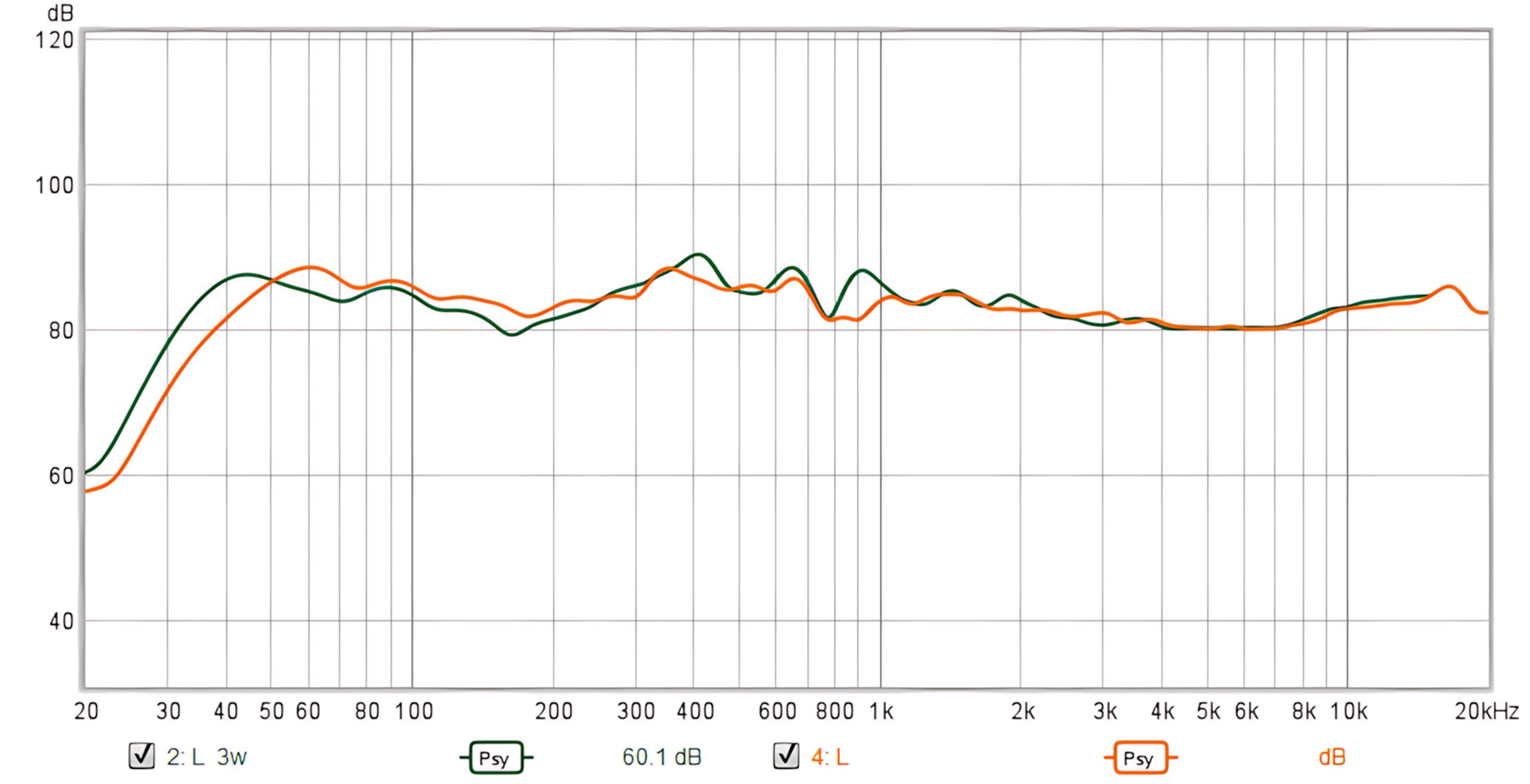
On an M-130 woofer, the resonant frequency (Fs) dropped from 56.35 Hz when new to 49.90 Hz after 40 hours of break-in. A decrease of more than 11%. The equivalent air volume (Vas) increased from 14.95 to 19.99 liters. These variations persist after complete cooling and do not return to their initial values.
Paul Roth, engineer at Credence Speakers, confirms: “Anyone who thinks a woofer’s parameters do not change with break-in is ignoring the data, has poor measurements, or does not break them in enough.”
The work of Wolfgang Klippel, a global reference in acoustic measurement, validates these observations. Mechanical fatigue in the surrounds results in increased compliance and reduced stiffness.
How break-in improves sound
These parameter changes translate into tangible acoustic performance. A lower resonant frequency means more generous low-frequency extension. Higher compliance allows the speaker to move more freely.
Dennis Murphy of Philharmonic Audio conducted a comparative test on Cambridge Audio Aero speakers. A sound engineer detected smoother bass reproduction from the broken-in speaker. It is in the bass range that changes in compliance have the greatest impact.
Sound reinforcement professionals observe the phenomenon in a tangible way. With subwoofers subjected to several kilowatts for dozens of hours, one technician reports: “After 20–30 hours of intensive break-in, you can feel the additional air being moved, with the softened surround allowing the cone to move more.”
Break-in duration: manufacturers’ recommendations
Manufacturers include break-in in their recommendations. Focal recommends at least around twenty hours, with continuous improvements up to 50 hours. Totem Acoustic mentions 50 to 300 hours depending on the models. Bowers & Wilkins includes break-in instructions in the manuals for its 800 Series.
Andy Kerr, Product Marketing Director at Bowers & Wilkins, compares the process to new leather shoes that need to soften. The mechanical components undergo real physical changes.
Manufacturers also measure their speaker parameters after break-in. Published specifications correspond to the stabilized behavior of the driver, not its initial characteristics. IEC 62459 defines protocols that take these effects into account.
| Speaker type | Break-in duration | Main sound impact |
|---|---|---|
| Woofer / Subwoofer | 50–100 hours | Deeper bass |
| Midrange | 30–50 hours | Increased clarity |
| Dome tweeter | 10–20 hours | Subtle |
| AMT / Ribbon tweeter | 50–100 hours | More airy treble |
Woofer, midrange, tweeter: what break-in for each speaker
Break-in does not affect all speakers in the same way. Woofers and midrange drivers, with their wide surrounds and significant excursion, show the most noticeable changes. Conventional dome tweeters, whose diaphragms have extremely small movements, change very little.
Materials play a role. Impregnated fabric surrounds require more time than rubber or foam ones. Polyglass diaphragms from Focal are designed to minimize these variations.
Udo Wohlgemuth, a speaker designer, notes that AMT (Air Motion Transformer) tweeters require around 100 hours. Their pleated diaphragms need to settle in properly. This observation also applies to ribbon tweeters and high-end soft domes.
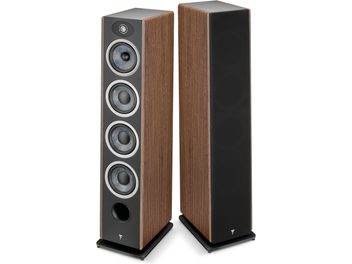
→ Discover floorstanding speakers
How to effectively break in your new speakers
Break-in requires no complex procedure. Listen to a variety of music at moderate levels during the first few dozen hours. Tracks rich in bass effectively work the surrounds.
Avoid turning the volume all the way up right after unboxing. The still-stiff surrounds limit the speaker’s maximum excursion. Forcing them could cause damage. Gradually increase the level over the following days.
Some users speed up the process with pink noise while they are away. This approach works, but listening to music achieves the same thing, more pleasantly.
Break-in generally stabilizes after 50 to 100 hours. Beyond that point, variations become marginal.
Break-in or auditory adaptation: the verdict
The argument of “brain burn-in,” the listener’s adaptation to the new sound, exists. But it does not invalidate the mechanical phenomenon. The two coexist.
Changing Thiele-Small parameters have calculable acoustic consequences. A 10% drop in resonant frequency and a 30% increase in Vas result in different bass behavior. This is particularly audible in bass-reflex speakers, where port tuning depends directly on these parameters.
Your new speakers are not defective. Allow for 50 to 100 hours of normal listening. The surrounds will soften, bass extension will improve, and you will finally enjoy the full potential of your speakers. Start your favorite playlist and let it happen.
Frequently Asked Questions
How long does it take to break in new speakers?
Between 50 and 100 hours of listening at moderate volume for most models. Large-diameter woofers and fabric surrounds may require more.
Is speaker break-in a myth?
No. Thiele-Small parameters (resonant frequency, compliance) change measurably with use. These changes affect bass reproduction.
Should you use pink noise to break in your speakers?
It is not mandatory. Listening to a variety of music at a moderate volume has the same effect, and it is more enjoyable.
Does break-in also apply to tweeters?
Classic dome tweeters change very little. AMT and ribbon tweeters, with their pleated diaphragms, benefit more from break-in (around 100 hours).
Can new speakers be damaged by turning up the volume?
Yes. The still-stiff suspension limits maximum excursion. Pushing the volume right out of the box may damage the speakers. Gradually increase the level.