

What Is a DAC and Why Do You Need One?
February 13, 2026
Contents
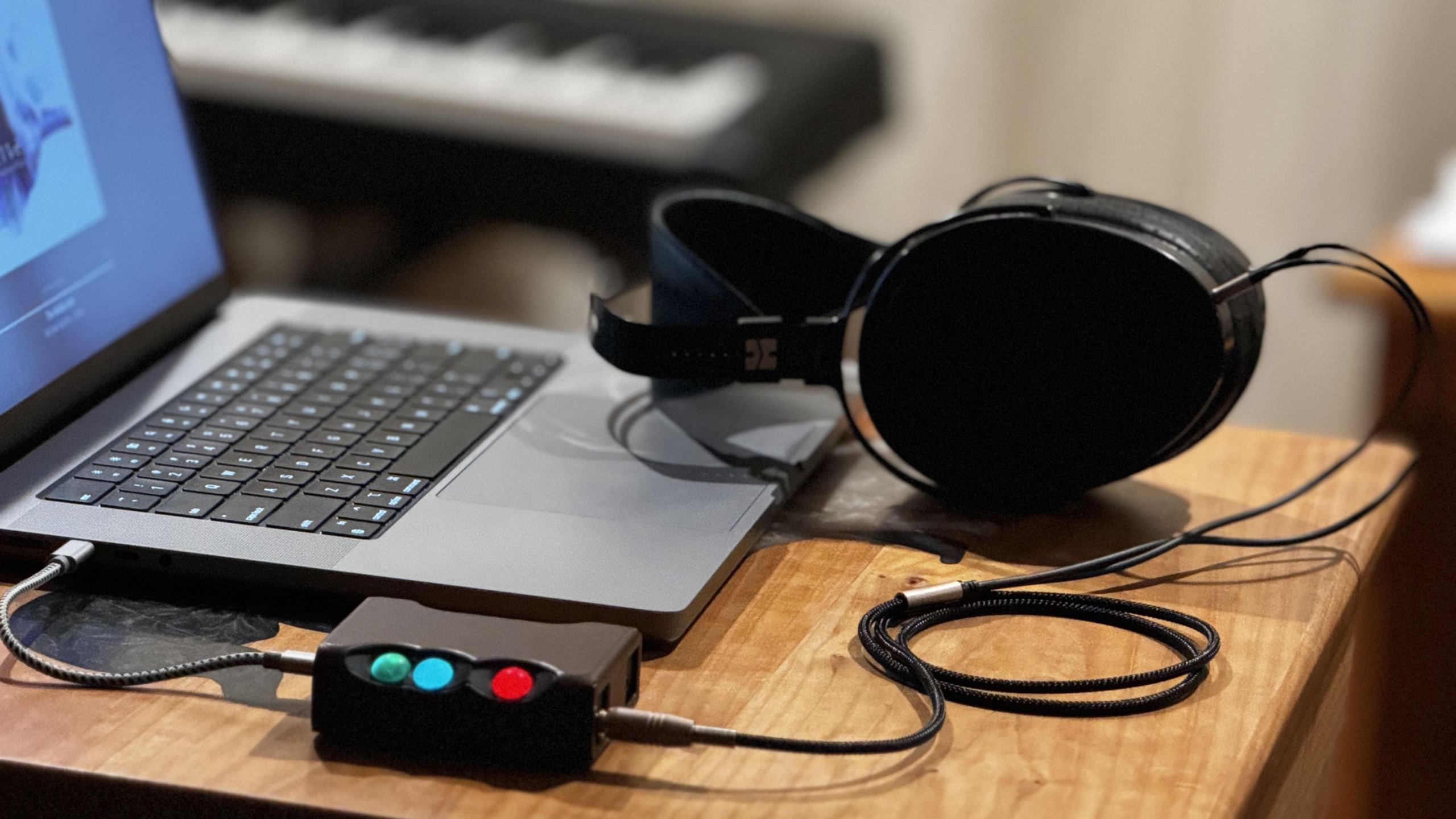
Your phone contains a DAC. So does your computer. Your television, game console, Blu-ray player: they all include a digital-to-analog converter. You use several of them every day without knowing it. So why spend money to buy another one? Because not all DACs are created equal, and the one in a multipurpose device almost always leaves some of the music by the roadside.
What is a DAC, or digital-to-analog converter?
DAC stands for Digital-to-Analog Converter. Any music stored in digital form (a CD, a FLAC file, a Spotify, Qobuz or Apple Music stream) is nothing more than a sequence of 0s and 1s. A headphone or speaker, on the other hand, works with an analog signal: an electrical voltage that varies continuously to move a diaphragm and recreate sound waves. The DAC’s role is to translate this binary data into a voltage that can be used by your headphones or speakers.
The sound path follows a mirror logic. In the studio, a microphone captures sound waves, and an analog-to-digital converter (ADC) turns them into data. This data is stored, compressed and distributed. During playback, the path is reversed: the DAC reconstructs an analog signal, which goes to an amplifier, then to your transducers.
A CD stores 44,100 samples per second at 16 bits: this is the famous 16-bit / 44.1 kHz format. High-resolution files go up to 24-bit / 96 kHz, or even 192 kHz, which means describing the signal with greater precision and a wider dynamic range. DSD, used by SACDs, is based on another principle: a single bit at a very high frequency. Whatever the format, a digital-to-analog converter must be involved to make it audible.
Why an external DAC changes sound quality
Every digital device already contains a DAC, but these integrated chips are compromises. In a smartphone, the same tiny circuit handles the processor, GPS, modem, screen and camera. Audio conversion therefore shares its electrical environment with dozens of components that emit electromagnetic noise. The resulting signal remains functional, but it leaves out some of the information contained in the recording.
A dedicated external DAC has only one task: to convert the signal as faithfully as possible. Its power supply is better filtered, its analog circuits are isolated from digital noise, and its clock is more stable. The improvement is first noticeable in instrument separation, vocal texture and the clarity of note attacks.
Do you need an external DAC in every case? No. For compressed streaming listened to in a noisy environment with basic earphones, your phone’s converter is more than sufficient. The difference becomes audible when several conditions are met: a good-quality recording, headphones or speakers capable of reproducing it, and quiet listening. That is when a dedicated component is justified.
Jitter, the silent enemy of digital sound
Jitter refers to the tiny timing variations of the clock that controls conversion. A DAC set to 44.1 kHz should produce one sample every 22.7 microseconds, with perfect regularity. In practice, slight shifts, on the order of a few picoseconds, distort the reconstructed wave. The result can be heard as a loss of definition and sound that seems slightly veiled.
Two approaches limit this flaw. On the one hand, asynchronous USB DACs use their own clock rather than synchronizing with the often mediocre clock of the computer: the converter sets its own pace and requests data as needed. On the other hand, the quality of the internal clock makes all the difference. On a high-end converter such as the Rockna Wavedream, the in-house clock system reaches around 300 femtoseconds of jitter, or one millionth of the value that starts to cause problems. This is one of the areas where the gap between an entry-level DAC and a serious model is determined.
Delta-sigma or R2R DAC: what is the difference?
Two major families of digital-to-analog converters coexist on the market.
Delta-sigma DACs are by far the most widespread. ESS, AKM, Texas Instruments and Cirrus Logic all produce chips of this type. The principle is based on oversampling: the signal is first raised to a very high frequency, then filtered, which pushes noise outside the audible band. On paper, measurements are excellent, with a very high signal-to-noise ratio and very low distortion.
R2R DACs, also called multibit DACs, take the opposite route. They convert each sample directly, using a network of precision resistors, without oversampling. This approach requires extremely close matching of components, making it more expensive to manufacture. Many recent models also offer a choice between two modes: NOS (Non-Oversampling), which retains the original frequency, and OS (Oversampling), which oversamples the signal before conversion. You can therefore compare both by ear and keep the one that suits you.
In practice, build quality matters as much as the chosen principle. A well-designed delta-sigma can sound more engaging than a mediocre R2R, and the reverse is also true. Another piece of good news: R2R is no longer reserved for the very high end. A desktop DAC / headphone amplifier such as the FiiO K13 R2R makes this technology accessible for a few hundred euros, whereas it once required a much larger budget.
USB dongle, portable DAC or desktop DAC
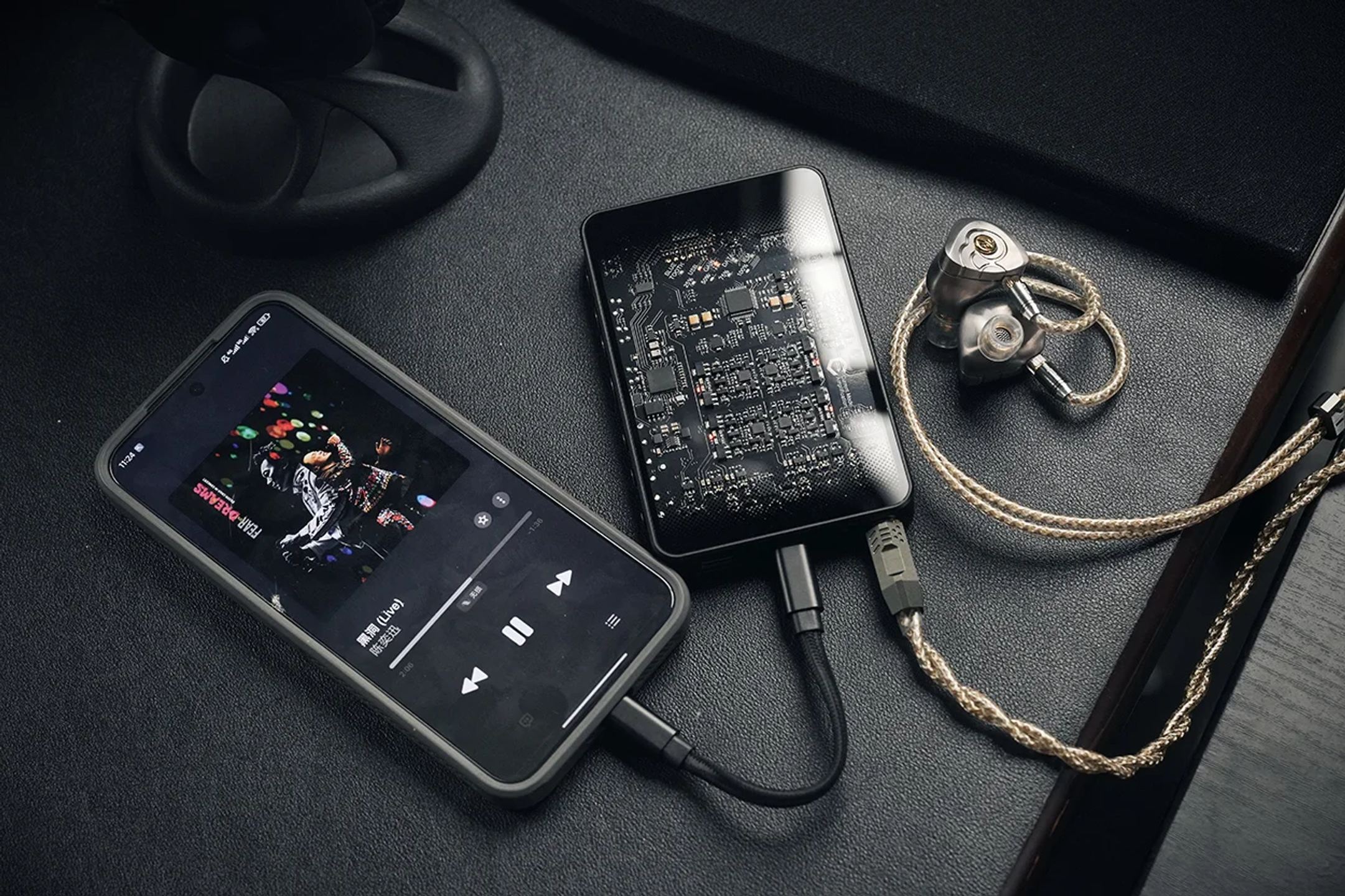
USB dongles are the most compact and affordable option. The iFi GO Link, at a few dozen euros, fits between your phone and headphones and takes up no more space than a cable. It draws power from the device’s USB port, which may reduce its battery life somewhat, but it is the simplest gateway to hearing what a true DAC brings.
Portable DACs also include a headphone amplifier, and often a battery. The Chord Mojo 2, at €499, relies on a programmable FPGA circuit rather than an off-the-shelf chip: this allows the brand to design its own digital filters, with a very large number of calculation coefficients. The 4.4 mm version, introduced in late 2025, adds a 4.4 mm headphone output and USB-C charging. Note: this 4.4 mm output remains internally single-ended, with conversion performed at the socket; it mainly provides compatibility with modern cables rather than an electrical gain.
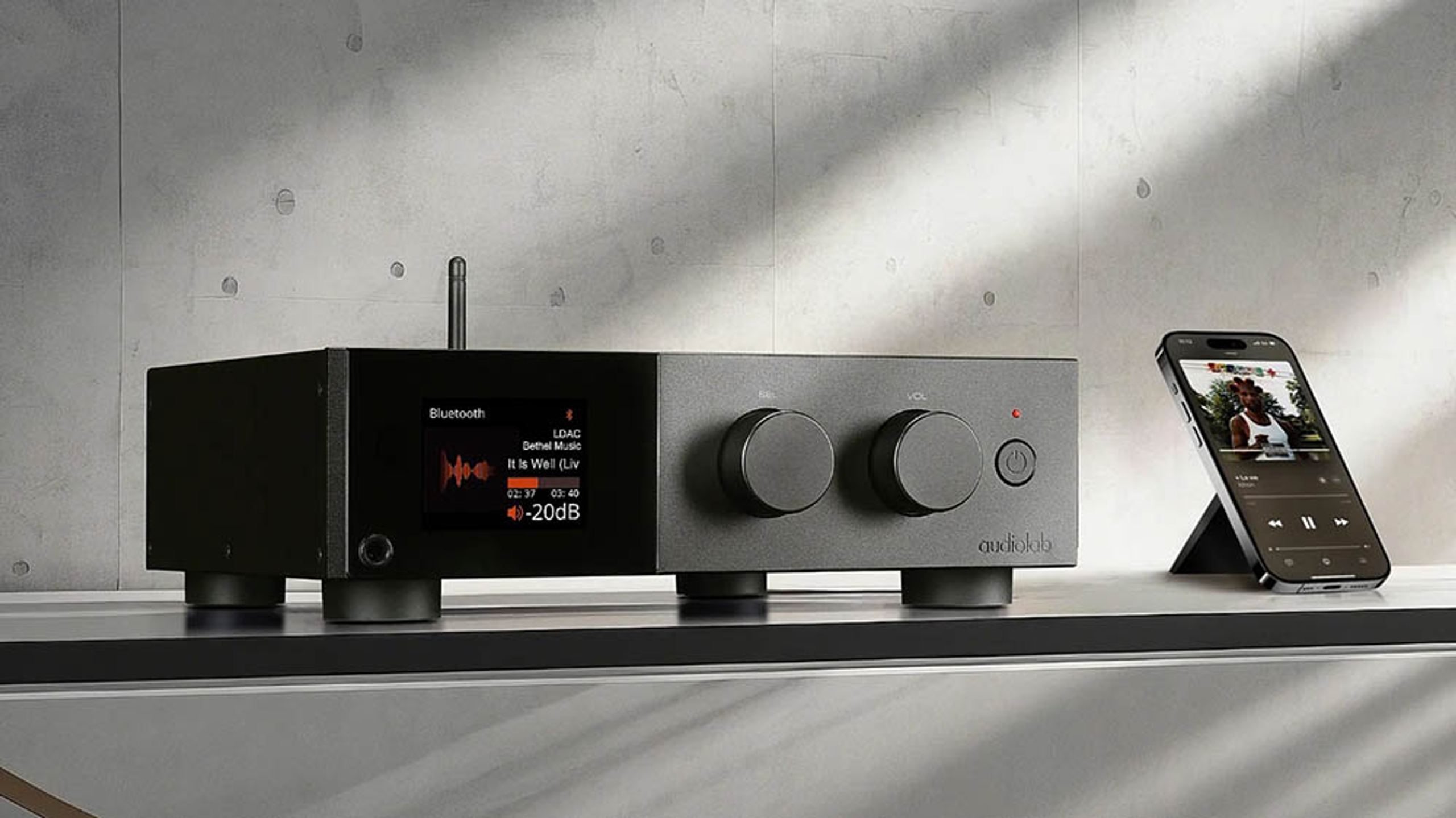
Desktop DACs are designed for a fixed setup. They offer more inputs (USB, optical, coaxial) and better outputs (single-ended RCA, balanced XLR), often with a headphone output. The Audiolab D7 is a good illustration of this category: an ESS Sabre chip supported by a dedicated power supply and precision clock, support for up to 32-bit / 768 kHz PCM and DSD512, plus Bluetooth reception for everyday use.
At the top end, brands such as Rockna design their entire converter from A to Z, including discrete resistor networks, digital filters and clock management. The gains at this price level become subtle, but the finish, connectivity and longevity justify the investment for some listeners.
How to choose a DAC: the criteria that matter
Format compatibility is the first filter. For streaming (Spotify, Apple Music, Tidal, Qobuz), a converter capable of handling 24-bit / 192 kHz PCM covers most needs. DSD is only worthwhile if you already own a library in this format, and MQA decoding is only useful for Tidal subscribers attached to this format.
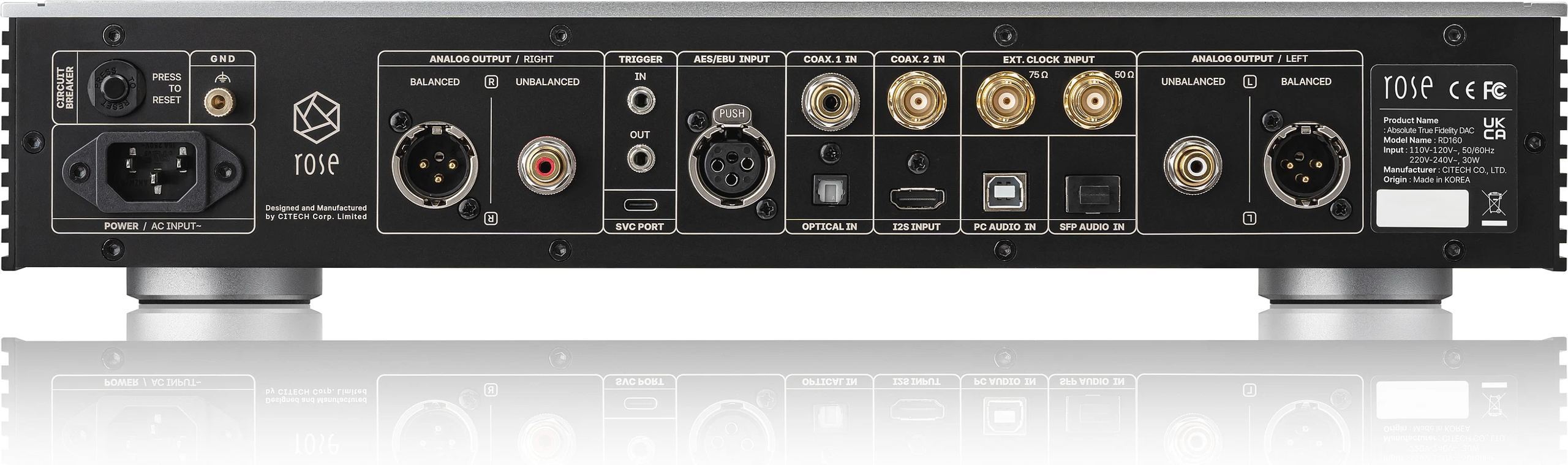
Connectivity must match your system. Check the inputs (USB for a computer or phone, optical and coaxial for a television or player) and outputs (RCA or XLR to an amplifier, headphone jack if you listen through headphones). A DAC that is perfect on paper is useless if it cannot connect to your equipment.
Finally, the price should remain proportional to the rest of the system. A €1,000 DAC used with €30 earphones will not deliver a matching result: balance between components is what matters, not the performance of a single device. To get started, a USB dongle between €50 and €80 is enough to judge the difference with your own music. If the result convinces you, a desktop DAC between €100 and €300 lets you build a real system around it, with room to upgrade headphones or amplification.
To go further, two guides complement this one: our comparison of portable DACs 2026, to choose a portable model according to your headphones, and our guide Which external DAC around €500 should you choose?, which compares several models side by side. You can also browse our selection of portable DACs, headphones and earphones and headphone preamps.
Frequently asked questions about DACs
What is the difference between an integrated DAC and an external DAC?
An integrated DAC is the conversion chip found in your phone, computer or television. An external DAC is a dedicated device, with a filtered power supply and isolated circuits, providing a cleaner, more detailed signal.
Does a DAC really improve sound quality?
Yes, provided you use good-quality headphones or speakers and little or no compressed files. The improvement is mainly in detail, instrument separation and overall clarity.
Which DAC should you choose for headphones?
A model with an integrated headphone amplifier is the most practical. A USB dongle costing a few dozen euros is suitable for getting started; a portable DAC such as the Chord Mojo 2 offers a significantly higher level and drives more demanding headphones.
Do you need a DAC to listen to Spotify or Apple Music?
It is not essential for compressed streaming. An external DAC provides an audible benefit mainly with lossless subscriptions, such as Apple Music Lossless or Tidal HiFi, combined with good headphones.
R2R or delta-sigma: which is best?
Neither is inherently better. Delta-sigma generally delivers better measurements, while R2R follows a more direct approach. Build quality matters more than the technology itself, and a model with NOS and OS modes lets you compare for yourself.
You may also like to read
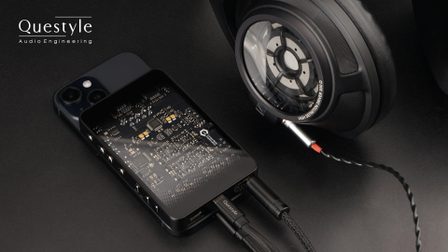 Questyle Sigma: a portable DAC with a headphone amp that changes the gameHi-fi and home cinema news
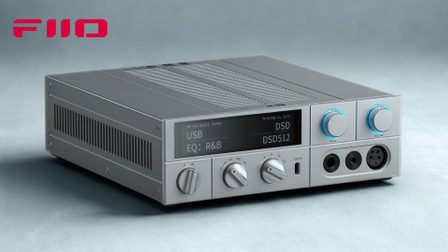 FiiO K15: a desktop DAC that combines versatility, power, and retro aestheticsHi-fi and home cinema news
 FiiO: from audiophile music players to portable DACs, the rise of an essential brandConcepts and technologies
 Audiolab D7 and D9: new generation of ultra-comprehensive mid-range DACsHi-fi and home cinema news




