Frederic
Very good value for money, Audiolab at the top
Comment from July 02, 2026 — Experience from April 04, 2026
Automatically translated — Show original (French)
Trés bon rapport qualité prix, Audiolab au top


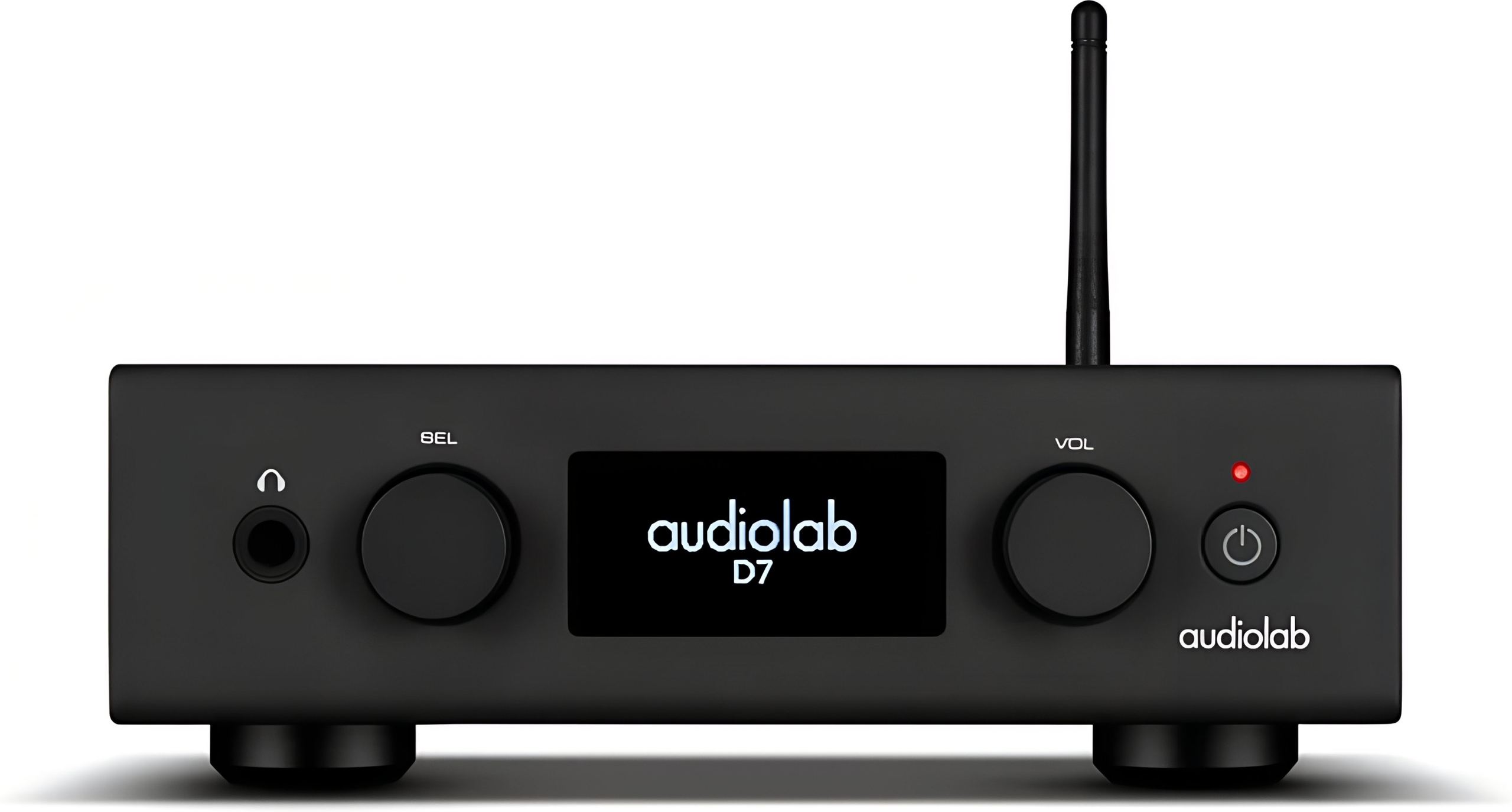
The Audiolab D7 marks Audiolab’s return to the dedicated DAC converters segment, thirteen years after the resounding success of the M-DAC. This new model draws on the technical heritage of the 6000 and 7000 series to offer a converter that transcends its price category. Designed as a true digital audio hub, the D7 features the ES9038Q2M chipset from the brand’s high-end amplifiers, paired with exceptionally rich connectivity and user flexibility that adapts to any audio system.
The D7 builds on thirteen years of expertise accumulated since the original M-DAC, incorporating technological advances developed for the 6000 and 7000 amplifier series. This approach allows Audiolab to offer a converter that benefits from the same technologies as more expensive products, while maintaining an accessible price point.
The design philosophy prioritizes implementation quality over the race for specifications. Rather than using a more expensive DAC chipset, Audiolab chose to optimize the ES9038Q2M environment with proprietary circuits, a precision clock, and dedicated power supplies. This approach reflects the brand’s technical maturity and its understanding of the real challenges in digital-to-analog conversion.
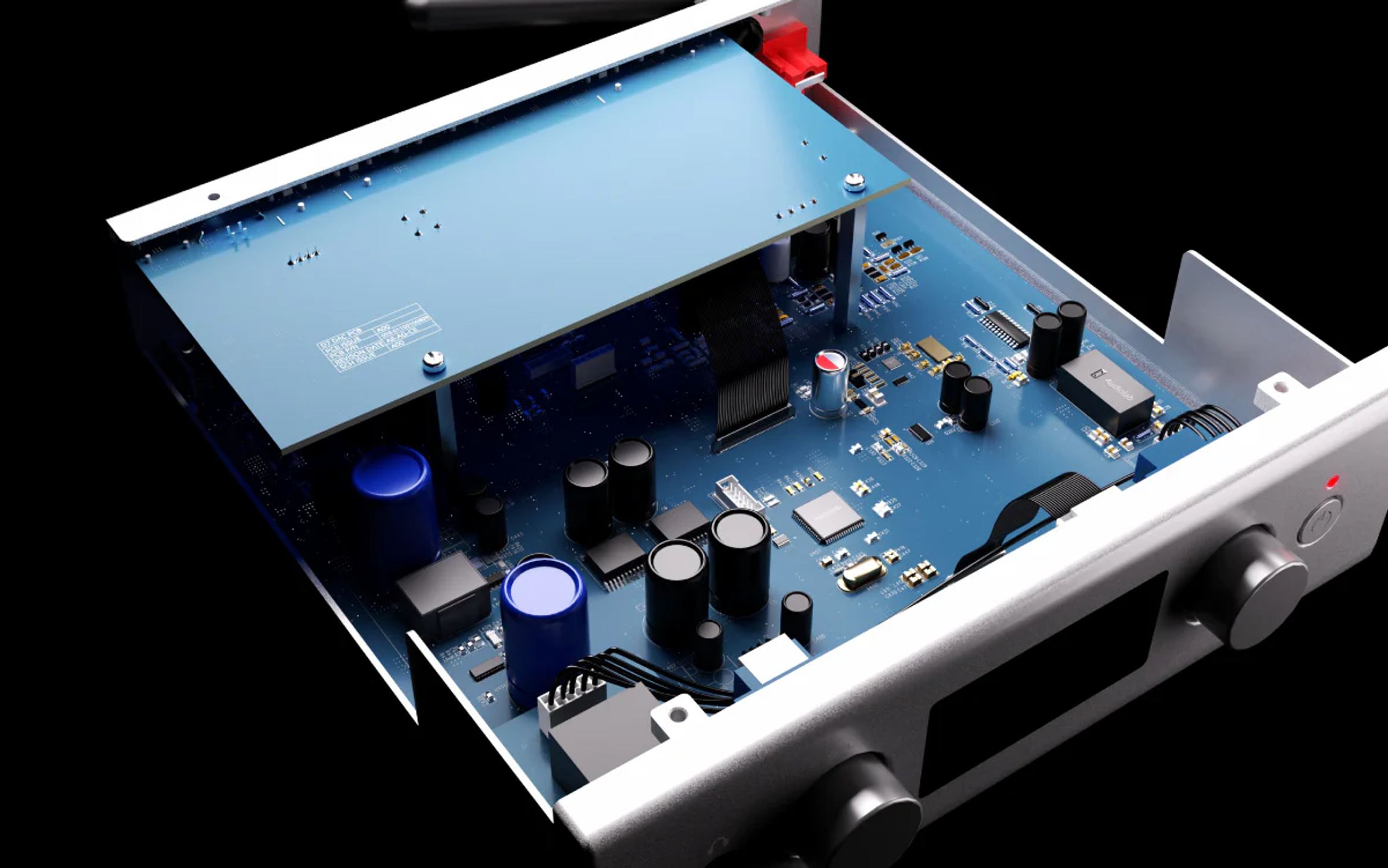
At the heart of the D7 is the ESS Sabre ES9038Q2M chipset, the same one found in the 7000A and 6000A MkII amplifiers. This choice is no accident: it demonstrates Audiolab’s confidence in this converter and its ability to fully exploit its potential. ESS Technology’s HyperStream II architecture is paired with the Time Domain Jitter Eliminator system to ensure optimal jitter elimination.
The D7’s originality lies in its Class A active post-DAC filtering, a key element for final sound quality. This approach preserves the integrity of the analog signal right from the converter’s output, avoiding degradation from less refined output circuits. Independent power supplies for each critical section, powered by an external block, ensure optimal isolation from electrical interference.
The D7’s tonal flexibility is a major asset. Five DAC filter profiles allow you to tailor playback to the nature of the source material, especially useful given the variable quality of digital files and streaming platforms. Optional upsampling up to 384 kHz offers further customization for listeners who wish to experiment.
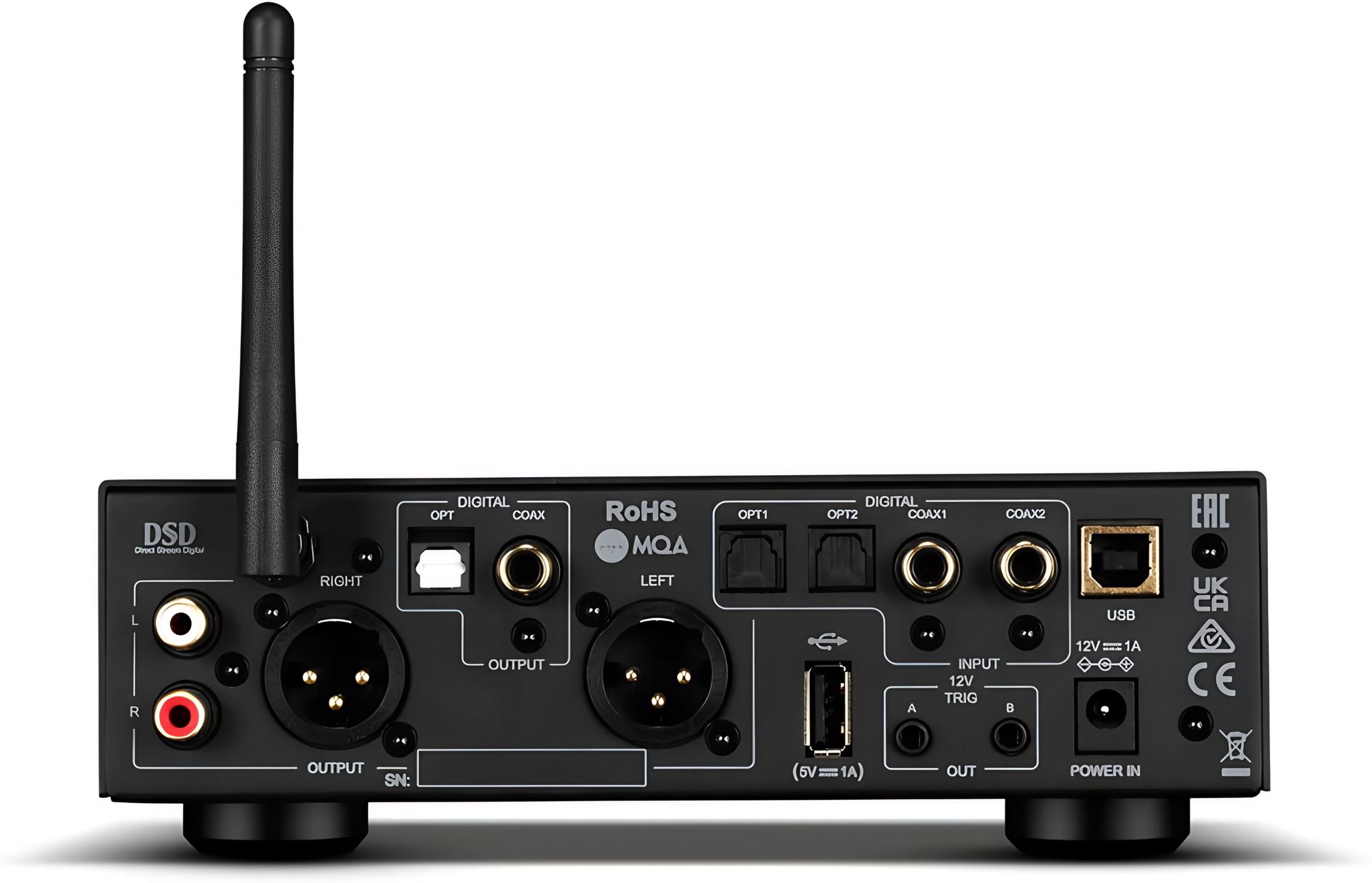
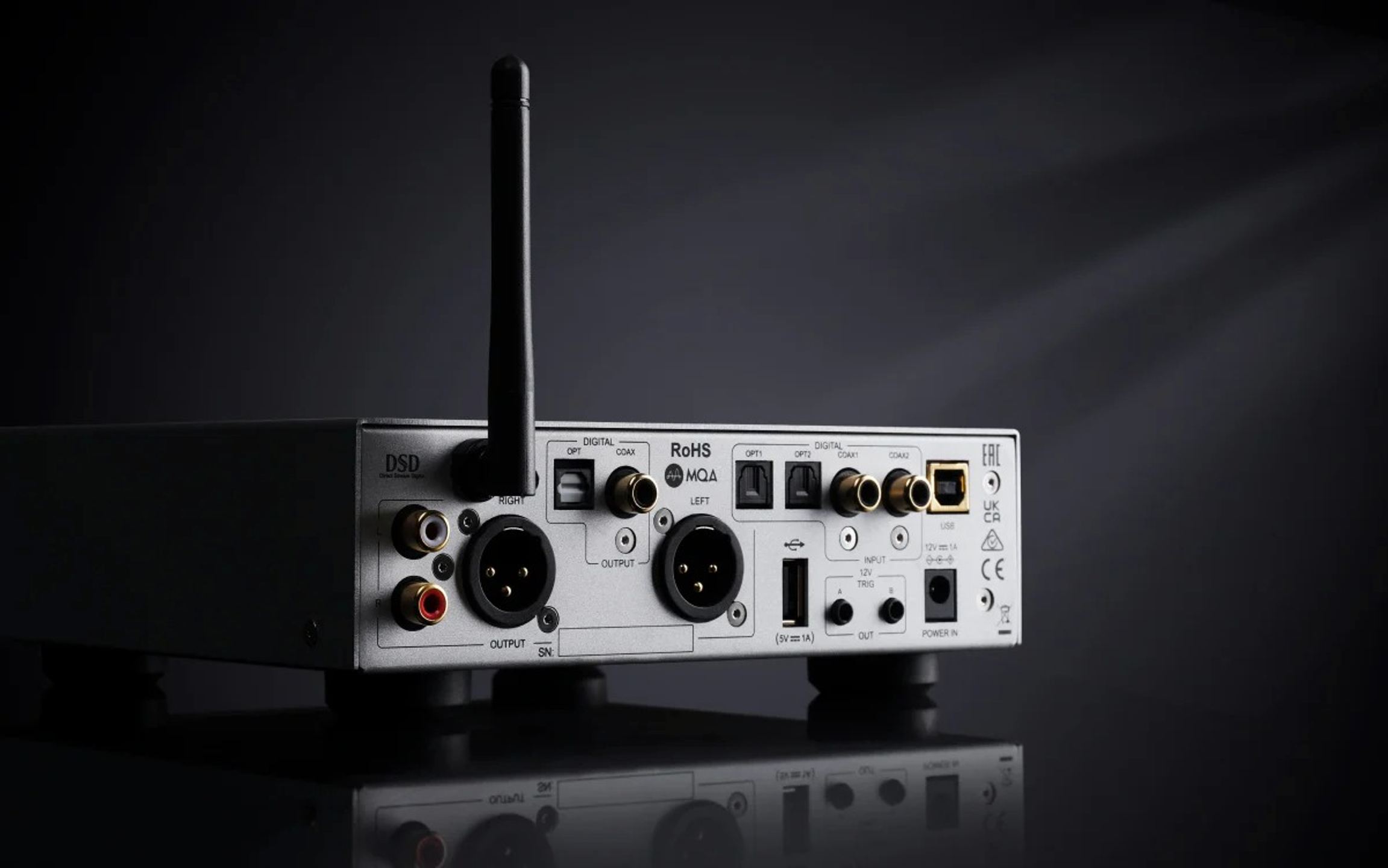
The D7 stands out with particularly rich connectivity for its price range. The USB-B input accepts PCM signals up to 768 kHz and DSD512, placing this converter on par with market benchmarks in terms of high-resolution compatibility. Four S/PDIF inputs (two optical and two coaxial) allow multiple digital sources to be connected simultaneously.
The originality of the USB-A port is worth highlighting: it allows direct connection of USB storage devices, turning the D7 into a standalone player. This feature, rare at this price point, eliminates the need for a computer to play stored files. Navigation is handled via the integrated OLED screen, making this use perfectly intuitive.
Bluetooth 5.1 connectivity with aptX HD support rounds out the reception options. This feature, often overlooked on audiophile converters, enables modern, mobile use without compromising transmission quality. The two 12V trigger outputs allow synchronization with other equipment, a thoughtful touch for system integration.
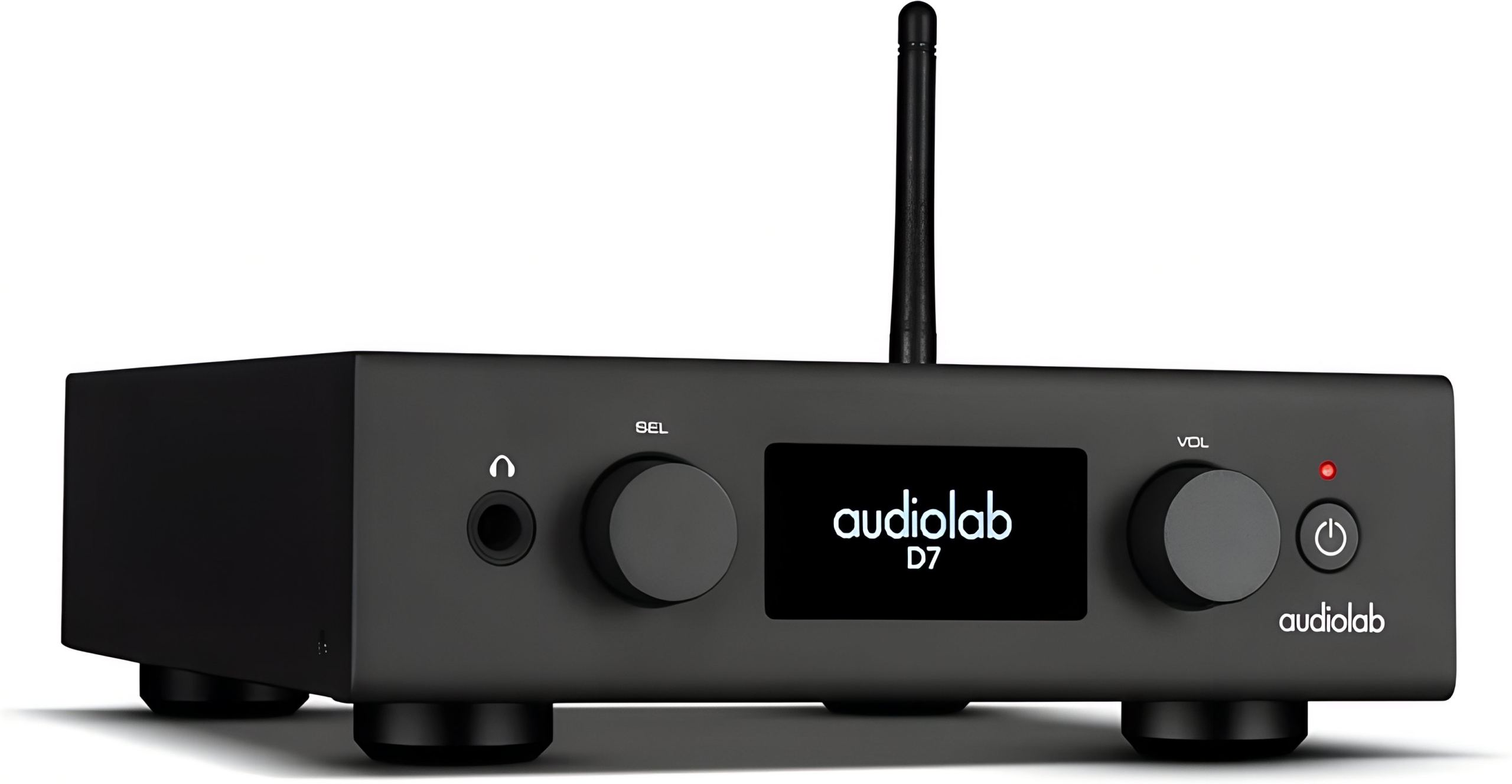
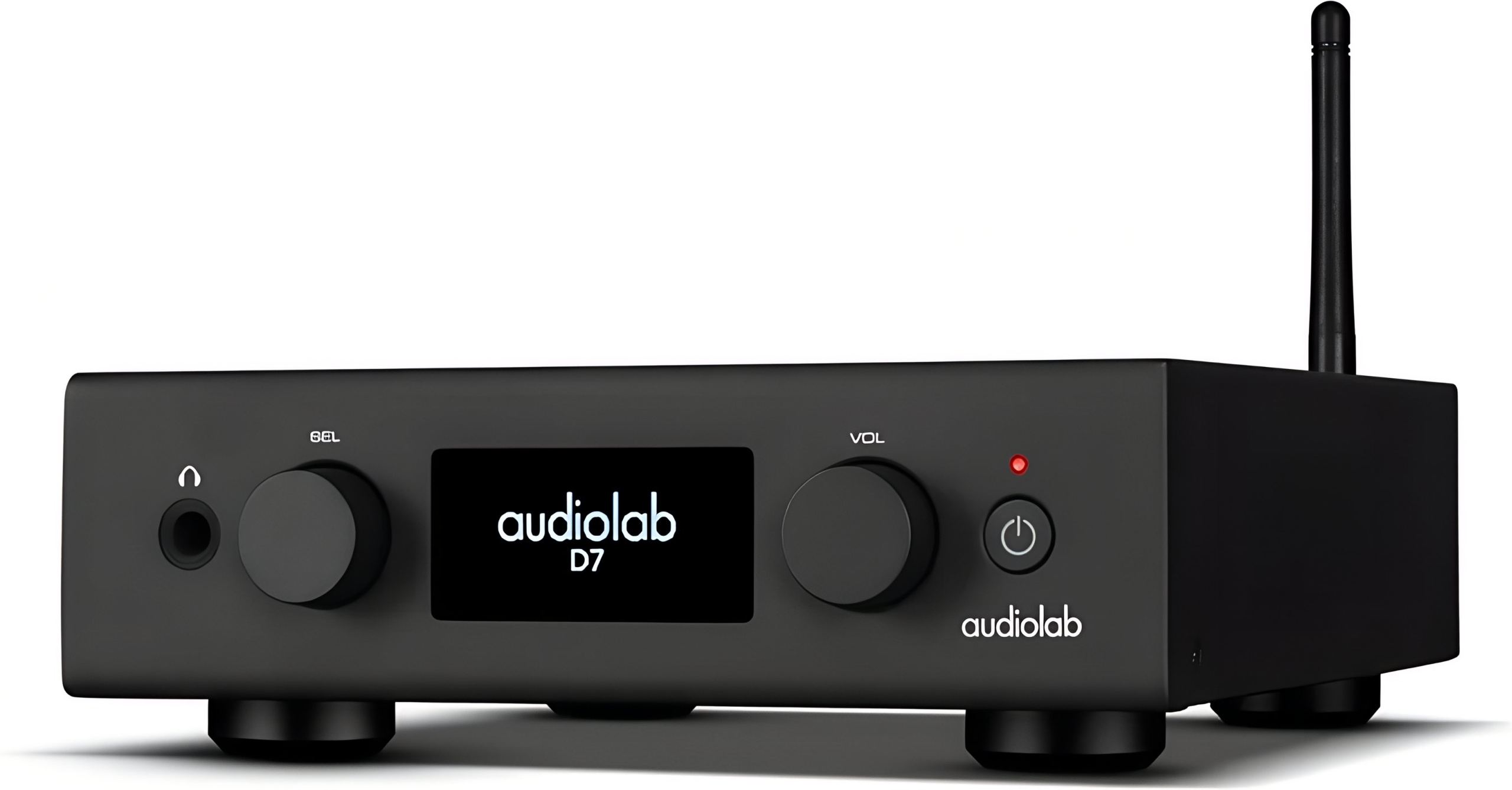
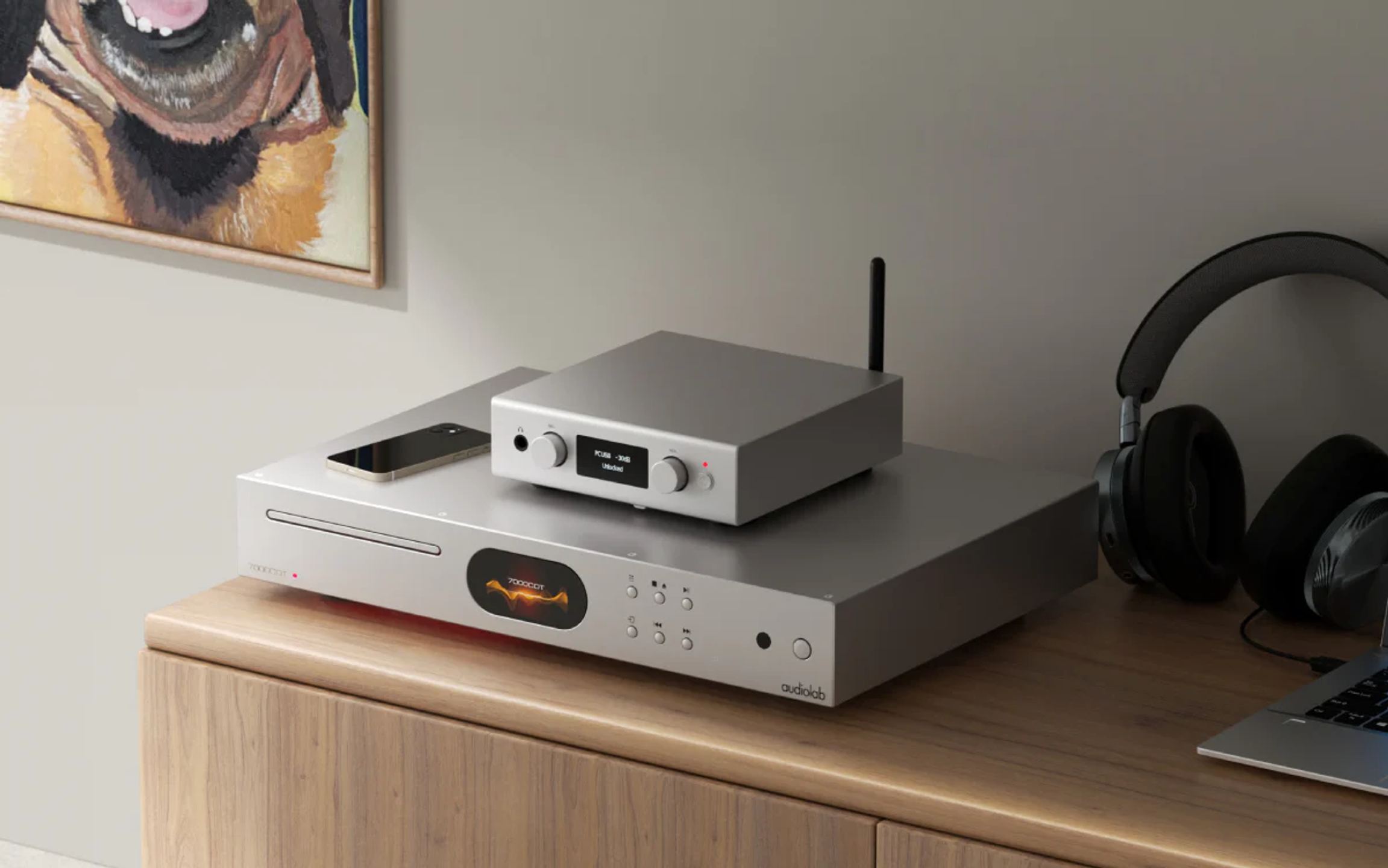
The D7’s user interface benefits from careful design, with a monochrome OLED screen offering optimal readability and intuitive navigation. The included remote control allows full operation without having to get up, a welcome detail in a living room audio system.
Versatility of use is a major strength. The analog outputs can operate in fixed mode for connection to a preamplifier or integrated amplifier, or in variable mode for direct connection to a power amplifier or active speakers. This flexibility allows the D7 to adapt to different system configurations without compromise.
The built-in headphone amplifier, capable of delivering 500 mW at 33 ohms, provides quality listening for most headphones on the market. The 2.35-ohm output impedance ensures optimal control even with low-impedance headphones, reflecting the care given to this section, often neglected on entry-level converters.
The D7 is “Roon Tested” certified, ensuring perfect integration into Roon environments. This certification attests to thorough testing and validated compatibility with this leading music management platform. Full MQA decoding allows you to take full advantage of high-resolution content in this format.
Its compact dimensions (180 x 56 x 208 mm) make it easy to integrate into existing systems. The design adopts the aesthetic codes of the 6000 and 7000 series, ensuring visual consistency for owners of other Audiolab equipment. The aluminum chassis and meticulous finish are in line with the brand’s standards.
The external power supply philosophy, sometimes seen as a drawback, offers clear advantages here. It provides optimal isolation of the audio circuits from electrical interference, while making future power supply upgrades easier. This approach demonstrates the priority given to audio quality over space considerations.
Yes, the variable mode of the analog outputs allows direct connection to a power amplifier or active speakers. The D7’s transparent volume control preserves signal quality while offering precise listening level adjustment.
Each filter subtly alters the frequency response and transient handling. This flexibility allows you to tailor playback to the type of music and recording quality, especially useful with variable-quality sources like streaming.
The D7 works with all standard digital sources via its S/PDIF and USB inputs. Roon Tested certification ensures perfect compatibility with Roon, and MQA decoding allows you to take advantage of Tidal content and other compatible services.
With 500 mW at 33 ohms and a 2.35-ohm output impedance, the headphone amplifier efficiently drives most headphones on the market, from sensitive models to more demanding references. Only very difficult planar headphones might require a dedicated amplifier.
Frederic
Very good value for money, Audiolab at the top
Comment from July 02, 2026 — Experience from April 04, 2026
Freddy
Hi, being very disappointed by the DAC built into my amp (fatiguing, metallic listening, etc.), this DAC excels in every respect: space, timbre, dynamics, definition, bass — pure joy ... Value for money 5/5 for me
Comment from June 24, 2026 — Experience from April 30, 2026