Skip to content
HomeCineSolutionsFrance
EN
Quote
Contact
Account
Basket

Specifications and features

ALLM (Auto Low Latency Mode)HDMI

Overview

In an HDMI connection, picture and sound travel as data: either they arrive intact, or the display drops out. The difference between two cables therefore lies elsewhere, in the stability of the data rate and in the high-frequency noise the wire picks up along the way and then passes on to the connected devices. This HDMI 2.1 cable offers the standard’s full bandwidth and tackles this noise with silver-plated conductors and multilayer shielding.

The full bandwidth of HDMI 2.1

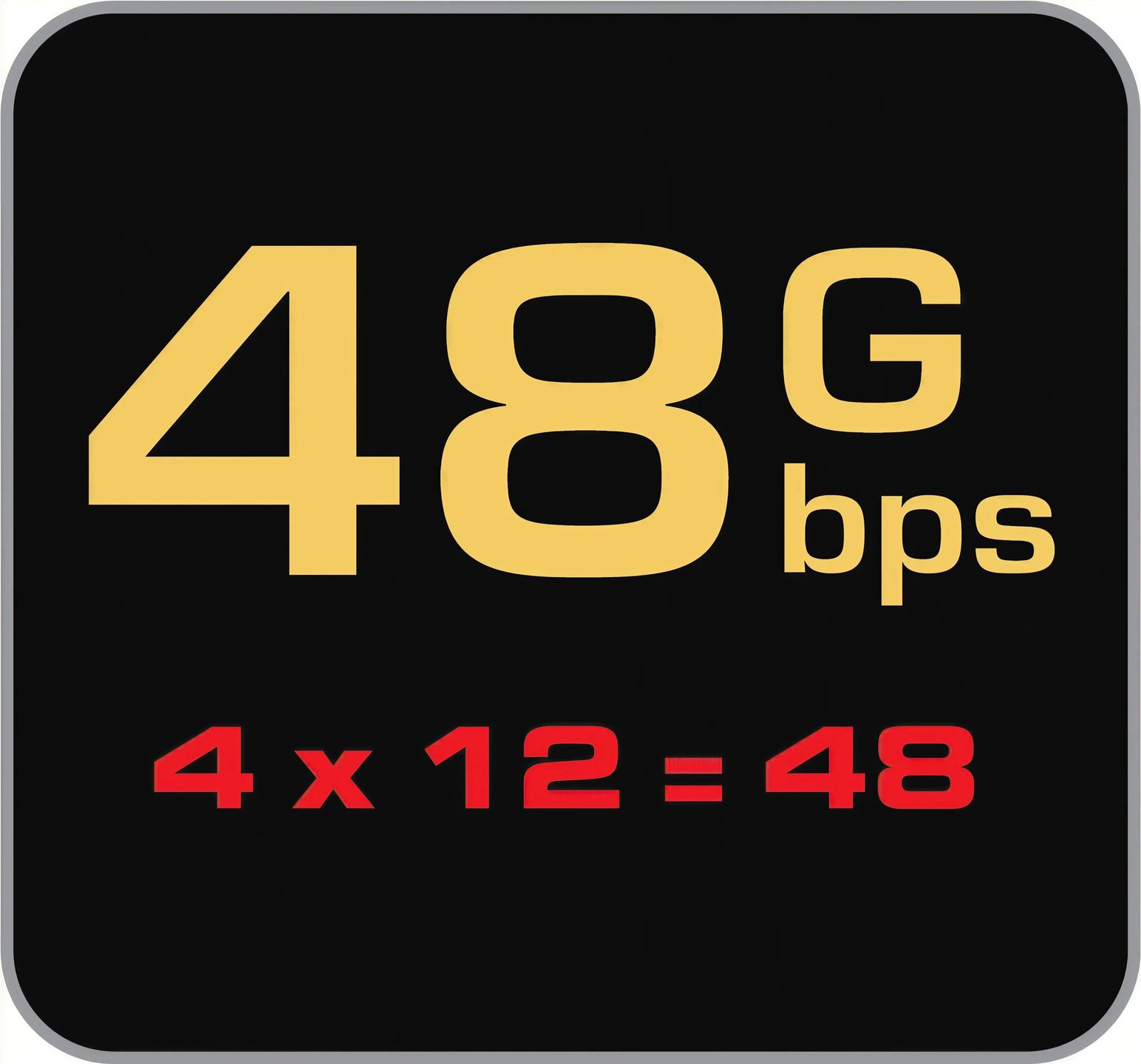
The 48 Gbps data rate relies on four pairs of conductors, each carrying 12 Gbps. This transmission mode, called FRL (Fixed Rate Link), was introduced with HDMI 2.1 and paved the way for the most data-intensive video formats. The cable is Ultra High Speed certified by HDMI Licensing, the organization that manages the standard. This certification guarantees that it has passed the data rate and interference resistance tests required for this level of performance.

In practice, it transmits 4K at up to 120 frames per second, 8K at up to 60 Hz and 10K at up to 30 Hz. It also supports dynamic HDR, whose metadata adjusts brightness and contrast scene by scene rather than applying a single setting to the entire film. Gamers benefit from HDMI 2.1’s gaming features. With VRR, the TV matches its refresh rate to the console’s actual frame rate to prevent screen tearing. ALLM automatically switches the display to low-latency game mode as soon as a game starts. QFT, meanwhile, shortens the time it takes to send each frame. A PlayStation 5, Xbox Series X or gaming PC can take full advantage, provided the TV keeps up: many models only offer these features on one or two HDMI inputs.

Silver-plated long-grain copper

The conductors are made of Long-Grain Copper (LGC), an AudioQuest copper whose crystalline structure has fewer grain boundaries than ordinary copper. Each conductor is solid-core, meaning it is made of a single solid wire rather than a bundle of fine strands. In a stranded cable, the strands touch and interact electrically and magnetically; a solid conductor eliminates these interactions.

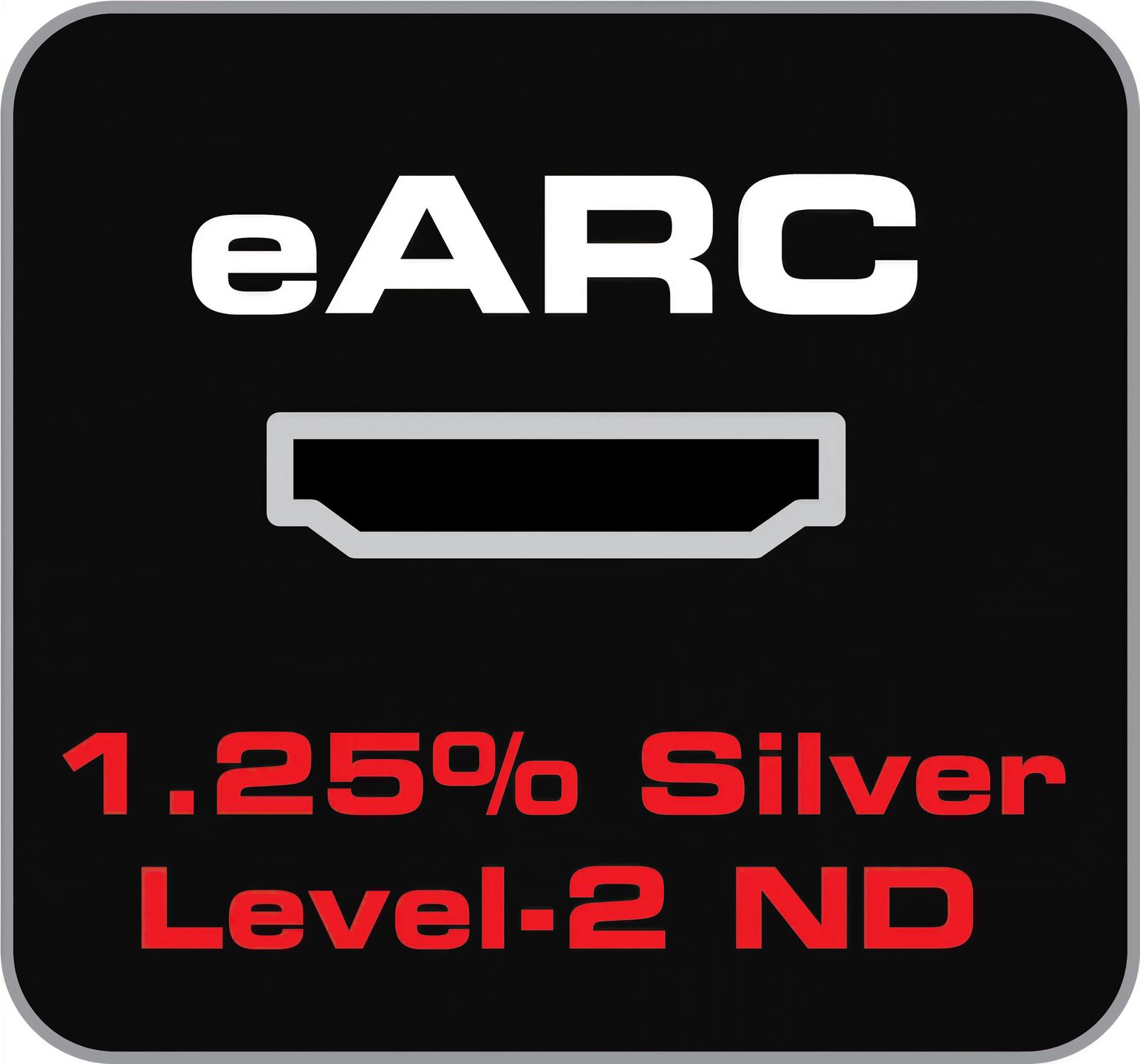
At HDMI’s high frequencies, the signal travels mainly along the conductor’s surface, a phenomenon known as the skin effect. AudioQuest therefore places silver, a better conductor than copper, precisely where it is needed: 1.25% silver plating covers the audio-video and eARC conductors, while the ground conductors feature 0.5% silver plating. In the 48 series, this proportion of silver increases at each level. The Cinnamon 48 doubles that of the Forest 48, which precedes it, while the Carbon 48 features even thicker plating.

Three layers against radio-frequency noise

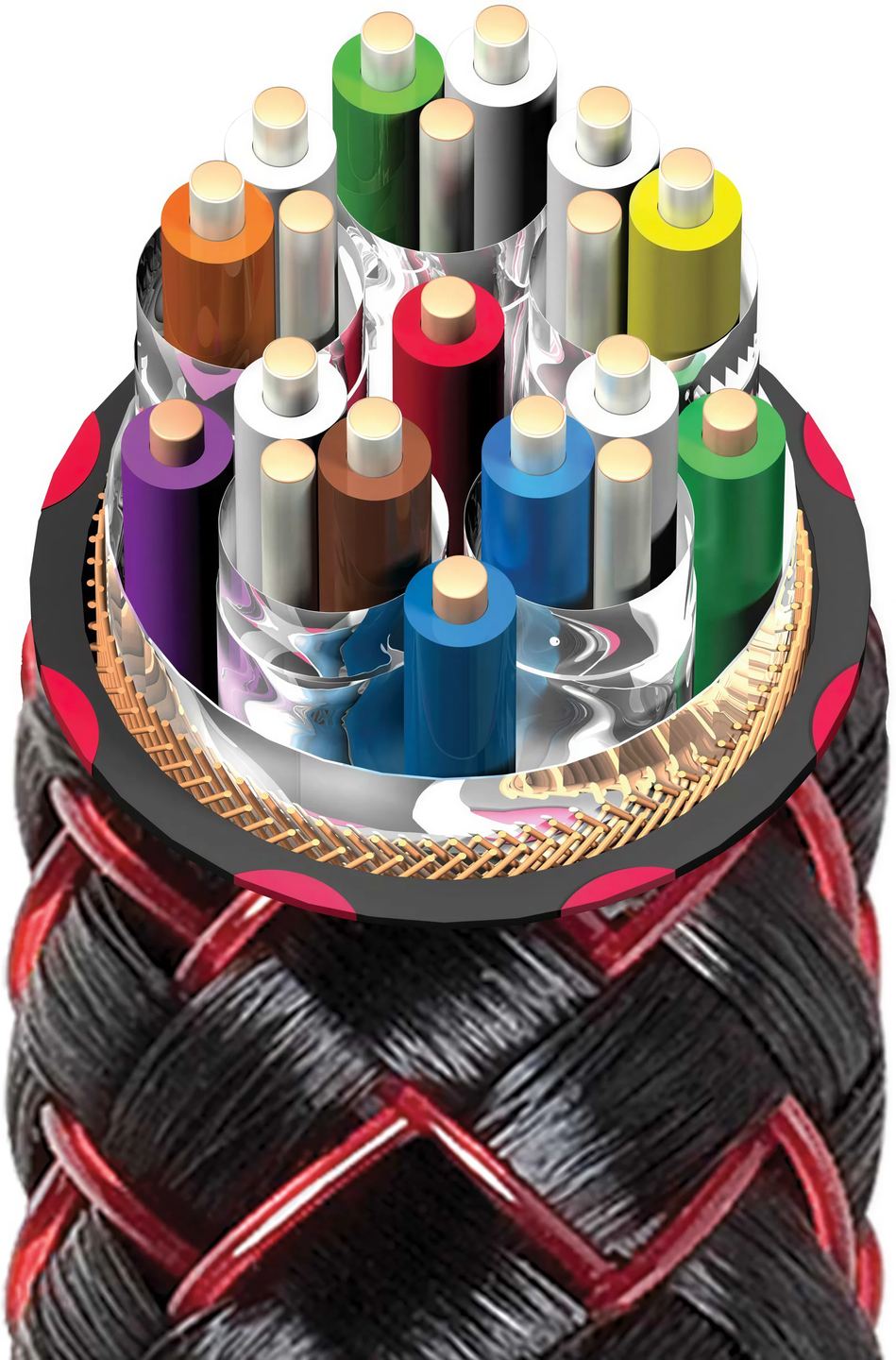
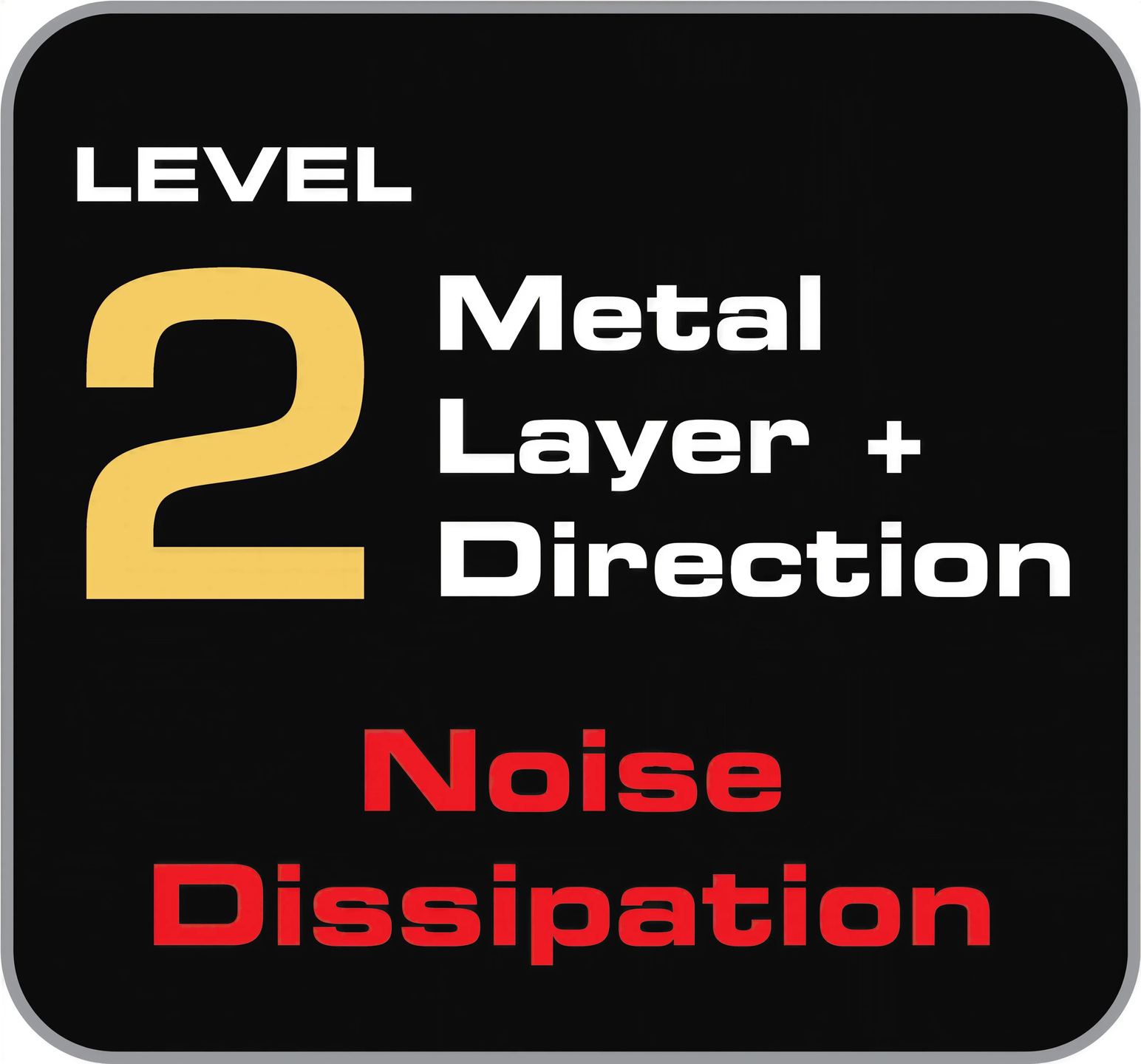
Wi-Fi, mobile networks and routers fill our homes with radio waves, and conventional shielding, even when rated at 100%, is no longer enough to keep them at bay. The Cinnamon 48 features level 3 of AudioQuest’s noise-dissipation system. Around the four FRL pairs and the eARC pair, a high-loss carbon layer is sandwiched between two metal layers. The metal reflects some of the interference, while the carbon absorbs the rest and converts it into a tiny amount of heat rather than sending it back toward the conductors.

All 19 conductors in the cable, including the control and power lines, are also direction-controlled. AudioQuest orients them during assembly to drain radio-frequency noise to ground, away from the sensitive circuitry in the TV, player or amplifier. The aim is not to “get the signal through,” which any certified cable does, but to limit the interference that reaches the devices’ electronics. The effect varies depending on the setup and the room’s radio-frequency environment, and is most noticeable in the sound.

Your TV’s sound also travels through this cable

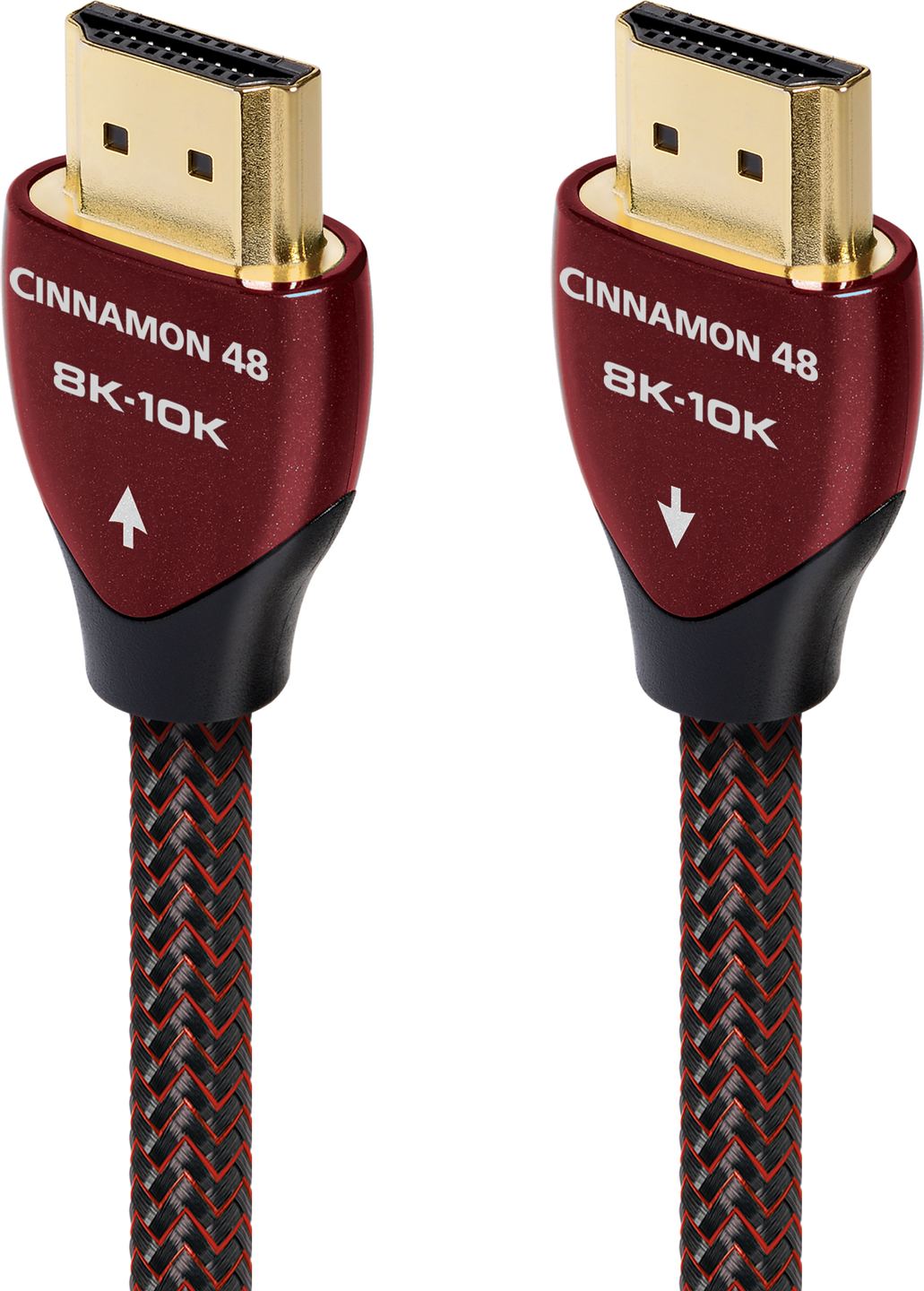
The eARC channel allows the TV to send sound back to a home theater amplifier or a soundbar through the same HDMI cable, without an additional optical connection. It transmits lossless multichannel formats, including Dolby Atmos and DTS:X, whether supplied by streaming apps or a source connected to the TV. The eARC conductors receive the same treatment as the video pairs: 1.25% silver and level 3 noise dissipation. As for the finish, the jacket is a red nylon braid over a black background, flexible enough to handle behind a TV cabinet.

Technical specifications

Type and design

  • Type: high-performance HDMI cable, 48 Gbps 8K-10K
  • Standard: HDMI 2.1
  • Certification: Ultra High Speed HDMI
  • Bandwidth: 48 Gbps
  • High-definition audio and video signal transmission up to 10K

Video performance and gaming features

  • Supported resolutions:
    • 4K up to 120 Hz, including gaming
    • 8K up to 60 Hz
    • 10K up to 30 Hz
  • Dynamic HDR support
  • Advanced gaming features:
    • VRR: variable refresh rate
    • ALLM: auto low latency mode
    • QFT: quick frame transport

Audio and eARC

  • eARC support: enhanced audio return channel
  • Bandwidth suitable for high-definition audio formats
  • High-quality audio transmission between TV, amplifier and AV receiver

Conductors and materials

  • Solid long-grain copper (LGC) conductors, designed to limit electrical and magnetic interactions between strands
  • Silver plating: 1.25%
  • Silver content by conductor type:
    • Audio / video: 1.25%
    • eARC: 1.25% silver plating
    • Ground: 0.5%
  • Total number of conductors: 19, including audio / video signals, eARC, grounds, control and power
  • High-quality insulation and shielding

Noise protection and dissipation

  • Metal foil noise reduction system and directionality control
  • Level 3 noise dissipation system
  • Direction-controlled conductors to limit radio-frequency (RF) interference
  • High-loss carbon layer combined with metal layers around the 4 FRL + eARC pairs
  • Design intended to reduce interference and preserve audio and video signal integrity

Compatibility and use

  • Compatible with HDMI 2.1 equipment and existing 4K devices
  • Backward compatible with previous HDMI versions
  • Suitable for PlayStation 5 and Xbox Series X consoles, as well as gaming computers
  • Connection between TVs, projectors, home theater amplifiers and soundbars
  • Suitable for home theater and video gaming setups

Jacket by length

  • From 0.6 to 3.0 m: red braid
  • From 3.0 m: CMG (CL3 / FT4)

Frequently asked questions

Does this cable improve the colors or sharpness of the image?

No, and no HDMI cable does: the signal is digital, so the image received is identical to the one sent as long as the data passes through without errors. A faulty cable reveals itself through visible symptoms (black screen, flickering, white dots, audio dropouts). The benefit of silver-plated conductors and shielding relates to noise transmitted to the devices, not to the pixels themselves.

Is a 48 Gbps cable useful with a 4K 60 Hz TV?

A 4K TV at 60 Hz only needs 18 Gbit/s. The Cinnamon 48 works perfectly in this case and has bandwidth to spare for when you upgrade to a console, player or TV that supports 4K at 120 Hz, without changing the cable.

How can I check that it is an Ultra High Speed certified cable?

The packaging has an official label with a QR code. Scanning it with the HDMI Cable Certification app confirms that the cable is listed in the certification body’s database.

Does it work with an amplifier or a TV with HDMI 2.0?

Yes, it is backward compatible with all previous versions of HDMI. The bandwidth and available features are then determined by the oldest device in the chain: if the amplifier between the console and the TV does not support 4K at 120 Hz, the image will be limited to 60 Hz, regardless of the cable.

Why isn't my TV displaying 4K at 120 Hz when everything is compatible?

First, check that the cable is connected to an HDMI 2.1 input on the TV, often labeled “4K 120” or “Game”. Then enable the enhanced signal format in that input’s settings (the name varies by brand), and allow 120 Hz output in the video settings of the console or graphics card.

What is the difference between ARC and eARC?

The older ARC is limited to stereo sound and compressed multichannel formats. eARC offers much higher bandwidth, allowing lossless multichannel audio and full-resolution Dolby Atmos to pass through. Both the TV and the amplifier or soundbar must support eARC, and the feature often needs to be enabled in the TV’s audio menus.

Can it be used to connect a computer to a TV?

Yes. With a graphics card equipped with an HDMI 2.1 output, it transmits 4K at 120 Hz with VRR, making it a suitable connection for PC gaming from the sofa. With an older HDMI output, it works at the resolutions and refresh rates that output can deliver.

User reviews

Andre

Excellent audio and video quality.
More dynamic than the Forest.
No need to upgrade for me.

Comment from 13 February 2024 — Experience from 5 January 2024

Automatically translated — Show original (French)
Excellente qualité audio et vidéo.
Plus de dynamique que le Forest.
Pas de nécessité de monter en gamme pour ma part.

Francis

Excellent article.

Comment from 1 January 2024 — Experience from 11 December 2023

Laurent

Very good product, well finished.

Comment from 7 July 2023 — Experience from 11 June 2023

Automatically translated — Show original (French)
Très bon produit, bien fini.
  • Eco-contribution included in the sale price.
  • Manufacturer reference: HDM48CIN060
  • GTIN / EAN: 92592016279
HomeCineSolutions
Loading