In an HDMI connection, picture and sound travel as data: either they arrive intact, or the screen loses the signal. The difference between two cables therefore lies elsewhere, in the stability of the data rate and in the high-frequency noise the wire picks up along the way and then passes on to the connected devices. This HDMI 2.1 cable offers the standard’s full bandwidth and tackles this noise with silver-plated conductors and multilayer shielding.
The full bandwidth of HDMI 2.1
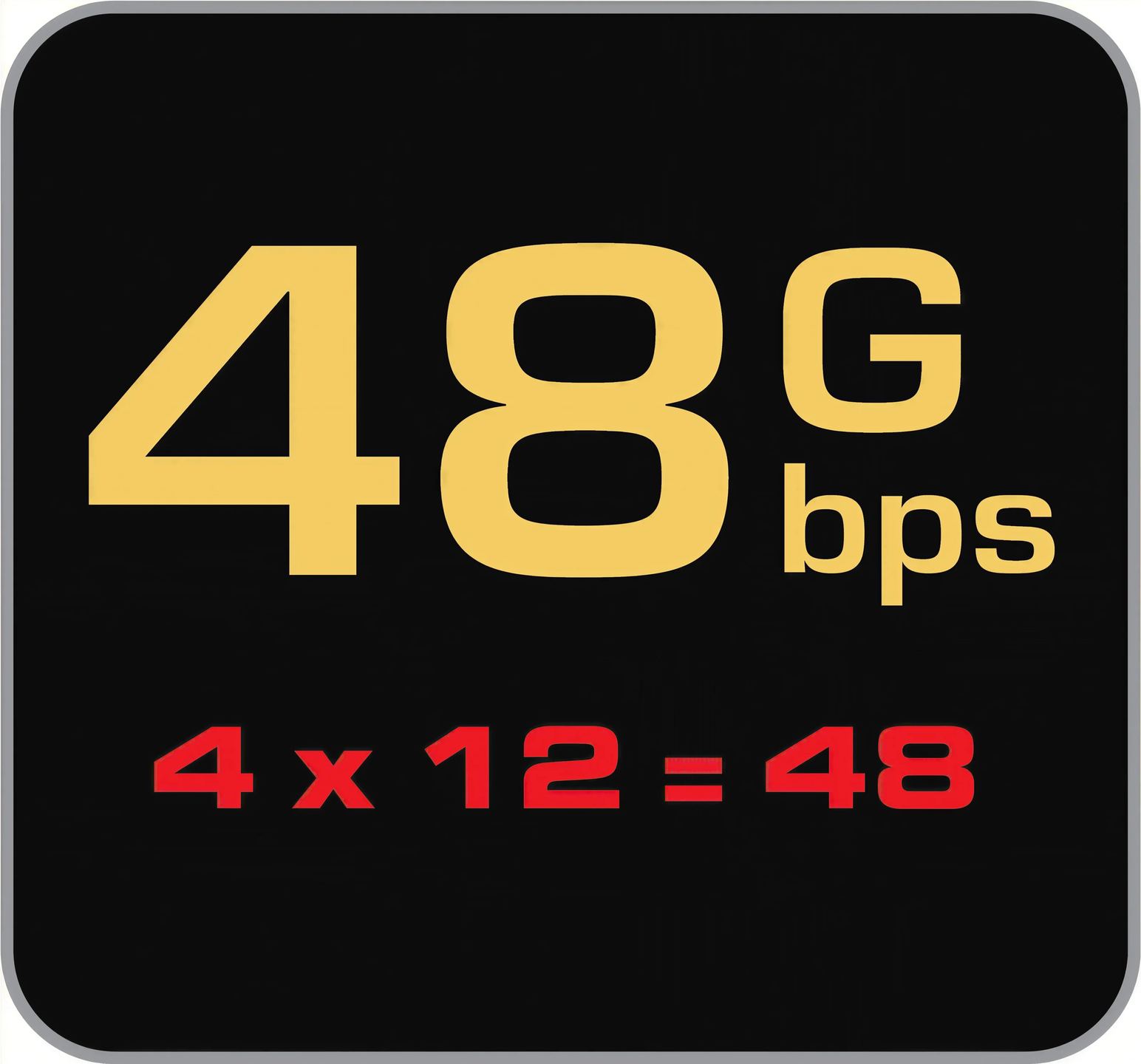
The 48 Gbit/s data rate relies on four pairs of conductors, each carrying 12 Gbit/s. This transmission mode, called FRL (Fixed Rate Link), was introduced with HDMI 2.1 and paved the way for the most demanding video formats. The cable is Ultra High Speed certified by HDMI Licensing, the organization that manages the standard. This certification guarantees that it has passed the data rate and interference resistance tests required for this level of performance.
In practice, it transmits 4K at up to 120 frames per second, 8K at up to 60 Hz and 10K at up to 30 Hz. It also supports dynamic HDR, whose metadata adjusts brightness and contrast scene by scene instead of applying a single setting to the entire film. Gamers benefit from HDMI 2.1’s gaming features. With VRR, the TV matches its refresh rate to the console’s actual output rate to prevent screen tearing. ALLM automatically switches the screen to low-latency game mode as soon as a game starts. QFT, meanwhile, reduces the time it takes to send each frame. A PlayStation 5, Xbox Series X or gaming PC can take full advantage of these features, provided the TV can keep up: many models only offer them on one or two HDMI inputs.
Silver-plated long-grain copper
The conductors are made of Long-Grain Copper (LGC), an AudioQuest copper whose crystalline structure has fewer grain boundaries than standard copper. Each conductor is solid-core, meaning it is made of a single solid wire rather than a bundle of fine strands. In a stranded cable, the strands touch and interact electrically and magnetically; a solid conductor eliminates these interactions.
At HDMI’s high frequencies, the signal travels mainly along the surface of the conductor, a phenomenon known as the skin effect. AudioQuest therefore places silver, a better conductor than copper, in precisely that location: 1.25% plating covers the audio-video and eARC conductors, while the ground conductors have 0.5% plating. In the 48 series, this proportion of silver increases at each level. The Cinnamon 48 doubles that of the Forest 48, which precedes it, while the Carbon 48 has even thicker plating.
Three layers against radio-frequency noise
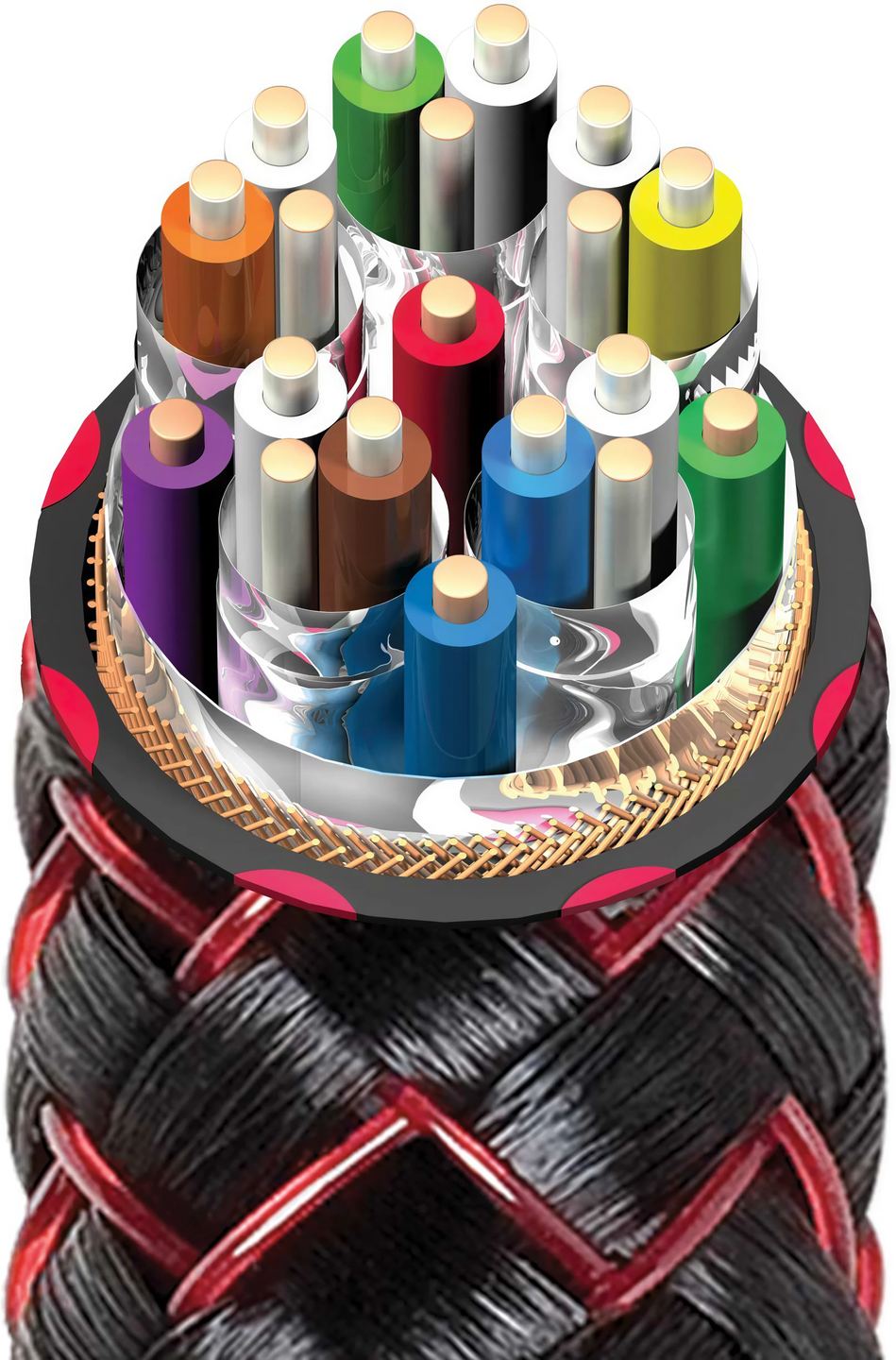
Wi-Fi, mobile networks and broadband routers fill our homes with radio waves, and conventional shielding, even when rated at 100%, is no longer enough to keep them at bay. The Cinnamon 48 features level 3 of AudioQuest’s noise-dissipation system. Around the four FRL pairs and the eARC pair, a high-loss carbon layer is sandwiched between two metal layers. The metal reflects some of the interference, while the carbon absorbs the rest and converts it into a tiny amount of heat instead of sending it back toward the conductors.
All 19 of the cable’s conductors, including the control and power lines, are also direction-controlled. AudioQuest orients them during assembly to drain radio-frequency noise toward ground, away from the sensitive circuits in the TV, player or amplifier. The aim is not to “get the signal through,” which any certified cable does, but to limit the interference that reaches the devices’ electronics. The effect varies depending on the installation and the room’s radio-frequency environment, and is most noticeable in the sound.
Your TV’s sound travels through this cable too
The eARC channel allows the TV to send sound back to a home theater amplifier or soundbar through the same HDMI cable, without an additional optical connection. It transmits lossless multichannel formats, including Dolby Atmos and DTS:X, whether supplied by streaming apps or a source connected to the TV. The eARC conductors receive the same treatment as the video pairs: 1.25% silver and level 3 noise dissipation. As for the finish, the jacket is a red nylon braid over a black background, flexible enough to handle behind a TV cabinet.