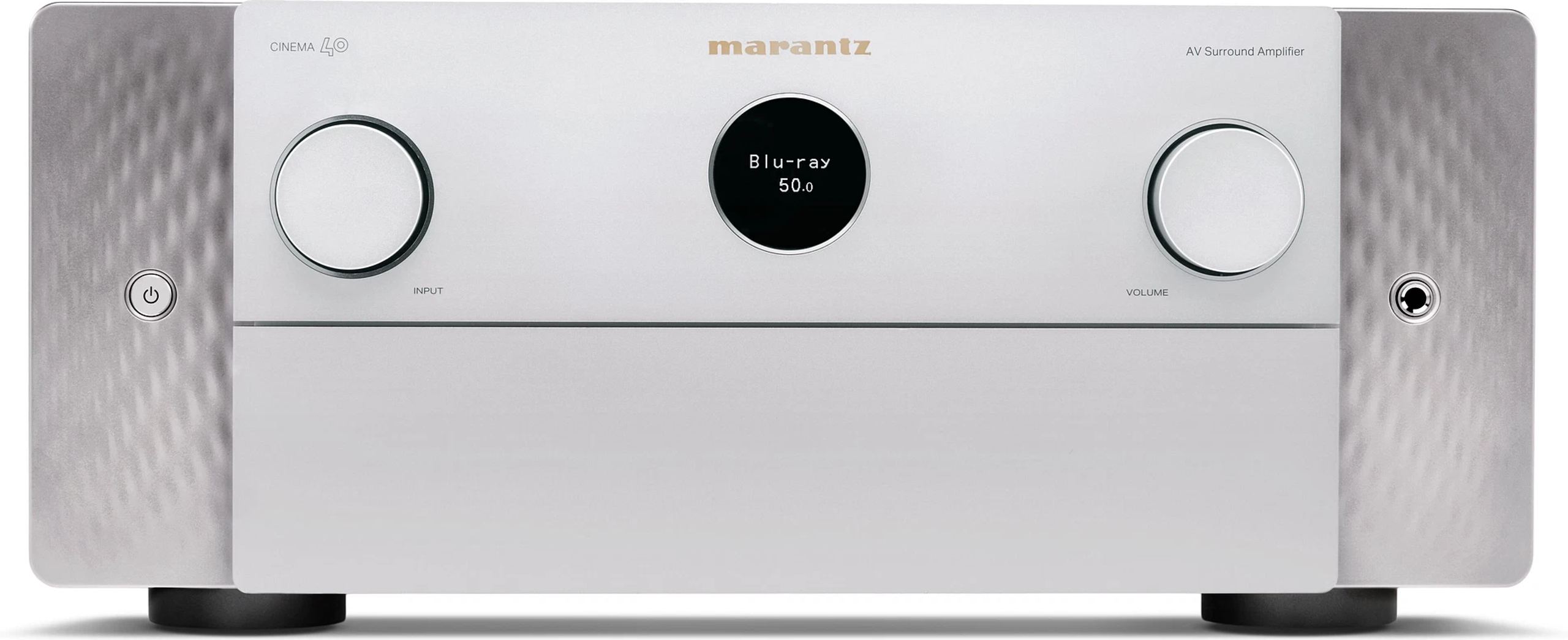
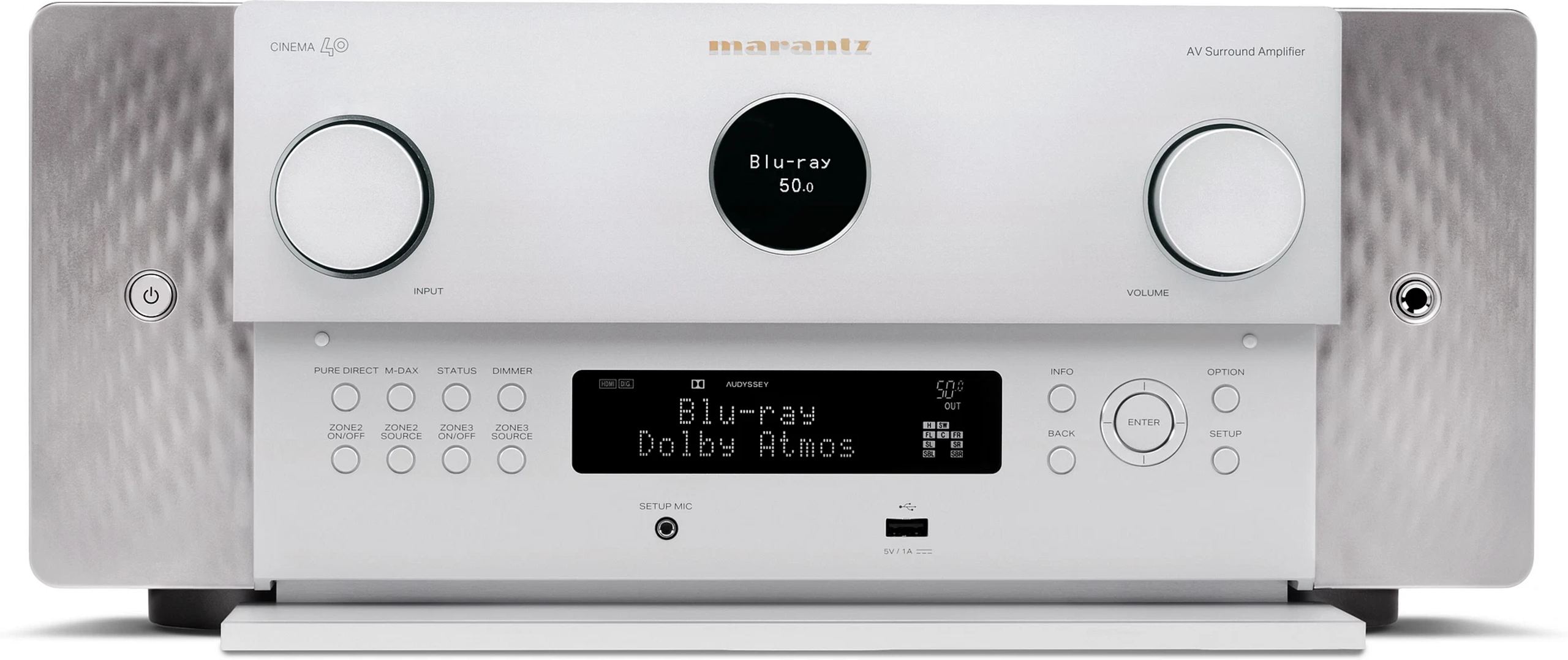
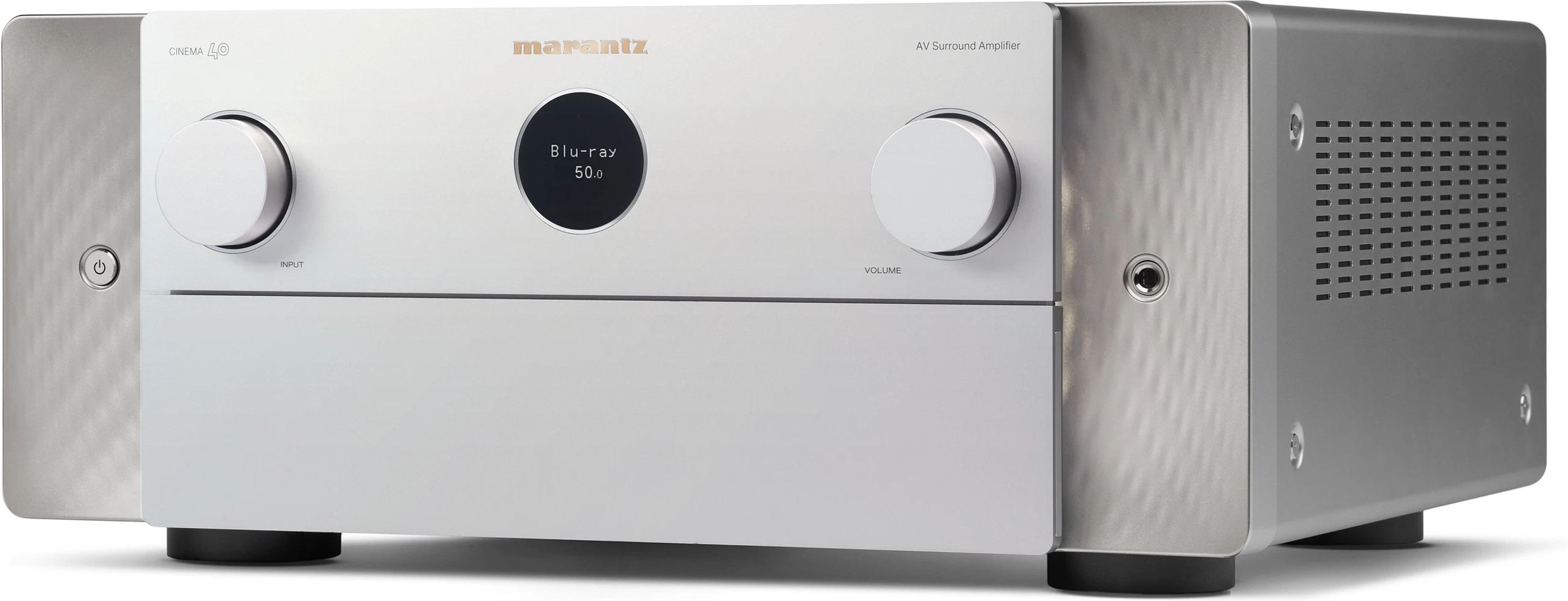
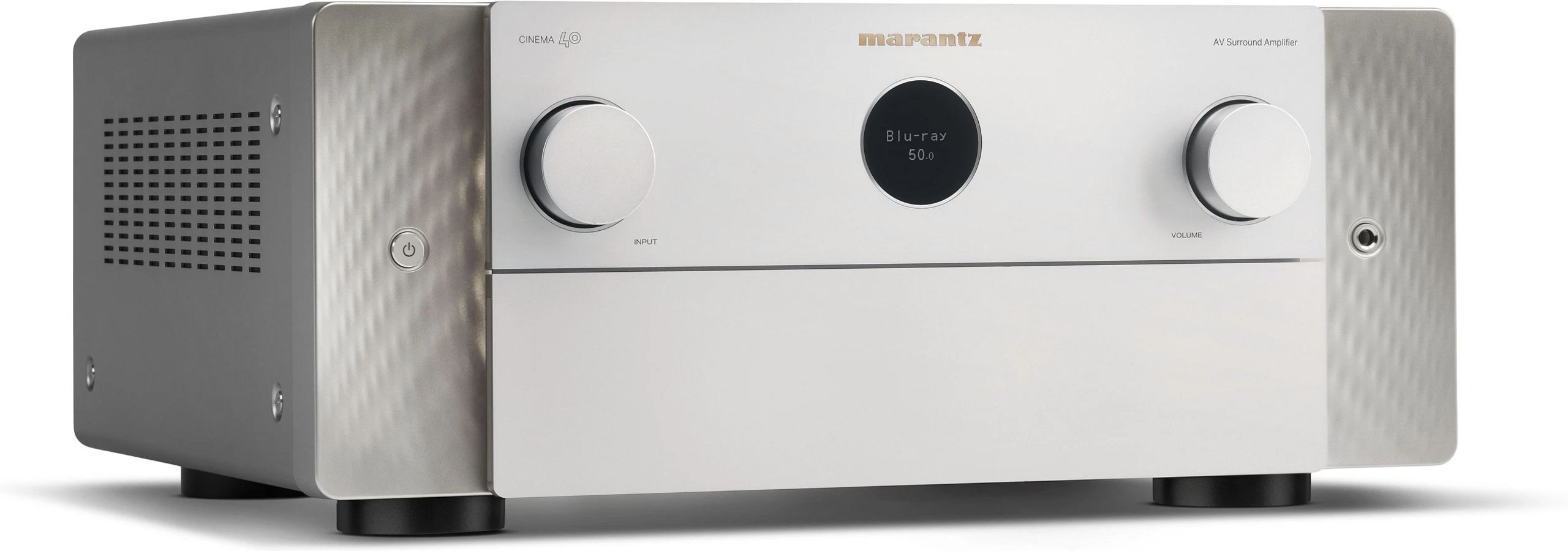
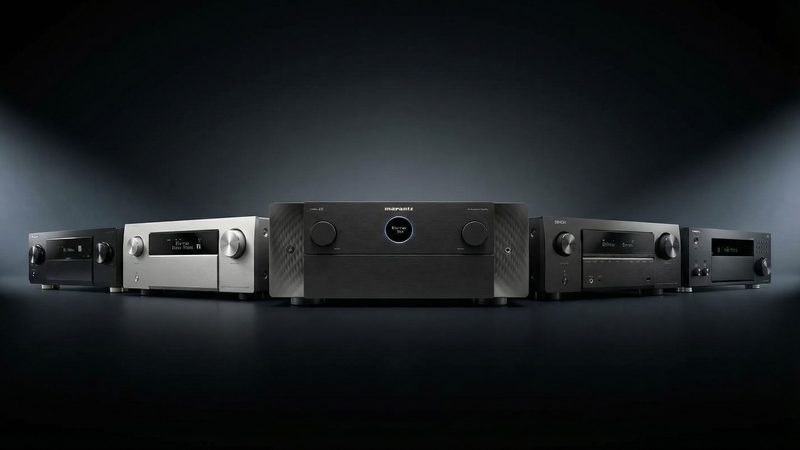
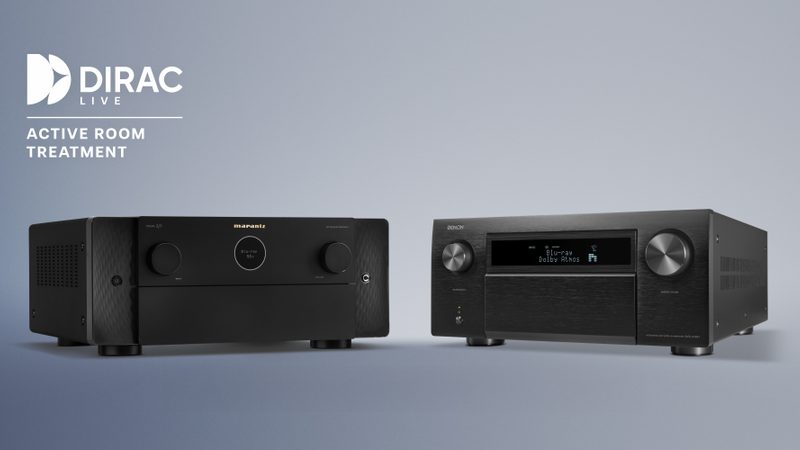
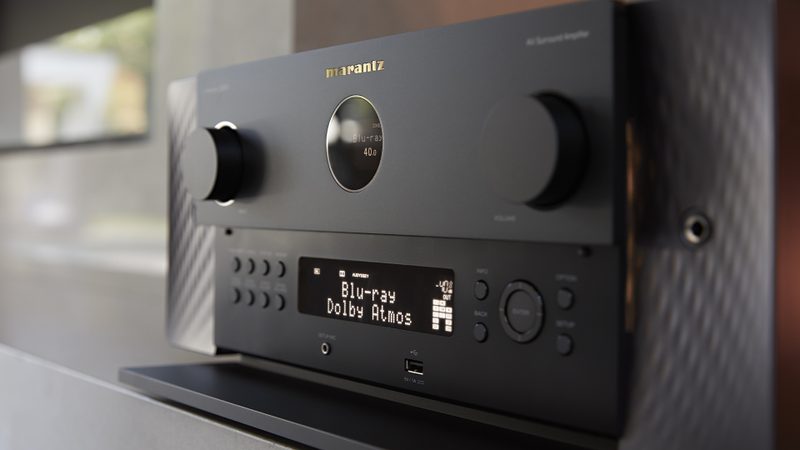
The Cinema 40 is designed and manufactured in Japan at the Shirakawa facilities. This 9.4-channel amplifier delivers 125 W per channel and integrates the Griffin Lite XP DSP processor, compatible with the three-dimensional audio formats Dolby Atmos, DTS:X, IMAX Enhanced, and Auro-3D. It features seven HDMI 2.1 inputs supporting 8K/60 Hz and 4K/120 Hz, Marantz HDAM technology, and four independent subwoofer outputs.
A technology powerhouse in service of sound
The Cinema 40 houses the latest-generation Griffin Lite XP DSP processor, capable of decoding and processing up to 11.4 channels simultaneously. This chip not only supports Dolby Atmos and DTS:X natively, but also Auro-3D, which adds an additional vertical dimension to the soundstage, creating an especially enveloping acoustic bubble. The IMAX Enhanced format automatically detects remastered content and adapts its parameters to faithfully reproduce the director’s original vision. Dolby Atmos Height virtualization and DTS Virtual:X even enable convincing vertical spatialization without ceiling speakers.
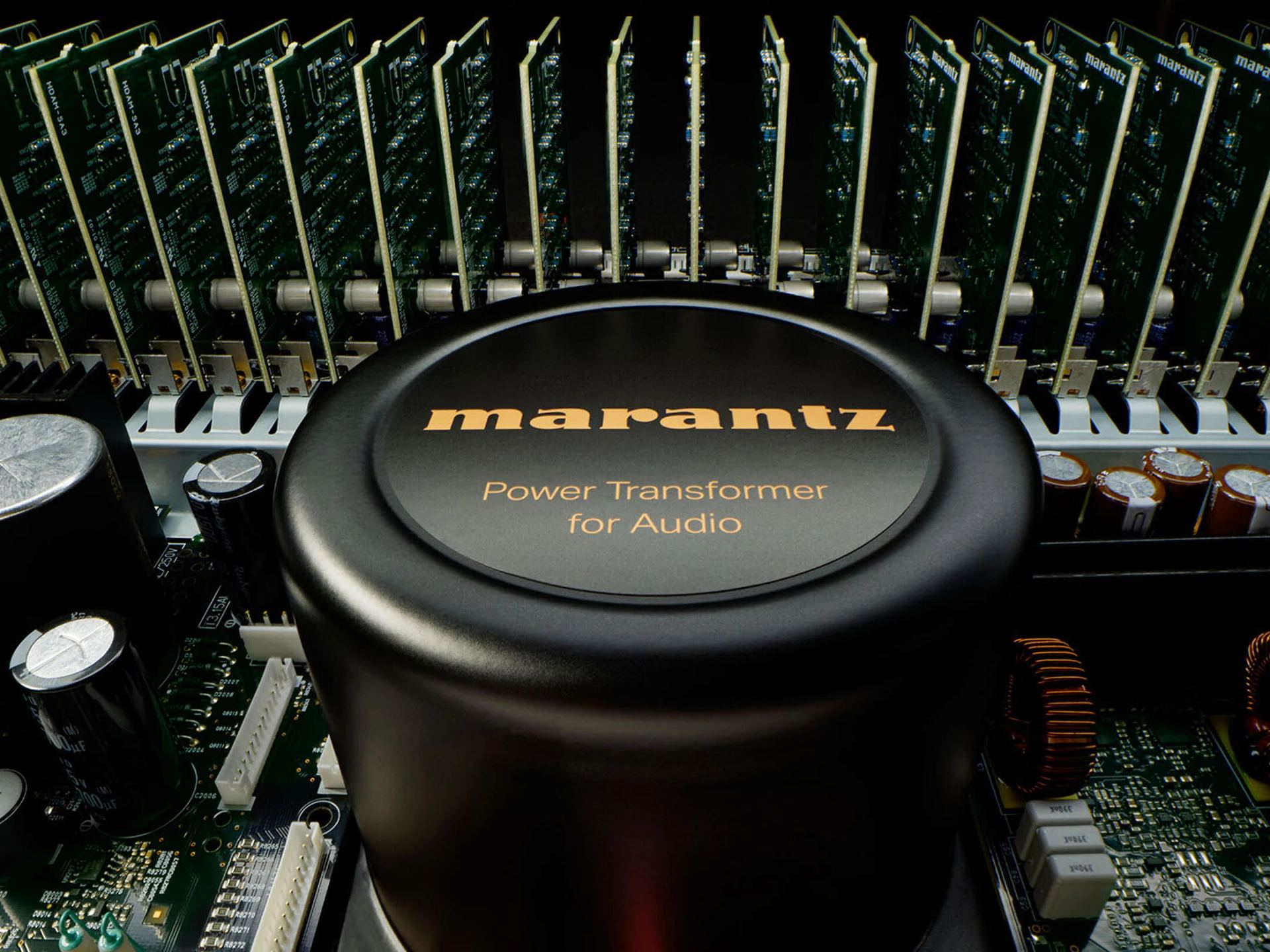
Amplification is based on a Class A/B topology delivering 125 watts per channel into 8 ohms (165 watts into 6 ohms), with a power reserve reaching 235 watts peak on a single channel. This architecture ensures uncompressed dynamics even during the most demanding passages, while preserving the warmth and musicality characteristic of the brand. Each of the nine amplification channels has its own circuit board, minimizing interference and optimizing channel separation.
At the heart of the preamplification stage, HDAM (Hyper Dynamic Amplifier Module) modules replace conventional operational amplifiers. These discrete circuits developed by Marantz since 1992 offer a slew rate of 70 to 80 V/µs, far superior to standard integrated components. This exclusive technology, used in the brand’s most prestigious models, guarantees exceptional transparency, a drastic reduction in background noise, and preservation of micro-details that make the difference between mere playback and true musical emotion.
Connectivity designed for the future
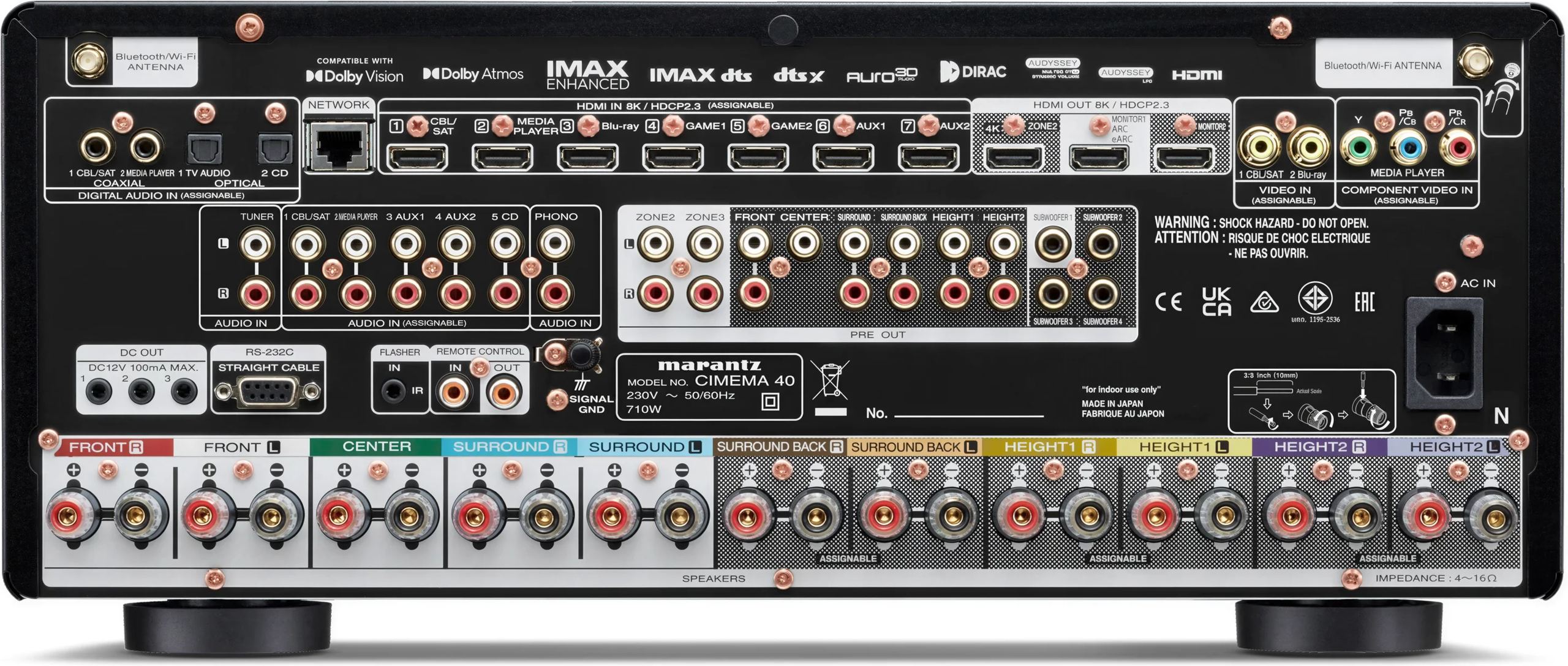
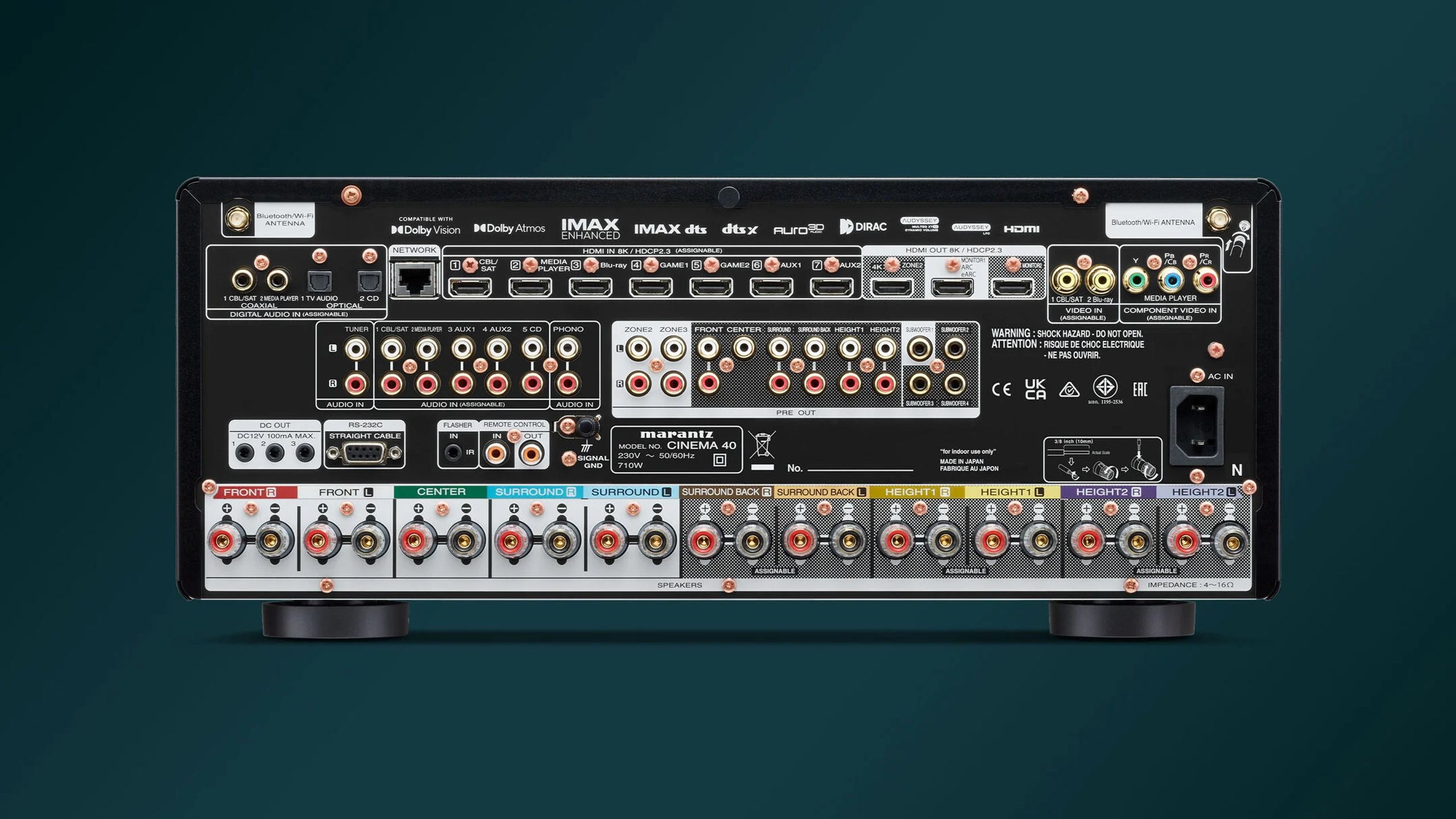
The Cinema 40’s HDMI section demonstrates a rare forward-thinking approach in this category. The seven HDMI 2.1 inputs support 8K at 60 frames per second and 4K at 120 Hz, essential for getting the most from the latest game consoles and ultra high-definition content. The three HDMI outputs can simultaneously feed a main projector, a Zone 2 TV, and an additional screen, offering remarkable installation flexibility.
Gaming technologies are particularly well catered for, with support for VRR (Variable Refresh Rate) that dynamically synchronizes the refresh rate, ALLM (Auto Low Latency Mode) that automatically switches to low-latency mode, and QFT (Quick Frame Transport) that reduces the delay between action and display. These features eliminate screen tearing and ensure optimal smoothness, making the Cinema 40 an ideal companion for the most demanding gamers.
HDR format handling is another strong point, with compatibility for Dolby Vision, HDR10+, HLG, and Dynamic HDR. The built-in video processor can even upscale 1080p and 4K signals to 8K resolution, maximizing the potential of next-generation displays. The eARC audio return channel retrieves high-resolution audio tracks from apps built into recent TVs, preserving the full, uncompressed signal.
Beyond digital, the Cinema 40 doesn’t forget analog sources with an MM phono input for turntable, six RCA audio inputs, two composite video inputs, and one component input. This versatility allows vintage equipment and modern technologies to integrate seamlessly within the same setup.
Sophisticated acoustic calibration and multiroom management
The Audyssey MultEQ XT32 calibration system represents the most advanced version of this acoustic correction technology. Using the supplied microphone, it analyzes the response of each speaker at eight different measurement points, generating high-resolution digital filters that compensate for the room’s acoustic flaws. The Audyssey Dynamic EQ and Dynamic Volume functions adjust tonal balance and dynamics in real time according to listening level, ensuring an optimal experience even at low volume.
The option to upgrade to Dirac Live offers an even more sophisticated alternative, allowing perfectionists to fine-tune each correction parameter manually. Both systems can coexist, providing several switchable presets depending on preferences or content type.
The four independent subwoofer outputs are a distinctive feature of the Cinema 40. Each can be configured individually for delay, level, and EQ, enabling surgically precise low-frequency management. This proves especially valuable in large rooms or complex acoustic setups that require multiple subs to achieve a uniform response.
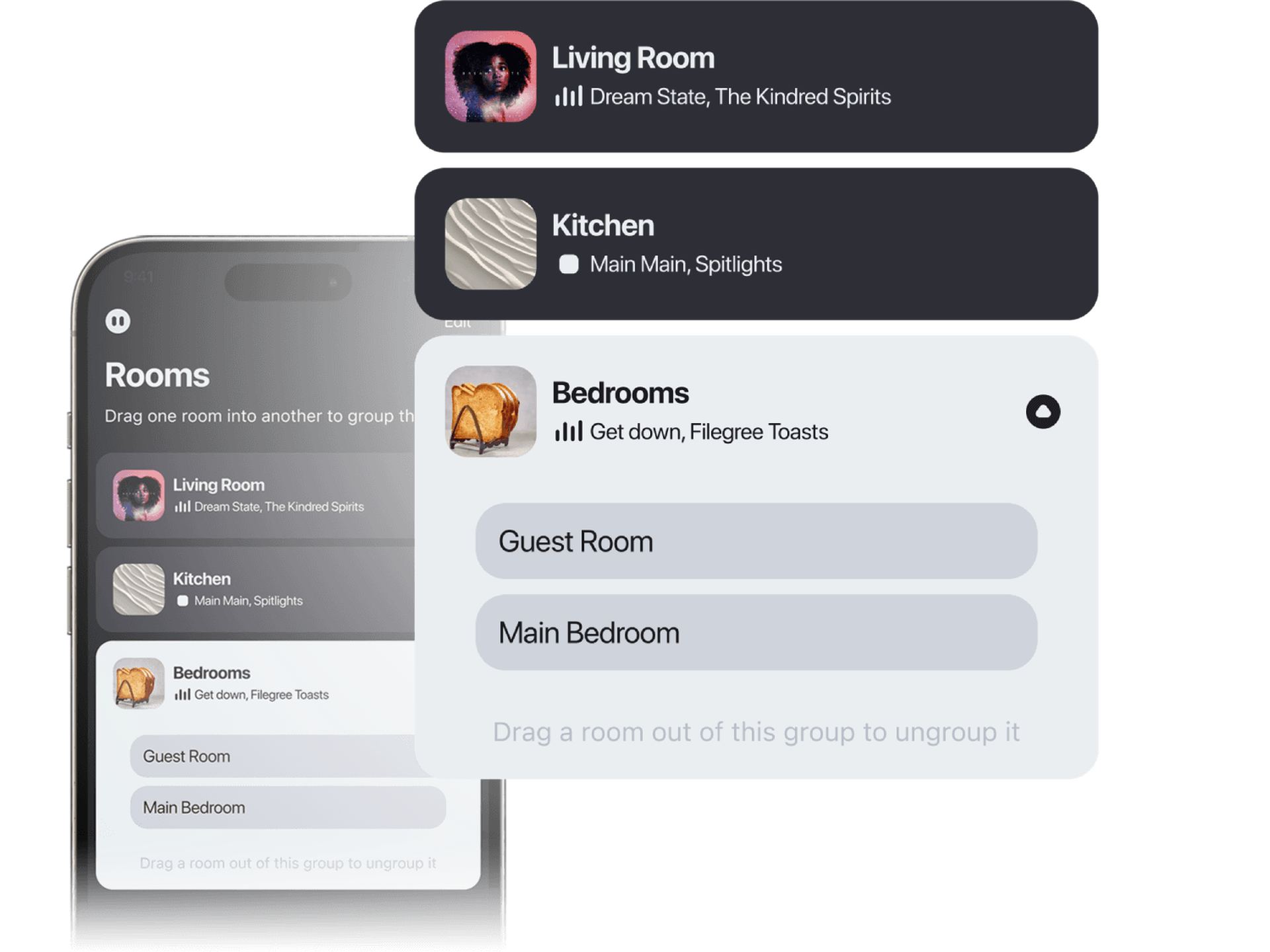
Built-in HEOS technology turns the Cinema 40 into a true multiroom hub capable of streaming music across three distinct zones. Compatible with major streaming services (Spotify Connect, TIDAL, Deezer, Amazon Music HD), it also supports playback of high-resolution files up to 192 kHz/24-bit and DSD 5.6 MHz from the local network. AirPlay 2 and Bluetooth protocols ensure universal compatibility with mobile devices, while Amazon Alexa and Google Assistant voice assistants offer intuitive hands-free control.
What the press says
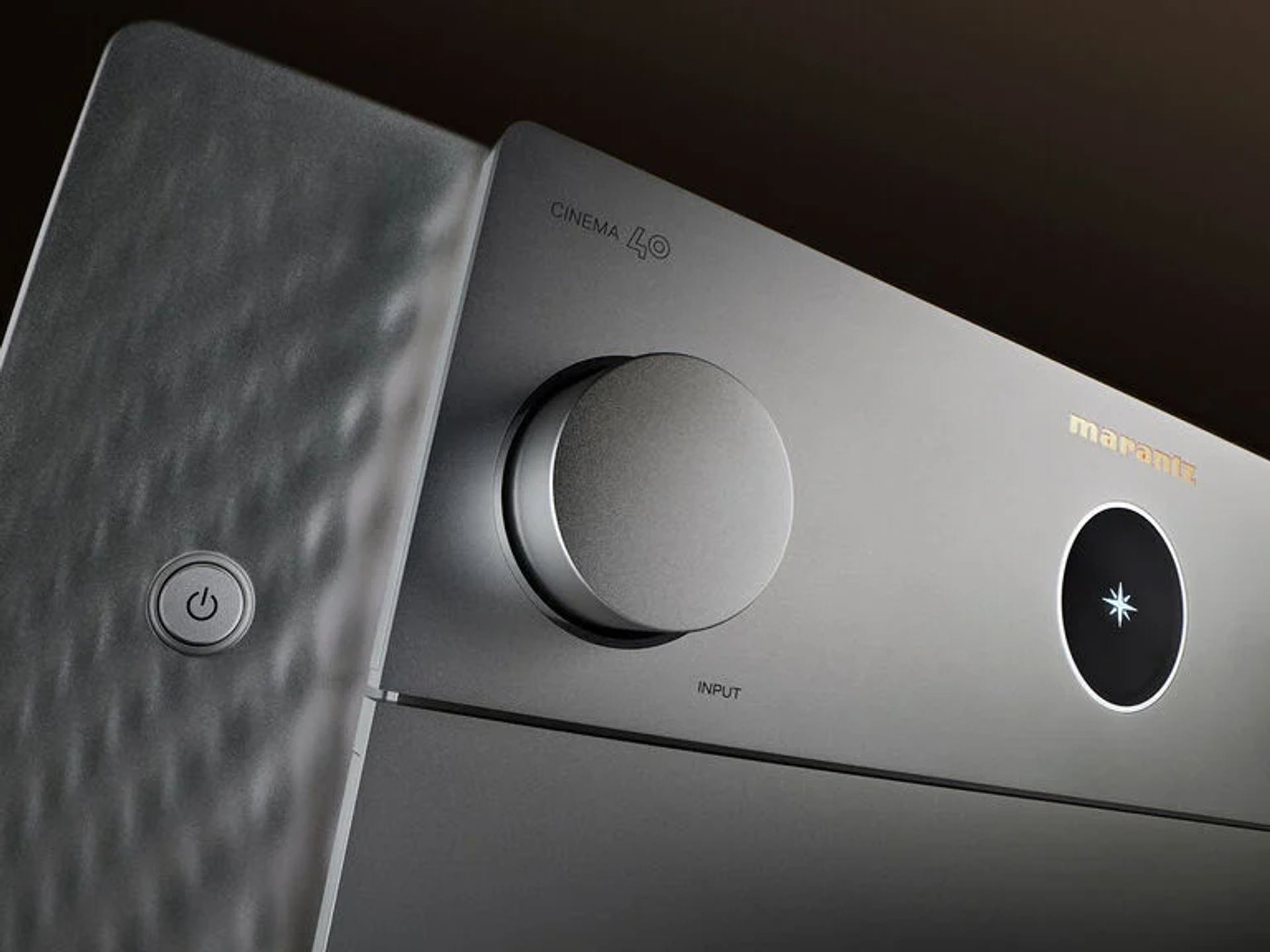
The Marantz Cinema 40 is the worthy successor to the Marantz SR7015. It naturally benefits from all the specifications of the latter, but in addition to its new aesthetics, it also boasts some notable new features, chief among them a 1080p color OSD (instead of 480p). Numerous details are now available on-screen, particularly regarding the nature of input and output signals, with information such as the channels that are actually active. Compared to the Cinema 50, the presence of a display is noticeable, along with transport buttons behind the front panel for operating the amplifier without the remote control. It also features slightly increased power and a seventh HDMI input, all of which are HDMI 2.1 compliant (compared to only one on the SR7015).
Automatically translated — Show original (French)
Le Marantz Cinema 40 est donc le digne successeur du Marantz SR7015. Il bénéficie bien sûr de l'intégralité des spécifications de ce dernier, mais outre sa nouvelle esthétique, il compte aussi quelques notables nouveautés au premier rang desquelles un OSD, 1 080p couleur (et non 480p). De nombreuses informations sont désormais disponibles à l'écran, notamment sur la nature des signaux d'entrée et ceux de sortie avec, par exemple, les canaux réellement actifs. Et comparé au Cinema 50, on remarque la présence d'un afficheur en plus des boutons de transport derrière la trappe de façade pour utiliser l'amplificateur sans la télécommande, une puissance légèrement accrue avec une septième entrée HDMI, toutes d'obédience 2.1 (contre une seule sur le SR7015).
Maximum number of processing channels (preamplifier): 11.4
Technologies
Hyper Dynamic Amplifier Modules (HDAM)
Pure Direct mode
Gold-plated RCA jacks
Jitter reducer
Room correction
Audyssey MultEQ XT32
Audyssey Dynamic EQ, Dynamic Volume
Audyssey LFC
Dirac Live
Adjustable crossover
Bass optimization
Bass synchronization
Supported audio formats
Compressed formats: MP3, WMA, AAC
Lossless formats: FLAC HD 192/24, WAV 192/24, ALAC 192/24
DSD: 2.8 MHz, 5.6 MHz
Gapless playback: FLAC, WAV, ALAC, DSD
Compressed audio enhancer: MDAX2
Network audio sharing
Streaming services
HEOS Multiroom and streaming
AirPlay, AirPlay 2
Internet radio
Spotify Connect
Pandora
SiriusXM
Other services: Amazon Music HD, Amazon Music, TIDAL, Deezer, Napster, Soundcloud, Mood Mix
Integration and control
Voice assistants: Amazon Alexa, Google Assistant, Apple HomePod
Mobile app: Marantz AVR (iOS and Android)
Built-in HEOS multiroom
HEOS Link compatibility: infrared (IR), IP
Multiroom zones: 3
Audio sources per zone: HDMI, optical, coaxial, network, USB, analog
Zone audio output: speakers, pre-out
Zone HDMI output from HDMI source
Control: IP, RS232, Web, App
Infrared receiver
Marantz remote control bus
12 V trigger outputs: 3
HDMI diagnostics
HDMI
8K-compatible inputs: 7
HDCP 2.3
HDMI outputs: main, zone 2, 1
Analog video conversion to HDMI
HDMI upscaling: 1080p / 4K to 8K
Maximum resolution: 8K at 60 Hz, 4K at 120 Hz
Enhanced Audio Return Channel (eARC)
HDR, HLG, Dolby Vision, HDR10+, Dynamic HDR
Auto Low Latency Mode (ALLM)
Variable Refresh Rate (VRR), QFT
HDMI standby mode
CEC
DSD over HDMI
Automatic lip sync
Connections
Composite video inputs: 2
Component video input: 1
HDMI inputs / outputs: 7 / 3
Multizone video output via HDMI
Analog inputs / fixed-level outputs: 6 / 0
Phono input (MM)
Digital inputs: 2 optical, 2 coaxial
Analog multizone outputs: 2
Multichannel preamplifier outputs: 11.4
Subwoofer outputs: 4 (independent)
Speaker terminals: 11
A / B speakers: assignable
Assignable multizone terminals
Front-panel USB-A ports
Network connectivity
Ethernet
Wi-Fi
Bluetooth
Bluetooth transmission to headphones
General specifications
Metal front panel
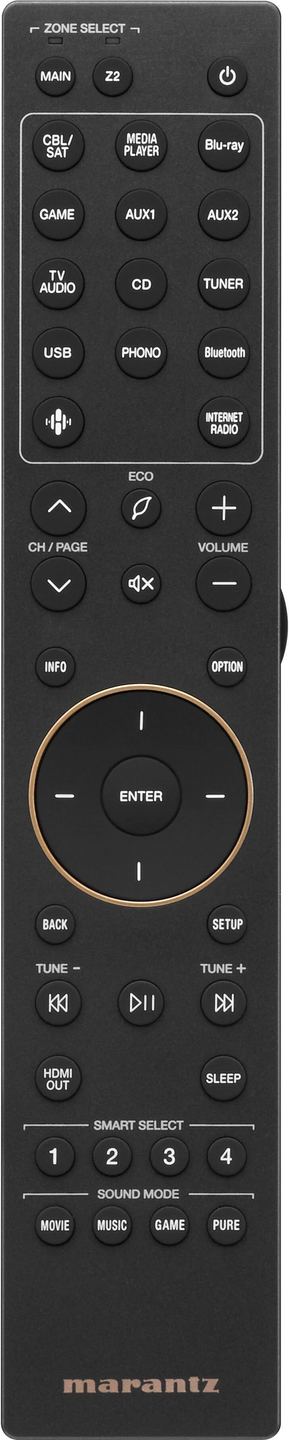
RC-048SR remote control
Smart Select on remote control
Update via USB
ECO mode
Automatic power off
Sleep timer
Power consumption
In operation: 710 W
No sound (ECO on / off): 65 W / 110 W
Normal / economy mode: 0.2 W
CEC standby: 0.5 W
Network standby: < 2.0 W
Dimensions (W × D × H)
Standard: 440 × 414 × 185 mm
Horizontal antennas: 440 × 414 × 254 mm
Vertical antennas: 440 × 401 × 185 mm
Weight: 15.1 kg
Package contents
Main unit
Remote control
Batteries
Quick start guide
Audyssey microphone
Microphone stand
2 removable external antennas
Power cord
Frequently asked questions
What’s the main difference between the Cinema 40 and the Cinema 50?
+
The Cinema 40 stands out with Japanese manufacturing at the Shirakawa factory, improved HDAM-SA2 modules mounted on separate, shielded boards, higher power (125 W vs 110 W), and a larger EI transformer. It also offers an additional HDMI input (7 vs 6) and can manage three audio zones versus two for the Cinema 50. These differences justify a higher-end positioning and a slightly more refined sound signature.
Can the Cinema 40 really drive hard-to-power speakers?
+
With 125 watts per channel and the ability to deliver 235 watts peak on a single channel, the Cinema 40 offers ample power reserve for the vast majority of speakers on the market. Its robust power supply with a 4.8 kg toroidal transformer and oversized filter capacitors guarantees exemplary stability even with complex loads down to 4 ohms.
Do HDAM modules make a truly audible difference?
+
HDAM modules replace standard op-amps with discrete circuits offering a much higher slew rate (70–80 V/µs) and reduced noise. Developed since 1992 and continually refined, this technology contributes to Marantz’s sound signature, known for its warmth, musicality, and ability to reveal micro-details. The difference is particularly noticeable in pure stereo listening and with quality recordings.
Can the Cinema 40 be used solely for stereo music?
+
Absolutely. Pure Direct mode bypasses all digital processing circuits to offer the shortest and purest possible signal path. Marantz engineers systematically test their home theater amplifiers in stereo configuration against their hi-fi references, ensuring first-rate musical performance. The integrated phono input with HDAM modules further reflects this attention to analog sources.
How do you efficiently manage four subwoofers with the Cinema 40?
+
The four independent subwoofer outputs allow individual adjustment of each sub’s level, delay, and EQ. This setup is ideal for smoothing frequency response in large rooms or compensating for problematic room modes. The Audyssey Sub EQ HT system automatically optimizes the integration of multiple subs, but manual fine-tuning remains possible for perfectionists.
Is the Cinema 40 truly compatible with future formats and resolutions?
+
With HDMI 2.1 inputs supporting 8K/60 Hz and 4K/120 Hz, support for all current HDR formats, and 40 Gbps bandwidth, the Cinema 40 is future-ready for several years. The Griffin Lite XP DSP processor already handles the most advanced audio formats. The only limitation: current HDMI bandwidth could prove insufficient for some future video formats beyond 8K.
What’s the maximum speaker configuration the Cinema 40 can handle?
+
On its own, the Cinema 40 can power setups up to 5.4.4 or 7.4.2 (9 amplified speakers + 4 subwoofers). In preamplifier mode with external amplification, it can process up to 11.4 channels, enabling full 7.4.4 configurations. Flexible amplifier assignments let you prioritize as needed: bi-amping the fronts, Zone 2/3, or rear surround speakers.
User reviews
Review highlights
Highly enthusiastic reviews: 40 out of 42 buyers give this Marantz Cinema 40 a 5/5 rating.
The sound wins unanimous praise: musical, detailed and warm, with a wide soundstage and precise spatial imaging, for both home theater and hi-fi.
The design and finish are considered superb, elegant and refined by a large proportion of buyers.
Many bought it to replace an older amplifier (Denon, Marantz, Yamaha, Pioneer) and report a clear improvement in definition, dynamics and power.
Based on reviews from customers who purchased this product, summarised by AI
Sebastiano
The Cinema 40 met my expectations, excellent value for money in terms of features, I recommend it without hesitation to anyone who, like me, wants a small to medium-sized home theater system, the design is stunning, the sound is very well-defined, quite powerful and decidedly enjoyable for both movies and music.
Comment from 13 October 2026 — Experience from 2 October 2026
Automatically translated — Show original (Italian)
Il Cinema 40 ha soddisfatto le mie aspettative, ottimo rapporto qualità prezzo, come funzionalità, lo consiglio senza dubbi per chi come me vuole un impianto home teather casalingo dalle piccole alle medie dimensioni, il design è stupendo, il suono è molto definito abbastanza potente e decisamente piacevole sia per film che per la musica.
Patrice
Bought to replace an aging Marantz SR 7800, I rediscovered the Marantz sound in both Hi-Fi and Home Cinema, with more detail and more refined spatialization in films. Connections and settings are easy enough for beginners to implement. Impeccable build quality and finish. Excellent in-store welcome.
Comment from 21 September 2026 — Experience from 30 November 2025
Automatically translated — Show original (French)
Acheté pour remplacer un Marantz SR 7800 vieillissant, j'ai retrouvé le son Marantz en HiFi comme en Home Cinéma, avec plus de détail et une spatialisation plus fine en film.
Mise en application des branchements et réglages à portée des débutants.
Qualité de fabrication et finition irréprochables.
Accueil magasin au top.
Jiannis
very good reciever. deliver power to a large amount of speaker. the sound after calibrating the system is stunning.
Comment from 19 August 2026 — Experience from 15 June 2026
Eco-contribution of €2.58 included in the sale price.
To better understand our visitors, measure marketing effectiveness and personalise ads, we and our partners use cookies and mobile advertising identifiers on your device. This data makes it possible to display personalised and non-personalised ads and measure their performance. Some cookies, which are technically necessary, are exempt from consent. You can accept those that require your consent, refuse them by clicking “Reject”, or customise your choices via “More options”.
To find out how Google uses the data collected once you have given your consent, see Google’s Business Data Responsibility site (opens in a new window).
You can change or withdraw your consent at any time via the “Cookies” link. Your choices will apply on our site for 12 months.